

2 months 2 weeks ago
Parmenides: If the one is not, nothing is. Then, and we may add, whether the one is or is not, the one and the others in relation to themselves and to each other all in every way are and are not and appear and do not appear.
1 month 4 weeks ago
Kings and philosophers shit, and so do ladies.
▼
Source
source
Ch. 42, English translation from Hartle, Ann (2003), Michel de Montaigne: Accidental Philosopher, Cambridge University Press.
2 weeks 2 days ago
The comprehension of God taken as a participation in his sacred life, an allegedly direct comprehension, is impossible, because participation is a denial of the divine, and because nothing is more direct than the face to face, which is straightforwardness itself.
▼
Source
source
Totality and Infinity

3 days ago
It must be borne in mind that it is through the channel of the child that the development of the mature man must go, and that the present ideas of the educating or training of the latter in the school and the family - even the family of the liberal or radical - are such as to stifle the natural growth of the child. Every institution of our day, the family, the State, our moral codes, sees in every strong, beautiful, uncompromising personality a deadly enemy; therefore every effort is being made to cramp human emotion and originality of thought in the individual into a straight-jacket from its earliest infancy; or to shape every human being according to one pattern; not into a well-rounded individuality, but into a patient work slave, professional automaton, tax-paying citizen, or righteous moralist.

2 months 2 weeks ago
Believe me, there is no such thing as great suffering, great regret, great memory...Everything is forgotten, even great love.
2 months 5 days ago
By protracting life, we do not deduct one jot from the duration of death.
▼
Source
source
Book III, lines 1087-1088 (tr. Rouse)
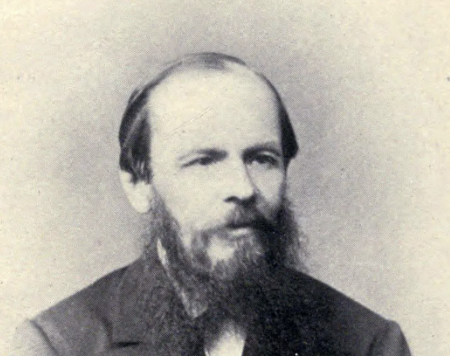
3 weeks ago
Fathers and teachers, I ponder, "What is hell?" I maintain that it is the suffering of being unable to love.
▼
Source
source
Book VI, Chapter 3 (trans. Constance Garnett)

1 month 2 weeks ago
Self-reliance, the height and perfection of man, is reliance on God.
▼
Source
source
The Fugitive Slave Law, a lecture in NYC, March 7, 1854

1 month 4 weeks ago
The very elements themselves, though repugnant in their nature, yet, by a happy equilibrium, preserve eternal peace; and amid the discordancy of their constituent principles, cherish, by a friendly intercourse and coalition, an uninterrupted concord.

1 month 2 days ago
Truth is so great a perfection, that if God would render himself visible to men, he would choose light for his body and truth for his soul.
▼
Source
source
As quoted in A Dictionary of Thoughts: Being a Cyclopedia of Laconic Quotations from the Best Authors of the World, both Ancient and Modern (1908) by Tyron Edwards, p. 592

2 months 1 week ago
To give one's self earnestly to the duties due to men, and, while respecting spiritual beings, to keep aloof from them, may be called wisdom.
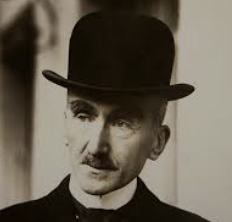
1 week 6 days ago
The present contains nothing more than the past, and what is found in the effect was already in the cause.
▼
Source
source
Creative Evolution (1907), Chapter I, as translated by Arthur Mitchell (1911), p. 14.; italicized in the original.
2 months 2 weeks ago
So many men are deprived of grace. How can one live without grace? One has to try it and do what Christianity never did: be concerned with the damned.
3 days ago
It may seem to be a long way from Blake's innocent talk of love and copulation to De Sade's need to inflict pain. And yet both are the outcome of a sexual mysticism that strives to transcend the everyday world. Simone de Beauvoir said penetratingly of De Sade's work that 'he is trying to communicate an experience whose distinguishing characteristic is, nevertheless its will to remain incommunicable'. De Sade's perversion may have sprung from his dislike of his mother or of other women, but its basis is a kind of distorted religious emotion.
▼
Source
source
p. 90
2 months 5 days ago
What is food to one, is to others bitter poison.
▼
Source
source
Book IV, line 637 (reported in Bartlett's Familiar Quotations) Compare: "What's one man's poison, signor, / Is another's meat or drink", Beaumont and Fletcher, Love's Cure (1647), Act III, scene 2
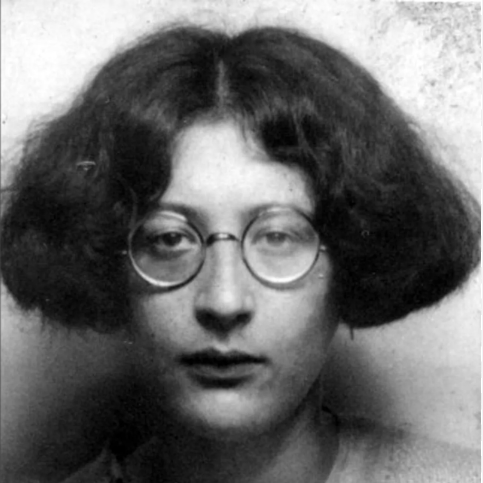
6 days ago
Our patriotism comes straight from the Romans. This is why French children are encouraged to seek inspiration for it in Corneille. It is a pagan virtue, if these two words are compatible. The word pagan, when applied to Rome, early possesses the significance charged with horror which the early Christian controversialists gave it. The Romans really were an atheistic and idolatrous people; not idolatrous with regard to images made of stone or bronze, but idolatrous with regard to themselves. It is this idolatry of self which they have bequeathed to us in the form of patriotism.
▼
Source
source
p. 220, also in The Need for Roots : prelude towards a declaration of duties towards mankind
1 month 4 weeks ago
Arts and sciences are not cast in a mould, but are formed and perfected by degrees, by often handling and polishing, as bears leisurely lick their cubs into form.
▼
Source
source
Book II, Ch. 12. Apology for Raimond Sebond

3 weeks ago
It is an advantage to all narrow wisdom and narrow morals that their maxims have a plausible air; and, on a cursory view, appear equal to first principles. They are light and portable. They are as current as copper coin; and about as valuable. They serve equally the first capacities and the lowest; and they are, at least, as useful to the worst men as to the best. Of this stamp is the cant of not man, but measures; a sort of charm by which many people get loose from every honourable engagement.
3 days ago
Behind man lies the abyss, nothingness; the Outsider knows this; it is his business to sink claws of iron into life to grasp it tighter than the indifferent bourgeois, to build, to Will, in spite of the abyss.
▼
Source
source
Chapter Seven, The Great Synthesis…
1 week 5 days ago
The three qualities of space and time reciprocally affect and qualify one another in experience. Space is inane save as occupied with active volumes. Pauses are holes when they do not accentuate masses and define figures as individuals. Extension sprawls and finally benumbs if it does not interact with place so as to assume intelligible distribution. Mass is nothing fixed. It contracts and expands, asserts and yields, according to its relations to other spatial and enduring things.... these are then the common properties of the matter of arts because there are general conditions without which an experience is not possible. As we saw earlier, the basic condition is felt relationship between doing and undergoing as the organism and environment interact.
▼
Source
source
pp. 220-21

2 months 1 week ago
I am a Roman citizen.
▼
Source
source
Against Verres [In Verrem], part 2, book 5, section 57; reported in Cicero, The Verrine Orations, trans. L. H. G. Greenwood (1935), vol. 2, p. 629
1 week 6 days ago
O ye of little faith, why reason ye among yourselves, because ye have brought no bread? Do ye not yet understand, neither remember the five loaves of the five thousand, and how many baskets ye took up? Neither the seven loaves of the four thousand, and how many baskets ye took up? How is it that ye do not understand that I spake it not to you concerning bread, that ye should beware of the leaven of the Pharisees and of the Sadducees?
▼
Source
source
16:8-11 (KJV)
1 month 3 weeks ago
All human knowledge begins with intuitions, proceeds from thence to concepts, and ends with ideas.
▼
Source
source
B 730; Variant translation: All our knowledge begins with the senses, proceeds then to the understanding, and ends with reason. There is nothing higher than reason.
1 month 3 weeks ago
Every parting gives a foretaste of death; every coming together again a foretaste of the resurrection.
▼
Source
source
"Psychological Observations"
3 days ago
Every daring attempt to make a great change in existing conditions, every lofty vision of new possibilities for the human race, has been labelled Utopian.
▼
Source
source
"Socialism: Caught in the Political Trap", a lecture (c. 1912), published in Red Emma Speaks, Part 1 (1972) edited by Alix Kates Shulman

1 month 2 weeks ago
Philosophy hasn't made any progress?-If someone scratches where it itches, do we have to see progress? Is it not genuine scratching otherwise, or genuine itching?
▼
Source
source
p. 98e
1 month 2 weeks ago
All is riddle, and the key to a riddle is another riddle.
▼
Source
source
Illusions
2 weeks 2 days ago
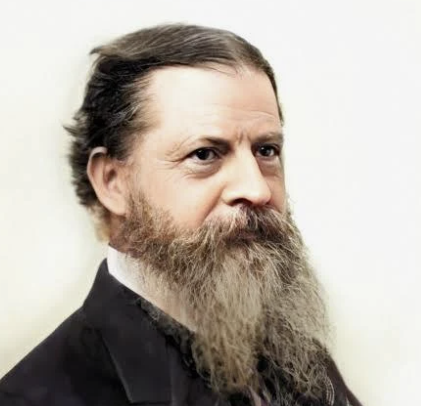
The old dualistic notion of mind and matter, so prominent in Cartesianism, as two radically different kinds of substance, will hardly find defenders to-day. Rejecting this, we are driven to some form of hylopathy, otherwise called monism.
1 week ago
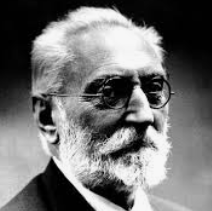
The real sin - perhaps it is a sin against the Holy Ghost for which there is no remission - is the sin of heresy, the sin of thinking for oneself. The saying has been heard before now, here in Spain, that to be a liberal - that is, a heretic - is worse than being an assassin, a thief, or an adulterer. The gravest sin is not to obey the Church, whose infallibility protects us from reason.
1 week 6 days ago
Get thee hence, Satan: for it is written, Thou shalt worship the Lord thy God, and him only shalt thou serve.
▼
Source
source
4:10 (KJV) Said to Satan.

1 month 3 weeks ago
Prejudice is an opinion without judgement.
▼
Source
source
"Prejudices", 1764
3 weeks 4 days ago
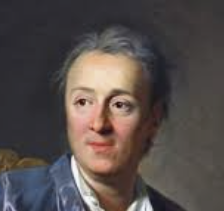
There is no good father who would want to resemble our Heavenly Father.
▼
Source
source
No. 51

2 weeks 2 days ago
No one should try to live if he has not completed his training as a victim.
1 month 3 weeks ago
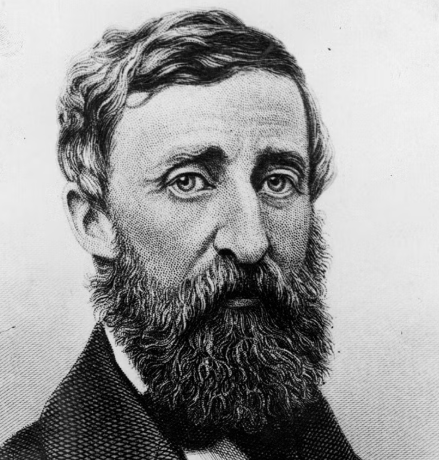
That virtue we appreciate is as much ours as another's. We see so much only as we possess.
▼
Source
source
June 22, 1839
1 month 3 weeks ago
The soldier is applauded who refuses to serve in an unjust war by those who do not refuse to sustain the unjust government which makes the war; is applauded by those whose own act and authority he disregards and sets at naught; as if the state were penitent to that degree that it hired one to scourge it while it sinned, but not to that degree that it left off sinning for a moment.
1 month 2 weeks ago
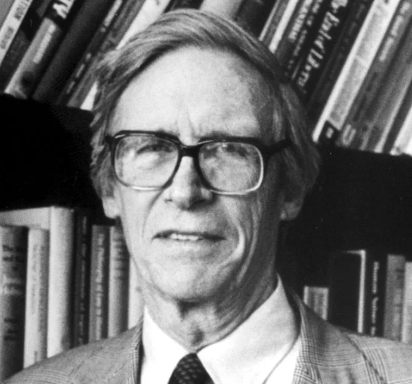
Essentially the fault lies in the fact that the democratic political process is at best regulated rivalry; it does not even in theory have the desirable properties that price theory ascribes to truly competitive markets.
▼
Source
source
Chapter IV, Section 36, p. 226

1 week 6 days ago
Freed from the sublimated form which was the very token of its irreconcilable dreams-a form which is the style, the language in which the story is told-sexuality turns into a vehicle for the bestsellers of oppression. ... This society turns everything it touches into a potential source of progress and of exploitation, of drudgery and satisfaction, of freedom and of oppression. Sexuality is no exception.
▼
Source
source
pp. 77-78
2 weeks 3 days ago
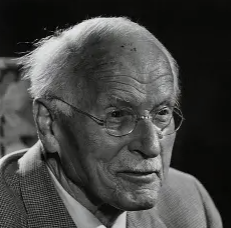
Without consciousness there would, practically speaking, be no world, for the world exists as such only in so far as it is consciously reflected and considered by a psyche. Consciousness is a precondition of being.
▼
Source
source
p 48
2 weeks 4 days ago
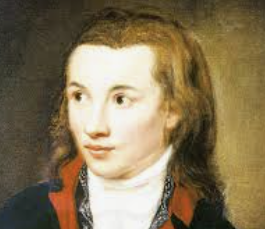
Nothing is more indispensable to true religiosity than a mediator that links us with divinity.
▼
Source
source
Fragment No. 74
1 month 4 weeks ago
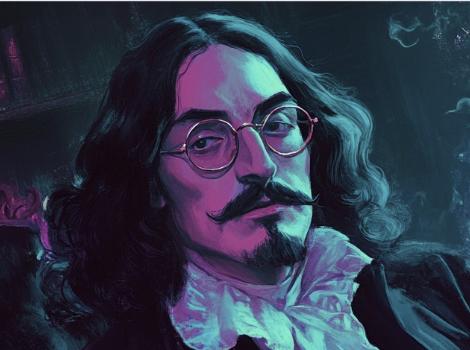
Thus, all unknown quantities can be expressed in terms of a single quantity, whenever the problem can be constructed by means of circles and straight lines, or by conic sections, or even by some other curve of degree not greater than the third or fourth.But I shall not stop to explain this in more detail, because I should deprive you of the pleasure of mastering it yourself, as well as of the advantage of training your mind by working over it, which is in my opinion the principal benefit to be derived from this science. Because, I find nothing here so difficult that it cannot be worked out by anyone at all familiar with ordinary geometry and with algebra, who will consider carefully all that is set forth in this treatise.
▼
Source
source
First Book
2 days ago
Just as modern mass production requires the standardization of commodities, so the social process requires standardization of man, and this standardization is called equality.
▼
Source
source
Ch. 2
2 months 2 weeks ago
Blessed are the hearts that can bend; they shall never be broken.
3 days ago
You've got the temperament of a scholar, and you live on your own and write books. You don't have anything to do with civilization. You've been in London a few days and you can't wait to get back home. But how about the people who can't write books -- people there's no outlet for in this civilization? What about your new men who don't know what to do?
▼
Source
source
p. 200
2 weeks 3 days ago
Great and enduring civilizations like those of the Hindus and the Chinese were built upon this foundation and developed from it a discipline of self-knowledge which they brought to a high pitch of refinement both in philosophy and practice.
▼
Source
source
Carl Jung, Modern Man in Search of a Soul. quoted in Hindu Culture, K. Guru Dutt, and quoted in Gewali, Salil (2013). Great Minds on India. New Delhi: Penguin Random House.

3 weeks 6 days ago
If all things are in common among friends, the most precious is Wisdom. What can Juno give which thou canst not receive from Wisdom? What mayest thou admire in Venus which thou mayest not also contemplate in Wisdom? Her beauty is not small, for the lord of all things taketh delight in her. Her I have loved and diligently sought from my youth up.
▼
Source
source
As quoted in Giordano Bruno : His Life and Thought (1950) by Dorothea Waley Singer
3 days ago
I have tried to show how religion, the backbone of civilisation, hardens into a Church that is unacceptable to Outsiders, and the Outsiders - the men who strive to become visionaries - become the Rebels. In our case, the scientific progress that has brought us closer than ever before to conquering the problems of civilisation, has also robbed us of spiritual drive; and the Outsider is doubly a rebel: a rebel against the Established Church , a rebel against the unestablished church of materialism. Yet for all this, he is the real spiritual heir of the prophets, of Jesus and St. Peter, of St. Augustine and Peter Waldo. The purest religion of any age lies in the hands of its spiritual rebels. The twentieth century is no exception.
▼
Source
source
p. 320

1 month 3 weeks ago
We are thus led to a somewhat vague distinction between what we may call "hard" data and "soft" data. This distinction is a matter of degree, and must not be pressed; but if not taken too seriously it may help to make the situation clear. I mean by "hard" data those which resist the solvent influence of critical reflection, and by " soft " data those which, under the operation of this process, become to our minds more or less doubtful.
▼
Source
source
p. 70

2 months 2 weeks ago
Probably, the most-often-repeated lesson in history is that foreigners who are called in to help one side in a civil war take over for themselves. It is a lesson that seems never to be learned despite endless repetition.
1 month 2 weeks ago
What a monument of human smallness is this idea of the philosopher king. What a contrast between it and the simplicity of humaneness of Socrates, who warned the statesmen against the danger of being dazzled by his own power, excellence, and wisdom, and who tried to teach him what matters most - that we are all frail human beings. What a decline from this world of irony and reason and truthfulness down to Plato's kingdom of the sage whose magical powers raise him high above ordinary men; although not quite high enough to forgo the use of lies, or to neglect the sorry trade of every shaman - the selling of spells, of breeding spells, in exchange for power over his fellow-men.
▼
Source
source
Vol. 1, Ch 8 "The Philosopher King"
1 week 6 days ago
Only the dead have seen the end of war.
▼
Source
source
"Tipperary"
CivilSimian.com created by AxiomaticPanic, CivilSimian, Kalokagathia