


2 months 5 days ago
Thus, in this universal catastrophe, the sufferings of Christians have tended to their moral improvement, because they viewed them with eyes of faith.
▼
Source
source
I, 9

2 days ago
The real issue is not whether two and two make four or whether two and two make five, but whether life advances by men who love words or men who love living.
▼
Source
source
Chapter Nine, Breaking the Circuit
1 month 3 weeks ago
Means at our disposal should be regarded as a bulwark against the many evils and misfortunes that can occur. We should not regard such wealth as a permission or even an obligation to procure for ourselves the pleasures of the world.
▼
Source
source
E. Payne, trans. (1974) Vol. 1, p. 348

2 months 2 weeks ago
Generals are, as a matter of course, allowed to be far more idiotic than ordinary human beings are permitted to be.
2 days ago
It must be borne in mind that it is through the channel of the child that the development of the mature man must go, and that the present ideas of the educating or training of the latter in the school and the family - even the family of the liberal or radical - are such as to stifle the natural growth of the child. Every institution of our day, the family, the State, our moral codes, sees in every strong, beautiful, uncompromising personality a deadly enemy; therefore every effort is being made to cramp human emotion and originality of thought in the individual into a straight-jacket from its earliest infancy; or to shape every human being according to one pattern; not into a well-rounded individuality, but into a patient work slave, professional automaton, tax-paying citizen, or righteous moralist.

1 month 3 weeks ago
Doctors are men who prescribe medicine of which they know little, to human beings of whom they know less, to cure diseases of which they know nothing.
▼
Source
source
Note: This attribution to Voltaire appears in Strauss' Familiar Medical Quotations (1968), p. 394, and in publications as early as 1956

1 month 4 weeks ago
Those who have handled sciences have been either men of experiment or men of dogmas. The men of experiment are like the ant, they only collect and use; the reasoners resemble spiders, who make cobwebs out of their own substance. But the bee takes a middle course: it gathers its material from the flowers of the garden and of the field, but transforms and digests it by a power of its own. Not unlike this is the true business of philosophy; for it neither relies solely or chiefly on the powers of the mind, nor does it take the matter which it gathers from natural history and mechanical experiments and lay it up in the memory whole, as it finds it, but lays it up in the understanding altered and digested. Therefore from a closer and purer league between these two faculties, the experimental and the rational (such as has never yet been made), much may be hoped.
▼
Source
source
Aphorism 95
2 months 2 weeks ago
It is surely better to be wronged than to do wrong.
1 month 2 weeks ago
As for us, my little friend, we entered [the Communist Party] because we were tired of dying of hunger.
▼
Source
source
Act 3, sc. 2

1 month 2 weeks ago
We are born helpless. As soon as we are fully conscious we discover loneliness. We need others physically, emotionally, intellectually; we need them if we are to know anything, even ourselves. Introduction

3 weeks 3 days ago
They call, in fact, for the forfeiture, to a greater or less degree, of human liberty, to the point where, were I to attempt to sum up what socialism is, I would say that it was simply a new system of serfdom.
▼
Source
source
Notes for a Speech on Socialism (1848). http://oll.libertyfund.org/pages/tocqueville-s-critique-of-socialism-1848
2 days ago
An elaborated culture has a density, complexity, and historical-semantic value that is so strong as to make politics possible... Gramsci's insight is to have recognised that subordination, fracturing, diffusion, reproducing, as much as producing, creating, forcing, guiding, are necessary aspects of elaboration.
▼
Source
source
Quoted in Richard Middleton, Studying Popular Music (Philadelphia: Open University Press, 1990, ISBN 0-335-15275-9), p. 248

1 week 5 days ago
Ideas, aspirations, and objectives that, by their content, transcend the established universe of discourse and action are either repelled or reduced to terms of this universe.
▼
Source
source
p. 12

2 weeks 1 day ago
It is difficult, it is impossible to believe that the Good Lord - "Our Father" - had a hand in the scandal of creation. Everything suggests that He took no part in it, that it proceeds from a god without scruples, a feculent god. Goodness does not create, lacking imagination; it takes imagination to put together a world, however botched. At the very least, there must be a mixture of good and evil in order to produce an action or a work.
2 days ago
The dominant, almost general, idea of revolution - particularly the Socialist idea - is that revolution is a violent change of social conditions through which one social class, the working class, becomes dominant over another class, the capitalist class. It is the conception of a purely physical change, and as such it involves only political scene shifting and institutional rearrangements. Bourgeois dictatorship is replaced by the "dictatorship of the proletariat" - or by that of its "advance guard," the Communist Party. Lenin takes the seat of the Romanovs, the Imperial Cabinet is rechristened Soviet of People's Commissars, Trotsky is appointed Minister of War, and a labourer becomes the Military Governor General of Moscow. That is, in essence, the Bolshevik conception of revolution, as translated into actual practice.
1 month 3 weeks ago
Every time a man is begotten and born, the clock of human life is wound up anew to repeat once more its same old tune that has already been played innumerable times, movement by movement and measure by measure, with insignificant variations.
▼
Source
source
Vol. I, Ch. 4, The World As Will: Second Aspect, as translated by Eric F. J. Payne (1958) p. 322
1 month 3 weeks ago
An evil may be real, tho' its cause has no relation to us: It may be real, without being peculiar: It may be real, without shewing itself to others: It may be real, without being constant: And it may be real, without falling under the general rules. Such evils as these will not fail to render us miserable, tho' they have little tendency to diminish pride: And perhaps the most real and the most solid evils of life will be found of this nature.
▼
Source
source
Part 1, Section 6

1 month 3 weeks ago
As these people are not convicted of forfeiting freedom, they have still a natural, perfect right to it; and the Governments whenever they come should, in justice set them free, and punish those who hold them in slavery.
1 month 2 weeks ago
Freedom is the greatest of political goods. I do not say freedom is the greatest of all goods: the best things come from within-they are such things as creative art, and love, and thought. Such things can be helped or hindered by political conditions, but not actually produced by them; and freedom is, both in itself and in its relation to these other goods the best thing that political and economic conditions can secure.
▼
Source
source
Ch. V: Government and Law, p. 75

1 month 2 weeks ago
A text is not a text unless it hides from the first comer, from the first glance, the law of its composition and the rules of its game. A text remains, moreover, forever imperceptible. Its law and its rules are not, however, harbored in the inaccessibility of a secret; it is simply that they can never be booked, in the present, into anything that could rigorously be called a perception.
▼
Source
source
Plato's Pharmacy, intro
3 weeks 3 days ago
In cities men cannot be prevented from concerting together, and from awakening a mutual excitement which prompts sudden and passionate resolutions. Cities may be looked upon as large assemblies, of which all the inhabitants are members; their populace exercises a prodigious influence upon the magistrates, and frequently executes its own wishes without their intervention. Variant translation: In towns it is impossible to prevent men from assembling, getting excited together and forming sudden passionate resolves. Towns are like great meeting houses with all the inhabitants as members. In them the people wield immense influence over their magistrates and often carry their desires into execution without intermediaries.
▼
Source
source
Chapter XVII.
1 month 1 week ago
The idealist tradition, including contemporary phenomenology, has of course admitted subjective points of view as basic and has gone to the opposite length of denying an irreducible objective reality. ... I find the idealist solution unacceptable ...: objective reality cannot be analyzed or shut out of existence any more than subjective reality can. Even if not everything is something from no point of view, some things are.The deep source of both idealism and its objectifying opposite is the same: a conviction that a single world cannot contain both irreducible points of view and irreducible objective reality - that one of them must be what there really is and the other somehow reducible or dependent on it. This is a very powerful idea. To deny it is in a sense to deny that there is a single world.
▼
Source
source
"Subjective and Objective" (1979), p. 212.
2 weeks 5 days ago
Ethical ideas and sentiments have to be considered as parts of the phenomena of life at large. We have to deal with man as a product of evolution, with society as a product of evolution, and with moral phenomena as products of evolution.
▼
Source
source
Ch. 1, Introductory
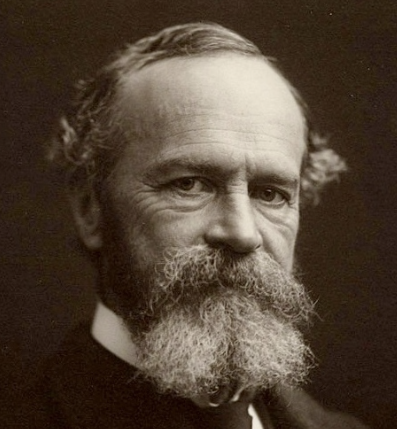
1 month 2 weeks ago
Most of what happens actually is forgotten.
▼
Source
source
Ch. 16

1 month 2 weeks ago
A religious symbol does not rest on any opinion. And error belongs only with opinion. One would like to say: This is what took place here; laugh, if you can.
▼
Source
source
Ch. 7 : Remarks on Frazer's Golden Bough, p. 123
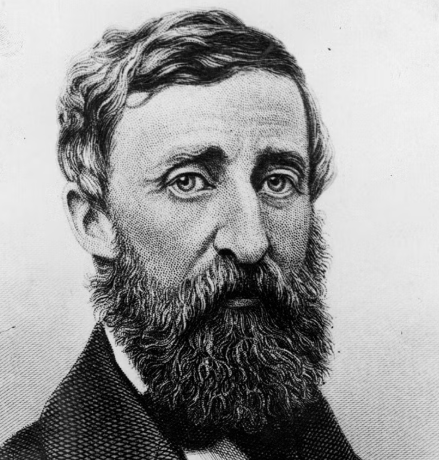
1 month 2 weeks ago
Most men would feel insulted, if it were proposed to employ them in throwing stones over a wall, and then in throwing them back, merely that they might earn their wages. But many are no more worthily employed now.
▼
Source
source
p. 485
1 month 3 weeks ago
The world neither ever saw, nor ever will see, a perfectly fair lottery.
▼
Source
source
Chapter X, Part I.
3 weeks 3 days ago
How old the world is! I walk between two eternities... What is my fleeting existence in comparison with that decaying rock, that valley digging its channel ever deeper, that forest that is tottering and those great masses above my head about to fall? I see the marble of tombs crumbling into dust; and yet I don't want to die!
▼
Source
source
Salon of 1767 (1798), Oeuvres esthétiques
2 weeks 6 days ago
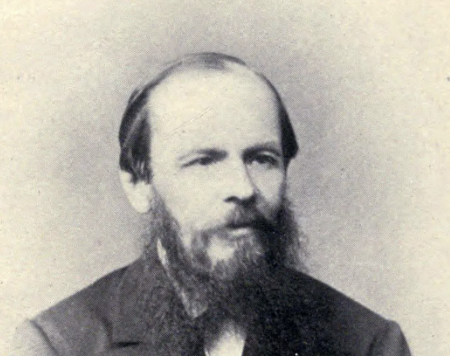
There is no sin, and there can be no sin on all the earth, which the Lord will not forgive to the truly repentant! Man cannot commit a sin so great as to exhaust the infinite love of God. Can there be a sin which could exceed the love of God?
▼
Source
source
Book II, ch. 3 (trans. Constance Garnett) The Elder Zossima, speaking to a devout widow afraid of death
1 month 2 weeks ago
The facts of science, as they appeared to him [Heraclitus], fed the flame in his soul, and in its light, he saw into the depths of the world.
▼
Source
source
Ch. 1: Mysticism and Logic
2 months 4 days ago
Why, what is weeping and sighing? A judgement. What is misfortune? A judgement. What are strife, disagreement, fault-finding, accusing, impiety, foolishness? They are all judgements.
▼
Source
source
Book III, ch. 3, 18, 19.
1 month 2 weeks ago
I speak for the slave when I say that I prefer the philanthropy of Captain Brown to that philanthropy which neither shoots me nor liberates me.
1 month 1 week ago
Now, that we do not really know of what sort each thing is, or is not, has often been shown.
1 month 3 weeks ago
No more useful inquiry can be proposed than that which seeks to determine the nature and the scope of human knowledge. ... This investigation should be undertaken once at least in his life by anyone who has the slightest regard for truth, since in pursuing it the true instruments of knowledge and the whole method of inquiry come to light. But nothing seems to me more futile than the conduct of those who boldly dispute about the secrets of nature ... without yet having ever asked even whether human reason is adequate to the solution of these problems.
▼
Source
source
Rules for the Direction of the Mind in Key Philosophical Writings (1997), pp. 29-30
1 month 3 weeks ago
The virtue of frugality lies in a middle between avarice and profusion, of which the one consists in an excess, the other in a defect of the proper attention to the objects of self-interest.
▼
Source
source
Section II, Chap. I.
1 week 3 days ago
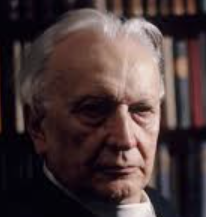
"There is no God," cry the masses more and more vociferously; and with the loss of God man loses his sense of values - is, as it were, massacred because he feels himself of no account.

1 month 3 weeks ago
A good marriage would be between a blind wife and a deaf husband.
▼
Source
source
Book III, Ch. 5
1 month 2 weeks ago
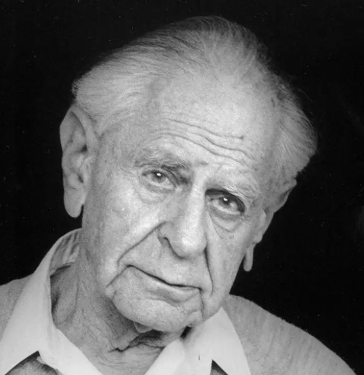
It seems to me that I may be living too long. Indeed: my nearest relations have all died, and so have some of my best friends, and even some of my best pupils. However, I do not have a reason to complain. I am grateful and happy to be alive, and still be able to continue with my work, if only just. My work seems to me more important than ever.
▼
Source
source
As quoted in "At 90, and Still Dynamic : Revisiting Sir Karl Popper and Attending His Birthday Party" by Eugene Yue-Ching Ho, in Intellectus 23
1 month 2 weeks ago
The past alone is truly real: the present is but a painful, struggling birth into the immutable being of what is no longer. Only the dead exist fully. The lives of the living are fragmentary, doubtful, and subject to change; but the lives of the dead are complete, free from the sway of Time, the all but omnipotent lord of the world. Their failures and successes, their hopes and fears, their joys and pains, have become eternal-our efforts cannot now abate one jot of them. Sorrows long buried in the grave, tragedies of which only a fading memory remains, loves immortalized by Death's hallowing touch these have a power, a magic, an untroubled calm, to which no present can attain. ...On the banks of the river of Time, the sad procession of human generations is marching slowly to the grave; in the quiet country of the Past, the march is ended, the tired wanderers rest, and the weeping is hushed.
▼
Source
source
On History, 1904
1 week 3 days ago
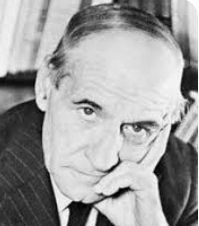
I have never said that human society ought to be aristocratic, but a great deal more than that. What I have said, and still believe with ever-increasing conviction, is that human society is always, whether it will or no, aristocratic by its very essence, to the extreme that it is a society in the measure that it is aristocratic, and ceases to be such when it ceases to be aristocratic. Of course I am speaking now of society and not of the State.
▼
Source
source
Chap.II: The Rise Of The Historic Level
1 month 2 weeks ago
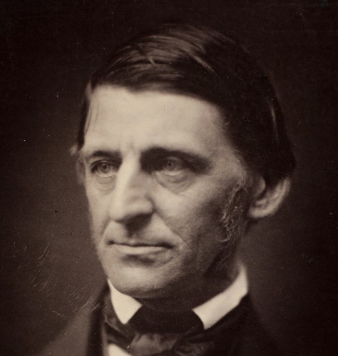
The silent organ loudest chants The master's requiem.
▼
Source
source
Dirge, st. 13
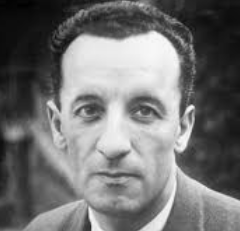
1 week 3 days ago
Thinking which displaces, or otherwise defines, the sacred has been called atheistic, and that philosophy which does not place it here or there, like a thing, but at the joining of things and words, will always be exposed to this reproach without ever being touched by it.
▼
Source
source
p. 46
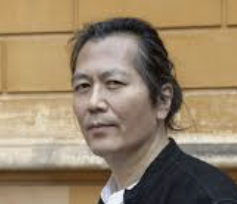
2 days ago
Violence may capture space, but it does not create space.
2 days ago
Time begins to emit a scent when it gains duration; when it is given a narrative or deep tension; when it gains depth and breadth, even space.
2 days ago
Emptiness simply prevents what is individual from insisting on itself.
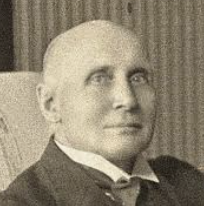
4 days ago
A man really writes for an audience of about ten persons. Of course if others like it, that is clear gain. But if those ten are satisfied, he is content.
▼
Source
source
p. 66
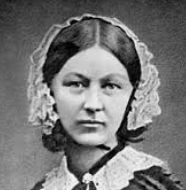
1 day ago
That man and woman have an equality of duties and rights is accepted by woman even less than by man. Behind his destiny woman must annihilate herself, must be only his complement. A woman dedicates herself to the vocation of her husband; she fills up and performs the subordinate parts in it. But if she has any destiny, any vocation of her own, she must renounce it, in nine cases out of ten.
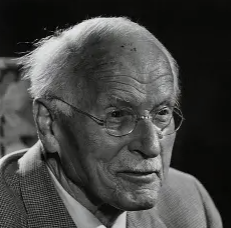
2 weeks 2 days ago
No psychic value can disappear without being replaced by another of equivalent intensity.
▼
Source
source
p. 209

2 months 2 weeks ago
Fate is not in man but around him.
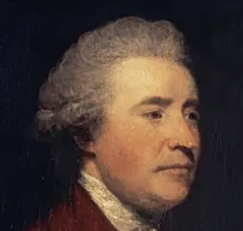
2 weeks 6 days ago
A trade begun with savage war, prosecuted with unheard of cruelty, continued during the mid passage with the most loathsome imprisonment, and ending in perpetual exile and unremitting slavery, was a trade so horrid in all its circumstances, that it was impossible a single argument could be adduced in its favour. On the score of prudence nothing could be said in defence of it, nor could it be justified by necessity, and no case of inhumanity could be justified, but upon necessity; but no such necessity could be made out strong enough to bear out such a traffick. It was the duty of that House, therefore, to put an end to it. If it were said, that the interest of individuals required that it should continue, that argument ought not to be listened to.
▼
Source
source
Speech in the House of Commons against the slave trade (12 May 1789), quoted in The Parliamentary History of England, From the Earliest Period to the Year 1803, Vol. XXVIII (1816), columns 68-69
CivilSimian.com created by AxiomaticPanic, CivilSimian, Kalokagathia