
5 months 1 week ago
Progressive Jewish feminists must find ways to express solidarity with their Palestinian sisters, whose families have been cruelly divested of their land and their rights by the state of Israel, and, in turn, all of us who are active in the women's movement must look on anti-Semitism as a priority in our work. Black women in particular must reveal the strong ties between racism and anti-Semitism. (1988)
5 months 1 week ago
The color line about which Du Bois spoke is not nearly as clear as it was at the time. Racialization processes are now far more complicated. Class is an important category to consider as it intersects with race and gender. The prominence of Black middle classes today combined with the putative eradication of racism within the legal sphere means that we have to think in a much more complicated way about the structures of racism and how they continue to inform US society. We need to develop an analysis that incorporates gender and class and sexuality, as well.
5 months 1 week ago
There are many versions of nationalism. And I've always preferred to identify with the pan-Africanism of W. E. B. Du Bois, who argued that Black people, say Black people in the new world, do have a special responsibility to Africa and other parts of the world, Asia...not by virtue of any biological connection, not by virtue of any racial link, but by virtue of a political identification that is forged. So that it is not about Africa because Africa happens to be populated by Black people. It is about Africa because Africa has been the target of colonialism and imperialism. And what I also like about Du Bois's pan-Africanism is that it is open to notions of Afro-Asian struggles as well, and this is something, I think, that has been concealed in the conventional tellings of history at many historical gatherings that were designated as Afro-Asian solidarity. So I prefer to think about the kind of political approach that is open, that is not racially defined but that is poised against racism.
5 months 1 week ago
In the way we think about past movements, I encourage people to look beyond heroic male figures. While Martin Luther King is someone I revere, I don't like to allow his representation to erase the contributions of ordinary people. The 1955 Montgomery bus boycott was successful because Black women, domestic workers, refused to ride the bus. Had they not, where would we be today?
5 months 1 week ago
What the civil rights movement did, it seems to me, was to create a new terrain for asking new questions and moving in new directions. It's not a betrayal that people like Colin Powell and Condoleeza Rice and the Black conservatives who are the heart of government are where they are. As a matter of fact, the civil rights movement demanded access, right? But I don't think that we can assume that what was done in the 1950s and 1960s is going to do the work of the 1980s and 1990s.
5 months 1 week ago
Past struggles cannot correct current injustices.
5 months 1 week ago
So many things were changing in our world. We looked, and we searched in revolutionary literature. Maybe we found a few pieces, but there really wasn't much because the world had never really dealt with this. We did take as heroines of our struggle Lolita Lebrón and Blanca Canales because they had been in the Nationalist Party struggle in Puerto Rico. We looked to women like Angela Davis. There were two women in the Panther 21 case at the time, Afeni Shakur and Joan Bird, who had been arrested with the brothers. We were proud that women were going on posters. That was real important because this was new. The face of the civil rights movement had been male.
▼
Source
source
Denise Oliver-Velez in Through the Eyes of Rebel Women: The Young Lords 1969-1976 (2016)
5 months 1 week ago
The notion of a prison industrial complex insists on understandings of the punishment process that take into account economic and political structures and ideologies, rather than focusing myopically on the individual criminal conduct and efforts to "curb crime."
▼
Source
source
Chapter Five
5 months 1 week ago
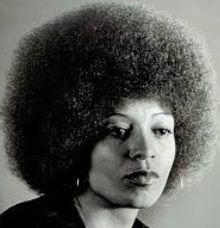
It is both humiliating and humbling to discover that a single generation after the events that constructed me as a public personality, I am remembered as a hairdo.
▼
Source
source
"Afro Images: Politics, Fashion, and Nostalgia" Critical Inquiry. Vol. 21, No. 1 (Autumn, 1994), pp. 37-39, 41-43 and 45.
5 months 1 week ago
In the heat of our pursuit for fundamental human rights, Black people have been continually cautioned to be patient. We are advised that as long as we remain faithful to the existing democratic order, the glorious moment will eventually arrive when we will come into our own as full-fledged human beings.
5 months 1 week ago
Needless to say, the history of the United States has been marred from its inception by an enormous quantity of unjust laws, far too many expressly bolstering the oppression of Black people. Particularized reflections of existing social inequities, these laws have repeatedly borne witness to the exploitative and racist core of the society itself. For Blacks, Chicanos, for all nationally oppressed people, the problem of opposing unjust laws and the social conditions which nourish their growth, has always had immediate practical implications. Our very survival has frequently been a direct function of our skill in forging effective channels of resistance. In resisting, we have sometimes been compelled to openly violate those laws which directly or indirectly buttress our oppression. But even when containing our resistance within the orbit of legality, we have been labeled criminals and have been methodically persecuted by a racist legal apparatus.
5 months 1 week ago
The political prisoner’s words or deeds have in one form or another embodied political protests against the established order and have consequently brought him into acute conflict with the state. In light of the political content of his act, the “crime” (which may or may not have been committed) assumes a minor importance. In this country, however, where the special category of political prisoners is not officially acknowledged, the political prisoner inevitably stands trial for a specific criminal offense, not for a political act.
5 months 1 week ago
Nat Turner and John Brown were political prisoners in their time. The acts for which they were charged and subsequently hanged, were the practical extensions of their profound commitment to the abolition of slavery.
5 months 1 week ago
Racist oppression invades the lives of Black people on an infinite variety of levels. Blacks are imprisoned in a world where our labor and toil hardly allow us to eke out a decent existence, if we are able to find jobs at all. When the economy begins to falter, we are forever the first victims, always the most deeply wounded. When the economy is on its feet, we continue to live in a depressed state. Unemployment is generally twice as high in the ghettos as it is in the country as a whole and even higher among Black women and youth. The unemployment rate among Black youth has presently skyrocketed to 30 per cent. If one-third of America’s white youth were without a means of livelihood, we would either be in the thick of revolution or else under the iron rule of fascism. Substandard schools, medical care hardly fit for animals, overpriced, dilapidated housing, a welfare system based on a policy of skimpy concessions, designed to degrade and divide (and even this may soon be cancelled)—this is only the beginning of the list of props in the overall scenery of oppression which, for the mass of Blacks, is the universe.
5 months 1 week ago
It goes without saying that the police would be unable to set into motion their racist machinery were they not sanctioned and supported by the judicial system. The courts not only consistently abstain from prosecuting criminal behavior on the part of the police, but they convict, on the basis of biased police testimony, countless Black men and women.
5 months 1 week ago
The vicious circle linking poverty, police, courts and prison is an integral element of ghetto existence.
5 months 1 week ago
The pivotal struggle which must be waged in the ranks of the working class is consequently the open, unreserved battle against entrenched racism. The white worker must become conscious of the threads which bind him to a James Johnson, Black auto worker, member of UAW, and a political prisoner presently facing charges for the killings of two foremen and a job setter. The merciless proliferation of the power of monopoly capital may ultimately push him inexorably down the very same path of desperation. No potential victim of the fascist terror should be without the knowledge that the greatest menace to racism and fascism is unity!
5 months 1 week ago
The eternally repetitive routine, the imposed anonymity and the rigid atomization of numbers and cages are just a few of the dehumanizing, desocializing mechanisms. As for the relationship of prisoners to life outside, it is supposed to be virtually nonexistent. In this respect, the impenetrable concrete, the barbed wire and the armed keepers, ostensibly there to deter escape-bound captives, also suggest something further: prisoners must be guarded from the ingressions of a moving, developing world outside. Disengaged from normal social life, its revelations and influences, they must finally be robbed of their humanity. Yet human beings cannot be willed and molded into nonexistence. In reality the facts of prison life have begun in recent years to bespeak the irrationality of its goals. Even the most drastic repressive measures have not obstructed the progressive ascent of captive men and women to new heights of social consciousness. This has been especially intense among Black and Brown prisoners
▼
Source
source
Chapter 2, "Lessons: From Attica to Soledad"
5 months 1 week ago
Jails and prisons are designed to break human beings, to convert the population into specimens in a zoo - obedient to our keepers, but dangerous to each other. In response, imprisoned men and women will invent and continually invoke various and sundry defenses. Consequently, two layers of existence can be encountered within almost every jail or prison. The first layer consists of the routines and behavior prescribed by the governing penal hierarchy. The second layer is the prisoner culture itself: the rules and standards of behavior that come from and are defined by the captives in order to shield themselves from the open or covert terror designed to break their spirits.
▼
Source
source
Chapter One, p. 53.
5 months 1 week ago
Birth control - individual choice, safe contraceptive methods, as well as abortions when necessary - is a fundamental prerequisite for the emancipation of women.
▼
Source
source
Chapter 12, "Racism, Birth Control and Reproductive Rights"
5 months 1 week ago
“Woman” was the test, but not every woman seemed to qualify. Black women, of course, were virtually invisible within the protracted campaign for woman suffrage. As for white working-class women, the suffrage leaders were probably impressed at first by the organizing efforts and militancy of their working-class sisters. But as it turned out, the working women themselves did not enthusiastically embrace the cause of woman suffrage.
5 months 1 week ago
We believe that the most pressing political necessity is the consolidation of a United Front joining together all sections of the revolutionary, radical and democratic movements. Only a united front—led in the first place by the national liberation movements and the working people—can decisively counter, theoretically, ideologically and practically, the increasingly fascistic and genocidal posture of the present ruling clique
5 months 1 week ago
Repression is the response of an increasingly desperate imperialist ruling clique to contain an otherwise uncontrollable and growing popular disaffection leading ultimately, we think, to the revolutionary transformation of society.
5 months 1 week ago
Where cultural representations do not reach out beyond themselves, there is the danger that they will function as the surrogates for activism, that they will constitute both the beginning and the end of political practice.
▼
Source
source
"Black Nationalism: The Sixties and the Nineties." Black Popular Culture, ed. Gina Dent (Seattle, Wash: Bay Press, 1992), 324.
5 months 1 week ago
Progressive art can assist people to learn not only about the objective forces at work in the society in which they live, but also about the intensely social character of their interior lives. Ultimately, it can propel people toward social emancipation.
▼
Source
source
"For a People's Culture." Political Affairs, March 1995.
5 months 1 week ago
Prisons do not disappear problems, they disappear human beings. And the practice of disappearing vast numbers of people from poor, immigrant and racially marginalized communities has literally become big business.
▼
Source
source
"Masked Racism" (1998)
5 months 1 week ago
The challenge of the twenty-first century is not to demand equal opportunity to participate in the machinery of oppression. Rather, it is to identify and dismantle those structures in which racism continues to be embedded. This is the only way the promise of freedom can be extended to masses of people.
▼
Source
source
From Abolition Democracy: Beyond Empire, Prisons, and Torture (2005), p. 29.
5 months 1 week ago
The reason I am a communist is because I believe in a total revolution which is going to overthrow the capitalist control of the economy, which will seize the wealth from all of the giant corporations that exploit and control the lives of all working people.
▼
Source
source
From an [https://www.facebook.com/Redfishstream/videos/184844339473961/ interview].
5 months 1 week ago
When you talk about a revolution, most people think violence; without realizing that the real content of any kind of revolutionary thrust lies in the principles and the goals that you're striving for - not in the way that you reach them. On the other hand, because of the way this society is organized; because of the violence that exists on the surface everywhere - you'd have to expect that there are going to be such explosions. You have to expect things like that as reactions.
▼
Source
source
From [https://www.imdb.com/title/tt1592527/characters/nm0204171 The Black Power Mixtape 1967-1975].
5 months 1 week ago
From her involvement with the Student Nonviolent Coorditing Committee during the 1960s to her current leadership of the Institute for Multi-Racial Justice, Elizabeth (Betita) Martinez' work comprises one of the most important living histories of progressive activism in the contemporary era. Furthermore, her writings recording countless struggles for social justice-some won, some lost, some still raging with varying degrees of intensity, and many having international implications-offer us an invaluable reader in the rich history of radical activism in the Americas...Martínez' words are always powerful, never mournful as she addresses the role of U.S. people of color in forging the past, present and future of leftist activism... Her voice is of wisdom gained through a wide range of experiences across a broad spectrum of social movements...Her approach is no-nonsense, yet it reflects the sharp sense of humor that so effectively keeps the weightiness of her subjects from overwhelming...Betita Martinez' life and work stand as a living monument to the possibilities for success that reside in our collective knowledge, commitment, persistence and plain old hard work.
▼
Source
source
Forward to De Colores Means All of Us (2017)
5 months 1 week ago
Palestine is a moral litmus test for the world
▼
Source
source
[https://www.aljazeera.com/program/upfront/2023/10/27/angela-davis-palestine-is-a-moral-litmus-test-for-the-world Angela Davis: 'Palestine is a moral litmus test for the world'] (27 Oct 2023)
5 months 1 week ago
I am a Communist because I am convinced that the reason we have been forcefully compelled to eke out an existence at the very lowest level of American society has to do with the nature of capitalism. If we are going to rise out of our oppression, our poverty, if we are going to cease being the targets of the racist-minded mentality of racist policemen, we will have to destroy the American capitalist system. We will have to obliterate a system in which a few wealthy capitalists are guaranteed the privilege of becoming richer and richer, whereas the people who are forced to work for the rich, and especially Black people, never take any significant step forward.
▼
Source
source
p. 483
5 months 1 week ago
My decision to join the Communist party emanated from my belief that the only true path of liberation for black people is the one that leads toward a complete and total overthrow of the capitalist class in this country and all its manifold institutional appendages which insure its ability to exploit the masses and enslave black people.
▼
Source
source
p. 483
5 months 1 week ago
The American judicial system is bankrupt. In so far as black people are concerned, it has proven itself to be one more arm of a system carrying out the systematic oppression of our people. We are the victims, not the recipients of justice.
▼
Source
source
p. 484
5 months 1 week ago
Political repression in the United States has reached monstrous proportions. Black and Brown peoples especially, victims of the most vicious and calculated forms of class, national and racial oppression, bear the brunt of this repression. Literally tens of thousands of innocent men and women, the overwhelming majority of them poor, fill the jails and prisons; hundreds of thousands more, including the most presumably respectable groups and individuals, are subject to police, FBI and military intelligence surveillance. The Nixon administration most recently responded to the massive protests against the war in Indochina by arresting more than 13,000 people and placing them in stadiums converted into detention centers.
5 months 1 week ago
It was assumed within birth control circles that poor women, Black and immigrant alike, had a 'moral obligation to restrict the size of their families.' What was demanded as a 'right' for the privileged came to be interpreted as a 'duty' for the poor.
▼
Source
source
Page 210 of 2011 edition of the book.
5 months 1 week ago
If Black people had simply accepted a status of economic and political inferiority, the mob murders would probably have subsided. But because vast numbers of ex-slaves refused to discard their dreams of progress, more than ten thousand lynchings occurred during the three decades following the war.
5 months 1 week ago
The colonization of the Southern economy by capitalists from the North gave lynching its most vigorous impulse. If Black people, by means of terror and violence, could remain the most brutally exploited group within the swelling ranks of the working class, the capitalists could enjoy a double advantage. Extra profits would result from the superexploitation of Black labor, and white workers’ hostilities toward their employers would be defused. White workers who assented to lynching necessarily assumed a posture of racial solidarity with the white men who were really their oppressors. This was a critical moment in the popularization of racist ideology.
5 months 1 week ago
The most immediate question today is how to prevent as many imprisoned women and men as possible back into what prisoners call "the free world." How can we move to decriminalize drug use and the trade in sexual services? How can we take seriously strategies of restorative rather than elusively punitive justice? Effective alternatives involve both transformation of the techniques for addressing "crime" and of the social and economic conditions that track so many children from poor communities, and especially communities of color, into the juvenile system and then on to prison. The most difficult and urgent challenge today is that of creatively exploring the new terrain of justice, where the prison no longer serves as our major anchor.
▼
Source
source
Chapter One
5 months 1 week ago
The prison therefore functions ideologically as an abstract site into which undesirables are deposited, relieving us of the responsibility of thinking about the real issues afflicting those communities from which prisoners are drawn in such disproportionate numbers. This is the ideological work that the prison performs—it relieves us of the responsibility of seriously engaging with the problems of our society, especially those produced by racism and, increasingly, global capitalism.
▼
Source
source
Chapter One
5 months 1 week ago
The prison has become a black hole inti which the detritus of contemporary capitalism is deposited. Mass imprisonment generates profits as it devours social wealth, and thus it tends to reproduce the very conditions that lead people to prison
▼
Source
source
Chapter One
5 months 1 week ago
It should be remembered that the ancestors of many of today's most ardent liberals could not have imagined life without slavery, life without lynching, life without segregation.
▼
Source
source
Chapter Two
5 months 1 week ago
Because we are so accustomed to talking about race in terms of black and white, we often fail to recognize and contest expressions of racism that target people of color who are not black.
▼
Source
source
Chapter Two
5 months 1 week ago
Particularly in the United States, race has always played a central role in constructing presumptions of criminality.
▼
Source
source
Chapter Two
5 months 1 week ago
I am not suggesting that the abolition of slavery and the lease system has produced an era of equality and justice. On the contrary, racism surreptitiously defines social and economic structures in ways that are difficult to identify and thus are much more damaging.
▼
Source
source
Chapter Two
5 months 1 week ago
Although men constitute the vast majority of prisoners in the world, important aspects of the operation of state punishment are missed if it is assumed that women are marginal and thus undeserving of attention.
▼
Source
source
Chapter Four
5 months 1 week ago
While jails and prisons have been dominant institutions for the control of men, mental institutions have served a similar purpose for women. That is, deviant men have been constructed as criminal, while deviant women have been constructed as insane.
▼
Source
source
Chapter Four
5 months 1 week ago
Paradoxically, demands for parity with men's prisons, instead of creating greater educational, vocational, and health opportunities for women prisoners, often have led to more repressive conditions for women. This is not only a consequence of deploying liberal - that is, formalistic - notions of equality, but of, more dangerous, allowing male prisons to function as the punishment norm.
▼
Source
source
Chapter Four
5 months 1 week ago
Although guard-on-prisoner sexual abuse is not sanctioned as such, the widespread leniency with which offending officers are treated suggests that for women, prison is a space in which the threat of sexualized violence that looms in the larger society is effectively sanctioned as a routine aspect of the landscape of punishment behind prison walls.
▼
Source
source
Chapter Four
5 months 1 week ago
The criminalization of black and Latina women includes persisting images of hypersexuality that serve to justify sexual assaults against them both in and outside of prison.
▼
Source
source
Chapter Four
CivilSimian.com created by AxiomaticPanic, CivilSimian, Kalokagathia