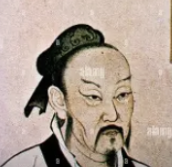
The superior man has three things in which he delights, and to be ruler over the kingdom is not one of them. That his father and mother are both alive, and that the condition of his brothers affords no cause for anxiety;-this is one delight. That, when looking up, he has no occasion for shame before Heaven, and, below, he has no occasion to blush before men;-this is a second delight. That he can get from the whole kingdom the most talented individuals, and teach and nourish them;-this is the third delight.
0
⚖0
▼Source
source
7A:20, as translated by James Legge in The Chinese Classics, Vol. II (1861), p. 335
The sense of mercy is found in all men; the sense of shame is found in all men; the sense of respect is found in all men; the sense of right and wrong is found in all men.
He who outrages benevolence is called a ruffian: he who outrages righteousness is called a villain. I have heard of the cutting off of the villain Chow, but I have not heard of the putting of a ruler to death.
0
⚖0
▼Source
source
1B:8, In relation to righteousness and the overthrow of the tyrannous King Zhou of Shang, as translated by Sir Robert Kennaway Douglas, China (1904), p. 8
Mencius went to see King Huei of Liang. The king said, "Venerable sir, since you have not counted it far to come here, a distance of a thousand li, may I presume that you are provided with counsels to profit my kingdom?" Mencius replied, "Why must your Majesty use that word "profit"? What I am provided with, are counsels to benevolence and righteousness, and these are my only topics.
0
⚖0
▼Source
source
Book 1, part 1, as translated by James Legge in The Life and Works of Mencius (1875), p. 124