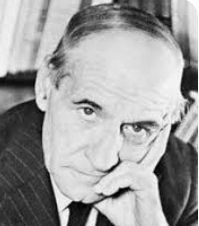
When shall we open our minds to the conviction that the ultimate reality of the world is neither matter nor spirit, is no definite thing, but a perspective?
0
0
I know well that many of my readers do not think as I do. This also is most natural and confirms the theorem. For although my opinion turn out erroneous, there will always remain the fact that many of those dissentient readers have never given five minutes' thought to this complex matter. How are they going to think as I do? But by believing that they have a right to an opinion on the matter without previous effort to work one out for themselves, they prove patently that they belong to that absurd type of human being which I have called the "rebel mass." It is precisely what I mean by having one's soul obliterated, hermetically closed. Here it would be the special case of intellectual hermetism.
0
0
Source
source
Chap. VIII: The Masses Intervene In Everything, And Why Their Intervention Is Solely By Violence
I often asked myself the following question. There is no doubt that at all times for many men one of the greatest tortures of their lives has been the contact, the collision with the folly of their neighbours. And yet how is it that there has never been attempted — I think this is so — a study on this matter, an Essay on Folly? For the pages of Erasmus do not treat of this aspect of the matter.
0
0
Source
source
Chap. VIII: The Masses Intervene In Everything, And Why Their Intervention Is Solely By Violence
It is not a question of the mass-man being a fool. On the contrary, to-day he is more clever, has more capacity of understanding than his fellow of any previous period. But that capacity is of no use to him; in reality, the vague feeling that he possesses it seems only to shut him up more within himself and keep him from using it. Once for all, he accepts the stock of commonplaces, prejudices, fag-ends of ideas or simply empty words which chance has piled up within his mind, and with a boldness only explicable by his ingenuousness, is prepared to impose them everywhere.… Why should he listen if he has within him all that is necessary? There is no reason now for listening, but rather for judging, pronouncing, deciding. There is no question concerning public life, in which he does not intervene, blind and deaf as he is, imposing his "opinions."
0
0
Source
source
Chap. VIII: The Masses Intervene In Everything, And Why Their Intervention Is Solely By Violence
[I]s this not an advantage? Is it not a sign of immense progress that the masses should have "ideas," that is to say, should be cultured? By no means. The "ideas" of the average man are not genuine ideas, nor is their possession culture. An idea is a putting truth in checkmate. Whoever wishes to have ideas must first prepare himself to desire truth and to accept the rules of the game imposed by it. It is no use speaking of ideas when there is no acceptance of a higher authority to regulate them, a series of standards to which it is possible to appeal in a discussion. These standards are the principles on which culture rests.
0
0
Source
source
Chap. VIII: The Masses Intervene In Everything, And Why Their Intervention Is Solely By Violence
When all these things are lacking there is no culture; there is in the strictest sense of the word, barbarism. And let us not deceive ourselves, this is what is beginning to appear in Europe under the progressive rebellion of the masses. The traveller who arrives in a barbarous country knows that in that territory there are no ruling principles to which it is possible to appeal. Properly speaking, there are no barbarian standards. Barbarism is the absence of standards to which appeal can be made.
0
0
Source
source
Chap. VIII: The Masses Intervene In Everything, And Why Their Intervention Is Solely By Violence
Liberalism — it is well to recall this today—is the supreme form of generosity; it is the right which the majority concedes to minorities and hence it is the noblest cry that has ever resounded in this planet. It announces the determination to share existence with the enemy; more than that, with an enemy which is weak. It was incredible that the human species should have arrived at so noble an attitude, so paradoxical, so refined, so acrobatic, so anti-natural. Hence, it is not to be wondered at that this same humanity should soon appear anxious to get rid of it. It is a discipline too difficult and complex to take firm root on earth.
0
0
Source
source
Chap. VIII: The Masses Intervene In Everything, And Why Their Intervention Is Solely By Violence
[L]ife, individual or collective, personal or historic, is the one entity in the universe whose substance is compact of danger, of adventure. It is, in the strict sense of the word, drama. … [T]he primary, radical meaning of life appears when it is employed in the sense not of biology, but of biography. For the very strong reason that the whole of biology is quite definitely only a chapter in certain biographies, it is what biologists do in the portion of their lives open to biography.
0
0
Source
source
Chap.IX: The Primitive and the Technical
[T]he direction of society has been taken over by a type of man who is not interested in the principles of civilisation. Not of this or that civilisation but — from what we can judge to-day — of any civilisation. …[T]he type of man dominant to-day is a primitive one, a Naturmensch rising up in the midst of a civilised world.
0
0
Source
source
Chap.IX: The Primitive and the Technical
Is it not altogether absurd that, under actual circumstances, the average man does not feel spontaneously, and without being preached at, an ardent enthusiasm for those sciences and the related ones of biology?… Every day furnishes a new invention which this average man utilises. Every day produces a new anesthetic or vaccine from which this average man benefits. … How is it, nevertheless, that there is no sign of the masses imposing on themselves any sacrifice of money or attention in order to endow science more worthily? Far from this being the case, the post-war period has converted the man of science into a new social pariah.
0
0
Source
source
Chap.IX: The Primitive and the Technical
The form most contradictory to human life that can appear among the human species is the "self-satisfied man."
0
0
Source
source
Chapter XI: The Self-Satisfied Age
It is not that one ought not to do just what one pleases; it is simply that one cannot do other than what each of us has to do, has to be. The only way out is to refuse to do what has to be done, but this does not set us free to do something else just because it pleases us. In this matter we only possess a negative freedom of will, a noluntas. We can quite well turn away from our true destiny, but only to fall a prisoner in the deeper dungeons of our destiny. … Theoretic truths not only are disputable, but their whole meaning and force lie in their being disputed, they spring from discussion. They live as long as they are discussed, and they are made exclusively for discussion. But destiny — what from a vital point of view one has to be or has not to be — is not discussed, it is either accepted or rejected. If we accept it, we are genuine; if not, we are the negation, the falsification of ourselves. Destiny does not consist in what we feel we should like to do; rather is it recognised in its clear features in the consciousness that we must do what we do not feel like doing.
0
0
Source
source
Chapter XI: The Self-Satisfied Age
The surrealist thinks he has outstripped the whole of literary history when he has written (here a word that there is no need to write) where others have written "jasmines, swans and fauns." But what he has really done has been simply to bring to light another form of rhetoric which hitherto lay hidden in the latrines.
0
0
Source
source
Chapter XI: The Self-Satisfied Age
Diogenes, in his mud-covered sandals, tramps over the carpets of Aristippus. The cynic pullulated at every corner, and in the highest places. This cynic did nothing but saboter the civilisation of the time. He was the nihilist of Hellenism. He created nothing, he made nothing. His role was to undo — or rather to attempt to undo, for he did not succeed in his purpose. The cynic, a parasite of civilisation, lives by denying it, for the very reason that he is convinced that it will not fail. What would become of the cynic among a savage people where everyone, naturally and quite seriously, fulfils what the cynic farcically considers to be his personal role?
0
0
Source
source
Chapter XI: The Self-Satisfied Age
He [the "specialist"] is one who, out of all that has to be known in order to be a man of judgment, is only acquainted with one science, and even of that one only knows the small corner in which he is an active investigator. He even proclaims it as a virtue that he takes no cognisance of what lies outside the narrow territory specially cultivated by himself, and gives the name of "dilettantism" to any curiosity for the general scheme of knowledge.
0
0
Source
source
Chapter XII: The Barbarism Of "Specialisation"
The specialist serves as a striking concrete example of the species, making clear to us the radical nature of the novelty. For, previously, men could be divided simply into the learned and the ignorant, those more or less the one, and those more or less the other. But your specialist cannot be brought in under either of these two categories. He is not learned , for he is formally ignorant of all that does not enter into his speciality; but neither is he ignorant, because he is "a scientist," and "knows" very well his own tiny portion of the universe. We shall have to say that he is a learned ignoramus, which is a very serious matter, as it implies that he is a person who is ignorant, not in the fashion of the ignorant man, but with an the petulance of one who is learned in his own special line.
0
0
Source
source
Chapter XII: The Barbarism Of "Specialisation"
The most immediate result of this unbalanced specialisation has been that to-day, when there are more "scientists" than ever, there are much less "cultured" men than, for example, about 1750. And the worst is that with these turnspits of science not even the real progress of science itself is assured. For science needs from time to time, as a necessary regulator of its own advance, a labour of reconstitution, and, as I have said, this demands an effort towards unification, which grows more and more difficult, involving, as it does, ever-vaster regions of the world of knowledge. Newton was able to found his system of physics without knowing much philosophy, but Einstein needed to saturate himself with Kant and Mach before he could reach his own keen synthesis. Kant and Mach — the names are mere symbols of the enormous mass of philosophic and psychological thought which has influenced Einstein.
0
0
Source
source
Chapter XII: The Barbarism Of "Specialisation"
As one advances in life, one realises more and more that the majority of men — and of women — are incapable of any other effort than that strictly imposed on them as a reaction to external compulsion. And for that reason, the few individuals we have come across who are capable of a spontaneous and joyous effort stand out isolated, monumentalised, so to speak, in our experience. These are the select men, the nobles, the only ones who are active and not merely reactive, for whom life is a perpetual striving, an incessant course of training. Training = askesis. These are the ascetics.
0
0
Source
source
Chap. VII: Noble Life And Common Life, Or Effort And Inertia
The mass-man would never have accepted authority external to himself had not his surroundings violently forced him to do so. As to-day, his surroundings do not so force him, the everlasting mass-man, true to his character, ceases to appeal to other authority and feels himself lord of his own existence. On the contrary the select man, the excellent man is urged, by interior necessity, to appeal from himself to some standard beyond himself, superior to himself, whose service he freely accepts.… Contrary to what is usually thought, it is the man of excellence, and not the common man who lives in essential servitude. Life has no savour for him unless he makes it consist in service to something transcendental. Hence he does not look upon the necessity of serving as an oppression. When, by chance, such necessity is lacking, he grows restless and invents some new standard, more difficult, more exigent, with which to coerce himself. This is life lived as a discipline — the noble life.
0
0
Source
source
Chap. VII: Noble Life And Common Life, Or Effort And Inertia
Hatred is a feeling which leads to the extinction of values.
0
0
Source
source
Cited in the Oxford Dictionary of Quotations by Subject, ed. Susan Ratcliffe (2010), p. 223
It must be emphasized that the warrior spirit is one thing and the military spirit quite another. Militarism was unknown in the Middle Ages. The soldier signifies the degeneration of the warrior, corrupted by the industrialist. The soldier is an armed industrialist, a bourgeois who has invented gunpowder. He was organized by the state to make war on the castles. With his coming, long-distance warfare appeared, the abstract war waged by cannon and machine gun.
0
0
The physical change in the thickness of walls since the Middle Ages could be shown in a diagram. In the fourteenth century each house was a fortress. Man spent the major portion of his day in them, in secret and well-defended solitude. That solitude, working on the soul hour after hour, forged it, like a transcendent blacksmith, into a compact and forceful character. Under its treatment, man consolidated his individual destiny and sallied forth with impunity, never yielding to the contamination from the public. It is only in isolation that we gain, almost automatically, a certain discrimination in ideas, desires, longings, that we learn which are ours, and which are anonymous, floating in the air, falling on us like dust in the street.
0
0
Source
source
p. 168
Now, apparently, many men are again feeling homesick for the herd. They devote themselves passionately to whatever there is left in them of the sheep. They want to march through life together, along the collective path, shoulder to shoulder, wool rubbing wool, and the head down. This is the reason why so many European peoples are looking for a shepherd and a sheep dog.
0
0
Source
source
p. 170
Similarly a work of art vanishes from sight for a beholder who seeks in it nothing but the moving fate of John and Mary or Tristan and Isolde and adjusts his vision to this. Tristan's sorrows are sorrows and can evoke compassion only in so far as they are taken as real. But an object of art is artistic only in so far as it is not real. In order to enjoy Titian's portrait of Charles the Fifth on horseback we must forget that this is Charles the Fifth in person and see instead a portrait — that is, an image, a fiction. The portrayed person and his portrait are two entirely different things; we are interested in either one or the other. In the first case we "live" with Charles the Fifth, in the second we look at an object of art.
0
0
Source
source
"The Dehumanization of Art"
This grave dissociation of past and present is the generic fact of our time and the cause of the suspicion, more or less vague, which gives rise to the confusion characteristic of our present-day existence. We feel that we actual men have suddenly been left alone on the earth; that the dead did not die in appearance only but effectively; that they can no longer help us. Any remains of the traditional spirit have evaporated. Models, norms, standards are no use to us. We have to solve our problems without any active collaboration of the past, in full actuality, be they problems of art, science, or politics. The European stands alone, without any living ghosts by his side; like Peter Schlehmil he has lost his shadow. This is what always happens when midday comes.
0
0
Source
source
"The Dehumanisation of Art"; Ortega y Gasset later used this passage in The Revolt of the Masses (1929), quoting it in Ch. III: The Height Of The Times
Were art to redeem man, it could do so only by saving him from the seriousness of life and restoring him to an unexpected boyishness. The symbol of art is seen again in the magic flute of the Great God Pan which makes the young goats frisk at the edge of the grove. All modern art begins to appear comprehensible and in a way great when it is interpreted as an attempt to instill youthfulness into an ancient world.
0
0
Source
source
"Art a Thing of No Consequence"
The metaphor is perhaps one of man's most fruitful potentialities. Its efficacy verges on magic, and it seems a tool for creation which God forgot inside one of His creatures when He made him. All our other faculties keep us within the realm of the real, of what is already there. The most we can do is to combine things or to break them up. The metaphor alone furnishes an escape; between the real things, it lets emerge imaginary reefs, a crop of floating islands. A strange thing, indeed, the existence in man of this mental activity which substitutes one thing for another — from an urge not so much to get at the first as to get rid of the second.
0
0
Source
source
"Taboo and Metaphor"
Strictly speaking, the mass, as a psychological fact, can be defined without waiting for individuals to appear in mass formation. In the presence of one individual we can decide whether he is "mass" or not. The mass is all that which sets no value on itself — good or ill — based on specific grounds, but which feels itself "just like everybody," and nevertheless is not concerned about it; is, in fact, quite happy to feel itself as one with everybody else.
0
0
Source
source
Chap.I: The Coming Of The Masses
The characteristic of the hour is that the commonplace mind, knowing itself to be commonplace, has the assurance to proclaim the rights of the commonplace and to impose them wherever it will. As they say in the United States: "to be different is to be indecent." The mass crushes beneath it everything that is different, everything that is excellent, individual, qualified and select. Anybody who is not like everybody, who does not think like everybody, runs the risk of being eliminated. And it is clear, of course, that this "everybody" is not "everybody." "Everybody" was normally the complex unity of the mass and the divergent, specialised minorities. Nowadays, "everybody" is the mass alone.
0
0
Source
source
Chap.I: The Coming Of The Masses
The history of the Roman Empire is also the history of the uprising of the Empire of the Masses, who absorb and annul the directing minorities and put themselves in their place. Then, also, is produced the phenomenon of agglomeration, of "the full." For that reason, as Spengler has very well observed, it was necessary, just as in our day, to construct enormous buildings. The epoch of the masses is the epoch of the colossal.
0
0
Source
source
Chap.II: The Rise Of The Historic Level
I have never said that human society ought to be aristocratic, but a great deal more than that. What I have said, and still believe with ever-increasing conviction, is that human society is always, whether it will or no, aristocratic by its very essence, to the extreme that it is a society in the measure that it is aristocratic, and ceases to be such when it ceases to be aristocratic. Of course I am speaking now of society and not of the State.
0
0
Source
source
Chap.II: The Rise Of The Historic Level
To-day the [Enlightenment] ideal has been changed into a reality; not only in legislation, which is the mere framework of public life, but in the heart of every individual, whatever his ideas may be, and even if he be a reactionary in his ideas, that is to say, even when he attacks and castigates institutions by which those rights are sanctioned.… The sovereignty of the unqualified individual, of the human being as such, generically, has now passed from being a juridical idea or ideal to be a psychological state inherent in the average man. And note this, that when what was before an ideal becomes a component part of reality, it inevitably ceases to be an ideal. The prestige and the magic that are attributes of the ideal are volatilised.
0
0
Source
source
Chap.II: The Rise Of The Historic Level
It would be wrong to suppose that the man of any particular period always looks upon past times as below the level of his own, simply because they are past. It is enough to recall that to the seeming of Jorge Manrique, "Any time gone by was better."… From A.D. 150 on, this impression of a shrinking of vitality, of a falling from position, of decay and loss of pulse shows itself increasingly in the Roman Empire. Had not Horace already sung: "Our fathers, viler than our grandfathers, begot us who are even viler, and we shall bring forth a progeny more degenerate still"? Horace, Odes, III.6]
0
0
Source
source
Chap. III: The Height Of The Times
The primary meaning of the words "modern," "modernity," with which recent times have baptised themselves, brings out very sharply that feeling of "the height of time" which I am at present analysing. "Modern" is what is "in the fashion, "that is to say, the new fashion or modification which has arisen over against the old traditional fashions used in the past. The word "modern" then expresses a consciousness of a new life, superior to the old one, and at the same time an imperative call to be at the height of one's time. For the "modern" man, not to be "modern" means to fall below the historic level.
0
0
Source
source
Chap. III: The Height Of The Times
Even to-day, in spite of some signs which are making a tiny breach in that sturdy faith, even to-day, there are few men who doubt that motorcars will in five years' time be more comfortable and cheaper than to-day. They believe in this as they believe that the sun will rise in the morning. The metaphor is an exact one. For, in fact, the common man, finding himself in a world so excellent, technically and socially, believes that it has been produced by nature, and never thinks of the personal efforts of highly-endowed individuals which the creation of this new world presupposed. Still less will he admit the notion that all these facilities still require the support of certain difficult human virtues, the least failure of which would cause the rapid disappearance of the whole magnificent edifice.… These traits together make up the well-known psychology of the spoilt child.
0
0
Source
source
Chap. VI: The Dissection Of The Mass-Man Begins
[I]t is necessary to insist upon this extraordinary but undeniable fact: experimental science has progressed thanks in great part to the work of men astoundingly mediocre, and even less than mediocre. That is to say, modern science, the root and symbol of our actual civilization, finds a place for the intellectually commonplace man and allows him to work therein with success.
0
0
Source
source
Chapter XII: The Barbarism Of "Specialisation"
[T]he mass-man sees in the State an anonymous power, and feeling himself, like it, anonymous, he believes that the State is something of his own. Suppose that in the public life of a country some difficulty, conflict, or problem presents itself, the mass-man will tend to demand that the State intervene immediately and undertake a solution directly with its immense and unassailable resources. This is the gravest danger that to-day threatens civilisation: State intervention; the absorption of all spontaneous social effort by the State.
0
0
Source
source
Chapter XIII: The Greatest Danger, The State
Spontaneous social action will be broken up over and over again by State intervention; no new seed will be able to fructify. Society will have to live for the State, man for the governmental machine. And as, after all, it is only a machine whose existence and maintenance depend on the vital supports around it, the State, after sucking out the very marrow of society, will be left bloodless, a skeleton, dead with that rusty death of machinery, more gruesome than the death of a living organism. Such was the lamentable fate of ancient civilisation. … Already in the times of the Antonines (IInd Century), the State overbears society with its anti-vital supremacy. Society begins to be enslaved, to be unable to live except in the service of the State. The whole of life is bureaucratised. What results? The bureaucratisation of life brings about its absolute decay in all orders.
0
0
Source
source
Chapter XIII: The Greatest Danger, The State
Man’s being is made of such strange stuff as to be partly akin to nature and partly not, at once natural and extranatural, a kind of ontological centaur, half immersed in nature, half transcending it.
0
0
Source
source
“Man has no nature”
Whether he be an original or a plagiarist, man is the novelist of himself.
0
0
Source
source
“Man has no nature”
Be it well understood, I am free by compulsion, whether I wish to be or not. Freedom is not an activity pursued by an entity that, apart from and previous to such pursuit, is already possessed of a fixed being. To be free means to be lacking in constitutive identity, not to have subscribed to a determined being, to be able to be other than what one was, to be unable to install oneself once and for all in any given being. The only attribute of the fixed, stable being in the free being is this constitutive instability.
0
0
Source
source
“Man has no nature”
Man is a substantial emigrant on a pilgrimage of being, and it is accordingly meaningless to set limits to what he is capable of being.
0
0
Source
source
“Man has no nature”
In this initial illimitableness of possibilities that characterizes one who has no nature there stands out only one fixed, pre-established, and given line by which he may chart his course, only one limit: the past.
0
0
Source
source
“Man has no nature”
No human acquisition is stable. Even what appears to us most completely won and consolidated can disappear in a few generations. This thing we call "civilization" — all these physical and moral comforts, all these conveniences, all these shelters, all these virtues and disciplines which have become habit now, on which we count, and which in effect constitute a repertory or system of securities which man made for himself like a raft in the initial shipwreck which living always is — all these securities are insecure securities which in the twinkling of an eye, at the least carelessness, escape from man's hands and vanish like phantoms.
0
0
Source
source
p. 25
History tells us of innumerable retrogressions, of decadences and degenerations. But nothing tells us that there is no possibility of much more basic retrogressions than any so far known, including the most radical of all: the total disappearance of man as man and his silent return to the animal scale, to complete and definitive alteration. The fate of culture, the destiny of man, depends upon our maintaining this dramatic consciousness ever alive in our inmost being, and upon our being well aware, as of a murmuring counterpoint in our entrails, that we can only be sure of insecurity.
0
0
Source
source
p. 26
Man does not exercise his thought because he finds it amusing, but because, obliged as he is to live immersed in the world and to force his way among things, he finds himself under the necessity of organizing his psychic activities, which are not very different from those of the anthropoid, in the form of thought — which is what the animal does not do.

0
0
Source
source
p. 28
The demagogues, impresarios of alteracion, who have already caused the death of several civilizations, harass men so that they shall not reflect, see to it that they are kept herded together in crowds so that they cannot reconstruct their individuality in the one place where it can be reconstructed, which is in solitude.
0
0
Source
source
p. 33
Torn in this way from its normal connection with contemplation, with being within one's self, pure action permits and produces only a chain of stupidities which we might better call "stupidity unchained." So we see today that an absurd attitude justifies the appearance of an opposing attitude no more reasonable; at least, reasonable enough, and so on indefinitely. Such is the extreme to which political affairs in the West have come!
0
0
Source
source
p. 34
Without a strategic retreat into the self, without vigilant thought, human life is impossible. Call to mind all that mankind owes to certain great withdrawals into the self! It is no chance that all the great founders of religions preceded their apostolates by famous retreats. Buddha withdraws to the forest; Mahomet withdraws to his tent, and even there he withdraws from his tent by wrapping his head in his cloak; above all, Jesus goes apart into the desert for forty days.
0
0
Source
source
p. 35
Meditation on any theme, if positive and honest, inevitably separates him who does the meditating from the opinion prevailing around him, from that which … can be called “public” or “popular” opinion.
0
0
Source
source
p. 15

CivilSimian.com created by AxiomaticPanic, CivilSimian, Kalokagathia