

4 months 3 weeks ago
The desire to die was my one and only concern; to it I have sacrificed everything, even death.
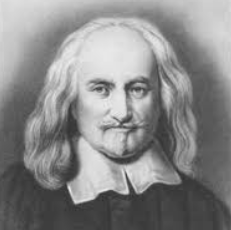
4 months 3 weeks ago
A naturall foole that could never learn by heart the order of numerall words, as one, two, and three, may observe every stroak of the Clock, and nod to it, or say one, one, one; but can never know what houre it strikes.
▼
Source
The First Part, Chapter 4, p. 14

4 months 3 weeks ago
The suffering man ought really 'to consume his own smoke'; there is no good in emitting smoke till you have made it into fire, — which, in the metaphorical sense too, all smoke is capable of becoming!
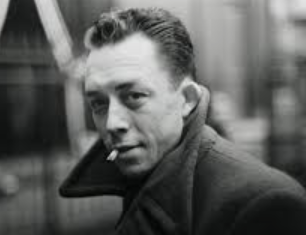
4 months 3 weeks ago
There is a fundamental question which Camus never seems to have put to himself: by what right am I qualified to pass this sort of verdict on the world [the verdict that the world is absurd]? Of two things, one: either I myself do not belong to the world under discussion, but in that case have I not every reason to suppose that it is impenetrable to me and that I am not qualified to judge its value- or, on the other hand, I really am part of the world, and if the world is absurd, so am I absurd too. Camus, perhaps, might concede this. It is, however, a destructive concession. Again, of two things, one: either I am myself absurd in my ultimate nature- in which case so are my judgements absurd, they negate themselves, it cannot be conceded that they have any sort of validity- or, on the other hand, we have to admit that I have a double nature, that is there is a part of me which is not absurd and which can make valid judgements about absurdity: but how did this aspect of me which is not absurd get there? I cannot even admit the possibility of its existence without beginning to formulate a kind of dualism which, in some sense, splits my original assertion of the total absurdity of the universe apart.
▼
Source
Gabriel Marcel, Man Against Mass Society (1952), p. 118
4 months 3 weeks ago
And yet it will be obvious that it is difficult to really know of what sort each thing is.
4 months 3 weeks ago
Jaspers sees the historical meaning of existential philosophy as a struggle to awaken in the individual the possibilities of an authentic and genuine life, in the face of the great modern drift toward a standardized mass society.
▼
Source
Chapter Two, The Encounter With Nothingness, p. 28
4 months 3 weeks ago
When arguments or proofs were needed, whether on the side of the Jewish Christians or of the Gentile Christians, a document was discovered which met the case, and on which the name of an apostle, or of some authoritative contemporary of the apostles, was boldly inscribed. The end being held to sanctify the means, there was no lack of manufactured testimony.
4 months 3 weeks ago
The greatest and noblest conceptions have no image wrought plainly for human vision, which he who wishes to satisfy the mind of the inquirer can apply to some one of his senses and by mere exhibition satisfy the mind. We must therefore endeavor by practice to acquire the power of giving and understanding a rational definition of each one of them; for immaterial things, which are the noblest and greatest, can be exhibited by reason only, and it is for their sake that all we are saying is said. But it is always easier to practice in small matters than in greater ones.
▼
Source
285e-286b
4 months 3 weeks ago
That which I am now entering upon being the Consideration of the things themselves whereinto Spagyrists resolve mixt Bodies by the Fire, If I can shew that these are not of an Elementary Nature, it will be no great matter what names these or those Chymists have been pleased to give them. And I question not that to a Wise man, and consequently to Eleutherius, it will be lesse considerable to know, what Men Have thought of Things, then what they Should have thought.
4 months 3 weeks ago
However intimate we may be with the operations of the mind, we cannot think more than two or three minutes a day; — unless, by taste or by profession, we practice, for hours on end, brutalizing words in order to extract ideas from them. The intellectual represents the major disgrace, the culminating failure of Homo sapiens.
4 months 3 weeks ago
The RIGHT OF NATURE, which Writers commonly call Jus Naturale, is the Liberty each man hath, to use his own power, as he will himself, for the preservation of his own Nature; that is to say, of his own Life; and consequently, of doing any thing, which in his own Judgement, and Reason, he shall conceive to be the aptest means thereunto.
▼
Source
The First Part, Chapter 14, p. 64
4 months 3 weeks ago
He has now a second far greater success to gain: to seek out his real superiors, whom not the Tailor but the Almighty God has made superior to him, and see a little what he will do with these! Rebel against these also? Pass by with minatory eagle-glance, with calm-sniffing mockery, or even without any mockery or sniff, when these present themselves? The lion-hearted will never dream of such a thing. Forever far be it from him! His minatory eagle-glance will veil itself in softness of the dove: his lion- heart will become a lamb's; all is just indignation changed into just reverence, dissolved in blessed floods of noble humble love, how much heavenlier than any pride, nay, if you will, how much prouder!
4 months 3 weeks ago
For a man petticoat government is the limit of insolence.

4 months 3 weeks ago
Progressives regarded Woodrow Wilson’s Fourteen Points and the Atlantic Charter of Franklin Roosevelt and Winston Churchill as beacons of hope for mankind—and this precisely because they were considered expressions of nationalism, promising national independence and self-determination to enslaved peoples around the world. Conservatives from Teddy Roosevelt to Dwight Eisenhower likewise spoke of nationalism as a positive good, and in their day Ronald Reagan and Margaret Thatcher were welcomed by conservatives for the “new nationalism” they brought to political life. In other lands, statesmen from Mahatma Gandhi to David Ben-Gurion led nationalist political movements that won widespread admiration and esteem as they steered their peoples to freedom.
4 months 3 weeks ago
If knowing is work, exclusively work, then the one who knows, knows only the fruit of his own, subjective activity, and nothing else. There is nothing in his knowing that is not the fruit of his own efforts; there is nothing "received" in it. It is the mark of "absolute activity" (which Goethe said "makes one bankrupt, in the end"); the hard quality of not-being-able-to-receive; a stoniness of heart, that will not brook any resistance — as expressed once, most radically, in the following terrifying statement: "Every action makes sense, even criminal acts … all passivity is senseless."
▼
Source
p. 14 | The Goethe quote is from his Maximen und Reflexionen, ed. Günther Müller (Stuttgart, 1943), no. 1415. The other quote is from Hermann Rauschning's Conversations with Hitler (Gespräche mit Hitler, 1940).
4 months 3 weeks ago
Socrates: But suppose the words used are ‘just’ and ‘good’. Don’t we then go each his own way, and find ourselves in disagreement with ourselves as well as with each other? Phaedrus: Undoubtedly.
▼
Source
263a
4 months 3 weeks ago
Boyle's greatest service to learning consisted in the new spirit he introduced into chemistry. Henceforward chemistry was no longer the mere helpmeet of medicine. She became an independent science, the principles of which were to be ascertained by experiment; a science to be studied with the object of discovering the laws regulating the phenomena with which it is concerned and hence elucidating truth for truth's sake.
4 months 3 weeks ago
Freedom can be manifested only in the void of beliefs, in the absence of axioms, and only where the laws have no more authority than a hypothesis.
4 months 3 weeks ago
Christian Kings may erre in deducing a Consequence, but who shall Judge?
▼
Source
The Third Part, Chapter 43, p. 330
4 months 3 weeks ago
Behold therefore, this England of the Year 1200 was no chimerical vacuity or dreamland, peopled with mere vaporous Fantasms, Rymer's Foedera, and Doctrines of the Constitution, but a green solid place, that grew corn and several other things. The Sun shone on it; the vicissitude of seasons and human fortunes. Cloth was woven and worn; ditches were dug, furrowfields ploughed, and houses built. Day by day all men and cattle rose to labour, and night by night returned home weary to their several lairs. In wondrous Dualism, then as now, lived nations of breathing men; alternating, in all ways, between Light and Dark; between joy and sorrow, between rest and toil, between hope, hope reaching high as Heaven, and fear deep as very Hell. Not vapour Fantasms, Rymer's Foedera at all!
4 months 3 weeks ago
Many city-dwellers have a romanticized conception of the living world. From another perspective, some "conservation biologists" favour e.g. "". By contrast, I think any truly compassionate person should be horrified at the terrible suffering of Nature "red in tooth and claw". Why not aim for a cruelty-free world instead?
▼
Source
"[https://www.hedweb.com/hedethic/interviewoct2009.html Interview with Pensata Animal]", Pensata Animal, 25 Oct. 2009
4 months 3 weeks ago
The tone in which an Englishman expresses anger would, in Italy, be only a mark of surprise.
▼
Source
As quoted in David Booth, The principles of English composition (1831), p. 8.
4 months 3 weeks ago
Modern religious teachings have little or nothing to say about the place of prudence in life or in the hierarchy of virtues.
4 months 3 weeks ago
Ignorance, the root and stem of all evil.
▼
Source
Attributed to Plato on quotes sites but never sourced.
4 months 3 weeks ago
Skepticism is the sadism of embittered souls.
4 months 3 weeks ago
These are the two vices that beset Government Offices; both of them originating in insufficient Intellect,—that sad insufficiency from which, directly or indirectly, all evil whatsoever springs!
4 months 3 weeks ago
I think there's an asymmetry. There's this fable of Ursula Le Guin, short story, Ones Who Walk Away From Omelas. We're invited to imagine this city of delights, vast city of incredible wonderful pleasures but the existence of Omelas, this city of delights depends on the torment and abuse of a single child. The question is would you walk away from Omelas and what does walking away from Omelas entail. Now, personally I am someone who would walk away from Omelas. The world does not have an off switch, an off button and I think if one is whether a Buddhist of a negative utilitarian, or someone who believes in suffering-focused ethics, rather than to consider these theoretical apocalyptic scenarios it is more fruitful to work with secular and religious life lovers to phase out the biology of suffering in favor of gradients of intelligent wellbeing because one of the advantages of hedonic recalibration, i.e. ratcheting up hedonic set points is that it doesn't ask people to give up their existing values and preferences with complications.
▼
Source
"[https://futureoflife.org/2018/08/16/ai-alignment-podcast-metaethics-of-joy-suffering-with-brian-tomasik-and-david-pearce/ AI Alignment Podcast: The Metaethics of Joy, Suffering, and Artificial Intelligence with Brian Tomasik and David Pearce]", Future o
4 months 3 weeks ago
It is known to all persons who are conversant in experimental philosophy, that there are many little attentions and precautions necessary to be observed in the conducting of experiments, which cannot well be described in words, but which it is needless to describe, since practice will necessarily suggest them; though, like all other arts in which the hands and fingers are made use of, it is only much practice that can enable a person to go through complex experiments, of this or any kind, with ease and readiness.
▼
Source
Experiments and Observations of Different Kinds of Air (1775)
4 months 3 weeks ago
I boldly make the claim that the Platonic doctrines are not easily understood without reference to the Indian teaching. And, in reference to the quest of Socrates, his character and his faith, I will be content to let the resemblance to the quest and character and faith of the ancient Indian sages speak for itself […] I affirm very confidently that if anyone will make himself familiar with the old Indian wisdom-religion of the Vedas and Upanishads: will shake himself free, from the moment, from the academic attitude and the limiting Western conception of philosophy, and will then read Plato’s dialogues, he will hardly fail to realise that both are occupied with the selfsame search, inspired by the same faith, drawn upwards by the same vision.
▼
Source
Urwick, Edward. J. The Message of Plato: A re-interpretation of the ‘Republic’. London: Metheun and Co. Ltd., 1920. quoted in : Bhaskar Kamble, The Imperishable Seed: How Hindu Mathematics Changed the World and why this History was Erased, Garuda Prakasha
4 months 3 weeks ago
It's easy to convince oneself that things can't really be that terrible, that the horror I allude to is being overblown, that what is going on elsewhere in space-time is somehow less real than the here-and-now, or that the good in the world somehow offsets the bad. Yet however vividly one thinks one can imagine what agony, torture or suicidal despair must be like, the reality is inconceivably worse. The force of "inconceivably" is itself largely inconceivable here. Blurry images of Orwell's "Room 101" can barely even hint at what I'm talking about. Even if one's ancestral namesakes [aka "younger self"] underwent great pain, then the state-dependence of memories means that much of pain's sheer dreadfulness is semantically, cognitively and emotionally inaccessible in the here-and-now. So this manifesto's rhapsodies on the incredible joys that do indeed lie ahead tend to belie its underlying seriousness of purpose. For the biological strategy is propounded here in deadly moral earnest.
▼
Source
2.7 [https://www.hedweb.com/hedethic/hedon2.htm#negative Why Be Negative?]
4 months 3 weeks ago
Governors will never be awed by the voice of the people, so long as it is a mere voice, without overt-acts.
▼
Source
Section II, "Of Political Liberty"
4 months 3 weeks ago
The socialist system of society should only be, and can only be, an historical product, born out of the school of its own experiences, born in the course of its realization, as a result of the developments of living history, which – just like organic nature of which, in the last analysis, it forms a part – has the fine habit of always producing along with any real social need the means to its satisfaction, along with the task simultaneously the solution. However, if such is the case, then it is clear that socialism by its very nature cannot be decreed or introduced by ukase. It has as its prerequisite a number of measures of force – against property, etc. The negative, the tearing down, can be decreed; the building up, the positive, cannot. New Territory. A thousand problems. Only experience is capable of correcting and opening new ways.
▼
Source
Chapter Six, "The Problem of Dictatorship"
4 months 3 weeks ago
Speech and silence. We feel safer with a madman who talks than with one who cannot open his mouth.
4 months 3 weeks ago
If you find many people who are hard and indifferent to you in a world that you consider to be unhospitable and cruel—as often, indeed, happens to a tender-hearted, stirring young creature—you will also find there are noble hearts who will look kindly on you, and their help will be precious to you beyond price.
4 months 3 weeks ago
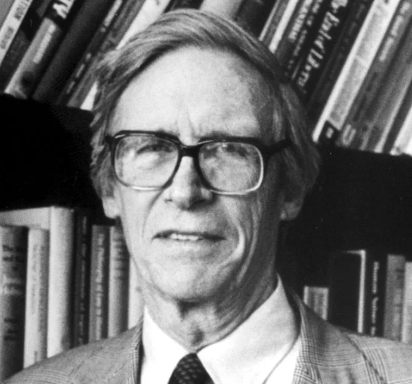
To each according to his threat advantage does not count as a principle of justice.
▼
Source
Chapter III, Section 24, pg. 141
4 months 3 weeks ago
Life on earth is a hand-to-hand mortal combat... between the law of love and the law of hate.
▼
Source
Letter (1881), as quoted in The Conscience of Worms and the Cowardice of Lions : Cuban Politics and Culture in an American Context (1993) by Irving Louis Horowit, p. 11
4 months 3 weeks ago
The holy fights by Moslem heroes fought,The saintly works by Christian hermits wroughtAnd those of Jewry or of Sabian creed—Their valour reaches not the Indian's deedWhom zeal and awe religiously inspire To cast his body on the flaming pyre.
▼
Source
From Nicholson, R. A., Studies in Islamic Poetry (1921)
4 months 3 weeks ago
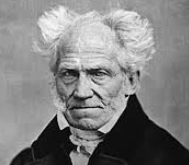
And now that I have allowed myself the jest to which in this two-sided life hardly any page can be too serious to grant a place, I part with the book with deep seriousness, in the sure hope that sooner or later it will reach those to whom alone it can be addressed; and for the rest, patiently resigned that the same fate should, in full measure, befall it, that in all ages has, to some extent, befallen all knowledge, and especially the weightiest knowledge of the truth, to which only a brief triumph is allotted between the two long periods in which it is condemned as paradoxical or disparaged as trivial. The former fate is also wont to befall its author. But life is short, and truth works far and lives long: let us speak the truth.
▼
Source
:s:The World as Will and Representation/Preface to the First Edition, last paragraph. | Mostly quoted rather incorrectly as: All truth passes through three stages. First, it is ridiculed. Second, it is violently opposed. Third, it is accepted as being sel
4 months 3 weeks ago
Having destroyed all my connections, burned my bridges, I should feel a certain freedom, and in fact I do. One so intense I am afraid to rejoice in it.
4 months 3 weeks ago
There was the puissant voice of Carlyle; so sorely strained, over-used, and mis-used since, but then fresh, comparatively sound, and reaching our hearts with true, pathetic eloquence. Who can forget the emotion of receiving in its first freshness such a sentence as that sentence of Carlyle upon Edward Irving, then just dead: ‘Scotland sent him forth a herculean man; our mad Babylon wore and wasted him with all her engines,—and it took her twelve years!’
▼
Source
Matthew Arnold, Discourses in America (1885), pp. 142-143
4 months 3 weeks ago
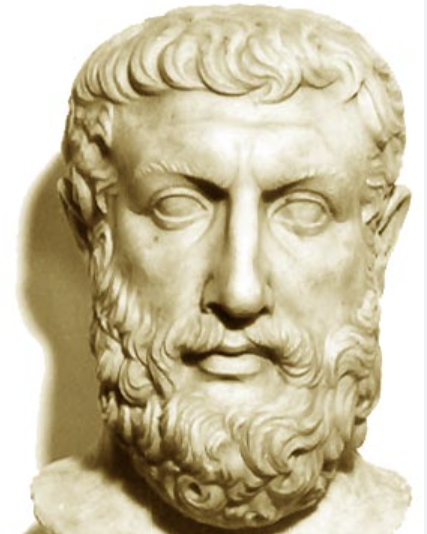
The Greek tradition was a complete contrast to that of the Far East. ...the Greeks placed logic at the pinnacle of human thinking. Their sceptical attitude towards the wielding of 'non-being' as some sort of 'something' that could be subject to logical development was exemplified by Parmenides' influential arguments against the concept of empty space. ...He maintained that you can only speak about what is: what is not cannot be thought of, and what cannot be thought of cannot be. ...more unexpected was the further conclusion that time, motion nor change could exist either.
▼
Source
John D. Barrow, The Book of Nothing (2009) chapter one "Zero—The Whole Story" p. 40
4 months 3 weeks ago
Why then in Britain has secularism become seen to be hostile to religion? Because neutrality is too often assumed to require the bleaching out of all traces of faith, excluding religious belief and discourse from public life. But it doesn't, and we can see why by appeal to the notion of public reason, articulated most clearly by the late political philosopher John Rawls. Rawls was quite clear that the religious have no obligation at all to keep their faith entirely to themselves. "Reasonable comprehensive doctrines, religious or non-religious, may be introduced in public political discussion at any time," he wrote, "provided that in due course proper political reasons – and not reasons given solely by comprehensive doctrines – are presented that are sufficient to support whatever the comprehensive doctrines are said to support."
▼
Source
Julian Baggini, in [http://www.guardian.co.uk/world/2012/feb/14/is-religion-really-under-threat?INTCMP=SRCH "Is religion really under threat?" in The Guardian (14 February 2012)]
4 months 3 weeks ago
America began to suffer, and still suffers, from the tiresome task of reconciling the hostile and discordant elements it inherited from the despotic and perverse colonizer, and the imported methods and ideas which have been retarding logical government because they are lacking in local realities. Thrown out of gear for three centuries by a power which denied men the right to use their reason, the continent disregarded or closed its ears to the unlettered throngs that helped bring it to redemption, and embarked on a government based on reason-a reason belonging to all for the common good, not the university brand of reason over the peasant brand. The problem of independence did not lie in a change of forms but in change of spirit.
4 months 3 weeks ago
We live in a contradiction, a brutal state of affairs, profoundly inegalitarian – where all existence is evaluated in terms of money alone – is presented to us as ideal. To justify their conservatism, the partisans of the established order cannot really call it ideal or wonderful. So instead, they have decided to say that all the rest is horrible. Sure, they say, we may not live in a condition of perfect Goodness. But we’re lucky that we don’t live in a condition of Evil. Our democracy is not perfect. But it’s better than the bloody dictatorships. Capitalism is unjust. But it’s not criminal like Stalinism. We let millions of Africans die of AIDS, but we don’t make racist nationalist declarations like Milosevic. We kill Iraqis with our airplanes, but we don’t cut their throats with machetes like they do in Rwanda, etc.
▼
Source
From ' by , 2009. p.5
4 months 3 weeks ago
The view of things [called Pantheism] … — that all plurality is only apparent, that in the endless series of individuals, passing simultaneously and successively into and out of life, generation after generation, age after age, there is but one and the same entity really existing, which is present and identical in all alike; — this theory … may be carried back to the remotest antiquity. It is the alpha and omega of the oldest book in the world, the sacred Vedas, whose dogmatic part, or rather esoteric teaching, is found in the Upanishads. There, in almost every page this profound doctrine lies enshrined; with tireless repetition, in countless adaptations, by many varied parables and similes it is expounded and inculcated. That such was, moreover, the fount whence Pythagoras drew his wisdom, cannot be doubted … That it formed practically the central point in the whole philosophy of the Eleatic School, is likewise a familiar fact. Later on, the New Platonists were steeped in the same … In the ninth century we find it unexpectedly appearing in Europe. It kindles the spirit of no less a divine than Johannes Scotus Erigena, who endeavours to clothe it with the forms and terminology of the Christian religion. Among the Mohammedans we detect it again in the rapt mysticism of the Sufi. In the West Giordano Bruno cannot resist the impulse to utter it aloud; but his reward is a death of shame and torture. And at the same time we find the Christian Mystics losing themselves in it, against their own will and intention, whenever and wherever we read of them! Spinoza's name is identified with it.
▼
Source
Part IV, Ch. 2, [https://archive.org/stream/basisofmorality00schoiala#page/269/mode/2up pp. 269]-272
4 months 3 weeks ago
Everything turns on pain; the rest is accessory, even nonexistent, for we remember only what hurts. Painful sensations being the only real ones, it is virtually useless to experience others.
4 months 3 weeks ago
Liberty he attached less importance to than economic security: in that a true man of the people. "Liberty, I am told, is a divine thing. Liberty, when it becomes the 'Liberty to die by starvation' is not so divine." It is here that Carlyle links up with the socialist trend of thought in his age.
▼
Source
A. L. Rowse, ‘Carlyle's Past and Present’, The English Spirit: Essays in History and Literature (1944), p. 227
4 months 3 weeks ago
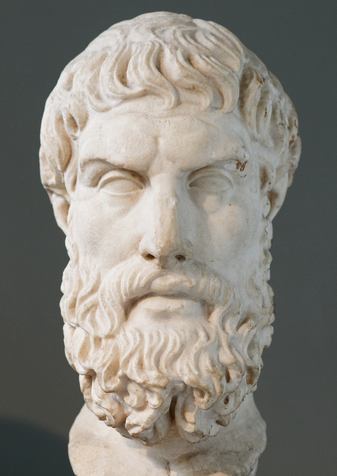
A prudent man, in order to secure his tranquility, will consult his natural disposition in the choice of his plan of life. If, for example, he be persuaded that he should be happier in a state of marriage than in celibacy, he ought to marry; but if he be convinced that matrimony would be an impediment to his happiness, he ought to remain single.
4 months 3 weeks ago
The appearances of multiplicity and motion, empty space and time, are illusions.
4 months 3 weeks ago
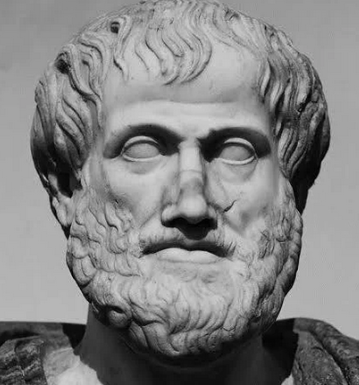
Knowledge of the fact differs from knowledge of the reason for the fact.
▼
Source
I.13, 78a.22
CivilSimian.com created by AxiomaticPanic, CivilSimian, Kalokagathia