

4 months 3 weeks ago
One ought to seek out virtue for its own sake, without being influenced by fear or hope, or by any external influence. Moreover, that in that does happiness consist.
▼
Source
Zeno, 53.

4 months 3 weeks ago
Among animals, some learn to speak and sing; they remember tunes, and strike the notes as exactly as a musician. Others, for instance the ape, show more intelligence... would it be absolutely impossible to teach the ape a language? I do not think so.
4 months 3 weeks ago
By an object, I mean anything that we can think, i.e. anything we can talk about.
▼
Source
"Reflections on Real and Unreal Objects", Undated, MS 966
4 months 3 weeks ago
It is not among extraordinary and fantastic things that excellence is to be found, of whatever kind it may be. We rise to attain it and become removed from it: it is oftenest necessary to stoop for it.
4 months 3 weeks ago
All truths are easy to understand once they are discovered; the point is to discover them.
▼
Source
As quoted in Angels in the workplace: stories and inspirations for creating a new world of work (1999) by Melissa Giovagnoli

4 months 3 weeks ago
Kant's philosophy shifts for the first time the whole of modern thought and being (Desein) into the clarity and transparency of the foundation (Begrundung). This determines every attitude toward knowledge since then, as well as the bounds (Abgrenzungen) and appraisals of the sciences in the nineteenth century up to the present time. Therein Kant towers so far above all who precede and follow that even those who reject him or go beyond him still remain entirely dependent upon him. p. 55-56

4 months 3 weeks ago
He who receives a good turn should never forget it; he who does one should never remember it.
▼
Source
p. 213 (Gratitude)
4 months 3 weeks ago
Donald Davidson has notoriously retorted that the resources of existing natural languages seem perfectly adequate for dealing with even the most dramatic cases of purported incommensurability reported by writers like Benjamin Whorf and Thomas Kuhn. But Davidson’s argument seems questionable in itself, relying as it does on such a strict application of the verification principle in order to rule out the idea of alternative conceptual schemes. Furthermore, Davidson’s scepticism is insufficient to undermine the sense in which I am defending anything resembling a thesis of incommensurability. I am merely contending that it will always be a mistake for an historian to assume that the task of explicating an alien concept can be reduced to that of finding a counterpart in his or her own language for the term that expresses it.
▼
Source
Quentin Skinner, "Interpretation, rationality and truth", Visions of Politics (2002)
4 months 3 weeks ago
Now, let there be an indefinite succession of these inferential acts of comparative perception; and it is plain that the last moment will contain objectively the whole series. Let there be, not merely an indefinite succession, but a continuous flow of inference through a finite time; and the result will be a mediate objective consciousness of the whole time in the last moment. In this last moment, the whole series will be recognized, or known as known before.
4 months 3 weeks ago
One can forgive many Germans, but there are some Germans it is difficult to forgive. It is difficult to forgive Heidegger.
▼
Source
Emmanuel Lévinas, Heidegger's pre-WWII colleague at University of Freiburg, Nine Talmudic Readings, trans. Annette Aronowicz. Bloomington: Indiana University Press, 1994. p. 25
4 months 3 weeks ago
Everything is so arranged that the blind logic of mathematics executes the will of the most enlightened and free Mind.
4 months 3 weeks ago
If men could only know each other, they would never either idolize or hate.
▼
Source
p. 13

4 months 3 weeks ago
The guiding question of Marx’s analysis was, How does capitalist society supply its members with the necessary use-values? And the answer disclosed a process of blind necessity, chance, anarchy and frustration. The introduction of the category of use-value was the introduction of a forgotten factor, forgotten, that is, by the classical political economy which was occupied only with the phenomenon of exchange value. In the Marxian theory, this factor becomes an instrument that cuts through the mystifying reification of the commodity world. P. 304
4 months 3 weeks ago
In order to be transmuted into knowledge, every perception is and must be ordered and organized into categories. The extent, however, to which we can organize and express our experience in such conceptual forms is, in turn, dependent upon the frames of reference which happen to be available at a given historical moment. The concepts which we have and the universe of discourse in which we move, together with the directions in which they tend to elaborate themselves, are dependent largely upon the historical-social situation of the intellectually active and responsible members of the group.
4 months 3 weeks ago
The quality of feeling is the true psychical representative of the first category of the immediate as it is in its immediacy, of the present in its direct positive presentness. Qualities of feeling show myriad-fold variety, far beyond what the psychologists admit. This variety however is in them only insofar as they are compared and gathered into collections. But as they are in their presentness, each is sole and unique; and all the others are absolute nothingness to it — or rather much less than nothingness, for not even a recognition as absent things or as fictions is accorded to them. The first category, then, is Quality of Feeling, or whatever is such as it is positively and regardless of aught else.
▼
Source
Lecture II : The Universal Categories, § 1 : Presentness, CP 5.44
4 months 3 weeks ago
In order to learn true humility (I use this expression to describe the state of mind under discussion), it is good for a person to withdraw from the turmoil of the world (we see that Christ withdrew when the people wanted to proclaim him king as well as when he had to walk the thorny path), for in life either the depressing or the elevating impression is too dominant for a true balance to come about. Here, of course, individuality is very decisive, for just as almost every philosopher believes he has found the truth, just as almost every poet believes he has reached Mount Parnassus, just so we find on the other hand many who link their lives entirely to another, like a parasite to a plant, live in him, die in him (for example, the Frenchman in relation to Napoleon). But in the heart of nature, where a person, free from life's often nauseating air, breathes more freely, here the soul opens willingly to every noble impression. Here one comes out as nature's master, but he also feels that something higher is manifested in nature, something he must bow down before; he feels a need to surrender to this power that rules it all. (I, of course, would rather not speak of those who see nothing higher in nature than substance — people who really regard heaven as a cheese-dish cover and men as maggots who live inside it.) Here he feels himself great and small at one and the same time, and feels it without going so far as the Fichtean remark (in his Die Bestimmung des Menschen) about a grain of sand constituting the world, a statement not far removed from madness.
▼
Source
Journals 1A 68 (29 July 1835)
4 months 3 weeks ago
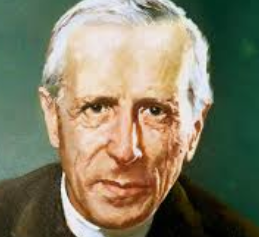
To the cosmic corpuscles we should find it natural to attribute an individual radius of action as limited as their dimensions. We find, on the contrary, that each of them can only be defined by virtue of its influence on all around it. Whatever space we suppose it to be in, each cosmic element radiates in it and entirely fills it. However narrowly the heart of an atom may be circumscribed, its realm is co-extensive, at least potentially, with that of every other atom. This strange property we will come across again, even in the human molecule.
4 months 3 weeks ago
Men who marry for gratification, propagation or the matter of buttons or socks, must expect to cope with and deal in a certain amount of quibble, subterfuge, concealments, and double, deep-dyed prevarication.
▼
Source
p. 159
4 months 3 weeks ago
In the most advanced areas of this civilization, the social controls have been introjected to the point where even individual protest is affected at its roots. The intellectual and emotional refusal “to go along” appears neurotic and impotent. This is the socio-psychological aspect of the political event that marks the contemporary period: the passing of the historical forces which, at the preceding stage of industrial society, seemed to represent the possibility of new forms of existence. But the term “introjection” perhaps no longer describes the way in which the individual by himself reproduces and perpetuates the external controls exercised by his society. Introjection suggests a variety of relatively spontaneous processes by which a Self (Ego) transposes the “outer” into the “inner.” Thus introjection implies the existence of an inner dimension distinguished from and even antagonistic to the external exigencies—an individual consciousness and an individual unconscious apart from public opinion and behavior. The idea of “inner freedom” here has its reality: it designates the private space in which man may become and remain “himself.” Today this private space has been invaded and whittled down by technological reality. Mass production and mass distribution claim the entire individual, and industrial psychology has long since ceased to be confined to the factory. The manifold processes of introjection seem to be ossified in almost mechanical reactions. The result is, not adjustment but mimesis: an immediate identification of the individual with his society and, through it, with the society as a whole. This immediate, automatic identification (which may have been characteristic of primitive forms of association) reappears in high industrial civilization; its new “immediacy,” however, is the product of a sophisticated, scientific management and organization. In this process, the “inner” dimension of the mind in which opposition to the status quo can take root is whittled down. The loss of this dimension, in which the power of negative thinking—the critical power of Reason—is at home, is the ideological counterpart to the very material process in which advanced industrial society silences and reconciles the opposition. The impact of progress turns Reason into submission to the facts of life, and to the dynamic capability of producing more and bigger facts of the same sort of life. The efficiency of the system blunts the individuals' recognition that it contains no facts which do not communicate the repressive power of the whole. If the individuals find themselves in the things which shape their life, they do so, not by giving, but by accepting the law of things—not the law of physics but the law of their society.
▼
Source
pp. 9-11
4 months 3 weeks ago
Pierce wrote as a logician and James as a humanist.
▼
Source
John Dewey, distinguishing the styles and focus of Peirce and William James, in The Development of American Pragmatism" in Studies in the History of Ideas (1925), Vol. II, p. 361
4 months 3 weeks ago
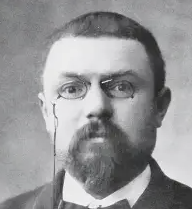
If... it be supposed that another way of measuring time is adopted... enunciation of the law would be... translated into another language... much less simple. So that the definition implicitly adopted by the astronomers may be summed up..: Time should be so defined that the equations of mechanics may be as simple as possible... [i.e.,] there is not one way of measuring time more true... only more convenient.
4 months 3 weeks ago
If I were to imagine a girl deeply in love and some man who wanted to use all his reasoning powers and knowledge to ridicule her passion, well, there's surely no question of the enamoured girl having to choose between keeping her wealth and being ridiculed. No, but if some extremely cool and calculating man calmly told the young girl, "I will explain to you what love is," and the girl admitted that everything he told her was quite correct, I wonder if she wouldn't choose his miserable common sense rather than her wealth?
▼
Source
1846
4 months 3 weeks ago
In his own poetic style, the French Jesuit Teilhard de Chardin liked to meditate on the Eucharist as the firstfruits of the new creation. In an essay called The Monstrance he describes how, kneeling in prayer, he had a sensation that the Host was beginning to grow until at last, through its mysterious expansion, "the whole world had become incandescent, had itself become like a single giant Host." Although it would probably be incorrect to imagine that the universe will eventually be transubstantiated, Teilhard correctly identified the connection between the Eucharist and the final glorification of the cosmos.
▼
Source
Cardinal Avery Dulles, in "A Eucharistic Church : The Vision of John Paul II" (10 November 2004)
4 months 3 weeks ago
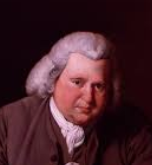
Would it be too bold to imagine that, in the great length of time since the earth began to exist, perhaps millions of ages before the commencement of the history of mankind would it be too bold to imagine that all warm-blooded animals have arisen from one living filament, which the great First Cause endued with animality, with the power of acquiring new parts, attended with new propensities, directed by irritations, sensations, volitions and associations, and thus possessing the faculty of continuing to improve by its own inherent activity, and of delivering down these improvements by generation to its posterity, world without end!
▼
Source
Zoönomia, vol. 1 (1794).
4 months 3 weeks ago
Technical progress and more comfortable living permit the systematic inclusion of libidinal components into the realm of commodity production and exchange. But no matter how controlled the mobilization of instinctual energy may be (it sometimes amounts to a scientific management of libido), no matter how much it may serve as a prop for the status quo—it is also gratifying to the managed individuals, just as racing the outboard motor, pushing the power lawn mower, and speeding the automobile are fun.
▼
Source
p. 75
4 months 3 weeks ago
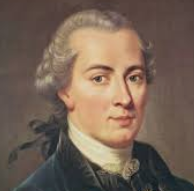
The mind intent upon resolving as well as compounding the concept of a composite demands and presumes boundaries in which it may acquiesce in the former as well as in the latter direction.
4 months 3 weeks ago
After all, in the poets love has its priests, and sometimes one hears a voice which knows how to defend it; but of faith one hears never a word. Who speaks in honor of this passion? Philosophy goes further. Theology sits rouged at the window and courts its favor, offering to sell her charms to philosophy. it is supposed to be difficult to understand Hegel, but to understand Abraham is a trifle. To go beyond Hegel's is a miracle, but to get beyond Abraham is the easiest thing of all.
▼
Source
Problemata: Preliminary Expectoration

4 months 3 weeks ago
At the point at which the concept of différance, and the chain attached to it, intervenes, all the conceptual oppositions of metaphysics (signifier/signified; sensible/intelligible; writing/speech; passivity/activity; etc.)- to the extent that they ultimately refer to the presence of something present (for example, in the form of the identity of the subject who is present for all his operations, present beneath every accident or event, self-present in its "living speech," in its enunciations, in the present objects and acts of its language, etc.)- become non pertinent. They all amount, at one moment or another, to a subordination of the movement of différance in favor of the presence of a value or a meaning supposedly antecedent to différance, more original than it, exceeding and governing it in the last analysis. This is still the presence of what we called above the "transcendental signified.
▼
Source
p. 29
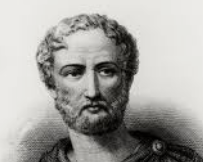
4 months 3 weeks ago
Modestus said of Regulus that he was "the biggest rascal that walks upon two legs."
▼
Source
Letter 5, 14.
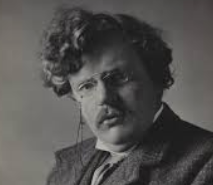
4 months 3 weeks ago
I think that if they gave me leave, Within the world to stand, I would be good through all the day I spent in fairyland. They should not hear a word from me, Of selfishness or scorn, If only I could find the door, If only I were born.
▼
Source
"By the Babe Unborn", sts. 5 and 6. The Wild Knight, &c., 2nd ed. (1906)
4 months 3 weeks ago
The methods of logical procedure are very different in ancient and modem logic, but behind all difference is the construction of a universally valid order of thought, neutral with respect to material content. Long before technological man and technological nature emerged as the objects of rational control and calculation, the mind was made susceptible to abstract generalization. Terms which could be organized into a coherent logical system, free from contradiction or with manageable contradiction, were separated from those which could not. Distinction was made between the universal, calculable, “objective” and the particular, incalculable, subjective dimension of thought.
▼
Source
pp. 137-138
4 months 3 weeks ago
There will always be some people who think for themselves, even among the self-appointed guardians of the great mass who, after having thrown off the yoke of immaturity themselves, will spread about them the spirit of a reasonable estimate of their own value and of the need for every man to think for himself.
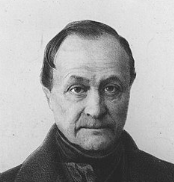
4 months 3 weeks ago
To understand a science it is necessary to know its history.
▼
Source
A Course of Positive Philosophy (1832 - 1842) [Six volumes]
4 months 3 weeks ago
Magister Adler was deeply moved by something higher, but now when he wants to express his thoughts in words, wants to communicate, he confuses the subjective with the objective, his altered subjective state with an external event, the dawning of a light upon him with the coming into existence of something new outside him, the falling of the veil from his eyes with his having had a revelation. Subjectively his emotion is carried to the extreme; he wants to select the most powerful expression to describe it and by means of a mental deception grasps the objective qualification: having had a revelation.
▼
Source
The Book of Adler, by Søren Kierkegaard, Hong 1998 p. 117

4 months 3 weeks ago
Understanding, however--and sometimes a very considerable depth of it--results from seeing the obstinate difficulties in views which often seem, on other grounds, quite obviously true...Let the reader be warned accordingly, that whenever he hears a philosopher proclaim any metaphysical opinion with great confidence, or hears him asset that something in metaphysics is obvious, or that some metaphysical problem turns only on confusions of concepts or upon the meanings of words, then he can be quite sure that this man is still infinitely far from philosophical understanding. His views appear to him devoid of difficulties only because he stoutly refuses to see difficulties.
▼
Source
Metaphysics, [https://babel.hathitrust.org/cgi/pt?id=uc1.b4410806&seq=22 Introduction, p. 2]
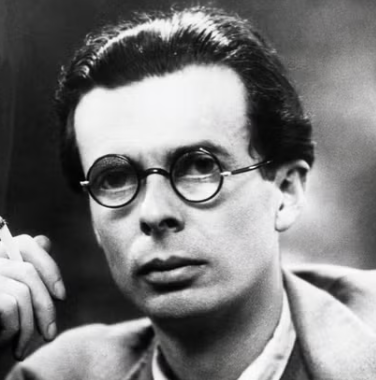
4 months 3 weeks ago
Proverbs are always platitudes until you have personally experienced the truth of them.
▼
Source
[http://books.google.com/books?lr=&id=iy0SkXPxsF8C&q=%22Proverbs+are+always+platitudes+until+you+have+personally+experienced+the+truth+of+them%22&pg=PA207#v=onepage Part IV: America],Jesting Pilate: The Diary of a Journey, (1926)
4 months 3 weeks ago
For the secular society of to-day is sceptical not merely about spiritual assumptions, but about its own secular assumptions. It has not merely broken the church window or besieged the tower of tradition; it has also kicked away the ladder of progress by which it had climbed. The Declaration of Independence, once the charter of democracy, begins by saying that certain things are self-evident. If we were to trace the history of the American mind from Thomas Jefferson to William James, we should find that fewer and fewer things were self-evident, until at last hardly anything is self-evident. So far from it being self-evident to the modern that men are created equal, it is not self-evident that men are created, or even that men are men. They are sometimes supposed to be monkeys muddling through a transition stage before the Superman. But there is not only doubt about mystical things; not even only about moral things. There is most doubt of all about rational things. I do not mean that I feel these doubts, either rational or mystical; but I mean that a sufficient number of modern people feel them to make unanimity an absurd assumption. Reason was self-evident before Pragmatism. Mathematics were self-evident before Einstein. But this scepticism is throwing thousands into a condition of doubt, not about occult but about obvious things. We shall soon be in a world in which a man may be howled down for saying that two and two make four, in which furious party cries will be raised against anybody who says that cows have horns, in which people will persecute the heresy of calling a triangle a three-sided figure, and hang a man for maddening a mob with the news that grass is green.
▼
Source
In The Illustrated London News (14 August 1926)
4 months 3 weeks ago
Newton... (after having remarked that geometry only requires two of the mechanical actions which it postulates, namely, to describe a straight line and a circle) says: geometry is proud of being able to achieve so much while taking so little from extraneous sources. One might say of metaphysics, on the other hand: it stands astonished, that with so much offered it by pure mathematics it can effect so little. In the meantime, this little is something which mathematics indispensably requires in its application to natural science, which, inasmuch as it must here necessarily borrow from metaphysics, need not be ashamed to allow itself to be seen in company with the latter.
▼
Source
Preface, Tr. Bax (1883) citing Isaac Newton's Principia
4 months 3 weeks ago
If thou shalt aspire after the glorious acts of men, thy working shall be accompanied with compunction and strife, and thy remembrance followed with distaste and upbraidings; and justly doth it come to pass towards thee, O man, that since thou, which art God's work, doest him no reason in yielding him well-pleasing service, even thine own works also should reward thee with the like fruit of bitterness.
▼
Source
Of The Works Of God and Man
4 months 3 weeks ago
If God stops a man on the road, and calls him with a revelation and sends him armed with divine authority among men, they say to him; from whom dost thou come? He answers: from God. But now God cannot help his messenger physically like a king, who gives him soldiers or policemen, or his ring or his signature, which is known to all; in short, God cannot help men by providing them with physical certainty that an Apostle is an Apostle-which would, moreover, be nonsense. Even miracles, if the Apostle has that gift, give no physical certainty; for the miracle is the object of faith.
▼
Source
p. 95
4 months 3 weeks ago
Conspiracy is just another name for coalition.
▼
Source
The Historical Illuminatus as spoken by Luigi Duccio
4 months 3 weeks ago
As I have already urged, the practice of that which is ethically best—what we call goodness or virtue—involves a course of conduct which in all respects is opposed to that which leads to success in the cosmic struggle for existence. In place of ruthless self-assertion, it demands self-restraint; in place of thrusting aside or treading down all competitors, it requires that the individual shall not merely respect, but shall help his fellows; its influence is directed not so much to the survival of the fittest as to the fitting of as many as possible to survive. It repudiates the gladiatorial theory of existence. It demands that each man who enters into the enjoyment of the advantages of a polity shall be mindful of his debt to those who have laboriously constructed it, and shall take heed that no act of his weakens the fabric in which he has been permitted to live. Laws and moral precepts are directed to the end of curbing the cosmic process, and reminding the individual of his duty to the community, to the protection and influence of which he owes, if not existence itself, at least the life of something better than a brutal savage. (Evolution and Ethics, pp. 81-82.)
▼
Source
Quoted by Swami Abhedananda, in [http://www.gutenberg.org/ebooks/7377 Vedanta Philosophy: Five Lectures on Reincarnation,] III. Evolution and Reincarnation. (1907)
4 months 3 weeks ago
The humorous look of children is perhaps the most endearing of all the bonds that hold the Cosmos together. Their top-heavy dignity is more touching than any humility; their solemnity gives us more hope for all things than a thousand carnivals of optimism; their large and lustrous eyes seem to hold all the stars in their astonishment; their fascinating absence of nose seems to give to us the most perfect hint of the humour that awaits us in the kingdom of heaven.
▼
Source
"A Defence of Baby-Worship"
4 months 3 weeks ago
The chief requirement of the good life... is to live without any image of oneself.
▼
Source
The Bell (1958), ch. 9; 2001, p. 119.
4 months 3 weeks ago
He [Jesus] claims that not the observance of outer civil or statutory churchly duties but the pure moral disposition of the heart alone can make man well-pleasing to God (Matthew V, 20-48); … that injury done one’s neighbor can be repaired only through satisfaction rendered to the neighbor himself, not through acts of divine worship (V, 24). Thus, he says, does he intend to do full justice to the Jewish law (V, 17); whence it is obvious that not scriptural scholarship but the pure religion of reason must be the law’s interpreter, for taken according to the letter, it allowed the very opposite of all this. Furthermore, he does not leave unnoticed, in his designations of the strait gate and the narrow way, the misconstruction of the law which men allow themselves in order to evade their true moral duty, holding themselves immune through having fulfilled their churchly duty (VII, 13). He further requires of these pure dispositions that they manifest themselves also in works (VII, 16) and, on the other hand, denies the insidious hope of those who imagine that, through invocation and praise of the Supreme Lawgiver in the person of His envoy, they will make up for their lack of good works and ingratiate themselves into favor (VII, 21). Regarding these works he declares that they ought to be performed publicly, as an example for imitation (V, 16), and in a cheerful mood, not as actions extorted from slaves (VI, 16); and that thus, from a small beginning in the sharing and spreading of such dispositions, religion, like a grain of seed in good soil, or a ferment of goodness, would gradually, through its inner power, grow into a kingdom of God (XIII, 31-33).
▼
Source
Book IV, Part 1, Section 1, “The Christian religion as a natural religion”
4 months 3 weeks ago
We are wont to call that human reasoning which we apply to Nature the anticipation of Nature (as being rash and premature) and that which is properly deduced from things the interpretation of Nature.
4 months 3 weeks ago
It is love that leniently and mercifully says: I forgive you everything-if you are forgiven only little, then it is because you love only little. Justice severely sets the boundary and says: No further! This is the limit. For you there is no forgiveness, and there is nothing more to be said. P. 172

4 months 3 weeks ago
In this context, Hans Asperger and other medics began dividing autistics up into those deemed to have potential worth to the Third Reich given their purportedly strong logical capacities, and those who were to be sterilized or killed along with countless other mad and disabled targets.
▼
Source
p. 62
4 months 3 weeks ago
Speed, it seems to me, provides the one genuinely modern pleasure.
▼
Source
Wanted, A New Pleasure
4 months 3 weeks ago
A man looking at a hippopotamus may sometimes be tempted to regard a hippopotamus as an enormous mistake; but he is also bound to confess that a fortunate inferiority prevents him personally from making such mistakes.
▼
Source
Ch. 10 "The Great Dickens Characters"
CivilSimian.com created by AxiomaticPanic, CivilSimian, Kalokagathia