
4 months 3 weeks ago
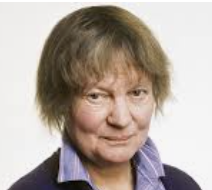
I see myself as Rhoda, not Mary Tyler Moore.
▼
Source
Not Iris Murdoch, but the actress and comedian Rosie O'Donnell. See George Mair Rosie O'Donnell: Her True Story (1997) p. 81.
4 months 3 weeks ago
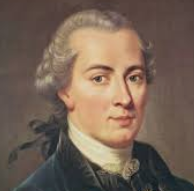
Good and strong will. Mechanism must precede science (learning). Also in morals and religion? Too much discipline makes one narrow and kills proficiency. Politeness belongs, not to discipline, but to polish, and thus comes last.
▼
Source
Part III : Selection on Education from Kant's other Writings, Ch. I Pedagogical Fragments, # 9
4 months 3 weeks ago
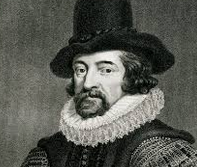
Again, we should notice the force, effect, and consequences of inventions, which are nowhere more conspicuous than in those three which were unknown to the ancients; namely, printing, gunpowder, and the compass. For these three have changed the appearance and state of the whole world; first in literature, then in warfare, and lastly in navigation: and innumerable changes have been thence derived, so that no empire, sect, or star, appears to have exercised a greater power and influence on human affairs than these mechanical discoveries.
▼
Source
Aphorism 129
4 months 3 weeks ago
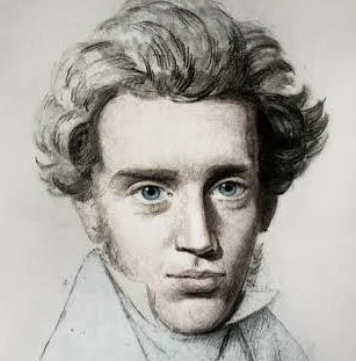
I will not by suppression, or by performing tricks, try to produce the impression that the ordinary Christianity in the land and the Christianity of the New Testament are alike.
▼
Source
"What Do I Want?"
4 months 3 weeks ago
Even the wisest of mankind cannot live by reason alone; pure arrogant reason, denying the claims of prejudice (which commonly are also the claims of conscience), leads to a wasteland of withered hopes and crying loneliness, empty of God and man: the wilderness in which Satan tempted Christ was not more dreadful than the arid expanse of intellectual vanity deprived of tradition and intuition, where modern man is tempted by his own pride.
4 months 3 weeks ago
Because machines could be made progressively more and more efficient, Western man came to believe that men and societies would automatically register a corresponding moral and spiritual improvement. Attention and allegiance came to be paid, not to Eternity, but to the Utopian future. External circumstances came to be regarded as more important than states of mind about external circumstances, and the end of human life was held to be action, with contemplation as a means to that end. These false and historically, aberrant and heretical doctrines are now systematically taught in our schools and repeated, day in, day out, by those anonymous writers of advertising copy who, more than any other teachers, provide European and American adults with their current philosophy of life. And so effective has been the propaganda that even professing Christians accept the heresy unquestioningly and are quite unconscious of its complete incompatibility with their own or anybody else's religion.
4 months 3 weeks ago
The academic mind reflects infinity, and is full of light by the simple process of being shallow and standing still.
▼
Source
Arthur Inglewood in Part II, ch. I
4 months 3 weeks ago
Einstein has not — as you sometimes hear — given the lie to Kant’s deep thoughts on the idealization of space and time; he has, on the contrary, made a large step towards its accomplishment.
▼
Source
Erwin Schrödinger, [https://archive.org/details/WhatIsLife_201708/page/n166/Mind and Matter] (1967)
4 months 3 weeks ago
Pithy sentences are like sharp nails which force truth upon our memory.
▼
Source
As quoted in A Dictionary of Thoughts : Being a Cyclopedia of Laconic Quotations (1908) by Tryon Edwards, p. 338
4 months 3 weeks ago
What is the internally free man free from? First of all - he or she is free from fear of people and life; from conventional opinion. He or she is independent from the crowd, from stereotypical thinking. He or she is able to have their own personal point of view; free from prejudices. He or she is free from envy, selfishness and from aggressive personal drives.
▼
Source
[http://parentingforeveryone.com/freedom/ Talent of Freedom. What Is Internal Freedom?]
4 months 3 weeks ago
To see ourselves as others see us is a most salutary gift. Hardly less important is the capacity to see others as they see themselves.
▼
Source
Page 159
4 months 3 weeks ago
The strangest whim has seized me. ... After all I think I will not hang myself to-day.
▼
Source
A Ballade of Suicide, st. 1
4 months 3 weeks ago
The pit of a theatre is the one place where the tears of virtuous and wicked men alike are mingled.

4 months 3 weeks ago
There is little in common between the organised parading of madness in the eighteenth century and the freedom with which madness came to the fore during the Renaissance. The earlier age had found it everywhere, an integral element of each experience, both in images and in real life dangers. During the classical period, it was also on public view, but behind bars. When it manifested itself it was at a carefully controlled distance, under the watchful eye of a reason that denied all kinship with it, and felt quite unthreatened by any hint of resemblance. Madness had become a thing to be observed, no longer the monster within, but an animal moved by strange mechanisms, more beast than man, where all humanity had long since disappeared.
▼
Source
Part One: 5. The Insane

4 months 3 weeks ago
There is only one good. And that is to act according to the dictates of one's conscience.
▼
Source
p. 181
4 months 3 weeks ago
At this point we find ourselves confronted by a very disquieting question: Do we really wish to act upon our knowledge?
▼
Source
Chapter 12 (p. 116)
4 months 3 weeks ago
About sex especially men are born unbalanced; we might almost say men are born mad. They scarcely reach sanity till they reach sanctity.
4 months 3 weeks ago
We are not so absurd as to propose that the teacher should not set forth his own opinions as the true ones and exert his utmost powers to exhibit their truth in the strongest light. To abstain from this would be to nourish the worst intellectual habit of all, that of not finding, and not looking for, certainty in any teacher. But the teacher himself should not be held to any creed; nor should the question be whether his own opinions are the true ones, but whether he is well instructed in those of other people, and, in enforcing his own, states the arguments for all conflicting opinions fairly.
▼
Source
"Civilization," London and Westminster Review (April 1836)
4 months 3 weeks ago
The infant runs toward it with its eyes closed, the adult is stationary, the old man approaches it with his back turned.
▼
Source
"Death"
4 months 3 weeks ago
This dysfunction of power was related to a central excess: what might be called the monarchical 'super-power', which identified the right to punish with the personal power of the sovereign.
▼
Source
Chapter Two, pp.80
4 months 3 weeks ago
What should a society be, so that in his last years a man might still be a man? The answer is simple: he would always have to have been treated as a man. By the fate that it allots to its members who can no longer work, society gives itself away — it has always looked upon them as so much material. Society confesses that as far as it is concerned, profit is the only thing that counts, and that its "humanism" is mere window-dressing. In the nineteenth century the ruling classes explicitly equated the proletariat with barbarism. The struggles of the workers succeeded in making the proletariat part of mankind once more. But only in so far as it is productive. Society turns away from the aged worker as though he belonged to another species. That is why the whole question is buried in a conspiracy of silence.
▼
Source
Conclusion, p. 542
4 months 3 weeks ago
There is great poetry being written now. G.K. Chesterton, for instance.
▼
Source
Robert E. Howard, in a letter to his friend Tevis Clyde Smith (6 August 1926)
4 months 3 weeks ago
Whatever crushes individuality is despotism, by whatever name it may be called, and whether it professes to be enforcing the will of God or the injunctions of men.
▼
Source
Ch. III: Of Individuality, As One of the Elements of Well-Being
4 months 3 weeks ago
All poetry is misrepresentation
▼
Source
An Aphorism attributed to him according to John Stuart Mill (see Mill's essay On Bentham and Coleridge in Utilitarianism edt. by Mary Warnock p. 123).
4 months 3 weeks ago
The pastorate was formed against a sort of intoxication of religious behavior, examples of which are found throughout the Middle East in the second, third, and fourth centuries, and to which certain Gnostic sects in particular bear striking and indisputable testimony. In at least some of these Gnostic sects, in fact, the identification of matter with evil, and as absolute evil, obviously entailed certain consequences. This might be, for example, a kind of vertigo or enchantment provoked by a sort of unlimited asceticism that could lead to suicide: freeing oneself from matter as quickly as possible. There is also the idea, the theme, of destroying matter through the exhaustion of the evils it contains, of committing every possible sin, going to the very end of the domain of evil opened up by matter, and thus destroying matter. Let us sin, then, and sin to infinity. There is also the theme of the nullification of the world of the law, to destroy which one must first destroy the law, that is to say, break every law. One must respond to every law established by the world, or by the powers of the world, by violating it, systematically breaking the law and in effect, overthrowing the reign of the one who created the world.
▼
Source
Lecture 8 (1 March 1978), p. 195

4 months 3 weeks ago
And are not the temperate exactly in the same case? They are temperate because they are intemperate—which may seem to be a contradiction, but is nevertheless the sort of thing which happens with this foolish temperance. For there are pleasures which they must have, and are afraid of losing; and therefore they abstain from one class of pleasures because they are overcome by another: and whereas intemperance is defined as "being under the domination of pleasure," they overcome only because they are overcome by pleasure.

4 months 3 weeks ago
Nostalgia is a fruit with the pain of distance in its pit.
▼
Source
Assault on Time, 1981.
4 months 3 weeks ago
I deny that anyone knows, or can know, the nature of the two sexes, as long as they have only been seen in their present relation to one another. If men had ever been found in society without women, or women without men, or if there had been a society of men and women in which the women were not under the control of the men, something might have been positively known about the mental and moral differences which may be inherent in the nature of each. What is now called the nature of women is an eminently artificial thing — the result of forced repression in some directions, unnatural stimulation in others.
▼
Source
Ch. 1
4 months 3 weeks ago
The problem... Democracy is founded by a politeia, a constitution, where the demos, the people, exercise power, and... everyone is equal in front of the law. Such a constitution... is condemned to give equal place to all forms of parrhesia, even the worst. Because parrhesia is given even to the worst citizens, the overwhelming influence of bad, immoral, or ignorant speakers may lead... into tyranny, or... otherwise endanger the city. Hence parrhesia may be dangerous for democracy itself.
4 months 3 weeks ago
You would say... inexperienced as I am, and ready to start, as the proverb says, at my own shadow, I cannot afford to give up the sure ground of principle. ...and when you are further required to give an explanation of this principle, you would go on to assume a higher principle, and the best of the higher ones, until you found a resting place; but you would not refuse the principle and consequences in your reasoning like the Eristics—at least if you wanted to discover real existence.
4 months 3 weeks ago
Soy boricua. In spite of my family and in spite of my country, I’m writing the process of the Puerto Rican mind— taking it out of context—as a native and a foreigner—expressing it through Spanish, Spanglish, and English—Independencia, Estado Libre Asociado, and Estadidad—from the position of a nation, a colony, and a state—Wishy, Wishy-Washy, and Washy.
4 months 3 weeks ago
Their worship was not paid to the demon which such a being as they imagined would really be, but to their own idea of excellence. The evil is, that such a belief keeps the ideal wretchedly low; and opposes the most obstinate resistance to all thought which has a tendency to raise it higher. Believers shrink from every train of ideas which would lead the mind to a clear conception and an elevated standard of excellence, because they feel (even when they do not distinctly see) that such a standard would conflict with many of the dispensations of nature, and with much of what they are accustomed to consider as the Christian creed.
▼
Source
([https://archive.org/details/autobiography01mill/page/42/mode/1up p. 42])
4 months 3 weeks ago
It is not a question of the mass-man being a fool. On the contrary, to-day he is more clever, has more capacity of understanding than his fellow of any previous period. But that capacity is of no use to him; in reality, the vague feeling that he possesses it seems only to shut him up more within himself and keep him from using it. Once for all, he accepts the stock of commonplaces, prejudices, fag-ends of ideas or simply empty words which chance has piled up within his mind, and with a boldness only explicable by his ingenuousness, is prepared to impose them everywhere.… Why should he listen if he has within him all that is necessary? There is no reason now for listening, but rather for judging, pronouncing, deciding. There is no question concerning public life, in which he does not intervene, blind and deaf as he is, imposing his "opinions."
▼
Source
Chap. VIII: The Masses Intervene In Everything, And Why Their Intervention Is Solely By Violence
4 months 3 weeks ago
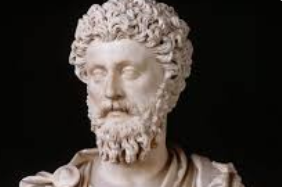
Human life. Duration: momentary. Nature: changeable. Perception: dim. Condition of Body: decaying. Soul: spinning around. Fortune: unpredictable. Lasting Fame: uncertain. Sum Up: The body and its parts are a river, the soul a dream and mist, life is warfare and a journey far from home, lasting reputation is oblivion.
▼
Source
II, 17 (Hays translation)
4 months 3 weeks ago
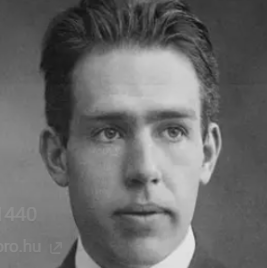
I go into the Upanishads to ask questions.
▼
Source
As quoted in God Is Not One : The Eight Rival Religions That Run the World and Why Their Differences Matter (2010), by Stephen Prothero, Ch, 4 : Hinduism : The Way of Devotion, p. 144
4 months 3 weeks ago
The man who eats with the greatest appetite has the least need of delicacies.
4 months 3 weeks ago
No man has a right to free himself from the law of labour
▼
Source
as quoted from The New International Encyclopædia, Volume 17, (1905 edition) p. 471, by Gilman, Daniel Coit; Colby, Frank Moore; Peck, Harry Thurston. Editor Dodd, Mead.
4 months 3 weeks ago
I had obtained some distinction, and felt myself of some importance, before the desire of distinction and of importance had grown into a passion: and little as it was which I had attained, yet having been attained too early, like all pleasures enjoyed too soon, it had made me blasé and indifferent to the pursuit. Thus neither selfish nor unselfish pleasures were pleasures to me. And there seemed no power in nature sufficient to begin the formation of my character anew, and create in a mind now irretrievably analytic, fresh associations of pleasure with any of the objects of human desire.
▼
Source
([https://archive.org/details/autobiography01mill/page/139/mode/1up p. 139])
4 months 3 weeks ago
The assurance that we have no means of answering [final] questions is no valid excuse for callousness towards them. The more deeply should we feel, down to the roots of our being, their pressure and their sting. Whose hunger has ever been [sated] with the knowledge that he could not eat?
▼
Source
p. 15
4 months 3 weeks ago
If mind is common to us, then also the reason, whereby we are reasoning beings, is common. If this be so, then also the reason which enjoins what is to be done or left undone is common. If this be so, law also is common; if this be so, we are citizens; if this be so, we are partakers in one constitution; if this be so, the Universe is a kind of Commonwealth.
▼
Source
IV, 4 (as translated by ASL Farquharson)
4 months 3 weeks ago
The wisest of you men is he who has realized, like Socrates, that in respect of wisdom he is really worthless.
▼
Source
Plato, in Apology, 23b, as quoted in The last days of Socrates: Euthyphro, The apology: Crito [and] Phaedo (1967), p. 52

4 months 3 weeks ago
Everything which is, is thought, but not conscious and individual thought. The human intelligence is but the consciousness of being. It is what I have formulated before: Everything is a symbol of a symbol, and a symbol of what? of mind.
▼
Source
30 December 1850
4 months 3 weeks ago
It is the character of the British people, or at least of the higher and middle classes who pass muster for the British people, that to induce them to approve of any change, it is necessary that they should look upon it as a middle course: they think every proposal extreme and violent unless they hear of some other proposal going still farther, upon which their antipathy to extreme views may discharge itself. So it proved in the present instance; my proposal was condemned, but any scheme for Irish Land reform, short of mine, came to be thought moderate by comparison.
▼
Source
([https://archive.org/details/autobiography01mill/page/294/mode/1up pp. 294-295])
4 months 3 weeks ago
To be like the rock that the waves keep crashing over. It stands unmoved and the raging of the sea falls still around it.
▼
Source
IV, 49

4 months 3 weeks ago
Beginning to reason is like stepping onto an escalator that leads upward and out of sight. Once we take the first step, the distance to be traveled is independent of our will and we cannot know in advance where we shall end.
▼
Source
Chapter 4, Reason, p. 88

4 months 3 weeks ago
Always think of yourself as everyone's servant; look for Christ Our Lord in everyone and you will then have respect and reverence for them all.
▼
Source
Maxim 25, p. 257

4 months 3 weeks ago
They (Thucydides and Xenophon) maintained the dignity of history.
▼
Source
On the Study and Use of History, letter 5 (1752); compare Henry Fielding, Tom Jones, book xi. chap. ii.; Horace Walpole, Advertisement to Letter to Sir Horace Mann; Thomas Babington Macaulay, History of England, vol. i. chap. i.
4 months 3 weeks ago
We cannot say, at any rate, that Liberty was the work of the Demagogue, either of Rationalism or anything else, because it was evidently a potent war-cry against the infallibility of Public Opinion, and the usurpation of Majorities, whether by Act of Parliament or social boycott.
▼
Source
p. 64
4 months 3 weeks ago
It is questionable whether there does not exist in man an obscure and blind will to make war; an impulse towards change, towards emergence from the familiarities of everyday life and from the stabilities of well-known conditions — something like a will to death as a will to annihilation and self-sacrifice, a vague enthusiasm for the upbuilding of a new world.
4 months 3 weeks ago
Stir up thy mind, and recall thy wits again from thy natural dreams, and visions, and when thou art perfectly awoken, and canst perceive that they were but dreams that troubled thee, as one newly awakened out of another kind of sleep look upon these worldly things with the same mind as thou didst upon those, that thou sawest in thy sleep.
▼
Source
VI, 29
CivilSimian.com created by AxiomaticPanic, CivilSimian, Kalokagathia