
4 months 3 weeks ago
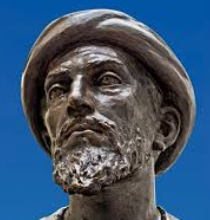
According to the theory of those weak minded persons, man is more perfect than his Creator. For what man says or does has a certain object, whilst the actions of God are different; He commands us to do what is of no use to us, and forbids us to do what is harmless. Far be this! On the contrary, the sole object of the Law is to benefit us.
▼
Source
Ch.31
4 months 3 weeks ago
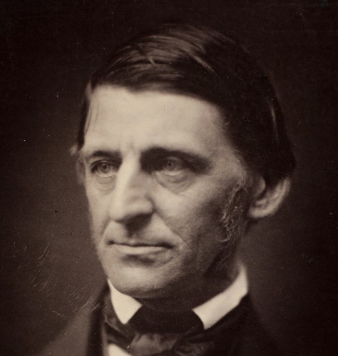
Nothing can be preserved that is not good.
▼
Source
Books
4 months 3 weeks ago
I have to say, I think that we are in some kind of final examination as to whether human beings now, with this capability to acquire information and to communicate, whether we're really qualified to take on the responsibility we're designed to be entrusted with. And this is not a matter of an examination of the types of governments, nothing to do with politics, nothing to do with economic systems. It has to do with the individual. Does the individual have the courage to really go along with the truth?

4 months 3 weeks ago
Iamblichus set out to give a systematic and decisive character to Plotinus' dialectic at its most sublime but also most obscure moment, that of absolute unity and its forms, already dealt with by Amelius and Porphyry; that is, around the way of reconciling and harmonising the mystical theory of the One with the variety of unitary principles that are expected to preside over the various aspects of life: that is, the transcendent One and the immanent One, the unity of thought and being, thinking thought and thought thought, and finally thought as an intelligible world.
▼
Source
(La Scuola di giamblico, “'School of Iamblichus”', XXX, p. 187)

4 months 3 weeks ago
Without Justice, no realm may prosper.
4 months 3 weeks ago
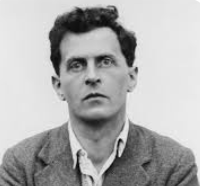
A tautology's truth is certain, a proposition's possible, a contradiction's impossible. (Certain, possible, impossible: here we have the first indication of the scale that we need in the theory of probability.) (4.464)
▼
Source
Original German: Die Wahrheit der Tautologie ist gewiss, des Satzes möglich, der Kontradiktion unmöglich
4 months 3 weeks ago
By a pardonable abridgment of history, the Rationalist character may be seen springing from the exaggeration of Bacon's hopes and the neglect of the scepticism of Descartes; modern Rationalism is what commonplace minds made out of the inspiration of men of discrimination and genius.
4 months 3 weeks ago
Language is a city to the building of which every human being brought a stone; yet he is no more to be credited with the grand result than the acaleph which adds a cell to the coral reef which is the basis of the continent.
▼
Source
Quotation and Originality
4 months 3 weeks ago
One cannot help but be struck by the diversity that characterizes efforts to study the management process. If it is true that psychologists like to study personality traits in terms of a person's reactions to objects and events, they could not choose a better stimulus than management science. Some feel it is a technique, some feel it is a branch of mathematics, or of mathematical economics, or of the "behavioral sciences," or of consultation services, or just so much nonsense. Some feel it is for management (vs. labor), some feel it ought to be for the good of mankind — or for the good of underpaid professors.
4 months 3 weeks ago
He was the antithesis of the philosopher of mystery and intimation, and he was not tempted to technicality. He lived assertively and was vain and cocksure — at some cost to his philosophical reputation, since other philosophers were as human in their judgements on him. He was also honest, humane, and more or less on the Left in politics. He liked society, was a man of many women, came to be self-judging, and after some sadness died bravely, on 27 June 1989.
▼
Source
Ted Honderich, in [http://www.ucl.ac.uk/~uctytho/AyerbyTH.html "A. J. Ayer's Philosophy and its Greatness"], his introduction to A. J. Ayer : Writings on Philosophy (2004).
4 months 3 weeks ago
Materials are indifferent, but the use which we make of them is not a matter of indifference.
▼
Source
Book II, ch. 5, § 1
4 months 3 weeks ago
I have often admired the mystical way of Pythagoras, and the secret Magic of numbers.
▼
Source
Thomas Browne, in Religio Medici (1642), Section 12
4 months 3 weeks ago
The seeds of heavenly bodies are deposited and cared for in the Milky Way, from which they emanate in swarms of comets that travel a ;long time and ordinarily gravitate towards various suns before becoming fixed in orbit.
▼
Source
L'attraction passioneé
4 months 3 weeks ago
Frazer is much more savage than most of his savages, for they are not as far removed from the understanding of spiritual matter as a twentieth-century Englishman. His explanations of primitive practices are much cruder than the meaning of these practices themselves.
▼
Source
Ch. 7 : Remarks on Frazer's Golden Bough, p. 131

4 months 3 weeks ago
As soon as you concern yourself with the "good" and "bad" of your fellows, you create an opening in your heart for maliciousness to enter. Testing, competing with, and criticizing others weakens and defeats you.
4 months 3 weeks ago
Heroism feels and never reasons and therefore is always right.
▼
Source
Heroism
4 months 3 weeks ago
The systems approach goes on to discovering that every world-view is terribly restricted.
▼
Source
C. West Churchman, (1970) cited in: Michael C. Jackson ( 1992) Systems Methodology for the Management Sciences. p. 137
4 months 3 weeks ago
Most men's conscience, habits, and opinions are borrowed from convention and gather continual comforting assurances from the same social consensus that originally suggested them.
▼
Source
Ch. VIII: Ideal Society
4 months 3 weeks ago
Next to the ridicule of denying an evident truth, is that of taking much pains to defend it; and no truth appears to me more evident, than that beasts are endow'd with thought and reason as well as men. The arguments are in this case so obvious, that they never escape the most stupid and ignorant.
▼
Source
Part 3, Section 16
4 months 3 weeks ago
It is the act of an ill-instructed man to blame others for his own bad condition; it is the act of one who has begun to be instructed, to lay the blame on himself; and of one whose instruction is completed, neither to blame another, nor himself. (5) [tr. George Long (1888)].
4 months 3 weeks ago
According to the account of Proclus (Book II. c. 4 ), Pythagoras was the first who gave to Geometry the form of a deductive science, by shewing the connexion of the geometrical truths then known, and their dependence on certain first principles. ...The traditionary account, that Pythagoras was the founder of scientific mathematics, is in some degree, supported by the statement of Diogenes Laertius, that he was chiefly occupied with the consideration of the properties of number, weight, and extension, besides music and astronomy. The passage of Cicero (De Nat. Deor. III. 36) may be referred to as evidence that later writers were unable to give any precise account of the mathematical discoveries of Pythagoras. To Pythagoras, however, is attributed the discovery of some of the most important elementary properties contained in the first book of Euclid's Elements. The very important truth contained in Prop. 47, Book I. is also ascribed to Pythagoras. ...Proclus attributes to him the discovery of that right-angled triangle, the three sides of which are respectively 3, 4, and 5 units. To Pythagoras also belongs the discovery, that there are only three kinds of regular polygons which can be placed so as to fill up the space round a point; namely, six equilateral triangles, four squares, and three regular hexagons. Proclus attributes to him the doctrine of incommensurables, and the discovery of the five regular solids, which, if not due to Pythagoras, originated in his school. In Astronomy he is reputed to have held, that the Sun is the centre of the system, and that the planets revolve round it. This has been called, from his name, the Pythagorean System, which was revived by Copernicus, A.D.1541, and proved by Newton.
▼
Source
Robert Potts, [https://books.google.com/books?id=GLZjAAAAcAAJ&pg=PR3 Euclid's Elements of Geometry] (1845) Introduction pp. iii-iv
4 months 3 weeks ago
If I have exhausted the justifications, I have reached bedrock and my spade is turned. Then I am inclined to say: "This is simply what I do."
▼
Source
§ 217

4 months 3 weeks ago
It cannot be denied that Islam, regarded as an ethical ideal plus a certain kind of polity – by which expression I mean a social structure regulated by a legal system and animated by a specific ethical ideal – has been the chief formative factor in the life-history of the Muslims of India. It has furnished those basic emotions and loyalties which gradually unify scattered individuals and groups, and finally transform them into a well-defined people, possessing a moral consciousness of their own.
▼
Source
Sir Muhammad Iqbal’s 1930 Presidential Address to the 25th Session of the All-India Muslim League, Allahabad, 29 December 1930 (from [http://www.columbia.edu/itc/mealac/pritchett/00islamlinks/txt_iqbal_1930.html University of Columbia website])
4 months 3 weeks ago
In order to learn the important lessons in life, one must each day surmount to fear.
▼
Source
There are ongoing disputes on who should receive credit for this quote. The earliest match that could be found was in an article published by Los Angeles Times in 1936, which attributed the quote to Elbert Hubbard, but the evidence was weak as he died in
4 months 3 weeks ago
Mr. Herschel ... brought with him the calculations of the computers, and we commenced the tedious process of verification. After a time many discrepancies occurred, and at one point these discordances were so numerous that I exclaimed, "I wish to God these calculations had been executed by steam," to which Herschel replied, "It is quite possible."
▼
Source
Babbage in November 1839, recalling events in 1821; quoted in Harry Wilmot Buxton and Anthony Hyman (1988), Memoir of the Life and Labours of the Late Charles Babbage. "Computers" here refers to people calculating by hand.
4 months 3 weeks ago
There is no cure for birth and death save to enjoy the interval.
▼
Source
"War Shrines"
4 months 3 weeks ago
Burke said with a depth that it is impossible to admire enough that art is man’s nature: yes, undoubtedly, man with all his affections, all his knowledge, all his arts, is truly the man of nature, and the weaver’s web is as natural as the spider’s.
▼
Source
p. 52
4 months 3 weeks ago
In vain, therefore, should we pretend to determine any single event, or infer any cause or effect, without the assistance of observation and experience.
▼
Source
§ 4.11
4 months 3 weeks ago
Scholastic skeptics, as well as ignorant materialists, have greatly amused themselves for the last two centuries over the absurdities attributed to Pythagoras by his biographer, Iamblichus. The Samian philosopher is said to have persuaded a she-bear to give up eating human flesh; to have forced a white eagle to descend to him from the clouds, and to have subdued him by stroking him gently with the hand, and by talking to him. On another occasion, Pythagoras actually persuaded an ox to renounce eating beans, by merely whispering in the animal's ear! (Iamblichus: "De Vita Pythag.") Oh, ignorance and superstition of our forefathers, how ridiculous they appear in the eyes of our enlightened generations! Let us, however, analyze this absurdity. Every day we see unlettered men, proprietors of strolling menageries, taming and completely subduing the most ferocious animals, merely by the power of their irresistible will... Every one has either witnessed or heard of the seemingly magical power of some mesmerizers and psychologists. They are able to subjugate their patients for any length of time. Regazzoni, the mesmerist who excited such wonder in France and London, has achieved far more extraordinary feats than what is above attributed to Pythagoras. Why, then, accuse the ancient biographers of such men as Pythagoras and Apollonius of Tyana of either wilful misrepresentation or absurd superstition?
▼
Source
p.284.
4 months 3 weeks ago
Reading the Socratic dialogues one has the feeling: what a frightful waste of time! What's the point of these arguments that prove nothing and clarify nothing?
▼
Source
p. 14e

4 months 3 weeks ago
All content of science, and also their protocol statements that are used for verification, are selected on the basis of decisions and can be altered in principle.
▼
Source
Otto Neurath (1934:102), as cited in: Cartwright (2008;199)
4 months 3 weeks ago
Emerson's prose is full of poetry, and his poems are light and air. ... His modes of expression, like his epithets, are imaginative.
▼
Source
Edmund Clarence Stedman, Poets of America (1885), pp. 134 & 164
4 months 3 weeks ago
If we define a miracle as an effect of which the cause is unknown to us, then we make our ignorance the source of miracles! and the universe itself would be a standing miracle. A miracle might be perhaps defined more exactly as an effect which is not the consequence or effect of any known laws of nature.
▼
Source
"Passages from the life of a philosopher", Appendix, p. 489
4 months 3 weeks ago
I leave you but the sound of many a wordIn mocking echoes haply overheard,I sang to heaven. My exile made me free,from world to world, from all worlds carried me.
▼
Source
[http://www.poemhunter.com/poem/the-poet-s-testament/ The Poet's Testament]
4 months 3 weeks ago
Why so many laws? Because there is no legislator. What have these so-called legislators done in six years? Nothing, for to destroy is not to make.
4 months 3 weeks ago
It is, therefore, a just political maxim, that every man must be supposed a knave: Though at the same time, it appears somewhat strange, that a maxim should be true in politics, which is false in fact. But to satisfy us on this head, we may consider, that men are generally more honest in their private than in their public capacity, and will go greater lengths to serve a party, than when their own private interest is alone concerned. Honour is a great check upon mankind: But where a considerable body of men act together, this check is, in a great measure, removed; since a man is sure to be approved of by his own party, for what promotes the common interest; and he soon learns to despise the clamours of adversaries.
▼
Source
Part I, Essay 6: Of The Independency of Parliament; first line often paraphrased as "It is a just political maxim, that every man must be supposed a knave."
4 months 3 weeks ago
Religion is, as it were, the calm bottom of the sea at its deepest point, which remains calm however high the waves on the surface may be.
▼
Source
p. 53e

4 months 3 weeks ago
And you, young engineer, you who dream of improving the lot of the workers by the application of science to industry — what a sad disappointment, what terrible disillusions await you! You devote the useful energy of your mind to working out the scheme of a railway which, running along the brink of precipices and burrowing into the very heart of mountains of granite, will bind together two countries which nature has separated. But once at work, you see whole regiments of workers decimated by privations and sickness in this dark tunnel — you see others of them returning home carrying with them, maybe, a few pence, and the undoubted seeds of consumption; you see human corpses — the results of a groveling greed — as landmarks along each yard of your road; and, when the railroad is finished, you see, lastly, that it becomes the highway for the artillery of an invading army...
4 months 3 weeks ago
Popper's skepticism about scientific truth in The Logic of Scientific Discovery is that kind of reaction, of which the epitome is given in Aesop's fable of the fox and the grapes. The parallel would be complete if the fox, having become convinced that neither he nor anyone else could ever succeed in tasting grapes, should nevertheless write many long books on the progress of viticulture.
▼
Source
[https://www.google.com.au/books/edition/Popper_and_After/9iOoBQAAQBAJ Popper and After: Four Modern Irrationalists], Oxford: Pergamon, 1982. Page 52.
4 months 3 weeks ago
By means of [the microscope and the telescope] man touched, one might say, the two infinities. With the aid of glass, he could contemplate at his leisure the mite and the ring of Saturn. […] Master of glass through fire, and master of light through glass, he had lenses and mirrors of all kinds, prisms, containers, beakers, tubes, and finally barometers and thermometers. However all this originally began with the astronomical lens, which honours glass; and physics is born in some manner from astronomy, as it was written that, even in a material and gross sense, all science must descend from heaven.
▼
Source
p. 47
4 months 3 weeks ago
In a word, CLEANTHES, a man who follows your hypothesis is able perhaps to assert, or conjecture, that the universe, sometime, arose from something like design: but beyond that position he cannot ascertain one single circumstance; and is left afterwards to fix every point of his theology by the utmost license of fancy and hypothesis. This world, for aught he knows, is very faulty and imperfect, compared to a superior standard; and was only the first rude essay of some infant deity, who afterwards abandoned it, ashamed of his lame performance: it is the work only of some dependent, inferior deity; and is the object of derision to his superiors: it is the production of old age and dotage in some superannuated deity; and ever since his death, has run on at adventures, from the first impulse and active force which it received from him. You justly give signs of horror, DEMEA, at these strange suppositions; but these, and a thousand more of the same kind, are CLEANTHES's suppositions, not mine. From the moment the attributes of the Deity are supposed finite, all these have place. And I cannot, for my part, think that so wild and unsettled a system of theology is, in any respect, preferable to none at all.
▼
Source
Philo to Demea, Part V
4 months 3 weeks ago
He was like an atomic bomb, a tornado — people don't appreciate that.
▼
Source
W. A. Hijab, a student of Wittgenstein, as quoted in Autism and Creativity : Is there a link between autism in men and exceptional ability? (2004) by Michael Fitzgerald, p. 93
4 months 3 weeks ago
The masses have never believed in sophisms taught by economists, uttered more to confirm exploiters in their rights than to convert exploited! Peasants and workers, crushed by misery and finding no support in the well-to-do classes, have let things go, save from time to time when they have affirmed their rights by insurrection. And if workers ever thought that the day would come when personal appropriation of capital would profit all by turning it into a stock of wealth to be shared by all, this illusion is vanishing like so many others. The worker perceives that he has been disinherited, and that disinherited he will remain, unless he has recourse to strikes or revolts to tear from his masters the smallest part of riches built up by his own efforts; that is to say, in order to get that little, he already must impose on himself the pangs of hunger and face imprisonment, if not exposure to Imperial, Royal, or Republican fusillades.But a greater evil of the present system becomes more and more marked; namely, that in a system based on private appropriation, all that is necessary to life and to production — land, housing, food and tools — having once passed into the hands of a few, the production of necessities that would give well-being to all is continually hampered. The worker feels vaguely that our present technical power could give abundance to all, but he also perceives how the capitalistic system and the State hinder the conquest of this well-being in every way.Far from producing more than is needed to assure material riches, we do not produce enough.

4 months 3 weeks ago
Ignorance plays the chief part among men, and the multitude of words.
▼
Source
Cleobulus, 4.
4 months 3 weeks ago
There is not even a thought, or an invention, which is not common property, born of the past and the present. Thousands of inventors, known and unknown, who have died in poverty, have co-operated in the invention of each of these machines which embody the genius of man.
▼
Source
Ch. 1 : Our Riches
4 months 3 weeks ago
The road to Hades is the easiest to travel.
▼
Source
Bion, 49.
4 months 3 weeks ago
The love of God consists in an ardent desire to procure the general welfare, and reason teaches me that there is nothing which contributes more to the general welfare of mankind than the perfection of reason.
▼
Source
Closing sentence of the Preface to the general science (1677) (in P. Wiener (ed.), Leibniz Selections, Macmilland Press Ltd, 1951).
4 months 3 weeks ago
Whilst in speaking of human things, we say that it is necessary to know them before we can love them...the saints on the contrary say in speaking of divine things that it is necessary to love them in order to know them, and that we only enter truth through charity.
4 months 3 weeks ago
To apply oneself to great inventions, starting from the smallest beginnings, is no task for ordinary minds; to divine that wonderful arts lie hid behind trivial and childish things is a conception for superhuman talents.
4 months 3 weeks ago
If we put aside those gardeners who chiefly cultivate the... primeurs—strawberries ripened in January, and the like—if we take only those who grow crops in the open field, and resort to frames exclusively for the earlier days of the life of the plant and if we analyse their system, we see that its very essence is first, to create for the plant a nutritive and porous soil, which contains both the necessary decaying organic matter and the inorganic compounds; and then to keep that soil and the surrounding atmosphere at a temperature and moisture superior to those of the open air. The whole system is summed up in these few words. If the French maraîcher spends prodigies of labour, intelligence, and imagination in combining different kinds of manure so as to make them ferment at a given speed, he does so for no purpose but the above: a nourishing soil and a desired equal temperature of the air and the soil. All of his empirical art is devoted to the achievement of these two aims. But... the soil can be improved by hand, but it need not be made by hand. Any soil... can be made by machinery. ...We shall see manufactures of as soon as there is a demand for them.
CivilSimian.com created by AxiomaticPanic, CivilSimian, Kalokagathia