

4 months 3 weeks ago
Reason in man is rather like God in the world.
▼
Source
Opuscule II, De Regno (On Kingship, c. 1267)

4 months 3 weeks ago
The fleshless diet contributes to health and to a suitable endurance of hard work in philosophy.
▼
Source
1, 2, 1
4 months 3 weeks ago
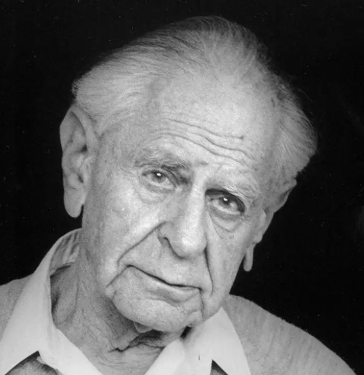
Why do I think that we, the intellectuals, are able to help? Simply because we, the intellectuals, have done the most terrible harm for thousands of years. Mass murder in the name of an idea, a doctrine, a theory, a religion — that is all our doing, our invention: the invention of the intellectuals. If only we would stop setting man against man — often with the best intentions — much would be gained. Nobody can say that it is impossible for us to stop doing this.
4 months 3 weeks ago
Science has adapted itself entirely to the wealthy classes and accordingly has set itself to heal those who can afford everything, and it prescribes the same methods for those who have nothing to spare.
4 months 3 weeks ago
Marx compellingly proved it in Capital Volume Two, that no production is possible which does not allow for the reproduction of the material conditions of productions: the reproduction of the means of production.
▼
Source
p.128
4 months 3 weeks ago
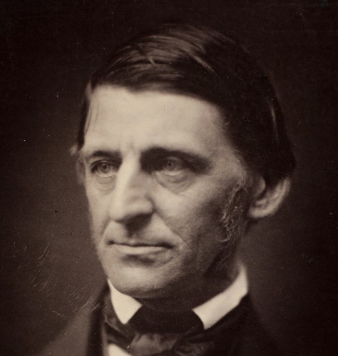
Character is higher than intellect...A great soul will be strong to live, as well as strong to think.
▼
Source
par. 27

4 months 3 weeks ago
A Right Mind, and Generous Affection, [has] more Beauty and Charm, than all other Symmetrys in the World besides.
▼
Source
Vol. 2, p. 209; "Miscellany III".
4 months 3 weeks ago
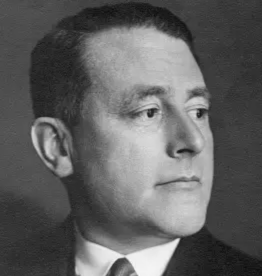
The state as the decisive political entity possesses an enormous power: the possibility of waging war and thereby publicly disposing of the lives of men. The jus belli contains such a disposition. It implies a double possibility: the right to demand from its own members the readiness to die and unhesitatingly to kill enemies.
4 months 3 weeks ago
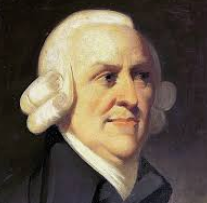
III. Every tax ought to be levied at the time, or in the manner, in which it is most likely to be convenient for the contributor to pay it.
▼
Source
Chapter II Part II, p. 893.
4 months 3 weeks ago
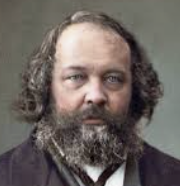
Marx is a Jew and is surrounded by a crowd of little, more or less intelligent, scheming, agile, speculating Jews, just as Jews are everywhere, commercial and banking agents, writers, politicians, correspondents for newspapers of all shades; in short, literary brokers, just as they are financial brokers, with one foot in the bank and the other in the socialist movement, and their arses sitting upon the German press. They have grabbed hold of all newspapers, and you can imagine what a nauseating literature is the outcome of it. Now this entire Jewish world, which constitutes an exploiting sect, a people of leeches, a voracious parasite, Marx feels an instinctive inclination and a great respect for the Rothschilds. This may seem strange. What could there be in common between communism and high finance? Ho ho! The communism of Marx seeks a strong state centralization, and where this exists there must inevitably exist a state central bank, and where this exists, there the parasitic Jewish nation, which speculates upon the labor of the people, will always find the means for its existence.
▼
Source
Letters to the internationals of Bologna - Explanatory and supporting documents (Lettres aux internationaux de Bologne - Pièces explicatives et justificatives), December 1871. Heavily paraphrased from the original into English by in Jew Baiting On The Lef
4 months 3 weeks ago
These issues are very complex and are best left to a full treatment of the principle of rectification. In the absence of such a treatment applied to a particular society, one cannot use the analysis and theory presented here to condemn any particular scheme of transfer payments, unless it is clear that no considerations of rectification of injustice could apply to justify it. Although to introduce socialism as the punishment for our sins would be to go too far, past injustices might seem to be so great as to make necessary in the short run a more extensive state in order to rectify them.
▼
Source
p. [http://books.google.com/books?id=fVITAAAAQBAJ&pg=PT139 232]
4 months 3 weeks ago
We are all brothers—and yet every morning a brother or a sister must empty the bedroom slops for me. We are all brothers, but every morning I must have a cigar, a sweetmeat, an ice, and such things, which my brothers and sisters have been wasting their health in manufacturing, and I enjoy these things and demand them...We are all brothers, but I live on a salary paid me for prosecuting, judging, and condemning the thief or the prostitute whose existence the whole tenor of my life tends to bring about, and who I know ought not to be punished but reformed. We are all brothers, but I live on the salary I gain by collecting taxes from needy laborers to be spent on the luxuries of the rich and idle. We are all brothers, but I take a stipend for preaching a false Christian religion, which I do not myself believe in, and which only serves to hinder men from understanding true Christianity. I take a stipend as priest or bishop for deceiving men in the matter of the greatest importance to them. We are all brothers, but I will not give the poor the benefit of my educational, medical, or literary labors except for money. We are all brothers, yet I take a salary for being ready to commit murder, for teaching men to murder, or making firearms, gunpowder, or fortifications.
▼
Source
Chapter V, Contradiction Between our Life and our Christian Conscience
4 months 3 weeks ago
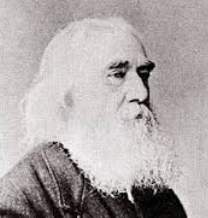
Children learn the fundamental principles of natural law at a very early age. Thus they very early understand that one child must not, without just cause, strike or otherwise hurt, another; that one child must not assume any arbitrary control or domination over another; that one child must not, either by force, deceit, or stealth, obtain possession of anything that belongs to another; that if one child commits any of these wrongs against another, it is not only the right of the injured child to resist, and, if need be, punish the wrongdoer, and compel him to make reparation, but that it is also the right, and the moral duty, of all other children, and all other persons, to assist the injured party in defending his rights, and redressing his wrongs. These are fundamental principles of natural law, which govern the most important transactions of man with man. Yet children learn them earlier than they learn that three and three are six, or five and five ten. Their childish plays, even, could not be carried on without a constant regard to them; and it is equally impossible for persons of any age to live together in peace on any other conditions.It would be no extravagance to say that, in most cases, if not in all, mankind at large, young and old, learn this natural law long before they have learned the meanings of the words by which we describe it. In truth, it would be impossible to make them understand the real meanings of the words, if they did not understand the nature of the thing itself. To make them understand the meanings of the words justice and injustice before knowing the nature of the things themselves, would be as impossible as it would be to make them understand the meanings of the words heat and cold, wet and dry, light and darkness, white and black, one and two, before knowing the nature of the things themselves. Men necessarily must know sentiments and ideas, no less than material things, before they can know the meanings of the words by which we describe them.
▼
Source
Section IV, p. 9–10
4 months 3 weeks ago
Each to each a looking-glass, Reflects his figure that doth pass. Every wayfarer he meets What himself declared repeats, What himself confessed records, Sentences him in his words; The form is his own corporal form, And his thought the penal worm. Yet shine forever virgin minds, Loved by stars and the purest winds, Which, o'er passion throned sedate, Have not hazarded their state; Disconcert the searching spy, Rendering to a curious eye The durance of a granite ledge To those who gaze from the sea's edge. It is there for benefit; It is there for purging light; There for purifying storms; And its depths reflect all forms; It cannot parley with the mean,— Pure by impure is not seen. For there's no sequestered grot, Lone mountain tarn, or isle forgot, But Justice, journeying in the sphere, Daily stoops to harbour there.
▼
Source
Astræa
4 months 3 weeks ago
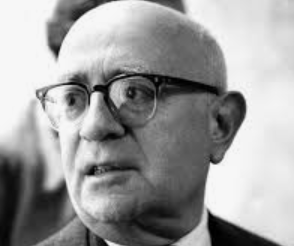
To be sure, exchange-value exerts its power in a special way in the realm of cultural goods. For in the world of commodities this realm appears to be exempted from the power of exchange, to be in an immediate relationship with the goods, and it is this appearance in turn which alone gives cultural goods their exchange-value. But they nevertheless simultaneously fall completely into the world of commodities, are produced for the market, and are aimed at the market.
▼
Source
p. 279
4 months 3 weeks ago
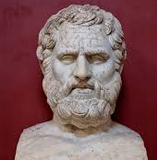
Seek to please all the citizens, even though Your house may be in an ungracious city. For such a course will favour win from all: But haughty manners oft produce destruction.
4 months 3 weeks ago
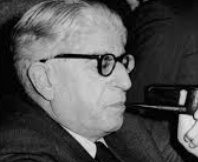
The Roman came into the Promised Land that had become less and less as promised. The rich got along quite well with the foreign occupation; it provided protection from desperate peasants and patriotic resistance fighters. It provided protection from prophets who could be labeled "agitators" now, without any qualms.
▼
Source
p. 121
4 months 3 weeks ago
The Wealth of Nations is in no sense a textbook. Adam smith is writing to his age, not to his classroom; he is expounding a doctrine that is meant to be of importance in running an empire, not an abstract treatise for academic distribution. The dragons that he slays (such as the Mercantilist philosophy, which takes over two hundred pages to die) were alive and panting, if a little tired, in his day. And finally, the book is a revolutionary one. To be sure, Smith would hardly have countenanced an upheaval that disordered the gentlemanly classes and enthroned the common poor. But the import of The Wealth of Nations is revolutionary, nonetheless.
▼
Source
Robert Heilbroner, The Worldly Philosophers 7th ed. (1999), Chapter III. The Wonderful World of Adam Smith
4 months 3 weeks ago
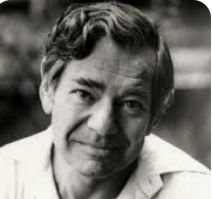
If it does not upset, it is not philosophy.
4 months 3 weeks ago
The activity of art is... as important as the activity of language itself, and as universal.
4 months 3 weeks ago
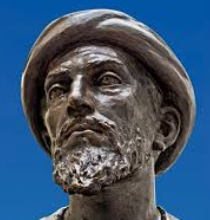
Abraham ... was sunk in Ur of the Chaldees among foolish idolaters. His father and mother and all the people worshipped the stars. ... He knew that all were mistaken and that what caused them to err was worship of the images which drove the Truth out of their minds. ... It was proper to destroy and smash the idols so that the people should not err by them like those who think there is no god save images.
▼
Source
Treatise 4: “Idolatry,” H. Russell, trans. (1983), p. 73
4 months 3 weeks ago
Earth proudly wears the Parthenon As the best gem upon her zone.
▼
Source
The Problem, st. 3
4 months 3 weeks ago
I remember well a junior seminar I gave with Paul Tillich shortly before the outbreak of the Third Reich. A participant spoke out against the idea of the meaning of existence. She said life did not seem very meaningful to her and she didn't know whether it had a meaning. The very voluble Nazi contingent became very excited by this and scraped the floor noisily with their feet. Now, I do not wish to maintain that this Nazi foot-shuffling proves or refutes anything in particular, but I do find it highly significant. I would say it is a touchstone for the relation of thinking to freedom. It raises the question whether thought can bear the idea that a given reality is meaningless and that mind is unable to orientate itself; or whether the intellect has become so enfeebled that it finds itself paralysed by the idea that all is not well with the world.
▼
Source
pp. 19-20
4 months 3 weeks ago
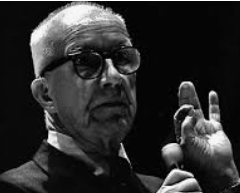
So long as mathematicians can impose up-and-down semantics upon students while trafficking personally in the non-up-and-down advantages of their concise statements, they can impose upon the ignorance of man a monopoly of access to accurate processing of information and can fool even themselves by thought habits governing the becoming behavior of professional specialists, by disclaiming the necessity of, or responsibility for, comprehensive adjustment of the a priori thought to total reality of universal principles. The everywhere-relative velocities and momentums of interactions, of energetic phenomena of universe, are central to the preoccupations and realizations of the comprehensive designer. The concept of relativity involves high frequency of re-established awareness, and progressively integrating consideration of the respective, and also integrated dynamic complexities of the moving and transforming frame of reference and of the integrated dynamic complexities of the observed, as well as of the series of integrated sub-dynamic complexities, in respect to each of the major categories of the relatively moving frames of reference, of the observer and the observed. It also involves constant reference of all the reciprocating sub-sets to the comprehensive totality of non-simultaneous universe, from which naught may be lost.
▼
Source
"The Designers and the Politicians" (1962), later published in Ideas and Integrities : A Spontaneous Autobiographical Disclosure (1969), p. 234, and The Buckminster Fuller Reader (1970), p. 305
4 months 3 weeks ago
One dominant view in the eighteenth century, which was particularly persuasive among French economists, was that the government should actively promote trade and industry. Advocates of this view were called mercantilists. It was partly in response to the mercantilists that Adam Smith (who is often viewed as the founder of modern economics) wrote The Wealth of Nations (1776), in which he argued for a limited role for government. Smith attempted to show how competition and the profit motive would lead individuals—in pursuing their own private interests—to serve the public interest. The profit motive would lead individuals, competing against one another, to supply the goods other individuals wanted. Only firms that produced what was wanted and at as low a price as possible would survive. Smith argued that the economy was led, as if by an invisible hand, to produce what was desired—and in the best possible way. Adam Smith’s ideas had a powerful influence both on governments and on economists.
▼
Source
Joseph E. Stiglitz and Jay K. Rosengard, Economics of the Public Sector (4th ed., 2014)
4 months 3 weeks ago
The relation of word to thought, and the creation of new concepts is a complex, delicate and enigmatic process unfolding in our soul.
▼
Source
Pegagogicheskie Statli (Pedagogical Writings), pg. 143.
4 months 3 weeks ago
No form remains permanently in a substance; a constant change takes place, one form is taken off and another is put on.
▼
Source
Ch.8
4 months 3 weeks ago
Wealth begins in a tight roof that keeps the rain and wind out; in a good pump that yields you plenty of sweet water; in two suits of clothes, so to change your dress when you are wet; in dry sticks to burn; in a good double-wick lamp; and three meals; in a horse, or a locomotive, to cross the land; in a boat to cross the sea; in tools to work with; in books to read; and so, in giving, on all sides, by tolls and auxiliaries, the greatest possible extension to our powers, as if it added feet, and hands, and eyes, and blood, length to the day, and knowledge, and good-will.Wealth begins with these articles of necessity.
▼
Source
Wealth
4 months 3 weeks ago
I am convinced all of humanity is born with more gifts than we know. Most are born geniuses and just get de-geniused rapidly.
▼
Source
Statement made in 1974, quoted in People magazine. In Thomas T. K. Zung, "Buckminster Fuller: Anthology for the New Millenium" (2002), 174.
4 months 3 weeks ago
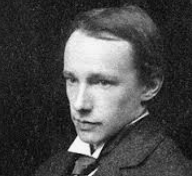
The study of Ethics would, no doubt, be far more simple, and its results far more "systematic," if, for instance, pain were an evil of exactly the same magnitude as pleasure is a good; but we have no reason whatever to assume that the Universe is such that ethical truths must display this kind of symmetry ... .
▼
Source
Principia Ethica (1903), ch. VI.
4 months 3 weeks ago
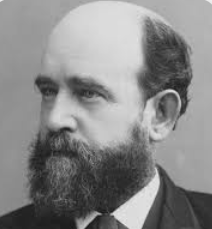
Many there are, too depressed, too embruted with hard toil and the struggle for animal existence, to think for themselves. Therefore the obligation devolves with all the more force on those who can. If thinking men are few, they are for that reason all the more powerful. Let no man imagine that he has no influence. Whoever he may be, and wherever he may be placed, the man who thinks becomes a light and a power. That for every idle word men may speak they shall give an account at the day of judgment, seems a hard saying. But what more clear than that the theory of the persistence of force, which teaches us that every movement continues to act and react, must apply as well to the universe of mind as to that of matter? Whoever becomes imbued with a noble idea kindles a flame from which other torches are lit, and influences those with whom he comes in contact, be they few or many. How far that influence, thus perpetuated, may extend, it is not given to him here to see. But it may be that the Lord of the Vineyard will know.
▼
Source
Ch. 21 : Conclusion
4 months 3 weeks ago
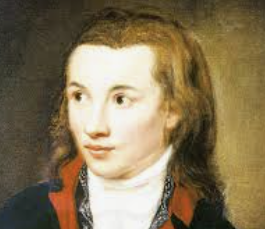
Tools arm the man. One can well say that man is capable of bringing forth a world; he lacks only the necessary apparatus, the corresponding armature of his sensory tools. The beginning is there. Thus the principle of a warship lies in the idea of the shipbuilder, who is able to incorporate this thought by making himself into a gigantic machine, as it were, through a mass of men and appropriate tools and materials. Thus the idea of a moment often required monstrous organs, monstrous masses of materials, and man is therefore a potential, if not an actual creator.
▼
Source
Fragment No. 88

4 months 3 weeks ago
A person who is shallow aspires to depth; one who is ugly aspires to beauty; one who is narrow aspires to breadth; one who is poor aspires to wealth; one who is humble aspires to esteem. Whatever one lacks in oneself he must seek outside.
▼
Source
Sources of Chinese Tradition (1999), vol. 1, p. 181
4 months 3 weeks ago
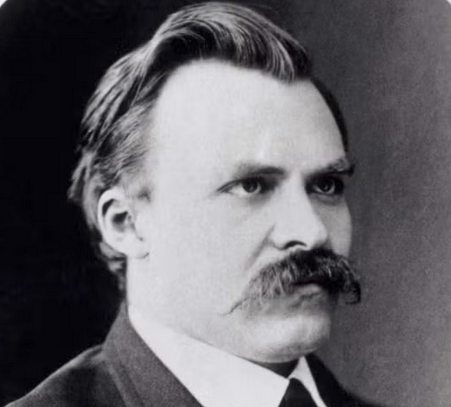
Never, however, was the struggle between truth and beauty greater than with the invasion of the Dionysian ritual; in this ritual, nature disclosed itself and spoke of its secret with terrible clarity, with that tone against which seductive seeming [...] A great revolution began in all forms of life
▼
Source
page 40
4 months 3 weeks ago
No one has yet added up all the heavy, stress-filled workdays as well as the hundreds, perhaps thousands, of lives that are wasted to produce the world's amusements. It is for this reason that "amusements" are not so amusing.
▼
Source
p. 81
4 months 3 weeks ago
The more we desire for that which is superfluous, the more we meet with difficulties; our strength and possessions are spent in unnecessary things, and are wanting when required for that which is necessary.
▼
Source
Ch.12
4 months 3 weeks ago
Fine manners need the support of fine manners in others, and this is a gift interred only by the self.
▼
Source
Behavior
4 months 3 weeks ago
We evolute toward ever lesser brain comprehension lags — ergo, toward ever diminishing error; ergo, ever diminishing misunderstandings; ergo, ever diminishing fear, and its brain-lagging painful errors of objectivity; wherefore we approach eternal instantaneity of absolute and total comprehension. The eternal instantaneity of no lag at all. However, we have now learned from our generalizations of the great complexity of the interactions of principles as we are disembarrassed of our local, exclusively physical chemistry of information-sensing devices — that what is approached is eternal and instant awareness of absolute reality of all that ever existed. All the great metaphysical integrity of all the individuals, which is potential and inherent in the complex interactions of generalized principles, will always and only coexist eternally.
4 months 3 weeks ago
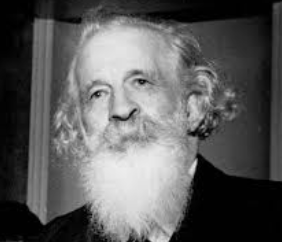
True poetry is a function of awakening. It awakens us, but it must retain the memory of previous dreams.
▼
Source
Introduction
4 months 3 weeks ago
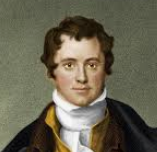
A small piece of pure ... was placed upon an insulated disk of platina, connected with the negative side of the battery... and a platina wire communicating with the positive side, was brought into contact with the... surface of the alkali. ...The potash began to fuse at both its points of electrization. There was a violent effervescence at the upper surface; at the lower, or negative, surface, there was no liberation of elastic fluid; but small globules, having a high metallic lustre, and being precisely similar in visible characters to quicksilver, appeared, some of which burnt with explosion and bright flame, as soon as they were formed, and others remained, and were merely tarnished, and finally covered with a white film which formed on their surfaces.
▼
Source
"The Bakerian Lecture, on some new Phenomena of chemical Changes produced by Electricity, particularly the Decomposition of the fixed Alkalis, and on the Exhibition of the new substances which constitute their bases; and on the general Nature of alkaline

4 months 3 weeks ago
Man can, indeed, act contrarily to the decrees of God, as far as they have been written like laws in the minds of ourselves or the prophets, but against that eternal decree of God, which is written in universal nature, and has regard to the course of nature as a whole, he can do nothing.
▼
Source
Ch. 2, Of Natural Right
4 months 3 weeks ago
What is Nature? An encyclopedical, systematic Index or Plan of our Spirit. Why will we content us with the mere catalogue of our Treasures? Let us contemplate them ourselves, and in all ways elaborate and use them.

4 months 3 weeks ago
Write in the sand the flaws of your friend.
▼
Source
As quoted in Geary's Guide to the World's Great Aphorists (2007) by James Geary
4 months 3 weeks ago
The very reason the Greeks got so far is that they knew how to pick up the spear and throw it onward from the point where others had left it. Their skill in the art of fruitful learning was admirable. We ought to be learning from our neighbors precisely as the Greeks learned from theirs, not for the sake of learned pedantry but rather using everything we learn as a foothold which will take us up as high, and higher, than our neighbor.
▼
Source
p. 30
4 months 3 weeks ago
Tolstoy, himself a nobleman and the owner of a thousand serfs, conceived of dramas on a scale commensurate with his lands and estates.
▼
Source
Lewis H. Lapham, Money and Class in America, Chapter 3, The Golden Horde, p. 61
4 months 3 weeks ago
God's knowledge extends to things not in existence, and includes also the infinite.
▼
Source
Ch.20
4 months 3 weeks ago
Ever from one who comes to-morrow Men wait their good and truth to borrow.
▼
Source
Merlin's Song, II
4 months 3 weeks ago
The effective decisions can only be made by the independently thinking and adequately informed human individuals and their telepathically intercommunicated wisdom--the wisdom of the majority of all such human individuals -- qualifying for continuance in Universe as local cosmic problem-solvers -- in love with the truth and in individually spontaneous self-commitment to absolute faith in the wisdom, integrity, and love of God, who seems to wish Earthian humans to survive.
4 months 3 weeks ago
When the wise man opens his mouth, the beauties of his soul present themselves to the view, like the statues in a temple
▼
Source
"Pythagorean Ethical Sentences From Stobæus" (1904)
4 months 3 weeks ago
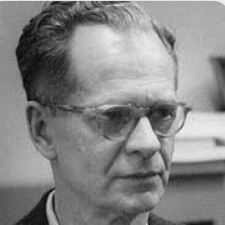
Society attacks early, when the individual is helpless.
▼
Source
Walden Two (1948), p. 95
CivilSimian.com created by AxiomaticPanic, CivilSimian, Kalokagathia