
4 months 3 weeks ago
According to the way it is generally used today, the term 'ethics' relates above all to the domain of human rights, 'the rights of man'- or, by derivation, the rights of living beings. We are supposed to assume the existence of a universally recognizable human subject possessing 'rights' that are in some sense natural: the right to live, to avoid abusive, to enjoy 'fundamental' liberties (of opinion, of expression, of democratic choice in the election of governments, etc.) These rights are held to be self-evident, and the result of a wide consensus. 'Ethics' is a matter of busying ourselves with these rights, of making sure that they are respected.
▼
Source
Chapter One, "Does Man Exist?"
4 months 3 weeks ago
All religions promise a reward for excellences of the will or heart, but none for excellences of the head or understanding.
▼
Source
E. Payne, trans., vol. 2, p. 230

4 months 3 weeks ago
We make choices, decisions, as long as we keep to the surface of things; once we reach the depths, we can neither choose nor decide, we can do nothing but regret the surface...

4 months 3 weeks ago
I found him as usual sitting at his table, but evidently in a condition of great suppressed irritability; with Mill's treatise On Liberty lying before him... [H]e rose angrily from the table with the book in his hand, and gave vent to such a torrent of anathema (glancing at Christianity itself, as if Christianity had been the inspiration of it), as filled me with pain and amazement. He addressed himself directly to me, almost as if I had written the book, or had sent it to him, or was in some way mixed up with it in his mind. I felt terribly hurt; but what could I say in protest against such a wide-rushing torrent of invective? ... I know the book well enough now, and the ghastly issues to which it inevitably points, with its accurate balancing of enlightened self-interests, and its deification of every man's own heart; and I will only say that, putting myself honestly in Carlyle's place, I do not wonder that his indignation was beyond endurance. It must have been to him, in the incisiveness of its attack and the taking popularity of its style, like a vision of the great red dragon standing triumphant before him, ready to devour the fruit of his soul's travail as soon as it was born. Since that day, I have never heard him express more utter abhorrence of anything than I have, more than once in late years, heard him express of the crowing, God denying, death-stricken spirit, now making such ‘great signs’ with our fashionable sciences and life-philosophies,—and all the world wondering after it!
▼
Source
Henry Larkin, ‘Carlyle and Mrs. Carlyle: A Ten-Years' Reminiscence’, British Quarterly Review, Vol. LXXIV (1881), pp. 73–74
4 months 3 weeks ago
Those animals which are incapable of making binding agreements with one another not to inflict nor suffer harm are without either justice or injustice; and likewise for those peoples who either could not or would not form binding agreements not to inflict nor suffer harm.
4 months 3 weeks ago
The philosophy of Parmenides is a strange blend of mysticism and logic. It is mysticism, for its goal is not the gradual and cumulative correction of empirical knowledge, but deliverance from it through the instantaneous and absolute grasp of "immovable" truth. This is not the way of techne, but the way of revelation: it lies "beyond the path of men" (B. 1.27). Yet this revelation is itself addressed to man's reason and must be judged by reason. Its core is pure logic: a rigorous venture in deductive thinking, the first of its kind in European thought. This kind of thinking could be used against the world of the senses … This projection of the logic of Being upon the alien world of Becoming was Parmenides' most important single contribution to the history of thought, though it is seldom recognized as such. Without it, his doctrine of Being could have remained a speculative curiosity. With it, he laid the foundations for the greatest achievement of the scientific imagination of Greece, the atomic hypothesis.
▼
Source
Gregory Vlastos, in Studies in Greek Philosophy (1993), Vol. I, p. 16
4 months 3 weeks ago
What right do white racist, who believe their race is superior, have for complaining about black racists, who see something special in their own race? What right do black racists, who see a special character in their race, have for complaining about white racists? White men who think their race makes them superior to black men admit the idea of racial difference and authorize and initiate black racists. Black men who proclaim their race — when what they are really proclaiming is the spiritual identity that distinguishes one ethnic group from another — authorize and incite white racists. Peace demands of Nature the recognition of human rights; discrimination is contrary to Nature and the enemy of peace. Whites who isolate themselves also isolate Negroes. Negroes who isolate themselves incite and isolate whites.

4 months 3 weeks ago
Logic is justly considered the basis of all other sciences, even if only for the reason that in every argument we employ concepts taken from the field of logic, and that ever correct inference proceeds in accordance with its laws.
▼
Source
Introduction to Logic: and to the Methodology of Deductive Sciences. (1941/2013) Tr. Olaf Helmer, pp. 108-110.
4 months 3 weeks ago
Pride is an established conviction of one’s own paramount worth in some particular respect, while vanity is the desire of rousing such a conviction in others, and it is generally accompanied by the secret hope of ultimately coming to the same conviction oneself. Pride works from within; it is the direct appreciation of oneself. Vanity is the desire to arrive at this appreciation indirectly, from without.
▼
Source
Vol. 1, Ch. 4, § 2
4 months 3 weeks ago
In relation to any act of life, the mind acts as a killjoy.
4 months 3 weeks ago
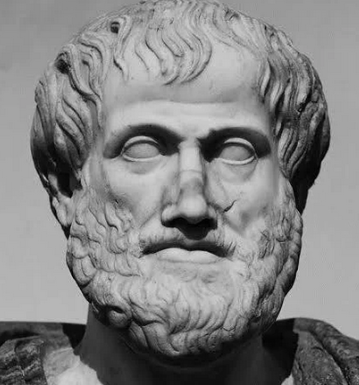
Since the science of nature is conversant with magnitudes, motion, and time, each of which must necessarily be either infinite or finite...we should speculate the infinite, and consider whether it is or not; and if it is what it is. ...All those who appear to have touched on a philosophy of this kind... consider it as a certain principle of beings. Some, indeed, as the Pythagoreans and Plato, consider it, per se, not as being an accident to any thing else, but as having an essential subsistence... the Pythagoreans... consider the infinite as subsisting in sensibles; for they do not make number to be separate; and they assert that what is beyond the heavens is infinite; but Plato says that beyond the heavens there is not any body, nor ideas, because these are no where: he affirms, however, that the infinite is both in sensibles, and in ideas. ...Plato establishes two infinities, viz. the great and the small.
▼
Source
Book III, Ch. IV, pp. 150-152.
4 months 3 weeks ago
Like stones rolling down hills, fair ideas reach their objectives despite all obstacles and barriers. It may be possible to speed or hinder them, but impossible to stop them.

4 months 3 weeks ago
Progressive art can assist people to learn not only about the objective forces at work in the society in which they live, but also about the intensely social character of their interior lives. Ultimately, it can propel people toward social emancipation.
▼
Source
"For a People's Culture." Political Affairs, March 1995.
4 months 3 weeks ago
Buying books would be a good thing if one could also buy the time to read them in: but as a rule the purchase of books is mistaken for the appropriation of their contents.
▼
Source
Vol. 2, Ch. 23, § 296a
4 months 3 weeks ago
What to think of other people? I ask myself this question each time I make a new acquaintance. So strange does it seem to me that we exist, and that we consent to exist.
4 months 3 weeks ago
In ease of body and peace of mind, all the different ranks of life are nearly upon a level, and the beggar, who suns himself by the side of the highway, possesses that security which kings are fighting for.
▼
Source
Chap. I.

4 months 3 weeks ago
Women are systematically degraded by receiving the trivial attentions which men think it manly to pay to the sex, when, in fact, men are insultingly supporting their own superiority.
▼
Source
Ch. 4

4 months 3 weeks ago
In science, as in the playing card experiment, novelty emerges only with difficulty, manifested by resistance, against a background provided by expectation.
▼
Source
p. 64 (2012 ed.)

4 months 3 weeks ago
The whole world is in some ways better than it's ever been in the past. And, indeed, I think for many people the meaning of their lives really depends on that belief. If you strip out that belief in progress, if you start thinking of the world in the way in which the ancient pre-Christian Europeans did, or the Buddhists and the Hindus or the Taoists of China do, many people think that's a kind of despair. I don't know how many times I've been told "If I thought that, John, I wouldn't get up in the morning" and "If I agreed with you, John, that history had no pattern of that kind, I wouldn't get up in the morning." I said, "Well, stay in bed a bit longer, you might find a better reason for getting up."
▼
Source
Quoted in [http://www.abc.net.au/rn/philosopherszone/stories/2008/2284016.htm "John Gray at the Writers' Festival, part 1,"] The Philosopher's Zone, a discussion with Alan Saunders on ABC Radio National (2008-06-28)
4 months 3 weeks ago
If a man knows what it is right to do, he does not require a formal reason. And a person that has been thus trained, either possesses these first principles already, or can easily acquire them.
▼
Source
(Bk I, Ch II)
4 months 3 weeks ago
The happiness of men consists in life. And life is in labor.
▼
Source
What Is To Be Done? (1886) Chap. XXXVIII, as translated in The Novels and Other Works of Lyof N. Tolstoï (1902) edited by Nathan Haskell Dole, p. 259
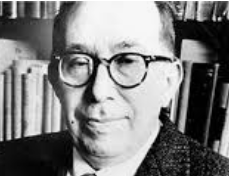
4 months 3 weeks ago
No bloody or unbloody change of society can eradicate the evil in man: as long as there will be men, there will be malice, envy and hatred, and hence there cannot be a society which does not have to employ coercive restraint.
▼
Source
The City and Man, p. 5 (1964)
4 months 3 weeks ago
This is not the first period during which we have confronted the difficult problem of using difference as a way of bringing people together, rather than as incontrovertible evidence of separation. There are more options than sameness, opposition, or hierarchical relations. One of the basic challenges confronting women of color today, as Audre Lorde has pointed out, is to think about and act upon notions of equality across difference. There are so many ways in which we can conceptualize coalitions, alliances, and networks that we would be doing ourselves a disservice to argue that there is only one way to construct relations across racial and ethnic boundaries. We cannot assume that if it does not unfold in one particular way, then it is not an authentic coalition.
4 months 3 weeks ago
Dissimulation is innate in woman, and almost as much a quality of the stupid as of the clever.
▼
Source
"Of Women"
4 months 3 weeks ago
What can be said, lacks reality. Only what fails to make its way into words exists and counts.
4 months 3 weeks ago
The poverty of the lower ranks of people in China far surpasses that of the most beggarly nations of Europe. In the neighbourhood of Canton many hundred, it is commonly said, many thousand families have no habitation on the land, but live constantly in little fishing boats upon the rivers and the canals. The subsistence which they find there is so scanty that they are eager to fish up the nastiest garbage thrown overboard from any European ship. Any carrion, the carcase of a dead dog or cat, for example, though half putrid and stinking, is as welcome to them as the most wholesome food to the people of other countries.
▼
Source
Chapter VIII, p. 86.
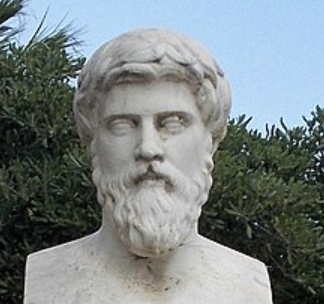
4 months 3 weeks ago
Pyrrhus said, "If I should overcome the Romans in another fight, I were undone."
▼
Source
47 Pyrrhus
4 months 3 weeks ago
Against the many Russian thinkers influenced by Hegel who believed that history was governed by universal laws to which one could only submit, Turgenev upheld the freedom of different societies to pursue different paths of development and of individuals to pursue, even in opposition to powerful historical forces, their own goals and values. Here Turgenev endorsed the celebrated dictum of Alexander Herzen, with whom he disagreed on other matters: that history has no libretto. Human history is a realm of contingency and unpredictability, in which each generation faces conflicts that have no ideal solution.
▼
Source
'Isaiah Berlin: The Value of Decency' (p.105)
4 months 3 weeks ago
The best friend is he that, when he wishes a person's good, wishes it for that person's own sake.
▼
Source
Book IX, 1168b.1 | Variants: My best friend is the man who in wishing me well wishes it for my sake. The best friend is the man who in wishing me well wishes it for my sake.
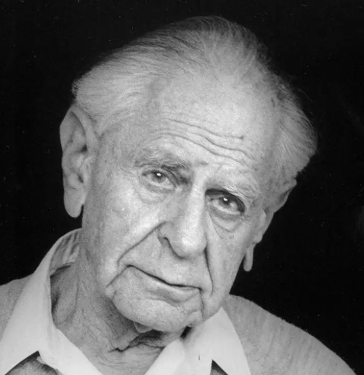
4 months 3 weeks ago
I see now more clearly than ever before that even our greatest troubles spring from something that is as admirable and sound as it is dangerous — from our impatience to better the lot of our fellows. For these troubles are the by-products of what is perhaps the greatest of all moral and spiritual revolutions of history, a movement which began three centuries ago. It is the longing of uncounted unknown men to free themselves and their minds from the tutelage of authority and prejudice. It is their attempt to build up an open society which rejects the absolute authority to preserve, to develop, and to establish traditions, old or new, that measure up to their standards of freedom, of humaneness, and of rational criticism. It is their unwillingness to sit back and leave the entire responsibility for ruling the world to human or superhuman authority,and their readiness to share the burden of responsibility for avoidable suffering, and to work for its avoidance. This revolution has created powers of appalling destructiveness; but they may yet be conquered.
▼
Source
Preface to the Second Edition.
4 months 3 weeks ago
The vicomte was a nice-looking young man with soft features and polished manners, who evidently considered himself a celebrity but out of politeness modestly placed himself at the disposal of the circle in which he found himself. Anna Pávlovna was obviously serving him up as a treat to her guests. As a clever maître d'hôtel serves up as a specially choice delicacy a piece of meat that no one who had seen it in the kitchen would have cared to eat, so Anna Pávlovna served up to her guests, first the vicomte and then the abbé, as peculiarly choice morsels. The group about Mortemart immediately began discussing the murder of the Duc d'Enghien. The vicomte said that the Duc d'Enghien had perished by his own magnanimity, and that there were particular reasons for Buonaparte's hatred of him.
▼
Source
Bk. I, Ch. III
4 months 3 weeks ago
We believe that failing to call a spade a spade is not scientific.
▼
Source
p. 50
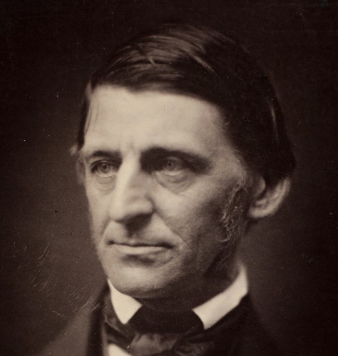
4 months 3 weeks ago
A mollusk is a cheap edition [of man] with a suppression of the costlier illustrations, designed for dingy circulation, for shelving in an oyster-bank or among the seaweed.
▼
Source
Power and Laws of Thought (c. 1870)
4 months 3 weeks ago
To reiterate, rather than try to imagine one single alternative to the existing system of incarceration, we might envision an array of alternatives that will require radical transformations of many aspects of our society. Alternatives that fail to address racism, male dominance, homophobia, class bias, and other structures of domination will not, in the final analysis, lead to decarceration and will not advance the goal of abolition.
▼
Source
Chapter Six
4 months 3 weeks ago
Criminal history shows us how many torturers of men, and murderers, have first been torturers of animals. The manner in which a nation in the aggregate treats animals, is one chief measure of its real civilization. The Latin races, as we know, come forth badly from this examination; we Germans, not half well enough. Buddhism has done more in this direction than Christianity, and Schopenhauer more than all ancient and modern philosophers together. The warm sympathy with sentient Nature which pervades all the writings of Schopenhauer, is one of the most pleasing aspects of his thoroughly intellectual, yet often unhealthy and unprofitable philosophy.
▼
Source
David Strauss, The Old Faith and the New (Der alte und der neue Glaube, translated from the 6th edition by M. Blind, New York: Henry Holt & Co., 1873), vol. II, part IV, ch. 71, [https://archive.org/stream/oldfaithnewconfe01stra#page/59/mode/2up pp. 59]-6
4 months 3 weeks ago
It is not by genius, it is by suffering, and suffering alone, that one ceases to be a marionette.
4 months 3 weeks ago
It seldom happens, however, that a great proprietor is a great improver.
▼
Source
Chapter IV, p. 420.
4 months 3 weeks ago
Surely, the time has come for the intellectuals, the liberals, and the radicals of the world to speak out about this new slavery, to call it clearly and bluntly what it is. For it can no longer be doubted that in this dictatorship of the politicians is to be found every abuse which liberals and radicals have denounced in their own society for generations. . . . the Soviet has allowed it people to starve by the thousands. . . . It has choked all competition, and made itself a monopoly of monopolies; it has restored serfdom, conscription of labor, and indentured servitude among a people that has recently liberated itself by revolution and civil war, from these feudal chains; . . . it has kept wages low and labor intense, it has made democracy in the factory only a sham; it has herded and regimented its people like cattle. It has pitilessly industrialized its women under the pretense of emancipating them; it has crowded the population into dingy quarters, and offered every discouragement to the creation of homes. . . . . It is stifled the growth of democracy, and has centralized power into dictatorship of fanatics and machines; it has waged a class war against the peasants, tradesmen, and mental workers; . . . there is no opportunity for the expression of the public will; . . . it has oppressed with unsurpassed barbarity men and women guilty of no other crime than the prosperity attendant upon enterprise, industry, intelligence, and thrift; it has refused to the rights of habeas corpus, of trial by jury, of equality before the law; it has sent it secret police into millions of homes; . . . it has terrorized the public with marching armies, secret police, merciless penalties, and a million spies. It has deported or shot hundreds of thousands of men and women solely for political heresy and non-conformance. It has subjected to censorship every drama and every book, even every opera; it has prostituted the press, the radio and the stage . . . It has suppressed all freedom of speech or assembly, and in effect has raised a thousand obstacles against the freedom of worship and belief. . . Slavery, barbarism and desolation—these fundamentally, despite a thousand minor virtues, is what Russia is today.
▼
Source
The Tragedy of Russia: Impressions from a brief visit , New York, NY, Simon and Schuster (1933) pp. 150-54
4 months 3 weeks ago
When one asked him what boys should learn, "That," said he, "which they shall use when men."
▼
Source
Of Agesilaus the Great
4 months 3 weeks ago
Through all of history and pre-history it has been accepted that there is something wrong with the human animal. Health may be the natural condition of other species, but in humans it is sickness that is normal. To be chronically unwell is part of what it means to be human. It is no accident that every culture has its own versions of therapy. Tribal shamans and modern psychotherapists answer the same needs and practise the same trade.
▼
Source
Beyond the Last Thought: Freud's cigars and the long way round to Nirvana (p. 84)
4 months 3 weeks ago
There is only one way to avoid criticism: do nothing, say nothing and be nothing.
▼
Source
Source: Elbert Hubbard, Little Journeys to the Homes of American Statesmen (1898), [http://hdl.handle.net/2027/osu.32435065322687?urlappend=%3Bseq=458 p. 370]: "If you would escape moral and physical assassination, do nothing, say nothing, be nothing—cour
4 months 3 weeks ago
In brief, it is my thesis that human misery is the most urgent problem of a rational public policy and that happiness is not such a problem.
▼
Source
p. 485
4 months 3 weeks ago
He stepped down, trying not to look long at her, as if she were the sun, yet he saw her, like the sun, even without looking.
▼
Source
Pt. I, ch. 9
4 months 3 weeks ago
For a philosophy based on faith is no longer philosophy. Perhaps it was this unresolved conflict which has prevented Western thought from ever coming to rest. Perhaps it is this conflict which is at the bottom of a kind of thought which is philosophic indeed but no longer Greek: modern philosophy. It is in trying to understand modern philosophy that we come across Machiavelli. Machiavelli is the only political thinker whose name has come into common use for designating a kind of politics, which exists and will continue to exist independently of his influence, a politics guided exclusively by considerations of 'expediency, which uses all means, fair or foul, iron or poison, for achieving its ends-its end being the aggrandizement of one's country or fatherland-but also using the father land in the service of the self-aggrandizement of the politician or statesman or one's party.
4 months 3 weeks ago
It is easy to live for others; everybody does. I call on you to live for yourselves.
▼
Source
May 3, 1845
4 months 3 weeks ago
What the civil rights movement did, it seems to me, was to create a new terrain for asking new questions and moving in new directions. It's not a betrayal that people like Colin Powell and Condoleeza Rice and the Black conservatives who are the heart of government are where they are. As a matter of fact, the civil rights movement demanded access, right? But I don't think that we can assume that what was done in the 1950s and 1960s is going to do the work of the 1980s and 1990s.
4 months 3 weeks ago
The reasons for persisting in Being seem less and less well founded, and our successors will find it easier than we to be rid of such obstinacy.
4 months 3 weeks ago
Mercantile jealousy is excited, and both inflames, and is itself inflamed, by the violence of national animosity:...
▼
Source
Chapter III, Part II, p. 534.
4 months 3 weeks ago
When we speak of justice we do not thereby mean the justice which is imparted to us in legal codes and by Roman law, founded for the most part on acts of force and violence consecrated by time and by the blessings of some church, Christian or pagan and, as such, accepted as an absolute, the rest being nothing but the logical consequence of the same. I speak of that justice which is based solely upon human conscience, the justice which you will rediscover deep in the conscience of every man, even in the conscience of the child, and which translates itself into simple equality. This justice, which is so universal but which nevertheless, owing to the encroachments of force and to the influence of religion, has never as yet prevailed in the world of politics, of law, or of economics, should serve as a basis for the new world. Without it there is no liberty, no republic, no prosperity, no peace! It should therefore preside at all our resolutions in order that we may effectively cooperate in establishing peace.
4 months 3 weeks ago
When the British came there was, throughout India, a system of communal schools, managed by the village communities. The agents of the East India Company destroyed these village communities, and took steps to replace the schools; even today, after a century of effort to restore them, they stand at only 66% of their number a hundred years ago. Hence, the 93 % illiteracy of India. (source: The Case for India - By Will Durant Simon and Schuster, New York. 1930 p.44).
CivilSimian.com created by AxiomaticPanic, CivilSimian, Kalokagathia