
4 months 3 weeks ago
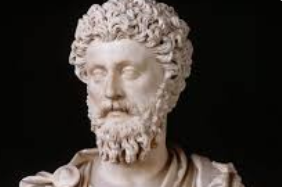
Marcus Aurelius wrote the following about Severus (a person who is not clearly identifiable according to the footnote): Through him [...] I became acquainted with the conception of a community based on equality and freedom of speech for all, and of a monarchy concerned primarily to uphold the liberty of the subject.
▼
Source
I. 14, trans. Maxwell Staniforth
4 months 3 weeks ago
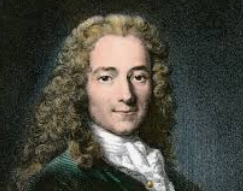
We never live: we are always in expectation of living.
▼
Source
p. 55

4 months 3 weeks ago
The true hero fights and dies in the name of his destiny, and not in the name of a belief.

4 months 3 weeks ago
They indicate the saddest spiritual paralysis, and mere death-life of the souls of men: more godless theory, I think, was never promulgated in this Earth. A false man found a religion? Why, a false man cannot build a brick house!
4 months 3 weeks ago
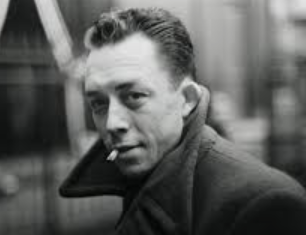
Every revolutionary ends as an oppressor or a heretic.
▼
Source
Variant translation: Every revolutionary ends by becoming either an oppressor or a heretic.
4 months 3 weeks ago
The world is the book where the eternal Wisdom wrote its own concepts
▼
Source
"Modo di filosofare".
4 months 3 weeks ago
It is apparently very congenial for some people who are professionally concerned with fictional texts to be told that all texts are really fictional anyway, and that claims that fiction differs significantly from science and philosophy can be deconstructed as a logocentric prejudice, and it seems positively exhilarating to be told that what we call "reality" is just more textuality. Furthermore, the lives of such people are made much easier than they had previously supposed, because now they don't have to worry about an author's intentions, about precisely what a text means, or about distinctions within a text between the metaphorical and the literal, or about the distinction between texts and the world because everything is just a free play of signifiers. The upper limit, and I believe the reductio ad absurdum, of this "sense of mastery" conveyed by deconstruction, is in Geoffrey Hartman's claim that the prime creative task has now passed from the literary artist to the critic.
▼
Source
"The Word Turned Upside Down", The New York Review of Books, Volume 30, Number 16, October 27, 1983.
4 months 3 weeks ago
Our rulers at the present day, with their machines and their preachers, are all occupied in putting into our heads the preposterous notion that activity rather than contemplation is the object of life.
▼
Source
In Defence of Sensuality (1930), p. 136
4 months 3 weeks ago
All the reasoning of man is not worth one sentiment of woman.
▼
Source
p. 172
4 months 3 weeks ago
Chaos is rejecting all you have learned. Chaos is being yourself.
4 months 3 weeks ago
The seeing eye! It is this that discloses the inner harmony of things; what Nature meant, what musical idea Nature has wrapped up in these often rough embodiments. Something she did mean. To the seeing eye that something were discernible. Are they base, miserable things? You can laugh over them, you can weep over them; you can in some way or other genially relate yourself to them; — you can, at lowest, hold your peace about them, turn away your own and others' face from them, till the hour come for practically exterminating and extinguishing them!
4 months 3 weeks ago
God is not needed to create guilt or to punish. Our fellow men suffice, aided by ourselves.
4 months 3 weeks ago
Criticism and prophecy must be the two categories that meet in the salvation of the past
▼
Source
p. 53-54 (trans. John Osborne (London: Verso, 1977)
4 months 3 weeks ago
We often attribute "understanding" and other cognitive predicates by metaphor and analogy to cars, adding machines, and other artifacts, but nothing is proved by such attributions.
4 months 3 weeks ago
In the interests of the ideal of maximum output, [our society] judges men by their fitness for jobs, not jobs by their fitness for men.
▼
Source
p. 280.
4 months 3 weeks ago
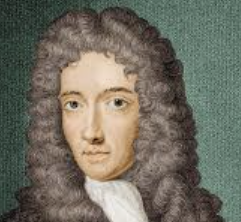
The phaenomena afforded by trades, are a part of the history of nature, and therefore may both challenge the naturalist's curiosity and add to his knowledge, Nor will it suffice to justify learned men in the neglect and contempt of this part of natural history, that the men, from whom it must be learned, are illiterate mechanicks... is indeed childish, and too unworthy of a philosopher, to be worthy of an honest answer.
▼
Source
"That the Goods of Mankind May be Much Increased by the Naturalist's Insight into Trades" in the Works of Robert Boyle, (1772) Vol.3 as quoted in Clifford D. Conner, A People's History of Science (2005) Note: Compare Francis Bacon's The Great Instauration
4 months 3 weeks ago
I grew bored in France -- and the main reason is that everyone here resembles Voltaire.
4 months 3 weeks ago
Lucidity's task: to attain a correct despair, an Olympian ferocity.
4 months 3 weeks ago
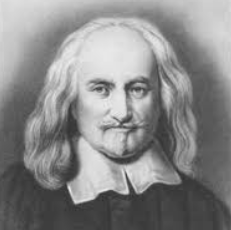
But yet they that have no Science, are in better, and nobler condition with their naturall Prudence; than men, that by their mis-reasoning, or by trusting them that reason wrong, fall upon false and absurd generall rules.
▼
Source
The First Part, Chapter 5, p. 21
4 months 3 weeks ago
There is no act more moral between men than that of rule and obedience. Woe to him that claims obedience when it is not due; woe to him that refuses it when it is! God's law is in that, I say, however the Parchment-laws may run: there is a Divine Right or else a Diabolic Wrong at the heart of every claim that one man makes upon another.

4 months 3 weeks ago
Of practical wisdom these are the three fruits: to deliberate well, to speak to the point, to do what is right.
4 months 3 weeks ago
Poets are witnesses to Being before the philosophers are able to bring it into thought.
▼
Source
Chapter Five, Christian sources, p. 105
4 months 3 weeks ago
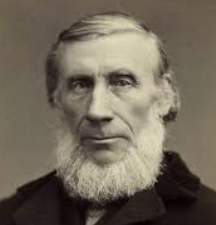
The enunciation of a thought in advance of the moment provokes dissent or evokes approval, and thus promotes action. The thought may be unwise; but it is only by discussion, checked by experience, that its value can be determined.
4 months 3 weeks ago
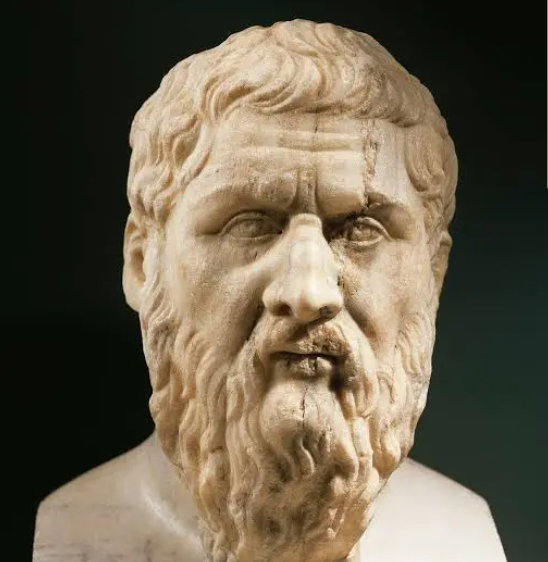
The characters of self-restrained officials are exceedingly careful and just and conservative, but they lack keenness and a certain quick and active boldness. The courageous natures, on the other hand, are deficient in justice and caution in comparison with the former, but excel in boldness of action; and unless both these qualities are present it is impossible for a state to be entirely prosperous in public and private matters.
▼
Source
311a
4 months 3 weeks ago
And first the Doctrine that all their Theory is grounded on, seems to me Inevident and undemonstrated, not to say precarious.
4 months 3 weeks ago
The lover who kills himself for a girl has an experience which is more complete and much more profound than the hero who overturns the world.
4 months 3 weeks ago
And though this may seem to subtile a deduction of the Lawes of Nature, to be taken notice of by all men;whereof the most part are too busie in getting food, and the rest too negligent to understand; yet to leave all men unexcusable, they have been contracted into one easie sum, intelligble, even to the meanest capacity; and that is, Do not that to another, which thou wouldest not have done to thyselfe; which sheweth him, that he has no more to do in learning the Lawes of Nature, but, when weighing the actions of other men with his own, they seem too heavy, to put them into the other part of the balance, and his own into their place, that his own passions, and selfe love, may adde nothing to the weight; and then there is none of these Laws of Nature that will not appear unto him very reasonable.
▼
Source
The First Part, Chapter 15, p. 79
4 months 3 weeks ago
Unless some Hero-worship, in its new appropriate form, can return, this world does not promise to be very habitable long.
4 months 3 weeks ago
Now as of old the gods give men all good things, excepting only those that are baneful and injurious and useless. These, now as of old, are not gifts of the gods: men stumble into them themselves because of their own blindness and folly.

4 months 3 weeks ago
Enlightenment rationalism, to the extent that its program is taken seriously, is an engine of perpetual revolution, which brings about the progressive destruction of every inherited institution, yet without ever being able to consolidate a stable consensus around any new ones.
▼
Source
p. 147
4 months 3 weeks ago
In leisure — not only there, but certainly there, if anywhere — the truly human is rescued and preserved precisely because the area of the "just human" is left behind over and over again — and this is not brought about through the application of extreme efforts but rather as with a kind of "moving away" (and this "moving" is of course more difficult than the extreme, active effort; it is "more difficult" because it is less at one's own disposal; the condition of utmost exertion is more easily to be realized than the condition of relaxation and detachment, even though the latter is effortless: this is the paradox that reigns over the attainment of leisure, which is at once a human and superhuman condition). As Aristotle said of it: "man cannot live this way insofar as he is man, but only insofar as something divine dwells in him." [Nichomachean Ethics X, 7 (1177b27–28)]
▼
Source
p. 36
4 months 3 weeks ago
And the true order of going, or being led by another, to the things of love, is to begin from the beauties of earth and mount upwards for the sake of that other beauty, using these steps only, and from one going on to two, and from two to all fair forms to fair practices, and from fair practices to fair notions, until from fair notions he arrives at the notion of absolute beauty, and at last knows what the essence of beauty is.
▼
Source
211
4 months 3 weeks ago
Nothing is so wearing as the possession or abuse of liberty.
4 months 3 weeks ago
The thoughts are to the desires, as scouts and spies, to range abroad and find the way to the thing desired.
▼
Source
Reported in Robert P. George, Conscience and Its Enemies (2013) pt. 2, ch. 8, p. 81
4 months 3 weeks ago
Descend where you will into the lower class, in Town or Country, by what avenue you will, by Factory Inquiries, Agricultural Inquiries, by Revenue Returns, by Mining-Labourer Committees, by opening your own eyes and looking, the same sorrowful result discloses itself: you have to admit that the working body of this rich English Nation has sunk or is fast sinking into a state, to which, all sides of it considered, there was literally never any parallel.
4 months 3 weeks ago
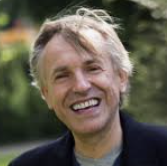
The irrationality of the "appeal to Nature" is illustrated by a simple thought-experiment. Imagine, fancifully, if starvation, disease, parasitism, disembowelling, asphyxiation and being eaten alive were not endemic to the living world - or such miseries have already been abolished and replaced by an earthly paradise. Would anyone propose there is ethical case for (re)introducing them? Even proposing such a thought-experiment can sound faintly ridiculous.
▼
Source
"[https://www.ledonline.it/index.php/Relations/article/view/881 A Welfare State For Elephants?: A Case Study of Compassionate Stewardship]", Relations: Beyond Anthropocentrism, Vol. 3, Iss. 2 (Nov. 2015), p. 162
4 months 3 weeks ago
All just order in the world is based on this, that man give man what is his due.
▼
Source
[http://books.google.com/books?id=XjYbAAAAIAAJ&q=%22All+just+order+in+the+world+is+based+on+this+that+man+give+man+what+is+his+due%22&pg=PA10#v=onepage Justice] (1955)
4 months 3 weeks ago
Be kind, for everyone you meet is fighting a hard battle.
▼
Source
Attributed to Plato in No Ordinary Moments: A Peaceful Warrior's Guide to Daily Life (1992) by Dan Millman. It has also been wrongly attributed to Philo. It is a variant of the Christmas message "Be pitiful, for every man is fighting a hard ba
4 months 3 weeks ago
Isn't history ultimately the result of our fear of boredom?
4 months 3 weeks ago
But leaving this, let us remark one thing which is very plain: That whatever be the uses and duties, real or supposed, of a Secretary in Parliament, his faculty to accomplish these is a point entirely unconnected with his ability to get elected into Parliament, and has no relation or proportion to it, and no concern with it whatever.
4 months 3 weeks ago
...it won't just be the quality and quantity of consciousness in the world that will be transformed in the post-Darwinian Transition. As (post-)humanity emerges from the neurochemical Dark Ages, enriched dopaminergic function in particular may sharpen the sheer intensity and meaningfulness of every moment of conscious existence. For a generation whose lifetimes span both modes of awareness, it will be as if they had just woken up. They will feel they had hitherto been sleep-walking through life in a twilit stupor. Thereafter their former mundane and minimal existence may be recalled only as some kind of zombified trance-state whose nature they were physiologically incapable of recognising...
▼
Source
The Hedonistic Imperative: Heaven on Earth?, [https://www.hedweb.com/heaven/heaven7.htm "Eden"], BLTC Research
4 months 3 weeks ago
The Working Man as yet sought only to know his craft; and educated himself sufficiently by ploughing and hammering, under the conditions given, and in fit relation to the persons given: a course of education, then as now and ever, really opulent in manful culture and instruction to him; teaching him many solid virtues, and most indubitably useful knowledges; developing in him valuable faculties not a few both to do and to endure,—among which the faculty of elaborate grammatical utterance, seeing he had so little of extraordinary to utter, or to learn from spoken or written utterances, was not bargained for; the grammar of Nature, which he learned from his mother, being still amply sufficient for him. This was, as it still is, the grand education of the Working Man. As for the Priest, though his trade was clearly of a reading and speaking nature, he knew also in those veracious times that grammar, if needful, was by no means the one thing needful, or the chief thing. By far the chief thing needful, and indeed the one thing then as now, was, That there should be in him the feeling and the practice of reverence to God and to men; that in his life's core there should dwell, spoken or silent, a ray of pious wisdom fit for illuminating dark human destinies;—not so much that he should possess the art of speech, as that he should have something to speak!
4 months 3 weeks ago
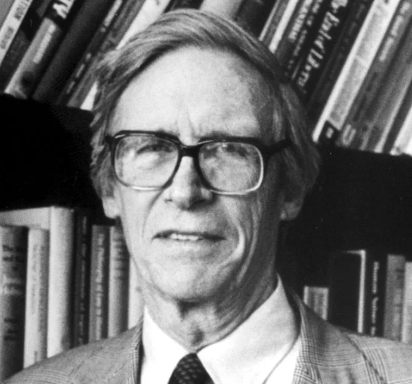
The concept of justice I take to be defined, then, by the role of its principles in assigning rights and duties and in defining the appropriate division of social advantages. A conception of justice is an interpretation of this role.
▼
Source
Chapter I, Section 2, pg. 10
4 months 3 weeks ago
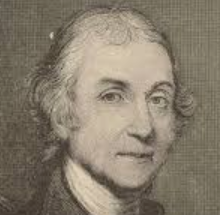
It is the earnest wish of my heart, that your minds may be well established in the sound principles of religious knowledge, because I am fully persuaded, that nothing else can be a sufficient foundation of a virtuous and truly respectable conduct in life, or of good hope in death. A mind destitute of knowledge (and, comparatively speaking, no kind of knowledge, besides that of religion, deserves the name) is like a field on which no culture has been bestowed, which, the richer it is, the ranker weeds it will produce, If nothing good be sown in it, it will be dccupied by plants that are useless or noxious.
▼
Source
Vol. I : The Dedication (March 1772)
4 months 3 weeks ago
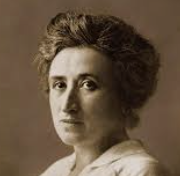
For Lenin, the difference between the Social Democracy and is reduced to the observation that in place of a handful of conspirators we have a class-conscious proletariat. He forgets that this difference implies a complete revision of our ideas on organization and, therefore, an entirely different conception of centralism and the relations existing between the party and the struggle itself.
4 months 3 weeks ago
I am enraptured by Hindu philosophy, whose essential endeavor is to surmount the self; and everything I do, everything I think is only myself and the selfs humiliations.
4 months 3 weeks ago
[H]e seldom or never spoke except actually to convey an idea. Measured by quantity of words, he was a talker of fully average copiousness; by extent of meaning communicated, he was the most copious I have listened to. How in few sentences he would sketch you off an entire biography, an entire object or transaction, keen, clear, rugged, genuine, completely rounded In! His words came direct from the heart by the inspiration of the moment.
4 months 3 weeks ago
Justice as fairness provides what we want.
▼
Source
Chapter III, Section 30, pg. 190
4 months 3 weeks ago
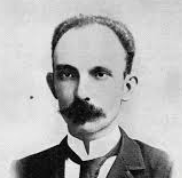
Terrible times in which priests no longer merit the praise of poets and in which poets have not yet begun to be priests.
▼
Source
On El Poema de Niágara of Pérez Bonalde (1883)

4 months 3 weeks ago
How sad that I returned, how sad,Instead of dying at Baghdad!I say, whene'er things fall amiss,"My coming home hath brought me this."
▼
Source
1. 303, 5
CivilSimian.com created by AxiomaticPanic, CivilSimian, Kalokagathia