

4 months 3 weeks ago
No man who has once heartily and wholly laughed can be altogether irreclaimably bad.
▼
Source
Bk. I, ch. 4.
4 months 3 weeks ago
I hope the dogs don't bark tonight. I always think it's mine.
4 months 3 weeks ago
To reconcile this science and the Masters of it to the world is an attempt more plausible than possible, the prejudice being so great that neither reason nor authority can balance it.
4 months 3 weeks ago
If it be true that in showing pity and compassion we think of ourselves, because we fear to be one day or another in the same circumstances as those unfortunate people for whom we feel, why are the latter so sparingly relieved by us of their condition?
▼
Source
Aphorism 48
4 months 3 weeks ago
Continuously thou wilt look at human things as smoke and nothing at all; especially if thou reflectest at the same time, that what has once changed will never exist again in the infinite duration of time. But thou, in what a brief space of time is thy existence? And why art thou not content to pass through this short time in an orderly way?
▼
Source
X, 31

4 months 3 weeks ago
No one should forget: Eros alone can fulfill life; knowledge, never. Only Eros makes sense; knowledge is empty infinity; — for thoughts, there is always time; life has its time; there is no thought that comes too late; any desire can become a regret.
4 months 3 weeks ago
Battles, in these ages, are transacted by mechanism; with the slightest possible development of human individuality or spontaneity: men now even die, and kill one another, in an artificial manner.
▼
Source
Pt. I, Bk. VII, ch. 4.
4 months 3 weeks ago
There can be no question of holding forth on ethics. I have seen people behave badly with great morality and I note every day that integrity has no need of rules. There is but one moral code that the absurd man can accept, the one that is not separated from God: the one that is dictated. But it so happens that he lives outside that God. As for the others (I mean also immoralism), the absurd man sees nothing in them but justifications and he has nothing to justify. I start out here from the principle of his innocence. That innocence is to be feared. "Everything is permitted," exclaims Ivan Karamazov. That, too, smacks of the absurd. But on condition that it not be taken in a vulgar sense. I don't know whether or not it has been sufficiently pointed out that it is not an outburst of relief or of joy, but rather a bitter acknowledgment of a fact.
4 months 3 weeks ago
Hatred also is short lived; but that which makes the splendor of the present and the glory of the future remains forever unforgotten
▼
Source
Book II, 2.64-[5]
4 months 3 weeks ago
The success and originality of American integration stem precisely from the fact that immigrants' descendants can perpetuate their ancestral cultures while thinking of themselves as Americans in the fullest sense, sharing basic ideals across racial and ethnic barriers. In France, the characteristic attitude of newcomers from North Africa, Turkey, and sub-Saharan Africa is predominantly one of alienation, confrontation, rejection, and hatred.
4 months 3 weeks ago
Calvin’s theocentric irrationalism eventually revealed itself as the cunning to technocratic reason which had to shape its human material. Misery and the poor laws did not suffice to drive men into the workshops of the early capitalistic era. The new spirit helped to supplement external pressures with a concern for wife and child to which the moral autonomy of the introverted subject in reality was tantamount.
▼
Source
p. 34.
4 months 3 weeks ago
Depart then satisfied, for he also who releases thee is satisfied.
▼
Source
XII, 36
4 months 3 weeks ago
"A false science makes atheists, a true science prostrates men before the Deity"
▼
Source
[http://books.google.es/books?id=aItKAAAAcAAJ&printsec=frontcover&hl=es#v=onepage&q&f=false The critical review, or annals of literature, Volume XXVI], by A Society of Gentlemen (1768) p. 450
4 months 3 weeks ago
Someday the old shack we call the world will fall apart. How, we don't know, and we don't really care either. Since nothing has real substance, and life is a twirl in the void, its beginning and its end are meaningless.
4 months 3 weeks ago
As in Mathematicks, so in Natural Philosophy, the Investigation of difficult Things by the Method of Analysis, ought ever to precede the Method of Composition.
▼
Source
Isaac Newton, Opticks (1704)
4 months 3 weeks ago
The young generations of the world, who had in them the freshness of young children, and yet the depth of earnest men, who did not think that they had finished off all things in Heaven and Earth by merely giving them scientific names, but had to gaze direct at them there, with awe and wonder: they felt better what of divinity is in man and Nature; they, without being mad, could worship Nature, and man more than anything else in Nature.
4 months 3 weeks ago
I said that the world is absurd, but I was too hasty. This world in itself is not reasonable, that is all that can be said. But what is absurd is the confrontation of this irrational and the wild longing for clarity whose call echoes in the human heart.
▼
Source
p. 16
4 months 3 weeks ago
But what most oppressed them was that they had two wars at once, and has thus reached a pitch of frenzy which no one would have believed possible if he had heard of it before it had come to pass.
▼
Source
Book VII, 7.28-[3]
4 months 3 weeks ago
He who has no taste for order will be often wrong in his judgements, and seldom considerate or conscientious in his actions.
▼
Source
No. 189
4 months 3 weeks ago
If it were not for the founder of the school, Charles S. Pierce, who has told us that he ‘learned philosophy out of Kant,’ one might be tempted to deny any philosophical pedigree to a doctrine that holds not that our expectations are fulfilled and our actions successful because our ideas are true, but rather that our ideas are true because our expectations are fulfilled and our actions successful.
▼
Source
describing the pragmatist view, p. 42.
4 months 3 weeks ago
Marcus Aurelius wrote the following about Severus (a person who is not clearly identifiable according to the footnote): Through him [...] I became acquainted with the conception of a community based on equality and freedom of speech for all, and of a monarchy concerned primarily to uphold the liberty of the subject.
▼
Source
I. 14, trans. Maxwell Staniforth
4 months 3 weeks ago
We never live: we are always in expectation of living.
▼
Source
p. 55
4 months 3 weeks ago
The true hero fights and dies in the name of his destiny, and not in the name of a belief.
4 months 3 weeks ago
They indicate the saddest spiritual paralysis, and mere death-life of the souls of men: more godless theory, I think, was never promulgated in this Earth. A false man found a religion? Why, a false man cannot build a brick house!
4 months 3 weeks ago
Every revolutionary ends as an oppressor or a heretic.
▼
Source
Variant translation: Every revolutionary ends by becoming either an oppressor or a heretic.
4 months 3 weeks ago
The world is the book where the eternal Wisdom wrote its own concepts
▼
Source
"Modo di filosofare".

4 months 3 weeks ago
It is apparently very congenial for some people who are professionally concerned with fictional texts to be told that all texts are really fictional anyway, and that claims that fiction differs significantly from science and philosophy can be deconstructed as a logocentric prejudice, and it seems positively exhilarating to be told that what we call "reality" is just more textuality. Furthermore, the lives of such people are made much easier than they had previously supposed, because now they don't have to worry about an author's intentions, about precisely what a text means, or about distinctions within a text between the metaphorical and the literal, or about the distinction between texts and the world because everything is just a free play of signifiers. The upper limit, and I believe the reductio ad absurdum, of this "sense of mastery" conveyed by deconstruction, is in Geoffrey Hartman's claim that the prime creative task has now passed from the literary artist to the critic.
▼
Source
"The Word Turned Upside Down", The New York Review of Books, Volume 30, Number 16, October 27, 1983.
4 months 3 weeks ago
Our rulers at the present day, with their machines and their preachers, are all occupied in putting into our heads the preposterous notion that activity rather than contemplation is the object of life.
▼
Source
In Defence of Sensuality (1930), p. 136
4 months 3 weeks ago
All the reasoning of man is not worth one sentiment of woman.
▼
Source
p. 172
4 months 3 weeks ago
Chaos is rejecting all you have learned. Chaos is being yourself.
4 months 3 weeks ago
The seeing eye! It is this that discloses the inner harmony of things; what Nature meant, what musical idea Nature has wrapped up in these often rough embodiments. Something she did mean. To the seeing eye that something were discernible. Are they base, miserable things? You can laugh over them, you can weep over them; you can in some way or other genially relate yourself to them; — you can, at lowest, hold your peace about them, turn away your own and others' face from them, till the hour come for practically exterminating and extinguishing them!
4 months 3 weeks ago
God is not needed to create guilt or to punish. Our fellow men suffice, aided by ourselves.
4 months 3 weeks ago
Criticism and prophecy must be the two categories that meet in the salvation of the past
▼
Source
p. 53-54 (trans. John Osborne (London: Verso, 1977)
4 months 3 weeks ago
We often attribute "understanding" and other cognitive predicates by metaphor and analogy to cars, adding machines, and other artifacts, but nothing is proved by such attributions.
4 months 3 weeks ago
In the interests of the ideal of maximum output, [our society] judges men by their fitness for jobs, not jobs by their fitness for men.
▼
Source
p. 280.
4 months 3 weeks ago
The phaenomena afforded by trades, are a part of the history of nature, and therefore may both challenge the naturalist's curiosity and add to his knowledge, Nor will it suffice to justify learned men in the neglect and contempt of this part of natural history, that the men, from whom it must be learned, are illiterate mechanicks... is indeed childish, and too unworthy of a philosopher, to be worthy of an honest answer.
▼
Source
"That the Goods of Mankind May be Much Increased by the Naturalist's Insight into Trades" in the Works of Robert Boyle, (1772) Vol.3 as quoted in Clifford D. Conner, A People's History of Science (2005) Note: Compare Francis Bacon's The Great Instauration
4 months 3 weeks ago
I grew bored in France -- and the main reason is that everyone here resembles Voltaire.
4 months 3 weeks ago
Lucidity's task: to attain a correct despair, an Olympian ferocity.
4 months 3 weeks ago
But yet they that have no Science, are in better, and nobler condition with their naturall Prudence; than men, that by their mis-reasoning, or by trusting them that reason wrong, fall upon false and absurd generall rules.
▼
Source
The First Part, Chapter 5, p. 21
4 months 3 weeks ago
There is no act more moral between men than that of rule and obedience. Woe to him that claims obedience when it is not due; woe to him that refuses it when it is! God's law is in that, I say, however the Parchment-laws may run: there is a Divine Right or else a Diabolic Wrong at the heart of every claim that one man makes upon another.
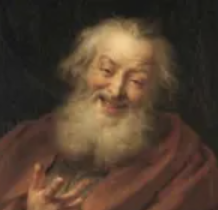
4 months 3 weeks ago
Of practical wisdom these are the three fruits: to deliberate well, to speak to the point, to do what is right.
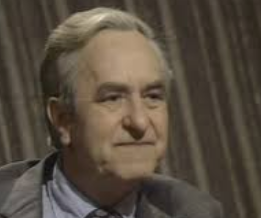
4 months 3 weeks ago
Poets are witnesses to Being before the philosophers are able to bring it into thought.
▼
Source
Chapter Five, Christian sources, p. 105
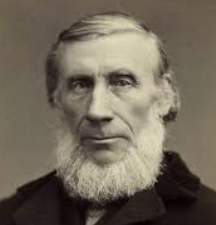
4 months 3 weeks ago
The enunciation of a thought in advance of the moment provokes dissent or evokes approval, and thus promotes action. The thought may be unwise; but it is only by discussion, checked by experience, that its value can be determined.
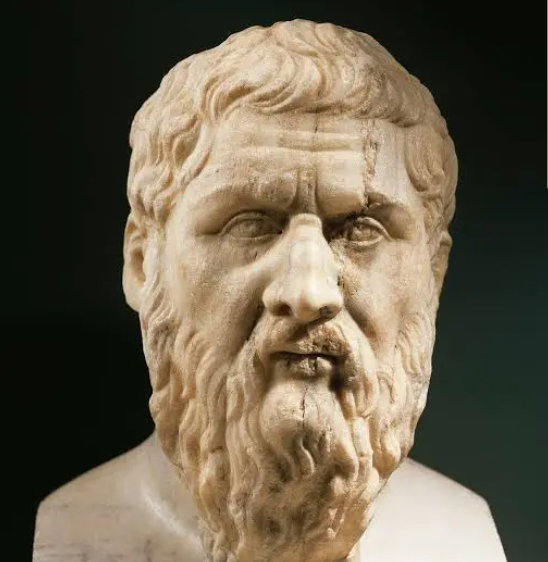
4 months 3 weeks ago
The characters of self-restrained officials are exceedingly careful and just and conservative, but they lack keenness and a certain quick and active boldness. The courageous natures, on the other hand, are deficient in justice and caution in comparison with the former, but excel in boldness of action; and unless both these qualities are present it is impossible for a state to be entirely prosperous in public and private matters.
▼
Source
311a
4 months 3 weeks ago
And first the Doctrine that all their Theory is grounded on, seems to me Inevident and undemonstrated, not to say precarious.
4 months 3 weeks ago
The lover who kills himself for a girl has an experience which is more complete and much more profound than the hero who overturns the world.
4 months 3 weeks ago
And though this may seem to subtile a deduction of the Lawes of Nature, to be taken notice of by all men;whereof the most part are too busie in getting food, and the rest too negligent to understand; yet to leave all men unexcusable, they have been contracted into one easie sum, intelligble, even to the meanest capacity; and that is, Do not that to another, which thou wouldest not have done to thyselfe; which sheweth him, that he has no more to do in learning the Lawes of Nature, but, when weighing the actions of other men with his own, they seem too heavy, to put them into the other part of the balance, and his own into their place, that his own passions, and selfe love, may adde nothing to the weight; and then there is none of these Laws of Nature that will not appear unto him very reasonable.
▼
Source
The First Part, Chapter 15, p. 79
4 months 3 weeks ago
Unless some Hero-worship, in its new appropriate form, can return, this world does not promise to be very habitable long.
4 months 3 weeks ago
Now as of old the gods give men all good things, excepting only those that are baneful and injurious and useless. These, now as of old, are not gifts of the gods: men stumble into them themselves because of their own blindness and folly.

4 months 3 weeks ago
Enlightenment rationalism, to the extent that its program is taken seriously, is an engine of perpetual revolution, which brings about the progressive destruction of every inherited institution, yet without ever being able to consolidate a stable consensus around any new ones.
▼
Source
p. 147
CivilSimian.com created by AxiomaticPanic, CivilSimian, Kalokagathia