

4 months 3 weeks ago
The laws of Manu are the doctrines of Plato, Philo, Zoroaster, Pythagoras, and of the Kabala. The esoterism of every religion may be solved by the latter. The kabalistic doctrine of the allegorical Father and Son, or Xlarrjp and Aoyos is identical with the groundwork of Buddhism. Moses could not reveal to the multitude the sublime secrets of religious speculation, nor the cosmogony of the universe ; the whole resting upon the Hindu Illusion, a clever mask veiling the Sanctum Sanctorum, and which has misled so many theological commentators. (p. 271)
▼
Source
The Veil of Isis, Part 1, Science.
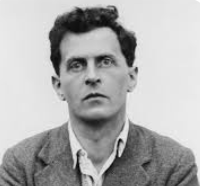
4 months 3 weeks ago
If someone is merely ahead of his time, it will catch up to him one day.
▼
Source
p. 8e

4 months 3 weeks ago
Finally it should be noted that the picture education, especially the pictorial statistics, are of international importance. Words carry more emotional elements than set pictures, which can be observed by people of different countries, different parties without any protest; Words divide, pictures unite.
▼
Source
Otto Neurath (1931), "Bildstatistik nach Wiener Methode", Die Volksschule 27 (1931): 569 ; Translated and cited in Sybilla Nikolow (2013) "‘Words Divide, Pictures Unite.’Otto Neurath’s Pictorial Statistics in Historical Context."
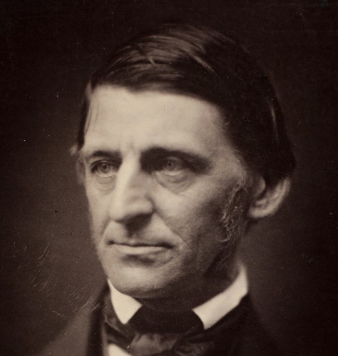
4 months 3 weeks ago
Virtually at the same time as Kierkegaard gave philosophical significance to moods, Emerson was doing the same. In "Experience" he characterized our life experiences as "a train of moods" that color whatever we encounter, and he described life as "a flux of moods" that affect our "states of mind."
▼
Source
Nineteenth-century prose v. 30 The Emerson Enigma by George M Stack, 2003 p. 444
4 months 3 weeks ago
We must be careful to discriminate between our own incapacity to test truth and the necessary improbability of an event. It is plain that from our ignorance of the remote spheres of God's action we cannot judge of His works removed from our experience; but a fact is not necessarily doubtful because it cannot be reached by our ordinary senses. To recapitulate, we may lay down the following propositions: 1. That there is no real physical distinction between miracles and any other operations of the Divine energy : that we regard them differently is because we are familiar with one order of events and not the other. 2. There is nothing incredible in a miracle, and the credibility of a miraculous event is to be measured only by the evidence which sustains it. And although the extraordinary character of a phenomenon may render the event itself improbable, it does not, therefore, necessarily render it either incredible or untrue.
▼
Source
"Passages from the life of a philosopher", Appendix, p. 489
4 months 3 weeks ago
Skepticism, like chastity, should not be relinquished too readily.
▼
Source
George Santayana, as quoted in Quotations for Our Time (1977) edited by Laurence J. Peter
4 months 3 weeks ago
The Constitution of 1795, like its predecessors, was made for man. But there is no such thing as man in the world. In my lifetime I have seen Frenchmen, Italians, Russians, etc.; thanks to Montesquieu, I even know that one can be Persian. But as for man, I declare that I have never in my life met him; if he exists, he is unknown to me.
4 months 3 weeks ago
Nothing appears more surprising to those, who consider human affairs with a philosophical eye, than the easiness with which the many are governed by the few; and the implicit submission, with which men resign their own sentiments and passions to those of their rulers. When we enquire by what means this wonder is effected, we shall find, that, as Force is always on the side of the governed, the governors have nothing to support them but opinion. It is therefore, on opinion only that government is founded; and this maxim extends to the most despotic and most military governments, as well as to the most free and most popular.
▼
Source
Part I, Essay 4: Of The First Principles of Government
4 months 3 weeks ago
Wisdom is passionless. But faith by contrast is what Kierkegaard calls a passion.
▼
Source
p. 53e

4 months 3 weeks ago
If you reason instead of repeating what is taught you; if you analyze the law and strip off those cloudy fictions with which it has been draped in order to conceal its real origin, which is the right of the stronger, and its substance, which has ever been the consecration of all the tyrannies handed down to mankind through its long and bloody history; when you have comprehended this, your contempt for the law will be profound indeed. You will understand that to remain the servant of the written law is to place yourself every day in opposition to the law of conscience, and to make a bargain on the wrong side; and, since this struggle cannot go on forever, you will either silence your conscience and become a scoundrel, or you will break with tradition, and you will work with us for the utter destruction of all this injustice, economic, social and political.
4 months 3 weeks ago
If a lack of empirical foundations is a defect of the theory of logical probability, it is also a defect of deductive logic.
▼
Source
The Rationality of Induction, Oxford: Clarendon, 1986. Page 176, last paragraph.
4 months 3 weeks ago
There is perhaps nothing more interesting than to listen to a superior man talk of what he does not know. He advances slowly, and scarcely puts his foot down without knowing if the ground is solid; he looks for plausible analogies; he tries to attach his ideas to higher and incontestable principles; he always has the tone of looking, never that of teaching; and it often happens that, even if he is mistaken, he leaves a great enough idea of his mental honesty.
▼
Source
p. 43
4 months 3 weeks ago
But were this world ever so perfect a production, it must still remain uncertain, whether all the excellencies of the work can justly be ascribed to the workman. If we survey a ship, what an exalted idea must we form of the ingenuity of the carpenter who framed so complicated, useful, and beautiful a machine? And what surprise must we feel, when we find him a stupid mechanic, who imitated others, and copied an art, which, through a long succession of ages, after multiplied trials, mistakes, corrections, deliberations, and controversies, had been gradually improving? Many worlds might have been botched and bungled, throughout an eternity, ere this system was struck out; much labour lost; many fruitless trials made; and a slow, but continued improvement carried on during infinite ages in the art of world-making. In such subjects, who can determine, where the truth; nay, who can conjecture where the probability, lies; amidst a great number of hypotheses which may be proposed, and a still greater number which may be imagined?
▼
Source
Philo to Cleanthes, Part V
4 months 3 weeks ago
What struck me most in this conversation was a radical passion for truthfulness in everything (which I came to know as a characteristic vogue among the young Viennese intellectuals of the generation immediately preceding mine only in the following university years). This truthfulness became almost a fashion in that border group between the purely Jewish and the purely Gentile parts of the intelligentsia in which I came so much to move. It meant much more than truth in speech. One had to "live" truth and not tolerate any pretence in oneself or others. It sometimes produced outright rudeness and, certainly, unpleasantness. Every convention was dissected and every conventional form exposed as fraud. Wittgenstein merely carried this further in applying it to himself. I sometimes felt that he took a perverse pleasure in discovering falsehood in his own feelings and that he was constantly trying to purge himself of all fraud.
▼
Source
Friedrich Hayek, "[https://www.unz.org/Pub/Encounter-1977aug-00020 Remembering My Cousin, Ludwig Wittgenstein]", Encounter ([https://www.unz.org/Pub/Encounter-1977aug August 1977]) Page 20.
4 months 3 weeks ago
It is futile to speak of liberty as long as economic slavery exists."Speak not of liberty — poverty is slavery!" is not a vain formula; it has penetrated into the ideas of the great working-class masses; it filters through all the present literature; it even carries those along who live on the poverty of others, and takes from them the arrogance with which they formerly asserted their rights to exploitation.

4 months 3 weeks ago
Bias used to say that men ought to calculate life both as if they were fated to live a long and a short time, and that they ought to love one another as if at a future time they would come to hate one another; for that most men were bad.
▼
Source
Bias, 5.
4 months 3 weeks ago
Millions of human beings have labored to create this civilization on which we pride ourselves today. Other millions, scattered through the globe, labor to maintain it. Without them nothing would be left in fifty years but ruins.
▼
Source
Ch. 1 : Our Riches
4 months 3 weeks ago
Wealth is the sinews of affairs.
▼
Source
Bion, 48.
4 months 3 weeks ago
We never have a full demonstration, although there is always an underlying reason for the truth, even if it is only perfectly understood by God, who alone penetrated the infinite series in one stroke of the mind.
▼
Source
[http://books.google.com/books?id=oFoCY3xJ8nkC&dq The Shorter Leibniz Texts (2006)] edited by Lloyd H. Strickland, p. 111
4 months 3 weeks ago
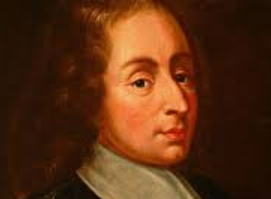
I do not speak here of divine truths... because they are infinitely superior to nature: God alone can place them in the soul... I know that he has desired that they should enter from the heart into the mind, and not from the mind into the heart, to humiliate that proud power of reasoning that pretends to the right to be the judge of the things that the will chooses; and to cure this infirm will which is wholly corrupted by its filthy attachments.
4 months 3 weeks ago
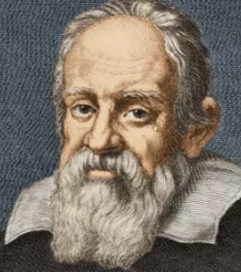
It always seems to me extreme rashness on the part of some when they want to make human abilities the measure of what nature can do. On the contrary, there is not a single effect in nature, even the least that exists, such that the most ingenious theorists can arrive at a complete understanding of it. This vain presumption of understanding everything can have no other basis than never understanding anything. For anyone who had experienced just once the perfect understanding of one single thing, and had truly tasted how knowledge is accomplished, would recognize that of the infinity of other truths he understands nothing.
▼
Source
Day One
4 months 3 weeks ago
And yet the Paris gardener is not our ideal of an agriculuralist. In the painful work of civilisation he has shown us the way to follow; but the ideal of modern civilisation is is elsewhere. He toils, with but short interruption, from 3 in the morning till late in the night. He knows no leisure; he has no time to live the life of a human being; the commonwealth does not exist for him; his world is his garden, more than his family. He cannot be our ideal; neither he nor his system of agriculture. Our ambition is, that he should produce even more... with less labour, and should enjoy all the joys of human life. And this is fully possible.
4 months 3 weeks ago
They say that the first inclination which an animal has is to protect itself.
▼
Source
Zeno, 52.
4 months 3 weeks ago
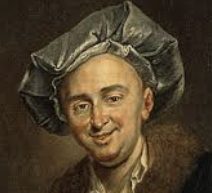
A mere nothing, a tiny fibre, something that could never be found by the most delicate anatomy, would have made of Erasmus and Fontenelle two idiots, and Fontenelle himself speaks of this very fact in one of his best dialogues.
4 months 3 weeks ago
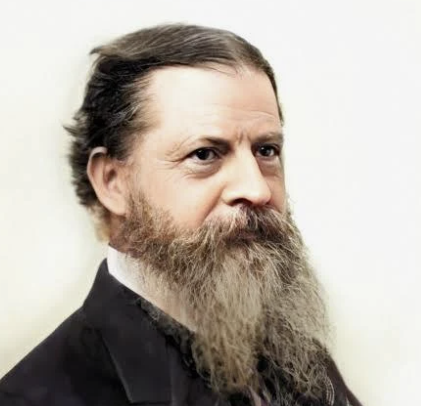
The definition of definition is at bottom just what the maxim of pragmatism expresses.
▼
Source
Letter to William James (8 January 1909)
4 months 3 weeks ago
Nothing is more common than good things: the point in question is only to discriminate them; and it is certain that they are all natural and within our reach and even known to all mankind.
4 months 3 weeks ago
Names and attributes must be accommodated to the essence of things, and not the essence to the names, since things come first and names afterwards.
▼
Source
As quoted in Discoveries and Opinions of Galileo (1957) by Stillman Drake, p. 92 | Variant translation: Names and attributes must be accommodated to the essence of things, and not the essence to the names, because things came first, and their names subseq

4 months 3 weeks ago
Do the essences of proposition and of the truth determine themselves from out of the essence of the thing, or does the essence of the thing determine itself from out of the essence of the proposition? The question is posed as an either/or. However does this either/or itself suffice? Are the essence of the thing and the essence of the proposition only built as mirror images because both of them together determine themselves from out of the same but deeper lying root? However, what and where can be this common ground for the essence of the thing and of the proposition and of their origin? The unconditioned (Unbedingt)? We stated at the beginning that what conditions the essense of the thing in its thingness can no longer itself be thing and conditioned, it must be an unconditioned (Un-bedingtes). p. 47

4 months 3 weeks ago
Pleasure and pain, though directly opposite, are yet so contrived by nature as to be constant companions; and it is a fact that the same motions and muscles of the face are employed both in laughing and crying.
▼
Source
p. 161 (Extremes)
4 months 3 weeks ago
I cannot see that this view of radical interpretation possesses the relevance for historians that some of Davidson’s more enthusiastic followers, such as Macdonald and Pettit, have supposed. Davidson is merely proposing a general strategy for using assertions to get at underlying beliefs, the strategy of beginning by assuming general agreement. It may well be that we need to start with some such assumption if we are to find another culture intelligible. If I am to identify the nature of Bodin’s beliefs about witches, or even to establish that they are beliefs about that particular subject-matter, it certainly seems plausible to assume that Bodin and I must share a considerable number of ancillary beliefs. It is arguable, however, that Davidson has overemphasised the significance of this consideration and too comfortably ridiculed the notion of radically different conceptual schemes.
▼
Source
Quentin Skinner, "Interpretation, rationality and truth", Visions of Politics (2002)
4 months 3 weeks ago
From these two immediate perceptions, we gain a mediate, or inferential perception of the relation of all four instants. This mediate perception is objectively, or as to the object being represented, spread over the four instants; but subjectively, or as itself the subject of duration, it is completely embraced in the second moment. (The reader will observe that I use the word instant to mean a point in time, and moment to mean an infinitesimal duration.
4 months 3 weeks ago
What has happened to those who, like Heidegger, have tried to find their ways in immediacy, in intuition, in nature, would be too sad to retell—and is well known anyway. What is certain is that those pathmarks off the beaten track led indeed nowhere.
▼
Source
Bruno Latour, “Why Has Critique Run out of Steam? From Matters of Fact to Matters of Concern” Critical Inquiry 30, (Winter 2004)
4 months 3 weeks ago
The supreme Being is everywhere; but He is not equally visible everywhere. Let us seek Him in the simplest things, in the most fundamental laws of Nature, in the universal rules by which movement is conserved, distributed or destroyed; and let us not seek Him in phenomena that are merely complex consequences of these laws.
4 months 3 weeks ago
Literary people of the opposite sex do not really love each other. All they really desire is to read their manuscript aloud to a receptive listener.
▼
Source
p. 11

4 months 3 weeks ago
Hegel’s philosophy revolved about the universality of reason; it was a rational system with its every part (the subjective as well as the objective spheres) integrated into a comprehensive whole. Marx shows that capitalist society first put such a universality into practice. P. 286-287
4 months 3 weeks ago
This first non-evaluative insight into history does not inevitably lead to relativism, but rather to relationism. Knowledge, as seen in the light of the total conception of ideology, is by no means an illusory experience, for ideology in its relational concept is not at all identical with illusion. Knowledge arising out of our experience in actual life situations, though not absolute, is knowledge none the less. The norms arising out of such actual life situations do not exist in a social vacuum, but are effective as real sanctions for conduct. Relationism signifies merely that all of the elements of meaning in a given situation have reference to one another and derive their significance from this reciprocal interrelationship in a given frame of thought. Such a system of meanings is possible and valid only in a given type of historical existence, to which, for a time, it furnishes appropriate expression. When the social situation changes, the system of norms to which it had previously given birth ceases to be in harmony with it. The same estrangement goes on with reference to knowledge and to the historical perspective. All knowledge is oriented toward some object and is influenced in its approach by the nature of the object with which it is pre-occupied. But the mode of approach to the object to be known is dependent upon the nature of the knower.
4 months 3 weeks ago
When anything is present to the mind, what is the very first and simplest character to be noted in it, in every case, no matter how little elevated the object may be? Certainly, it is its presentness.
▼
Source
Lecture II : The Universal Categories, § 1 : Presentness, CP 5.44
4 months 3 weeks ago
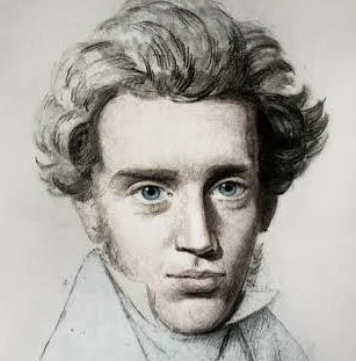
After a considerable walk through the forest, where I became acquainted with several of the little lakes I am so fond of, I came to Hestehaven and Lake Carl. Here is one of the most beautiful regions I have ever seen. The countryside is somewhat isolated and slopes steeply down to the lake, but with the beech forests growing on either side, it is not barren. A growth of rushes forms the background and the lake itself the foreground; a fairly large part of the lake is clear, but a still larger part is overgrown with the large green leaves of the waterlily, under which the fish seemingly try to hide but now and then peek out and flounder about on the surface in order to bathe in sunshine. The land rises on the opposite side, a great beech forest, and in the morning light the lighted areas make a marvelous contrast to the shadowed areas. The church bells call to prayer, but not in a temple made by human hands. If the birds do not need to be reminded to praise God, then ought men not be moved to prayer outside of the church, in the true house of God, where heaven's arch forms the ceiling of the church, where the roar of the storm and the light breezes take the place of the organ's bass and treble, where the singing of the birds make up the congregational hymns of praise, where echo does not repeat the pastor's voice as in the arch of the stone church, but where everything resolves itself in an endless antiphony — Hillerød, July 25, 1835
4 months 3 weeks ago
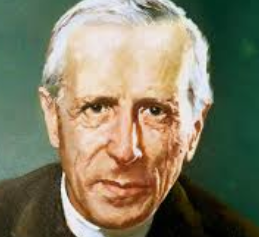
Sometimes we need bread, sometimes wine, sometimes a tonic or a hormone injection, sometimes the stimulation of a colour, sometimes the magic of a sound which goes in at our ears as a vibration and reaches our brains in the form of inspiration. ...There is something through which material and spiritual energy hold together and are complementary. ...There must be a single energy operating in the world. ...The 'soul' must be ...a focal point of transformation ...Forces of bodies converge, to become interiorised and sublimated in beauty and truth. ...Yet, ...direct transformation of one of these two energies into the other... has to be abandoned. As... we try to couple them... their mutual independence becomes as clear as their interrelation.
4 months 3 weeks ago
Do not dump your woes upon people — keep the sad story of your life to yourself. Troubles grow by recounting them.
▼
Source
p. 156
4 months 3 weeks ago
We are again confronted with one of the most vexing aspects of advanced industrial civilization: the rational character of its irrationality. Its productivity and efficiency, its capacity to increase and spread comforts, … the extent to which this civilization transforms the object world into an extension of man's mind and body makes the very notion of alienation questionable. The people recognize themselves in their commodities; they find their soul in their automobile, hi-fi set, split-level home, kitchen equipment. The very mechanism which ties the individual to his society has changed, and social control is anchored in the new needs which it has produced.
▼
Source
p. 9
4 months 3 weeks ago
Peirce, to my knowledge, is original and unique in stressing the problem of studying the rules that limit the class of possible theories. Of course, his concept of abduction, like Lorenz’s biological a priori, has a strongly Kantian flavor, and all derive from the rationalist psychology that concerned itself with the forms, the limits, and the principles that provide “the sinews and connections” for human thought, that underlie “that infinite amount of knowledge of which we are not always conscious,” of which Leibnitz spoke. It is therefore quite natural that we should link these developments to the revival of philosophical grammar, which grew from the same soil as an attempt, quite fruitful and legitimate, to explore one basic facet of human intelligence.
▼
Source
Noam Chomsky, Language and Mind (1968), Chap. 2 : Linguistic contributions to the study of mind: present
4 months 3 weeks ago
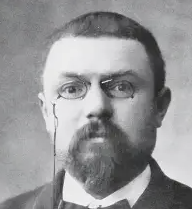
We should say: 'Causes almost identical take almost the same time to produce almost the same effects.'
4 months 3 weeks ago
But this I thought was the meaning of life, that the individual shook off the habit of accepting the favors of difference, should that be tempting, steeled himself against its humiliation, should that weigh down on him, in order to find the universal, what is common to all human beings, to concern oneself only with that. Oh! How beautiful to lose oneself in this way. But then I thought again that in the having of this concern the meaning of life was to be concerned for oneself as if the particular individual were all there was. Oh! How beautiful thus to find oneself in the universal! If the universal is the rule then the individual is the paradigm [corrected from demand]; if the universal is the demand then the universal is the fulfillment; if the universal is everything, if the universal says everything, then the particular individual believes that the everything is said about him-him alone. So if the place and context here did not require signature, none would be needed, for again it is infinitely inconsequential who has said it (as though the favored one said it, the one who was wronged being in no position to say it, since after all they all have it in them to do it).
▼
Source
S. Kierkegaard 1846 Journals, Hannay 1996, VII IB200, p. 252
4 months 3 weeks ago
The astonishing resonance of his research, as well as the brilliance of his personality and richness of his thinking, have profoundly marked our epoch. In him, a powerful poetic intuition of nature's profound value, a sharp perception of creation's dynanism, and a broad vision of the world's future join together with an incontestable religious fervor. Similarly, his unremitting desire to dialogue with the science of his time and his bold optimism about the evolution of the world have given his intuitions — through the rich variety of his words and the magic of his images — considerable influence. Completely turned to the future, this synthesis, often lyrical and animated with passion for the universal, will help to restore hope to those assailed by doubts. ... What our contemporaries will undoubtedly remember, beyond the difficulties of conception and deficiencies of expression in this audacious attempt to reach a synthesis, is the testimomy of the coherent life of a man possessed by Christ in the depths of his soul. He was concerned with honoring both faith and reason, and anticipated the response to John Paul II's appeal: "Be not afraid, open, open wide to Christ the doors of the immense domains of culture, civilization, and progress."
▼
Source
Cardinal Agostino Casaroli, in [http://www.traditioninaction.org/ProgressivistDoc/A_020_CasaroliTeilhard.htm "Cardinal Agostino Casaroli praises the work of Fr. Teilhard de Chardin" in L'Osservatore Romano (10 June 1981)]
4 months 3 weeks ago
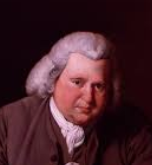
The Pʀᴏᴛᴇᴜs-ʟᴏᴠᴇʀ woos his playful bride,To win the fair he tries a thousand forms, Basks on the sands, or gambols in the storms.A Dolphin now, his scaly sides he laves,And bears the sportive damsel on the waves;She strikes the cymbal as he moves along,And wondering Ocean listens to the song.—And now a spotted Pard the lover stalks,Plays round her steps, and guards her favour’d walks;As with white teeth he prints her hand, caress’d, And lays his velvet paw upon her breast,O’er his round face her snowy fingers strainThe silken knots, and fit the ribbon-rein.—And now a Swan, he spreads his plumy sails,And proudly glides before the fanning gales;Pleas’d on the flowery brink with graceful handShe waves her floating lover to the land;Bright shines his sinuous neck, with crimson beakHe prints fond kisses on her glowing cheek,Spreads his broad wings, elates his ebon crest,And clasps the beauty to his downy breast.
▼
Source
[The Proteus-lover], The Botanic Garden (1791), Part ii, Canto iv, ll. 363-86.
4 months 3 weeks ago
A whole dimension of human activity and passivity has been de-eroticized. The environment from which the individual could obtain pleasure—which he could cathect as gratifying almost as an extended zone of the body—has been rigidly reduced. Consequently, the “universe” of libidinous cathexis is likewise reduced. The effect is a localization and contraction of libido, the reduction of erotic to sexual experience and satisfaction.
▼
Source
p. 73
4 months 3 weeks ago
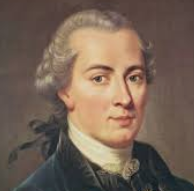
As the analysis of a substantial composite terminates only in a part which is not a whole, that is, in a simple part, so synthesis terminates only in a whole which is not a part, that is, the world.
4 months 3 weeks ago
An old proverb fetched from the outward and visible world says: "Only the man that works gets the bread." Strangely enough this proverb does not aptly apply in that world to which it expressly belongs. For the outward world is subjected to the law of imperfection, and again and again the experience is repeated that he too who does not work gets the bread, and that he who sleeps gets it more abundantly than the man who works. In the outward world everything is made payable to the bearer, this world is in bondage to the law of indifference, and to him who has the ring, the spirit of the ring is obedient, whether he be Noureddin or Aladdin, and he who has the world's treasure, has it, however he got it.
▼
Source
Problemata: Preliminary Expectoration
4 months 3 weeks ago
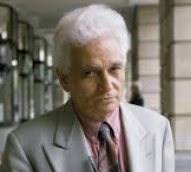
It is also the becoming-space of the spoken chain - which has been called temporal or linear; a becoming-space which makes possible both writing and every correspondence between speech and writing, every passage from one to the other.The activity or productivity connoted by the a of différance refers to the generative movement in the play of differences. The latter are neither fallen from the sky nor inscribed once and for all in a closed system, a static structure that a synchronic and taxonomic operation could exhaust. Differences are the effects of transformations, and from this vantage the theme of différance is incompatible with the static, synchronic, taxonomic, ahistoric motifs in the concept of structure.
▼
Source
p. 28
CivilSimian.com created by AxiomaticPanic, CivilSimian, Kalokagathia