

4 months 3 weeks ago
The Communists, following Hegel, speak of humanity and its future as of some monolithic individuality. I was attacking this illusion.
▼
Source
On her work All Men are Mortal in Force of Circumstances (1963), p. 73
4 months 3 weeks ago
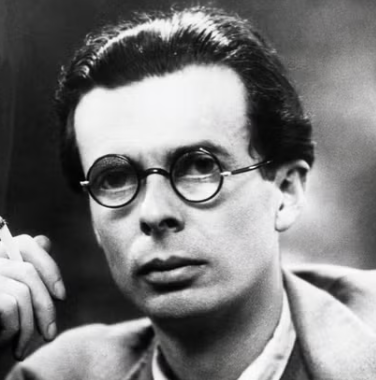
I don't think that there are any sinister persons deliberately trying to rob people of their freedom but I do think, first of all, that there are a number of impersonal forces which are pushing in the direction of less and less freedom. And I also thing there are a number of technological devices which anybody who wishes to use, can use, to accelerate this process of going away from freedom, of imposing control.
4 months 3 weeks ago
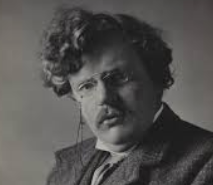
The cold queen of England is looking in the glass; The shadow of the Valois is yawning at the Mass.
▼
Source
Lepanto
4 months 3 weeks ago
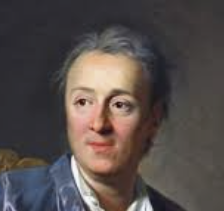
Shakespeare’s fault is not the greatest into which a poet may fall. It merely indicates a deficiency of taste.

4 months 3 weeks ago
This is the moment when it becomes clear that the images of madness are nothing but dream and error, and that if the unfortunate sufferer who is blinded by them invokes them, it is the better to disappear with them into the annihilation for which they are destined.
▼
Source
Part Two: 2. The Transcendence of Delirium
4 months 3 weeks ago
If you live long enough, you'll see that every victory turns into a defeat.
4 months 3 weeks ago
Both of us victims of the same twentieth-century plague. Not the Black Death, this time; the Grey Life.
4 months 3 weeks ago
An artist will betray himself by some sort of sincerity.
4 months 3 weeks ago
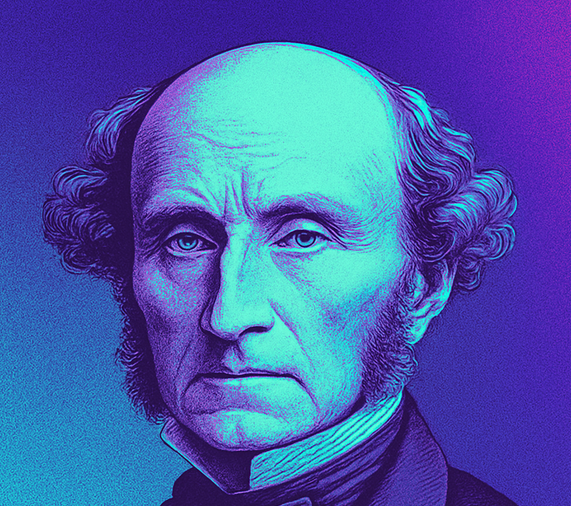
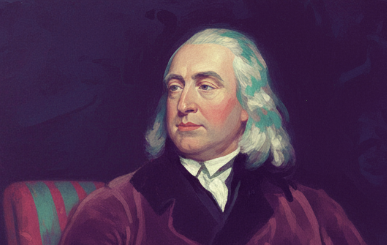
That power should be exercised over any portion of mankind without any obligation of consulting them, is only tolerable while they are in an infantine, or a semi-barbarous state. In any civilized condition, power ought never to be exempt from the necessity of appealing to the reason, and recommending itself by motives which justify it to the conscience and feelings, of the governed.
▼
Source
[https://en.wikisource.org/wiki/Thoughts_on_Parliamentary_Reform Thoughts on Parliamentary Reform] (1859), p. 24
4 months 3 weeks ago
Priestley was the first (unless it was Beccaria) who taught my lips to pronounce this sacred truth — that the greatest happiness of the greatest number is the foundation of morals and legislation.
▼
Source
"Extracts from Bentham's Commonplace Book", in Collected Works, x, p. 142; He credits Priestley in his Essay on the First Principles of Government (1768) or Beccaria with inspiring his use of the phrase, often paraphrased as "The greatest good for the gre
4 months 3 weeks ago
If I had believed him, everything would have been turned upside down... all would have been turned topsy-turvy to make room for impractical theories.
▼
Source
Catherine the Great as quoted by Jackson J. Spielvogel
4 months 3 weeks ago
This, then, is how one must imagine the punitive city. At the crossroads, in the gardens, at the side of roads being repaired or bridges built, in workshops open to all, in the depths of mines that may be visited, will be hundreds of tiny theatres of punishment. Each crime will have its law; each criminal his punishment. It will be a visible punishment, a punishment that tells all, that explains, justifies itself, convicts: placards, different-coloured caps bearing inscriptions, posters, symbols, texts read or printed, tirelessly repeat the code. Scenery, perspectives, optical effects, trompe-l'œil sometimes magnify the scene, making it more fearful than it is, but also clearer. From where the public is sitting, it is possible to believe in the existence of certain cruelties which, in fact, do not take place. But the essential point, in all these real or magnified severities, is that they should all, according to a strict economy, teach a lesson: that each punishment should be a fable. And that, in counterpoint with all the direct examples of virtue, one may at each moment encounter, as a living spectacle, the misfortunes of vice. Around each of these moral ‘representations’, schoolchildren will gather with their masters and adults will learn what lessons to teach their offspring. The great terrifying ritual of the public execution gives way, day after day, street after street, to this serious theatre, with its multifarious and persuasive scenes. And popular memory will reproduce in rumour the austere discourse of the law. But perhaps it will be necessary, above these innumerable spectacles and narratives, to place the major sign of punishment for the most terrible of crimes: the keystone of the penal edifice.
▼
Source
Chapter Three, The Gentle Way in Punishment
4 months 3 weeks ago
Each of us is responsible for everything and to every human being.
▼
Source
Fyodor Dostoevsky in The Brothers Karamazov; this was used as an epigraph in The Blood of Others, and is sometimes attributed to de Beauvoir
4 months 3 weeks ago
Being is - or should be - necessary.
4 months 3 weeks ago
..Whenever it ceases to be true that mankind, as a rule, prefer themselves to others, and those nearest to them to those more remote, from that moment Communism is not only practicable, but the only defensible form of society...
4 months 3 weeks ago
He found the philosophy of law a chaos, he left it a science: he found the practice of the law an Augean stable, he turned the river into it which is mining and sweeping away mound after mound of its rubbish.
▼
Source
John Stuart Mill, 'Bentham', London and Westminster Review (August 1838), in Dissertations and Discussions: Political, Philosophical, and Historical, Vol. I (1859), p. 368
4 months 3 weeks ago
I don't really know what they mean by "intellectuals," all the people who describe, denounce, or scold them. I do know, on the other hand, what I have committed myself to, as an intellectual, which is to say, after all, a cerebro-spinal individual: to having a brain as supple as possible and a spinal column that's as straight as necessary.

4 months 3 weeks ago
If the knowledge which we acquired before birth was lost to us at birth, and afterwords by the use of the senses we recovered that which we previously knew, will not that which we call learning be a process of recovering our knowledge, and may not this be rightly termed recollection by us? ...Then, Simmias, our souls must have existed before they were in the form of man—without bodies, and must have had intelligence.

4 months 3 weeks ago
Tragedy is all about losing. And humor is all about gaining perspective. Humour returns our gladness. And with gladness comes generosity. Humor returns us to the light and makes us light—it kills grudges, buries bodies–buries revenge—buries blame and guilt—fear and dread. Laughter, like hiccups and sneezes and farts and burps, relieves us of severity.
▼
Source
On the power of humor.[https://monkeybicycle.net/category/interviews/page/16/] (Monkey Bicycle, August 23, 2013)
4 months 3 weeks ago
The best state for human nature is that in which, while no one is poor, no one desires to be richer, nor has any reason to fear being thrust back by the efforts of others to push themselves forward.
▼
Source
Book IV, Chapter VI, §2
4 months 3 weeks ago
The aim of this Socratic parrhesiastic activity... is to lead the interlocutor to the choice of that kind of life (bios) that will be in Dorian-harmonic accord with, logos, virtue, courage, and truth.
4 months 3 weeks ago
If the immortal is also imperishable, the soul when attacked by death cannot perish; for the preceding argument shows that the soul will not admit of death, or even be dead, any more than three or the odd number will admit of the even...

4 months 3 weeks ago
Antoine Meillet also noted that imperatives in European languages are typically the morphological root of the verb, and hypothesised that the imperative was the primitive form of a verb: “walk!” precedes “to walk” or “he walks”. This opens up the possibility of an alternative ontology, or pre-ontology, based on commandment rather than assertion, on “be!” rather than “is”. While philosophical or scientific statements would fall under the ordinary “is”-based ontology, fields like law, religion or magic would operate in the imperative mode: “let there be…”
▼
Source
Giorgio Agamben, [http://bat020.com/2011/03/30/giorgio-agamben-what-is-a-commandment/ "What is a commandment?"] March 28, 2011
4 months 3 weeks ago
Though they may think the proof incomplete that the universe is a work of design, and though they assuredly disbelieve that it can have an Author and Governor who is absolute in power as well as perfect in goodness, they have that which constitutes the principal worth of all religions whatever, an ideal conception of a Perfect Being, to which they habitually refer as the guide of their conscience; and this ideal of Good is usually far nearer to perfection than the objective Deity of those, who think themselves obliged to find absolute goodness in the author of a world so crowded with suffering and so deformed by injustice as ours.
▼
Source
([https://archive.org/details/autobiography01mill/page/46/mode/1up p. 46])
4 months 3 weeks ago
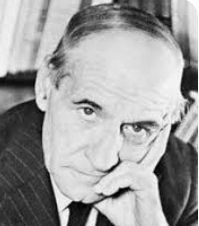
The direction of society has been taken over by a type of man who is not interested in the principles of civilisation. Not of this or that civilisation but — from what we can judge to-day — of any civilisation. …The type of man dominant to-day is a primitive one, a Naturmensch rising up in the midst of a civilised world.
▼
Source
Chap.IX: The Primitive and the Technical
4 months 3 weeks ago
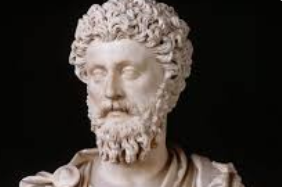
The lot assigned to every man is suited to him, and suits him to itself.
▼
Source
III, 4
4 months 3 weeks ago
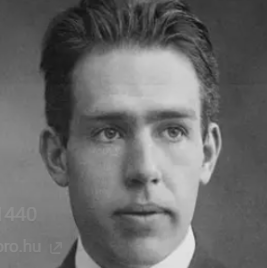
In mathematics we can take our inner distance from the content of our statements. In the final analysis mathematics is a mental game that we can play or not play as we choose. Religion, on the other hand, deals with ourselves, with our life and death; its promises are meant to govern our actions and thus, at least indirectly, our very existence. We cannot just look at them impassively from the outside. Moreover, our attitude to religious questions cannot be separated from our attitude to society. Even if religion arose as the spiritual structure of a particular human society, it is arguable whether it has remained the strongest social molding force through history, or whether society, once formed, develops new spiritual structures and adapts them to its particular level of knowledge. Nowadays, the individual seems to be able to choose the spiritual framework of his thoughts and actions quite freely, and this freedom reflects the fact that the boundaries between the various cultures and societies are beginning to become more fluid. But even when an individual tries to attain the greatest possible degree of independence, he will still be swayed by the existing spiritual structures — consciously or unconsciously. For he, too, must be able to speak of life and death and the human condition to other members of the society in which he's chosen to live; he must educate his children according to the norms of that society, fit into its life. Epistemological sophistries cannot possibly help him attain these ends. Here, too, the relationship between critical thought about the spiritual content of a given religion and action based on the deliberate acceptance of that content is complementary. And such acceptance, if consciously arrived at, fills the individual with strength of purpose, helps him to overcome doubts and, if he has to suffer, provides him with the kind of solace that only a sense of being sheltered under an all-embracing roof can grant. In that sense, religion helps to make social life more harmonious; its most important task is to remind us, in the language of pictures and parables, of the wider framework within which our life is set.
4 months 3 weeks ago
If we are to use women for the same things as the men, we must also teach them the same things.
▼
Source
Socrates, as quoted by Bettany Hughes: [http://www.telegraph.co.uk/women/womens-life/11785181/Feminism-started-with-the-Buddha-and-Confucius-25-centuries-ago.html "Feminism started with the Buddha and Confucius 25 centuries ago"].
4 months 3 weeks ago
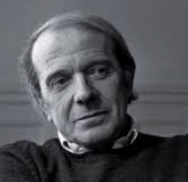
There's no need to fear or hope, but only to look for new weapons.
▼
Source
from Postscript on the Societies of Control
4 months 3 weeks ago
Since governmental activity may be deemed a service which is useful to society, society should consent to pay for this service.
4 months 3 weeks ago
The enjoyments of life (such was now my theory) are sufficient to make it a pleasant thing, when they are taken en passant, without being made a principal object. Once make them so, and they are immediately felt to be insufficient. They will not bear a scrutinizing examination. Ask yourself whether you are happy, and you cease to be so. The only chance is to treat, not happiness, but some end external to it, as the purpose of life. Let your self-consciousness, your scrutiny, your self-interrogation, exhaust themselves on that; and if otherwise fortunately circumstanced you will inhale happiness with the air you breathe, without dwelling on it or thinking about it, without either forestalling it in imagination, or putting it to flight by fatal questioning. This theory now became the basis of my philosophy of life. And I still hold to it as the best theory for all those who have but a moderate degree of sensibility and of capacity for enjoyment; that is, for the great majority of mankind.
▼
Source
([https://archive.org/details/autobiography01mill/page/142/mode/1up pp. 142-143])
4 months 3 weeks ago
Whether he be an original or a plagiarist, man is the novelist of himself.
▼
Source
“Man has no nature”
4 months 3 weeks ago
You have a mind? —Yes. Well, why not use it?
▼
Source
(Hays translation)
4 months 3 weeks ago
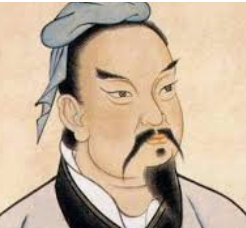
Engage people with what they expect; it is what they are able to discern and confirms their projections. It settles them into predictable patterns of response, occupying their minds while you wait for the extraordinary moment — that which they cannot anticipate.

4 months 3 weeks ago
Whenever conscience speaks with a divided, uncertain, and disputed voice, it is not yet the voice of God. Descend still deeper into yourself, until you hear nothing but a clear and undivided voice, a voice which does away with doubt and brings with it persuasion, light and serenity.
▼
Source
6 April 1851
4 months 3 weeks ago
I have learned to seek my happiness by limiting my desires, rather than in attempting to satisfy them.
▼
Source
Attributed to John Stuart Mill in The Phrenological Journal and Science of Health, Vol. LXXXV (September 1887), p. 170
4 months 3 weeks ago
At dawn, when you have trouble getting out of bed, tell yourself: ‘I have to go to work – as a human being. What do I have to complain of, if I’m going to do what I was born for – the things I was brought into the world to do? Or is this what I was created for? To huddle under the blankets and stay warm?’
▼
Source
At dawn of day, when you dislike being called, have this thought ready: "I am called to man's labour; why then do I make a difficulty if I am going out to do what I was born to do and what I was brought into the world for?(Farquharson translation) | Ὄρθρο

4 months 3 weeks ago
The goal of maximizing the welfare of all may be better achieved by an ethic that accepts our inclinations and harnesses them so that, taken as a whole, the system works to everyone's advantage.
▼
Source
Chapter 6, A New Understanding Of Ethics, p. 157

4 months 3 weeks ago
Dear brothers and sisters, St Teresa of Jesus is a true teacher of Christian life for the faithful of every time. In our society, which all too often lacks spiritual values, St Teresa teaches us to be unflagging witnesses of God, of his presence and of his action. She teaches us truly to feel this thirst for God that exists in the depths of our hearts, this desire to see God, to seek God, to be in conversation with him and to be his friends.This is the friendship we all need that we must seek anew, day after day. May the example of this Saint, profoundly contemplative and effectively active, spur us too every day to dedicate the right time to prayer, to this openness to God, to this journey, in order to seek God, to see him, to discover his friendship and so to find true life; indeed many of us should truly say: “I am not alive, I am not truly alive because I do not live the essence of my life”.Therefore time devoted to prayer is not time wasted, it is time in which the path of life unfolds, the path unfolds to learning from God an ardent love for him, for his Church, and practical charity for our brothers and sisters.
▼
Source
Benedict XVI, General Audience Address, 2 February 2011.

4 months 3 weeks ago
The shortest and surest way of arriving at real knowledge is to unlearn the lessons we have been taught, to mount the first principles, and take nobody's word about them.
▼
Source
As quoted in Treasury of Wisdom, Wit and Humor, Odd Comparisons and Proverbs (1891) by Adam Woolever
4 months 3 weeks ago
Man is always something more than what he knows of himself. He is not what he is simply once and for all, but is a process...
4 months 3 weeks ago
What is not good for the swarm is not good for the bee.
▼
Source
VI, 54
4 months 3 weeks ago
If no law of God had prohibited idols to be made by us; if no voice of the Holy Spirit uttered general menace no less against the makers than the worshippers of idols; from our sacrament itself we would draw our interpretation that arts of that kind are opposed to the faith. For how have we renounced the devil and his angels, if we make them? What divorce have we declared from them, I say not with whom, but dependent on whom, we live? What discord have we entered into with those to whom we are under obligation for the sake of our maintenance? Can you have denied with the tongue what with the hand you confess? unmake by word what by deed you make? preach one God, you who make so many? preach the true God, you who make false ones? "I make," says one, "but I worship not;" as if there were some cause for which he dare not worship, besides that for which he ought not also to make,--the offence done to God, namely, in either case. Nay, you who make, that they may be able to be worshipped, do worship; and you worship, not with the spirit of some worthless perfume, but with your own; nor at the expense of a beast's soul, but of your own. To them you immolate your ingenuity; to them you make your sweat a libation; to them you kindle the torch of your forethought. More are you to them than a priest, since it is by your means they have a priest; your diligence is their divinity. Do you affirm that you worship not what you make? Ah! but they affirm not so, to whom you slay this fatter, more precious and greater victim, your salvation.
▼
Source
Chapter VI, translated by , '.
4 months 3 weeks ago
Who now reads Bolingbroke? Who ever read him through? ... I do not often quote Bolingbroke, nor have his works in general, left any permanent impression on my mind. He is a presumptuousness and a superficial writer. But he has one observation, which in my opinion, is not without depth and solidity. He says, that he prefers a monarchy to other governments; because you can better ingraft any description of republic on a monarchy than any thing of monarchy upon the republican forms. I think him perfectly in the right.
▼
Source
Edmund Burke, Reflections on the Revolution in France (1790), pp. 133, 187
4 months 3 weeks ago
Another may be more expert in casting [throwing] his opponent; but he is not more social, nor more modest, nor better disciplined to meet all that happens, nor more considerate with respect to the faults of his neighbors.
▼
Source
VII, 52

4 months 3 weeks ago
For love is ever the beginning of Knowledge, as fire is of light.
▼
Source
Carlyle, Essays, Death of Goethe. Quote reported in Hoyt's New Cyclopedia Of Practical Quotations (1922), p. 419-23.
4 months 3 weeks ago
The encouragement of light-mindedness about traditional philosophical topics serves the same purposes as does the encouragement of light-mindedness about traditional theological topics. Like the rise of large market economies, the increase in literacy, the proliferation of artistic genres, and the insouciant pluralism of contemporary culture, such philosophical superficiality and light-mindedness helps along the disenchantment of the world. It helps make the world’s inhabitants more pragmatic, more tolerant, more liberal, more receptive to the appeal of instrumental rationality.

4 months 3 weeks ago
See me safe up: for in my coming down, I can shift for myself.
▼
Source
On ascending the platform to his execution, as quoted in History of England (1856-1870) by James Anthony Froude
4 months 3 weeks ago
To be free is of the essence of every intellectual being.
▼
Source
p. 6.
4 months 3 weeks ago
In the constitution of that rational animal I see no virtue which is opposed to justice, but I see a virtue which is opposed to love of pleasure, and that is temperance.
▼
Source
VIII, 39
CivilSimian.com created by AxiomaticPanic, CivilSimian, Kalokagathia