

4 months 3 weeks ago
In existing States a fresh law is looked upon as a remedy for evil. Instead of themselves altering what is bad, people begin by demanding a law to alter it. … In short, a law everywhere and for everything! A law about fashions, a law about mad dogs, a law about virtue, a law to put a stop to all the vices and all the evils which result from human indolence and cowardice. We are so perverted by an education which from infancy seeks to kill in us the spirit of revolt, and to develop that of submission to authority; we are so perverted by this existence under the ferrule of a law, which regulates every event in life — our birth, our education, our development, our love, our friendship — that, if this state of things continues, we shall lose all initiative, all habit of thinking for ourselves. Our society seems no longer able to understand that it is possible to exist otherwise than under the reign of law, elaborated by a representative government and administered by a handful of rulers. And even when it has gone so far as to emancipate itself from the thralldom, its first care has been to reconstitute it immediately. "The Year I of Liberty" has never lasted more than a day, for after proclaiming it men put themselves the very next morning under the yoke of law and authority.
▼
Source
I

4 months 3 weeks ago
If in the guise of philosophers, they [declaim speeches] with a view to their own profit and reputation, and not to improve you, that indeed is shocking. For it is as if a physician when visiting patients should disregard their treatment and their restoration to health, and should bring them flowers and courtesans and perfume.
▼
Source
Discourse 32, J. Cohoon and H. Crosby, trans. (1940), p. 181
4 months 3 weeks ago
Christianity is the religion of Europe, it is mingled with all our institutions, it is the hand of this religion that fashioned these new nations of Europe. The cross is on all the crowns, all the codes begin with its symbol. The kings are anointed, the priests are magistrates, the priesthood is an order, the empire is sacred, the religion is civil. The two powers are merged; each lends the other part of its strength, and, despite the quarrels that have divided these two sisters, they cannot live separated.
▼
Source
"Reflections on Protestantism in its Relations with Sovereignty," 1798, Œuvre critique, 8:64–5.
4 months 3 weeks ago
The difference between a man who is led by opinion or emotion and one who is led by reason. The former, whether he will or not, performs things of which he is entirely ignorant; the latter is subordinate to no one, and only does those things which he knows to be of primary importance in his life, and which on that account he desires the most; and therefore I call the former a slave, but the latter free.
▼
Source
Commonly attributed to Hume, but is actually from Spinoza (Ethics part IV PROP. LXVI Note)
4 months 3 weeks ago
The philosophical tradition that goes from Descartes to Husserl, and indeed a large part of the philosophical tradition that goes back to Plato, involves a search for foundations: metaphysically certain foundations of knowledge, foundations of language and meaning, foundations of mathematics, foundations of morality, etc. [...] Now, in the twentieth century, mostly under the influence of Wittgenstein and Heidegger, we have come to believe that this general search for these sorts of foundations is misguided.
▼
Source
John Searle, “The Word Turned Upside Down,” The New York Review of Books, 27 October 1983
4 months 3 weeks ago
Have not prisons — which kill all will and force of character in man, which enclose within their walls more vices than are met with on any other spot of the globe — always been universities of crime? Is not the court of a tribunal a school of ferocity?

4 months 3 weeks ago
The market is a place set apart where men may deceive each other.
▼
Source
Anacharsis, 5.
4 months 3 weeks ago
This right which you have, is not founded any more than his upon any quality or any merit in yourself which renders you worthy of it. Your soul and your body are, of themselves, indifferent to the state of boatman or that of duke; and there is no natural bond that attaches them to one condition rather than to another.
4 months 3 weeks ago
The landlord owes his riches to the poverty of the peasants, and the wealth of the capitalist comes from the same source.
▼
Source
Ch. 4 : Expropriation
4 months 3 weeks ago
The chief good he has defined to be the exercise of virtue in a perfect life.
▼
Source
Aristotle, 13.
4 months 3 weeks ago
Descartes, a genius made to blaze new paths and to go astray in them, supposed with some other philosophers that God is the only efficient cause of motion, and that every instant He communicates motion to all bodies. But this opinion is but an hypothesis which he tried to adjust to the light of faith; and in so doing he was no longer attempting to speak as a philosopher or to philosophers. Above all he was not addressing those who can be convinced only by the force of evidence.
▼
Source
Ch. V Concerning the Moving Force of Matter
4 months 3 weeks ago
This art, which I call the art of persuading, and which, properly speaking, is simply the process of perfect methodical proofs, consists of three essential parts: of defining the terms of which we should avail ourselves by clear definitions, of proposing principles of evident axioms to prove the thing in question; and of always mentally substituting in the demonstrations the definition in the place of the thing defined.
4 months 3 weeks ago
I was obliged to retract, like a good Catholic, this opinion of mine; and as a punishment my dialogue was prohibited; and after five months being dismissed from Rome (at the time that the city of Florence was infected with plague), the habitation which with generous pity was assigned to me, was that of the dearest friend I had in Siena, Monsignor the Archbishop Piccolomini, whose most agreeable conversation I enjoyed with such quite and satisfaction of mind, that having there resumed my studies, I discovered and demonstrated a great number on the mechanical conclusions on the resistance of solids … after about five months, the pestilence having ceased, the confinement of that house was changed by His Holiness for the freedom of the country so agreeable to me, whence I returned to the villa of Bellosguardo, and afterwards to Arcetri, where I still breathe salubrious air near my dear native-country Florence. Stay sane.
▼
Source
p. 251-253

4 months 3 weeks ago
Everywhere we remain unfree and chained to technology, whether we passionately affirm or deny it. But we are delivered over to it in the worst possible way when we regard it as something neutral; for this conception of it, to which today we particularly like to do homage, makes us utterly blind to the essence of technology.
▼
Source
The Question Concerning Technology (1954)
4 months 3 weeks ago
Science, down to the present day, remains permeated with Malthus's teachings. Political economy continues to base its reasoning upon a tacit admission of the impossibility of rapidly increasing the productive powers of a nation, and of thus giving satisfaction to all wants. This postulate stands, undiscussed, in the background of whatever political economy, classical or socialist, has to say about exchange-value, wages, sale of labour force, rent, exchange and consumption. Political economy never rises above the hypothesis of a limited and insufficient supply of the necessities of life; it takes it for granted. And all theories connected with political economy retain the same erroneous principle. Nearly all socialists too, admit the postulate. Nay, even in biology (so deeply interwoven now with sociology) we have recently seen the theory of variability of species borrowing a quite unexpected support from its having been connected by Darwin and Wallace with Malthus's fundamental idea, that the natural resources must inevitably fail to supply the means of existence for the rapidly multiplying animals and plants.
4 months 3 weeks ago
It takes a wise man to discover a wise man.
▼
Source
Xenophanes, 3.
4 months 3 weeks ago
Whatever the virtue may be, from whatever source it may come, it is worthy of esteem... Mind, beauty, wealth, nobility, although the children of chance, all have their own value, as skill, learning and virtue have theirs.
4 months 3 weeks ago
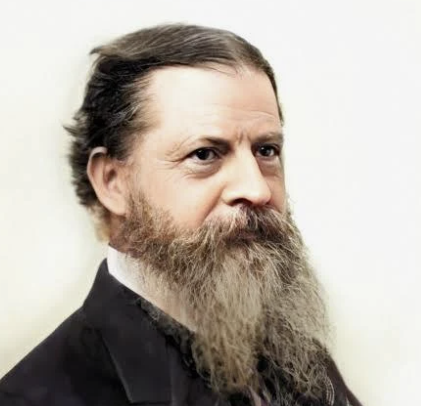
The only possible way of accounting for the laws of nature and for uniformity in general is to suppose them results of evolution. This supposes them not to be absolute, not to be obeyed precisely. It makes an element of indeterminacy, spontaneity, or absolute chance in nature. Just as, when we attempt to verify any physical law, we find our observations cannot be precisely satisfied by it, and rightly attribute the discrepancy to errors of observation, so we must suppose far more minute discrepancies to exist owing to the imperfect cogency of the law itself, to a certain swerving of the facts from any definite formula.
4 months 3 weeks ago
If beings are grasped as will to power, the “should” which is supposed to hang suspended over them, against which they might be measured, becomes superfluous. If life itself is will to power, it is itself the ground, principium, of valuation. Then a “should” does not determine being. Being determines a “should.” “When we talk of values we are speaking under the inspiration or optics of life: life itself compels us to set up values; life itself values through us whenever we posit values.” (VIII, 89)
▼
Source
p. 32
4 months 3 weeks ago
There you have, then, a theoretical physics which is neither the theory of a believer nor that of a nonbeliever, but merely and simply a theory of a physicist; admirably suited to classify the laws studied by the experimenter, it is incapable of opposing any assertion whatever of metaphysics or of religious dogma, and is equally incapable of lending effective support to any such assertion.
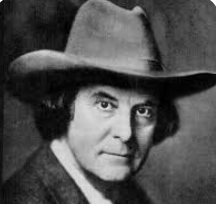
4 months 3 weeks ago
Do nothing, say nothing, and be nothing, and you'll never be criticized.
▼
Source
"John North Willys", in Elbert Hubbard's Selected Writings, Part 2 (1922), p. 335

4 months 3 weeks ago
German idealism rescued philosophy from the attack of British empiricism, and the struggle between the two became not merely a clash of different philosophical school, but a struggle for philosophy as such. P. 16
4 months 3 weeks ago
Second, in the presence of this continuity of feeling, nominalistic maxims appear futile. There is no doubt about one idea affecting another, when we can directly perceive the one generally modified and shaping itself into the other. Nor can there any longer be any difficulty about one idea resembling another, when we can pass along the continuous field of quality from one to the other and back again to the point which we had marked.
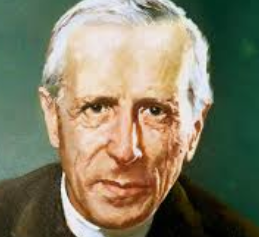
4 months 3 weeks ago
I am far from denying the destructive and disintegrating forces of passion. I will go so far as to agree that apart from the reproductive function, men have hitherto used love, on the whole, as an instrument of self-corruption and intoxication. But what do these excesses prove? Because fire consumes and electricity can kill are we to stop using them? The feminine is the most formidable of the forces of matter. True enough. "Very well, then," say the moralists, "we must avoid it." "Not at all," I reply, "we take hold of it." In every domain of the real (physical, affective, intellectual) "danger" is a sign of power. Only a mountain can create a terrifying drop. The customary education of the Christian conscience tends to make us confuse tutiorism with prudence, safety with truth. Avoiding the risk of transgression has become more important to us than carrying a difficult position for God. And it is this that is killing us. "The more dangerous a thing, the more is its conquest ordained by life": it is from that conviction that the modern world has emerged; and from that our religion, too, must be reborn.
▼
Source
"The Evolution of Chastity" (1934), as translated by René Hague in Toward the Future (1975)
4 months 3 weeks ago
It is the weak man who urges compromise—never the strong man.
▼
Source
p. 52
4 months 3 weeks ago
Gentile himself call his doctrine ‘absolute formalism’: there is no; ’matter’ apart from the pure ‘form’ of acting. ‘The only matter there is in the spiritual act is the form itself, as activity.’ P. 407
4 months 3 weeks ago
Of the three Universes of Experience familiar to us all, the first comprises all mere Ideas, those airy nothings to which the mind of poet, pure mathematician, or another might give local habitation and a name within that mind. Their very airy-nothingness, the fact that their Being consists in mere capability of getting thought, not in anybody's Actually thinking them, saves their Reality. The second Universe is that of the Brute Actuality of things and facts. I am confident that their Being consists in reactions against Brute forces, notwithstanding objections redoubtable until they are closely and fairly examined. The third Universe comprises everything whose being consists in active power to establish connections between different objects, especially between objects in different Universes. Such is everything which is essentially a Sign — not the mere body of the Sign, which is not essentially such, but, so to speak, the Sign's Soul, which has its Being in its power of serving as intermediary between its Object and a Mind.
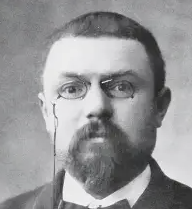
4 months 3 weeks ago
The very possibility of the science of mathematics seems an insoluble contradiction. If this science is deductive only in appearance, whence does it derive that perfect rigor no one dreams of doubting? If, on the contrary, all the propositions it enunciates can be deduced one from another by the rules of formal logic, why is not mathematics reduced to an immense tautology? The syllogism can teach us nothing essentially new, and, if everything is to spring from the principle of identity, everything should be capable of being reduced to it. Shall we then admit that the enunciations of all those theorems which fill so many volumes are nothing but devious ways of saying A is A! ...Does the mathematical method proceed from particular to the general, and, if so, how can it be called deductive? ...If we refuse to admit these consequences, it must be conceded that mathematical reasoning has of itself a sort of creative virtue and consequently differs from a syllogism.
▼
Source
Ch. I: On the Nature of Mathematical Reasoning (1905) [https://books.google.com/books?id=5nQSAAAAYAAJ Tr.] George Bruce Halstead
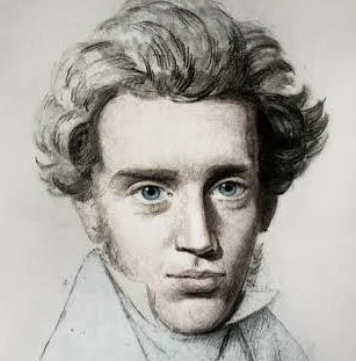
4 months 3 weeks ago
God creates out of nothing. Wonderful you say. Yes, to be sure, but He does what is still more wonderful: He makes saints out of sinners.
▼
Source
7 July 1838
4 months 3 weeks ago
Actuality, irreversibility. ...Omega ...is discovered ...at the end ...[I]n it the movement culminates. Yet... under this evolutive facet Omega still only reveals half of itself. While being the last term of its series, it is also outside all series. ...If by its very nature it did not escape from time and space which it gathers together, it would not be Omega.
4 months 3 weeks ago
There is no such thing as success in a bad business.
4 months 3 weeks ago
The music of the soul is also the music of salesmanship. Exchange value, not truth value counts. On it centers the rationality of the status quo, and all alien rationality is bent to It.
▼
Source
p. 57
4 months 3 weeks ago
Religion is too important a matter to its devotees to be a subject of ridicule. If they indulge in absurdities, they are to be pitied rather than ridiculed.
▼
Source
A lecture at Königsberg (1775), as quoted in A New Dictionary of Quotations on Historical Principles from Ancient and Modern Sources (1946) by H. L. Mencken, p. 1017
4 months 3 weeks ago
(1) The rules applied are exceedingly various. (2) It is difficult to separate the qualitative problem of simultaneity from the quantitative problem of the measurement of time; no matter whether a chronometer is used, or whether account must be taken of a velocity of transmission, as... of light, because such a velocity could not be measured without measuring a time.
4 months 3 weeks ago
Socrates did not stop with a philosophical consideration of mankind; he addressed himself to each one individually, wrested everything from him, and sent him away empty-handed.
▼
Source
p. 173
4 months 3 weeks ago
As soon as we cease to believe in such an engineer and in a discourse which breaks with the received historical discourse, and as soon as we admit that every finite discourse is bound by a certain bricolage and that the engineer and the scientist are also species of bricoleurs, then the very idea of bricolage is menaced and the difference in which it took on its meaning breaks down.
▼
Source
"Structure, Sign, and Play in the Discourse of the Human Sciences," Writing and Difference, tr. w/ intro & notes by Alan Bass. The University of Chicago Press. Chicago, 1978. p. 285
4 months 3 weeks ago
It is far from easy to determine whether she [Nature] has proved to man a kind parent or a merciless stepmother.
▼
Source
Book VII, sec. 1.
4 months 3 weeks ago
The ultimate notion of right is that which tends to the universal good; and when one's acting in a certain manner has this tendency, he has a right thus to act.
▼
Source
Book II, Ch. III, § VII
4 months 3 weeks ago
The closed language does not demonstrate and explain—it communicates decision, dictum, command. Where it defines, the definition becomes “separation of good from evil;” it establishes unquestionable
▼
Source
p. 101
4 months 3 weeks ago
The concept of space, therefore, is a pure intuition, being a singular concept, not made up by sensations, but itself the fundamental form of all external sensation.
4 months 3 weeks ago
In an age as agitated as ours, it no longer suffices just to be advertised in the newspaper. To be advertised in this way is the same thing as being consigned to oblivion. If one is to be noticed, once must as least appear on the first page under a hand that points to and, as it were, announces or advertises the advertisement.
▼
Source
Søren Kierkegaard, Writing Sampler, Nichol P. 73
4 months 3 weeks ago
If , there is a tendency in all Western democracies no longer to respect the professional politician or even the party member as such, it is no longer only because of some personal insufficiency, some fault, or some incompetence, or because of some scandal that can now be more widely known, amplified, and in fact often produced, if not premeditated by the power of the media. Rather, it is because politicians become more and more, or even solely characters in the media's representation at the very moment when the transformation of the public space, precisely by the media, causes them to lose the essential part of the power and even of the competence they were granted before by the structures of parliamentary representation, by the party apparatuses that were linked to it, and so forth. However competent they may personally be, professional politicians who conform to the old model tend today to become structurally incompetent. The same media power accuses, produces, and amplifies at the same time this incompetence of traditional politicians: on the one hand, it takes aways from them the legitimate power they held in the former political space (party, parliament, and so forth), but, on the other hand, it obliges them to become mere silhouettes, if not marionettes, on the stage of televisual rhetoric. They were thought to be actors of politics, they now often risk, as everyone knows, being no more than TV actors.
▼
Source
Wear and Tears (tableu of a ageless world)
4 months 3 weeks ago
Indeed I am inclined to go so far as to say that the one cause for which one may properly make war is the cause of peace.
▼
Source
"Non-Resistance and The Present War - A Reply to Mr. Russell," International Journal of Ethics (April 1915), vol. 25, no. 3, pp. 307-316
4 months 3 weeks ago
Either criticism is no good at all (a very defensible position) or else criticism means saying about an author the very things that would have made him jump out of his boots.
▼
Source
Appreciations and Criticisms of the Works of Charles Dickens (1911) Ch. 6: "Old Curiosity Shop"
4 months 3 weeks ago
Now precisely because Galilean science is, in the formation of its concepts, the technic of a specific Lebenswelt, it does not and cannot transcend this Lebenswelt. It remains essentially within the basic experiential framework and within the universe of ends set by this reality.
▼
Source
p. 164
4 months 3 weeks ago
The greatest problem for the human race, to the solution of which Nature drives man, is the achievement of a universal civic society which administers law among men.
▼
Source
Fifth Thesis
4 months 3 weeks ago
I confess that I have as vast contemplative ends, as I have moderate civil ends: for I have taken all knowledge to be my province; and if I could purge it of two sorts of rovers, whereof the one with frivolous disputations, confutations, and verbosities, the other with blind experiments and auricular traditions and impostures, hath committed so many spoils, I hope I should bring in industrious observations, grounded conclusions, and profitable inventions and discoveries; the best state of that province. This, whether it be curiosity, or vain glory, or nature, or (if one take it favourably) philanthropia, is so fixed in my mind as it cannot be removed. And I do easily see, that place of any reasonable countenance doth bring commandment of more wits than of a man's own; which is the thing I greatly affect.
▼
Source
Letter to William Cecil, 1st Baron Burghley (ca. 1593), published in The Works of Francis Bacon: Baron of Verulam, Viscount St. Alban, and Lord High Chancellor of England, 14 Vols. (1870), James Spedding, Robert L. Ellis, Douglas D. Heath, editors, Vol. V
4 months 3 weeks ago
There are three successive states of morality answering to the three principal stages of human life; the personal, the domestic, and the social stage.
▼
Source
p. 104
4 months 3 weeks ago
Forgetting when God does it in relation to sin, is the opposite of creating, since to create is to bring forth from nothing and to forget is to take back into nothing. What is hidden from my eyes, that I have never seen; but what is hidden behind my back, that I have seen. The one who loves forgives in this way; he forgives, he forgets, he blots out the sin, in love he turns toward the one he forgives; but when he turns toward him, he of course, cannot see what is lying behind his back.
▼
Source
p. 296
4 months 3 weeks ago
The usage of the words “public" and “public sphere” betrays a multiplicity of concurrent meanings. Their origins go back to various historical phases and, when applied synchronically to the conditions of a bourgeois society that is industrially advanced and constituted as a social-welfare state, they fuse into a clouded amalgam. Yet the very conditions that make the inherited language seem inappropriate appear to require these words, however confused their employment.
▼
Source
p. 1 as cited in: Gandy, M (1997) "Ecology, modernity and the intellectual legacy of the Frankfurt School". In: Light, A and Smith, JM, (eds.) Space, Place and Environmental Ethics. p. 240
CivilSimian.com created by AxiomaticPanic, CivilSimian, Kalokagathia