
4 months 3 weeks ago
Stephan Arkadievich chose neither his attitudes nor his opinions, no, the attitudes and opinions came to him on their own, just as he chose neither the style of his hat nor of his coats but got what people were wearing.
▼
Source
Part 1, Chapter 3
4 months 3 weeks ago
Political philosophy was concerned with the best or just order of society which is by nature best or just everywhere or always, while politics is concerned with the being and well-being of this or that particular society (a polis, a nation, an empire) that is in being at a given place for some time.
4 months 3 weeks ago
The aim of art is to represent not the outward appearance of things, but their inward significance.
▼
Source
Source: Will Durant, The Story of Philosophy: The Lives and Opinions of the World's Greatest Philosophers (1926), reprinted in Simon & Schuster/Pocket Books, 1991, ], Ch. II: Aristotle and Greek Science; part VI: Psychology and the Nature of Art: "Artisti

4 months 3 weeks ago
If I made laws for Shakers or a school, I should gazette every Saturday all the words they were wont to use in reporting religious experience, as "spiritual life," "God," "soul," "cross," etc., and if they could not find new ones next week, they might remain silent.
▼
Source
June 15, 1844

4 months 3 weeks ago
There are many versions of nationalism. And I've always preferred to identify with the pan-Africanism of W. E. B. Du Bois, who argued that Black people, say Black people in the new world, do have a special responsibility to Africa and other parts of the world, Asia...not by virtue of any biological connection, not by virtue of any racial link, but by virtue of a political identification that is forged. So that it is not about Africa because Africa happens to be populated by Black people. It is about Africa because Africa has been the target of colonialism and imperialism. And what I also like about Du Bois's pan-Africanism is that it is open to notions of Afro-Asian struggles as well, and this is something, I think, that has been concealed in the conventional tellings of history at many historical gatherings that were designated as Afro-Asian solidarity. So I prefer to think about the kind of political approach that is open, that is not racially defined but that is poised against racism.

4 months 3 weeks ago
Never unreal, Pain is a challenge to the universal fiction. What luck to be the only sensation granted a content, if not a meaning!
4 months 3 weeks ago
The violence and injustice of the rulers of mankind is an ancient evil, for which, I am afraid, the nature of human affairs can scarce admit a remedy.
▼
Source
Chapter III, Part II, p. 531.
4 months 3 weeks ago
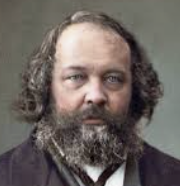
Unity is the great goal toward which humanity moves irresistibly. But it becomes fatal, destructive of the intelligence, the dignity, the well-being of individuals and peoples whenever it is formed without regard to liberty, either by violent means or under the authority of any theological, metaphysical, political, or even economic idea. That patriotism which tends toward unity without regard to liberty is an evil patriotism, always disastrous to the popular and real interests of the country it claims to exalt and serve. Often, without wishing to be so, it is a friend of reaction – an enemy of the revolution, i.e., the emancipation of nations and men.
4 months 3 weeks ago
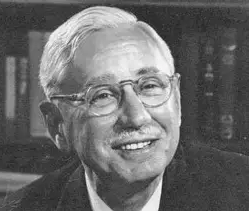
Sir William Hunter, estimated that 40,000,000 of the people of India were seldom or never able to satisfy their hunger. In 1901, 272,000 died of plague introduced from abroad, in 1902, 500,000 died of plague; in 1903, 800,000; in 1904, 1,000,000. We can now understand why there are famines in India. Their cause, in plain terms, is not the absence of food, but the inability of the people to pay for it. It was hoped the railways would solve the problem...the fact that the worst famines have come since the building of the railways...behind all these, as the fundamental source of the terrible famines in India, lies such merciless exploitation, such unbalanced exploitation of goods, and such brutal collection of high taxes in the very midst of famine.... (source: The Case for India - By Will Durant Simon and Schuster, New York. 1930 p.50-53).
4 months 3 weeks ago
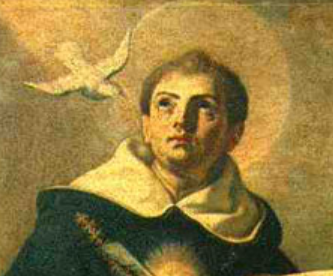
O saving Victim, opening wideThe gate of heaven to man below,Our foes press on from every side,Thine aid supply, Thy strength bestow.
▼
Source
Verbum Supernum Prodiens (hymn for Lauds on Corpus Christi), stanza 5 (O Salutaris Hostia)

4 months 3 weeks ago
The soul is bound to the body by a conversion to the corporeal passions; and again liberated by becoming impassive to the body. That which nature binds, nature also dissolves: and that which the soul binds, the soul likewise dissolves. Nature, indeed, bound the body to the soul; but the soul binds herself to the body. Nature, therefore, liberates the body from the soul; but the soul liberates herself from the body. Hence there is a twofold death; the one, indeed, universally known, in which the body is liberated from the soul; but the other peculiar to philosophers, in which the soul is liberated from the body. Nor does the one entirely follow the other. We do not understand similarly in all things, but in a manner adapted to the essence of each. For intellectual objects we understand intellectually; but those that pertain to soul rationally. We apprehend plants spermatically; but bodies idolically (i.e., as images); and that which is above all these, super-intellectually and super-essentially.
▼
Source
7 - 10
4 months 3 weeks ago
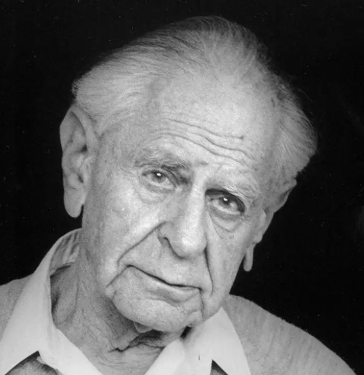
Our aim as scientists is objective truth; more truth, more interesting truth, more intelligible truth. We cannot reasonably aim at certainty. Once we realize that human knowledge is fallible, we realize also that we can never be completely certain that we have not made a mistake.
4 months 3 weeks ago
The positivist philosophy of Comte and the I doctrine deduced from it that humanity is an organism, and Darwin's doctrine of a law of the struggle for existence that is supposed to govern life, with the differentiation of various breeds of people which follows from it, and the anthropology, biology, and sociology of which people are now so fond-all have the same aim. These have all become favourite sciences because they serve to justify the way in which people free themselves from the human obligation to labour, while consuming the fruits of other people's labour.
4 months 3 weeks ago
All ideology hails or interpellates concrete individuals as concrete subjects, by the functioning of the category of the subject. ... ideology ‘acts’ or ‘functions’ in such a way that it ‘recruits’ subjects among the individuals (it recruits them all), or ‘transforms’ the individuals into subjects (it transforms them all) by that very precise operation which I have called interpellation or hailing, and which can be imagined along the lines of the most commonplace everyday police (or other) hailing: ‘Hey, you there!’
▼
Source
p. 117
4 months 3 weeks ago
Genius is always sufficiently the enemy of genius by over influence.
▼
Source
par. 19
4 months 3 weeks ago
'Tis not Wit merely, but a Temper which must form the Well-Bred Man. In the same manner, 'tis not a Head merely, but a Heart and Resolution which must compleat the real Philosopher.
▼
Source
Vol. 2, p. 206; "Miscellany III".
4 months 3 weeks ago
Every religious, moral, economic, ethical, or other antithesis transforms into a political one if it is sufficiently strong to group human beings effectively according to friend and enemy. The political does not reside in the battle itself, which. possesses its own technical, psychological, and military laws, but in the mode of behavior which is determined by this possibility, by clearly evaluating the concrete situation and thereby being able to distinguish correctly the real friend and the real enemy.
4 months 3 weeks ago
I. The subjects of every state ought to contribute towards the support of the government, as nearly as possible, in proportion to their respective abilities, that is, in proportion to the revenue which they respectively enjoy under the protection of the state.
▼
Source
Chapter II, Part II, p. 892.
4 months 3 weeks ago
A person is strong only when he stands upon his own truth, when he speaks and acts from his deepest convictions. Then, whatever the situation he may be in, he always knows what he must say and do. He may fall, but he cannot bring shame upon himself or his cause. If we seek the liberation of the people by means of a lie, we will surely grow confused, go astray, and lose sight of our objective, and if we have any influence at all on the people we will lead them astray as well — in other words, we will be acting in the spirit of reaction and to its benefit.
▼
Source
"Appendix A"
4 months 3 weeks ago
This dumb ox will fill the world with his bellowing.
▼
Source
Albertus Magnus, in response to other of his students calling Thomas a "dumb ox" because of his quietude, as quoted in The Great Ages of Western Philosophy : The Age of Belief : The Medieval Philosophers (1962) by Anne Jackson Fremantle
4 months 3 weeks ago
Taxation of earnings from labor is on a par with forced labor. Seizing the results of someone's labor is equivalent to seizing hours from him and directing him to carry on various activities.
▼
Source
Ch. 7 : Distributive Justice, Section I, Redistribution and Property Rights, p. 169
4 months 3 weeks ago
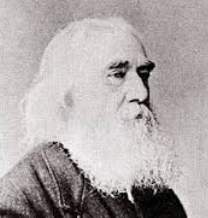
The man who holds the divine theory of life recognizes life not in his own individuality, and not in societies of individualities (in the family, the clan, the nation, the tribe, or the government), but in the eternal undying source of life—in God; and to fulfill the will of God he is ready to sacrifice his individual and family and social welfare. The motor power of his life is love. And his religion is the worship in deed and in truth of the principle of the whole—God.
▼
Source
Chapter IV, Christianity Misunderstood by Men of Science
4 months 3 weeks ago
Certainly no man can rightfully be required to join, or support, an association whose protection he does not desire.
▼
Source
Section III, p. 7
4 months 3 weeks ago
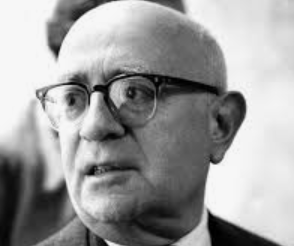
Each the herald is who wrote His rank, and quartered his own coat. There is no king nor sovereign state That can fix a hero's rate.
▼
Source
Astræa
4 months 3 weeks ago
Music for entertainment ... seems to complement the reduction of people to silence, the dying out of speech as expression, the inability to communicate at all. It inhabits the pockets of silence that develop between people molded by anxiety, work and undemanding docility.
▼
Source
p. 271
4 months 3 weeks ago
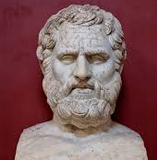
Whatever good fortune befalls you, attribute it to the gods.
4 months 3 weeks ago
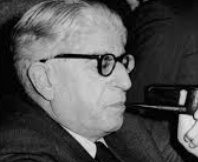
In ourselves alone the absolute light keeps shining, a sigillum falsi et sui, mortis et vitae aeternae [false signal and signal of eternal life and death itself], and the fantastic move to it begins: to the external interpretation of the daydream, the cosmic manipulation of a concept that is utopian in principle. Finding this concept, finding the right for whose sake it behoves us to live, to be organized, to have time—this is where we are headed, why we are clearing the metaphysically constitutive trails afresh, calling for what is not, building into the blue that lines all edges of the world; this is why we build ourselves into the blue and search for truth and reality where mere factuality vanishes.
▼
Source
p. 43
4 months 3 weeks ago
Though in Hume, and also in the works of Bernard Mandeville, we can watch the gradual emergence of the twin concepts of the formations of spontaneous orders and of selective evolution [...], it was Adam Smith and Adam Ferguson who first made systematic use of this approach. Smith's work marks the breakthrough of an evolutionary approach which has progressively displaced the stationary Aristotelian view. The nineteenth-century enthusiast who claimed that the Wealth of Nations was in importance second only to the Bible has often been ridiculed; but he may not have exaggerated so much. Even Aristotle's disciple Thomas Aquinas could not conceal from himself that multae utilitates impedirentur si omnia peccata districte prohiberentur - that much that is useful would be prevented if all sins were strictly prohibited (Summa Theologica, II, ii, q. 78 i).
▼
Source
Friedrich Hayek, The Fatal Conceit (1988), Appendix A: 'Natural' Versus 'Artificial'.
4 months 3 weeks ago
In Victorian times - at the apex of the repression of the Great Mother - a Scottish schoolmaster named Adam Smith noticed a lot of greed and scarcity around him and assumed that was how all "civilized" societies worked. Smith, as you know, created modern economics, which can be defined as a way of allocating scarce resources through the mechanism of individual, personal greed... If a society is afraid of scarcity, it will actually create an environment in which it manifests well-grounded reasons to live in fear of scarcity. It is a self-fulfilling prophecy!
▼
Source
Bernard Lietaer, [https://library.uniteddiversity.coop/Money_and_Economics/Bernard_Lietaer/Interview_Yes%21.pdf Beyond Greed and Scarcity, YES! A Journal of Positive Futures] , (Spring 1997)
4 months 3 weeks ago
Aesthetic theories arose one hundred fifty years ago among the wealthy classes of the Christian European world. ...And notwithstanding its obvious insolidity, nobody else's theory so pleased the cultured crowd or was accepted so readily and with such absence of criticism. It so suited the people of the upper classes that to this day, notwithstanding its entirely fantastic character and the arbitrary nature of its assertions, it is repeated by the educated and uneducated as though it were something indubitable and self-evident.
4 months 3 weeks ago
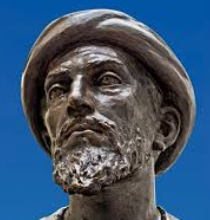
Know that the figures employed by prophets are of two kinds: first, where every word which occurs in the simile represents a certain idea: and secondly, where the simile, as a whole, represents a general idea, but has a great many points which have no reference whatever to that idea: they are simply required to give to the simile its proper form and order, or better to conceal the idea: the simile is therefore continued as far as necessary, according to its literal sense. Consider this well.
4 months 3 weeks ago
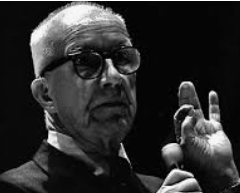
What point of morals, of manners, of economy, of philosophy, of religion, of taste, of the conduct of life, has he not settled? What mystery has he not signified his knowledge of? What office, or function, or district of man's work, has he not remembered? What king has he not taught state, as Talma taught Napoleon? What maiden has not found him finer than her delicacy? What lover has he not outloved? What sage has he not outseen? What gentleman has he not instructed in the rudeness of his behavior?
▼
Source
Shakespeare; or, The Poet
4 months 3 weeks ago
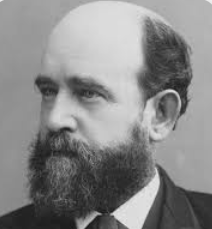
The World Game deals in all the terrestrially available quantities of the 92 regenerative chemical elements and all of their isotopes. It deals with all that man has learned in all history regarding the generalized principles operative in the physical universe and all the vast ramifications of technology, industrialization, the behavioral sciences, ecology, et al... The World Game is as meticulously geared to priority scheduling of “first things first” as is the gestation of a human being, or as is the gestation of any of the most scientifically implemented procedures of humanity’s sometimes vast undertakings, such as world wars or moon landings.
4 months 3 weeks ago
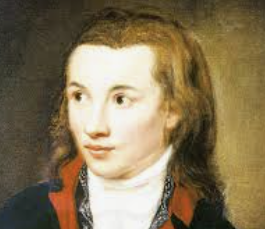
I propose in this inquiry to take nothing for granted, but to bring even accepted theories to the test of first principles, and should they not stand the test, freshly to interrogate facts in the endeavor to discover their law. I propose to beg no question, to shrink from no conclusion, but to follow truth wherever it may lead. Upon us is the responsibility of seeking the law, for in the very heart of our civilization to-day women faint and little children moan. But what that law may prove to be is not our affair. If the conclusions that we reach run counter to our prejudices, let us not flinch; if they challenge institutions that have long been deemed wise and natural, let us not turn back.
▼
Source
Introductory : The Problem
4 months 3 weeks ago
I was still blind, but twinkling stars did dance Throughout my being's limitless expanse, Nothing had yet drawn close, only at distant stages I found myself, a mere suggestion sensed in past and future ages.
▼
Source
As quoted in Romantic Vision, Ethical Context: Novalis and Artistic Autonomy (1987) by Géza von Molnár, p. 2
4 months 3 weeks ago
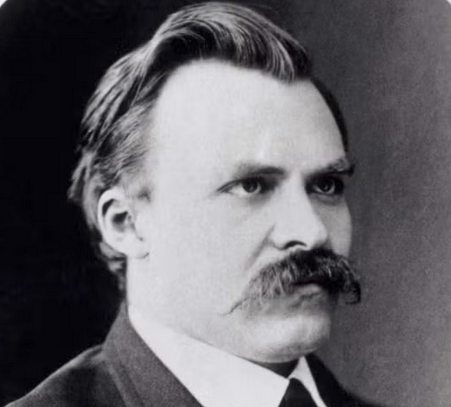
I am utterly amazed, utterly enchanted! I have a precursor, and what a precursor! I hardly knew Spinoza: that I should have turned to him just now, was inspired by "instinct." Not only is his overtendency like mine—namely to make all knowledge the most powerful affect — but in five main points of his doctrine I recognize myself; this most unusual and loneliest thinker is closest to me precisely in these matters: he denies the freedom of the will, teleology, the moral world-order, the unegoistic, and evil. Even though the divergencies are admittedly tremendous, they are due more to the difference in time, culture, and science. In summa: my lonesomeness, which, as on very high mountains, often made it hard for me to breathe and make my blood rush out, is now at least a twosomeness. Strange! Incidentally, I am not at all as well as I had hoped. Exceptional weather here too! Eternal change of atmospheric conditions! — that will yet drive me out of Europe! I must have clear skies for months, else I get nowhere. Already six severe attacks of two or three days each. With affectionate love, Your friend.
▼
Source
Postcard to Franz Overbeck, Sils-Maria (30 July 1881), tr. Walter Kaufmann, The Portable Nietzsche (1954)
4 months 3 weeks ago
In former times the chief method of justifying the use of violence and thereby infringing the law of love was by claiming a divine right for the rulers: the Tsars, Sultans, Rajahs, Shahs, and other heads of states. But the longer humanity lived the weaker grew the belief in this peculiar, God-given right of the ruler. That belief withered in the same way and almost simultaneously in the Christian and the Brahman world, as well as in Buddhist and Confucian spheres, and in recent times it has so faded away as to prevail no longer against man's reasonable understanding and the true religious feeling. People saw more and more clearly, and now the majority see quite clearly, the senselessness and immorality of subordinating their wills to those of other people just like themselves, when they are bidden to do what is contrary not only to their interests but also to their moral sense.
▼
Source
III
4 months 3 weeks ago
The proposition has... been laid down in the most general terms, "All evils are negations." Thus for man death is evil; death is his non-existence. Illness, poverty, and ignorance are evils for man; all these are privations of properties. ...The destruction of other things is likewise nothing but the absence of their form. After these propositions, it must be admitted as a fact that it cannot be said of God that He directly creates evil, or He has the direct intention to produce evil; this is impossible. His works are all perfectly good. He only produces existence, and all existence is good; whilst evils are of a negative character, and cannot be acted upon.
▼
Source
Ch.10
4 months 3 weeks ago
The real and lasting victories are those of peace, and not of war.
▼
Source
Worship
4 months 3 weeks ago
The word generalization in literature usually means covering too much territory too thinly to be persuasive, let alone convincing. In science, however, a generalization means a principle that has been found to hold true in every special case. ... The principle of leverage is a scientific generalization.
4 months 3 weeks ago
The respect for authority, the presumption in favor of those who have won intellectual reputation, is within reasonable limits, both prudent and becoming. But it should not be carried too far, and there are some things especially as to which it behooves us all to use our own judgment and to maintain free minds. For not only does the history of the world show that undue deference to authority has been the potent agency through which errors have been enthroned and superstitions perpetuated, but there are regions of thought in which the largest powers and the greatest acquirements cannot guard against aberrations or assure deeper insight. One may stand on a box and look over the heads of his fellows, but he no better sees the stars. The telescope and the microscope reveal depths which to the unassisted vision are closed. Yet not merely do they bring us no nearer to the cause of suns and animal-cula, but in looking through them the observer must shut his eyes to what lies about him. That intension is at the expense of extension is seen in the mental as in the physical sphere. A man of special learning may be a fool as to common relations. And that he who passes for an intellectual prince may be a moral pauper there are examples enough to show.
▼
Source
Introduction : The Reason for the Examination
4 months 3 weeks ago
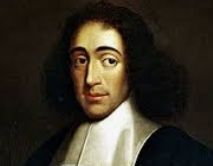
If you find the light of Scripture clearer than the light of reason (which also is given us by divine wisdom), you are doubtless right in your own conscience in making your reason yield. For my part, since I plainly confess that I do not understand the Scriptures, though I have spent many years upon them, and since I know that when once I have a firm proof I cannot by any course of thought come to doubt of it, I rest wholly upon that which my understanding commends to me, without any suspicion that I am deceived therein, or that the Scriptures, even though I do not search them, can speak against it. For one truth cannot conflict with another, as I have already clearly shown in my Appendix to the "Principles of Descartes"...But if in any case I did find error in that which I have collected from my natural understanding, I should count it good fortune, since I enjoy life, and endeavour to pass it not in weeping and sighing, but in peace, joy, and cheerfulness, and from time to time climb thereby a step higher. I know, meanwhile (which is the highest pleasure of all), that all things happen by the power and unchangeable decree of the most perfect Being.
▼
Source
Letter to William van Blyenbergh (1665) as quoted by Sir Frederick Pollock, [https://books.google.com/books?id=82R9rMALJfQC Spinoza: His Life and Philosophy] (1880) pp. 50-51
4 months 3 weeks ago
I. The Pupil. — Men travel in manifold paths: whoso traces and compares these, will find strange Figures come to light; Figures which seem as if they belonged to that great Cipher-writing which one meets with everywhere, on wings of birds, shells of eggs, in clouds, in the snow, in crystals, in forms of rocks, in freezing waters, in the interior and exterior of mountains, of plants, animals, men, in the lights of the sky, in plates of glass and pitch when touched and struck on, in the filings round the magnet, and the singular conjunctures of Chance. In such Figures one anticipates the key to that wondrous Writing, the grammar of it; but this Anticipation will not fix itself into shape, and appears as if, after all, it would not become such a key for us. An Alcahest seems poured out over the senses of men. Only for a moment will their wishes, their thoughts thicken into form. Thus do their Anticipations arise; but after short whiles, all is again swimming vaguely before them, even as it did.

4 months 3 weeks ago
Power is the near neighbour of necessity.
▼
Source
As quoted in Aurea Carmina (8) by Hierocles of Alexandria, as translated in Dictionary of Quotations (1906) by Thomas Benfield Harbottle, p. 356
4 months 3 weeks ago
In my opinion, Henrik Ibsen has become very German. With all his robust idealism and "Will to Truth," he never dared to ring himself free from moral-illusionism which says "freedom," and will not admit, even to itself, what freedom is: the second stage in the metamorphosis of the "Will to Power" in him who lacks it. In the first stage, one demands justice at the hands of those who have power. In the second, one speaks of "freedom," that is to say, one wishes to "shake oneself free" from those who have power. In the third stage, one speaks of "equal rights"—that is to say, so long as one is not a predominant personality one wishes to prevent one's competitors from growing in power.
▼
Source
Friedrich Nietzsche The Will to Power Vol 1 S. 86 p. 71 1914
4 months 3 weeks ago
The most important person is the one you are with in this moment.
▼
Source
p. 206
4 months 3 weeks ago
That which is impossible has a permanent and constant property, which is not the result if some agent, and cannot in any way change, and consequently we do not ascribe to God the power of doing what is impossible.
▼
Source
Ch.15
4 months 3 weeks ago
O tenderly the haughty day Fills his blue urn with fire; One morn is in the mighty heaven, And one in our desire.
▼
Source
Ode, st. 1
4 months 3 weeks ago
Humanity is moving ever deeper into crisis—a crisis without precedent. First, it is a crisis brought about by cosmic evolution irrevocably intent upon completely transforming omnidisintegrated humanity from a complex of around-the-world, remotely-deployed-from-one-another, differently colored, differently credoed, differently cultured, differently communicating, and differently competing entities into a completely integrated, comprehensively interconsiderate, harmonious whole.
4 months 3 weeks ago
Reverie is not a mind vacuum. It is rather the gift of an hour which knows the plenitude of the soul.
▼
Source
Ch. 2, sect. 3
CivilSimian.com created by AxiomaticPanic, CivilSimian, Kalokagathia