
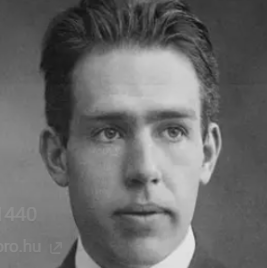
5 months 2 weeks ago
We must be clear that when it comes to atoms, language can be used only as in poetry. The poet, too, is not nearly so concerned with describing facts as with creating images and establishing mental connections.
▼
Source
In his first meeting with Werner Heisenberg in early summer 1920, in response to questions on the nature of language, as reported in Discussions about Language (1933)
5 months 2 weeks ago
It is a great pity that human beings cannot find all of their satisfaction in scientific contemplativeness.
▼
Source
As quoted in Chandra: A Biography of S. Chandrasekhar (1991) by Kameshwar C. Wali, p. 147
5 months 2 weeks ago
However far the phenomena transcend the scope of classical physical explanation, the account of all evidence must be expressed in classical terms. The argument is that simply by the word "experiment" we refer to a situation where we can tell others what we have done and what we have learned and that, therefore, the account of the experimental arrangement and of the results of the observations must be expressed in unambiguous language with suitable application of the terminology of classical physics.
▼
Source
Niels Bohr, "Discussions with Einstein on Epistemological Problems in Atomic Physics," in Paul Arthur Schilpp, Albert Einstein: Philosopher Scientist (1949) pp. 199-241.
5 months 2 weeks ago
No, no, you are not thinking, you are just being logical.
▼
Source
In response to those who made purely formal or mathematical arguments, as quoted in What Little I Remember (1979) by Otto Robert Frisch, p. 95
5 months 2 weeks ago
The grand discoveries which scientific experiment yielded at and about the turn of the century, in which investigators in many countries took an eminent part and which were destined all unexpectedly to give us a fresh insight into the structure of atoms, were due in the first instance, as all are aware, to the work of the great investigators of the English school, Sir Joseph Thomson and Sir Ernest Rutherford, who have inscribed their names on the tablets of the history of scientific research as distinguished witnesses to the truth that imagination and acumen are capable of penetrating the crowded mass of registered experience and of revealing Nature's simplicity to our gaze.
▼
Source
Niels Bohr's speech at the Nobel Banquet in Stockholm
5 months 2 weeks ago
Anyone who is not shocked by quantum theory has not understood it.
▼
Source
As quoted in Meeting the Universe Halfway (2007) by Karen Michelle Barad, p. 254
5 months 2 weeks ago
An expert is a person who has found out by his own painful experience all the mistakes that one can make in a very narrow field.
▼
Source
As quoted by Edward Teller, in Dr. Edward Teller's Magnificent Obsession by Robert Coughlan, in LIFE magazine (6 September 1954), p. 62
5 months 2 weeks ago
I am absolutely prepared to talk about the spiritual life of an electronic computer: to state that it is reflecting or is in a bad mood... The question whether the machine really feels or ponders, or whether it merely looks as though it did, is of course absolutely meaningingless.
▼
Source
As quoted in a letter written from J. Kalckar to John A. Wheeler dated June 10, 1977, which appears in Wheeler's "Law Without Law," pg 207.
5 months 2 weeks ago
Even the mathematical framework helps nothing, I would first like to understand how Nature avoids the contradictions.
▼
Source
(1927) Quoted in Werner Heisenberg: Die Sprache der Atome (2010) by H. Rechenberg, p. 564.
5 months 2 weeks ago
Some subjects are so serious that one can only joke about them.
▼
Source
As quoted in The Genius of Science: A Portrait Gallery (2000) by Abraham Pais, p. 24
5 months 2 weeks ago
Physics is to be regarded not so much as the study of something a priori given, but rather as the development of methods of ordering and surveying human experience. In this respect our task must be to account for such experience in a manner independent of individual subjective judgement and therefore objective in the sense that it can be unambiguously communicated in ordinary human language.
▼
Source
The Unity of Human Knowledge
5 months 2 weeks ago
The great extension of our experience in recent years has brought light to the insufficiency of our simple mechanical conceptions and, as a consequence, has shaken the foundation on which the customary interpretation of observation was based.
▼
Source
Niels Bohr, "Atomic Physics and the Description of Nature"
5 months 2 weeks ago
Truth and clarity are complementary.
▼
Source
As quoted in Quantum Theory and the Flight from Realism : Philosophical Responses to Quantum Mechanics (2000) by Christopher Norris, p. 234
5 months 2 weeks ago
Every valuable human being must be a radical and a rebel, for what he must aim at is to make things better than they are.
▼
Source
As quoted in The World of the Atom (1966) by Henry Abraham Boorse and Lloyd Motz, p. 741
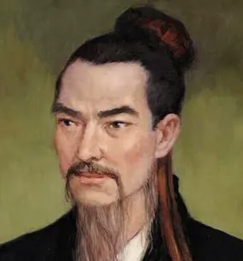
5 months 2 weeks ago
Suppose we try to locate the cause of disorder, we shall find it lies in the want of mutual love.
▼
Source
Book 4; Universal Love I
5 months 2 weeks ago
What is the purpose of houses? It is to protect us from the wind and cold of winter, the heat and rain of summer, and to keep out robbers and thieves. Once these ends have been secured, that is all. Whatever does not contribute to these ends should be eliminated.
▼
Source
Ch 20, as quoted in Van Norden, Bryan W. (2011). Introduction to Classical Chinese Philosophy. Hackett Publishing. p. 52. ISBN 978-1-60384-468-0.
5 months 2 weeks ago
If one does not preserve the learned in a state he will be injuring the state; if one is not zealous (to recommend) the virtuous upon seeing one, he will be neglecting the ruler. Enthusiasm is to be shown only to the virtuous, and plans for the country are only to be shared with the learned. Few are those, who, neglecting the virtuous and slighting the learned, could still maintain the existence of their countries. Book 1; Befriending the Learned Variant translation: To enter upon rulership of a country but not preserve its scholars will result in the downfall of the country. To see the worthy but not hasten to them will make the country's ruler less able to perform his duties. To the unworthy is due no attention. The ignorant should remain without inclusion in the state's affairs. To impede the virtuous and neglect the scholarly and still maintain the survival of the state has yet to be, indeed.
5 months 2 weeks ago
Whoever criticizes others must have something to replace them. Criticism without suggestion is like trying to stop flood with flood and put out fire with fire. It will surely be without worth.
▼
Source
Book 4; Universal Love III
5 months 2 weeks ago
If every one in the world will love universally; states not attacking one another; houses not disturbing one another; thieves and robbers becoming extinct; emperor and ministers, fathers and sons, all being affectionate and filial -- if all this comes to pass the world will be orderly. Therefore, how can the wise man who has charge of governing the empire fail to restrain hate and encourage love? So, when there is universal love in the world it will be orderly, and when there is mutual hate in the world it will be disorderly.
▼
Source
Book 4; Universal Love I
5 months 2 weeks ago
To accomplish anything whatsoever one must have standards. None have yet accomplished anything without them.
▼
Source
Book 1; On the necessity of standards
5 months 2 weeks ago
When we come to think about the several benefits in regard to their cause, how have they arisen? Have they arisen out of hate of others and injuring others? Of course we should say no. We should say they have arisen out of love of others and benefiting others. If we should classify one by one all those who love others and benefit others, should we find them to be partial or universal? Of course we should say they are universal. Now, since universal love is the cause of the major benefits in the world, therefore Mozi proclaims universal love is right. And, as has already been said, the interest of the magnanimous lies in procuring benefits for the world and eliminating its calamities. Now that we have found out the consequences of universal love to be the major benefits of the world and the consequences of partiality to be the major calamities in the world; this is the reason why Mozi said partiality is wrong and universality is right.
▼
Source
Book 4; Universal Love III
5 months 2 weeks ago
The purpose of the magnanimous is to be found in procuring benefits for the world and eliminating its calamities. ... Mutual attacks among states, mutual usurpation among houses, mutual injuries among individuals; the lack of grace and loyalty between ruler and ruled, the lack of affection and filial piety between father and son, the lack of harmony between elder and younger brothers - these are the major calamities in the world.
▼
Source
Book 4; Universal Love II
5 months 2 weeks ago
All states in the world, large or small, are cities of Heaven, and all people, young or old, honourable or humble, are its subjects; for they all graze oxen and sheep, feed dogs and pigs, and prepare clean wine and cakes to sacrifice to Heaven. Does this not mean that Heaven claims all and accepts offerings from all? Since Heaven does claim all and accepts offerings from all, what then can make us say that it does not desire men to love and benefit one another? Hence those who love and benefit others Heaven will bless. Those who hate and harm others Heaven will curse, for it is said that he who murders the innocent will be visited by misfortune. How else can we explain the fact that men, murdering each other, will be cursed by Heaven? Thus we are certain that Heaven desires to have men love and benefit one another and abominates to have them hate and harm one another.
▼
Source
Book 1; On the necessity of standards
5 months 2 weeks ago
When we try to develop and procure benefits for the world with universal love as our standard, then attentive ears and keen eyes will respond in service to one another, then limbs will be strengthened to work for one another, and those who know the Tao will untiringly instruct others. Thus the old and those who have neither wife nor children will have the support and supply to spend their old age with, and the young and weak and orphans will have the care and admonition to grow up in. When universal love is adopted as the standard, then such are the consequent benefits. It is incomprehensible, then, why people should object to universal love when they hear it.
▼
Source
Book 4; Universal Love III
5 months 2 weeks ago
When nobody in the world loves any other, naturally the strong will overpower the weak, the many will oppress the few, the wealthy will mock the poor, the honoured will disdain the humble, the cunning will deceive the simple. Therefore all the calamities, strifes, complaints, and hatred in the world have arisen out of want of mutual love. Therefore the benevolent disapproved of this want.
▼
Source
Book 4; Universal Love II
5 months 2 weeks ago
The words of malicious slander should not be allowed to enter the ear. A defensive voice should not be allowed to come out of the mouth. The want to gravely injure people should not be allowed to exist in the heart. If this is accomplished, though there be people who cynically expose others, they would be without people who would align with them.
▼
Source
Book 1; Self-culfivation
5 months 2 weeks ago
Now, as to universal love and mutual aid, they are beneficial and easy beyond a doubt. It seems to me that the only trouble is that there is no superior who encourages it. If there is a superior who encourages it, promoting it with rewards and commendations, threatening its reverse with punishments, I feel people will tend toward universal love and mutual aid like fire tending upward and water downwards - it will be unpreventable in the world.
▼
Source
Book 4; Universal Love III
5 months 2 weeks ago
When feudal lords love one another there will be no more war; when heads of houses love one another there will be no more mutual usurpation; when individuals love one another there will be no more mutual injury. When ruler and ruled love each other they will be gracious and loyal; when father and son love each other they will be affectionate and filial; when older and younger brothers love each other they will be harmonious. When all the people in the world love one another, then the strong will not overpower the weak, the many will not oppress the few, the wealthy will not mock the poor, the honoured will not disdain the humble, and the cunning will not deceive the simple. And it is all due to mutual love that calamities, strife, complaints, and hatred are prevented from arising. Therefore the benevolent exalt it.
▼
Source
Book 4; Universal Love II
5 months 2 weeks ago
The virtuous who are prosperous must be exalted, and the virtuous who are not prosperous must be exalted too.
▼
Source
Book 2; Exaltation of the Virtuous I
5 months 2 weeks ago
Universal love is really the way of the sage-kings. It is what gives peace to the rulers and sustenance to the people. The gentleman would do well to understand and practise universal love; then he would be gracious as a ruler, loyal as a minister, affectionate as a father, filial as a son, courteous as an elder brother, and respectful as a younger brother. So, if the gentleman desires to be a gracious ruler, a loyal minister, an affectionate father, a filial son, a courteous elder brother, and a respectful younger brother, universal love must be practised. It is the way of the sage-kings and the great blessing of the people.
▼
Source
Book 4; Universal Love III
5 months 2 weeks ago
If the rulers sincerely desire the empire to be wealthy and dislike to have it poor, desire to have it orderly and dislike to have it chaotic, they should bring about universal love and mutual aid. This is the way of the sage-kings and the way to order for the world, and it should not be neglected.
▼
Source
Book 4; Universal Love II
5 months 2 weeks ago
The wise man who has charge of governing the empire should know the cause of disorder before he can put it in order. Unless he knows its cause, he cannot regulate it.
▼
Source
Book 4; Universal Love I
5 months 2 weeks ago
The murder of one person is called unrighteous and incurs one death penalty. Following this argument, the murder of ten persons will be ten times as unrighteous and there should be ten death penalties; the murder of a hundred persons will be a hundred times as unrighteous and there should be a hundred death penalties. All the gentlemen of the world know that they should condemn these things, calling them unrighteous. But when it comes to the great unrighteousness of attacking states, they do not know that they should condemn it. On the contrary, they applaud it, calling it righteous.
▼
Source
Book 5: Condemnation of Offensive War I
5 months 2 weeks ago
If we should classify one by one all those who hate others and injure others, should we find them to be universal in love or partial? Of course we should say they are partial. Now, since partiality against one another is the cause of the major calamities in the empire, then partiality is wrong.
▼
Source
Book 4; Universal Love III
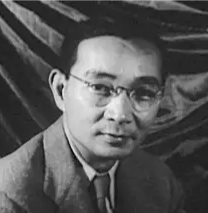
5 months 2 weeks ago
By association with nature's enormities, a man's heart may truly grow big also. There is a way of looking upon a landscape as a moving picture and being satisfied with nothing less big as a moving picture, a way of looking upon tropic clouds over the horizon as the backdrop of a stage and being satisfied with nothing less big as a backdrop, a way of looking upon the mountain forests as a private garden and being satisfied with nothing less as a private garden, a way of listening to the roaring waves as a concert and being satisfied with nothing less as a concert, and a way of looking upon the mountain breeze as an air-cooling system and being satisfied with nothing less as an air-cooling system. So do we become big, even as the earth and firmaments are big.
▼
Source
Like the "Big Man" described by Yuan Tsi (A.D. 210-263), one of China's first romanticists, we "live in heaven and earth as our house." p. 282
5 months 2 weeks ago
When the mirror meets with an ugly woman, when a rare ink-stone finds a vulgar owner, and when a good sword is in the hands of a common general, there is utterly nothing to be done about it.
▼
Source
p. 317
5 months 2 weeks ago
A good traveler is one who does not know where he is going to, and a perfect traveler does not know where he came from.
▼
Source
p. 332
5 months 2 weeks ago
The wise man reads both books and life itself.
▼
Source
p. 388
5 months 2 weeks ago
Such religion as there can be in modern life, every individual will have to salvage from the churches for himself.
▼
Source
p. 397
5 months 2 weeks ago
I feel, like all modern Americans, no consciousness of sin and simply do not believe in it. All I know is that if God loves me only half as much as my mother does, he will not send me to Hell. That is a final fact of my inner consciousness, and for no religion could I deny its truth.
▼
Source
p. 407
5 months 2 weeks ago
I like spring, but it is too young. I like summer, but it is too proud. So I like best of all autumn, because its leaves are a little yellow, its tone mellower, its colours richer, and it is tinged a little with sorrow and a premonition of death. Its golden richness speaks not of the innocence of spring, nor of the power of summer, but of the mellowness and kindly wisdom of approaching age. It knows the limitations of life and is content. From a knowledge of those limitations and its richness of experience emerges a symphony of colours, richer than all, its green speaking of life and strength, its orange speaking of golden content and its purple of resignation and death.
▼
Source
Epilogue, p. 328
5 months 2 weeks ago
The Chinese do not draw any distinction between food and medicine.
▼
Source
Ch. IX : The Enjoyment of Living, p. 249, as quoted in Fred R Shapiro (2006). The Yale Book of Quotations. Yale University Press. p. 467. ISBN 0-300-10798-6.
5 months 2 weeks ago
All men and women have passions, natural desires and noble ambitions, and also a conscience; they have sex, hunger, fear, anger, and are subject to sickness, pain, suffering and death. Culture consists in bringing about the expression of these passions and desires in harmony.
▼
Source
p. 20
5 months 2 weeks ago
These influences of my young childhood were greatest: 1, the mountain landscape, 2, my father the impossible idealist, and 3, the upringing of a closely-knit Christian home.
▼
Source
Memoirs of an Octogenarian (1975), pp. 8-9
5 months 2 weeks ago
The three great American vices seem to be efficiency, punctuality, and the desire for achievement and success. They are the things that make the Americans so unhappy and so nervous.
▼
Source
p. 162
5 months 2 weeks ago
It is not so much what you believe in that matters, as the way in which you believe it and proceed to translate that belief into action.
▼
Source
Ch. I : The Awakening, p. 8
5 months 2 weeks ago
The Chinese believe that when there are too many policemen, there can be no individual liberty, when there are too many lawyers, there can be no justice, and when there are too many soldiers, there can be no peace.
▼
Source
Between Tears And Laughter (1943), p. 71.
5 months 2 weeks ago
What is patriotism but love of the good things we ate in our childhood? I have said elsewhere that the loyalty to Uncle Sam is the loyalty to doughnuts and ham and sweet potatoes and the loyalty to the German Vaterland is the loyalty to Pfannkuchen and Christmas Stollen. As for international understanding, I feel that macaroni has done more for our appreciation of Italy than Mussolini... in food, as in death, we feel the essential brotherhood of mankind.
▼
Source
Ch. IV : On Having A Stomach, p. 46
5 months 2 weeks ago
This is a personal testimony, a testimony of my own experience of thought and life. It is not intended to be objective and makes no claim to establish eternal truths. In fact I rather despise claims to objectivity in philosophy; the point of view is the thing. I should have liked to call it "A Lyrical Philosophy," using the word "lyrical" in the sense of being a highly personal and individual outlook...
▼
Source
Preface
5 months 2 weeks ago
A reasonable naturalist then settles down to this life with a sort of animal satisfaction. As Chinese illiterate women put it, "Others gave birth to us and we give birth to others. What else are we to do?".... Life becomes a biological procession and the very question of immortality is sidetracked. For that is the exact feeling of a Chinese grandfather holding his grandchild by the hand and going to the shops to buy some candy, with the thought that in five or ten years he will be returning to his grave or to his ancestors. The best that we can hope for in this life is that we shall not have sons and grandsons of whom we need to be ashamed.
▼
Source
p. 23
CivilSimian.com created by AxiomaticPanic, CivilSimian, Kalokagathia