
5 months ago
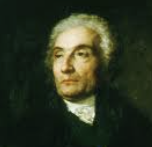
War is divine in itself, since it is a law of the world. War is divine through its consequences of a supernatural nature which are as much general as particular, consequences little known because little studied, but which are nevertheless incontestable. War is divine in the mysterious glory that surrounds it and in the no less inexplicable attraction that draws us to it. War is divine by the manner in which it breaks out.
▼
Source
Seventh Dialogue, p. 218
5 months ago
In a word, the mass of the people counts for nothing in every political creation. A people even respects a government only because it is not its own creation. This feeling is engraved on its heart in profound characters. It submits to sovereignty because it senses that it is something sacred it can neither create nor destroy. If, as a consequence of corruption and perfidious suggestions, this preventive sentiment is somehow effaced, if it has the misfortune of believing itself called as a body to reform the State, all is lost. This is why, even in free States, it is extremely important that the men who govern be separated from the mass of the people by that personal respect stemming from birth and wealth.
▼
Source
p. 73
5 months ago
Long live the king,' cry the loving and the loyal, beside themselves with joy. 'Long live the king,' responds the republican hypocrite in dire terror. What does it matter? There is only one cry. And the king is crowned.
▼
Source
Chapter IX, p. 79
5 months ago
Men do not lead the revolution; it is the Revolution that uses men. They are right when they say it goes all alone. This phrase means that never has the Divinity shown itself so clearly in any human event. If the vilest instruments are employed, punishment is for the sake of regeneration.
▼
Source
Chapter I, p. 8
5 months ago
All grandeur, all power, all subordination to authority rests on the executioner: he is the horror and the bond of human association. Remove this incomprehensible agent from the world and at that very moment order gives way to chaos, thrones topple and society disappears.
▼
Source
"First Dialogue," p. 20
5 months ago
Nations are barbarian in their infancy but not savage. The barbarian is a proportional mean between the savage and the citizen. He already possesses no end of knowledge: he has habitations, some agriculture, domestic animals, laws, a cult, regular tribunals; he lacks only the sciences.
▼
Source
p. 25
5 months ago
There is the same difference between political theory and constitutional laws as there is between poetics and poetry. The illustrious Montesquieu is to Lycurgus, in the intellectual hierarchy, what Batteux is to Homer or Racine. Moreover, these two talents positively exclude each other, as can be seen by the example of Locke, who fumbled badly when he presumed to give laws to the Americans.
▼
Source
Chapter VI, p. 52
5 months ago
As long as the aristocracy is healthy, the name of the sovereign sacred to it, and it loves the monarchy passionately, the State is unshakeable, whatever be the qualities of the king. But once it loses its greatness, its pride, its energy, its faith, the spirit withdraws, the monarchy is dead, and its cadaver is left to the worms.
▼
Source
p. 127
5 months ago
Nothing great has great beginnings.
▼
Source
XXIII, p. 73
5 months ago
Now the real fruits of human nature - the arts, sciences, great enterprises, lofty conceptions, manly virtues - are due especially to the state of war. In a word, we can say that blood is the manure of the plant we call genius.
▼
Source
Chapter III, p. 29
5 months ago
Opinion is so powerful in war that it can alter the nature of the same event and give it two different names, for no reason other than its own whim. A general throws his men between two enemy armies and he writes to his king, I have split him, he has lost. His opponent writes to his king, He has put himself between two fires, he is lost. Which of the two is mistaken? Whoever is seized by the cold goddess. Assuming that all things, especially size, are at least approximately equal, the only difference between the two positions is a purely moral one. It is imagination that loses battles.
▼
Source
"Seventh Dialogue," p. 221
5 months ago
In the Koran as in the Bible, politics is divinized, and human reason, crushed by the religious ascendancy, cannot insinuate its isolating and corrosive poison into the mechanisms of government, so that citizens are believers whose loyalty is exalted to faith, and obedience to enthusiasm and fanaticism.
▼
Source
p. 78
5 months ago
Frenchmen, it was to the noise of hellish songs, the blasphemy of atheism, the cries of death, and the prolonged moans of slaughtered innocence, it was by the light of flames, on the debris of throne and altar, watered by the blood of the best of kings and an innumerable host of other victims, it was by the contempt of morality and the established faith, it was in the midst of every crime that your seducers and your tyrants founded what they call your liberty.
▼
Source
Chapter X, p. 84
5 months ago
Too many French scholars were the principal authors of the Revolution, too many approved and gave their support so long as the Revolution, like Tarquinius' sceptre, struck down only the tallest heads. Like so many others, they said, It is impossible to make a great revolution without incurring misfortunes. But when a philosopher justifies evil by the end in view, when he says in his heart, Let there be a hundred thousand murders, provided we are free, and Providence replies, I accept your offer, but you must be included in the number, where is the injustice?
▼
Source
Chapter II, pp. 9-10
5 months ago
Man cannot be wicked without being evil, nor evil without being degraded, nor degraded without being punished, nor punished without being guilty. In short ... there is nothing so intrinsically plausible as the theory of original sin.
▼
Source
Second Dialogue, p. 38
5 months ago
Man is an enigma whose knot has not ceased to occupy observers. The contradictions that he contains astonish reason and impose silence on it. So what is this inconceivable being who carries within him powers that clash and who is obliged to hate himself in order to esteem himself?
5 months ago
The Constitution of 1795, like its predecessors, was made for man. But there is no such thing as man in the world. In my lifetime I have seen Frenchmen, Italians, Russians, etc.; thanks to Montesquieu, I even know that one can be Persian. But as for man, I declare that I have never in my life met him; if he exists, he is unknown to me.
5 months ago
How many mistakes power has committed! And how often has it ignored the means to conserve itself! Man is insatiable for power; he is infinite in his desires, and, always discontented with what he has, he loves only what he has not. People complain about the despotism of princes; they should complain about that of man. We are all born despots, from the most absolute monarch of Asia to the child who smothers a bird with his hand for the pleasure of seeing something in the world weaker than himself. There is no man who does not abuse power, and experience proves that the most abominable despots, if they come to seize the sceptre, will be precisely those who rant against despotism.
5 months ago
Never have nations been civilized, except by religion.
▼
Source
XXXIII, p. 99
5 months ago
Men gather the clouds, and then they complain of the tempests that follow.
▼
Source
Chapter III, p. 30
5 months ago
The first among the sciences is that of statesmanship. That cannot be learnt in academies. No great minister, from Suger to Richelieu, ever occupied himself with physics or mathematics. The genius of the natural sciences makes impossible that other kind of genius, which is a talent unto itself.
▼
Source
"Eighth Dialogue," p. 297-298
5 months ago
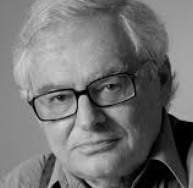
From the point of view of semantics, errors must be accidents: if in the extension of "horse" there are no cows, then it cannot be required for the meaning of "horse" that cows be called horses. On the other hand, if "horse" did not mean that which it means, and if it were an error for horses, it would never be possible for a cow to be called "horse." Putting the two things together, it can be seen that the possibility of falsely saying "this is a horse" presupposes the existence of a semantic basis for saying it truly, but not vice versa. If we put this in terms of the crude causal theory, the fact that cows cause one to say "horse" depends on the fact that horses cause one to say "horse"; but the fact that horses cause one to say "horse" does not depend on the fact that cows cause one to say "horse"...
▼
Source
Fodor (1990). A Theory of Content and Other Essays. The MIT Press.
5 months ago
FACULTY PSYCHOLOGY is getting to be respectable again after centuries of hanging around with phrenologists and other dubious types. By faculty psychology I mean, roughly , the view that many fundamentally different kinds of psychological mechanisms must be postulated in order to explain the facts of mental life . Faculty psychology takes seriously the apparent heterogeneity of the mental and is impressed by such prima facie differences as between, say, sensation and perception, volition and cognition, learning and remembering, or language and thought.
▼
Source
p. 1
5 months ago
Philosophers who have wanted to banish the ghost from the machine have usually sought to do so by showing that truths about behavior can sometimes, and in some sense, logically implicate truths about mental states. In so doing, they have rather strongly suggested that the exorcism can be carried through only if such a logical connection can be made out. ... Once it has been made clear that the choice between dualism and behaviorism is not exhaustive, a major motivation for the defense of behaviorism is removed: we are not required to be behaviorists simply in order to avoid being dualists.
▼
Source
Fodor (1986) "Why Paramecia Don't Have Mental Representations," Midwest Studies in Philosophy 10: 3-23. cited in: Bradley Rives "Jerry A. Fodor (1935 - )" Internet Encyclopedia of Philosophy, Oct. 25, 2010
5 months ago
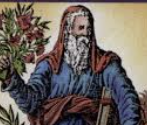
The dyad gets its name from passing through or asunder; for the dyad is the first to have separated itself from the monad, whence also it is called "daring." For when the monad manifests unification, the dyad steals in and manifests separation.
▼
Source
On the Dyad
5 months ago
If the potential of every number is in the monad, then the monad would be intelligible number in the strict sense, since it is not yet manifesting anything actual, but everything conceptually together in it.
▼
Source
On the Monad
5 months ago
Wait for the appointed hour.
▼
Source
As quoted in The Lives of the Sophists by Eunapius (online exerpt)
5 months ago
The Triad has a special beauty and fairness beyond all numbers, primarily because it is the very first to make actual the potentiality of the Monad - oddness, perfection, proportionality, unification, limit.
▼
Source
On the Triad
5 months ago
Likewise, they call it "Chaos," which is Hesiod's first generator, because Chaos gives rise to everything else, as the monad does. It is also thought to be both "mixture" and "blending," "obscurity" and "darkness" thanks to the lack of articulation and distinction of everything which ensues from it. Anatolius says that it is called "matrix" and "matter," on the grounds that without it there is no number. The mark which signifies the monad is the source of all things.
▼
Source
On the Monad
5 months ago
It is irreverent to the Gods to give you this demonstration, but for your sakes it shall be done.
▼
Source
As quoted in The Lives of the Sophists by Eunapius
5 months ago
They call it "friendship" and "peace," and further "harmony" and "unanimity": for these are all cohesive and unificatory of opposites and dissimilars. Hence they also call it "marriage." And there are also three ages in life.
▼
Source
On the Triad
5 months ago
Just as without the monad there is in general no composition of anything, so also without it there is no knowledge of anything whatsoever, since it is a pure light, most authoritative over everything in general, and it is sun-like and ruling, so that in each of these respects it resembles God, and especially because it has the power of making things cohere and combine, even when they are composed of many ingredients and are very different from one another, just as he made this universe harmonious and unified out of things which are likewise opposed.
▼
Source
On the Monad
5 months ago
What appears to us to be an accurate definition of justice does not also appear to be so to the Gods. For we, looking to that which is most brief, direct our attention to things present, and to this momentary life, and the manner in which it subsists. But the Powers that are superior to us know the whole life of the Soul, and all its former lives.
▼
Source
The Mysteries of the Egyptians, Chaldeans, and Assyrians, translated from the Greek by Thomas Taylor, (1821) quoted by Annie Besant in Karma,
5 months ago
Hence the Pythagoreans in their theology called it sometimes "universe," sometimes "heaven," sometimes "all," sometimes "Fate" and "eternity," "power" and "trust" and "Necessity," "Atlas" and "unwearying," and simply "God" and "Phanes" and "sun."They called it "universe," because all things are arranged by it both in general and in particular, and because it is the most perfect boundary of number, in the sense that "decad" is, as it were, "receptacle," just as heaven is the receptacle of all things, they called it "heaven" and, among the Muses, "Ourania."
▼
Source
On the Decad
5 months ago
Furthermore, the monad produces itself and is produced from itself, since it is self-sufficient and has no power set over it and is everlasting; and it is evidently the cause of permanence, just as God is thought to be in the case of actual physical things, and to be the preserver and maintainer of natures.
▼
Source
On the Monad
5 months ago
No one will deny that the soul of Pythagoras was sent to mankind from Apollo's domain, having either been one of his attendants, or more intimate associates, which may be inferred both from his birth, and his versatile wisdom.
▼
Source
Ch. 2 : Youth, Education, Travels
5 months ago
It is necessary that every man be surpassingly temperate. That person would most of all be a man of this sort if he were superior to money, which is what corrupts all men, and if, without caring about his life, he bestowed his pains on things that are just and pursued virtue.
▼
Source
p. 149
5 months ago
The Pythagoreans called the monad "intellect" because they thought that intellect was akin to the One; for among the virtues, they likened the monad to moral wisdom; for what is correct is one. And they called it "being," "cause of truth," "simple," "paradigm," "order," "concord," "what is equal among the greater and the lesser," "the mean between intensity and slackness," "moderation in plurality," "the instant now in time," and moreover they call it "ship," "chariot," "friend," "life," "happiness."
▼
Source
On the Monad
5 months ago
The Pythagoreans thought those who teach for the sake of reward show themselves worse than sculptors, or artists who perform the work sitting. For these, when someone orders wood to make a statue of Hermes, search for wood suited to receive the proper form; while those pretend that they can readily produce the works of virtue from every nature.
5 months ago
Whoever is a truly good man seeks a renown not by means of an ornament that does not belong to him but by means of his own virtue.
▼
Source
p. 151
5 months ago
They also gave it the title of "opinion," because truth and falsity lie in opinion. And they called it "movement," "generation," "change," "division," "length," "multiplication," "addition," "kinship," "relativity," "the ratio in proportionality." For the relation of two numbers is of every conceivable form.
▼
Source
On the Dyad
5 months ago
This also is a beautiful circumstance, that they referred every thing to Pythagoras, and called it by his name, and that they did not ascribe to themselves the glory of their own inventions, except very rarely.
5 months ago
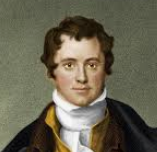
Every new discovery may be considered as a new species of manufacture, awakening moral industry and sagacity, and employing, as it were, new capital of mind.
▼
Source
In The Edinburgh Review, or Critical Journal (June-October 1827) as quoted in Lee Johnson and Joseph Meany, Graphene
5 months ago
Fortunately science, like that nature to which it belongs, is neither limited by time nor by space. It belongs to the world, and is of no country and of no age. The more we know, the more we feel our ignorance; the more we feel how much remains unknown; and in philosophy, the sentiment of the Macedonian hero can never apply, - there are always new worlds to conquer.
▼
Source
Discourse Delivered at the Royal Society (30 November 1825)
5 months ago
I envy no quality of the mind or intellect in others; not genius, power, wit, nor fancy; but, if I could choose what would be most delightful, and, I believe, most useful to me, I should prefer a firm religious belief to every other blessing.
▼
Source
In Josiah Hotchkiss Gilbert, Dictionary of Burning Words of Brilliant Writers (1895), p. 241
5 months ago
Nothing is so fatal to the progress of the human mind as to suppose that our views of science are ultimate; that there are no mysteries in nature; that our triumphs are complete, and that there are no new worlds to conquer.
▼
Source
In David Knight, Humphry Davy: Science & Power (1998) p. 87
5 months ago
I am firmly convinced, as I have already said, that to effect any great social improvement, it is sympathy rather than self-interest, the sense of duty rather than the desire for self-advancement, that must be appealed to. Envy is akin to admiration, and it is the admiration that the rich and powerful excite which secures the perpetuation of aristocracies.
▼
Source
Ch. 21 : Conclusion
5 months ago
Why should charity be offered the unemployed? It is not alms they ask. They are insulted and embittered and degraded by being forced to accept as paupers what they would gladly earn as workers. What they ask is not charity, but the opportunity to use their own labor in satisfying their own wants. Why can they not have that? It is their natural right. He who made food and clothing and shelter necessary to man's life has also given to man, in the power of labor, the means of maintaining that life; and when, without fault of their own, men cannot exert that power, there is somewhere a wrong of the same kind as denial of the right of property and denial of the right of life - a wrong equivalent to robbery and murder on the grandest scale. Charity can only palliate present suffering a little at the risk of fatal disease. For charity cannot right a wrong; only justice can do that. Charity is false, futile, and poisonous when offered as a substitute for justice.
▼
Source
p. 179
5 months ago
The intelligence required for the solving of social problems is not a thing of the mere intellect. It must be animated with the religious sentiment and warm with sympathy for human suffering. It must stretch out beyond self-interest, whether it be the self-interest of the few or of the many. It must seek justice. For at the bottom of every social problem we will find a social wrong.
▼
Source
Ch. 1 : The Increasing Importance of Social Questions
5 months ago
My primary object is to defend and advance a principle in which I see the only possible relief from much that enthralls and degrades and distorts, turning light to darkness and good to evil, rather than to gage a philosopher or weigh a philosophy. Yet the examination I propose must lead to a decisive judgment upon both.
▼
Source
Introduction : The Reason for the Examination
CivilSimian.com created by AxiomaticPanic, CivilSimian, Kalokagathia