
5 months ago
In our contemporary social and intellectual plight, it is nothing less than shocking to discover that those persons who claim to have discovered an absolute are usually the same people who also pretend to be superior to the rest. To find people in our day attempting to pass off to the world and recommending to others some nostrum of the absolute which they claim to have discovered is merely a sign of the loss of and the need for intellectual and moral certainty, felt by broad sections of the population who are unable to look life in the face.
5 months ago
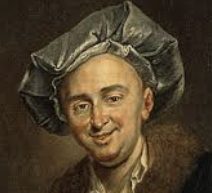
Among animals, some learn to speak and sing; they remember tunes, and strike the notes as exactly as a musician. Others, for instance the ape, show more intelligence... would it be absolutely impossible to teach the ape a language? I do not think so.
5 months ago
We have now but to prove a third attribute: I mean the faculty of feeling which the philosophers of all centuries have found in this same substance. ...The Cartesians have made, in vain, to rob matter of this faculty. But in order to avoid insurmountable difficulties, they have flung themselves into a labyrinth from which they have thought to escape by this absurd system "that animals are pure machines."An opinion so absurd has never gained admittance among philosophers... Experience gives us no less proof of the faculty of feeling in animals than of feeling in men.
▼
Source
Ch. VI Concerning the Sensitive Faculty of Matter
5 months ago
He who has the most imagination should be regarded as having the most intelligence or genius, for all these words are synonymous...
5 months ago
The soul follows the progress of the body, as it does the progress of education.
5 months ago
Write as if thou wert alone in the universe and hadst nothing to fear from the jealousies and prejudices of the people. Otherwise thou wilt miss thy purpose.
▼
Source
Preface, Oeuvres philosophiques de Monsieur de La Mettrie (1764) as quoted by Paul Carus, The Mechanistic Principle and the Non-mechanical (1913) p. 102.
5 months ago
Everything is the work of imagination, and... all the faculties of the soul can be correctly reduced to pure imagination...
5 months ago
If there is a revelation, it can not then contradict nature.
5 months ago
Let us not limit the resources of nature; they are infinite, especially when reinforced by great art.
5 months ago
There comes up another difficulty which more nearly concerns our vanity: namely, the impossibility of our conceiving this property [the faculty of feeling] as a dependence or attribute of matter.
▼
Source
Ch. VI Concerning the Sensitive Faculty of Matter
5 months ago
The soul is... but an empty word, of which no one has any idea, and which an enlightened man should use only to signify the part in us that thinks...
5 months ago
The mind, like the body, has its contagious diseases and its scurvy. …We catch everything from those with whom we come in contact; their gestures, their accent, etc.
5 months ago
Before Descartes, some of the ancients made the essence of matter consist in solid extension. But this opinion, of which all the Cartesians have made much, has at all times been victoriously combated...
▼
Source
Ch. III Concerning the Extension of Matter
5 months ago
Why should we divide the sensitive principle which thinks in man? ...For a thing that is divided can no longer without absurdity be regarded as indivisible.
5 months ago
Man... whatever the origin of his soul, if it is pure, noble, and lofty, it is a beautiful soul which dignifies the man endowed with it.
5 months ago
What was man before the invention of words and the knowledge of language? An animal..
5 months ago
We know in bodies only matter, and we observe the faculty of feeling only in bodies: on what foundation then can we erect an ideal being, disowned by all our knowledge?
▼
Source
Ch. VI Concerning the Sensitive Faculty of Matter
5 months ago
A brilliant man is his own best company, unless he can find other company of the same sort.
5 months ago
The ancients, persuaded that there is no body without a moving force, regarded the substance of bodies as composed of two primitive attributes. It was held that, through one of these attributes, this substance has the capacity for moving and, through the other, the capacity for being moved.
▼
Source
Ch. V Concerning the Moving Force of Matter
5 months ago
Imagination is the soul, since it plays all the roles of the soul.
5 months ago
Either everything is illusion, nature as well as revelation, or experience alone can explain faith.
5 months ago
Man has been trained in the same way as animals. He has become an author, as they became beasts of burden.
5 months ago
We must admit, with the same frankness, that we are ignorant whether matter has in itself the faculty of feeling, or only the power of acquiring it by those modifications or forms to which matter is susceptible; for it is true that this faculty of feeling appears only in organic bodies.This is then another new faculty which might exist only potentially in matter, like all the others which have been mentioned; and this was the hypothesis of the ancients, whose philosophy, full of insight and penetration, deserves to be raised above the ruins of the philosophy of the moderns.
▼
Source
Ch. VI Concerning the Sensitive Faculty of Matter
5 months ago
The, diverse states of the soul are always correlative with those of the body.
5 months ago
If we demonstrate this moving principle, if we show that matter, far from being as indifferent as it is supposed to be, to movement and to rest, ought to be regarded as an active, as well as a passive substance, what resource can be left to those who have made its essence consist in extension?
▼
Source
Ch. V Concerning the Moving Force of Matter
5 months ago
Man's preeminent advantage is his organism. ...Only through nature do we have any good qualities; to her we owe all that we are.
5 months ago
Let us... take in our hands the staff of experience... To be blind and to think that one can do without this staff is the worst kind of blindness.
5 months ago
A geometrician has learned to perform the most difficult demonstrations and calculations, as a monkey has learned to take his little hat off and on...
5 months ago
Ancient philosophy will always hold its own among those who are worthy to judge it, because it forms... a system that is solid and well articulated like the body, whereas all these scattered members of modern philosophy form no system.
▼
Source
Ch. VI Concerning the Sensitive Faculty of Matter
5 months ago
In general, the form and the structure of the brains of quadrupeds are almost the same as those of the brain of man...
5 months ago
Descartes, a genius made to blaze new paths and to go astray in them, supposed with some other philosophers that God is the only efficient cause of motion, and that every instant He communicates motion to all bodies. But this opinion is but an hypothesis which he tried to adjust to the light of faith; and in so doing he was no longer attempting to speak as a philosopher or to philosophers. Above all he was not addressing those who can be convinced only by the force of evidence.
▼
Source
Ch. V Concerning the Moving Force of Matter
5 months ago
Whatever the virtue may be, from whatever source it may come, it is worthy of esteem... Mind, beauty, wealth, nobility, although the children of chance, all have their own value, as skill, learning and virtue have theirs.
5 months ago
The human body is a machine which winds its own springs.
5 months ago
As a violin string or a harpsichord key vibrates and gives forth sound, so the cerebral fibres, struck by waves of sound, are stimulated to render or repeat the words that strike them.
5 months ago
It is not enough for a wise man to study nature and truth; he should dare state truth for the benefit of the few who are willing and able to think.
5 months ago
A mere nothing, a tiny fibre, something that could never be found by the most delicate anatomy, would have made of Erasmus and Fontenelle two idiots, and Fontenelle himself speaks of this very fact in one of his best dialogues.
5 months ago
The Christian Scholastics... might have shown that God Himself said that He had "imprinted an active principle in the elements of matter (Gen. i; Is. lxvi).
▼
Source
Ch. V Concerning the Moving Force of Matter
5 months ago
If one's organism is... the preeminent advantage, and the source of all others, education is the second. The best made brain would be a total loss without it...
5 months ago
One needs only eyes to see the necessary influence of old age on reason.
5 months ago
A good prescription is still more profitable than an absolution.
▼
Source
As quoted by Friedrich Albert Lange, History of Materialism and Critique of its Present Importance Tr. Ernest Chester Thomas (1882) 2nd edition, Vol. 2, p. 55.
5 months ago
The sciences that are expressed by numbers or by other small signs, are easily learned; and... this facility rather than its demonstrability is what has made the fortune of algebra.
5 months ago
I reduce to two the systems of philosophy which deal with man's soul. The first and older system is materialism; the second is spiritualism.

5 months ago
It seems like those without money are forced to be focused on money. There's no option. But something else is going on. Those who are treated unfairly are forced to focus on ethics, while those who are well off and view life as fair from their perspective SEEM like they are less ethical...all the way up to just straight evil. Ultimately this is a generalization, but, I still think there's something to it.
5 months ago
Final causes or intentions are the torment of modern philosophy, which neglects nothing to get rid of them. From this, among other things, comes its great axiom: nature creates only individuals. Indeed, since all classification supposes order, this philosophy has denied classes to deny order. In order to establish this marvellous reasoning, it fixes its suspicious eyes on the differences between beings to dispense itself from turning them to their similarities. It does not want to recognize that nuances between classes and individuals constitute another order, and that diversity in resemblance supposes intention more visibly than mere resemblance.
5 months ago
Man, in wearing himself out his whole life long by saying: What is that! and what is that called! and what does that mean! is a big spectacle to himself if he wants to open his eyes. All his natural powers tending towards the truth, he never ceases looking for true names; he senses a language prior to that of Babel, and even of Eden.
▼
Source
p. 68
5 months ago
It is permitted to modern philosophy, all swollen up with Bacon's venom, to repeat to us to satiety, to disgust, to nausea, that we make God similar to man; we will reply as many times that is not quite the same thing to say that a man resembles his portrait or that his portrait resembles him.
▼
Source
p. 293
5 months ago
The greatest of errors therefore would be to believe what the modern sect, which has only worked to obscure all truths, never ceases to advance, which is that what cannot be defined is not known, while on the contrary what is of the essence of what is perfectly known cannot be defined; for the more a thing is known, the more it brings us to intuition, which excludes all equation.
▼
Source
p. 70
5 months ago
Let your brother work hard at the French poets. Let him learn them by heart, especially the incomparable Racine; never mind whether he understands him yet or not. I didn't understand him when my mother used to come repeating his verses by my bedside, and lulled me to sleep with her fine voice to the sound of that inimitable music. I knew hundreds of lines long before I knew how to read; and it is thus that my ears, accustomed betimes to this ambrosia, have never since been able to endure any sourer draught.
▼
Source
Letter to his daughter Constance de Maistre
5 months ago
All the science in the world began in temples, and the first astronomers especially were priests. I do not say that it necessary to begin again with the antique initiation, and to change the presidents of our academies into hierophants, but I say that all things begin again as they began, that they all carry an original principle that modifies itself according to the different character of nations and the progressive advance of the human mind, but which however always shows itself in one way or another. Priests have preserved everything, brooded over everything, and taught us everything.
▼
Source
p. 283
5 months ago
Every nation gets the government it deserves.
▼
Source
Original text:Toute nation a le gouvernement qu'elle mérite. Letter 76, on the topic of Russia's new constitutional laws (27 August 1811); published in Lettres et Opuscules.
CivilSimian.com created by AxiomaticPanic, CivilSimian, Kalokagathia