
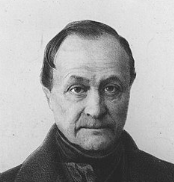
5 months ago
A common monetary standard will be established, with the consent of the various governments, by which industrial transactions will be greatly facilitated. Three spheres made respectively of gold, silver, and platinum, and each weighing fifty grammes, would differ sufficiently in value for the purpose. The sphere should have a small flattened base, and on the great circle parallel to it the Positivist motto would be inscribed. At the pole would be the image of the immortal Charlemagne, the founder of the Western Republic, and round the image his name would be engraved, in its Latin form, Carolus; that name, respected as it is by all nations of Europe alike, would be the common appellation of the universal monetary standard.
▼
Source
p. 430
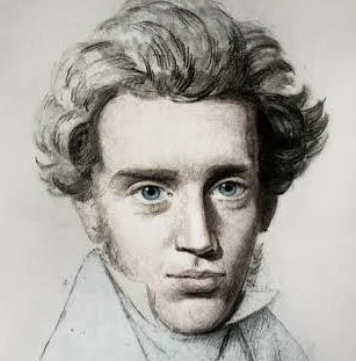
5 months ago
I have never definitely broken with Christianity nor renounced it. To attack it has never been my thought. No, from the time when there could be any question of the employment of my powers, I was firmly determined to employ them all to defend Christianity, or in any case to present it in its true form.
▼
Source
The Point of View for My Work as An Author, Soren Kierkegaard, translated by Walter Lowrie 1939, 1962 P. 77
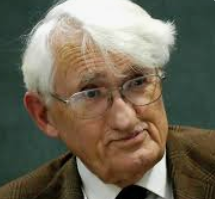
5 months ago
Philosophy's position with regard to science, which at one time could be designated with the name "theory of knowledge," has been undermined by the movement of philosophical thought itself. Philosophy was dislodged from this position by philosophy.
▼
Source
p. 4
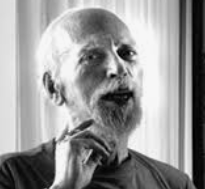
5 months ago
Every morning I have been looking at CNN to see if there is any reason for hope. I see a few large and impressive peace protests here and there around the world, but mostly I see empty robot faces monotonously reciting the magic incantations, "We must support the President" and "We must support our troops", both of which mean the killing must continue.
▼
Source
Cosmic Trigger II: Down to Earth (1991)
5 months ago
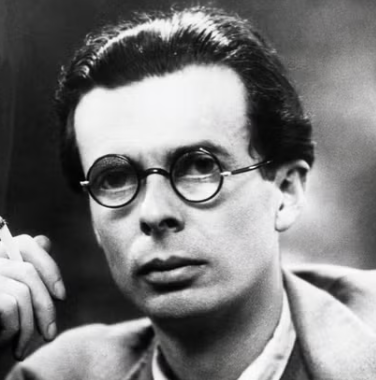
A belief in hell and the knowledge that every ambition is doomed to frustration at the hands of a skeleton have never prevented the majority of human beings from behaving as though death were no more than an unfounded rumour, and survival a thing beyond the bounds of possibility.
▼
Source
Themes and Variations (1950)
5 months ago
Every one of the great revolutionists, from Isaiah to Shelley, have been optimists. They have been indignant, not about the badness of existence, but about the slowness of men in realizing its goodness.
▼
Source
"Introduction"
5 months ago
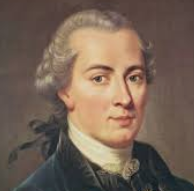
Metaphysics has as the proper object of its enquiries three ideas only: God, freedom, and immortality.
▼
Source
B 395
5 months ago
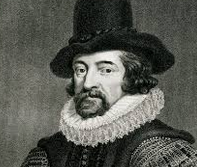
The use of this feigned history hath been to give some shadow of satisfaction to the mind of man in those points wherein the nature of things doth deny it, the world being in proportion inferior to the soul; by reason whereof there is, agreeable to the spirit of man, a more ample greatness, a more exact goodness, and a more absolute variety, than can be found in the nature of things. Therefore, because the acts or events of true history have not that magnitude which satisfieth the mind of man, poesy feigneth acts and events greater and more heroical: because true history propoundeth the successes and issues of actions not so agreeable to the merits of virtue and vice, therefore poesy feigns them more just in retribution, and more according to revealed providence: because true history representeth actions and events more ordinary, and less interchanged, therefore poesy endueth them with more rareness, and more unexpected and alternative variations: so as it appeareth that poesy serveth and conferreth to magnanimity, morality, and to delectation. And therefore it was ever thought to have some participation of divineness, because it doth raise and erect the mind, by submitting the shows of things to the desires of the mind; whereas reason doth buckle and bow the mind into the nature of things.
▼
Source
Book II, iv, 2
5 months ago
A white spot is on the horizon. There it is. A terrible storm is brewing. But no one sees the white spot or has any inkling of what it might mean. But no (this would not be the most terrible situation either), no, there is one person who sees it and knows what it means-but he is a passenger. He has no authority on the ship, can take no action. ... The fact that in Christendom there is visible on the horizon a white speck which means that a storm is threatening-this I knew; but, alas, I was an am only a passenger.
▼
Source
Søren Kierkegaard, Journals and Papers XI3 B 109 p 178ff (quoted in Kierkegaard’s Way to the Truth by Gergor Malantschuk 1963 Augsburg Publishing House
5 months ago
Whatever the Thinker thinks, the Prover will prove. And if the Thinker thinks passionately enough, the Prover will prove the thought so conclusively that you will never talk a person out of such a belief, even if it is something as remarkable as the notion that there is a gaseous vertebrate of astronomical heft ("GOD") who will spend all eternity torturing people who do not believe in his religion.
▼
Source
Ch. 1 : The Thinker & The Prover, p. 28
5 months ago
Why did it occur to anyone to believe in only one God? And conversely why did it ever occur to anyone to believe in many gods? To both these questions we must return the same answer: Because that is how the human mind happens to work. For the human mind is both diverse and simple, simultaneously many and one. We have an immediate perception of our own diversity and of that of the outside world. And at the same time we have immediate perceptions of our own oneness.
▼
Source
“One and Many,” p. 12
5 months ago
For religion all men are equal, as all pennies are equal, because the only value in any of them is that they bear the image of the King.... It has often been said, very truly, that religion is the thing that makes the ordinary man feel extraordinary; it is an equally important truth that religion is the thing that makes the extraordinary man feel ordinary.
▼
Source
Ch 1: "The Dickens Period"
5 months ago
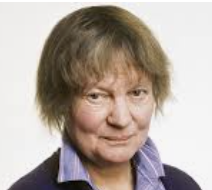
Whit Meynell was a sociologist; he had got into an intellectual muddle early on in life and never managed to get out.
▼
Source
The Philosopher's Pupil (1983) p. 165.
5 months ago
To require that a so-called layman should not use his own reason in religious matters, particularly since religion is to be appreciated as moral, but instead follow the appointed clergyman and thus someone else's reason, is an unjust demand because as to morals every man must account for all his doings. The clergyman will not and even cannot assume such a responsibility.
▼
Source
Kant, Immanuel (1996), pages 94-95
5 months ago
The human understanding is of its own nature prone to suppose the existence of more order and regularity in the world than it finds. And though there be many things in nature which are singular and unmatched, yet it devises for them parallels and conjugates and relatives which do not exist. Hence the fiction that all celestial bodies move in perfect circles, spirals and dragons being (except in name) utterly rejected.
▼
Source
Aphorism 45
5 months ago
That which distinguishes the Christian narrow way from the common human narrow way is the voluntary. Christ was not someone who coveted earthly things but had to be satisfied with poverty – no, he chose poverty.
▼
Source
Soren Kierkegaard, For Self-Examination, Hong p. 67
5 months ago
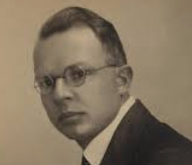
In order to determine whether or not one sentence is a consequence of another, no reference need be made to the meaning of the sentences. The mere statement of the truth-values is certainly too little; but the statement of the meaning is, on the other hand, too much. It is sufficient that the syntactical design of the sentences be given.
▼
Source
p. 258
5 months ago
In recent years, many men of science have come to realize that the scientific picture of the world is a partial one — the product of their special competence in mathematics and their special incompetence to deal systematically with aesthetic and moral values, religious experiences and intuitions of significance. Unhappily, novel ideas become acceptable to the less intelligent members of society only with a very considerable time-lag. Sixty or seventy years ago the majority of scientists believed — and the belief caused them considerable distress — that the product of their special incompetence was identical with reality as a whole. Today this belief has begun to give way, in scientific circles, to a different and obviously truer conception of the relation between science and total experience. The masses on the contrary, have just reached the point where the ancestors of today's scientists were standing two generations back. They are convinced that the scientific picture of an arbitrary abstraction from reality is a picture of reality as a whole and that therefore, the world is without meaning or value. But nobody likes living in such a world. To satisfy their hunger for meaning and value, they turn to such doctrines as nationalism, fascism and revolutionary communism. Philosophically and scientifically, these doctrines are absurd; but for the masses in every community, they have this great merit: they attribute the meaning and value that have been taken away from the world as a whole to the particular part of the world in which the believers happen to be living.
▼
Source
Ch. 14, p. 311 [2012 reprint]
5 months ago
Shyness is always the sign of a divided soul; a man is shy because he somehow thinks his position at once despicable and important. If he were without humility he would not care; and if he were without pride he would not care.
▼
Source
"The Philosopher"
5 months ago
To be is to do.
▼
Source
This is usually cited as an ancient maxim, sometimes attributed to Socrates
5 months ago
Who then to frail mortality shall trust But limns the water, or but writes in dust.
5 months ago
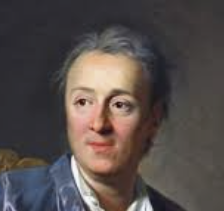
From fanaticism to barbarism is only one step.
▼
Source
Essai sur le Mérite de la Vertu (1745); a translation and adaptation of Inquiry concerning Virtue or Merit (1699) by Anthony Ashley-Cooper, 3rd Earl of Shaftesbury
5 months ago
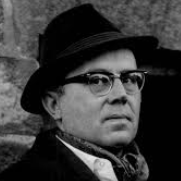
In politics we do well to abide by precedent and precept and even prejudice, for the great mysterious incorporation of the human race has acquired a prescriptive wisdom far greater than any man’s petty private rationality.
5 months ago
The really important facts were that spatial relationships had ceased to matter very much and that my mind was perceiving the world in terms of other than spatial categories. At ordinary times the eye concerns itself with such problems as where? — how far? — how situated in relation to what? In the mescaline experience the implied questions to which the eye responds are of another order. Place and distance cease to be of much interest. The mind does its perceiving in terms of intensity of existence, profundity of significance, relationships within a pattern."
5 months ago
The night we went to Birmingham by way of Beachy Head.
▼
Source
Ch. XXI: "The Road to Roundabout" ("The Rolling English Road", l. 6)
5 months ago
We are constantly railing against the passions; we ascribe to them all of man’s afflictions, and we forget that they are also the source of all his pleasures … But what provokes me is that only their adverse side is considered … and yet only passions, and great passions, can raise the soul to great things. Without them there is no sublimity, either in morals or in creativity. Art returns to infancy, and virtue becomes small-minded.
▼
Source
As translated in Diderot (1977) by Otis Fellows, p. 39 | Variant translations: | One declaims endlessly against the passions; one imputes all of man's suffering to them. One forgets that they are also the source of all his pleasures. | Only passions, grea

5 months ago
There is object proof that homosexuality is more interesting than heterosexuality. It's that one knows a considerable number of heterosexuals who would wish to become homosexuals, whereas one knows very few homosexuals who would really like to become heterosexuals.
▼
Source
As quoted in Who's Who in Contemporary Gay & Lesbian History: From World War II to the Present Day (2001) by Robert Aldrich and Gary Wotherspoon

5 months ago
Insects were scurrying about in the shade cast by the grass, and the lawn was a huge monotonous forest of thousands of little green blades, all equal, all alike, hiding the world from each other. Anguished, she thought, "I don't want to be just another blade of grass."
▼
Source
Regina
5 months ago
However hard they try, men cannot create a social organism, they can only create an organization. In the process of trying to create an organism they will merely create a totalitarian despotism.
▼
Source
Chapter 3 (p. 24)
5 months ago
Literary men are being employed to praise a big business man personally, as men used to praise a king. They not only find political reasons for the commercial schemes—that they have done for some time past—they also find moral defences for the commercial schemers. ... I do resent the whole age of patronage being revived under such absurd patrons; and all poets becoming court poets, under kings that have taken no oath.
▼
Source
pp. 15-17
5 months ago
Disturbances in society are never more fearful than when those who are stirring up the trouble can use the pretext of religion to mask their true designs.
5 months ago
The guillotine takes life almost without touching the body, just as prison deprives of liberty or a fine reduces wealth. It is intended to apply the law not so to a real body capable of feeling pain as to a juridical subject, the possessor, among other rights, of the right to exist it had to have the abstraction of the law itself.
▼
Source
pp. 13, Chapter One The Body of the Condemned
5 months ago
To be gazed at is one danger; to be manhandled is another. Women as a rule are unfamiliar with violence, they have not been through the tussles of childhood and youth as have men; and now the girl is laid hold of, swept away in a bodily struggle in which the man is the stronger. She is no longer free to dream, to delay, to maneuver: she is in his power, at his disposal.
▼
Source
Bk. 2, Pt.. 3, Ch. 3: Sexual initiation. p. 427 (1974 Vintage edition)
5 months ago
Aldous smiled; he knew what one can see in a dirty dish when the doors of perception are cleansed.
▼
Source
Laura Huxley, Timeless Moment anthologized in Sisters of the Extreme: Women Writing on the Drug Experience
5 months ago
Guesses about the fashions of the future are generally quite wide of the mark, because they are founded on a very obvious fallacy. They always imply that public taste will continue to progress in its present direction; which is, in truth, the only thing we know that it will not do. A thing that wanders away in great winding curves may end anywhere; but to turn each curve into a straight line striking out into the void will be wrong in any case.
▼
Source
Ch. IX: "The Philosophy of Gesture"
5 months ago
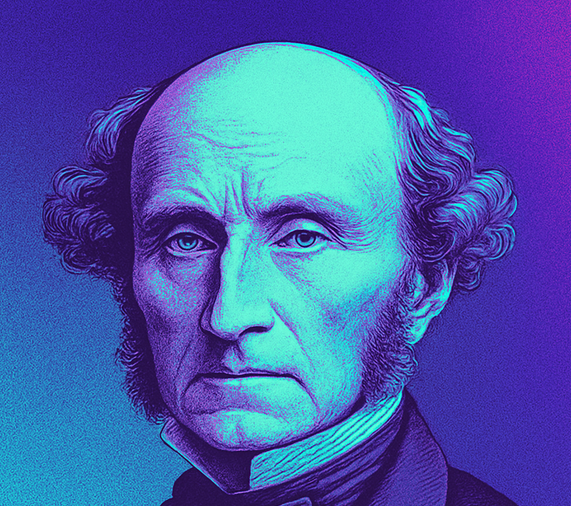
No longer enslaved or made dependent by force of law, the great majority are so by force of poverty; they are still chained to a place, to an occupation, and to conformity with the will of an employer, and debarred, by the accident of birth both from the enjoyments, and from the mental and moral advantages, which others inherit without exertion and independently of desert. That this is an evil equal to almost any of those against which mankind have hitherto struggled, the poor are not wrong in believing.
▼
Source
John Stuart Mill, Chapters On Socialism, London, 1879, ‘Introductory’
5 months ago
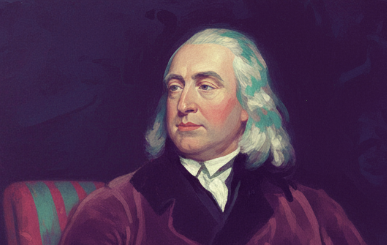
It is with government, as with medicine. They have both but a choice of evils. Every law is an evil, for every law is an infraction of liberty: And I repeat that government has but a choice of evils: In making this choice, what ought to be the object of the legislator? He ought to assure himself of two things; 1st, that in every case, the incidents which he tries to prevent are really evils; and 2ndly, that if evils, they are greater than those which he employs to prevent them. There are then two things to be regarded; the evil of the offence and the evil of the law; the evil of the malady and the evil of the remedy. An evil comes rarely alone. A lot of evil cannot well fall upon an individual without spreading itself about him, as about a common centre. In the course of its progress we see it take different shapes: we see evil of one kind issue from evil of another kind; evil proceed from good and good from evil. All these changes, it is important to know and to distinguish; in this, in fact, consists the essence of legislation.
▼
Source
Principles of Legislation (1830), Ch. X : Analysis of Political Good and Evil; How they are spread in society
5 months ago
But a punishment like forced labour or even imprisonment – mere loss of liberty – has never functioned without a certain additional element of punishment that certainly concerns the body itself: rationing of food, sexual deprivation, corporal punishment, solitary confinement ... There remains, therefore, a trace of ‘torture’ in the modern mechanisms of criminal justice – a trace that has not been entirely overcome, but which is enveloped, increasingly, by the non-corporal nature of the penal system

5 months ago
If the entire soul, then, follows without rebellion the part which loves wisdom, the result is that in general each part can carry out its own function—can be just, in other words—and in particular each is able to enjoy pleasures which are its own, the best, and, as far as possible, the truest. ... When one of the other parts takes control, there are two results: it fails to discover its own proper pleasure, and it compels the other parts to pursue a pleasure which is not their own, and not true.
▼
Source
Plato, Republic, T. Griffith, trans. (2000), 587a
5 months ago
The past, when it is merely known historically (that is, as a subject for abstract study), somehow piles itself up outside our real lives. ... I think that one of the duties of a philosopher, if he shows himself worthy of his vocation today, is to attack quite directly those dissimulating forces which are all working toward what might be called the neutralization of the past; and whose conjoint effect consists in arousing in contemporary man a feeling of what I should like to call insulation in time.
▼
Source
p. 39
5 months ago
the ultimate end, with reference to and for the sake of which all other things are desirable...is an existence exempt as far as possible from pain, and as rich as possible in enjoyments...This, being, according to the utilitarian opinion, the end of human action, is necessarily also the standard of morality; which may accordingly be defined, the rules and precepts for human conduct, by the observance of which an existence such as has been described might be, to the greatest extent possible, secured to all mankind; and not to them only, but, so far as the nature of things admits, to the whole sentient creation.
▼
Source
Ch. 2
5 months ago
Parrhesia is... always a "game" between the one who speaks the truth and the interlocutor.
5 months ago
Will you not allow that I have as much of the spirit of prophecy in me as the swans? For they, when they perceive that they must die, having sung all their life long, do then sing more than ever, rejoicing in the thought that they are about to go away to the god whose ministers they are.

5 months ago
If I respected languages like you do, I wouldn't write at all. El muro de Berlín fue derribado. Why can't I do the same? Desde la torre de Babel, las lenguas han sido siempre una forma de divorciarnos del resto de la humanidad. Poetry must find ways of breaking distance. I'm not reducing my audience. On the contrary, I'm going to have a bigger audience with the common markets — in Europe — in America. And besides, all languages are dialects that are made to break new grounds. I feel like Dante, Petrarca and Boccaccio, and I even feel like Garcilaso forging a new language. Saludo al nuevo siglo, el siglo del nuevo lenguaje de América, y le digo adiós a la retórica separatista y a los atavismos.
5 months ago
It is also a study peculiarly adapted to an early stage in the education of philosophical students, since it does not presuppose the slow process of acquiring, by experience and reflection, valuable thoughts of their own.
▼
Source
([https://archive.org/details/autobiography01mill/page/19/mode/1up pp. 19-20])
5 months ago
This grave dissociation of past and present is the generic fact of our time and the cause of the suspicion, more or less vague, which gives rise to the confusion characteristic of our present-day existence. We feel that we actual men have suddenly been left alone on the earth; that the dead did not die in appearance only but effectively; that they can no longer help us. Any remains of the traditional spirit have evaporated. Models, norms, standards are no use to us. We have to solve our problems without any active collaboration of the past, in full actuality, be they problems of art, science, or politics. The European stands alone, without any living ghosts by his side; like Peter Schlehmil he has lost his shadow. This is what always happens when midday comes.
▼
Source
"The Dehumanisation of Art"; Ortega y Gasset later used this passage in The Revolt of the Masses (1929), quoting it in Ch. III: The Height Of The Times
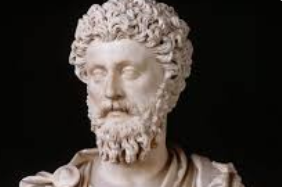
5 months ago
He was a man who looked at what ought to be done, not to the reputation which is got by a man's acts.
▼
Source
I, 16
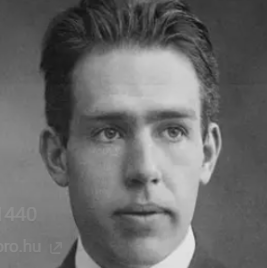
5 months ago
For a parallel to the lesson of atomic theory regarding the limited applicability of such customary idealizations, we must in fact turn to quite other branches of science, such as psychology, or even to that kind of epistemological problems with which already thinkers like Buddha and Lao Tzu have been confronted, when trying to harmonize our position as spectators and actors in the great drama of existence.
▼
Source
Speech on quantum theory at Celebrazione del Secondo Centenario della Nascita di Luigi Galvani, Bologna, Italy (October 1937)
5 months ago
The name ‘Foucault’ was first spoken to me in dark, conspiratorial tones, as if he were a threat to the then-alluring project of combining Althusser's ideology-centred thinking and the British culture-and-hegemony thinking. Foucault, along with Weber, Popper, Berlin, and many others (the list was a tiresomely long one) had to be rejected, or so I was told. My mind was soon changed on that score. The exciting work of Barry Hindess and Paul Hirst (see esp. Hindess and Hirst 1975, 1977), who had worked through the Althusser and British Cultural Marxist possibilities more thoroughly than anyone else I had then read (or have read since), indirectly opened up the idea that Foucault was not only not a threat to the best-alternative project I shared with hundreds of others, but was the key to that project's success.At last, here was a thinker who could treat power seriously yet undogmatically, someone who could relate power to society without making it read like the script of a prison movie. I was hooked. I tried my best to understand (or to sound like I understood) all the methodological innovations that came with the Foucault package – ‘archaeology’, ‘genealogy’, ‘discourse’, ‘episteme’, and so on. My excitement reached its peak when, using these tools, Foucault appeared to have succeeded in crafting an entirely new approach to the study of government, under a term of his own invention, ‘governmentality’. But, as so often happens in life, the peak of excitement turned out to be the moment when doubts emerged. These doubts became stronger, eventually leading me to think that Foucault's works from this period too often pronounce and too rarely argue from the historical evidence.
▼
Source
Gary Wickham, "Foucault and the Promise of Power without Dogma", in Routledge International Handbook of Contemporary Social and Political Theory (2011) edited by Gerard Delanty and Stephen P. Turner
5 months ago
I would not have him sorrow at my hard lot, or say at the burial, Thus we lay out Socrates, or, Thus we follow him to the grave or bury him; for false words are not only evil in themselves, but they infect the soul with evil. Be of good cheer then, my good Crito, and say that you are burying my body only, and do with that as is usual, and as you think best.
CivilSimian.com created by AxiomaticPanic, CivilSimian, Kalokagathia