
5 months ago
Fascism as a consequence of its Marxian and Sorelian patrimony . . . conjoined with the influence of contemporary Italian idealism, through which Fascist thought attained maturity, conceives philosophy as praxis.
▼
Source
Origini e dottrina del fascismo, Rome (1929) p. 58, A. James Gregor, The Ideology of Fascism: The Rationale of Totalitarianism, New York: NY, The Free Press (1969) p. 317
5 months ago
The dissatisfaction with life and the world, felt more or less in the present state of society and intellect by every discerning and highly conscientious mind, gave in his case a rather melancholy tinge to the character, very natural to those whose passive moral susceptibilities are more than proportioned to their active energies. For it must be said, that the strength of will of which his manner seemed to give such strong assurance, expended itself principally in manner. With great zeal for human improvement, a strong sense of duty and capacities and acquirements the extent of which is proved by the writings he has left, he hardly ever completed any intellectual task of magnitude. He had so high a standard of what ought to be done, so exaggerated a sense of deficiencies in his own performances, and was so unable to content himself with the amount of elaboration sufficient for the occasion and the purpose, that he not only spoilt much of his work for ordinary use by over-labouring it, but spent so much time and exertion in superfluous study and thought, that when his task ought to have been completed, he had generally worked himself into an illness, without having half finished what he undertook. From this mental infirmity (of which he is not the sole example among the accomplished and able men whom I have known), combined with liability to frequent attacks of disabling though not dangerous ill-health, he accomplished, through life, little in comparison with what he seemed capable of...
▼
Source
([https://archive.org/details/autobiography01mill/page/74/mode/1up pp. 74-75])
5 months ago
Spontaneous social action will be broken up over and over again by State intervention; no new seed will be able to fructify. Society will have to live for the State, man for the governmental machine. And as, after all, it is only a machine whose existence and maintenance depend on the vital supports around it, the State, after sucking out the very marrow of society, will be left bloodless, a skeleton, dead with that rusty death of machinery, more gruesome than the death of a living organism. Such was the lamentable fate of ancient civilisation. … Already in the times of the Antonines (IInd Century), the State overbears society with its anti-vital supremacy. Society begins to be enslaved, to be unable to live except in the service of the State. The whole of life is bureaucratised. What results? The bureaucratisation of life brings about its absolute decay in all orders.
▼
Source
Chapter XIII: The Greatest Danger, The State
5 months ago
Nothing has such power to broaden the mind as the ability to investigate systematically and truly all that comes under thy observation in life.
▼
Source
III, 11

5 months ago
By all means, marry. If you get a good wife, you'll become happy; if you get a bad one, you'll become a philosopher.
▼
Source
Origin unknown. Attributed to Sydney Smith in Speaker's Handbook of Epigrams and Witticisms (1955) by Herbert Prochnow, p. 190. Variant reported in Why Are You Single? (1949) by Hilda Holland, p. 49: «When asked by a young man whether to marry, Socrates i

5 months ago
There is no repose for the mind except in the absolute; for feeling except in the infinite; for the soul except in the divine. Nothing finite is true, is interesting, is worthy to fix my attention. All that is particular is exclusive, and all that is exclusive repels me. There is nothing non-exclusive but the All; my end is communion with Being through the whole of Being.
5 months ago
Mere newspaper articles on the occurrences or questions of the moment, gave no opportunity for the development of any general mode of thought; but I attempted, in the beginning of 1831, to embody in a series of articles, headed "The Spirit of the Age," some of my new opinions, and especially to point out in the character of the present age, the anomalies and evils characteristic of the transition from a system of opinions which had worn out, to another only in process of being formed. These articles were, I fancy, lumbering in style, and not lively or striking enough to be at any time, acceptable to newspaper readers; but had they been far more attractive, still, at that particular moment, when great political changes were impending, and engrossing all minds, these discussions were ill-timed, and missed fire altogether. The only effect which I know to have been produced by them, was that Carlyle, then living in a secluded part of Scotland, read them in his solitude, and saying to himself (as he afterwards told me) "here is a new Mystic," inquired on coming to London that autumn respecting their authorship; an inquiry which was the immediate cause of our becoming personally acquainted.
▼
Source
([https://archive.org/details/autobiography01mill/page/173/mode/1up pp. 173-174])
5 months ago
Every intellectual effort sets us apart from the commonplace, and leads us by hidden and difficult paths to secluded spots where we find ourselves amid unaccustomed thoughts.
▼
Source
p. 15
5 months ago
Love the little trade which thou hast learned, and be content therewith.
▼
Source
IV, 31

5 months ago
Speciesism—the word is not an attractive one, but I can think of no better term—is a prejudice or attitude of bias in favor of the interests of members of one's own species and against those of members of other species.
▼
Source
Ch. 1: All Animals Are Equal

5 months ago
Pain is never permanent.
▼
Source
The Book of Positive Quotations (2007) edited by John Cook, Steve Deger, and Leslie Ann Gibson, p. 333
5 months ago
The will localizes us, thought universalizes us. My soul wavers between two, four, six general and contradictory conceptions, for it obeys all the great instincts of human nature, and aspires to the absolute, which can only be realized by a succession of contraries.
▼
Source
As translated in The Private Journal of Henri Frédéric Amiel (1935), p. 238
5 months ago
The most virtuous and truth-loving man that I at least have ever known.
▼
Source
John Morley to Andrew Carnegie (6 February 1905), quoted in D. A. Hamer, John Morley: Liberal Intellectual in Politics (1968), p. 22
5 months ago
In a sense, people are our proper occupation. Our job is to do them good and put up with them. But when they obstruct our proper tasks, they become irrelevant to us--like sun, wind, and animals. Our actions may be impeded by them, but there can be no impeding our intentions or our dispositions. Because we can accommodate and adapt. The mind adapts and converts to its own purposes the obstacle to our acting. The impediment to action advances action. What stands in the way becomes the way.
▼
Source
(Hays translation)
5 months ago
Remember Bostrom’s definition of existential risk, which refers to the annihilation not of human beings, but of “Earth-originating intelligent life.” The replacement of our species by some other form of conscious intelligent life is not in itself, impartially considered, catastrophic. Even if the intelligent machines kill all existing humans, that would be...a very small part of the loss of value that Parfit and Bostrom believe would be brought about by the extinction of Earth-originating intelligent life. The risk posed by the development of AI, therefore, is not so much whether it is friendly to us, but whether it is friendly to the idea of promoting wellbeing in general, for all sentient beings it encounters, itself included.
▼
Source
Chapter 15: Preventing Human Extinction (p. 176)
5 months ago
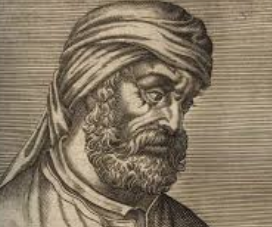
In the first place, how arrogantly do the Marcionites build up their stupid system, bringing forward a new god, as if we were ashamed of the old one! So schoolboys are proud of their new shoes, but their old master beats their strutting vanity out of them.
▼
Source
Book I, Chapter VIII.—Specific Points. The Novelty of Marcion’s God Fatal to His Pretensions. God is from Everlasting, He Cannot Be in Any Wise New.

5 months ago
The minister [Robert Walpole] preaches corruption aloud and constantly, like an impudent missionary of vice.
▼
Source
p. 72
5 months ago
Remember, that to change thy mind upon occasion, and to follow him that is able to rectify thee, is equally ingenuous, as to find out at the first, what is right and just, without help. For of thee nothing is required, that is beyond the extent of thine own deliberation and judgment, and of thine own understanding.
▼
Source
VII, 14
5 months ago
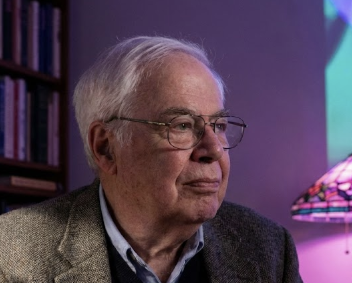
On James's view, "true" resembles "good" or "rational" in being a normative notion, a compliment paid to sentences that seem to be paying their way and that fit with other sentences which are doing so.
▼
Source
Introduction to Consequences of Pragmatism (1982)
5 months ago
But, presenting to your weakness the gift of the example of His own flesh, the more perfect Adam—that is, Christ, more perfect on this account as well (as on others), that He was more entirely pure—stands before you, if you are willing (to copy Him), as a voluntary celibate in the flesh. If, however, you are unequal (to that perfection), He stands before you a monogamist in spirit, having one Church as His spouse, according to the figure of Adam and of Eve, which (figure) the apostle interprets of that great sacrament of Christ and the Church, (teaching that), through the spiritual, it was analogous to the carnal monogamy.
▼
Source
Chapter 5
5 months ago
Napoleon, far more Italian than French, Italian by race, by instinct, imagination, and souvenir, considers in his plan the future of Italy, and, on casting up the final accounts of his reign, we find that the net profit is for Italy and the net loss is for France.
▼
Source
"[https://archive.org/stream/jstor-25102177/25102177_djvu.txt Napoleon's Views of Religion]" (1891)
5 months ago
Very little is needed to make a happy life.
▼
Source
ἐν ὀλιγίστοις κεῖται τὸ εὐδαιμόνως βιῶσαι | VII, 67

5 months ago
In every man's writings, the character of the writer must lie recorded.
▼
Source
Goethe (1828).

5 months ago
In no victory do they glory so much as in that which is gained by dexterity and good conduct without bloodshed. In such cases they appoint public triumphs, and erect trophies to the honour of those who have succeeded; for then do they reckon that a man acts suitably to his nature, when he conquers his enemy in such a way as that no other creature but a man could be capable of, and that is by the strength of his understanding. Bears, lions, boars, wolves, and dogs, and all other animals, employ their bodily force one against another, in which, as many of them are superior to men, both in strength and fierceness, so they are all subdued by his reason and understanding.
▼
Source
Ch. 8 : Of Their Military Discipline
5 months ago
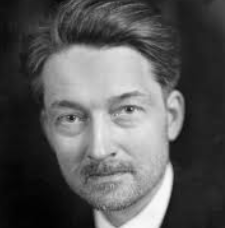
With all his sincerity and devotion, the authentic, absolute atheist is after all only an abortive saint, and at the same time, a mistaken revolutionist.
▼
Source
p. 113.
5 months ago
It is a great good fortune, as Stendhal said, for one “to have his passion as a profession.”
▼
Source
p. 4
5 months ago
You want praise from people who kick themselves every fifteen minutes, the approval of people who despise themselves. (Is it a sign of self-respect to regret nearly everything you do?) (Hays translation)
▼
Source
VIII, 53
5 months ago
Consider the great elements of human enjoyment, the attainments and possessions that exalt man's life to its present height, and see what part of these he owes to institutions, to Mechanism of any kind; and what to the instinctive, unbounded force, which Nature herself lent him.
5 months ago
With rebellion, awareness is born.
▼
Source
As quoted in The Estranged God : Modern Man's Search for Belief (1966) by Anthony T. Padovano, p. 109
5 months ago
I have two admonitions more to the ingenuous, and well-disposed reader. First that he would not slight my endeavors because of my years, which are but few. It is the custom of most men to measure knowledge by the beard, but look thou rather on the Soul, an essence of that Nature, que ad perfectionem suam curricula temporis non defiderat. Secondly, that he would not conclude any thing rashly concerning the subject of this art, for it is a principle not easily apprehended.
▼
Source
p. 69
5 months ago
Geometrical Speculations have just as much Elegancy as Simplicity, and deserve just so much praise as they can promise Use.
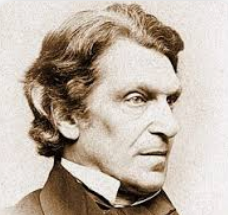
5 months ago
Trust arises from the mind's instinctive feeling after fixed realities, after the substance of every shadow, the base of all appearance, the everlasting amid change.
▼
Source
Vol. II, p. 5.
5 months ago
Wilt thou then, my soul, never be good and simple and one and naked, more manifest than the body which surrounds thee? Wilt thou never enjoy an affectionate and contented disposition? Wilt thou never be full and without a want of any kind, longing for nothing more, nor desiring anything, either animate of inanimate, for the enjoyment of pleasures? nor yet desiring time wherein thou shalt have longer enjoyment, or place, or pleasant climate, or society of men with whom thou mayst live in harmony? but wilt thou be satisfied with thy present condition, and pleased with all that is around thee, and wilt thou convince thyself that thou hast everything and that it comes from the gods, that everything is well for thee, and will be well whatever shall please them, and whatever they shall give for the conservation of the perfect living being, the good and just and beautiful, which generates and holds together all things, and contains and embraces all things which are dissolved for the production of other like things? Wilt thou never be such that thou shalt so dwell in community with gods and men as neither to find fault with them at all, nor to be condemned by them?
▼
Source
X, 1

5 months ago
How important can it be that I suffer and think? My presence in this world will disturb a few tranquil lives and will unsettle the unconscious and pleasant naiveté of others. Although I feel that my tragedy is the greatest in history — greater than the fall of empires — I am nevertheless aware of my total insignificance. I am absolutely persuaded that I am nothing in this universe; yet I feel that mine is the only real existence.
5 months ago
Hadst thou not Greek enough to understand thus much: The end of man is an Action, and not a Thought, though it were the noblest.
▼
Source
Bk. II, ch. 5 | The words Carlyle put in italics are a quotation from Book 1 of Aristotle's Nicomachean Ethics.
5 months ago
Nothing is harder to understand than a symbolic work. A symbol always transcends the one who makes use of it and makes him say in reality more than he is aware of expressing.
▼
Source
"Hope and the Absurd in the work of Franz Kafka"
5 months ago
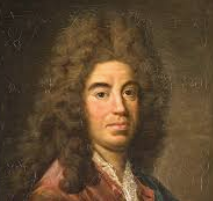
In fine, I have written my work, not as an essay which is to win the applause of the moment, but as a possession for all time.
▼
Source
Book I, 1.22-[4]
5 months ago
One mark of a second-rate mind is to be always telling stories.
▼
Source
Aphorism 52
5 months ago
Learn to ask of all actions, “Why are they doing that?” Starting with your own.
▼
Source
X, 37 (Hays translation)
5 months ago
To withstand any truth...
5 months ago
Literature is the Thought of thinking Souls.
5 months ago
One recognizes one's course by discovering the paths that stray from it.
5 months ago
We must make up our minds to look for our protection not to legal terrors but to careful administration.
▼
Source
Book III, 3.46-[4]
5 months ago
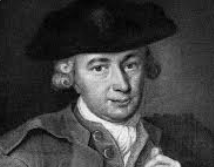
Without language we would have no reason, without reason no religion, and without these three essential aspects of our nature, neither mind nor bond of society.
▼
Source
Sämtliche Werken, ed. Josef Nadler (1949-1957), vol. III, p. 231.
5 months ago
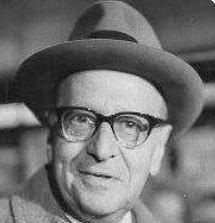
The idea that an aim can be reasonable for its own sake—on the basis of virtues that insight reveals it to have in itself—without reference to some kind of subjective gain or advantage, is utterly alien to subjective reason, even where it rises above the consideration of immediate utilitarian values and devotes itself to reflection about the social order as a whole.
▼
Source
p. 4.
5 months ago
Take away your opinion, and there is taken away the complaint, [...] Take away the complaint, [...] and the hurt is gone
▼
Source
IV. 7, trans. George Long
5 months ago
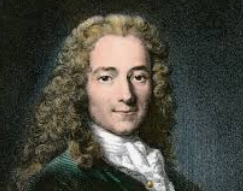
It was in the reign of Charles II that they obtained the noble distinction of being exempted from giving their testimony on oath in a court of justice, and being believed on their bare affirmation. On this occasion the chancellor, who was a man of wit, spoke to them as follows: "Friends, Jupiter one day ordered that all the beasts of burden should repair to be shod. The asses represented that their laws would not allow them to submit to that operation. 'Very well,' said Jupiter; 'then you shall not be shod; but the first false step you make, you may depend upon being severely drubbed.'"
5 months ago
Love of the absolute engenders a predilection for self-destruction. Hence the passion for monasteries and brothels. Cells and women, in both cases. Weariness with life fares well in the shadow of whores and saintly women.
5 months ago
Transport yourselves into the early childhood of nations; the first beautiful morning-light of our Europe, when all yet lay in fresh young radiance as of a great sunrise, and our Europe was first beginning to think, to be! Wonder, hope; infinite radiance of hope and wonder, as of a young child's thoughts, in the hearts of these strong men! Strong sons of Nature; and here was not only a wild Captain and Fighter; discerning with his wild flashing eyes what to do, with his wild lion-heart daring and doing it; but a Poet too, all that we mean by a Poet, Prophet, great devout Thinker and Inventor,—as the truly Great Man ever is. A Hero is a Hero at all points; in the soul and thought of him first of all. This Odin, in his rude semi-articulate way, had a word to speak. A great heart laid open to take in this great Universe, and man's Life here, and utter a great word about it. A Hero, as I say, in his own rude manner; a wise, gifted, noble-hearted man. And now, if we still admire such a man beyond all others, what must these wild Norse souls, first awakened into thinking, have made of him!
5 months ago
He tried to recall what he had read about the disease. Figures floated across his memory, and he recalled that some thirty or so great plagues known to history had accounted for nearly a hundred million deaths. But what are a hundred million deaths? When one has served in a war, one hardly knows what a dead man is, after a while. And since a dead man has no substance unless one actually sees him dead, a hundred million corpses broadcast through history are no more than a puff of smoke in the imagination.
CivilSimian.com created by AxiomaticPanic, CivilSimian, Kalokagathia