

5 months ago
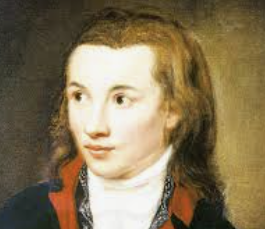
The true Poet is all-knowing; he is an actual world in miniature.
5 months ago
Above all things reverence thy Self.
▼
Source
Variant translations: | Respect yourself above all. | As quoted in [http://www.sacredscience.com/pythagoras.htm Divine Harmony: The Life and Teachings of Pythagoras] by John Strohmeier and Peter Westbrook. (1999) | Above all things reverence thy self. Abo
5 months ago
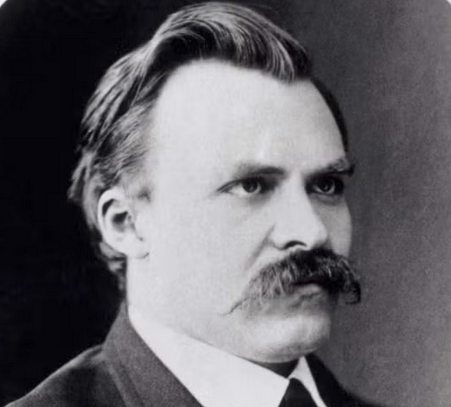
You know these things as thoughts, but your thoughts are not your experiences, they are an echo and after-effect of your experiences: as when your room trembles when a carriage goes past. I however am sitting in the carriage, and often I am the carriage itself.
▼
Source
Attributed across social media to TSZ. Is actually quoted in TSZ, Penguin Classics, Reg Hollingdale translation, in the introduction pg 12. Attributed to 'posthumously produced notes' [Nachlass?] Hollingdale continues.' In a man who thinks like this, the
5 months ago
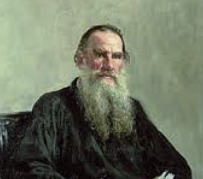
Tolstoy, who among European writers of the nineteenth century probably had the widest access to all sectors of his society, was able to stock War and Peace with an enormous cast of characters and range of situations.
▼
Source
Ruth Wisse The Modern Jewish Canon (2000)
5 months ago
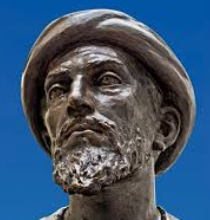
Abraham was the first to teach the Unity of God, to establish the faith, to cause it to remain among coming generations, and to win his fellow-men to his doctrine; as Scripture says of him: "I know him, that he will command,". (Gen. xviii. 19)
▼
Source
Ch.24

5 months ago
Write it on your heart that every day is the best day in the year.
▼
Source
Works and Days
5 months ago
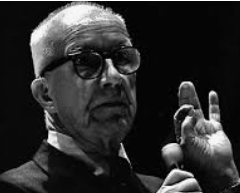
I was convinced in 1927 that humanity's most fundamental survival problems could never be solved by politics.
5 months ago
The Pythagoreans thought those who teach for the sake of reward show themselves worse than sculptors, or artists who perform the work sitting. For these, when someone orders wood to make a statue of Hermes, search for wood suited to receive the proper form; while those pretend that they can readily produce the works of virtue from every nature.
5 months ago
A fool is known by his Speech; and a wise man by Silence.
5 months ago
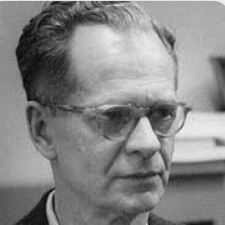
I did not direct my life. I didn't design it. I never made decisions. Things always came up and made them for me. That's what life is.
▼
Source
As quoted in "Unpacking the Skinner Box : Revisiting B. F. Skinner through a Postformal Lens" by Dana Salter in The Praeger Handbook of Education and Psychology Vol. 4 (2008) edited by Joe L. Kincheloe and Raymond A. Horn, Ch. 99, p. 872
5 months ago
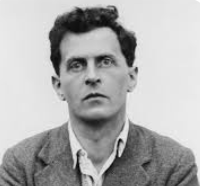
There are two godheads: the world and my independent I. I am either happy or unhappy, that is all. It can be said: good or evil do not exist. A man who is happy must have no fear. Not even in the face of death. Only a man who lives not in time but in the present is happy.
▼
Source
Journal entry (8 July 1916), p. 74e
5 months ago
The depths of the soul are not a faculty, a “power” of the soul, but rather the place where uncreated grace operates, God himself who “works with the soul to such an extent that he frees it from itself, as a creature, so that nothing remains but God and the soul itself, without mediation.”
5 months ago
Shall I tell you the secret of the true scholar? It is this: Every man I meet is my master at some point, and in that, I learn of him.
▼
Source
Greatness
5 months ago
It is to be feared that Spinoza would not have been enlightened enough to appreciate the beneficient system of the Ph.D. degree, introduced into English universities as a measure of post-war propaganda, whereby the time and energy of those who are qualified to do research are expended in supervising the work of those who never will be.
▼
Source
From Five Types of Ethical Theory (1930)
5 months ago
I see philosophy as a fairly abstract activity, as concerned mainly with the analysis of criticism and concepts, and of course most usefully of scientific concepts.
▼
Source
As quoted in Profile of Sir Alfred Ayer (June 1971) by Euro-Television, quoted in A.J. Ayer: A Life (1999), p. 2.
5 months ago
Practice yourself, for heaven's sake, in little things; and thence proceed to greater.
▼
Source
Book I, ch. 18, § 18.
5 months ago
In this theater of man's life it is reserved only for God and angels to be lookers on.
▼
Source
Francis Bacon, in The Advancement of Learning (1605) Book II, xx, 8.
5 months ago
What I give is the morphology of the use of an expression. I show that it has kinds of uses of which you had not dreamed. In philosophy one feels forced to look at a concept in a certain way. What I do is suggest, or even invent, other ways of looking at it. I suggest possibilities of which you had not previously thought. You thought that there was one possibility, or only two at most. But I made you think of others. Furthermore, I made you see that it was absurd to expect the concept to conform to those narrow possibilities. Thus your mental cramp is relieved, and you are free to look around the field of use of the expression and to describe the different kinds of uses of it.
▼
Source
Lectures of 1946 - 1947, as quoted in Ludwig Wittgenstein : A Memoir (1966) by Norman Malcolm, p. 43
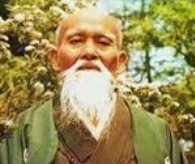
5 months ago
I am the Universe.
▼
Source
As quoted in Abundant Peace: The Biography of Morihei Ueshiba (1987) by John Stevens
5 months ago
Every man I meet is in some way my superior, and in that, I can learn of him.
▼
Source
As quoted in Think, Vol. 4-5 (1938), p. 32
5 months ago
It is sheer nonsense to expect that any human being has yet been able to attain such insight into the problems of society that he can really identify the central problems and determine how they should be solved. The systems in which we live are far too complicated as yet for our intellectual powers and technology to understand.
▼
Source
p. x
5 months ago
Beauty is a pledge of the possible conformity between the soul and nature, and consequently a ground of faith in the supremacy of the good.
▼
Source
Pt. IV, Expression; § 67: "Conclusion.", p. 270
5 months ago
Know, first, who you are, and then adorn yourself accordingly.
▼
Source
Book III, ch. 1, § 25.
5 months ago
Much learning does not teach wisdom; otherwise it would have taught Hesiod and Pythagoras, and again Xenophanes and Hecataeus.
▼
Source
Heraclitus (c. 500 BC) as quoted by Sir Thomas Little Heath, A History of Greek Mathematics, [https://books.google.com/books?id=h4JsAAAAMAAJ Vol. 1], p.65, citing Diog. L. ix. 1 (Fr. 40 in Vorsokratiker i3, p. 86. 1-3).
5 months ago
Why in the world shouldn't they have regarded with awe and reverence that act by which the human race is perpetuated. Not every religion has to have St. Augustine's attitude to sex. Why even in our culture marriages are celebrated in a church, everyone present knows what is going to happen that night, but that doesn't prevent it being a religious ceremony.
▼
Source
In reaction to statements by Maurice O'Connor Drury who expressed disapproval of depictions of an ancient Egyptian god with an erect phallus, in "Conversations with Wittgenstein" as quoted in Leading a Human Life: Wittgenstein, Intentionality, and Romanti
5 months ago
There are no contests in the Art of Peace. A true warrior is invincible because he or she contests with nothing. Defeat means to defeat the mind of contention that we harbor within.
5 months ago
Self-command is the main elegance.
▼
Source
p. 205
5 months ago
Enemies are hostile, out to stop you, to eliminate you and your ideas; they are also to be loved, even as yourself.
▼
Source
p. 156
5 months ago
Professional philosophers are usually only apologists: that is, they are absorbed in defending some vested illusion or some eloquent idea. Like lawyers or detectives, they study the case for which they are retained.
▼
Source
pp. 48-49
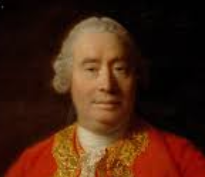
5 months ago
We speak not strictly and philosophically when we talk of the combat of passion and of reason. Reason is, and ought only to be the slave of the passions, and can never pretend to any other office than to serve and obey them.
▼
Source
Part 3, Section 3
5 months ago
Those of our pleasures which come most rarely give the greatest delight.
▼
Source
Fragment 33 ([https://en.wikisource.org/wiki/Epictetus,_the_Discourses_as_reported_by_Arrian,_the_Manual,_and_Fragments/Fragments Oldfather translation])
5 months ago
Around 600 BCE, Pythagoras observed that the tones of a lyre sound most harmonious when the ratio of string lengths forms a simple whole-number fraction. Inspired by such hints, Pythagoras and his followers made a remarkable intuitive leap. They foresaw the possibility of a different kind of world-model, less dependent on the accident of our senses but more in tune with Nature's hidden harmonies, and ultimately more faithful to reality. This is the meaning of... "All things are number."
▼
Source
Frank Wilczek, The Lightness of Being (2008)
5 months ago
To write well is to think well; there is no art of style distinct from the culture of the mind. The good writer is a complete mind, gifted with judgment, passion, imagination, and at the same time well trained. The inner qualities of rectitude, of brilliant geniality, are not given; instruction, wealth of information, fulness of knowledge, are acquired. Thus good training of the mind is the only school of good style. Wanting that, you have merely rhetoric and bad taste.
▼
Source
As quoted in The Art of Authorship (1890) by George Bainton
5 months ago
115. If you tried to doubt everything you would not get as far as doubting anything. The game of doubting itself presupposes .

5 months ago
O water of the river Ganges, thou rememberst the dayWhen our torrent flooded thy valleys...
▼
Source
quoted in Annemarie Schimmel - Gabriel's Wing_ Study into the Religious Ideas of Sir Muhammad Iqbal (1989, Iqbal Academy) also in Jain, M. (2010). Parallel pathways: Essays on Hindu-Muslim relations, 1707-1857.
5 months ago
"We, as we read," Ralph Waldo Emerson wrote in an essay on history, "must become Greeks, Romans, Turks, priest and king, martyr and executioner; must fasten these images to some reality in our secret experience, or we shall learn nothing rightly."
▼
Source
Edwidge Danticat chapter 1, "Create Dangerously: The Immigrant Artist at Work"
5 months ago
It is not uninteresting to observe in society the opinions of its different classes respecting honours conferred on science. Military and naval men, especially the most eminent, feel that genius is limited by no profession, and themselves sympathizing with it, would gladly hail as brothers in the same distinction, the philosopher and the poet. With lawyers the case is reversed ; genius dwells not in their courts : industry and acuteness, monopolised by one absorbing professional subject, exclude larger views; and ribbons not being amongst the honoraria of their own profession, they reprobate their application to science. To this there are, however, some noble exceptions. Amongst the brightest ornaments, of their own profession, men are to be found of larger experience and more extended views than it often produces, who are themselves qualified to have become discoverers in other sciences. It is much to be regretted when such powers are applied to the mere administration, instead of to the reformation, of the laws of their country.
▼
Source
p. 224
5 months ago
The young man who has not wept is a savage, and the old man who will not laugh is a fool.
▼
Source
Ch. 3, P. 57
5 months ago
We are all attached to the throne of the Supreme Being by a supple chain that restrains us without enslaving us. Nothing is more admirable in the universal order of things than the action of free beings under the divine hand. Freely slaves, they act voluntarily and necessarily at the same time; they really do what they will, but without being able to disturb the general plans. Each of these beings occupies the centre of a sphere of activity whose diameter varies according to the will of the Eternal Geometer, who can extend, restrict, check, or direct the will without altering its nature.
5 months ago
That original intelligence, say the MAGIANS, who is the first principle of all things, discovers himself immediately to the mind and understanding alone; but has placed the sun as his image in the visible universe; and when that bright luminary diffuses its beams over the earth and the firmament, it is a faint copy of the glory which resides in the higher heavens. If you would escape the displeasure of this divine being, you must be careful never to set your bare foot upon the ground, nor spit into a fire, nor throw any water upon it, even though it were consuming a whole city. Who can express the perfections of the Almighty? say the Mahometans. Even the noblest of his works, if compared to him, are but dust and rubbish. How much more must human conception fall short of his infinite perfections? His smile and favour renders men for ever happy; and to obtain it for your children, the best method is to cut off from them, while infants, a little bit of skin, about half the breadth of a farthing. Take two bits of cloth, say the Roman catholics, about an inch or an inch and a half square, join them by the corners with two strings or pieces of tape about sixteen inches long, throw this over your head, and make one of the bits of cloth lie upon your breast, and the other upon your back, keeping them next your skin: There is not a better secret for recommending yourself to that infinite Being, who exists from eternity to eternity.
▼
Source
Part VII - Confirmation of this doctrine
5 months ago
The tetrad was called by the Pythagoreans every number, because it comprehends in itself all the numbers as far as to the decad, and the decad itself; for the sum of 1, 2, 3, and 4, is 10. Hence both the decad and the tetrad were said by them to be every number; the decad indeed in energy, but the tetrad in capacity. The sum likewise of these four numbers was said by them to constitute the tetractys, in which all harmonic ratios are included. For 4 to 1, which is a quadruple ratio, forms the symphony bisdiapason; the ratio of 3 to 2, which is sesquialter forms the symphony diapente; 4 to 3, which is sesquitertian, the symphony diatessaron; and 2 to 1, which is a duple ratio, forms the diapason.
▼
Source
Iamblichus, [https://books.google.com/books?id=J_BZAAAAcAAJ Iamblichus' Life of Pythagoras, or Pythagoric Life], Tr. Thomas Taylor (1818) Note 3:1 is the twelfth interval in music
5 months ago
A man will be imprisoned in a room with a door that's unlocked and opens inwards; as long as it does not occur to him to pull rather than push it.
▼
Source
p. 42e

5 months ago
True science consists in systematically examining all possible cases. Exact political economy has not achieved this until now. It does not even encompass all actual cases. This is one of the reason why exact theory finds itself in opposition to the historical school and why it does not have an awful lot to say to those economists who occupy themselves with issues of practical interest, theories of crisis, cartels and trusts.
▼
Source
p. 278
5 months ago
The history of the human species is the history of a variety of races in every stage of civilization and barbarism, and the great majority of which have neither an intellectual, nor a moral, nor a religious progressive history. Progression has not been the character of the history of man. Without alluding to his primeval fall from his high estate, we have only to cast our eyes over the globe, and look at the intellectual, moral, and religious catastrophes which it presents to us, — at ages of light and darkness, — at alternations of progress and decline, — at the highest civilization sinking into the lowest barbarism. Mark those eastern lands, now involved in darkness, from which the beams of knowledge first radiated on mankind. Study the extinction of morality in many regions of the earth where its great lessons were first taught by our Saviour and His apostles; and above all, mark the total suppression of the Christian faith in European communities, where it has been displaced by a religion whose doctrines were preached by conquest, and whose decalogue was dictated by the sword.
▼
Source
More Worlds Than One: The Creed of the Philosopher and the Hope of the Christian (1856), "Religious Difficulties", p. 157-158
5 months ago
All grandeur, all power, all subordination to authority rests on the executioner: he is the horror and the bond of human association. Remove this incomprehensible agent from the world and at that very moment order gives way to chaos, thrones topple and society disappears.
▼
Source
"First Dialogue," p. 20
5 months ago
In a word, human life is more governed by fortune than by reason; is to be regarded more as a dull pastime than as a serious occupation; and is more influenced by particular humour, than by general principles. Shall we engage ourselves in it with passion and anxiety? It is not worthy of so much concern. Shall we be indifferent about what happens? We lose all the pleasure of the game by our phlegm and carelessness. While we are reasoning concerning life, life is gone; and death, though perhaps they receive him differently, yet treats alike the fool and the philosopher.
▼
Source
Part I, Essay 18: The Sceptic
5 months ago
If a false thought is so much as expressed boldly and clearly, a great deal has already been gained.
▼
Source
p. 86e

5 months ago
All this we see, and, therefore, instead of inanely repeating the old formula, "Respect the law," we say, "Despise law and all its Attributes!" In place of the cowardly phrase, "Obey the law," our cry, is "Revolt against all laws!"
▼
Source
I

5 months ago
Pleasure assails a man through each and every sense that he has; and while he must face and grapple with work, to pleasure he must give the widest berth possible and have none but unavoidable dealings with her. And herein the strongest man is indeed strongest, one might almost say, who can keep the farthest away from pleasures; for it is impossible to dwell with pleasure or even to dally with her for any length of time without being completely enslaved.
▼
Source
A speech by Diogenes, p. 391
CivilSimian.com created by AxiomaticPanic, CivilSimian, Kalokagathia