
5 months ago
It is life that educates, and perhaps love more than anything else in life.
▼
Source
Ch. 2 : On Youth
5 months ago
The perfection of the effect demonstrates the perfection of the cause, for a greater power brings about a more perfect effect. But God is the most perfect agent. Therefore, things created by Him obtain perfection from Him. So, to detract from the perfection of creatures is to detract from the perfection of divine power.
▼
Source
III, 69, 15
5 months ago
Whatever the practical origins of aesthetic discernment may have been, it has been used to create great works of art. When the very loftiest human creations are seen to derive from humble origins and functions, what needs revision is not our esteem for these creations but our notion of nobility.
▼
Source
The Nature of Rationality (1993), Ch. V : Instrumental Rationality and Its Limits; Rationality's Imagination, p. 181
5 months ago
I read Karl Popper's The Open Society and its Enemies. Popper, whose analysis in many ways complemented that of Hayek, approached Marxism from the point of view of the philosopher of the natural sciences. This meant that he was ideally equipped to expose the fraudulent claim of Marxists to have discovered immutable laws of history, social development or "progress" – laws which were comparable to the laws of natural science. It was not just that the "inevitable" course of events which Marx had prophesied had not occurred and showed no signs of occurring. Marx and Marxists had not even understood the scientific method, let alone practised it in their analysis. Unlike the Marxists – whether historians, economists or social scientists – who tried to "prove" their theories by accumulating more and more facts to sustain them, "the method of science is rather to look out for facts which may refute the theory... and the fact that all tests of the theory are attempted falsifications of predictions derived with its help furnishes the clue to scientific method". The political consequences of this basic error – perhaps more properly described as basic fraud – were summed up by Popper in the dedication of his later book The Poverty of Historicism: "In memory of the countless men, women and children of all creeds or nations or races who fell victims to the fascist and communist belief in Inexorable Laws of Historical Destiny."
▼
Source
Margaret Thatcher, The Path to Power (1995), pp. 58-59
5 months ago
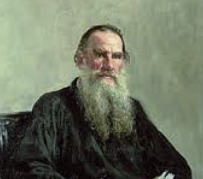
We are not ostriches, and cannot believe that if we refuse to look at what we do not wish to see, it will not exist. This is especially the case when what we do not wish to see is what we wish to eat. If it were really indispensable, or, if not indispensable, at least in some way useful! But it is quite unnecessary ... And this is continually being confirmed by the fact that young, kind, undepraved people — especially women and girls — without knowing how it logically follows, feel that virtue is incompatible with beefsteaks, and, as soon as they wish to be good, give up eating flesh.
▼
Source
Ch. X
5 months ago
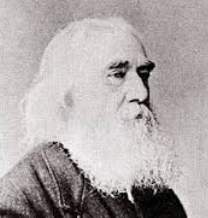
It is true that the theory of our Constitution is, that all taxes are paid voluntarily; that our government is a mutual insurance company, voluntarily entered into by the people with each other; that each man makes a free and purely voluntary contract with all others who are parties to the Constitution, to pay so much money for so much protection, the same as he does with any other insurance company; and that he is just as free not to be protected, and not to pay any tax, as he is to pay a tax, and be protected.But this theory of our government is wholly different from the practical fact. The fact is that the government, like a highwayman, says to a man: Your money, or your life. And many, if not most, taxes are paid under the compulsion of that threat.The government does not, indeed, waylay a man in a lonely place, spring upon him from the road side, and, holding a pistol to his head, proceed to rifle his pockets. But the robbery is none the less a robbery on that account; and it is far more dastardly and shameful.The highwayman takes solely upon himself the responsibility, danger, and crime of his own act. He does not pretend that he has any rightful claim to your money, or that he intends to use it for your own benefit. He does not pretend to be anything but a robber. He has not acquired impudence enough to profess to be merely a "protector," and that he takes men's money against their will, merely to enable him to "protect" those infatuated travellers, who feel perfectly able to protect themselves, or do not appreciate his peculiar system of protection. He is too sensible a man to make such professions as these. Furthermore, having taken your money, he leaves you, as you wish him to do. He does not persist in following you on the road, against your will; assuming to be your rightful "sovereign," on account of the "protection" he affords you. He does not keep "protecting" you, by commanding you to bow down and serve him; by requiring you to do this, and forbidding you to do that; by robbing you of more money as often as he finds it for his interest or pleasure to do so; and by branding you as a rebel, a traitor, and an enemy to your country, and shooting you down without mercy, if you dispute his authority, or resist his demands. He is too much of a gentleman to be guilty of such impostures, and insults, and villainies as these. In short, he does not, in addition to robbing you, attempt to make you either his dupe or his slave.The proceedings of those robbers and murderers, who call themselves "the government," are directly the opposite of these of the single highwayman.In the first place, they do not, like him, make themselves individually known; or, consequently, take upon themselves personally the responsibility of their acts. On the contrary, they secretly (by secret ballot) designate some one of their number to commit the robbery in their behalf, while they keep themselves practically concealed.
▼
Source
p. 12–13
5 months ago
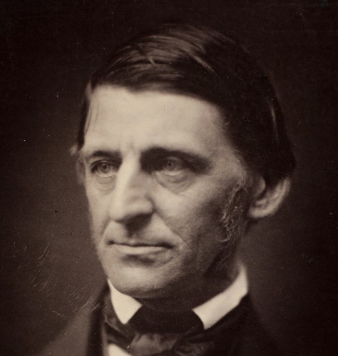
Explore, and explore, and explore. Be neither chided nor flattered out of your position of perpetual inquiry. Neither dogmatise yourself, nor accept another's dogmatism. Why should you renounce your right to traverse the star-lit deserts of truth, for the premature comforts of an acre, house, and barn? Truth also has its roof, and bed, and board. Make yourself necessary to the world, and mankind will give you bread, and if not store of it, yet such as shall not take away your property in all men's possessions, in all men's affections, in art, in nature, and in hope.
5 months ago
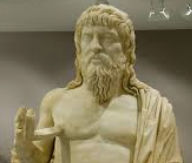
If someone gives money to Apollonius, and the giver is someone considered respectable, he will take the money if he needs it. But he will not accept a fee for philosophy even if he does need it.
▼
Source
Epp. Apoll. 42
5 months ago
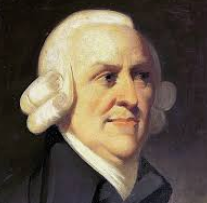
[The Wealth of Nations gave a] scientific backbone to liberal sentiment.
▼
Source
Lord Acton, private notes, quoted in G. E. Fasnacht, Acton's Political Philosophy: An Analysis (1952), p. 145
5 months ago
Nozick’s Theory, in spite of its apparent dedication to self-ownership, cannot escape the conclusion that women’s entitlement rights to those they produce must take priority of persons’ rights to themselves at birth. ... There is nothing about a woman’s production of an infant that does not easily fulfill the conditions of the principle of acquisition as Nozick specifies them.
▼
Source
Susan Moller Okin, Justice, Gender, and the Family, (USA: Basic Books, 1989), p. 82
5 months ago
There is no single speech nor article in which it is not said that the purpose of all these orgies is the peace of Europe. At a dinner given by the representatives of French literature, all breathe of peace. M. Zola, who, a short time previously, had written that war was inevitable, and even serviceable; M. de Vogue, who more than once has stated the same in print, say, neither of them, a word as to war, but speak only of peace. The sessions of Parliament open with speeches upon the past festivities; the speakers mention that such festivities are an assurance of peace to Europe. It is as if a man should come into a peaceful company, and commence energetically to assure everyone present that he has not the least intention to knock out anyone's teeth, blacken their eyes, or break their arms, but has only the most peaceful ideas for passing the evening.
▼
Source
Ch. 1
5 months ago
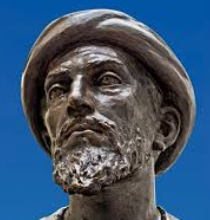
There shall always be much silence in a man's conduct. He shall speak only about a matter concerned with wisdom or matters that are necessary to keep his body alive.
▼
Source
Chapter 2, Section 4, p. 32
5 months ago
There are two laws discrete Not reconciled, Law for man, and law for thing.
▼
Source
Ode: Inscribed to W. H. Channing, st. 9
5 months ago
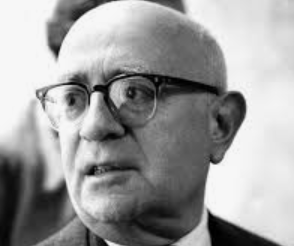
Philosophy ... should not imagine that specialized work in epistemological theory, or whatever else prides itself on being research, is actually philosophy. Yet a philosophy forswearing all of that must in the end be irreconcilably at odds with the dominant consciousness. Nothing else raises it above the suspicion of apologetics. Philosophy that satisfies its own intention, and does not childishly skip behind its own history and the real one, has its lifeblood in the resistance against the common practices of today and what they serve, against the justification of what happens to be the case.
▼
Source
p. 6
5 months ago
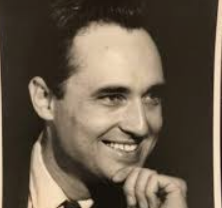
James observed that if one who desires self-knowledge takes exclusively a (supposedly) detached and dispassionate view of oneself, one has already prejudiced what one can be, and, of course, what one can know of oneself.
▼
Source
p. 5
5 months ago
While discussing what it is that makes the “pleasures of wealth and greatness ... strike the imagination as something grand and beautiful,” [Adam Smith] remarks that “in the languor of disease and the weariness of old age” we cease to be so impressed, for we then take note of the fact that the acquisition of wealth and greatness leaves their possessors “always as much, and sometimes more exposed than before, to anxiety, to fear, and to sorrow, to diseases, to danger, and to death” (The Theory of Moral Sentiments IV, chapter I). But to allow our attention to dwell on this is, on Smith’s view, misguided.To do so is to embrace a “splenetic philosophy,” the effect of “sickness or low spirits” upon an imagination “which in pain and sorrow seems to be confined,” so that we are no longer “charmed with the beauty of that accommodation which reigns in the palaces and economy of the great.” The imagination of those “in better health or in better humor” fosters what may, Smith concedes, be no more than seductive illusions about the pleasures of wealth and greatness, but they are economically beneficial illusions. “It is this deception which rouses and keeps in continual motion the industry of mankind.” So even someone as perceptive as Smith, when he does pause to recognize the perspectives of ill health and old age, finds reason at once to put them on one side. And in so doing Smith speaks for moral philosophy in general.
▼
Source
Alasdair MacIntyre, Dependent Rational Animals (1999), p. 2
5 months ago
I know that most men — not only those considered clever, but even those who are very clever and capable of understanding most difficult scientific, mathematical, or philosophic, problems — can seldom discern even the simplest and most obvious truth if it be such as obliges them to admit the falsity of conclusions they have formed, perhaps with much difficulty — conclusions of which they are proud, which they have taught to others, and on which they have built their lives.
▼
Source
Opening to Ch 14. Translation from: What Is Art and Essays on Art (Oxford University Press, 1930, trans. Aylmer Maude) | Variant: I know that most men, including those at ease with problems of the greatest complexity, can seldom accept even the simplest a
5 months ago
It is the function of the intellect to discriminate between the true and the false—a distinction which is applicable to all objects of intellectual perception.
5 months ago
The thing done avails, and not what is said about it. An original sentence, a step forward, is worth more than all the censures.
▼
Source
First Visit to England
5 months ago
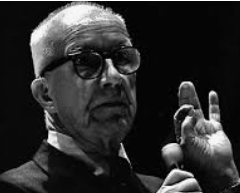
We are not going to be able to operate our spaceship earth successfully nor for much longer unless we see it as a whole spaceship and our fate as common It has to be everybody or nobody. It is very encouraging therefore that you as representatives of the people see tit to bring us together to consider these matters
5 months ago
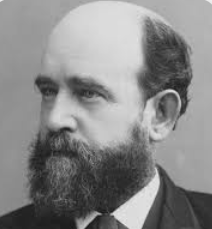
The tax upon land values is, therefore, the most just and equal of all taxes. It falls only upon those who receive from society a peculiar and valuable benefit, and upon them in proportion to the benefit they receive. It is the taking by the community, for the use of the community, of that value which is the creation of the community. It is the application of the common property to common uses. When all rent is taken by taxation for the needs of the community, then will the equality ordained by Nature be attained. No citizen will have an advantage over any other citizen save as is given by his industry, skill, and intelligence; and each will obtain what he fairly earns. Then, but not till then, will labor get its full reward, and capital its natural return.
▼
Source
Book VIII, Ch. 3
5 months ago
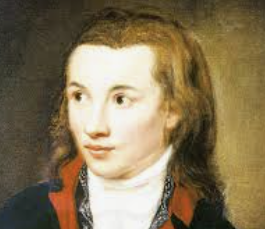
To get to know a truth properly, one must polemicize it.
▼
Source
Quoted in The Viking Book of Aphorisms by Wystan Hugh Auden (1962) p. 323
5 months ago
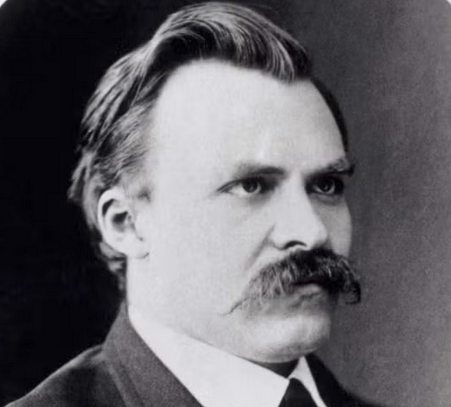
So far no one had had enough courage and intelligence to reveal me to my dear Germans. My problems are new, my psychological horizon frighteningly comprehensive, my language bold and clear; there may well be no books written in German which are richer in ideas and more independent than mine.
▼
Source
Letter to Carl Fuchs (14 December 1887)
5 months ago
As soon as men live entirely in accord with the law of love natural to their hearts and now revealed to them, which excludes all resistance by violence, and therefore hold aloof from all participation in violence — as soon as this happens, not only will hundreds be unable to enslave millions, but not even millions will be able to enslave a single individual.
▼
Source
V
5 months ago
The prophet Isaiah... points out what will be the cause of this change; for he says that hatred, quarrel, and fighting will come to an end, because men will have a true knowledge of God. "They shall not hurt nor destroy in all my holy mountain: for the earth shall be full of the knowledge of the Lord, as the waters which cover the sea" (Isa. xi. ver. 9) Note it.
▼
Source
Ch.11
5 months ago
People seem not to see that their opinion of the world is also a confession of character.
▼
Source
Worship
5 months ago
It is essential to release humanity from the false fixations of yesterday, which seem now to bind it to a rationale of action leading only to extinction.
5 months ago
Stepping out of their proper sphere and arrogating to themselves an authority to which they have no claim, professed teachers of spiritual truths long presumed to deny the truths of the natural sciences. But now professed teachers of the natural sciences, stepping in turn out of their proper sphere and arrogating to themselves an authority to which they have no claim, presume to deny spiritual truths. And there are many, who having discarded an authority often perverted by the influence of dominant wrong, have in its place accepted another authority which in its blank materialism affords as efficient a means for stilling conscience and defending selfish greed as any perversion of religious truth. Mr. Spencer is the foremost representative of this authority. Widely regarded as the scientific philosopher; eulogized by his admirers as the greatest of all philosophers — as the man who has cleared and illuminated the field of philosophy by bringing into it the exact methods of science — he carries to the common mind the weight of the marvelous scientific achievements of our time as applied to the most momentous of problems. The effect is to impress it with a vague belief that modern science has proved the idea of God to be an ignorant superstition and the hope of a future life a vain delusion.
▼
Source
Conclusion : The Moral of this Examination
5 months ago
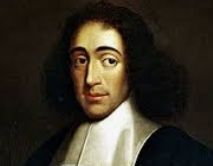
If I had as clear an idea of ghosts, as I have of a triangle or a circle, I should not in the least hesitate to affirm that they had been created by God; but as the idea I possess of them is just like the ideas, which my imagination forms of harpies, gryphons, hydras, &c., I cannot consider them as anything but dreams, which differ from God as totally as that which is not differs from that which is.
▼
Source
Letter to Hugo Boxel (October 1674) The Chief Works of Benedict de Spinoza (1891) Tr. R. H. M. Elwes, Vol. 2, Letter 58 (54).
5 months ago
I shall in no time forget that moment. We felt as if we had had in our souls a clear passing glimpse into this wondrous World.

5 months ago
Rest satisfied with doing well, and leave others to talk of you as they please.
▼
Source
As quoted in The World's Laconics: Or, The Best Thoughts of the Best Authors (1853) by Everard Berkeley | Variant: Rest satisfied with doing well, and leave others to talk of you as they will.
5 months ago
The stronger becomes master of the weaker, in so far as the latter cannot assert its degree of independence — here there is no mercy, no forbearance, even less a respect for "laws."
▼
Source
Sec. 630 (Notebook W I 4. June - July 1885, KGW VII, 3.283, KSA 11.559)
5 months ago
If you want to be happy, be.
▼
Source
Attributed in Wisdom for the Soul : Five Millennia of Prescriptions for Spiritual Healing (2006) by Larry Chang, p. 352; this statement appears in late 20th century inspirational books, but with no known citation to original material by Tolstoy. | This is
5 months ago
First Theory.—There is no Providence at all for anything in the Universe; all parts of the Universe, the heavens and what they contain, owe their origin to accident and chance; there exists no being that rules and governs them or provides for them. This is the theory of Epicurus...
▼
Source
Ch.17
5 months ago
England's genius filled all measure Of heart and soul, of strength and pleasure, Gave to the mind its emperor, And life was larger than before: Nor sequent centuries could hit Orbit and sum of Shakespeare's wit. The men who lived with him became Poets, for the air was fame.
▼
Source
Solution, ll. 35-42
5 months ago
It is now highly feasible to take care of everybody on Earth at a 'higher standard of living than any have ever known.' It no longer has to be you or me. Selfishness is unnecessary and henceforth unrationalizable as mandated by survival... It is a matter of converting the high technology from weaponry to livingry.
5 months ago
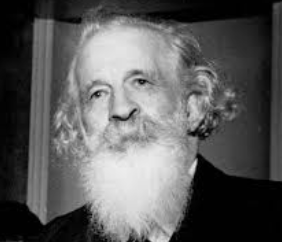
There is no original truth, only original error.
▼
Source
A Retrospective Glance at the Lifework of a Master of Books
5 months ago
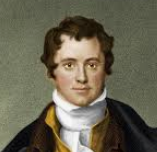
Four days after this was given to the world he took to his bed, and he remained there for nine weeks. Such a blow following hard on the heels of such a triumph aroused the liveliest sympathy. The doors of the Royal Institution were beset by anxious inquirers, and written reports of his condition at various periods of the day had to be posted in the hall.
5 months ago
The true Poet is all-knowing; he is an actual world in miniature.
5 months ago
Above all things reverence thy Self.
▼
Source
Variant translations: | Respect yourself above all. | As quoted in [http://www.sacredscience.com/pythagoras.htm Divine Harmony: The Life and Teachings of Pythagoras] by John Strohmeier and Peter Westbrook. (1999) | Above all things reverence thy self. Abo
5 months ago
You know these things as thoughts, but your thoughts are not your experiences, they are an echo and after-effect of your experiences: as when your room trembles when a carriage goes past. I however am sitting in the carriage, and often I am the carriage itself.
▼
Source
Attributed across social media to TSZ. Is actually quoted in TSZ, Penguin Classics, Reg Hollingdale translation, in the introduction pg 12. Attributed to 'posthumously produced notes' [Nachlass?] Hollingdale continues.' In a man who thinks like this, the
5 months ago
Tolstoy, who among European writers of the nineteenth century probably had the widest access to all sectors of his society, was able to stock War and Peace with an enormous cast of characters and range of situations.
▼
Source
Ruth Wisse The Modern Jewish Canon (2000)
5 months ago
Abraham was the first to teach the Unity of God, to establish the faith, to cause it to remain among coming generations, and to win his fellow-men to his doctrine; as Scripture says of him: "I know him, that he will command,". (Gen. xviii. 19)
▼
Source
Ch.24
5 months ago
Write it on your heart that every day is the best day in the year.
▼
Source
Works and Days
5 months ago
I was convinced in 1927 that humanity's most fundamental survival problems could never be solved by politics.
5 months ago
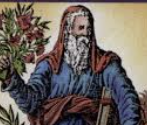
The Pythagoreans thought those who teach for the sake of reward show themselves worse than sculptors, or artists who perform the work sitting. For these, when someone orders wood to make a statue of Hermes, search for wood suited to receive the proper form; while those pretend that they can readily produce the works of virtue from every nature.
5 months ago
A fool is known by his Speech; and a wise man by Silence.
5 months ago
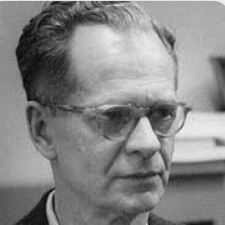
I did not direct my life. I didn't design it. I never made decisions. Things always came up and made them for me. That's what life is.
▼
Source
As quoted in "Unpacking the Skinner Box : Revisiting B. F. Skinner through a Postformal Lens" by Dana Salter in The Praeger Handbook of Education and Psychology Vol. 4 (2008) edited by Joe L. Kincheloe and Raymond A. Horn, Ch. 99, p. 872
5 months ago
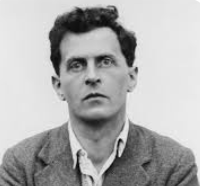
There are two godheads: the world and my independent I. I am either happy or unhappy, that is all. It can be said: good or evil do not exist. A man who is happy must have no fear. Not even in the face of death. Only a man who lives not in time but in the present is happy.
▼
Source
Journal entry (8 July 1916), p. 74e
5 months ago
The depths of the soul are not a faculty, a “power” of the soul, but rather the place where uncreated grace operates, God himself who “works with the soul to such an extent that he frees it from itself, as a creature, so that nothing remains but God and the soul itself, without mediation.”
CivilSimian.com created by AxiomaticPanic, CivilSimian, Kalokagathia