

5 months ago
Men have superior strength of body; but were it not for mistaken notions of beauty, women would acquire sufficient to enable them to earn their own subsistence, the true definitions of independence; and to bear those bodily inconveniences and exertions that are requisite to strengthen the mind. Let us then, by being allowed to take the same exercise as boys, not only during infancy, but youth, arrive at perfection of body, that we may know how far the nation superiority of man extends . For what reason or virtue can be expected from a creature when the seed-time of life is neglected? None; did not the winds of heaven casually scatter many useful seeds in fallow ground.
▼
Source
Ch.5
5 months ago
Scientific revolutions are inaugurated by a growing sense... that an existing paradigm has ceased to function adequately in the exploration of an aspect of nature to which that paradigm itself had previously led the way.
▼
Source
p. 91 (2012 ed.)

5 months ago
The true goal of the bourgeois life, in other words, is not self-enactment, but diversion. Most people need the organised distraction of work (if they can find it). Idleness - the life of the playboy who doesn't answer the phone - is simply too demanding.
▼
Source
[http://www.newstatesman.com/books/2009/04/bourgeois-life-work-botton "A difficult business,"] New Statesman (2009-04-16)
5 months ago
Condemn me if you choose — I do that myself, — but condemn me, and not the path which I am following, and which I point out to those who ask me where, in my opinion, the path is.
▼
Source
"Letter to N.N.," quoted by Havelock Ellis in [http://books.google.com/books?id=xCp6OIGcojMC& "The New Spirit"] (1892) p. 226
5 months ago
The Jewish people and their fate are the living witness for the absence of redemption. This, one could say, is the meaning of the chosen people; the Jews are chosen to prove the absence of redemption.
▼
Source
Jewish Philosophy and the crisis of Modernity : Essays And Lectures in Modern Jewish Thought, p. 327 (1997)
5 months ago
The majority of mankind and people who lack refinement conceive it to be pleasure, and hence they approve a life of sensual enjoyment.
▼
Source
(.Bk 1, Chapter III)

5 months ago
Racism is still a factor both within the gay movement and in the way the gay movement is publicly perceived.
5 months ago
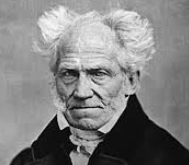
Monotheistic religions alone furnish the spectacle of religious wars, religious persecutions, heretical tribunals, that breaking of idols and destruction of images of the gods, that razing of Indian temples and Egyptian colossi, which had looked on the sun 3,000 years: just because a jealous god had said, 'Thou shalt make no graven image.'

5 months ago
It makes no sense to say that death is the goal of life, but what else is there to say?
5 months ago
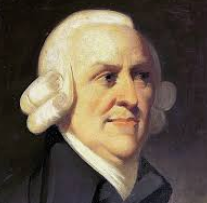
No society can surely be flourishing and happy, of which the greater part of the members are poor and miserable. It is but equity, besides, that they who feed, cloath and lodge the whole body of the people, should have such a share of the produce of their own labour as to be themselves tolerably well fed, clothed, and lodged.
▼
Source
Chapter VIII, p. 94.
5 months ago
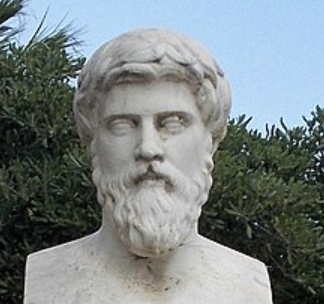
Alcibiades had a very handsome dog, that cost him seven thousand drachmas; and he cut off his tail, "that," said he, "the Athenians may have this story to tell of me, and may concern themselves no further with me."
▼
Source
50 Alcibiades
5 months ago
Much in the study of the paranormal was what we would now call pseudo-science. But the line between science and pseudo-science is smudged and shifting; where it lies seems clear only in retrospect. There is no pristine science untouched by the vagaries of faith.
▼
Source
Foreword: Two Attempts to Cheat Death (p. 5)
5 months ago
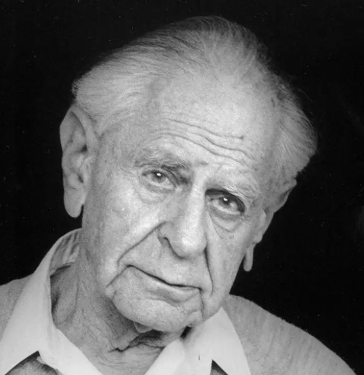
What a monument of human smallness is this idea of the philosopher king. What a contrast between it and the simplicity of humaneness of Socrates, who warned the statesmen against the danger of being dazzled by his own power, excellence, and wisdom, and who tried to teach him what matters most — that we are all frail human beings. What a decline from this world of irony and reason and truthfulness down to Plato's kingdom of the sage whose magical powers raise him high above ordinary men; although not quite high enough to forgo the use of lies, or to neglect the sorry trade of every shaman — the selling of spells, of breeding spells, in exchange for power over his fellow-men.
▼
Source
Vol. 1, Ch 8 "The Philosopher King"
5 months ago
Three days later the little princess was buried, and Prince Andrei went up the steps to where the coffin stood, to give her the farewell kiss. And there in the coffin was the same face, though with closed eyes. "Ah, what have you done to me?" it still seemed to say, and Prince Andrei felt that something gave way in his soul and that he was guilty of a sin he could neither remedy nor forget.
▼
Source
Bk. IV, Ch. 9
5 months ago
Our understanding of the thought of the past is liable to be the more adequate, the less the historian is convinced of the superiority of his own point of view, or the more he is prepared to admit the possibility that he may have to learn something, not merely about the thinkers of the past, but from them.
▼
Source
p. 68
5 months ago
Now the activity of the practical virtues is exhibited in political or military affairs, but the actions concerned with these seem to be unleisurely. Warlike actions are completely so (for no one chooses to be at war, or provokes war, for the sake of being at war; any one would seem absolutely murderous if he were to make enemies of his friends in order to bring about battle and slaughter); but the action of the statesman is also unleisurely, and-apart from the political action itself—aims at despotic power and honours, or at all events happiness, for him and his fellow citizens—a happiness different from political action, and evidently sought as being different. So if among virtuous actions political and military actions are distinguished by nobility and greatness, and these are unleisurely and aim at an end and are not desirable for their own sake, but the activity of reason, which is contemplative, seems both to be superior in serious worth and to aim at no end beyond itself, and to have its pleasure proper to itself (and this augments the activity), and the self-sufficiency, leisureliness, unweariedness (so far as this is possible for man), and all the other attributes ascribed to the supremely happy man are evidently those connected with this activity, it follows that this will be the complete happiness of man, if it be allowed a complete term of life.
▼
Source
Book X, 1177b.6
5 months ago
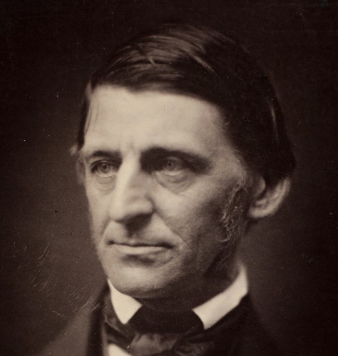
What is a weed? A plant whose virtues have yet to be discovered.
▼
Source
Fortune of the Republic (1878)
5 months ago
For many years and many decades, there have been critiques of, and struggles against, those who insisted that gender as a category was self-contained and self-sufficient and that scholarly inquiry into the construction of gender was possible without attending to race, sexuality, class, disability, and nation.
5 months ago
Our place is somewhere between being and nonbeing — between two fictions.
5 months ago
By the removal of the unnecessary mouths, and by extracting from the farmer the full value of the farm, a greater surplus, or what is the same thing, the price of a greater surplus, was obtained for the proprietor...
▼
Source
Chapter IV, p. 450 (On Highland Clearances).
5 months ago
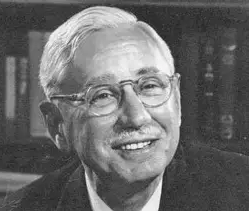
Love one another. My final lesson of history is the same as that of Jesus. You may think that's a lot of lollipop but just try it. Love is the most practical thing in the world. If you take an attitude of love toward everybody you meet, you'll eventually get along.
▼
Source
When asked, at the age of 92, if he could summarize the lessons of history into a single sentence. As quoted in "Durants on History from the Ages, with Love," by Pam Proctor, Parade (6 August 1978) p. 12. Durant is quoting Jesus (from John 13:34) here, an
5 months ago
Lysander, when Dionysius sent him two gowns, and bade him choose which he would carry to his daughter, said, "She can choose best," and so took both away with him.
▼
Source
Of Lysander
5 months ago
In ancient Europe, Stoics asserted that a slave could be freer than a master who suffers from self-division. In China, Daoists imagined a type of sage who responded to the flow of events without weighing alternatives. Disciples of monotheistic faiths have believed something similar: freedom, they say, is obeying God’s will. What those who follow these traditions want most is not any kind of freedom of choice. Instead, what they long for is freedom from choice.
▼
Source
The Faith of Puppets: The Freedom of the Marionette (p. 6-7)
5 months ago
I may illustrate this by two very different examples of human behaviour: that of a man who pushes a child into the water with the intention of drowning it; and that of a man who sacrifices his life in an attempt to save the child. Each of these two cases can be explained with equal ease in Freudian and in Adlerian terms. According to Freud the first man suffered from repression (say, of some component of his Oedipus complex), while the second man had achieved sublimation. According to Adler the first man suffered from feelings of inferiority (producing perhaps the need to prove to himself that he dared to commit some crime), and so did the second man (whose need was to prove to himself that he dared to rescue the child). I could not think of any human behaviour which could not be interpreted in terms of either theory. It was precisely this fact — that they always fitted, that they were always confirmed — which in the eyes of their admirers constituted the strongest argument in favour of these theories. It began to dawn on me that this apparent strength was in fact their weakness.
5 months ago
There was something in her higher than what surrounded her. There was in her the glow of the real diamond among glass imitations. This glow shone out in her exquisite, truly enigmatic eyes. The weary, and at the same time passionate, glance of those eyes, encircled by dark rings, impressed one by its perfect sincerity. Everyone looking into those eyes fancied he knew her wholly, and knowing her, could not but love her.
▼
Source
Anna's thoughts about Liza, Part III, Chapter 13
5 months ago
The Euthyphron is a very paradoxical dialogue. So indeed is every Platonic dialogue.
5 months ago
Humour is the only test of gravity, and gravity of humour. For a subject which would not bear raillery is suspicious; and a jest which would not bear a serious examination is certainly false wit.
▼
Source
Anthony Ashley-Cooper, 3rd Earl of Shaftesbury, Sensus Communis: An Essay on the Freedom of Wit and Humour (1709), Part 1, Sec. 5, incorrectly attributing it to Gorgias via Aristotle.
5 months ago
Blessed are those who have no talent!
▼
Source
February 1850
5 months ago
(Is democracy a good chassis on which to build a political system?) Davis: I believe profoundly in the possibilities of democracy, but democracy needs to be emancipated from capitalism. As long as we inhabit a capitalist democracy, a future of racial equality, gender equality, economic equality will elude us.
5 months ago
What I know wreaks havoc upon what I want.
5 months ago
I have no great faith in political arithmetic, and I mean not to warrant the exactness of either of these computations.
▼
Source
Chapter V, p. 577.
5 months ago
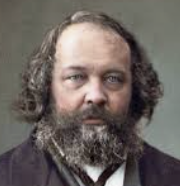
Equality, proclaimed in 1793, has been one of the greatest conquests of the French Revolution. Despite all the reactions which have arrived since, that great principle has triumphed in the political economy of Europe. In the most advanced countries, it is called the equality of politic rights; in the other countries, civil equality — equality before the law. No country in Europe would dare to openly proclaim today the principle of political inequality. But the history of the revolution itself and that of the seventy-five years that have passed since, we prove that political equality without economic equality is a lie. You would proclaim in vain the equality of political rights, as long as society remains split by its economic organization into socially different layers — that equality will be nothing but a fiction.
5 months ago
Nothing should more deeply shame the modern student than the recency and inadequacy of his acquaintance with India. Here is a vast peninsula of nearly two million square miles; two-thirds as large as the United States, and twenty times the size of its master, Great Britain; 320,000,000 souls, more than in all North and South America combined, or one-fifth of the population of the earth; an impressive continuity of development and civilization from Mohenjo-daro, 2900 B.C. or earlier, to Gandhi, Raman and Tagore; faiths compassing every stage from barbarous idolatry to the most subtle and spiritual pantheism; philosophers playing a thousand variations on one monistic theme from the Upanishads eight centuries before Christ to Shankara eight centuries after him; scientists developing astronomy three thousand years ago, and winning Nobel prizes in our own time; a democratic constitution of untraceable antiquity in the villages, and wise and beneficent rulers like Ashoka and Akbar in the capitals; minstrels singing great epics almost as old as Homer, and poets holding world audiences today; artists raising gigantic temples for Hindu gods from Tibet to Ceylon and from Cambodia to Java, or carving perfect palaces by the score for Mogul kings and queens — this is the India that patient scholarship is now opening up, like a new intellectual continent, to that Western mind which only yesterday thought civilization an exclusively European thing.
▼
Source
Ch. XIV : The Foundations of India § I : Scene of the Drama
5 months ago
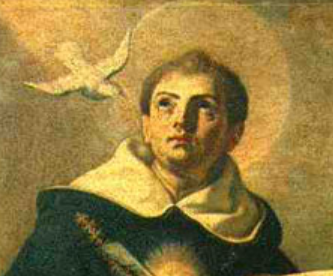
The reason, however, why the philosopher may be likened to the poet is this: both are concerned with the marvellous.
▼
Source
Commentary on the Metaphysics (c. 1270–1272), 1, 3; quoted in Josef Pieper, Leisure, the Basis of Culture (New York, 1952), p. 88

5 months ago
Not only can logos be seen in absolutely all animals, but in many of them it has the groundwork for being perfected.
▼
Source
3, 2, 4
5 months ago
The deepest, the only theme of human history, compared to which all others are of subordinate importance, is the conflict of skepticism with faith.
▼
Source
Johann Wolfgang von Goethe in "Israel in the Desert" (1819)
5 months ago
To say that the activity of science and art helps humanity's progress, if by that activity we mean the activity which now calls itself by those names, is as though one said that the clumsy, obstructive splashing of oars in a boat moving down stream assists the boat's progress. It only hinders it... The proof of this is seen in the confession made by men of science that the achievements of the arts and sciences are inaccessible to the labouring masses on account of the unequal distribution of wealth.

5 months ago
A nobleman is not only a subject, he is the most subordinate of all.
▼
Source
Quoted by Erik von Kuehnelt-Leddihn in The Menace of the Herd (1943), p. 330
5 months ago
Success treads on every right step. For the instinct is sure, that prompts him to tell his brother what he thinks. He then learns, that in going down into the secrets of his own mind, he has descended into the secrets of all minds. He learns that he who has mastered any law in his private thoughts, is master to that extent of all men whose language he speaks, and of all into whose language his own can be translated.
▼
Source
par. 35
5 months ago
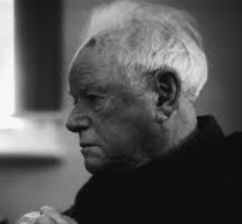
The Five Ways fail principally because it is much more difficult than at first appears to separate them from their background in medieval cosmology. Any contemporary cosmological argument would have to be much more different from the arguments of Aquinas than scholastic modernizations customarily are.
▼
Source
The Five Ways: St. Thomas Aquinas' Proofs of God's Exustence, New York: Routledge (2003), pp. 3-4
5 months ago
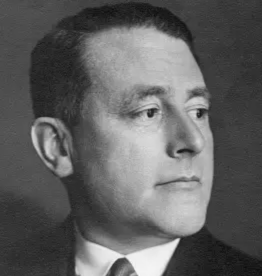
The concept of humanity is an especially useful ideological instrument of imperialist expansion, and in its ethical-humanitarian form it is a specific vehicle of economic imperialism.
5 months ago
But though empires, like all the other works of men, have all hitherto proved mortal, yet every empire aims at immortality.
▼
Source
Chapter II, Part II, p. 896.
5 months ago
Everything about him was colossal, and he was full of exuberance and strength.
▼
Source
Richard Wagner, as quoted in the Introduction to God and the State (1979 Dover edition)
5 months ago
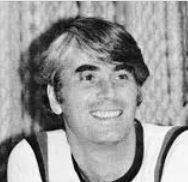
There will not be one kind of community existing and one kind of life led in utopia. Utopia will consist of utopias, of many different and divergent communities in which people lead different kinds of lives under different institutions. Some kinds of communities will be more attractive to most than others; communities will wax and wane. People will leave some for others or spend their whole lives in one. Utopia is a framework for utopias, a place where people are at liberty to join together voluntarily to pursue and attempt to realize their own vision of the good life in the ideal community but where no one can impose his own utopian vision upon others.
▼
Source
Ch. 10 : A Framework for Utopia; The Framework, p. 311
5 months ago
What! all of us, Christians, not only profess to love one another, but do actually live one common life; we whose social existence beats with one common pulse—we aid one another, learn from one another, draw ever closer to one another to our mutual happiness, and find in this closeness the whole meaning of life!—and to-morrow some crazy ruler will say some stupidity, and another will answer in the same spirit, and then I must go expose myself to being murdered, and murder men—who have done me no harm—and more than that, whom I love. And this is not a remote contingency, but the very thing we are all preparing for, which is not only probable, but an inevitable certainty.
▼
Source
Chapter V, Contradiction Between our Life and our Christian Conscience
5 months ago
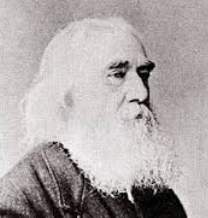
All human legislation is simply and always an assumption of authority and dominion, where no right of authority or dominion exists. It is, therefore, simply and always an intrusion, an absurdity, an usurpation, and a crime.
▼
Source
Section V, p. 13
5 months ago
Nor knowest thou what argument Thy life to thy neighbor's creed has lent: All are needed by each one, Nothing is fair or good alone.
▼
Source
Each and All, st. 1
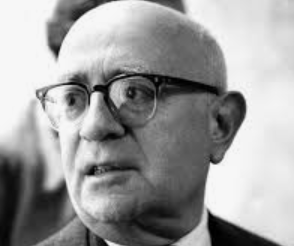
5 months ago
Even the most insensitive hit song enthusiast cannot always escape the feeling that the child with a sweet tooth comes to know in the candy store.
▼
Source
p. 290
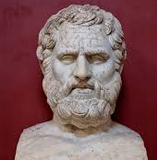
5 months ago
Once he was on a voyage with some impious men, and the vessel was overtaken by a storm; so they began to invoke the assistance of the Gods; on which he said, "Hold your tongues, lest they should find out that you are in this ship."
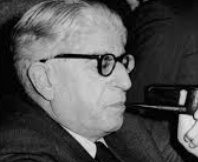
5 months ago
In the same society in which the processes of production and distribution will go on far out at the circumference, the essential human concerns will move to the center, to the end, into the teleological questions of "where to" and "what for."
▼
Source
p. 142
CivilSimian.com created by AxiomaticPanic, CivilSimian, Kalokagathia