
5 months ago
Only lies and evil come from letting people off.
▼
Source
A Severed Head (1961); 1976, p. 61.
5 months ago
Christianity possesses the great advantage over Judaism of being represented as coming from the mouth of the first Teacher not as a statutory but as a moral religion, and as thus entering into the closest relation with reason so that, through reason, it was able of itself, without historical learning, to be spread at all times and among all peoples with the greatest trustworthiness.
▼
Source
Book IV, Part 1, Section 1, “The Christian religion as a learned religion”
5 months ago
Human knowledge and human power meet in one; for where the cause is not known the effect cannot be produced. Nature to be commanded must be obeyed; and that which in contemplation is as the cause is in operation as the rule.
▼
Source
Aphorism 3
5 months ago
Lord Jesus Christ, the birds had nests, the foxes had dens, and you had no place where you could lay your head. You were homeless in the world-yet you yourself were a hiding place, the only place where the sinner could flee. And so even this very day you are a hiding place. When the sinner flees to you, hides himself with you, is hidden in you, he is eternally kept safe, since love hides a multitude of sins. P. 182
5 months ago
We live in and by the law. It makes us what we are: citizens and employees and doctors and spouses and people who own things. It is sword, shield, and menace: we insist on our wage, or refuse to pay our rent, or are forced to forfeit penalties, or are closed up in jail, all in the name of what our abstract and ethereal sovereign, the law, has decreed. And we argue about what it has decreed, even when the books that are supposed to record its commands and directions are silent; we act then as if law had muttered its doom, too low to be heard distinctly. We are subjects of law's empire, liegemen to its methods and ideals, bound in spirit while we debate what we must therefore do.
▼
Source
Law's Empire (1986), Preface
5 months ago
Half of the human race lives in manifest obedience to the lunar rhythm; and there is evidence to show that the psychological and therefore the spiritual life, not only of women, but of men too, mysteriously ebbs and flows with the changes of the moon. There are unreasoned joys, inexplicable miseries, laughters and remorses without a cause. Their sudden and fantastic alternations constitute the ordinary weather of our minds. These moods, of which the more gravely numinous may be hypostasized as gods, the lighter, if we will, as hobgoblins and fairies, are the children of the blood and humours. But the blood and humours obey, among many other masters, the changing moon. Touching the soul directly through the eyes and, indirectly, along the dark channels of the blood, the moon is doubly a divinity.
▼
Source
"Meditation on the Moon"
5 months ago
An inconvenience is only an adventure wrongly considered; an adventure is an inconvenience rightly considered.
▼
Source
"On Running After One's Hat"
5 months ago
The more one presupposes that his own power will suffice him to realize what he desires the more practical is that desire. When I treat a man contemptuously, I can inspire him with no practical desire to appreciate my grounds of truth. When I treat any one as worthless, I can inspire him with no desire to do right.
▼
Source
Part III : Selection on Education from Kant's other Writings, Ch. I Pedagogical Fragments, # 15
5 months ago
Not only must we seek the measure of motions and actions by themselves, but much more in comparison; for this is of excellent use and very general application. Now we find that the flash of a gun is seen sooner than its report is heard... and this is owing it seems to the motion of light being more rapid than that of sound. We find to that visible images are received by the sight faster than they are dismissed; thus the strings of the violin, when struck by the finger, are to appearance doubled and tripled, because the new image is received before the old one is gone; which is also why the reason why rings being spun round look like globes, and a lighted torch, carried hastily at night, seems to have a tail. And it was upon this inequality of motions in point of velocity that Galileo built his theory of flux and reflux of the sea; supposing that the earth revolved faster than the water could follow; and that the water was therefore first gathered in a heap and then fell down, as we see in a basin of water moved quickly. But this he devised upon an assumption which cannot be allowed, viz. that the earth moves; and also without being well informed as to the sexhorary motion of the tide.
▼
Source
Aphorism 46
5 months ago
Life is not a problem to be solved, but a reality to be experienced.
▼
Source
Attributed to Kierkegaard in a number of books, the earliest located on Google Books being the 1976 book Jack Kerouac: Prophet of the New Romanticism by Robert A. Hipkiss, [http://books.google.com/books?id=g_JaAAAAMAAJ&q=%22problem+to+be+solved%22#search_
5 months ago
Man's rights are linked with man's duties, and when they are distorted into extravagant claims for a species of freedom and equality and worldly aggrandizement which human character cannot sustain, they degenerate from rights to vices.
5 months ago
I have tried to show that the Perennial Philosophy and its ethical corollaries constitute a Highest Common Factor, present in all the major religions of the world. To affirm this truth has never been more imperatively necessary than at the present time. There will never be enduring peace unless and until human beings come to accept a philosophy of life more adequate to the cosmic and psychological facts than the insane idolatries of nationalism and the advertising man's apocalyptic faith in Progress towards a mechanized New Jerusalem. All the elements of this philosophy are present, as we have seen, in the traditional religions. But in existing circumstances there is not the slightest chance that any of the traditional religions will obtain universal acceptance. Europeans and Americans will see no reason for being converted to Hinduism, say, or Buddhism. And the people of Asia can hardly be expected to renounce their own traditions for the Christianity professed, often sincerely, by the imperialists who, for four hundred years and more, have been systematically attacking, exploiting, and oppressing, and are now trying to finish off the work of destruction by “educating” them. But happily there is the Highest Common Factor of all religions, the Perennial Philosophy which has always and everywhere been the metaphysical system of prophets, saints and sages. It is perfectly possible for people to remain good Christians, Hindus, Buddhists, or Moslems and yet to be united in full agreement on the basic doctrines of the Perennial Philosophy.
5 months ago
The mind moves by instincts, associations and premonitions and not by fixed dates or completed processes. Action and reaction will occur simultaneously: or the cause actually be found after the effect. Errors will be resisted before they have been properly promulgated: notions will be first defined long after they are dead.
▼
Source
Ch I: The Victorian Compromise and Its Enemies (p. 17)
5 months ago
Kant's questions are so strange and arresting that no one who has once heard them ever forgets them. It is just the reverse with his answers to them: no one can ever remember what these are! And there is a simple reason for this: the questions never get answered at all. Once they have served as an excuse for the darkening of sufficient area of wood-pulp, they just get lost.
▼
Source
David Stove, The Plato Cult and Other Philosophical Follies (1991). Oxford: Blackwell, p. 53.
5 months ago
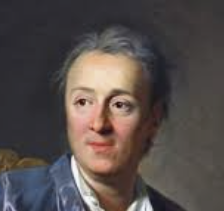
Distance is a great promoter of admiration!
▼
Source
As quoted in Thesaurus of Epigrams: A New Classified Collection of Witty Remarks, Bon Mots and Toasts (1942) by Edmund Fuller

5 months ago
I wish that every human life might be pure transparent freedom.
▼
Source
The Blood of Others [Le sang des autres] (1946)
5 months ago
The man who comes back through the Door in the Wall will never be quite the same as the man who went out. He will be wiser but less cocksure, happier but less self-satisfied, humbler in acknowledging his ignorance yet better equipped to understand the relationship of words to things, of systematic reasoning to the unfathomable Mystery which it tries, forever vainly, to comprehend.
▼
Source
Page 191
5 months ago
Nelson turned his blindest eye On Naples and on liberty.
▼
Source
Blessed are the Peacemakers, st. 3
5 months ago
Poetry must have something in it that is barbaric, vast and wild.

5 months ago
The circle of day and night is the law of the classical world: the most restricted but most demanding of the necessities of the world, the most inevitable but the simplest of the legislations of nature.This was a law that excluded all dialectics and all reconciliation, consequently laying the foundations for the smooth unity of knowledge as well as the uncompromising division of tragic existence. It reigns on a world without darkness, which knows neither effusiveness nor the gentle charms of lyricism. All is waking or dreams, truth or error, the light of being or the nothingness of shadow.
▼
Source
Part Two: 2. The Transcendence of Delirium
5 months ago
It is impossible to do anything for anyone.
▼
Source
p. 317
5 months ago
One Folk, One Realm, One Leader. Union with the unity of an insect swarm. Knowledgeless understanding of nonsense and diabolism. And then the newsreel camera had cut back to the serried ranks, the swastikas, the brass bands, the yelling hypnotist on the rostrum. And here once again, in the glare of his inner light, was the brown insectlike column, marching endlessly to the tunes of this rococo horror-music. Onward Nazi soldiers, onward Christian soldiers, onward Marxists and Muslims, onward every chosen People, every Crusader and Holy War-maker. Onward into misery, into all wickedness, into death!
5 months ago
But every man feels in his heart that the ultimate idea of a world is not bad or even neutral; staring at the sky or the grass or the truths of mathematics or even a new-laid egg, he has a vague feeling like the shadow of that saying of the great Christian philosopher, St. Thomas Aquinas, “Every existence, as such, is good.” On the other hand, something else tells him that it is unmanly and debased and even diseased to minimise evil to a dot or even a blot. He realises that optimism is morbid. It is if possible even more morbid than pessimism.
▼
Source
People's Library Edition (London: Hodder & Stoughton, 1927), pp. 283-284 [https://archive.org/details/everlasting_man/page/n287/mode/2up]
5 months ago
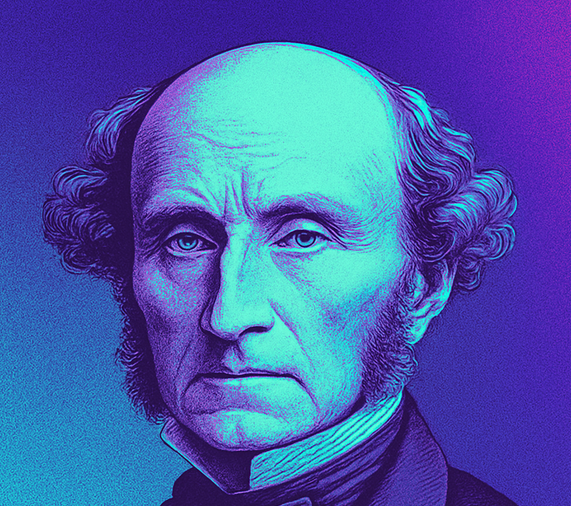
Granted that any practice causes more pain to animals than it gives pleasure to man; is that practice moral or immoral? And if, exactly in proportion as human beings raise their heads out of the slough of selfishness, they do not with one voice answer 'immoral,' let the morality of the principle of utility be for ever condemned.
▼
Source
Dr. Whewell on Moral Philosophy (1852), in Dissertations and Discussions: Political, Philosophical, and Historical, vol. 2, London: John W. Parker and son, 1859, [https://books.google.it/books?id=w-I3AQAAMAAJ&pg=PA485 p. 485]
5 months ago
The world is the house of the strong. I shall not know until the end what I have lost or won in this place, in this vast gambling den where I have spent more than sixty years, dicebox in hand, shaking the dice.
▼
Source
Conclusion
5 months ago
In the old system, the body of the condemned man became the king's property, on which the sovereign left his mark and brought down the effects of his power. Now he will be rather the property of society, the object of a collective and useful appropriation.
▼
Source
Chapter Three, The Gentle Way in Punishment
5 months ago
Defending the truth is not something one does out of a sense of duty or to allay guilt complexes, but is a reward in itself.
▼
Source
As quoted in The Book of Positive Quotations (2007) by John Cook, Steve Deger and Leslie Ann Gibson, p. 525
5 months ago
The fence analogy colorfully conveys why some may be reluctant to embrace radical changes in government institutions, public policies, and social norms. It embodies the insight that stable institutions are hard to create and easy to destroy.
▼
Source
[Jonathan Anomaly], [https://www.psychologytoday.com/intl/blog/sex-and-civilization/202403/ivf-embryo-selection-and-the-case-for-caution IVF, Embryo Selection, and the Case for Caution What we can learn from Chesterton’s Fence.] (August 31, 2024)
5 months ago
To think that because those who wield power in society wield in the end that of government, therefore it is of no use to attempt to influence the constitution of the government by acting on opinion, is to forget that opinion is itself one of the greatest active social forces. One person with a belief is a social power equal to ninety-nine who have only interests.
▼
Source
Ch. I: To What Extent Forms of Government Are a Matter of Choice (p. 155)
5 months ago
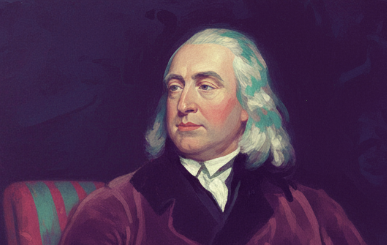
His primary concern was with neither psychology nor ethics, nor was it with "political theory", but with the reform of existing laws by means of a science of law... Bentham considered that both the Common Law and the administration that Parliament was supposed to supervise were incoherent and antiquated, and that systematic examination and comprehensive overhaul were just precisely what were required... To a considerable degree Bentham was adopting towards the legal institutions of his own country much the attitude that the rationalist Philosophes were adopting towards the whole of the social institutions of France.
▼
Source
Wilfrid Harrison, 'Introduction', Jeremy Bentham, A Fragment on Government and An Introduction to the Principles of Morals and Legislation (1948), pp. xviii, xxiii
5 months ago
Maybe the target nowadays is not to discover what we are but to refuse what we are.
▼
Source
p. 785

5 months ago
If generation were in a straight line only, and there were no compensation or circle in nature, no turn or return into one another, then you know that all things would at last have the same form and pass into the same state, and there would be no more generation of them.

5 months ago
When I was a little girl, my parents would say Puerto Rico can't be free because we would be poor like Cuba and poor like Haiti. Out of the fear of becoming poor we didn't dare to become free. Then a hurricane comes, devastates everything, and maybe we are as poor as Cuba and Haiti, but we are not free.
▼
Source
On the aftermath of Hurricane Maria [https://www.elnuevodia.com/entretenimiento/cultura/notas/giannina-braschi-profeta-literaria-de-su-tierra/] (El Nuevo Dia, Puerto Rico, July 23, 2018)
5 months ago
It appears... that a work similar in its object and general conception to that of Adam Smith, but adapted to the more extended knowledge and improved ideas of the present age, is the kind of contribution which Political Economy at present requires. The Wealth of Nations is in many parts obsolete, and in all, imperfect. Political Economy... has grown up almost from infancy since the time of Adam Smith; and the philosophy of society... has advanced many steps beyond the point at which he left it.
▼
Source
Preface (1848)
5 months ago
In "On the Peace"... in 355 B.C., Isocrates... argues that depraved orators "flatterers"... only say what the people desire to hear. ... The honest orator... is courageous enough, to oppose the demos. He has a critical and pedagogical role... to transform the will of the citizens so that they will serve the best interests of the city. ...Opposition between the people's will and the city's best interests is fundamental to Isocrates' criticism of the democratic institutions of Athens. ...He concludes ...it is not ...possible to be heard in Athens if one does not parrot the demos' will ...the only ...speakers left who have an audience are "reckless orators" and "comic poets" ...
5 months ago
[One of the company... said: ...is not this the direct contrary of what we admitted before—that out of the greater came the less and out of the less the greater, and that opposites are simply generated from opposites; whereas now this seems to be utterly denied.] ...then we were speaking of opposites in the concrete, and now of the essential opposite which, as is affirmed, neither in us nor in nature can ever be at variance with itself... these essetial opposites will never, as we maintain, admit of generation into or out of one another.

5 months ago
In the eyes of authority – and maybe rightly so – nothing looks more like a terrorist than the ordinary man.
▼
Source
What is an Apparatus?: And Other Essays (2009), Stanford University Press, p. 35.
5 months ago
The world would be astonished if it knew how great a proportion of its brightest ornaments—of those most distinguished even in popular estimation for wisdom and virtue—are complete sceptics in religion...
▼
Source
([https://archive.org/details/autobiography01mill/page/45/mode/1up p. 45])
5 months ago
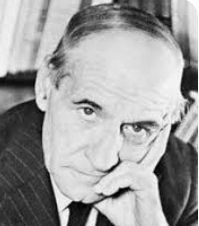
Liberalism — it is well to recall this today—is the supreme form of generosity; it is the right which the majority concedes to minorities and hence it is the noblest cry that has ever resounded in this planet. It announces the determination to share existence with the enemy; more than that, with an enemy which is weak. It was incredible that the human species should have arrived at so noble an attitude, so paradoxical, so refined, so acrobatic, so anti-natural. Hence, it is not to be wondered at that this same humanity should soon appear anxious to get rid of it. It is a discipline too difficult and complex to take firm root on earth.
▼
Source
Chap. VIII: The Masses Intervene In Everything, And Why Their Intervention Is Solely By Violence
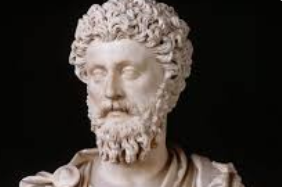
5 months ago
Waste not the remnant of thy life in those imaginations touching other folk, whereby thou contributest not to the common weal.
▼
Source
III, 4
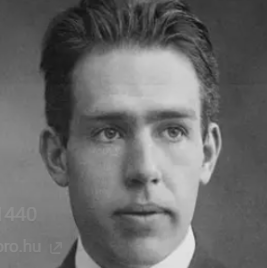
5 months ago
I feel very much like Dirac: the idea of a personal God is foreign to me. But we ought to remember that religion uses language in quite a different way from science. The language of religion is more closely related to the language of poetry than to the language of science. True, we are inclined to think that science deals with information about objective facts, and poetry with subjective feelings. Hence we conclude that if religion does indeed deal with objective truths, it ought to adopt the same criteria of truth as science. But I myself find the division of the world into an objective and a subjective side much too arbitrary. The fact that religions through the ages have spoken in images, parables, and paradoxes means simply that there are no other ways of grasping the reality to which they refer. But that does not mean that it is not a genuine reality. And splitting this reality into an objective and a subjective side won't get us very far.
5 months ago
There is only one good, knowledge, and one evil, ignorance.
▼
Source
Variant: The only good is knowledge and the only evil is ignorance. | [http://www.perseus.tufts.edu/hopper/text?doc=D.+L.+2.5.31&fromdoc=Perseus%3Atext%3A1999.01.0257#note-link14 Socrates II: xxxi]. Original Greek: ἓν μόνον ἀγαθὸν εἶναι, τὴν ἐπιστήμην, κα
5 months ago
In the old system Society is governed essentially by men; in the new it is governed only by principles
▼
Source
Org, IV, 197, as quoted from E.Durkheim, Socialism and Saint-Simon (1958)
5 months ago
The experiences of this period had two very marked effects on my opinions and character. In the first place, they led me to adopt a theory of life, very unlike that on which I had before acted, and having much in common with what at that time I certainly had never heard of, the anti-self-consciousness theory of Carlyle.
▼
Source
([https://archive.org/details/autobiography01mill/page/141/mode/1up pp. 141-142])
5 months ago
Man must not only make himself: the weightiest thing he has to do is to determine what he is going to be. He is causa sui to the second power.
▼
Source
As quoted in Existentialism from Dostoevsky to Sartre, p. 155
5 months ago
That which makes the man no worse than he was makes his life no worse: it has no power to harm, without or within.
▼
Source
IV, 8
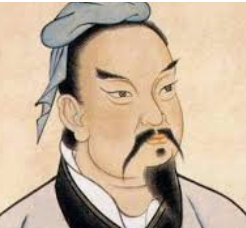
5 months ago
In war, numbers alone confer no advantage. Do not advance relying on sheer military power.

5 months ago
To repel one's cross is to make it heavier.
▼
Source
Variant translation: To shun one's cross is to make it heavier.
5 months ago
Wisdom and contrivance are shown in overcoming difficulties, so there is no place for them in a Being for whom no difficulties exist
▼
Source
pages 176-177; Early Modern Texts page 16
5 months ago
Deem not life a thing of consequence. For look at the yawning void of the future, and at that other limitless space, the past.
▼
Source
IV, 50
CivilSimian.com created by AxiomaticPanic, CivilSimian, Kalokagathia