
5 months ago
The fact that laws were given to man, both affirmative and negative, supports the principle, that God's knowledge of future events does not change their character. The great doubt that presents itself to our mind is the result of the insufficiency of our intellect.
▼
Source
Ch.20
5 months ago
A ruddy drop of manly blood The surging sea outweighs, The world uncertain comes and goes; The lover rooted stays.
▼
Source
Friendship
5 months ago
It seemed that the time would come evolutionarily when humans might have acquired enough knowledge of generalized principles to permit a graduation from class-two (entropically selfish) evolution into class-one (syntropically cooperative) evolution, thereafter making all the right moves for all the right reasons.
▼
Source
Pg. 246

5 months ago
Wind indeed increases fire, but custom love.
▼
Source
"Pythagorean Ethical Sentences From Stobæus" (1904)
5 months ago
Let men be happy, informed, skillful, well behaved, and productive.
▼
Source
Freedom and the control of men (1955/1956) American Scholar, 25 (1), 47-65
5 months ago
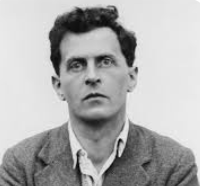
I work quite diligently and wish that I were better and smarter. And these both are one and the same.
▼
Source
In a letter to Paul Engelmann (1917) as quoted in The Idea of Justice (2010) by Amartya Sen, p. 31
5 months ago
The custom which was in those days general among all men, and the general mode of worship in which the Israelites were brought up, consisted in sacrificing animals in those temples which contained certain images to bow down to those images, and to burn incense before them; religious and ascetic persons were in those days the persons that were devoted to the service in the temples erected to the stars... It was in accordance with the wisdom and plan of God, as displayed in the whole Creation, that He did not command us to give up and to discontinue all these manners of service, for to obey such a commandment it would have been contrary to the nature of man, who generally cleaves to that to which he is used... By this Divine plan it was effected that the traces of idolatry were blotted out, and the truly great principle of our faith, the existence and Unity of God, was firmly established; this result was thus obtained without deterring or confusing the minds of the people by the abolition of the service to which they were accustomed and which alone was familiar to them.
▼
Source
Ch.32
5 months ago
Never read any book that is not a year old.
▼
Source
Books
5 months ago
The dark ages still reign over all humanity, and the depth and persistence of this domination are only now becoming clear. This Dark Ages prison has no steel bars, chains, or locks. Instead, it is locked by misorientation and built of misinformation. Caught up in a plethora of conditioned reflexes and driven by the human ego, both warden and prisoner attempt meagerly to compete with God. All are intractably skeptical of what they do not understand. We are powerfully imprisoned in these Dark Ages simply by the terms in which we have been conditioned to think.
5 months ago
Envy has been, is, and shall be, the destruction of many. What is there, that Envy hath not defamed, or Malice left undefiled? Truly, no good thing.
5 months ago
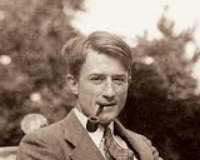
The limits of my language mean the limits of my world.
▼
Source
Variant translations: | The limits of my language stand for the limits of my world. | The limits of my language are the limits of my mind. All I know is what I have words for. | Original German: Die Grenzen meiner Sprache bedeuten die Grenzen meiner Welt.
5 months ago
The predicament of our time is that the Rationalists have been at work so long on their project of drawing off the liquid in which our moral ideals were suspended (and pouring it away as worthless) that we are left only with the dry and gritty residue which chokes us as we try to take it down. First, we do our best to destroy parental authority (because of its alleged abuse), then we sentimentally deplore the scarcity of 'good homes', and we end by creating substitutes which complete the work of destruction. And it is for this reason that, among much else that is corrupt and unhealthy, we have the spectacle of a set of sanctimonious, rationalist politicians, preaching an ideology of unselfishness and social service to a population in which they and their predecessors have done their best to destroy the only living root of moral behaviour; and opposed by another set of politicians dabbling with the project of converting us from Rationalism under the inspiration of a fresh rationalization of our political tradition.
5 months ago
To live without duties is obscene.
▼
Source
Aristocracy
5 months ago
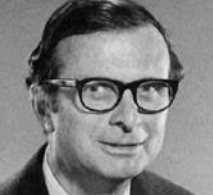
O.R.'s initial development began in the United Kingdom during World War II and was quickly taken up in the United States. This start took place in a military context. After the war O.R. moved into business, industry and civil government. This movement was slower in the United States than in the United Kingdom but in 1951 industrial O.R. took hold in this country and has since developed very rapidly.
▼
Source
p. 3

5 months ago
Freddie became so much nicer after he died. He was not nearly so boastful. He took an interest in other people.
▼
Source
[http://www.guardian.co.uk/news/2003/jul/23/guardianobituaries.books Dee Wells], his widow, on his changed dispositions after his near-death experience in June 1988, as quoted in "Did atheist philosopher see God when he 'died'?" by William Cash, in Nation

5 months ago
Look now, this is the starting point of philosophy: the recognition that different people have conflicting opinions, the rejection of mere opinion so that it comes to be viewed with mistrust, an investigation of opinion to determine whether it is rightly held, and the discovery of a standard of judgement, comparable to the balance that we have devised for the determining of weights, or the carpenter's rule for determining whether things are straight or crooked.
▼
Source
Book II, ch. 11, § 13.
5 months ago
The apparently ancient reports of the importance of Pythagoras and his pupils in laying the foundations of mathematics crumble on touch, and what we can get hold of is not authentic testimony by the efforts latecomers to paper over a crack, which they obviously found surprising, by the use of various kinds of reconstruction and reinterpretation. On the other hand, there are ancient and unassailable indications of a Greek mathematics antedating Pythagoras and quite outside his sphere of influence.
▼
Source
Walter Burkert, Lore and Science in Ancient Pythagoreanism (1972)
5 months ago
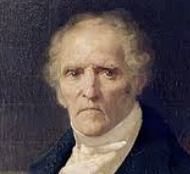
There is no idea more novel, more surprising, than that of associating three hundred families of different degrees of fortune, knowledge and capacity.
▼
Source
The Theory of Social Organization. Harmonian Man: Selected Writings of Charles Fourier, p. 5.
5 months ago
What makes a subject difficult to understand — if it is significant, important — is not that some special instruction about abstruse things is necessary to understand it. Rather it is the contrast between the understanding of the subject and what most people want to see. Because of this the very things that are most obvious can become the most difficult to understand. What has to be overcome is not difficulty of the intellect but of the will. [Nicht eine Schwierigkeit des Verstandes, sondern des Willens ist zu überwinden.]
▼
Source
Ch. 9 : Philosophy (chapters 86–93 of the so called Big Typescript), p. 161 | Corresponding to TS 213, Kapitel 86

5 months ago
Foster peace in your own life and then apply the Art to all that you encounter.
5 months ago
His heart was as great as the world, but there was no room in it to hold the memory of a wrong.
▼
Source
Greatness
5 months ago
A system may actually exist as a natural aggregation of component parts found in Nature, or it may be a man-contrived aggregation – a way of looking at a problem which results from a deliberate decision to assume that a set of elements are related and constitute such a thing called ‘a system.
▼
Source
C. West Churchman, , I. Auerbach, and Simcha Sadam (1975) Thinking for Decisions Deduction Quantitative Methods. Science Research Associates. cited in: John P. van Gigch (1978) Applied General Systems Theory. Harper & Row Publishers
5 months ago
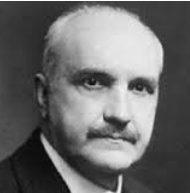
Fashion is something barbarous, for it produces innovation without reason and imitation without benefit.
▼
Source
Ch. VII
5 months ago
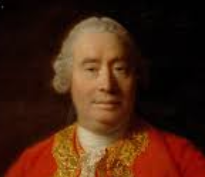
At present they [philosophers] seem to be in a very lamentable condition, and such as the poets have given us but a faint notion of in their descriptions of the punishment of Sisyphus and Tantalus. For what can be imagin'd more tormenting, than to seek with eagerness, what for ever flies us; and seek for it in a place, where 'tis impossible it can ever exist?
▼
Source
Part 4, Section 3
5 months ago
Remember that it is not he who gives abuse or blows who affronts, but the view we take of these things as insulting. When, therefore, any one provokes you, be assured that it is your own opinion which provokes you. (20).
5 months ago
Personal religion is derived from ecstasy, theology from mathematics, and both are to be found in Pythagoras.
▼
Source
Bertrand Russell, in A History of Western Philosophy (1945), Book One, Part I, Chapter III, Pythagoras, p. 36
5 months ago
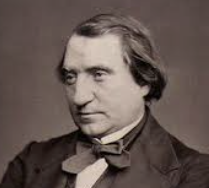
All agreed in rejecting that blasphemy, that Greece was ever a province of Asia, that the Greek spirit, so free, so objective, so limpid, could contain any element of the vague and obscure spirit of the Orient.
▼
Source
“Des Religions de l’antiquité et leurs derniers historiens”, Mondes, vol. 23, no. 2 (1853) p. 835, quoted in Suzanne L. Marchand, German Orientalism in the Age of Empire: Religion, Race, and Scholarship (Cambridge University Press, 2009)
5 months ago
My aim is: to teach you to pass from a piece of disguised nonsense to something that is patent nonsense.
▼
Source
§ 464

5 months ago
I have already indicated to you the meaning of the word religion, as applied to Islam. The truth is that Islam is not a Church. It is a State conceived as a contractual organism long before Rousseau ever thought of such a thing, and animated by an ethical ideal which regards man not as an earth-rooted creature, defined by this or that portion of the earth, but as a spiritual being understood in terms of a social mechanism, and possessing rights and duties as a living factor in that mechanism.
▼
Source
Sir Muhammad Iqbal’s 1930 Presidential Address to the 25th Session of the All-India Muslim League, Allahabad, 29 December 1930 (from [http://www.columbia.edu/itc/mealac/pritchett/00islamlinks/txt_iqbal_1930.html University of Columbia website])
5 months ago
To laugh often and much; To win the respect of intelligent people and the affection of children; To earn the appreciation of honest critics and endure the betrayal of false friends; To appreciate beauty, to find the best in others; To leave the world a bit better, whether by a healthy child, a garden patch or a redeemed social condition; To know even one life has breathed easier because you have lived. This is to have succeeded.
▼
Source
Widely attributed to Emerson on the internet, this actually originates with [http://www.cas.sc.edu/engl/emerson/Ephemera/Success.html "What is Success?"] by Bessie Anderson Stanley in Heart Throbs Volume Two (1911) edited by Joseph Mitchell Chapple.
5 months ago
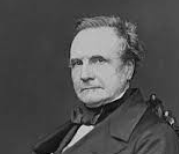
If we look at the fact, we shall find that the great inventions of the age are not, with us at least, always produced in universities. The doctrines of "definite proportions," and of the "chemical agency of electricity,"—principles of a high order, which have immortalized the names of their discoverers,—were not produced by the meditations of the cloister: nor is it in the least a reproach to those valuable institutions to mention truths like these. Fortunate circumstances must concur, even to the greatest, to render them eminently successful. It is not permitted to all to be born, like Archimedes, when a science was to be created; nor, like Newton, to find the system of the world "without form and void;" and, by disclosing gravitation, to shed throughout that system the same irresistible radiance as that with which the Almighty Creator had illumined its material substance. It can happen to but few philosophers, and but at distant intervals, to snatch a science, like Dalton, from the chaos of indefinite combination, and binding it in the chains of number, to exalt it to rank amongst the exact. Triumphs like these are necessarily "few and far between;", nor can it be expected that that portion of encouragement, which a country may think fir to bestow on science, should be adapted to meet such instances. Too extraordinary to be frequent, they must be left, if they are to be encouraged at all, to some direct interference of the governemeɳt. The dangers to be apprehended from such a specific interference, would arise from one, or several of the following circumstance:—That class of society, from whom the government is selected, might not possess sufficient knowledge either to judge themselves, or know upon whose judgment to rely. Or the number of persons devoting themselves to science, might not be sufficiently large to have due weight in the expression of public opinion. Or, supposing this class to be large, it might not enjoy, in the estimation of the world, a sufficiently high character for independence. Should these causes concur in any country, it might become highly injurious to commit the encouragement of science to any department of the government. This reasoning does not appear to have escaped the penetration of those who advised the abolition of the late Board of Longitude.The question whether it is good policy in the government of a country to encourage science, is one of which those who cultivate it are not perhaps the most unbiased judges. In England, those who have hitherto pursued science, have in general no very reasonable grounds of complaint; they knew, or should have known, that there was no demand for it, that it led to little honour, and to less profit.That blame has been attributed to the government for not fostering the science of the country is certain; and, as far as regards past administrations, is, to a great extent, just; with respect to the present ministers, whose strength essentially depends on public opinion, it is not necessary that they should precede, and they cannot remain long insensible to any expression of the general feeling. But supposing science were thought of some importance by any administration, it would be difficult in the present state of things to do much in its favour; because, on the one hand, the higher classes in general have not a profound knowledge of science, and, on the other, those persons whom they have usually consulted, seem not to have given such advice as to deserve the confidence of government. It seems to be forgotten, that the money allotted by government to purposes of science ought to be expended with the same regard to prudence and economy as in the disposal of money in the affairs of private life.
▼
Source
[http://www.gutenberg.org/files/1216/1216-h/1216-h.htm p. 21]
5 months ago
Liberal philosophy, at this point, ceases to be empirical and British in order to become German and transcendental. Moral life, it now believes, is not the pursuit of liberty and happiness of all sorts by all sorts of different creatures; it is the development of a single spirit in all life through a series of necessary phases, each higher than the preceding one. No man, accordingly, can really or ultimately desire anything but what the best people desire. This is the principle of the higher snobbery; and in fact, all earnest liberals are higher snobs.
▼
Source
"The Irony of Liberalism"

5 months ago
In a word, the mass of the people counts for nothing in every political creation. A people even respects a government only because it is not its own creation. This feeling is engraved on its heart in profound characters. It submits to sovereignty because it senses that it is something sacred it can neither create nor destroy. If, as a consequence of corruption and perfidious suggestions, this preventive sentiment is somehow effaced, if it has the misfortune of believing itself called as a body to reform the State, all is lost. This is why, even in free States, it is extremely important that the men who govern be separated from the mass of the people by that personal respect stemming from birth and wealth.
▼
Source
p. 73
5 months ago
Hypothetical liberty is allowed to everyone who is not a prisoner and in chains
▼
Source
§ 8.23
5 months ago
At the dawn of our century, scientists were proclaiming that our understanding of the world was almost complete. Only one or two small problems in physics remained to be solved. One of these problems had to do with black body radiation and was solved by Max Planck. His solution, however, formed the foundation for quantum mechanics which was to sweep aside almost the whole edifice of fundamental assumptions in physics, and with it our understanding of the world. A hundred years later we are faced with a similar situation. The mechanistic viewpoint that began to dominate our world view in the seventeenth century has almost completed its hegemony. This paradigm, as historian Hugh Kearney points out, stems from only one of three main systems of thought that flowed from Greek thought into the modern world, each of which has dominated our world view at different points in our history. … In spite of the dominance of mechanistic thought in the contemporary world, a perplexing residue of the magical tradition still survives in the form of several issues, solutions to which do not appear possible within the context of a purely mechanical view of the world.
5 months ago
A confession has to be part of your new life.
▼
Source
p. 18e

5 months ago
The primordial forms of all sciences, taken back beyond the rise of writing, lie ultimately in the magic of prehistory. Just as modern man wants to indicate what consequences his actions will have, so also a man who grows up in the magical way of life seeks to find a ground for everything and to find consequences of his action. Magic as a more or less clearly formulated system of tenets shot through with emotional elements, can become independent only when magicians, acting as specialists, proclaim the consequences of certain customs, either esoterically,. e.g. at certain rituals, or exoterically as popular education. The magicians tell what cases are to count as 'equal', and when certain measures shall be used (if we think them ineffective, we call them ceremonies).
▼
Source
p. 319
5 months ago
American self-confidence, Emerson argued, should be grounded not in a narrow chauvinistic claim about the superiority of the American way but rather in a mature affirmation of America's gifts to the world as well as candid acknowledgment of the "most un-handsome part of our condition." Cheap American patriotism not only reflects an immaturity and insecurity, he warned, but also is an adolescent defense mechanism that reveals a fear to engage the world and learn from others. Narrow nationalism is a handmaiden of imperial rule, he argues-it keeps the populace deferential and complacent. Hence it abhors critics and dissenters like Emerson who unsettle and awaken the people. His shining example of democratic intellectual work is a challenge to us today. This challenge has been taken up through the years by a stream of Emersonian voices-from Walt Whitman to William James, Gertrude Stein. W. E. B. Du Bois, and Muriel Rukeyser.
▼
Source
Cornel West Democracy Matters: Winning the Fight Against Imperialism (2004)
5 months ago
Errors using inadequate data are much less than those using no data at all.
▼
Source
Quoted in William Kenneth Richmond (1969), The Education Industry. | May be modern paraphrase of "the errors which arise from the absence of facts" quote above.
5 months ago
Religions are not true or false, but better or worse.
▼
Source
This statement is presented in quotes in The Philosophy of Religion and Advaita Vedanta (2008) by Arvind Sharma, p. 216, as a "Santayanan point", but earlier publications by the same author, such as in A Primal Perspective on the Philosophy of Religion (
5 months ago
What are we, weak and blind human beings! And what is that flickering light we call Reason? When we have calculated all the probabilities, questioned history, satisfied every doubt and special interest, we may still embrace only a deceptive shadow rather than the truth. What decree has He pronounced on the king, on his dynasty, on his family, on France, and on Europe? Where and when will the troubles end, and by how many misfortunes must we purchase our tranquillity? Is it to build that He has overthrown, or are our hardships to last forever? Alas! A dark cloud hides the future and no eye can penetrate its shadows.
▼
Source
Chapter VIII, p. 76
5 months ago
In all ages of the world, priests have been enemies to liberty; and it is certain, that this steady conduct of theirs must have been founded on fixed reasons of interest and ambition. Liberty of thinking, and of expressing our thoughts, is always fatal to priestly power, and to those pious frauds, on which it is commonly founded; and, by an infallible connexion, which prevails among all kinds of liberty, this privilege can never be enjoyed, at least has never yet been enjoyed, but in a free government.
▼
Source
Part I, Essay 9: Of The Parties of Great Britain
5 months ago
Don't for heaven's sake, be afraid of talking nonsense! But you must pay attention to your nonsense.
▼
Source
p. 56e

5 months ago
The need for a new life becomes apparent. The code of established morality, that which governs the greater number of people in their daily life, no longer seems sufficient. What formerly seemed just is now felt to be a crying injustice. The morality of yesterday is today recognized as revolting immorality. The conflict between new ideas and old traditions flames up in every class of society, in every possible environment, in the very bosom of the family. … Those who long for the triumph of justice, those who would put new ideas into practice, are soon forced to recognize that the realization of their generous, humanitarian and regenerating ideas cannot take place in a society thus constituted; they perceive the necessity of a revolutionary whirlwind which will sweep away all this rottenness, revive sluggish hearts with its breath, and bring to mankind that spirit of devotion, self-denial, and heroism, without which society sinks through degradation and vileness into complete disintegration.
5 months ago
I have actually seen a cow escape from the well-grazed paddock in which she had long been kept, and promptly put her head back through the wire fence and begin grazing inside her former prison.
▼
Source
Darwinian Fairytales, 1995.
5 months ago
All the science in the world began in temples, and the first astronomers especially were priests. I do not say that it necessary to begin again with the antique initiation, and to change the presidents of our academies into hierophants, but I say that all things begin again as they began, that they all carry an original principle that modifies itself according to the different character of nations and the progressive advance of the human mind, but which however always shows itself in one way or another. Priests have preserved everything, brooded over everything, and taught us everything.
▼
Source
p. 283
5 months ago
And why should man, added he, pretend to an exemption from the lot of all other animals? The whole earth, believe me, PHILO, is cursed and polluted. A perpetual war is kindled amongst all living creatures. Necessity, hunger, want, stimulate the strong and courageous: Fear, anxiety, terror, agitate the weak and infirm. The first entrance into life gives anguish to the new-born infant and to its wretched parent: Weakness, impotence, distress, attend each stage of that life: and it is at last finished in agony and horror.
▼
Source
Demea to Philo, Part X
5 months ago
My wife gave him some Swiss cheese and rye bread for lunch, which he greatly liked. Thereafter he more or less insisted on eating bread and cheese at all meals, largely ignoring the various dishes that my wife prepared. Wittgenstein declared that it did not much matter to him what he ate, so long as it always remained the same. When a dish that looked especially appetizing was brought to the table, I sometimes exclaimed "Hot Ziggety!" — a slang phrase that I learned as a boy in Kansas. Wittgenstein picked up this expression from me. It was inconceivably droll to hear him exclaim "Hot Ziggety!" when my wife put the bread and cheese before him.
▼
Source
Norman Malcolm, in Ludwig Wittgenstein : A Memoir (1966), p. 85
5 months ago
The uncertainty of Socialists themselves concerning the organization of the society they are wishing for, paralyses their energy up to a certain point.At the beginning, in the forties, Socialism presented itself as Communism, as a republic one and indivisible, as a governmental and Jacobin dictatorship, in its application to economics. Such was the ideal of that time. Religious and freethinking Socialists were equally ready to submit to any strong government, even an imperial one, if that government would only remodel economic relations to the worker's advantage.A profound revolution has since been accomplished, especially among Latin and English peoples. Governmental Communism, like theocratic Communism, is repugnant to the worker.

5 months ago
Often when he was looking on at auctions he would say, "How many things there are which I do not need!"
▼
Source
Socrates, 10.
CivilSimian.com created by AxiomaticPanic, CivilSimian, Kalokagathia