
5 months ago
I have composed this work neither for the common people, nor for beginners, nor for those who occupy themselves only with the Law as it is handed down without concerning themselves with its principles. The design of this work is rather to promote the true understanding of the real spirit of the Law, to guide those religious persons who, adhering to the Torah, have studied philosophy and are embarrassed by the contradictions between the teachings of philosophy and the literal sense of the Torah.
▼
Source
As quoted in [http://www.jewishencyclopedia.com/view.jsp?artid=905&letter=M The Jewish Encyclopedia (12 vols. 1901-1906)]

5 months ago
When nature removes a great man, people explore the horizon for a successor; but none comes, and none will. His class is extinguished with him. In some other and quite different field the next man will appear.
▼
Source
Uses of Great Men
5 months ago
We cannot think any true thought unless we want the true. Thinking is itself an aspect of practice.
▼
Source
p. 45
5 months ago
The opposite of nature is impossible.
▼
Source
Public lecture at Columbia University (Spring 1965), quoted in [http://www.pbs.org/wnet/americanmasters/r-buckminster-fuller-about-r-buckminster-fuller/599/ "Buckminster Fuller: Thinking Out Loud" at PBS (12 December 2001)]
5 months ago
In generating the first ever systematic account of the market mechanism in commercial society, Smith's political economy drew not only on his critical reflections of the unsytematic nature of earlier economic writing, but equally on his didactic revisions of earlier natural law and natural jurisprudence traditions as well as the empirically suggestive but unsystematic historical inductive method of tracing the progress of civil society previously introduced by thinkers such as the great Montesquieu. These revisions can be linked directly to Smith's political thinking. It may be questioned whether Adam Smith can be said to have developed a political theory. Certainly, it has been and yet remains a subject of debate. Unquestionably, however, Smith isolated important political concerns and made political conceptual contributions which he linked systematically to his theory of commercial society and the conduct of the market.
▼
Source
Shannon C. Stimson, "Classical Political Economy", in Coole, Diana H.; Gibbons, Michael; Ellis, Elisabeth et al., The encyclopedia of political thought (2014)
5 months ago
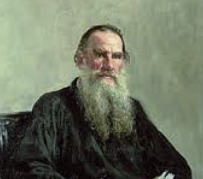
King Esarhaddon was thinking how he should execute Lailie, when suddenly he heard a rustling near his bed, and opening his eyes saw an old man with a long gray beard and mild eyes. You wish to execute Lailie? asked the old man. Yes, answered the King. But I cannot make up my mind how to do it. But you are Lailie, said the old man. That's not true, replied the King. Lailie is Lailie, and I am I. You and Lailie are one, said the old man. You only imagine you are not Lailie, and that Lailie is not you.... You cannot destroy his life.
▼
Source
Part VII: Stories Given to Aid Persecuted Jews (1903) Esarhaddon, King of Assyria
5 months ago
The knowledge of God, the formation of ideas, the mastery of desire and passion, the distinction between that which is to be chosen and that which is to be rejected, all these man owes to his form...
▼
Source
Ch.8
5 months ago
If a man own land, the land owns him.
▼
Source
Wealth
5 months ago
Up to the Twentieth Century, reality was everything humans could touch, smell, see, and hear. Since the initial publication of the chart of the electromagnetic spectrum, humans have learned that what they can touch, smell, see, and hear is less than one-millionth of reality. Ninety-nine percent of all that is going to affect our tomorrows is being developed by humans using instruments and working in ranges of reality that are nonhumanly sensible.
▼
Source
R. Buckminster Fuller on Education (1979), p. 130
5 months ago
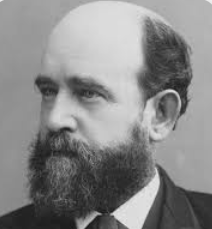
As man is so constituted that it is utterly impossible for him to attain happiness save by seeking the happiness of others, so does it seem to be of the nature of things that individuals and classes can obtain their own just rights only by struggling for the rights of others.
▼
Source
Ch. 21 : Conclusion
5 months ago
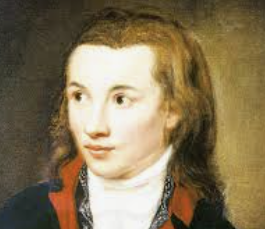
If the world is a precipitation of human nature, so to speak, then the divine world is a sublimation of the same. Both occur in one act. No precipitation without sublimation. What goes lost there in agility, is won here.
▼
Source
Fragment No. 96
5 months ago
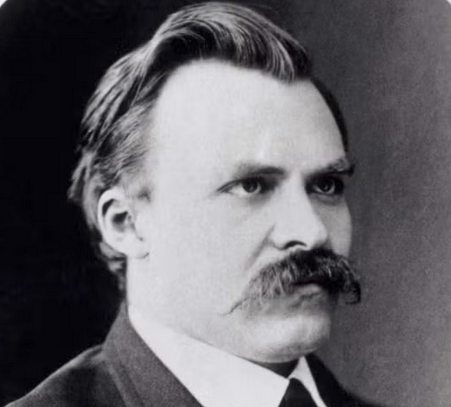
Not one of these nobly equipped young men has escaped the restless, exhausting, confusing, debilitating crisis of education. ... He feels that he cannot guide himself, cannot help himself—and then he dives hopelessly into the world of everyday life and daily routine, he is immersed in the most trivial activity possible, and his limbs grow weak and weary.
5 months ago
Wealth is a great sin in the eyes of God. Poverty is a great sin in the eyes of man.
▼
Source
p. 86
5 months ago
It is no wrong or injustice that one has many bags of the finest myrrh and garments embroidered with gold, while another has not those things, which are not necessary for our maintenance; he who has them has not thereby obtained control over anything that could be an essential addition to his nature, but has only obtained something illusory or deceptive. ...This is the rule at all times and in all places; no notice should be taken of exceptional cases, as we have explained.
▼
Source
Ch.12
5 months ago
The alleged power to charm down insanity, or ferocity in beasts, is a power behind the eye.
▼
Source
Behavior
5 months ago
The Universe consists of non-simultaneously apprehended events.
▼
Source
As quoted by Robert Anton Wilson in Maybe Logic - The Lives and Ideas of Robert Anton Wilson (2003)
5 months ago
Words … are little houses, each with its cellar and garret. Common sense lives on the ground floor, always ready to engage in ‘foreign commerce’ on the same level as the others, as the passers-by, who are never dreamers. To go upstairs in the word house is to withdraw step by step; while to go down to the cellar is to dream, it is losing oneself in the distant corridors of an obscure etymology, looking for treasures that cannot be found in words. To mount and descend in the words themselves—this is a poet’s life. To mount too high or descend too low is allowed in the case of poets, who bring earth and sky together.
▼
Source
Ch. 6
5 months ago
Every new discovery may be considered as a new species of manufacture, awakening moral industry and sagacity, and employing, as it were, new capital of mind.
▼
Source
In The Edinburgh Review, or Critical Journal (June–October 1827) as quoted in Lee Johnson and Joseph Meany, Graphene (2018)
5 months ago
If slavery, barbarism and desolation are to be called peace, men can have no worse misfortune. No doubt there are usually more and sharper quarrels between parents and children, than between masters and slaves ; yet it advances not the art of household management to change a father's right into a right of property, and count children but as slaves. Slavery, then, and not peace, is furthered by handing the whole authority to one man.
▼
Source
Ch. 6, On Monarchy
5 months ago
There is but one Temple in the World; and that is the Body of Man. Nothing is holier than this high form. Bending before men is a reverence done to this Revelation in the Flesh. We touch Heaven, when we lay our hand on a human body.
▼
Source
Variant translation: There is but one temple in the Universe and that is the Body of Man. | As inscribed on the Library of Congress, quoted in Handbook of the New Library of Congress (1897) by Herbert Small, p. 53

5 months ago
Philosophy leaps ahead on tiny toeholds; hope and intuition lend wings to its feet. Calculating reason lumbers heavily behind, looking for better footholds, for reason too wants to reach that alluring goal which its divine comrade has long since reached.
▼
Source
p. 40
5 months ago
"Garrison was the first to proclaim this principle as a rule for the organization of man's life," Tolstoy acknowledged, and described the "spiritual joy" with which he discovered the existence of kindred thinkers in Garrison, Ballou and the earlier pacifist William Dymond. Later in his life Tolstoy added to the list of Americans who had influenced him, the names of Emerson, Thoreau and Walt Whitman, among others. He was also influenced in his economic views by Henry George's Progress and Poverty. In turn, Tolstoy exerted a considerable influence on American intellectuals, and his ideas inspired a revitalization of the American peace movement.
▼
Source
Gerda Lerner, Why History Matters: Life and Thought (1997)
5 months ago
The fact that laws were given to man, both affirmative and negative, supports the principle, that God's knowledge of future events does not change their character. The great doubt that presents itself to our mind is the result of the insufficiency of our intellect.
▼
Source
Ch.20
5 months ago
A ruddy drop of manly blood The surging sea outweighs, The world uncertain comes and goes; The lover rooted stays.
▼
Source
Friendship
5 months ago
It seemed that the time would come evolutionarily when humans might have acquired enough knowledge of generalized principles to permit a graduation from class-two (entropically selfish) evolution into class-one (syntropically cooperative) evolution, thereafter making all the right moves for all the right reasons.
▼
Source
Pg. 246
5 months ago
Wind indeed increases fire, but custom love.
▼
Source
"Pythagorean Ethical Sentences From Stobæus" (1904)
5 months ago
Let men be happy, informed, skillful, well behaved, and productive.
▼
Source
Freedom and the control of men (1955/1956) American Scholar, 25 (1), 47-65
5 months ago
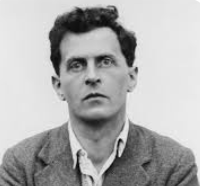
I work quite diligently and wish that I were better and smarter. And these both are one and the same.
▼
Source
In a letter to Paul Engelmann (1917) as quoted in The Idea of Justice (2010) by Amartya Sen, p. 31
5 months ago
The custom which was in those days general among all men, and the general mode of worship in which the Israelites were brought up, consisted in sacrificing animals in those temples which contained certain images to bow down to those images, and to burn incense before them; religious and ascetic persons were in those days the persons that were devoted to the service in the temples erected to the stars... It was in accordance with the wisdom and plan of God, as displayed in the whole Creation, that He did not command us to give up and to discontinue all these manners of service, for to obey such a commandment it would have been contrary to the nature of man, who generally cleaves to that to which he is used... By this Divine plan it was effected that the traces of idolatry were blotted out, and the truly great principle of our faith, the existence and Unity of God, was firmly established; this result was thus obtained without deterring or confusing the minds of the people by the abolition of the service to which they were accustomed and which alone was familiar to them.
▼
Source
Ch.32
5 months ago
Never read any book that is not a year old.
▼
Source
Books
5 months ago
The dark ages still reign over all humanity, and the depth and persistence of this domination are only now becoming clear. This Dark Ages prison has no steel bars, chains, or locks. Instead, it is locked by misorientation and built of misinformation. Caught up in a plethora of conditioned reflexes and driven by the human ego, both warden and prisoner attempt meagerly to compete with God. All are intractably skeptical of what they do not understand. We are powerfully imprisoned in these Dark Ages simply by the terms in which we have been conditioned to think.
5 months ago
Envy has been, is, and shall be, the destruction of many. What is there, that Envy hath not defamed, or Malice left undefiled? Truly, no good thing.
5 months ago
The limits of my language mean the limits of my world.
▼
Source
Variant translations: | The limits of my language stand for the limits of my world. | The limits of my language are the limits of my mind. All I know is what I have words for. | Original German: Die Grenzen meiner Sprache bedeuten die Grenzen meiner Welt.
5 months ago
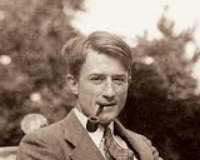
The predicament of our time is that the Rationalists have been at work so long on their project of drawing off the liquid in which our moral ideals were suspended (and pouring it away as worthless) that we are left only with the dry and gritty residue which chokes us as we try to take it down. First, we do our best to destroy parental authority (because of its alleged abuse), then we sentimentally deplore the scarcity of 'good homes', and we end by creating substitutes which complete the work of destruction. And it is for this reason that, among much else that is corrupt and unhealthy, we have the spectacle of a set of sanctimonious, rationalist politicians, preaching an ideology of unselfishness and social service to a population in which they and their predecessors have done their best to destroy the only living root of moral behaviour; and opposed by another set of politicians dabbling with the project of converting us from Rationalism under the inspiration of a fresh rationalization of our political tradition.
5 months ago
To live without duties is obscene.
▼
Source
Aristocracy
5 months ago
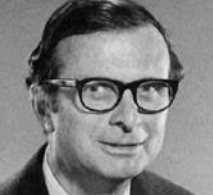
O.R.'s initial development began in the United Kingdom during World War II and was quickly taken up in the United States. This start took place in a military context. After the war O.R. moved into business, industry and civil government. This movement was slower in the United States than in the United Kingdom but in 1951 industrial O.R. took hold in this country and has since developed very rapidly.
▼
Source
p. 3
5 months ago
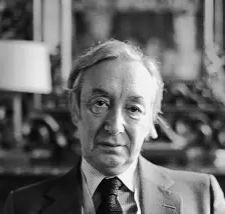
Freddie became so much nicer after he died. He was not nearly so boastful. He took an interest in other people.
▼
Source
[http://www.guardian.co.uk/news/2003/jul/23/guardianobituaries.books Dee Wells], his widow, on his changed dispositions after his near-death experience in June 1988, as quoted in "Did atheist philosopher see God when he 'died'?" by William Cash, in Nation
5 months ago
Look now, this is the starting point of philosophy: the recognition that different people have conflicting opinions, the rejection of mere opinion so that it comes to be viewed with mistrust, an investigation of opinion to determine whether it is rightly held, and the discovery of a standard of judgement, comparable to the balance that we have devised for the determining of weights, or the carpenter's rule for determining whether things are straight or crooked.
▼
Source
Book II, ch. 11, § 13.
5 months ago
The apparently ancient reports of the importance of Pythagoras and his pupils in laying the foundations of mathematics crumble on touch, and what we can get hold of is not authentic testimony by the efforts latecomers to paper over a crack, which they obviously found surprising, by the use of various kinds of reconstruction and reinterpretation. On the other hand, there are ancient and unassailable indications of a Greek mathematics antedating Pythagoras and quite outside his sphere of influence.
▼
Source
Walter Burkert, Lore and Science in Ancient Pythagoreanism (1972)
5 months ago
There is no idea more novel, more surprising, than that of associating three hundred families of different degrees of fortune, knowledge and capacity.
▼
Source
The Theory of Social Organization. Harmonian Man: Selected Writings of Charles Fourier, p. 5.
5 months ago
What makes a subject difficult to understand — if it is significant, important — is not that some special instruction about abstruse things is necessary to understand it. Rather it is the contrast between the understanding of the subject and what most people want to see. Because of this the very things that are most obvious can become the most difficult to understand. What has to be overcome is not difficulty of the intellect but of the will. [Nicht eine Schwierigkeit des Verstandes, sondern des Willens ist zu überwinden.]
▼
Source
Ch. 9 : Philosophy (chapters 86–93 of the so called Big Typescript), p. 161 | Corresponding to TS 213, Kapitel 86

5 months ago
Foster peace in your own life and then apply the Art to all that you encounter.
5 months ago
His heart was as great as the world, but there was no room in it to hold the memory of a wrong.
▼
Source
Greatness
5 months ago
A system may actually exist as a natural aggregation of component parts found in Nature, or it may be a man-contrived aggregation – a way of looking at a problem which results from a deliberate decision to assume that a set of elements are related and constitute such a thing called ‘a system.
▼
Source
C. West Churchman, , I. Auerbach, and Simcha Sadam (1975) Thinking for Decisions Deduction Quantitative Methods. Science Research Associates. cited in: John P. van Gigch (1978) Applied General Systems Theory. Harper & Row Publishers
5 months ago
Fashion is something barbarous, for it produces innovation without reason and imitation without benefit.
▼
Source
Ch. VII
5 months ago
At present they [philosophers] seem to be in a very lamentable condition, and such as the poets have given us but a faint notion of in their descriptions of the punishment of Sisyphus and Tantalus. For what can be imagin'd more tormenting, than to seek with eagerness, what for ever flies us; and seek for it in a place, where 'tis impossible it can ever exist?
▼
Source
Part 4, Section 3
5 months ago
Remember that it is not he who gives abuse or blows who affronts, but the view we take of these things as insulting. When, therefore, any one provokes you, be assured that it is your own opinion which provokes you. (20).
5 months ago
Personal religion is derived from ecstasy, theology from mathematics, and both are to be found in Pythagoras.
▼
Source
Bertrand Russell, in A History of Western Philosophy (1945), Book One, Part I, Chapter III, Pythagoras, p. 36
5 months ago
All agreed in rejecting that blasphemy, that Greece was ever a province of Asia, that the Greek spirit, so free, so objective, so limpid, could contain any element of the vague and obscure spirit of the Orient.
▼
Source
“Des Religions de l’antiquité et leurs derniers historiens”, Mondes, vol. 23, no. 2 (1853) p. 835, quoted in Suzanne L. Marchand, German Orientalism in the Age of Empire: Religion, Race, and Scholarship (Cambridge University Press, 2009)
CivilSimian.com created by AxiomaticPanic, CivilSimian, Kalokagathia