

5 months ago
Should you be willing to read [Xenophon's Anabasis] very carefully you shall discover how ... to deceive one’s enemies to their harm and one’s friends to their advantage, and to speak the truth in a way that will not pain those who are needlessly disturbed by it.
▼
Source
“On the Cultivation of Letters,” Discourses (18.16–17), quoted and translated by Bartlett, Xenophon: The Shorter Socratic Writings, 4
5 months ago
It is permitted to modern philosophy, all swollen up with Bacon's venom, to repeat to us to satiety, to disgust, to nausea, that we make God similar to man; we will reply as many times that is not quite the same thing to say that a man resembles his portrait or that his portrait resembles him.
▼
Source
p. 293
5 months ago
Truth springs from argument amongst friends.
5 months ago
W. is very excitable: he has more passion about philosophy than I have; his avalanches make mine seem mere snowballs. He has the pure intellectual passion in the highest degree; it makes me love him. His disposition is that of an artist, intuitive and moody. He says every morning he begins his work with hope, and every evening he ends in despair — he has just the sort of rage when he can't understand things as I have.
▼
Source
Bertrand Russell, as quoted in Young Ludwig: Wittgenstein's life, 1889-1921 (1988) by Brian McGuinness, p. 100

5 months ago
Educated men — "civilized," as Fourier used to say with disdain — tremble at the idea that society might some day be without judges, police, or gaolers.
▼
Source
Here Kropotkin seems to be referring to the French philosopher Charles Fourier, and not the French scientist Joseph Fourier.

5 months ago
Anarcharsis, on learning that the sides of a ship were four fingers thick, said that "the passengers were just that distance from death."
▼
Source
Anarcharsis, 5.
5 months ago
If it had pleased them [the legislators] to order that this wealth, after having been possessed by fathers during their life, should return to the republic after their death, you would have no reason to complain of it.
5 months ago
From the cradle to the grave all our actions are guided by this principle. Open any book on sociology or jurisprudence, and you will find there the Government, its organization, its acts, filling so large a place that we ome to believe that there is nothing outside the Government and the world of statesmen.
▼
Source
Ch. 3 : Anarchist Communism, p. 79
5 months ago
He used to define justice as "a virtue of the soul distributing that which each person deserved."
▼
Source
Aristotle, 9.

5 months ago
The ancients, persuaded that there is no body without a moving force, regarded the substance of bodies as composed of two primitive attributes. It was held that, through one of these attributes, this substance has the capacity for moving and, through the other, the capacity for being moved.
▼
Source
Ch. V Concerning the Moving Force of Matter
5 months ago
The principles of pleasure are not firm and stable. They are different in all mankind, and variable in every particular with such a diversity that there is no man more different from another than from himself at different times.
5 months ago
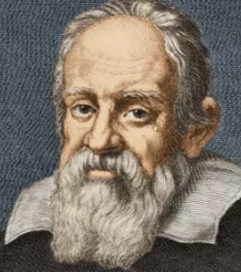
After the publication of my dialogues, I was summoned to Rome by the Congregation of the holy Office, where, being arrived on the 10th of February 1633, I was subjected to the infinite clemency of that tribunal, and of the Sovereign Pontiff, Urban the Eighth; who, notwithstanding, thought me deserving of his esteem.
▼
Source
pp. 145–146

5 months ago
Those in the crossing must in the end know what is mistaken by all urging for intelligibility: that every thinking of being, all philosophy, can never be confirmed by "facts," ie, by beings. Making itself intelligible is suicide for philosophy. Those who idolize "facts" never notice that their idols only shine in a borrowed light. They are also meant not to notice this; for thereupon they would have to be at a loss and therefore useless. But idolizers and idols are used wherever gods are in flight and so announce their nearness.
▼
Source
Contributions to Philosophy (From Enowning) [Beitrage Zur Philosophie (Vom Ereignis)], notes of 1936–1938, as translated by Parvis Emad and Kenneth Maly (1989)
5 months ago
He thus gave to the rich a kind of scientific argument against the ideas of equality; and we know that all dominion is based upon force, force itself begins to totter as soon as is no longer supported by a firm belief in its own rightfulness.
5 months ago
In the time of Pythagoras that proverbial phrase Ipse dixit was introduced into ordinary life.
▼
Source
Pythagoras, 25.
5 months ago
Imagination is the soul, since it plays all the roles of the soul.
5 months ago
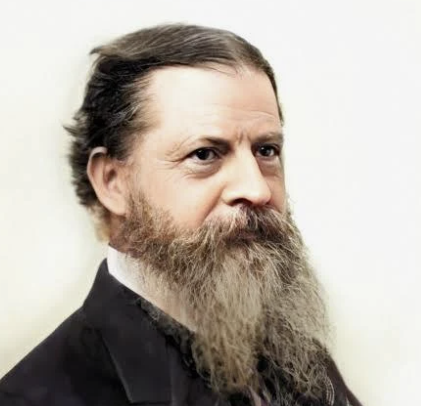
Of the fifty or hundred systems of philosophy that have been advanced at different times of the world's history, perhaps the larger number have been, not so much results of historical evolution, as happy thoughts which have accidently occurred to their authors. An idea which has been found interesting and fruitful has been adopted, developed, and forced to yield explanations of all sorts of phenomena. … The remaining systems of philosophy have been of the nature of reforms, sometimes amounting to radical revolutions, suggested by certain difficulties which have been found to beset systems previouslv in vogue; and such ought certainly to be in large part the motive of any new theory. … When a man is about to build a house, what a power of thinking he has to do, before he can safely break ground! With what pains he has to excogitate the precise wants that are to be supplied. What a study to ascertain the most available and suitable materials, to determine the mode of construction to which those materials are best adapted, and to answer a hundred such questions! Now without riding the metaphor too far, I think we may safely say that the studies preliminary to the construction of a great theory should be at least as deliberate and thorough as those that are preliminary to the building of a dwelling-house.
5 months ago
Knowledge is like a sphere, the greater its volume, the larger its contact with the unknown.
5 months ago
The critique of the highest values hitherto does not simply refute them or declare them invalid. It is rather a matter of displaying their origins as impositions which must affirm precisely what ought to be negated by the values established.
▼
Source
p. 26
5 months ago
The one who contributed most to break down the barrier between physical method and metaphysical method, and to confound their domains, so clearly distinguished in the Aristotelian philosophy, was surely Descartes.
5 months ago
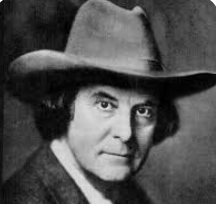
It is not to be wondered that men have worshiped the ocean, for in his depths they have seen mirrored the image of Eternity — of Infinity. Here they have seen the symbol of God's great plan of oneness with His creatures, for the sea is the union of all infinite particles, and it takes the whole to make the one.
▼
Source
"The Sea" in The Philosophy of Elbert Hubbard (1916), p. 169

5 months ago
Man is a thinking being. His reason enables him to recognize his own potentialities and those of his world. He is thus not at the mercy of the facts that surround him, but is capable of subjecting them to a higher standard, that of reason. P. 6
5 months ago
A finite interval of time generally contains an innumerable series of feelings; and when these become welded together in association the result is a general idea.
5 months ago
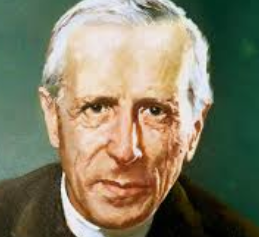
The future is more beautiful than all the pasts.
▼
Source
Letter (5 September 1919), in The Making of a Mind: Letters from a Soldier-Priest 1914–1919
5 months ago
A Miracle: An event described by those to whom it was told by men who did not see it.
▼
Source
p. 30; this has also appeared in recent years in paraphrased form as "A miracle is an event described by those to whom it was told by people who did not see it."
5 months ago
To those who hold abstractly to Hegel’s political philosophy, Hobhouse replies that the very fact of class society, the patent influence of class interests on the state, renders it impossible to designate the state as expressive of the real will of individuals as a whole. ‘Wherever a community is governed by one class or one race, the remaining class or race is permanently in the position of having to take what it can get.’ P. 396
5 months ago
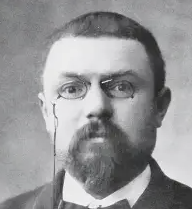
The word "God," so "capitalised" (as we Americans say), is the definable proper name, signifying Ens necessarium; in my belief Really creator of all three Universes of Experience.
▼
Source
I, Ens necessarium is a latin expression which signifies "Necessary being, necessary entity"
5 months ago
Talk with M. Hermite. He never evokes a concrete image, yet you soon perceive that the more abstract entities are to him like living creatures.
▼
Source
Quoted in G Simmons, Calculus Gems (New York 1992).
5 months ago
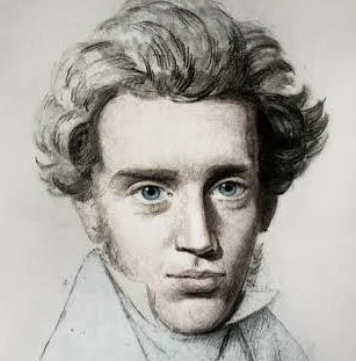
There is a contrast of primary significance between Augustine and Pelagius. The former crushes everything in order to rebuild it again. The other addresses himself to man as he is. The first system, therefore, in respect to Christianity, falls into three stages: creation – the fall and a consequent condition of death and impotence; a new creation – whereby man is placed in a position where he can choose; and then, if he chooses – Christianity. The other system addresses itself to man as he is (Christianity fits into the world). From this is seen the significance of the theory of inspiration for the first system; from this also is seen the relationship between the synergistic and the semipelagian conflict. It is the same question, only that the syngeristic struggle has its presupposition in the new creation of the Augustinian system.
▼
Source
Soren Kierkegaard's Journals and Papers, Volume 1 Hong translation 1967 p. 14-15 1 A 101 January 14, 1837
5 months ago
A universal love is not only psychologically possible; it is the only complete and final way in which we are able to love.
5 months ago
Perfume; Any smell that is used to drown a worse one.
5 months ago
This mutual dependencies no longer the dialectical relationship between master and servant, which has been broken in the struggle for mutual recognition, but rather a vicious circle which encloses both the master and the servant. Do the technicians rule, or is their rule that of the others, who rely on the technicians as their planners and executors?
▼
Source
p. 33
5 months ago
Conceptual graphs are system of logic based on the existential graphs of Charles Sanders Peirce and the semantic networks of artificial intelligence. The purpose of the system is to express meaning in a form that is logically precise, humanly readable, and computationally tractable.
▼
Source
John F. Sowa (1993) Conceptual graphs for knowledge representation. p. 3-51
5 months ago
When navigators... determine a ... they must... calculate Paris time...[with] a chronometer set for Paris. The qualitative problem of simultaneity is made to depend upon the quantitative problem of the measurement of time.
5 months ago
He fixed his definition thus: reflection is the possibility of the relation, consciousness is the relation, the first form of which is contradiction. He soon noted that, as a result, the categories of reflection are always dichotomous. For example ideality and reality, soul and body, to recognize – the true, to will – the good, to love – the beautiful, God and the world, and so on, these are categories of reflection. In reflection, these touch each other in such a way that a relation becomes possible. The categories of consciousness, on the other hand, are trichotomous, as language itself indicates, for when I say I am conscious of this, I mention a trinity. Consciousness is mind and spirit, and the remarkable thing is that when in the world of mind or spirit one is divided, it always becomes three and never two. Consciousness, therefore, presupposes reflection. If this were not true it would be impossible to explain doubt. True, language seems to contest this, since in most languages, as far as he knew, the word ‘doubt’ is etymologically related to the word ‘two’. Yet in his opinion this only indicated the presupposition of doubt, especially because it was clear to him that as soon as I, as spirit, become two, I am eo ipso three. If there were nothing but dichotomies, doubt would not exist, for the possibility of doubt lies precisely in that third which places the two in relation to each other. One cannot therefore say that reflection produces doubt, unless one expressed oneself backwards; one must say that doubt presupposes reflection, though not in a temporal sense. Doubt arises through a relation between two, but for this to take place the two must exist, although doubt, as a higher expression, comes before rather than afterwards."
▼
Source
Johannes Climacus (1841) p. 80-81

5 months ago
The end of man (as a factual anthropological limit) is announced to thought from the vantage of the end of man (as a determined opening or the infinity of a telos). Man is that which is in relation to his end, in the fundamentally equivocal sense of the word. Since always.
▼
Source
"The Ends of Man," Margins of Philosophy, tr. w/ notes by Alan Bass. The University of Chicago Press. Chicago, 1982. (original French published in Paris, 1972, as Marges de la philosophie). p. 123
5 months ago
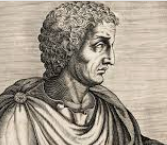
It is ridiculous to suppose that the great head of things, whatever it be, pays any regard to human affairs.
▼
Source
Book II, sec. 20.
5 months ago
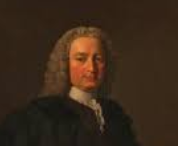
All our Ideas, or the materials of our reasoning or judging, are received by some immediate Powers of Perception internal or external, which we may call Senses … Reasoning or Intellect seems to raise no new Species of Ideas, but to discover or discern the Relations of those received.
▼
Source
An Essay on the Nature and Conduct of the Passions and Affections (1728), Treatise II: Illustrations upon the Moral Sense, Sect. I
5 months ago
Is this fight against history part of the fight against a dimension of the mind in which centrifugal faculties and forces might develop—faculties and forces that might hinder the total coordination of the individual with the society? Remembrance of the Fast may give rise to dangerous insights, and the established society seems to be apprehensive of the subversive contents of memory. Remembrance is a mode of dissociation from the given facts, a mode of “mediation” which breaks, for short moments, the omnipresent power of the given facts. Memory recalls the terror and the hope that passed. Both come to life again
▼
Source
p. 98
5 months ago
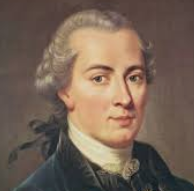
It is absurd to excite reason against the primary postulates of pure time, as, for example, continuity, etc., since they follow from laws prior and superior to which nothing is found, and since reason herself in the use of the principle of contradiction cannot dispense with the support of this concept, so primitive and original is it.
5 months ago
For whoever has what he has from the God himself clearly has it at first hand; and he who does not have it from the God himself is not a disciple. Let us assume that it is otherwise, that the contemporary generation of disciples had received the condition from the God, and that the subsequent generations were to receive it from these contemporaries – what would follow?
▼
Source
p. 76
5 months ago
In order to try to remove what we are going to say from what risks happening, if we judge by the many signs, to Marx's work today, which is to say also to his injunction. What risks happening is that one will try to play Marx off against Marxism so as to neutralize, or at any rate muffle the political imperative in the untroubled exegesis of a classified work. One can sense a coming fashion or stylishness in this regard in the culture and more precisely in the university. And what is there to worry about here? Why fear what may also become a cushioning operation? This recent stereotype would be destined, whether one wishes it or not, to depoliticize profoundly the Marxist reference, to do its best, by putting on a tolerant face, to neutralize a potential force, first of all by enervating a corpus, by silencing in it the revolt [the return is acceptable provided that the revolt, which initially inspired uprising, indignation, insurrection, revolutionary momentum, does not come back]. People would be ready to accept the return of Marx or the return to Marx, on the condition that a silence is maintained about Marx's injunction not just to decipher but to act and to make the deciphering [the interpretation] into a transformation that "changes the world. In the name of an old concept of reading, such an ongoing neutralization would attempt to conjure away a danger: now that Marx is dead, and especially now that Marxism seems to be in rapid decomposition, some people seem to say, we are going to be able to concern ourselves with Marx without being bothered-by the Marxists and, why not, by Marx himself, that is, by a ghost that goes on speaking. We'll treat him calmly, objectively, without bias: according to the academic rules, in the University, in the library, in colloquia! We'll do it systematically, by respecting the norms of hermeneutical, philological, philosophical exegesis. If one listens closely, one already hears whispered: "Marx, you see, was despite everything a philosopher like any other; what is more [and one can say this now that so many Marxists have fallen silent], he was a great-philosopher who deserves to figure on the list of those works we assign for study and from which he has been banned for too long.29 He doesn't belong to the communists, to the Marxists, to the parties-, he ought to figure within our great canon of Western political philosophy. Return to Marx, let's finally read him as a great philosopher." We have heard this and we will hear it again.
▼
Source
Injunctions of Marx
5 months ago
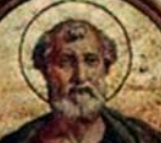
God has conferred upon men liberty of their own will, in order that by purity and sinlessness of life they may become like unto God.
▼
Source
As quoted in On Nature and Grace, Ch. 77, by Augustine of Hippo, as translated by Peter Holmes, Robert Ernest Wallis and Benjamin B Warfield in A Select Library of the Nicene and Post-Nicene Fathers of the Christian Church, Vol. 5 (1887), edited by Philip
5 months ago
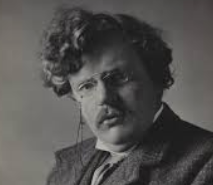
The Bible tells us to love our neighbors, and also to love our enemies; probably because they are generally the same people.
▼
Source
In The Illustrated London News (16 July 1910)
5 months ago
The liberating force of technology—the instrumentalization of things—turns into … the instrumentalization of man.
▼
Source
p. 159
5 months ago
Nature does nothing in vain, and in the use of means to her goals she is not prodigal. Her giving to man reason and the freedom of the will which depends upon it is clear indication of her purpose. Man accordingly was not to be guided by instinct, not nurtured and instructed with ready-made knowledge; rather, he should bring forth everything out of his own resources.
▼
Source
Third Thesis
5 months ago
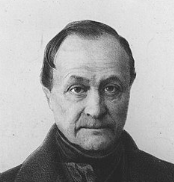
And now I have explained the series of social and intellectual conditions by which the discovery of sociological laws, and consequently the foundation of Positivism, was fixed for the precise date at which I began my philosophical career: that is to say, one generation after the progressive dictatorship of the Convention, and almost immediately after the fall of the retrograde tyranny of Bonaparte.
▼
Source
p. 71
5 months ago
If it were so, as conceited sagacity, proud of not being deceived, thinks, that we should believe nothing that we cannot see with our physical eyes, then we first and foremost ought to give up believing in love. ... We can be deceived by believing what is untrue, but we certainly are also deceived by not believing what is true. ... Which deception is more dangerous?
▼
Source
p. 5
5 months ago
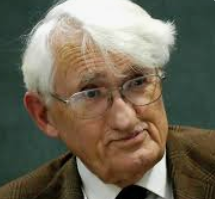
Christianity has functioned for the normative self-understanding of modernity as more than a mere precursor or a catalyst. Egalitarian universalism, from which sprang the ideas of freedom and social solidarity, of an antonomous conduct of life and emancipation, of the individual morality of conscience, human rights, and democracy, is the direct heir to the judaic ethic of justice and the Christian ethic of love. This legacy, substantially unchanged, has been the object of continual critical appropriation and reinterpretation. To this day, there is no alternative to it. And in the light of the current challenges of a postnational constellation, we continue to draw on the substance of this heritage. Everything else is just idle postmodern talk.
▼
Source
Habermas (2006) "Conversation about God and the World." Time of transitions. Cambridge: Polity Press, p. 150-151.
5 months ago
It only takes 20 years for a liberal to become a conservative without changing a single idea.
▼
Source
The Illuminati Papers (1980), p. 111
CivilSimian.com created by AxiomaticPanic, CivilSimian, Kalokagathia