
4 months 4 weeks ago
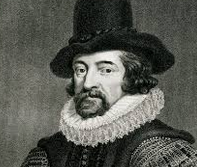
Only charity admitteth no excess. For so we see, aspiring to be like God in power, the angels transgressed and fell; Ascendam, et ero similis altissimo: by aspiring to be like God in knowledge, man transgressed and fell; Eritis sicut Dii, scientes bonum et malum: but by aspiring to a similitude of God in goodness or love, neither man nor angel ever transgressed, or shall transgress.
▼
Source
Book II, xxii
4 months 4 weeks ago
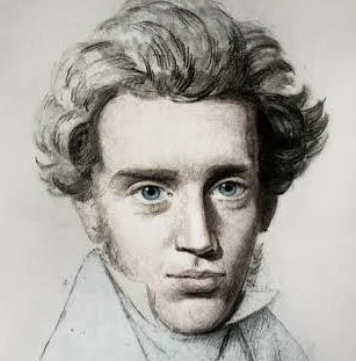
When in sickness I go to a physician, he may find it necessary to prescribe a very painful treatment-there is no self-contradiction in my submitting to it. No, but if on the other hand I suddenly find myself in trouble, an object of persecution, because, because I have gone to that physician: well, then then there is a self-contradiction. The physician has perhaps announced that he can help me with regard to the illness from which I suffer, and perhaps he can really do that-but there is an "aber" [but] that I had not thought of at all. The fact that I get involved with this physician, attach myself to him-that is what makes me an object of persecution; here is the possibility of offense. So also with Christianity. Now the issue is: will you be offended or will you believe. If you will believe, then you push through the possibility of offense and accept Christianity on any terms. So it goes; then forget the understanding; then you say: Whether it is a help or a torment, I want only one thing, I want to belong to Christ, I want to be a Christian.
▼
Source
p. 115
4 months 4 weeks ago
You simply cannot invent any conspiracy theory so ridiculous and obviously satirical that some people somewhere don't already believe it.
▼
Source
Introduction, p. 16
4 months 4 weeks ago
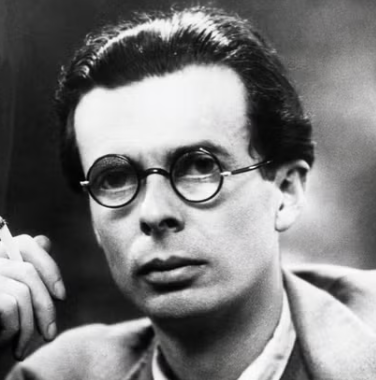
If good music has charms to soothe the savage breast, bad music has no less powerful spells for filling the mildest breast with rage, the happiest with horror and disgust. Oh, those mammy songs, those love longings, those loud hilarities! How was it possible that human emotions intrinsically decent could be so ignobly parodied.
▼
Source
“Silence is Golden,” p. 59
4 months 4 weeks ago
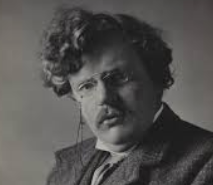
As a fact, there is no shred of evidence to show that those who have had sad experiences tend to have a sad philosophy. There are numberless points upon which Dickens is spiritually at one with the poor, that is, with the great mass of mankind. But there is no point in which he is more perfectly at one with them than in showing that there is no kind of connection between a man being unhappy and a man being pessimistic. Sorrow and pessimism are indeed, in a sense, opposite things, since sorrow is founded on the value of something, and pessimism upon the value of nothing.
▼
Source
Ch 2: "The Boyhood of Dickens"
4 months 4 weeks ago
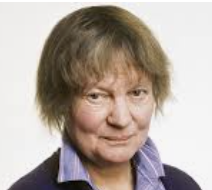
But fantasy kills imagination, pornography is death to art.
▼
Source
The Message to the Planet (1989) p. 43.
4 months 4 weeks ago
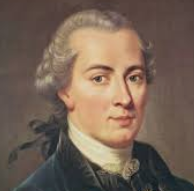
What alone has value is the use to which life is put and the end to which it is directed. The value of life has to be created by man, it cannot be obtained through luck but only through wisdom. He who is anxiously concerned over losing his life will never enjoy life.
▼
Source
Kant, Immanuel (1996), pages 141
4 months 4 weeks ago
But by far the greatest hindrance and aberration of the human understanding proceeds from the dullness, incompetency, and deceptions of the senses; in that things which strike the sense outweigh things which do not immediately strike it, though they be more important. Hence it is that speculation commonly ceases where sight ceases; insomuch that of things invisible there is little or no observation.
▼
Source
Aphorism 50
4 months 4 weeks ago
From the Christian point of view it stands firm that the truly Christian venturing requires probability. p. 101
4 months 4 weeks ago
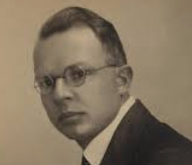
Frege's pair of concepts (nominatum and sense) is compared with our pair (extension and intension). The two pairs coincide in ordinary (extensional) contexts, but not in oblique (nonextensional) contexts.
▼
Source
p. 124 as cited in: E. Cornell Way (1991) Knowledge Representation and Metaphor. p. 183
4 months 4 weeks ago
A man who has trained himself in goodness come to have certain direct intuitions about character, about the relations between human beings, about his own position in the world — intuitions that are quite different from the intuitions of the average sensual man.
▼
Source
Ch. 14, p. 333 [2012 reprint]
4 months 4 weeks ago
Fairy tales...are not responsible for producing in children fear, or any of the shapes of fear; fairy tales do not give the child the idea of the evil or the ugly; that is in the child already, because it is in the world already. Fairy tales do not give the child his first idea of bogey. What fairy tales give the child is his first clear idea of the possible defeat of bogey. The baby has known the dragon intimately ever since he had an imagination. What the fairy tale provides for him is a St. George to kill the dragon. Exactly what the fairy tale does is this: it accustoms him for a series of clear pictures to the idea that these limitless terrors had a limit, that these shapeless enemies have enemies in the knights of God, that there is something in the universe more mystical than darkness, and stronger than strong fear.
▼
Source
Ch. XVII: "The Red Angel" | Paraphrased: "Fairy tales are more than true — not because they tell us dragons exist, but because they tell us dragons can be beaten." Epigraph of Neil Gaiman's Coraline (2004). When questioned about the quote on his [http://n
4 months 4 weeks ago
Unlike vision, touch, or smell, which are prewired and based on Kantian a priori knowledge, the spatial map presents us with a new type of representation, one based on a combination of a priori knowledge and learning.
▼
Source
Eric Kandel, In Search of Memory (2006)
4 months 4 weeks ago
If parts allure thee, think how Bacon shin'dThe wisest, brightest, meanest of mankind.
▼
Source
Alexander Pope, Essay on Man (1732-1734)
4 months 4 weeks ago
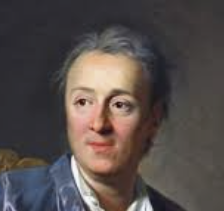
Only a very bad theologian would confuse the certainty that follows revelation with the truths that are revealed. They are entirely different things.
▼
Source
Apology for the Abbé de Prades (1752)
4 months 4 weeks ago
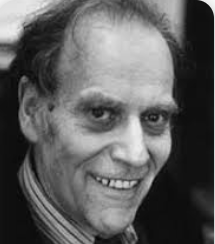
When asked his opinion of pragmatism, Morgenbesser replied "It's all very well in theory but it doesn't work in practice."
▼
Source
The Times, [https://www.thetimes.co.uk/article/sidney-morgenbesser-5cz8gg8qfvm Sidney Morgenbesser: Erudite and influential American linguistic philosopher with the analytical acuity of Spinoza and the blunt wit of Groucho Marx], September 8, 2004.
4 months 4 weeks ago
In the days before machinery men and women who wanted to amuse themselves were compelled, in their humble way, to be artists. Now they sit still and permit professionals to entertain them by the aid of machinery. It is difficult to believe that general artistic culture can flourish in this atmosphere of passivity.
4 months 4 weeks ago
For we that fight till the world is free, We are not easy in victory: We have known each other too long, my brother, And fought each other, the world and we.
▼
Source
A Song of Defeat
4 months 4 weeks ago
We do not know nature; causes hidden in her breast might have produced everything. In your turn, observe the polyp of Trembley: does it not contain in itself the causes which bring about regeneration? Why then would it be absurd to think that there are physical causes by reason of which everything has been made, and to which the whole chain of this vast universe is so necessarily bound and held that, nothing which happens, could have failed to happen,—causes, of which we are so invincibly ignorant that we have had recourse to a God, who, as some aver, is not so much as a logical entity? Thus to destroy chance is not to prove the existence of a supreme being, since there may be some other thing which is neither chance nor God—I mean, nature. It follows that the study of nature can make only unbelievers; and the way of thinking of all its more successful investigators proves this.
▼
Source
As quoted by Julien Offray de La Mettrie, Man a Machine (1747) [https://books.google.com/books?id=GKYLAQAAIAAJ&pg=PA125 Tr. Gertrude Carman Bussey] (1912)

4 months 4 weeks ago
Il me semble que la tache politique actuelle dans une société comme la notre c’est de critiquer le jeu des institutions apparemment les plus neutres et les plus indépendantes, de les critiquer et les attaquer de telle manière que la violence politique qui s’exerçait obscurément en elles (les institutions) surgissent et qu’on puisse lutter contre elles.
▼
Source
It seems to me that the current political task in a society like ours is to criticize the working of institutions that are apparently the most neutral and independent, to criticize these institutions and attack them in such a way that the political violen

4 months 4 weeks ago
I'm never afraid. But in my case it's nothing to be proud of.
▼
Source
Raimon to Regina. p. 23
4 months 4 weeks ago
Assembled in a crowd, people lose their powers of reasoning and their capacity for moral choice.
▼
Source
Chapter 5 (p. 42)
4 months 4 weeks ago
In every serious doctrine of the destiny of men, there is some trace of the doctrine of the equality of men. But the capitalist really depends on some religion of inequality. The capitalist must somehow distinguish himself from human kind; he must be obviously above it—or he would be obviously below it.
▼
Source
p. 34
4 months 4 weeks ago
The general interest of the masses might take the place of the insight of genius if it were allowed freedom of action.
4 months 4 weeks ago
This book is intended as a correlative history of the modern soul and of a new power to judge; a genealogy of the present scientifico-legal complex from which the power to punish derives its bases, justifications and rules, from which it extends its effects and by which it extends its effects and by which it masks its exorbitant singularity.
▼
Source
Chapter One, The Spectacle of the Scaffold, pp.42
4 months 4 weeks ago
It is vain to apportion praise and blame. The truth is that if the vicious circle is so hard to break, it is because the two sexes are each the victim at once of the other and of itself. Between two adversaries confronting each other in their pure liberty, an agreement could be easily reached: the more so as the war profits neither. But the complexity of the whole affair derives from the fact that each camp is giving aid and comfort to the enemy; woman is pursuing a dream of submission, man a dream of identification. Want of authenticity does not pay: each blames the other for the unhappiness he or she has incurred in yielding to the temptations of the easy way; what man and woman loathe in each other is the shattering frustration of each one's own bad faith and baseness.
4 months 4 weeks ago
You could always tell by his conversation which volume of the Encyclopedia Britannica he'd been reading. One day it would be Alps, Andes and Apennines, and the next it would be the Himalayas and the Hippocratic Oath.
▼
Source
Bertrand Russell, in a letter to R. W. Clark (July 1965)
4 months 4 weeks ago
I've searched all the parks in all the cities — and found no statues of Committees.
▼
Source
As quoted in Trust Or Consequences: Build Trust Today Or Lose Your Market Tomorrow (2004) by Al Golin, p. 206; also in Storms of Life (2008) by Dr. Don Givens, p. 136
4 months 4 weeks ago
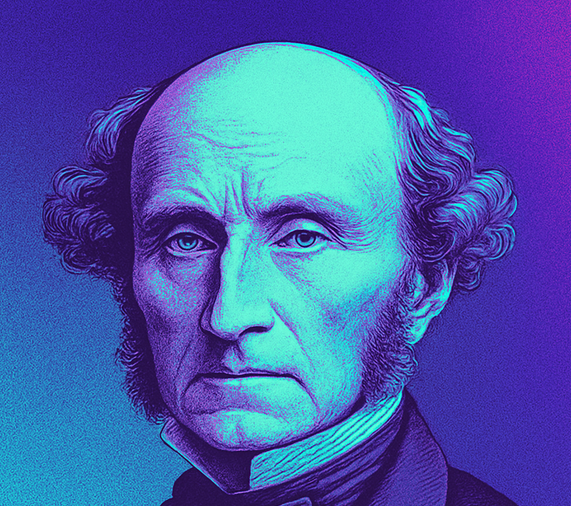
Since reasoning, or inference, the principal subject of logic, is an operation which usually takes place by means of words, and in complicated cases can take place in no other way: those who have not a thorough insight into both the signification and purpose of words, will be under chances, amounting almost to certainty, of reasoning or inferring incorrectly.
▼
Source
p. 11: Cited in Gaines (1976) "Foundations of fuzzy reasoning" in: International Journal of Man-Machine Studies 8(6), p. 623
4 months 4 weeks ago
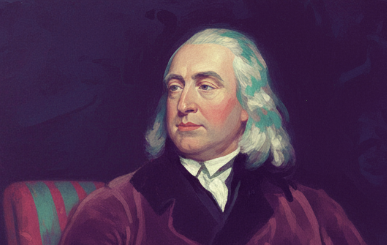
That which has no existence cannot be destroyed — that which cannot be destroyed cannot require anything to preserve it from destruction. Natural rights is simple nonsense: natural and imprescriptible rights, rhetorical nonsense — nonsense upon stilts. But this rhetorical nonsense ends in the old strain of mischievous nonsense for immediately a list of these pretended natural rights is given, and those are so expressed as to present to view legal rights. And of these rights, whatever they are, there is not, it seems, any one of which any government can, upon any occasion whatever, abrogate the smallest particle.
▼
Source
The often-quoted phrase ‘nonsense upon stilts’ is often modernised to ‘nonsense on stilts’.
4 months 4 weeks ago
In the darkest region of the political field the condemned man represents the symmetrical, inverted figure of the king.

4 months 4 weeks ago
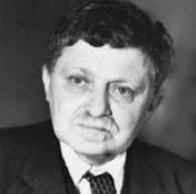
The true disciple of philosophy is likely to be misunderstood by other men; they do not perceive that he is ever pursuing death and dying; and if this is true, why, having had the desire of death all his life long, should he repine at that which he has always been pursuing and desiring?
4 months 4 weeks ago
The greatest merit of the critical spirit is that it tends to cure fanaticism, and it is logical enough that in our own fanatical times the critical spirit should tend to disappear.
▼
Source
p. 143
4 months 4 weeks ago
Again, defenders of utility often find themselves called upon to reply to such objections as this—that there is not time, previous to action, for calculating and weighing the effects of any line of conduct on the general happiness. This is exactly as if any one were to say that it is impossible to guide our conduct by Christianity, because there is not time, on every occasion on which anything has to be done, to read through the Old and New Testaments. The answer to the objection is, that there has been ample time, namely, the whole past duration of the human species. During all that time mankind have been learning by experience the tendencies of actions
▼
Source
Ch. 2
4 months 4 weeks ago
In parrhesia the speaker uses his freedom and chooses frankness instead of persuasion, truth instead of falsehood or silence, the risk of death instead of life and security, criticism instead of flattery, and moral duty instead of and moral apathy... in most of the Greek texts... from the Fifth Century B.C. to the Fifth Century A.D.
4 months 4 weeks ago
The soul, being a harmony, can never utter a note at variance with the tensions and relaxations and vibrations and other affections of the strings out of which she is composed; she can only follow, she cannot lead them? ...And yet do we not now discover the soul to be doing the exact opposite—leading the elements of which she is believed to be composed; almost always opposing and coercing them in all sorts of ways throughout life... threatening and reprimanding the desires, passions, fears, as if talking to a thing which is not herself...

4 months 4 weeks ago
Metaphors and similes are the beginning of the democratic system of envy.
4 months 4 weeks ago
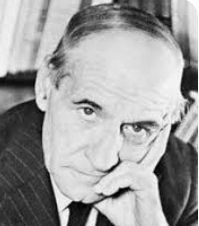
Most boys or youths who have had much knowledge drilled into them, have their mental capacities not strengthened, but over-laid by it. They are crammed with mere facts, and with the opinions or phrases of other people, and these are accepted as a substitute for the power to form opinions of their own: and thus the sons of eminent fathers, who have spared no pains in their education, so often grow up mere parroters of what they have learnt, incapable of using their minds except in the furrows traced for them. Mine, however, was not an education of cram. My father never permitted anything which I learnt to degenerate into a mere exercise of memory. He strove to make the understanding not only go along with every step of the teaching, but, if possible, precede it. Anything which could be found out by thinking I never was told, until I had exhausted my efforts to find it out for myself.
▼
Source
([https://archive.org/details/autobiography01mill/page/31/mode/1up p. 31])
4 months 4 weeks ago
The history of the Roman Empire is also the history of the uprising of the Empire of the Masses, who absorb and annul the directing minorities and put themselves in their place. Then, also, is produced the phenomenon of agglomeration, of "the full." For that reason, as Spengler has very well observed, it was necessary, just as in our day, to construct enormous buildings. The epoch of the masses is the epoch of the colossal.
▼
Source
Chap.II: The Rise Of The Historic Level
4 months 4 weeks ago
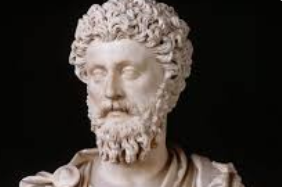
Yes, you can--if you do everything as if it were the last thing you were doing in your life, and stop being aimless, stop letting your emotions override what your mind tells you, stop being hypocritical, self-centered, irritable.
▼
Source
You will find rest from vain fancies if you perform every act in life as though it were your last. | II, 5 (Hayes translation)
4 months 4 weeks ago
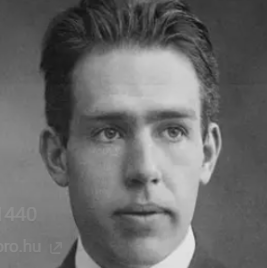
Every valuable human being must be a radical and a rebel, for what he must aim at is to make things better than they are.
▼
Source
As quoted in The World of the Atom (1966) by Henry Abraham Boorse and Lloyd Motz, p. 741
4 months 4 weeks ago
False words are not only evil in themselves, but they infect the soul with evil.
▼
Source
Phaedo 115e | literally: 'For know well', he said, 'o dearest Kriton, that to not speak well is not only sinful by itself, but lets evil intrude into the soul.'(εὖ γὰρ ἴσθι, ἦ δ᾽ ὅς, ὦ ἄριστε Κρίτων, τὸ μὴ καλῶς λέγειν οὐ μόνον εἰς αὐτὸ τοῦτο πλημμελές, ἀ
4 months 4 weeks ago
The authority of the State was not a product, but a presupposition. It could not depend on the people, in fact, the people depended on the State… The Fascist state, on the other hand, is a popular state, and, in that sense, a democratic State par excellence… Every citizen shares a relationship with the State and is so intimate that the State exists only in so far as it is made to exist by the citizen.
▼
Source
Orgini e dottrina del fascismo, Rome: Libreria del Littorio, (1929). Origins and Doctrine of Fascism, A. James Gregor, translator and editor, Transaction Publishers (2003) p. 28
4 months 4 weeks ago
I conceive that the description so often given of a Benthamite, as a mere reasoning machine, though extremely inapplicable to most of those who have been designated by that title, was during two or three years of my life not altogether untrue of me. ...There is nothing very extraordinary in this fact: no youth of the age I then was, can be expected to be more than one thing, and this was the thing I happened to be. Ambition and desire of distinction, I had in abundance; and zeal for what I thought the good of mankind was my strongest sentiment, mixing with and colouring all others. But my zeal was as yet little else, at that period of my life, than zeal for speculative opinions. It had not its root in genuine benevolence, or sympathy with mankind; though these qualities held their due place in my ethical standard. Nor was it connected with any high enthusiasm for ideal nobleness.
▼
Source
([https://archive.org/details/autobiography01mill/page/109/mode/1up pp. 109-110])
4 months 4 weeks ago
The State is always, whatever be its form — primitive, ancient, medieval, modern — an invitation issued by one group of men to other human groups to carry out some enterprise in common. That enterprise, be its intermediate processes what they may, consists in the long run in the organisation of a certain type of common life. … [As Renan says,] "To have common glories in the past, a common will in the present; to have done great things together; to wish to do greater; these are the essential conditions which make up a people.… In the past, an inheritance of glories and regrets; in the future, one and the same programme to carry out.… The existence of a nation is a daily plebiscite."
▼
Source
Chapter XIV: Who Rules The World?
4 months 4 weeks ago
Let no act be done at haphazard, nor otherwise than according to the finished rules that govern its kind.
▼
Source
IV, 2
4 months 4 weeks ago
Neither one nor the other doth follow, for that both the assertions may be true. The Oracle adjudged Socrates the wisest of all men, whose knowledg is limited; Socrates acknowledgeth that he knew nothing in relation to absolute wisdome, which is infinite; and because of infinite, much is the same part as is little, and as is nothing (for to arrive... to the infinite number, it is all one to accumulate thousands, tens, or ciphers,) therefore Socrates well perceived his wisdom to be nothing, in comparison of the infinite knowledg which he wanted. But yet, because there is some knowledg found amongst men, and this not equally shared to all, Socrates might have a greater share thereof than others, and therefore verified the answer of the Oracle.
▼
Source
Galileo Galilei, Dialogue Concerning the Two Chief World Systems (1632) as quoted in the Salusbury translation, The Systeme of the World: in Four Dialogues (1661) p. 85

4 months 4 weeks ago
Only one thing is necessary: to possess God — All the senses, all the forces of the soul and of the spirit, all the exterior resources are so many open outlets to the Divinity; so many ways of tasting and of adoring God. We should be able to detach ourselves from all that is perishable and cling absolutely to the eternal and the absolute and enjoy the all else as a loan, as a usufruct…. To worship, to comprehend, to receive, to feel, to give, to act: this our law, our duty, our happiness, our heaven.
▼
Source
As translated in Bartlett's Familiar Quotations, 10th ed. (1919)
4 months 4 weeks ago
I believe that the early success and reputation of Carlyle's French Revolution, were considerably accelerated by what I wrote about it in the Review. Immediately on its publication, and before the commonplace critics, all whose rules and modes of judgment it set at defiance, had time to preoccupy the public with their disapproval of it, I wrote and published a review of the book, hailing it as one of those productions of genius which are above all rules, and are a law to themselves.
▼
Source
([https://archive.org/details/autobiography01mill/page/217/mode/1up p. 217])
4 months 4 weeks ago
Observe always that everything is the result of a change, and get used to thinking that there is nothing Nature loves so well as to change existing forms and to make new ones like them.
▼
Source
IV, 36
CivilSimian.com created by AxiomaticPanic, CivilSimian, Kalokagathia