

4 months 4 weeks ago
No doubt markets transmit information in the way that Hayek claimed. But what reason is there to believe that – unlike any other social institution – they have a built-in capacity to correct their mistakes? History hardly supports the supposition. Moods of irrational exuberance and panic can, and often do, swamp the price-discovery functions of markets.
4 months 4 weeks ago
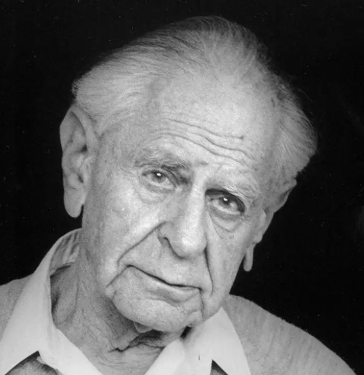
Never aim at more precision than... required by the problem...
4 months 4 weeks ago
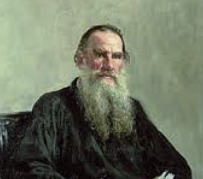
The only absolute knowledge attainable by man is that life is meaningless.
▼
Source
Ch. 5, translated by David Patterson, 1983
4 months 4 weeks ago
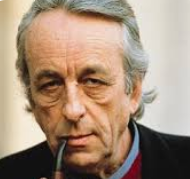
The sciences we are familiar with have been installed in a number of great 'continents'. Before Marx, two such continents had been opened up to scientific knowledge: the continent of Mathematics and the continent of Physics. The first by the Greeks (Thales), the second by Galileo. Marx opened up a third continent to scientific knowledge: the continent of History.
▼
Source
p. 4
4 months 4 weeks ago
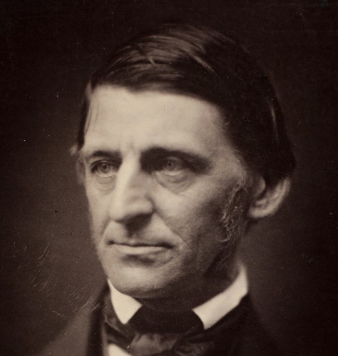
Every natural fact is a symbol of some spiritual fact.
▼
Source
Language

4 months 4 weeks ago
Gravity is of the very Essence of Imposture. It does not only make us mistake other Things, but is apt perpetually almost to mistake it-self.
▼
Source
Vol. 1, p. 11; "A Letter Concerning Enthusiasm".

4 months 4 weeks ago
Meaning of life
4 months 4 weeks ago
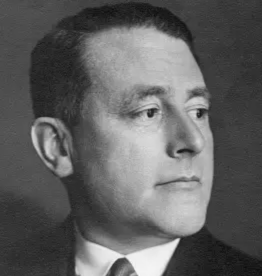
The equation state = politics becomes erroneous and deceptive at exactly the moment when state and society penetrate each other.
4 months 4 weeks ago
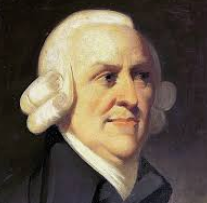
Though the principles of the banking trade may appear somewhat abstruse, the practice is capable of being reduced to strict rules. To depart upon any occasion from these rules, in consequence of some flattering speculation of extraordinary gain, is almost always extremely dangerous, and frequently fatal to the banking company which attempts it.
▼
Source
Chapter I, Part III, p. 820.
4 months 4 weeks ago
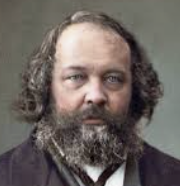
All religions are cruel, all founded on blood; for all rest principally on the idea of sacrifice — that is, on the perpetual immolation of humanity to the insatiable vengeance of divinity.
4 months 4 weeks ago
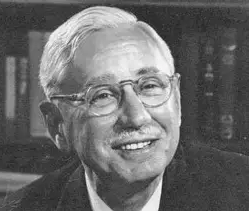
As we find a place in the economic world the rebellion of youth subsides; we disapprove of earthquakes when our feet are on the earth. We forget then the radicalism then in a gentle liberalism — which is radicalism softened with the consciousness of a bank account.
▼
Source
Ch. 3 : On Middle Age

4 months 4 weeks ago
It would be better if they [rulers] compelled the Jews to work for their living, as they do in parts of Italy, than that, living without occupation, they can grow rich only by usury (solis usuris ditentur).
▼
Source
art. 2
4 months 4 weeks ago
Is there really someone who, searching for a group of wise and sensitive persons to regulate him for his own good, would choose that group of people that constitute the membership of both houses of Congress?
▼
Source
Ch. 2 : The State of Nature; Protective Associations, p. 14
4 months 4 weeks ago
Further acquaintance with the labors of the Quakers and their works — with Fox, Penn, and especially the work of Dymond (published in 1827) — showed me not only that the impossibility of reconciling Christianity with force and war had been recognized long, long ago, but that this irreconcilability had been long ago proved so clearly and so indubitably that one could only wonder how this impossible reconciliation of Christian teaching with the use of force, which has been, and is still, preached in the churches, could have been maintained in spite of it.
▼
Source
Chapter I, The Doctrine of Non-resistance to Evil by Force has been Professed by a Minority of Men from the Very Foundation of Christianity
4 months 4 weeks ago
If a man wants "protection," he is competent to make his own bargains for it; and nobody has any occasion to rob him, in order to "protect" him against his will.
4 months 4 weeks ago
There is always a certain meanness in the argument of conservatism, joined with a certain superiority in its fact.
4 months 4 weeks ago
When I made my theoretical model, I could not have guessed that people would try to realise it with Molotov cocktails.
▼
Source
As quoted in The Dialectical Imagination : A History of the Frankfurt School and the Institute of Social Research (1973) by M Jay, p. 279.
4 months 4 weeks ago
Virtue is the health of the soul.
▼
Source
Stoicorum veterum fragmenta, fragment 359
4 months 4 weeks ago
If I were five-and-twenty or thirty, instead of, unhappily, twice that number of years, I would take Adam Smith in hand—I would not go beyond him, I would have no politics in it—I would take Adam Smith in hand, and I would have a League for free trade in Land just as we had a League for free trade in Corn. You will find just the same authority in Adam Smith for the one as for the other; and if it were only taken up as it must be taken up to succeed, not as a political, revolutionary, Radical, Chartist notion, but taken up on politico-economic grounds, the agitation would be certain to succeed; and if you apply free trade in land and to labour too—that is, by getting rid of those abominable restrictions in your parish settlements, and the like—then, I say, the men who do that will have done for England probably more than we have been able to do by making free trade in corn.
▼
Source
Richard Cobden, speech in Rochdale (23 November 1864), quoted in John Bright and J. E. Thorold Rogers (eds.), Speeches on Questions of Public Policy by Richard Cobden, M.P. Volume II (1908), p. 493
4 months 4 weeks ago
Only the truth and its expression can establish that new public opinion which will reform the ancient obsolete and pernicious order of life; and yet we not only do not express the truth we know, but often even distinctly give expression to what we ourselves regard as false. If only free men would not rely on that which has no power, and is always fettered — upon external aids; but would trust in that which is always powerful and free — the truth and its expression!
▼
Source
Ch. 17
4 months 4 weeks ago
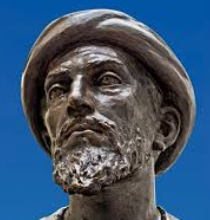
The Torah sage ... does not encroach upon another's occupation, nor does he ever cause someone discomfort. The rule is that he should be among the pursued and not the pursuers, among those who accept humiliation but not among those who humiliate others.
▼
Source
Chapter 5, Section 13
4 months 4 weeks ago
The silent organ loudest chants The master's requiem.
▼
Source
Dirge, st. 13
4 months 4 weeks ago
If philosophy is still necessary, it is so only in the way it has been from time immemorial: as critique, as resistance to the expanding heteronomy, even if only as thought's powerless attempt to remain its own master and to convict of untruth, by their own criteria, both a fabricated mythology and a conniving, resigned acquiescence. ... It is incumbent upon philosophy ... to provide a refuge for freedom. Not that there is any hope that it could break the political tendencies that are throttling freedom throughout the world both from within and without and whose violence permeates the very fabric of philosophical argumentation.
▼
Source
p. 10
4 months 4 weeks ago
The basic drive behind real philosophy is curiosity about the world, not interest in the writings of philosophers. Each of us emerges from the preconsciousness of babyhood and simply finds himself here, in it, in the world. That experience alone astonishes some people. What is all this — what is the world? And what are we? From the beginning of humanity some have been under a compulsion to ask these questions, and have felt a craving for the answers. This is what is really meant by any such phrase as "mankind's need for metaphysics."
▼
Source
p. 232
4 months 4 weeks ago
[T]hat constant accumulation of capital, that continual tendency to increase, the operation of which is universally seen in a greater or less proportion, whenever it is not obstructed by some...mistaken and mischievous policy. ... Simple and obvious as this principle is... I doubt whether it has ever been fully developed and sufficiently explained, but in the writings of an author of our own time, now unfortunately no more (I mean the author of the celebrated treatise on the Wealth of Nations), whose extensive knowledge of detail, and depth of philosophical research, will, I believe, furnish the best solution of every question connected with the history of commerce, or with the system of political economy.
▼
Source
William Pitt, speech in the House of Commons (17 February 1792), quoted in The Parliamentary History of England, From the Earliest Period to the Year 1803, Vol. XXIX (1817), columns 833-834
4 months 4 weeks ago
The difference between him as he was then and as he was now was great ... Then he was a courageous, free man, before whom opened endless possibilities; now he felt himself caught in the tenets of a stupid, idle, aimless, miserable life, from which there was no escape; aye, from which, for the most part, he would not escape. He remembered how he once had prided himself upon his rectitude; how he always made it a rule to tell the truth, and was in reality truthful, and how he was now steeped in falsehood—falsehood which was recognized as truth by all those around him.
▼
Source
Ch. 28
4 months 4 weeks ago
Through the constant revolution of the fifth element, with all contained therein, the four elements are forced to move and to change their respective positions, so that fire and air are driven into the water, and again these three elements enter the depth of the earth. Thus are the elements mixed together; and when they return to their respective places, parts of the earth, in quitting their places, move together with the water, the air and the fire. In this whole process the elements act and react upon each other. The elements intermixed, are then combined, and form at first various kinds of vapours; afterwards the several kinds of minerals, every species of plants, and many species of living beings, according to the relative proportion of the constituent parts. All transient beings have their origin in the elements, into which again they resolve when their existence comes to an end. The elements themselves are subject to being transformed from one into another; for although one substance is common to all, substance without form is in reality impossible, just as the physical form of these transient beings cannot exist without substance.
4 months 4 weeks ago
A creative economy is the fuel of magnificence.
▼
Source
Aristocracy
4 months 4 weeks ago
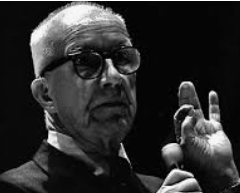
Nature is entirely synergetic and because your problems of representing a society ignorant of such fundamentals are greatly increased you need to pay great attention to learning how to comprehend synergy and thereafter how to educate all of humanity in the shortest time how to comprehend and usefully cope with omni-synergetic universe
4 months 4 weeks ago
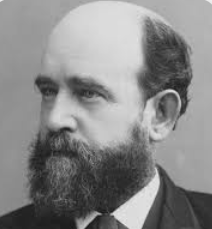
I am no sentimental admirer of the savage state. I do not get my ideas of the untutored children of nature from Rousseau, or Chateaubriand, or Cooper. I am conscious of its material and mental poverty, and its low and narrow range. I believe that civilization is not only the natural destiny of man, but the enfranchisement, elevation, and refinement of all his powers, and think that it is only in such moods as may lead him to envy the cud — chewing cattle, that a man who is free to the advantages of civilization could look with regret upon the savage state. But, nevertheless, I think no one who will open his eyes to the facts can resist the conclusion that there are in the heart of our civilization large classes with whom the veriest savage could not afford to exchange. It is my deliberate opinion that if, standing on the threshold of being, one were given the choice of entering life as a Tierra del Fuegan, a black fellow of Australia, an Esquimau in the Arctic Circle, or among the lowest classes in such a highly civilized country as Great Britain, he would make infinitely the better choice in selecting the lot of the savage. For those classes who in the midst of wealth are condemned to want, suffer all the privations of the savage, without his sense of personal freedom; they are condemned to more than his narrowness and littleness, without opportunity for the growth of his rude virtues; if their horizon is wider, it is but to reveal blessings that they cannot enjoy. There are some to whom this may seem like exaggeration, but it is only because they have never suffered themselves to realize the true condition of those classes upon whom the iron heel of modern civilization presses with full force. As De Tocqueville observes, in one of his letters to Mme. Swetchine, "we so soon become used to the thought of want that we do not feel that an evil which grows greater to the sufferer the longer it lasts becomes less to the observer by the very fact of its duration"; and perhaps the best proof of the justice of this observation is that in cities where there exists a pauper class and a criminal class, where young girls shiver as they sew for bread, and tattered and barefooted children make a home in the streets, money is regularly raised to send missionaries to the heathen! Send missionaries to the heathen! It would be laughable if it were not so sad. Baal no longer stretches forth his hideous, sloping arms; but in Christian lands mothers slay their infants for a burial fee! And I challenge the production from any authentic accounts of savage life of such descriptions of degradation as are to be found in official documents of highly civilized countries — in reports of sanitary commissioners and of inquiries into the condition of the laboring poor.
4 months 4 weeks ago
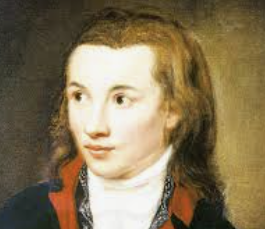
The poem of the understanding is philosophy.
▼
Source
“Logological Fragments,” Philosophical Writings, M. Stolijar, trans. (Albany: 1997) #24

4 months 4 weeks ago
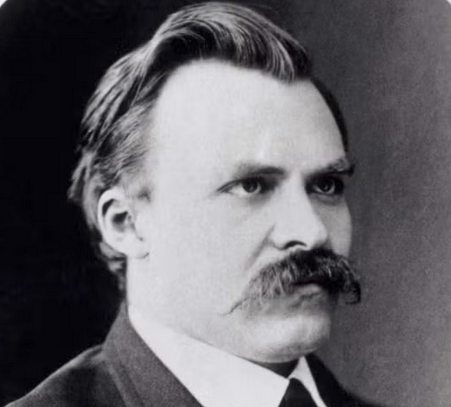
In order to properly understand the big picture, everyone should fear becoming mentally clouded and obsessed with one small section of truth.
▼
Source
Quoted in: Joan Klostermann-Ketels (2011) HumaniTrees, p. 96
4 months 4 weeks ago
Sobald es aber möglich wäre, durch einen starken Willen die ganze Weltvergangenheit umzustürzen, sofort träten wir in die Reihe der unabhängigen Götter, und Weltgeschichte hieße dann für uns nichts als ein träumerisches Selbstentrücktsein; der Vorhang fällt, und der Mensch findet sich wieder, wie ein Kind mit Welten spielend, wie ein Kind, das beim Morgenglühen aufwacht und sich lachend die furchtbaren Träume von der Stirn streicht.
▼
Source
As soon as it becomes possible, by dint of a strong will, to overthrow the entire past of the world, then, in a single moment, we will join the ranks of independent gods. World history for us will then be nothing but a dreamlike otherworldly being. The cu
4 months 4 weeks ago
In order that men should embrace the truth — not in the vague way they did in childhood, nor in the one-sided and perverted way presented to them by their religious and scientific teachers, but embrace it as their highest law the complete liberation of this truth from all and every superstition (both pseudo-religious and pseudo-scientific) by which it is still obscured is essential: not a partial, timid attempt, reckoning with traditions sanctified by age and with the habits of the people — not such as was effected in the religious sphere by Guru Nanak, the founder of the sect of the Sikhs, and in the Christian world by Luther, and by similar reformers in other religions — but a fundamental cleansing of religious consciousness from all ancient religious and modern scientific superstitions.
▼
Source
VI
4 months 4 weeks ago
The first kind of evil is that which is caused to man by the circumstance that he is subject to genesis and destruction, or that he possesses a body.
▼
Source
Ch.12
4 months 4 weeks ago
Our chief want in life, is somebody who shall make us do what we can.
▼
Source
Considerations by the Way
4 months 4 weeks ago
There is nothing that a single massive sphere will or can ever do by itself that says it will both exert and yield attractively with a neighboring massive sphere and that it yields progressively: every time the distance between the two is halved, the attraction will be fourfolded. This unpredicted, only mutual behavior is synergy.
▼
Source
[http://www.rwgrayprojects.com/synergetics/s01/p0100.html 103.00]
4 months 4 weeks ago
In any country, however new and vast, it would be possible to change "scarcity of labor" into "scarcity of employment" by increasing the price put on the use of land. If three families settled a virgin continent, one family could command the services of the others as laborers for hire just as fully as though they were its chattel slaves, if it was accorded the ownership of the land and could put its own price on its use. Wakefield proposed only that land should be held at what he called "a sufficient price "— that is, a price high enough to keep wages in new colonies only a little higher than wages in the mother-country, and to produce not actual inability to get employment on the part of laborers, but only such difficulty as would keep them tractable, and ready to accept what from his standpoint were reasonable wages. Yet it is evident that it would only require a somewhat greater increase in the price of land to go beyond this point and to bring about in the midst of abundant natural opportunities for the employment of labor, the phenomena of laborers vainly seeking employment. Now, in the United States we have not attempted to create "scarcity of employment" by Wakefield's plan. But we have made haste by sale and gift to put the public domain in the hands of private owners, and thus allowed speculation to bring about more quickly and effectually than he could have anticipated, more than Wakefield aimed at. The public domain is now practically gone; land is rising to European prices, and we are at last face to face with social difficulties which in the youth of men of my time we were wont to associate with "the effete monarchies of the Old World."
▼
Source
p. 182
4 months 4 weeks ago
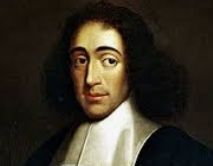
You seem to wish to employ reason, and ask me, "How I know that my philosophy is the best among all that have ever been taught in the world, or are being taught, or ever will be taught?" a question which I might with much greater right ask you ; for I do not presume that I have found the best philosophy, I know that I understand the true philosophy. If you ask in what way I know it, I answer: In the same way as you know that the three angles of a triangle are equal to two right angles: that this is sufficient, will be denied by no one whose brain is sound, and who does not go dreaming of evil spirits inspiring us with false ideas like the true. For the truth is the index of itself and of what is false. But you, who presume that you have at last found the best religion, or rather the best men, on whom you have pinned your credulity, you, "who know that they are the best among all who have taught, do now teach, or shall in future teach other religions. Have you examined all religions, ancient as well as modern, taught here and in India and everywhere throughout the world? And, if you, have duly examined them, how do you know that you have chosen the best" since you can give no reason for the faith that is in you? But you will say, that you acquiesce in the inward testimony of the Spirit of God, while the rest of mankind are ensnared and deceived by the prince of evil spirits. But all those outside the pale of the Romish Church can with equal right proclaim of their own creed what you proclaim of yours. As to what you add of the common consent of myriads of men and the uninterrupted ecclesiastical succession, this is the very catch-word of the Pharisees. They with no less confidence than the devotees of Rome bring forward their myriad witnesses, who as pertinaciously as the Roman witnesses repeat what they have heard, as though it were their personal experience. Further, they carry back their line to Adam. They boast with equal arrogance, that their Church has continued to this day unmoved and unimpaired in spite of the hatred of Christians and heathen. They more than any other sect are supported by antiquity. They exclaim with one voice, that they have received their traditions from God himself, and that they alone preserve the word of God, both written and unwritten. That all heresies have issued from them, and that they have remained constant through thousands of years under no constraint of temporal dominion, but by the sole efficacy of their superstition, no one can deny. The miracles they tell of would tire a thousand tongues. But their chief boast is that they count a far greater number of martyrs than any other nation, a number which is daily increased by those who suffer with singular constancy for the faith they profess; nor is their boasting false. I myself knew among others of a certain Judah called the faithful, who in the midst of the flames, when he was already thought to be dead, lifted his voice to sing the hymn beginning, "To thee, o God, I offer up my soul", and so singing perished.
▼
Source
[http://oll.libertyfund.org/?option=com_staticxt&staticfile=show.php%3Ftitle=1711&chapter=144250&layout=html&Itemid=27 Letter 74 (76) to Albert Burgh (1675)]
4 months 4 weeks ago
The waking man looks without fear at this offspring of his lawless Imagination; for he knows that they are but vain Spectres of his weakness. He feels himself lord of the world: his me hovers victorious over the Abyss; and will through Eternities hover aloft above that endless Vicissitude. Harmony is what his spirit strives to promulgate, to extend. He will even to infinitude grow more and more harmonious with himself and with his Creation; and at every step behold the all-efficiency of a high moral Order in the Universe, and what is purest of his Me come forth into brighter and brighter clearness. This significance of the World is Reason; for her sake is the World here; and when it is grown to be the arena of a childlike, expanding Reason, it will one day become the divine Image of her Activity, the scene of a genuine Church. Till then let man honour Nature as the Emblem of his own Spirit; the Emblem ennobling itself, along with him, to unlimited degrees. Let him, therefore, who would arrive at knowledge of Nature, train his moral sense, let him act and conceive in accordance with the noble Essence of his Soul; and as if of herself Nature will become open to him. Moral Action is that great and only Experiment, in which all riddles of the most manifold appearances explain themselves. Whoso understands it, and in rigid sequence of Thought can lay it open, is forever master of Nature.

4 months 4 weeks ago
Choose always the way that seems the best, however rough it may be; custom will soon render it easy and agreeable.
▼
Source
As quoted in A Dictionary of Thoughts: Being a Cyclopedia of Laconic Quotations from the Best Authors of the World, both Ancient and Modern (1908) by Tyron Edwards, p. 101
4 months 4 weeks ago
A declaration of war on the masses by higher men is needed! ... Everything that makes soft and effeminate, that serves the end of the people or the feminine, works in favor of universal suffrage, i.e. the domination of the inferior men. But we should take reprisal and bring this whole affair to light and the bar of judgment.
▼
Source
Sec. 864 (Notebook W II 5. Spring 1888, KGW VIII, 3.157-62, KSA 13.365-70)
4 months 4 weeks ago
People try so hard to believe in leaders now, pitifully hard. But we no sooner get a popular reformer or politician or soldier or writer or philosopher — a Roosevelt, a Tolstoy, a Wood, a Shaw, a Nietzsche, than the cross-currents of criticism wash him away. My Lord, no man can stand prominence these days. It's the surest path to obscurity.
▼
Source
F. Scott Fitzgerald in This Side of Paradise (1920)
4 months 4 weeks ago
Fourth Theory.—Man has free will; it is therefore intelligible that the Law contains commands and prohibitions, with announcements of reward and punishment. All acts of God are due to wisdom; no injustice is found in him, and he does not afflict the good. The Mu'tazila profess this theory, although they do not believe in man's absolute free will. They hold that God takes notice of the falling of the leaf and the destruction of the ant, and that his Providence extends over all beings.
▼
Source
Ch.17
4 months 4 weeks ago
Wilt thou seal up the avenues of ill? Pay every debt as if God wrote the bill.
▼
Source
Fragment
4 months 4 weeks ago
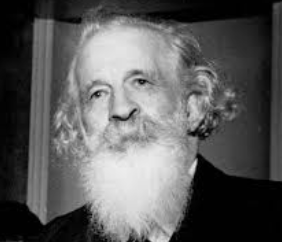
This book is written with the conviction that there are no "good" or "bad" people, no matter how offensive or eccentric to society they may seem. . . You and I didn't design people. God designed people. What I am trying to do is to discover why God included humans in Universe.
4 months 4 weeks ago
One must always maintain one’s connection to the past and yet ceaselessly pull away from it. To remain in touch with the past requires a love of memory. To remain in touch with the past requires a constant imaginative effort.
▼
Source
A Retrospective Glance at the Lifework of a Master of Books
4 months 4 weeks ago
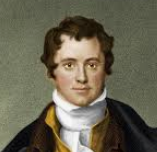
As we all gratefully acknowledge, it is to the genius and labours of Faraday—Davy's successor in this place—that the astonishing development of the application of electrical energy which characterises this age has taken rise.
4 months 4 weeks ago
Let not sleep fall upon thy eyes till thou has thrice reviewed the transactions of the past day. Where have I turned aside from rectitude? What have I been doing? What have I left undone, which I ought to have done? Begin thus from the first act, and proceed; and, in conclusion, at the ill which thou hast done, be troubled, and rejoice for the good.
▼
Source
As translated in [http://etext.lib.virginia.edu/etcbin/toccer-new2?id=Joh1Ram.sgm&images=images/modeng&data=/texts/english/modeng/parsed&tag=public&part=8&division=div1 The Rambler No. 8] (14 April 1750) by Samuel Johnson | Let not sleep e'er close thy ey
4 months 4 weeks ago
Meaning and morality of one's life come from within oneself. Healthy, strong individuals seek self-expansion by experimenting and by living dangerously. Life consists of an infinite number of possibilities, and the healthy person explores as many of them as possible. Religions that teach pity, self-contempt, humility, self-restraint and guilt are incorrect. The good life is ever-changing, challenging, devoid of regret, intense, creative, and risky.
▼
Source
Attributed to Nietzsche on quotes sites and on social media, the original quotation is from An Introduction to the History of Psychology by B. R. Hergenhahn (2008, page 226) and is the author's summary of Nietzsche's ideas: "The meaning and morality of on
CivilSimian.com created by AxiomaticPanic, CivilSimian, Kalokagathia