
4 months 4 weeks ago
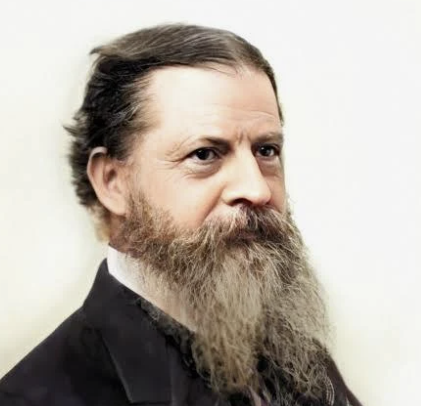
Ultimately, the last word is never ours. Peirce said: the meaning of my life is entrusted to others. [...] Which proves that truth is never something definitive; we are always mistaken. On a journey. It is no coincidence that I speak of the “transit of truth.”
▼
Source
Carlo Sini, quoted in [https://ricerca.repubblica.it/repubblica/archivio/repubblica/2013/02/14/la-verita-un-errore.html La verità è un errore], Antonio Gnoli, la Repubblica, 14 February 2013
4 months 4 weeks ago
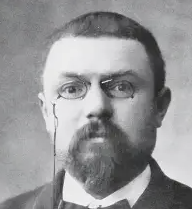
He has begun by supposing that light has a constant velocity... the same in all directions. This... could never be verified directly by experiment... The postulate... resembling the ... furnishes us with a new rule for the investigation of simultaneity.
4 months 4 weeks ago
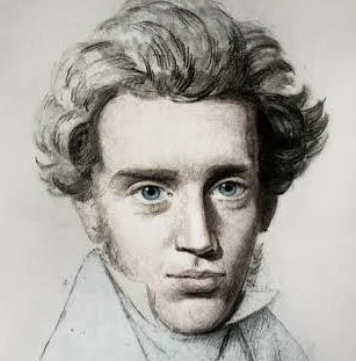
But it never occurred to him to want to be a philosopher, or dedicate himself to Speculation; he was still too fickle for that. True, he was not drawn now to one thing and now to another – thinking was and remained his passion – but he still lacked the self-discipline required for acquiring a deeper coherence. Both the significant and the insignificant attracted him equally as points of departure for his pursuits; the result was not of great consequence – only the movements of thought as such interested him. Sometimes he noticed that he reached one and the same conclusion from quite different starting points, but this did not in any deeper sense engage his attention. His delight was always just to be pressing on; wherever he suspected a labyrinth, he had to find the way. Once he had started, nothing could bring him to a halt. If he found the going difficult and became tired of it before he ought, he would adopt a very simple remedy – he would shut himself up in his room, make everything as festive as possible, and then say loudly and clearly: I will do it. He had learned from his father that one can do what one wills, and his father's life had not discredited this theory. Experiencing this had given Johannes indescribable pride; that there could be something one could not do when one willed it was unbearable to him. But his pride did not in the least indicate weakness of will, for when he had uttered these energetic words he was ready for anything; he then had a still higher goal – to penetrate the intricacies of the problem by force of will. This again was an adventure that inspired him. Indeed his life was in this way always adventurous. He needed no woods and wanderings for his adventures, but only what he possessed – a little room with one window.
▼
Source
Johannes Climacus p. 22-23

4 months 4 weeks ago
At the end of Being and Nothingness, ... Being in-itself and Being for-itself were of Being; and this totality of beings, in which they were effected, itself was linked up to itself, relating and appearing to itself, by means of the essential project of human-reality. What was named in this way, in an allegedly neutral and undetermined way, was nothing other than the metaphysical unity of man and God, the relation of man to God, the project of becoming God as the project constituting human-reality. Atheism changes nothing in this fundamental structure.
▼
Source
"The Ends of Man," Margins of Philosophy, tr. w/ notes by Alan Bass. The University of Chicago Press. Chicago, 1982. (original French published in Paris, 1972, as Marges de la philosophie). p. 116
4 months 4 weeks ago
The only certainty is that nothing is certain.
▼
Source
Book II, sec. 5.
4 months 4 weeks ago
Another valuable purpose of ridicule is with relation to smaller vices, which are often more effectually corrected by ridicule, than by grave admonition. Men have been laughed out of faults which a sermon could not reform; nay, there are many little indecencies which are improper to be mentioned in such solemn discourses. Now ridicule with contempt or ill-nature, is indeed always irritating and offensive; but we may, by testifying a just esteem for the good qualities of the person ridiculed, and our concern for his interests, let him see that our ridicule of his weakness flows from love to him, and then we may hope for a good effect. This then is another necessary rule, "That along with our ridicule of smaller faults we should always join evidences of good nature and esteem." As to jests upon imperfections, which one cannot amend, I cannot fee of what use they can be: men of sense cannot relish such jests; foolish trifling minds may by them be led to despise the truest merit, which is not exempted from the casual misfortunes of our mortal state.
▼
Source
Letter to the Author of the Dublin Journal, published in The Dublin Weekly Journal, No. 12 (19 June 1725), p. 46; later published in Reflections Upon Laughter (1750); and in Thoughts upon Laughter, and Observations on the Fable of the Bees (1758), p. 50

4 months 4 weeks ago
This organization of functional discourse is of vital importance; it serves as a vehicle of coordination and subordination. The unified, functional language is an irreconcilably anti-critical and anti-dialectical language. In it, operational and behavioral rationality absorbs the transcendent, negative, oppositional elements of Reason.
▼
Source
p. 97
4 months 4 weeks ago
Those who assert the objective reality of time either conceive of it as a continuous flow in what exists, without, however, any existing thing, as is done especially by the English philosophers, an absurd fiction, or as something real abstracted from the succession of inner states, as it has been put by Leibnitz and his followers.
4 months 4 weeks ago
Now just as the historical gives occasion for the contemporary to become a disciple, but only it must be noted through receiving the condition from the God himself, since otherwise we speak Socratically, so the testimony of contemporaries gives occasion for each successor to become a disciple, but only it must be noted through receiving the condition from the God himself.
▼
Source
p. 75
4 months 4 weeks ago
No differeance without alterity, no alterity without singularity, no singularity without here-now.
▼
Source
Injunctions of Marx, p,31
4 months 4 weeks ago
Let your accusations be few in number, even if they be just.
▼
Source
The Ring (c. 120). | If "The Ring" refers to the work "The Ring of Sixtus", it is highly unlikely that these quotes are attributed correctly. It is widely believed that "The Ring of Sixtus" was written by a Pythagorean philosopher.
4 months 4 weeks ago
Men do not differ much about what things they will call evils; they differ enormously about what evils they will call excusable.
▼
Source
In The Illustrated London News (23 October 1909)
4 months 4 weeks ago
The precarious ontological link between Logos and Eros is broken, and scientific rationality emerges as essentially neutral.
▼
Source
p. 147
4 months 4 weeks ago
Nature has willed that man should, by himself, produce everything that goes beyond the mechanical ordering of his animal existence, and that he should partake of no other happiness or perfection than that which he himself, independently of instinct, has created by his own reason.
▼
Source
Third Thesis
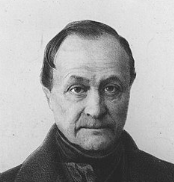
4 months 4 weeks ago
It lays down, as is generally known, that our speculations upon all subjects whatsoever, pass necessarily through three successive stages: a Theological stage, in which free play is given to spontaneous fictions admitting of no proof; the Metaphysical stage, characterized by the prevalence of personified abstractions or entities; lastly, the Positive stage, based upon an exact view of the real facts of the case.
▼
Source
p. 36
4 months 4 weeks ago
How could one speak properly about love if you were forgotten, you God of love, source of all love in heaven and on earth; you who spared nothing but in love gave everything; you who are love, so that one who loves is what he is only by being in you.
▼
Source
opening prayer, p. 3
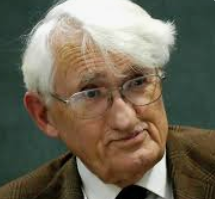
4 months 4 weeks ago
Technically speaking, since our complex societies are highly susceptible to interferences and accidents,they certainly offer ideal opportunities for a prompt disruption of normal activities. These disruptions can, with minimum expense, have considerably destructive consequences. Global terrorism is extreme both in its lack of realistic goals and in its cynical exploitation of the vulnerability of complex systems.
▼
Source
Habermas (2004) in: Giovanna Borradori (2004) Philosophy in a Time of Terror: : Dialogues with Jurgen Habermas and Jacques Derrida. p. 34
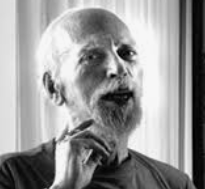
4 months 4 weeks ago
The persons we think we are have been manufactured out of some shotgun wedding of history and and imagination.
▼
Source
The Illuminati Papers (1980), p. 61
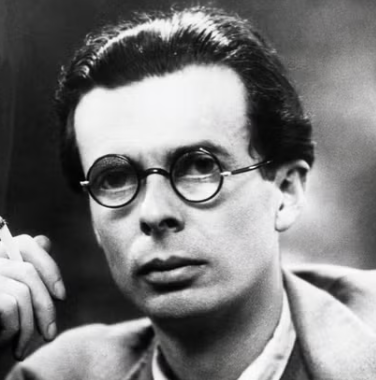
4 months 4 weeks ago
All war propaganda consists, in the last resort, in substituting diabolical abstractions for human beings. Similarly, those who defend war have invented a pleasant sounding vocabulary of abstractions in which to describe the process of mass murder.
▼
Source
"Pacifism and Philosophy" (1936)
4 months 4 weeks ago
What embitters the world is not excess of criticism, but absence of self-criticism.
▼
Source
"On Bright Old Things — and Other Things", in Sidelights on New London and Newer New York: And Other Essays (1932)
4 months 4 weeks ago
The light dove, cleaving the air in her free flight, and feeling its resistance, might imagine that its flight would be still easier in empty space.
▼
Source
B 8
4 months 4 weeks ago
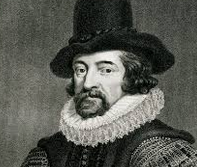
Time, which is the author of authors.
▼
Source
Book I, iv, 12
4 months 4 weeks ago
I see again what I thought I saw the first time, when I sent forth the little book that was compared to and in fact could best be compared to “a humble little flower under the cover of the great forest”
▼
Source
Preface Three Discourses at Friday Communion November 14, 1849 Hong translation 1997 P. 111 (From Without Authority)
4 months 4 weeks ago
Everybody who has ever worked for a corporation knows that corporations conspire all the time. Politicians conspire all the time, pot-dealers conspire not to get caught by the narcs, the world is full of conspiracies. Conspiracy is natural primate behavior.
▼
Source
The I in the Triangle, speech held at a bookstore in Santa Cruz, California (1990)
4 months 4 weeks ago
There are many kinds of gods. Therefore there are many kinds of men.
▼
Source
“One and Many,” p. 3
4 months 4 weeks ago
Truth must of necessity be stranger than fiction ... for fiction is the creation of the human mind, and therefore is congenial to it.
▼
Source
Ch. 4 "Speculation of the House Agent"
4 months 4 weeks ago
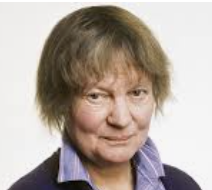
People from a planet without flowers would think we must be mad with joy the whole time to have such things about us.
▼
Source
A Fairly Honourable Defeat (1970); 2001, p. 170.
4 months 4 weeks ago
Human freedom is realised in the adoption of humanity as an end in itself, for the one thing that no-one can be compelled to do by another is to adopt a particular end.
▼
Source
Part Two : Metaphysical Principles of Virtue
4 months 4 weeks ago
There is a great difference between the Idols of the human mind and the Ideas of the divine. That is to say, between certain empty dogmas, and the true signatures and marks set upon the works of creation as they are found in nature.
▼
Source
Aphorism 23
4 months 4 weeks ago
I assume that Luther has risen from the grave. For several years now he has been living among us but incognito; he has been observing the lives we lead, has been scrutinizing everyone in this regard and me also. I assume that he speaks to me one day and says, “Are you a believer? Do you have faith?” Anyone who knows me as an author will see that I would perhaps be the one who might come off best of all in such and examination, for I have continually said, “I do not have faith” – I have expressed, as does a bird's alarmed flight before a storm, that there is mischief brewing here, “I do not have faith.” So I should say to Luther, “No, dear Luther, I have at least shown the respect of saying: I do not have faith.” However, I shall not press this, but, just as others call themselves Christians and believers, I, too, shall say, “I am a believer,” for otherwise what I wish to be cleared up will not be cleared up.
▼
Source
Soren Kierkegaard, For Self-Examination, Hong p. 17-18
4 months 4 weeks ago
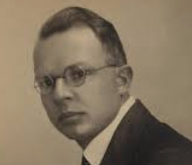
In science there are no 'depths'; there is surface everywhere.
▼
Source
Rudolf Carnap (1929) from the Vienna Circle manifesto.
4 months 4 weeks ago
It is man's intelligence that makes him so often behave more stupidly than the beasts. ... Man is impelled to invent theories to account for what happens in the world. Unfortunately, he is not quite intelligent enough, in most cases, to find correct explanations. So that when he acts on his theories, he behaves very often like a lunatic. Thus, no animal is clever enough, when there is a drought, to imagine that the rain is being withheld by evil spirits, or as punishment for its transgressions. Therefore you never see animals going through the absurd and often horrible fooleries of magic and religion. No horse, for example would kill one of its foals to make the wind change direction. Dogs do not ritually urinate in the hope of persuading heaven to do the same and send down rain. Asses do not bray a liturgy to cloudless skies. Nor do cats attempt, by abstinence from cat's meat, to wheedle the feline spirits into benevolence. Only man behaves with such gratuitous folly. It is the price he has to pay for being intelligent but not, as yet, intelligent enough.
▼
Source
p. 270
4 months 4 weeks ago
It is not funny that anything else should fall down; only that a man should fall down. No one sees anything funny in a tree falling down. No one sees a delicate absurdity in a stone falling down. No man stops in the road and roars with laughter at the sight of the snow coming down. The fall of thunderbolts is treated with some gravity. The fall of roofs and high buildings is taken seriously. It is only when a man tumbles down that we laugh. Why do we laugh? Because it is a grave religious matter: it is the Fall of Man. Only man can be absurd: for only man can be dignified.
▼
Source
"Spiritualism"
4 months 4 weeks ago
In the natural state no concept of God can arise, and the false one which one makes for himself is harmful. Hence the theory of natural religion can be true only where there is no science; therefore it cannot bind all men together.
▼
Source
Part III : Selection on Education from Kant's other Writings, Ch. I Pedagogical Fragments, # 60
4 months 4 weeks ago
Like strawberry wives, that laid two or three great strawberries at the mouth of their pot, and all the rest were little ones.
▼
Source
No. 54
4 months 4 weeks ago
History has a way of reducing individuals to flat, two-dimensional portraits. it is the enemy of subjectivity, which is why Stephen Dedalus called it "a nightmare from which I am trying to awake". If we think of Kierkegaard, of Nietzsche, of Hölderlin, we see them standing alone, outside of history. They are spotlighted by their intensity, and the background is all darkness. They intersect history, but are not a part of it. There is something anti-history about such men; they are not subject to time, accident and death, but their intensity is a protest against it. I have elsewhere called such men "Outsiders" because they attempt to stand outside history. which defines humanity on terms of limitation, not of possibility.
▼
Source
Colin Wilson in Rasputin and the Fall of the Romanovs, p. 13-14 (1964)
4 months 4 weeks ago
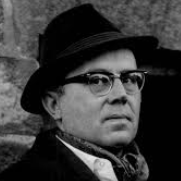
Human nature being irremediably flawed, so that all of us in some degree rebel against the people and the institutions to which we owe most, there is in every man a certain impulse to make himself God: that is, to cast off all authority but his own lust and whim. From this vice comes the corrupting influence of total power upon even the best of natures. The rebellion of Lucifer is the symbol of this ancient anarchic impulse—the passion for overthrowing the just authority of God, that upon the vacant throne of authority the rebel may make himself absolute.
4 months 4 weeks ago
We have been given free will, in order that we may will our self-will out of existence and so come to live continuously in a ‘state of grace.’ All our actions must be directed, in the last analysis, to making ourselves passive in relation to the activity and the being of divine reality. We are, as it were, aeolian harps, endowed with the power either to expose themselves to the wind of the Spirit or to shut themselves away from it.
4 months 4 weeks ago
It is largely because the free-thinkers, as a school, have hardly made up their minds whether they want to be more optimist or more pessimist than Christianity that their small but sincere movement has failed.
▼
Source
Ch. II: The Great Victorian Novelists (p. 73)
4 months 4 weeks ago
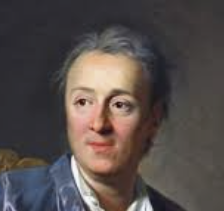
I believe in God, although I live very happily with atheists... It is very important not to mistake hemlock for parsley; but not at all so to believe or not in God.
▼
Source
As quoted in Against the Faith (1985) by Jim Herrick, p. 75 | Variant translation: It is very important not to mistake hemlock for parsley, but to believe or not believe in God is not important at all.

4 months 4 weeks ago
Sometimes, because my position has not been made clear enough, people think I'm a sort of radical anarchist who has an absolute hatred of power. No! What I am trying to do is to approach this extremely important and tangled phenomenon in our society, the exercise of power, with the most reflective, and I would say prudent attitude. Prudent in my analysis, in the moral and theoretical postulates I use: I try to figure out what's at stake. But to question the relations of power in the most scrupulous and attentive manner possible, looking into all the domains of its exercise, that's not the same thing as constructing a mythology of power as the beast of the apocalypse.
▼
Source
"Power, Moral Values, and the Intellectual", interview in History of the Present 4 (Spring 1988)

4 months 4 weeks ago
It's frightening to think that you mark your children merely by being yourself... It seems unfair. You can't assume the responsibility for everything you do — or don't do.
▼
Source
Les Belles Images (1966), Ch. 3
4 months 4 weeks ago
The soul of wit may become the very body of untruth.
▼
Source
Foreward (p. vii)
4 months 4 weeks ago
Strong gongs groaning as the drums beat far.
▼
Source
Lepanto
4 months 4 weeks ago
Bad company is as instructive as licentiousness. One makes up for the loss of one’s innocence with the loss of one’s prejudices.
4 months 4 weeks ago
There is hardly a philosophy which has not invoked something like the will or desire to know, the love of truth, etcetera. But, in truth, very few philosophers—apart, perhaps, from Spinoza and Schopenhauer—have accorded it more than a marginal status; as if there was no need for philosophy to say first of all what the name that it bears actually refers to. As if placing at the head of its discourse the desire to know, which it repeats in its name, was enough to justify its own existence and show—at a stroke—that it is necessary and natural: All men desire to know. Who, then, is not a philosopher, and how could philosophy not be the most necessary thing in the world?
▼
Source
pp. 4-5
4 months 4 weeks ago
In horror, in terror, she accepted the metamorphosis — gnat, foam, ant, until death. And it's only the beginning, she thought. She stood motionless, as if it were possible to play tricks with time, possible to stop it from following its course. But her hands stiffened against her quivering lips. When the bells began to sound the hour she let out the first scream.
▼
Source
Last lines
4 months 4 weeks ago
"Orthodoxy is the diehard of the world of thought. It learns not, neither can it forget."
▼
Source
No reliable source makes this quote disputed.
4 months 4 weeks ago
He had the notion that because I am a clergyman I should believe anything. Many people have little notions of that kind.
4 months 4 weeks ago
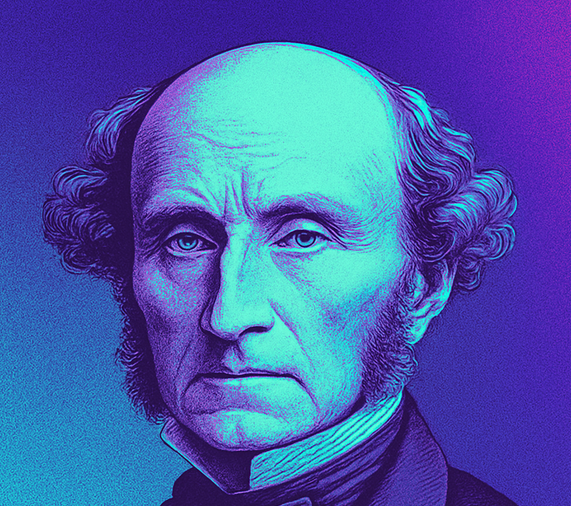
It is an uphill race, and a race against time, for if the American form of democracy overtakes us first, the majority will no more relax their despotism than a single despot would. But our only chance is to come forward as Liberals, carrying out the democratic idea, not as Conservatives, resisting it.
▼
Source
Letter to Henry Fawcett (5 February 1860), quoted in Michael St. John Packe, The Life of John Stuart Mill (1954), p. 418
CivilSimian.com created by AxiomaticPanic, CivilSimian, Kalokagathia