
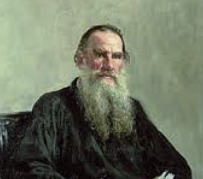
4 months 4 weeks ago
The whole life of the upper classes is a constant inconsistency. The more delicate a man's conscience is, the more painful this contradiction is to him.
▼
Source
Chapter V, Contradiction Between our Life and our Christian Conscience
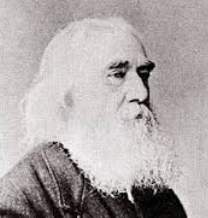
4 months 4 weeks ago
If justice be not a natural principle, it is no principle at all. If it be not a natural principle, there is no such thing as justice. If it be not a natural principle, all that men have ever said or written about it, from time immemorial, has been said and written about that which had no existence. If it be not a natural principle, all the appeals for justice that have ever been heard, and all the struggles for justice that have ever been witnessed, have been appeals and struggles for a mere fantasy, a vagary of the imagination, and not for a reality.If justice be not a natural principle, then there is no such thing as injustice; and all the crimes of which the world has been the scene, have been no crimes at all; but only simple events, like the falling of the rain, or the setting of the sun; events of which the victims had no more reason to complain than they had to complain of the running of the streams, or the growth of vegetation.If justice be not a natural principle, governments (so-called) have no more right or reason to take cognizance of it, or to pretend or profess to take cognizance of it, than they have to take cognizance, or to pretend or profess to take cognizance, of any other nonentity; and all their professions of establishing justice, or of maintaining justice, or of rewarding justice, are simply the mere gibberish of fools, or the frauds of imposters.But if justice be a natural principle, then it is necessarily an immutable one; and can no more be changed—by any power inferior to that which established it—than can the law of gravitation, the laws of light, the principles of mathematics, or any other natural law or principle whatever; and all attempts or assumptions, on the part of any man or body of men—whether calling themselves governments, or by any other name—to set up their own commands, wills, pleasure, or discretion, in the place of justice, as a rule of conduct for any human being, are as much an absurdity, an usurpation, and a tyranny, as would be their attempts to set up their own commands, wills, pleasure, or discretion in the place of any and all the physical, mental, and moral laws of the universe.If there be any such principle as justice, it is, of necessity, a natural principle; and, as such, it is a matter of science, to be learned and applied like any other science. And to talk of either adding to, or taking from, it, by legislation, is just as false, absurd, and ridiculous as it would be to talk of adding to, or taking from, mathematics, chemistry, or any other science, by legislation.
▼
Source
Sections I–II, p. 11–12

4 months 4 weeks ago
Good bye, proud world! I'm going home; Thou art not my friend; I am not thine.
▼
Source
Good-bye, st. 1
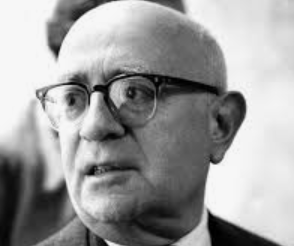
4 months 4 weeks ago
The dressing up and puffing up of the individual erases the lineaments of protest.
▼
Source
p. 283
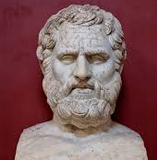
4 months 4 weeks ago
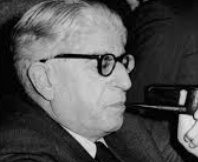
Great strength of body is the gift of nature; But to be able to advise whate'er Is most expedient for one's country's good, Is the peculiar work of sense and wisdom.
4 months 4 weeks ago
Jesus' own coming was by no means so introverted and other-worldly as a Pauline reinterpretation—always welcome to the ruling class—would have it. ... To Jesus, the kingdom of this world was the devil (John 8:44). This is why he never suggested allowing it to go on; he did not conclude a non-aggression pact with it.
▼
Source
p. 123
4 months 4 weeks ago
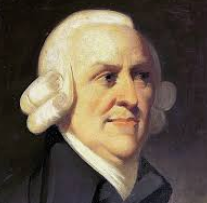
Adam Smith’s laws of the market are basically simple. They tell us that the outcome of a certain kind of behavior in a certain social framework will bring about perfectly definite and foreseeable results. Specifically they show us how the drive of individual self-interest in an environment of similarly motivated individuals will result in competition; and they further demonstrate how competition will result in the provision of those goods that society wants, in the quantities that society desires, and at the prices society is prepared to pay. […] But self-interest is only half the picture. It drives men to action. Something else must prevent the pushing of profit-hungry individuals from holding society up to exorbitant ransom: a community activated only by self-interest would be a community of ruthless profiteers. This regulator is competition, the conflict of the self-interested actors on the marketplace. For each man, out to do his best for himself with no thought of social consequences, is faced with a flock of similarly motivated individuals who are engaged in exactly the same pursuit. Hence, each is only too eager to take advantage of his neighbor’s greed. A man who permits his self-interest to run away with him will find that competitors have slipped in to take his trade away; if he charges too much for his wares or if he refuses to pay as much as everybody else for his workers, he will find himself without buyers in the one case and without employees in the other. Thus very much as in The Theory of Moral Sentiments, the selfish motives of men are transmuted by interaction to yield the most unexpected of results: social harmony.
▼
Source
Robert Heilbroner, The Worldly Philosophers 7th ed. (1999), Chapter III. The Wonderful World of Adam Smith
4 months 4 weeks ago
He said that the maintenance of public works was a duty of government; and his list of such works included all that at that time could have been possibly socialized—roads, canals, bridges, harbours, etc. Private enterprise could not be expected to erect or maintain these services, and this was a limited sort of socialism... [H]is concessions to Protectionism went very far. The doctrine of defence as prior to opulence was not stated only in respect of the Navigation Act: "if any particular manufacture was necessary for the defence of the society it might not always be prudent to depend upon our neighbours for the supply; and, if such manufacture could not otherwise be supported at home, it might not be unreasonable that all the other branches of industry should be taxed in order to support it". This goes a long way with modern Protectionism.
▼
Source
D. H. MacGregor, Economic Thought and Policy (1949), p. 81
4 months 4 weeks ago
Truth is ... one approach to the attainment of the good, but in and of itself, it is neither the good nor the beautiful ... Socrates, Pascal, and others regarded knowledge of the truth with regard to purposeless objects as incongruous with the good ... [by] exposing deception, truth destroys illusion, which is the principle attribute of beauty.
4 months 4 weeks ago
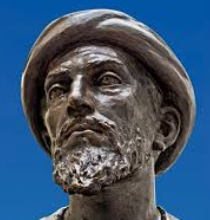
Having concluded these introductory remarks I proceed to examine those expressions, to the true meaning of which, as apparent from the context, it is necessary to direct your attention. This book will then be a key admitting to places the gates of which would otherwise be closed. When the gates are opened and men enter, their souls will enjoy repose, their eyes will be gratified, and even their bodies, after all toil and labour, will be refreshed.
4 months 4 weeks ago
The measure of action is the sentiment from which it proceeds. The greatest action may easily be one of the most private circumstance.
▼
Source
Goethe; or, The Writer
4 months 4 weeks ago
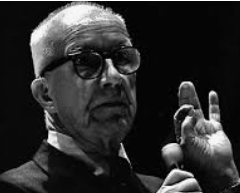
Acutely aware of our beings’ limitations and acknowledging the infinite mystery of the a priori universe into which we are born but nevertheless searching for a conscious means of hopefuily competent participation by humanity in its own evolutionary trending while employing only the unique advantages inhering exclusively to. the individual who takes and maintains the economic initiative in the face of the formidable physical capital and credit advantages of the massive corporations and political states and deliberately avoiding political ties and tactics while endeavoring by experiments and explorations to excite individuals’ awareness and realization of humanity’s higher potentials.
4 months 4 weeks ago
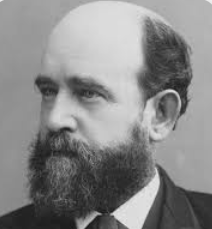
In the plan of forcing by endurance an increase of wages, there are in such methods inherent disadvantages which workingmen should not blink. I speak without prejudice, for I am still an honorary member of the union which, while working at my trade, I always loyally supported. But, see: The methods by which a trade union can alone act are necessarily destructive; its organization is necessarily tyrannical. A strike, which is the only recourse by which a trade union can enforce its demands, is a destructive contest — just such a contest as that to which an eccentric, called "The Money King," once, in the early days of San Francisco, challenged a man who had taunted him with meanness, that they should go down to the wharf and alternately toss twenty-dollar pieces into the bay until one gave in. The struggle of endurance involved in a strike is, really, what it has often been compared to — a war; and, like all war, it lessens wealth. And the organization for it must, like the organization for war, be tyrannical. As even the man who would fight for freedom, must, when he enters an army, give up his personal freedom and become a mere part in a great machine, so must it be with workmen who organize for a strike. These combinations are, therefore, necessarily destructive of the very things which workmen seek to gain through them — wealth and freedom.
▼
Source
Book VI, Ch. 1
4 months 4 weeks ago
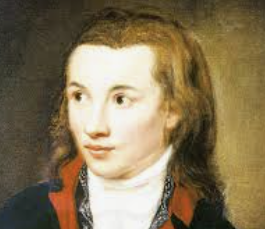
The world must be romanticized. In this way the originary meaning may be found again.
▼
Source
As quoted in The Experience of the Foreign : Culture and Translation in Romantic Germany (1992) by Antoine Berman | Variant translation: Romanticize the world.
4 months 4 weeks ago
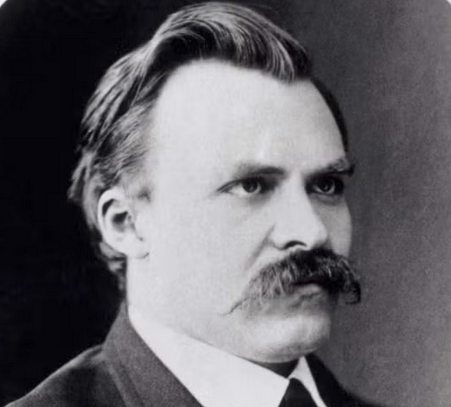
In Germany there is much complaining about my "eccentricities." But since it is not known where my center is, it won't be easy to find out where or when I have thus far been "eccentric." That I was a philologist, for example, meant that I was outside my center (which fortunately does not mean that I was a poor philologist). Likewise, I now regard my having been a Wagnerian as eccentric. It was a highly dangerous experiment; now that I know it did not ruin me, I also know what significance it had for me — it was the most severe test of my character.
▼
Source
Letter to Carl Fuchs (14 December 1887)
4 months 4 weeks ago
A commercial company enslaved a nation comprising two hundred millions. Tell this to a man free from superstition and he will fail to grasp what these words mean. What does it mean that thirty thousand men, not athletes but rather weak and ordinary people, have subdued two hundred million vigorous, clever, capable, and freedom-loving people? Do not the figures make it clear that it is not the English who have enslaved the Indians, but the Indians who have enslaved themselves?
▼
Source
V
4 months 4 weeks ago
All the great evils which men cause to each other because of certain intentions, desires, opinions, or religious principles, are likewise due to non-existence, because they originate in ignorance, which is absence of wisdom.
▼
Source
Ch.11
4 months 4 weeks ago
Shallow men believe in luck, believe in circumstances...Strong men believe in cause and effect.
▼
Source
Worship
4 months 4 weeks ago
We are now synergetically forced to conclude that all phenomena are metaphysical; wherefore, as many have long suspected — like it or not — "life is but a dream."
4 months 4 weeks ago
The primary error of the advocates of land nationalization is in their confusion of equal rights with joint rights, and in their consequent failure to realize the nature and meaning of economic rent… In truth the right to the use of land is not a joint or common right, but an equal right; the joint or common right is to rent, in the economic sense of the term. Therefore it is not necessary for the state to take land, it is only necessary for it to take rent. This taking by the commonalty of what is of common right, would of itself secure equality in what is of equal right — for since the holding of land could be profitable only to the user, there would be no inducement for any one to hold land that he could not adequately use, and monopolization being ended no one who wanted to use land would have any difficulty in finding it.
▼
Source
Part III : Recantation, Ch. XI Compensation
4 months 4 weeks ago
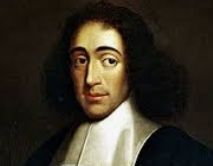
Beauty, my dear Sir, is not so much a quality of the object beheld, as an effect in him who beholds it. If our sight were longer or shorter, or if our constitution were different, what now appears beautiful to us would seem misshapen, and what we now think misshapen we should regard as beautiful. The most beautiful hand seen through the microscope will appear horrible. Some things are beautiful at a distance, but ugly near; thus things regarded in themselves, and in relation to God, are neither ugly nor beautiful. Therefore, he who says that God has created the world, so that it might be beautiful, is bound to adopt one of the two alternatives, either that God created the world for the sake of men's pleasure and eyesight, or else that He created men's pleasure and eyesight for the sake of the world. Now, whether we adopt the former or the latter of these views, how God could have furthered His object by the creation of ghosts, I cannot see. Perfection and imperfection are names which do not differ much from the names beauty and ugliness.
▼
Source
Letter to Hugo Boxel (October 1674) The Chief Works of Benedict de Spinoza (1891) Tr. R. H. M. Elwes, Vol. 2, Letter 58 (54).
4 months 4 weeks ago
Over his own heart and his own thoughts he watched attentively. He knew not whither his longing was carrying him. As he grew up, he wandered far and wide; viewed other lands, other seas, new atmospheres, new rocks, unknown plants, animals, men; descended into caverns, saw how in courses and varying strata the edifice of the Earth was completed, and fashioned clay into strange figures of rocks. By and by, he came to find everywhere objects already known, but wonderfully mingled, united; and thus often extraordinary things came to shape in him. He soon became aware of combinations in all, of conjunctures, concurrences. Erelong, he no more saw anything alone. — In great variegated images, the perceptions of his senses crowded round him; he heard, saw, touched and thought at once. He rejoiced to bring strangers together. Now the stars were men, now men were stars, the stones animals, the clouds plants; he sported with powers and appearances; he knew where and how this and that was to be found, to be brought into action; and so himself struck over the strings, for tones and touches of his own.

4 months 4 weeks ago
None but God is wise.
▼
Source
As quoted in The Diegesis (1829) by Robert Taylor, p. 219
4 months 4 weeks ago
A man as he ought to be: that sounds to us as insipid as "a tree as it ought to be."
▼
Source
Sec. 332 (Notebook W II 3. November 1887 - March 1888, KGW VIII, 2.304, KSA 13.62)
4 months 4 weeks ago
People try to do all sorts of clever and difficult things to improve life instead of doing the simplest, easiest thing—refusing to participate in activities that make life bad.
▼
Source
p. 210
4 months 4 weeks ago
The evil into which these philosophers have fallen is greater than that from which they sought to escape, because they refuse to say that God neglects or forgets a thing, and yet they maintain that His knowledge is imperfect, that He is ignorant of what is going on here on earth, that He does not perceive it.
▼
Source
Ch.16
4 months 4 weeks ago
So nigh is grandeur to our dust, So near is God to man, When Duty whispers low, Thou must, The youth replies, I can.
▼
Source
Voluntaries, st. 3 <!-- Bartlett's, 10th ed. (1919): "So nigh is grandeur to our dust, / So near is God to man, / When Duty whispers low, Thou must, / The youth replies, I can!"
4 months 4 weeks ago
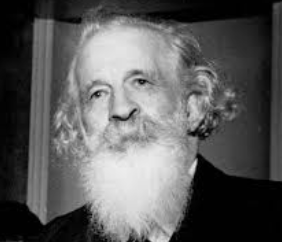
There is no joy equal to that of being able to work for all humanity and doing what you're doing well.
4 months 4 weeks ago
The words of the world want to make sentences.
▼
Source
Ch. 5, sect. 4
4 months 4 weeks ago
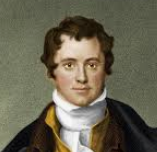
It seemed singular that his taste in this should be so acute, when his professional eminence is in a province so different and remote; but I was much more surprised when I found that the first chemist of his time was a professed angler; and that he thinks, if he were obliged to renounce fishing or philosophy, that he should find the struggle of his choice pretty severe.
4 months 4 weeks ago
The spirit of Poesy is the morning light, which makes the Statue of Memnon sound.
4 months 4 weeks ago
Abstain from animals.
▼
Source
Symbol 39; explained in the edition used here: "This Symbol exhorts to justice, to all the honour of kindred, to the reception of similar life, and to many other things of a like kind."
4 months 4 weeks ago
Mathematics would certainly have not come into existence if one had known from the beginning that there was in nature no exactly straight line, no actual circle, no absolute magnitude.
▼
Source
As quoted in The Puzzle Instinct: The Meaning of Puzzles in Human Life (2004) by Marcel Danesi, p. 71 from Human All-Too-Human
4 months 4 weeks ago
The play that Luisa Capetillo wrote in 1909, Influencias de las ideas modernas (The Influence of Modern Ideas), published in San Juan in 1916, was inspired by Tolstoy's philosophy and included a main character who resembled him.
▼
Source
Luisa Capetillo, Pioneer Puerto Rican Feminist, Norma Valle-Ferrer
4 months 4 weeks ago
It is man's duty to love and to fear God, even without hope of reward or fear of punishment.
▼
Source
Ch.24
4 months 4 weeks ago
Can anybody remember when the times were not hard and money not scarce?
▼
Source
Works and Days
4 months 4 weeks ago
Max Planck says, "The opposition never yields; they just die off." It's just a question of time. They are dying off.
4 months 4 weeks ago
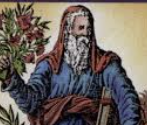
No one will deny that the soul of Pythagoras was sent to mankind from Apollo's domain, having either been one of his attendants, or more intimate associates, which may be inferred both from his birth, and his versatile wisdom.
▼
Source
Ch. 2 : Youth, Education, Travels
4 months 4 weeks ago
He is not rich, that enjoyeth not his own goods.
4 months 4 weeks ago
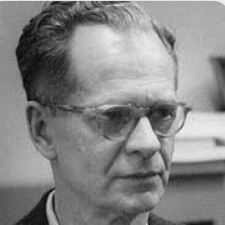
The way positive reinforcement is carried out is more important than the amount.
▼
Source
As quoted in Meditations for Parents Who Do Too Much (1993) by Jonathon Lazear and Wendy Lazear, p. 5
4 months 4 weeks ago
What do I know about God and the purpose of life? I know that this world exists. That I am placed in it like my eye in its visual field. That something about it is problematic, which we call its meaning. This meaning does not lie in it but outside of it. That life is the world. That my will penetrates the world. That my will is good or evil. Therefore that good and evil are somehow connected with the meaning of the world. The meaning of life, i.e. the meaning of the world, we can call God. And connect with this the comparison of God to a father. To pray is to think about the meaning of life.
▼
Source
Journal entry (11 June 1916), p. 72e and 73e
4 months 4 weeks ago
As a corollary we have to add that the Guide cannot be called a theological work, for Maimonides does not know of theology as a discipline distinct from metaphysics. Nor is it a book of religion, for he expressly excludes religious, together with ethical topics from the subject matter of his work. Until we shall have rediscovered a body of terms which are flexible enough to fit Maimonides' thought, the safest course will be to limit the description of the Guide to the statement that it is a book devoted to the explanation of the secret teaching of the Bible.
▼
Source
Leo Strauss, Persecution and the Art of Writing (1952), 3. Literary Character of the Guide for the Perplexed
4 months 4 weeks ago
Every artist was first an amateur.
▼
Source
Progress of Culture
4 months 4 weeks ago
Take an eighteenth century English whig. Let him be a mystic. Endow him with the logical subtlety of the great schoolmen and their belief in the powers of human reason, with the business capacity of a successful lawyer, and with the lucidity of the best type of French mathematician. Inspire him (Heaven knows how) in his early youth with a passion for Hegel. Then subject him to the teaching of Sidgwick and the continual influence of Moore and Russell. Set him to expound Hegel. What will be the result? Hegel himself could not have answered this question a priori, but the course of world history has solved it ambulando by producing McTaggart.
▼
Source
From John McTaggart Ellis McTaggart (1928)
4 months 4 weeks ago
I am using the word "perceive". I am using it here in such a way that to say of an object that it is perceived does not entail saying that it exists in any sense at all. And this is a perfectly correct and familiar usage of the word. If there is thought to be a difficulty here, it is perhaps because there is also a correct and familiar usage of the word "perceive", in which to say of an object that it is perceived does carry the implication that it exists.
▼
Source
The Foundations of Empirical Knowledge (1940).
4 months 4 weeks ago
Since it is Reason which shapes and regulates all other things, it ought not itself to be left in disorder.
▼
Source
Book I, ch. 17, § 1.
4 months 4 weeks ago
There is nothing so easy but that it becomes difficult when you do it reluctantly.
▼
Source
Terence, in Heauton Timoroumenos [The Self-Tormentor]
4 months 4 weeks ago
My propositions are elucidatory in this way: he who understands me finally recognizes them as senseless, when he has climbed out through them, on them, over them. (He must so to speak throw away the ladder, after he has climbed up on it.) (6.54)
▼
Source
Original German: Meine Sätze erläutern dadurch, dass sie der, welcher mich versteht, am Ende als unsinnig erkennt, wenn er durch sie—auf ihnen—über sie hinausgestiegen ist. (Er muss sozusagen die Leiter wegwerfen, nachdem er auf ihr hinaufgestiegen ist.)

4 months 4 weeks ago
Atemi accounts for 99% of Aikido.
▼
Source
As quoted in Traditional Aikido (1974) by Morihiro Saito, p. 38
4 months 4 weeks ago
I hung my verse in the wind Time and tide their faults will find.
▼
Source
"The Test", as quoted in Emerson As A Poet (1883) by Joel Benton, p. 40
CivilSimian.com created by AxiomaticPanic, CivilSimian, Kalokagathia