
4 months 4 weeks ago
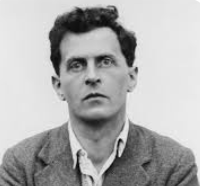
There is no more light in a genius than in any other honest man—but he has a particular kind of lens to concentrate this light into a burning point.
▼
Source
p. 41e

4 months 4 weeks ago
The attempt to construct a fundamental taxonomy of the sciences encounters great difficulties. For instance, logicians and mathematicians disagree among themselves about the objects of their respective research; there is no agreement on the relation of theoretical physics to empirical knowledge and to mathematics. The so-called social sciences are particularly difficult to classify. They have not been demarcated by systematic considerations. In Duhem and Poincarè, general considerations are not only exemplified, but the origins of the concepts and of the problems are traced right from the initial observation of facts if at all possible.
▼
Source
p. 269
4 months 4 weeks ago
Man, made after God's image, was a nobler creation than twinkling sparks in the sky, or than the larger and more useful lamp of the moon.
▼
Source
More Worlds Than One: The Creed of the Philosopher and the Hope of the Christian (1856), p. 207
4 months 4 weeks ago
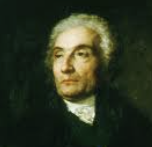
No human institution can endure unless supported by the Hand which supports all; that is to say, if it is not especially consecrated to Him at its origin. The more it is penetrated with the Divine principle, the more durable it will be. How strange is the blindness of men in our age! They boast of their knowledge, and are ignorant of everything, since they are ignorant of themselves. They know not what they are, nor what they can do. An invincible pride bears them on continually to overthrow every thing which they have not made; and in order to work out new creations, they separate themselves from the source of all existence. Jean-Jacques Rousseau has, however, very well said, Little, vain man, show me thy power, and I will show thee thy weakness. It might be said, with as much truth and more profit, Little, vain man, confess to me thy weakness, and I will show thee thy strength.
▼
Source
XLVI, p. 130
4 months 4 weeks ago
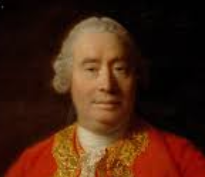
Beauty is no quality in things themselves: It exists merely in the mind which contemplates them; and each mind perceives a different beauty. One person may even perceive deformity, where another is sensible of beauty; and every individual ought to acquiesce in his own sentiment, without pretending to regulate those of others.
▼
Source
Part I, Essay 23: Of The Standard of Taste
4 months 4 weeks ago
I would really like to slow down the speed of reading with continual punctuation marks. For I would like to be read slowly. (As I myself read.)
▼
Source
p. 77e

4 months 4 weeks ago
Men who long for freedom begin the attempt to obtain it by entreating their masters to be kind enough to protect them by modifying the laws which these masters themselves have created! But times and tempers are changed. Rebels are everywhere to be found who no longer wish to obey the law without knowing whence it comes, what are its uses, and whither arises the obligation to submit to it, and the reverence with which it is encompassed. The rebels of our day are criticizing the very foundations of society which have hitherto been held sacred, and first and foremost amongst them that fetish, law. The critics analyze the sources of law, and find there either a god, product of the terrors of the savage, and stupid, paltry, and malicious as the priests who vouch for its supernatural origin, or else, bloodshed, conquest by fire and sword. They study the characteristics of law, and instead of perpetual growth corresponding to that of the human race, they find its distinctive trait to be immobility, a tendency to crystallize what should be modified and developed day by day.
▼
Source
I

4 months 4 weeks ago
Just as the good physician should go and offer his services where the sick are most numerous, so, said Diogenes the man of wisdom should take up his abode where fools are thickest in order to convict them of their folly and reprove them.
▼
Source
p. 379
4 months 4 weeks ago
Let your brother work hard at the French poets. Let him learn them by heart, especially the incomparable Racine; never mind whether he understands him yet or not. I didn't understand him when my mother used to come repeating his verses by my bedside, and lulled me to sleep with her fine voice to the sound of that inimitable music. I knew hundreds of lines long before I knew how to read; and it is thus that my ears, accustomed betimes to this ambrosia, have never since been able to endure any sourer draught.
▼
Source
Letter to his daughter Constance de Maistre
4 months 4 weeks ago
Well, it does not really explain things; in fact the founding fathers of quantum mechanics rather prided themselves on giving up the idea of explanation. They were very proud that they dealt only with phenomena: they refused to look behind the phenomena, regarding that as the price one had to pay for coming to terms with nature. And it is a fact of history that the people who took that agnostic attitude towards the real world on the microphysical level were very successful. At the time it was a good thing to do. But I don't believe it will be so indefinitely. Of course, I cannot produce theorems to that effect. If you go back to, say, David Hume, who made a careful analysis of our reasons for believing things, you find that there is no good reason for believing that the sun will come up tomorrow, or that this programme will ever be broadcast. It's a habit we have, of believing that things will continue very much as they did before. However, it is a fact that this seems to be a good habit! I cannot make that a theorem, because I think Hume's analysis is sound, but nevertheless I do believe it's a good habit, to look for explanations.
▼
Source
John S. Bell, interview in The Ghost in the Atom: A Discussion of the Mysteries of Quantum Physics (1986) edited by P. C. W. Davies and Julian R. Brown
4 months 4 weeks ago
[He was] a magician and had qualities of magic in his relations with people.
▼
Source
Sir Colin St John Wilson, as quoted in Autism and Creativity : Is there a link between autism in men and exceptional ability? (2004) by Michael Fitzgerald, p. 93
4 months 4 weeks ago
It is often said that Anarchists live in a world of dreams to come, and do not see the things which happen today. We do see them only too well, and in their true colors, and that is what makes us carry the hatchet into the forest of prejudice that besets us.Far from living in a world of visions and imagining men better than they are, we see them as they are; and that is why we affirm that the best of men is made essentially bad by the exercise of authority, and that the theory of the "balancing of powers" and "control of authorities" is a hypocritical formula, invented by those who have seized power, to make the "sovereign people," whom they despise, believe that the people themselves are governing. It is because we know men that we say to those who imagine that men would devour one another without those governors: "You reason like the king, who, being sent across the frontier, called out, 'What will become of my poor subjects without me?'"

4 months 4 weeks ago
There are many marvellous stories told of Pherecydes. For it is said that he was walking along the seashore at Samos, and that seeing a ship sailing by with a fair wind, he said that it would soon sink; and presently it sank before his eyes. At another time he was drinking some water which had been drawn up out of a well, and he foretold that within three days there would be an earthquake; and there was one.
▼
Source
Pherecydes, 2.
4 months 4 weeks ago
Do not mistake yourself by believing that your being has something in it more exalted than that of others.
4 months 4 weeks ago
It is evident, as Proudhon has already pointed our, that the smallest attack upon property will bring in its train the complete disorganization of the system based upon private enterprise and wage labor. Society itself will be forced to take production in hand, in its entirety, and to reorganize it to meet the needs of the whole people.
▼
Source
Ch. 5 : Food, p. 99
4 months 4 weeks ago
Antisthenes used to say that envious people were devoured by their own disposition, just as iron is by rust.
▼
Source
Antisthenes, 4.

4 months 4 weeks ago
There comes up another difficulty which more nearly concerns our vanity: namely, the impossibility of our conceiving this property [the faculty of feeling] as a dependence or attribute of matter.
▼
Source
Ch. VI Concerning the Sensitive Faculty of Matter
4 months 4 weeks ago
Rules for Definitions. I. Not to undertake to define any of the things so well known of themselves that the clearer terms cannot be had to explain them. II. Not to leave any terms that are at all obscure or ambiguous without definition. III. Not to employ in the definition of terms any words but such as are perfectly known or already explained.
4 months 4 weeks ago
My purpose is to set forth a very new science dealing with a very ancient subject. There is, in nature, perhaps nothing older than motion, concerning which the books written by philosophers are neither few nor small; nevertheless I have discovered by experiment some properties of it which are worth knowing and which have not hitherto been either observed or demonstrated. Some superficial observations have been made, as, for instance, that the free motion [naturalem motum] of a heavy falling body is continuously accelerated; but to just what extent this acceleration occurs has not yet been announced; for so far as I know, no one has yet pointed out that the distances traversed, during equal intervals of time, by a body falling from rest, stand to one another in the same ratio as the odd numbers beginning with unity.
▼
Source
Author, Third Day. Change of Position

4 months 4 weeks ago
It is said that "being" is the most universal and the emptiest concept. As such it resists every attempt at definition. Nor does this most universal and thus indefinable concept need any definition. Everybody uses it constantly and also already understands what is meant by it.
▼
Source
Introduction: The Exposition of the Question of the Meaning of Being (Stambaugh translation)
4 months 4 weeks ago
Having been brought up in a serf-owner's family, I entered active life, like all young men of my time, with a great deal of confidence in the necessity of commanding, ordering, scolding, punishing, and the like. But when, at an early stage, I had to manage serious enterprises and to deal with men, and when each mistake would lead at once to heavy consequences, I began to appreciate the difference between acting on the principle of command and discipline and acting on the principle of common understanding. The former works admirably in a military parade, but it is worth nothing where real life is concerned, and the aim can be achieved only through the severe effort of many converging wills.
▼
Source
[http://dwardmac.pitzer.edu/anarchist_archives/kropotkin/memoirs/memoirs3_7.html Part III, Sect. 7]
4 months 4 weeks ago
Xenophanes speaks thus:—And no man knows distinctly anything,And no man ever will.
▼
Source
Pyrrho, 8.
4 months 4 weeks ago
The soul is... but an empty word, of which no one has any idea, and which an enlightened man should use only to signify the part in us that thinks...
4 months 4 weeks ago
The old dualistic notion of mind and matter, so prominent in Cartesianism, as two radically different kinds of substance, will hardly find defenders to-day. Rejecting this, we are driven to some form of hylopathy, otherwise called monism.
4 months 4 weeks ago
The relation of feeling toward art and its bringing-forth can be one of production or one of reception and enjoyment.
▼
Source
p. 78
4 months 4 weeks ago
Boyle entertains the hypothesis of a universal matter, the concept of atoms of different shapes and sizes, and the possibility of existence of substances that might properly be called elements... The atomic theory as originally conceived by Democritus and Epicurus, developed by Lucretius, and resurrected by Gassendi from about 1647 on, was doubtless the source from which Boyle derived his ideas, ...as he cites both Epicurus and Gassendi. Boyle, however... avoids any dogmatic assertion of these hypotheses. It is plain, however, that these atoms or "corpuscles" as he calls them are a constant element of his thought.
▼
Source
John Maxson Stillman, The Story of Alchemy and Early Chemistry (1924)
4 months 4 weeks ago
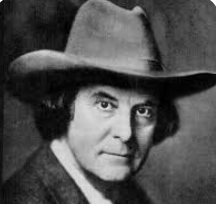
If you want work well done, select a busy man ‚ the other kind has no time.
▼
Source
The Note Book (1927)

4 months 4 weeks ago
The notion contradicts reality when the latter has become self-contradictory. Hegel says that a prevailing social form can be successfully attacked by thought only if this form has come into open contradiction with its own ‘truth,’ in other words, if it can no longer fulfill the demands of its own contents. P. 51
4 months 4 weeks ago
Feeling which has not yet emerged into immediate consciousness is already affectible and already affected. In fact, this is habit, by virtue of which an idea is brought up into the present consciousness by a bond that has already been established between it and another idea while it was still in futuro.
4 months 4 weeks ago
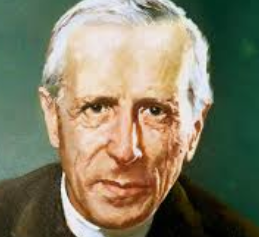
There is neither spirit nor matter in the world; the stuff of the universe is spirit-matter. No other substance but this could produce the human molecule. I know very well that this idea of spirit-matter is regarded as a hybrid monster, a verbal exorcism of a duality which remains unresolved in its terms. But I remain convinced that the objections made to it arise from the mere fact that few people can make up their minds to abandon an old point of view and take the risk of a new idea. ... Biologists or philosophers cannot conceive a biosphere or noosphere because they are unwilling to abandon a certain narrow conception of individuality. Nevertheless, the step must be taken. For in fact, pure spirituality is as unconceivable as pure materiality. Just as, in a sense, there is no geometrical point, but as many structurally different points as there are methods of deriving them from different figures, so every spirit derives its reality and nature from a particular type of universal synthesis.
▼
Source
A Sketch of a Personalistic Universe (1936)
4 months 4 weeks ago
There have always existed three ways of keeping the people loving and loyal. One is to leave them alone, to trust them and not to interfere. This plan, however, has very seldom been practised, because the politicians regard the public as a cow to be milked, and something must be done to make it stand quiet. So they try Plan Number Two, which consists in hypnotizing the public by means of shows, festivals, parades, prizes and many paid speeches, sermons and editorials, wherein and whereby the public is told how much is being done for it, and how fortunate it is in being protected and wisely cared for by its divinely appointed guardians. Then the band strikes up, the flags are waved, three passes are made, one to the right and two to the left; and we, being completely under the hypnosis, hurrah ourselves hoarse. Plan Number Three is a very ancient one and is always held back to be used in case Number Two fails. It is for the benefit of the people who do not pass readily under hypnotic control. If there are too many of these, they have been known to pluck up courage and answer back to the speeches, sermons and editorials. Sometimes they refuse to hurrah when the bass-drum plays, in which case they have occasionally been arrested for contumacy and contravention by stocky men, in wide-awake hats, who lead the strenuous life. This Plan Number Three provides for an armed force that shall overawe, if necessary, all who are not hypnotized. The army is used for two purposes — to coerce disturbers at home, and to get up a war at a distance, and thus distract attention from the troubles near at hand. Napoleon used to say that the only sure cure for internal dissension was a foreign war: this would draw the disturbers away, on the plea of patriotism, so they would win enough outside loot to satisfy them, or else they would all get killed, it really didn't matter much; and as for loot, if it was taken from foreigners, there was no sin. A careful analyst might here say that Plan Number Three is only a variation of Plan Number Two — the end being gained by hypnotic effects in either event, for the army is conscripted from the people to use against the people, just as you turn steam from a boiler into the fire-box to increase the draft. ...
▼
Source
[http://www.gutenberg.org/etext/20318 Vol. XIV: Great Musicians,] Chapter 8: "Ludwig van Beethoven," pp. 228-230
4 months 4 weeks ago
The social and political theory responsible for the development of Fascist Germany was, then, related to Hegelianism in a completely negative way. P. 418
4 months 4 weeks ago
Unless man have a natural bent in accordance with nature's, he has no chance of understanding nature at all.
▼
Source
IV
4 months 4 weeks ago
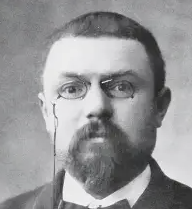
We can not... escape the conclusion that the rule of reasoning by recurrence is irreducible to the principle of contradiction. ...Neither can this rule come to us from experience... This rule, inaccessible to analytic demonstration and to experience, is the veritable type of the synthetic a priori judgment. On the other hand, we can not think of seeing in it a convention, as in some of the postulates of geometry. ...it is only the affirmation of the power of the mind which knows itself capable of conceiving the indefinite repetition of the same act when once this act is possible. The mind has a direct intuition of this power, and experience can only give occasion for using it and thereby becoming conscious of it.
▼
Source
Ch. I. (1905) Tr. George Bruce Halstead
4 months 4 weeks ago
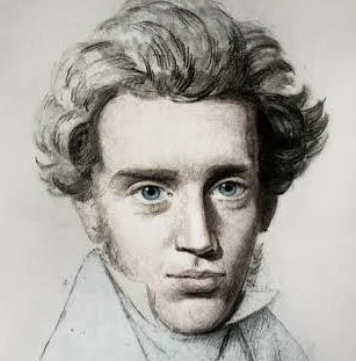
If someone were to expound that godliness is to belong to childhood in the temporal sense and thus dwindle and die with the years as childhood does, is to be a happy frame of mind that cannot be preserved but only recollected; if someone were to expound that repentance as a weakness of old age accompanies the decline of one's powers, when the senses are dulled, when sleep no longer strengthens but increases lethargy-this would be ungodliness and foolishness.
▼
Source
Upbuilding Discourses in Various Spirits, Hong p. 12
4 months 4 weeks ago
Now when sufficient elements have sufficiently agglomerated, this essentially convergent movement will attain such intensity and such quality that mankind, taken as a whole, will be obliged—as happened to the individual forces of instinct—to reflect upon itself at a single point; that is to say, in this case, to abandon its organo-planetary foothold so as to shift its centre on to the transcendent centre of its increasing concentration. This will be the end and the fulfillment of the spirit of the earth. The end of the world: the wholesale internal introversion upon itself of the , which has simultaneously reached the uttermost limit of its complexity and its centrality. The end of the world: the overthrow of equilibrium, detaching the mind, fulfilled at last, from its material matrix, so that it will henceforth rest with all its weight on God-Omega.
4 months 4 weeks ago
The way to learn to earn a living is to go at it and earn a living.
4 months 4 weeks ago
While this bourgeois order found its rich—and even affirmative—representation in art and literature, … it remained an order which was over-shadowed, broken, refuted by another dimension which was irreconcilably antagonistic to the order of business, indicting it and denying it. And in the literature, this other dimension is represented not by the religious, spiritual, moral heroes (who often sustain the established order) but rather by such disruptive characters as the artist. the prostitute, the adulteress, the great criminal and outcast, the warrior, the rebel-poet, the devil, the fool—those who don't earn a living, at least not in an orderly and normal way. To be sure, these characters have not disappeared from the literature of advanced industrial society, but they … perform a function very different from and even contrary to that of their cultural predecessors. They are no longer images of another way of life but rather freaks or types of the same life, serving as an affirmation rather than negation of the established order.
▼
Source
pp. 58-59
4 months 4 weeks ago
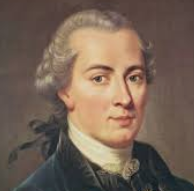
Freedom is the alone unoriginated birthright of man, and belongs to him by force of his humanity; and is independence on the will and co-action of every other in so far as this consists with every other person’s freedom.
▼
Source
[http://oll.libertyfund.org/?option=com_staticxt&staticfile=show.php%3Ftitle=1443&chapter=56215&layout=html&Itemid=27 Immanuel Kant, The Metaphysics of Ethics by Immanuel Kant, trans. J.W. Semple, ed. with Iintroduction by Rev. Henry Calderwood (Edinburgh
4 months 4 weeks ago
All laws are... deduced from experiment; but to enunciate them, a special language is needful... ordinary language is too poor...This... is one reason why the physicist can not do without mathematics; it furnishes him the only language he can speak. And a well-made language is no indifferent thing;...the analyst, who pursues a purely esthetic aim, helps create, just by that, a language more fit to satisfy the physicist....law springs from experiment, but not immediately. Experiment is individual, the law deduced from it is general; experiment is only approximate, the law is precise...In a word, to get the law from experiment, it is necessary to generalize... But how generalize? ...in this choice what shall guide us?It can only be analogy. ...What has taught us to know the true profound analogies, those the eyes do not see but reason divines?It is the mathematical spirit, which disdains matter to cling only to pure form.
4 months 4 weeks ago
Concepts, like individuals, have their histories, and are just as incapable of withstanding the ravages of time as are individuals.

4 months 4 weeks ago
I am one of those marranes who no longer say they are Jews even in the secret of their own hearts.
▼
Source
"Circumfession." In Jacques Derrida, eds. G. Bennington & J. Derrida, trans. G. Bennington. Chicago: University of Chicago Press, 1993, p. 170
4 months 4 weeks ago
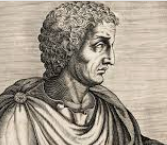
Man is the only one that knows nothing, that can learn nothing without being taught. He can neither speak nor walk nor eat, and in short he can do nothing at the prompting of nature only, but weep.
▼
Source
Book VII, sec. 4.
4 months 4 weeks ago
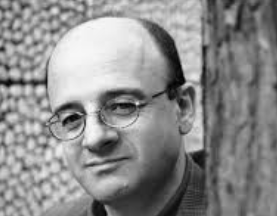
Philosophy is an inventory of thoughts in the flow of life.
4 months 4 weeks ago
It is the sphere farthest removed from the concreteness of society which may show most clearly the extent of the conquest of thought by society.
▼
Source
p. 104
4 months 4 weeks ago
The question of the principle of the form of the intelligible world turns, therefore, upon making apparent in what manner it is possible for several substances to be in mutual commerce, and for this reason to pertain to the same whole, which is called world. We do not here consider the world, let it be understood, as to matter, that is, as to the nature of the substances of which it consists, whether they be material or immaterial, but as to form, that is to say, how among several things taken separately a connection, and among them all, totality can have place.
4 months 4 weeks ago
When it is stated in Genesis that God said to Adam, “Only from the tree of the knowledge of good and evil you must not eat,” it follows as a matter of course that Adam really has not understood this word, for how could he understand the difference between good and evil when this distinction would follow as a consequence of the enjoyment of the fruit. When it is assumed that the prohibition awakens the desire one acquires knowledge instead of ignorance, and in that case Adam must have had knowledge of freedom, because the desire was to use it. The explanation is therefore subsequent. The prohibition induces in him anxiety, for the prohibition awakens in him freedom’s possibility. What passed by innocence as the nothing of anxiety has now entered into Adam, and here again it is a nothing-the anxious possibility of being able. He has no conception of what he is able to do; otherwise-and this it what usually happens-that which comes later, the difference between good and evil, would have to be presupposed. Only the possibility of being able is present as a higher form of ignorance, as a higher expression of anxiety, because in a higher sense it both is and is not, because in a higher sense he both loves it and flees from it.
▼
Source
p. 44-45
4 months 4 weeks ago
There is no Animal in the general singular, separated from man by a single, indivisible limit. We have to envisage the existence of “living creatures,” whose plurality cannot be assembled within the single figure of an animality that is simply opposed to humanity. … The confusion of all nonhuman living creatures within the general and common category of the animal is not simply a sin against rigorous thinking, vigilance, lucidity, or empirical authority, it is also a crime. Not a crime against animality, precisely, but a crime of the first order against the animals, against animals.
4 months 4 weeks ago
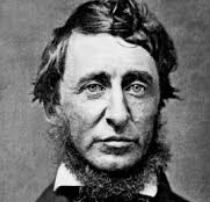
The realist, then, would seek in behalf of philosophy the same renunciation the same rigour of procedure, that has been achieved in science. This does not mean that he would reduce philosophy to natural or physical science. He recognizes that the philosopher has undertaken certain peculiar problems, and that he must apply himself to these, with whatever method he may find it necessary to employ. It remains the business of the philosopher to attempt a wide synoptic survey of the world, to raise underlying and ulterior questions, and in particular to examine the cognitive and moral processes. And it is quite true that for the present no technique at all comparable with that of the exact sciences is to be expected. But where such technique is attainable, as for example in symbolic logic, the realist welcomes it. And for the rest he limits himself to a more modest aspiration. He hopes that philosophers may come like scientists to speak a common language, to formulate common problems and to appeal to a common realm of fact for their resolution. Above all he desires to get rid of the philosophical monologue, and of the lyric and impressionistic mode of philosophizing. And in all this he is prompted not by the will to destroy but by the hope that philosophy is a kind of knowledge, and neither a song nor a prayer nor a dream. He proposes, therefore, to rely less on inspiration and more on observation and analysis. He conceives his function to be in the last analysis the same as that of the scientist. There is a world out yonder more or less shrouded in darkness, and it is important, if possible, to light it up. But instead of, like the scientist, focussing the mind's rays and throwing this or that portion of the world into brilliant relief, he attempts to bring to light the outlines and contour of the whole, realizing too well that in diffusing so widely what little light he has, he will provide only a very dim illumination.
▼
Source
Chap XXV.
4 months 4 weeks ago
To have a right to do a thing is not at all the same as to be right in doing it.
▼
Source
A Short History of England (1917)
CivilSimian.com created by AxiomaticPanic, CivilSimian, Kalokagathia