
4 months 3 weeks ago
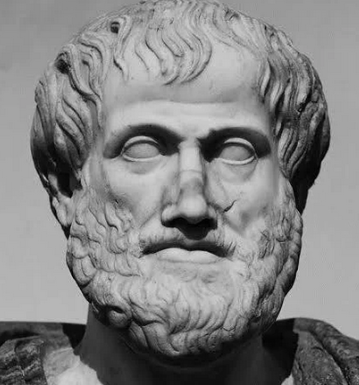
Suffering becomes beautiful when anyone bears great calamities with cheerfulness, not through insensibility but through greatness of mind.
▼
Source
Widely attributed since the mid to late 19th century, this apparently derives from a gloss or commentary on the following passage from Aristotle's Nicomachean Ethics (c. 325 BC), Book 1, Ch. XI (Bekker No. 1100b.13–14): | ὅμως δὲ καὶ ἐν τούτοις διαλάμπει
4 months 3 weeks ago
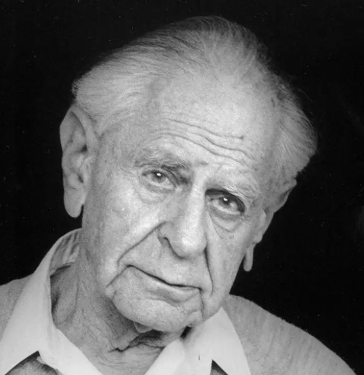
Besides, we should never attempt to balance anybody's misery against somebody else's happiness.
▼
Source
pp. 486-487
4 months 3 weeks ago
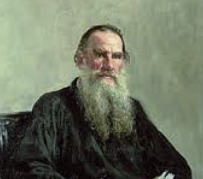
All his life Alexey Alexandrovitch had lived and worked in official spheres, having to do with the reflection of life. And every time he had stumbled against life itself he had shrunk away from it. Now he experienced a feeling akin to that of a man who, wile calmly crossing a precipice by a bridge, should suddenly discover that the bridge is broken, and that there is a chasm below. That chasm was life itself, the bridge that artificial life in which Alexey Alexandrovitch had lived.
▼
Source
Part II, Chapter 8
4 months 3 weeks ago
Machiavelli is not concerned with how men do live merely in order to describe it; his intention is rather, on the basis of knowledge of how men do live, to teach princes how they ought to rule and even how they ought to live.
4 months 3 weeks ago
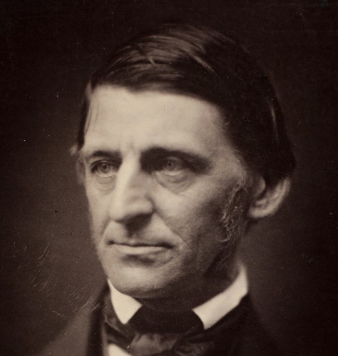
I owed a magnificent day to the Bhagavad Gita. It was the first of books; it was as if an empire spoke to us, nothing small or unworthy, but large, serene, consistent, the voice of an old intelligence which in another age and climate had pondered and thus disposed of the same questions which exercise us.
▼
Source
October 1, 1848

4 months 3 weeks ago
Past struggles cannot correct current injustices.

4 months 3 weeks ago
If you don't want to explode with rage, leave your memory alone, abstain from burrowing there.
4 months 3 weeks ago
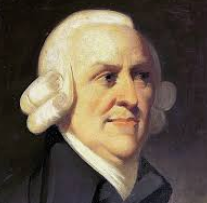
In public, as well as in private expences, great wealth may, perhaps, frequently be admitted as an apology for great folly.
▼
Source
Chapter V, p. 563.
4 months 3 weeks ago
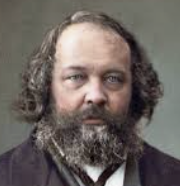
As we are convinced that the real attainment of liberty, of justice, and of peace in the world will be impossible so long as the immense majority of the populations are dispossessed of property, deprived of education and condemned to political and social nonbeing and a de facto if not a de jure slavery, through their state of misery as well as their need to labor without rest or leisure, in producing all the wealth in which the world is glorying today, and receiving in return but a small portion hardly sufficient for their daily bread; As we are convinced that for all these populations, hitherto so terribly maltreated through the centuries, the question of bread is the question of intellectual emancipation, of liberty, and of humanity; As we are convinced that liberty without socialism is privilege, injustice; and that socialism without liberty is slavery and brutality; Now therefore, the League highly proclaims the need for a radical social and economic reform, whose aim shall be the deliverance of the people's labor from the yoke of capital and property, upon a foundation of the strictest justice — not juridical, not theological, not metaphysical, but simply human justice, of positive science and the most absolute liberty.
▼
Source
Variant translation: We are convinced that freedom without Socialism is privilege and injustice, and that Socialism without freedom is slavery and brutality. | As quoted in The Political Philosophy of Bakunin: Scientific Anarchism (1953) edited by Grigori
4 months 3 weeks ago
Human progress having reached a high level through respect for the liberty and dignity of men, it has become desirable to re-affirm these evident truths:
▼
Source
That differences of race, color, and creed are natural, and that diverse groups, institutions, and ideas are stimulating factors in the development of man; | That to promote harmony in diversity is a responsible task of religion and statesmanship; | That

4 months 3 weeks ago
Charity, by which God and neighbor are loved, is the most perfect friendship.
▼
Source
[http://dhspriory.org/thomas/QDdeVirtutibus2.htm#4 Quaestiones disputatae: De caritate] (Disputed Questions: On Charity, c. 1270)

4 months 3 weeks ago
I think that when friendship and perception of kinship ruled everything, no one killed any creature, because people thought the other animals were related to them.
▼
Source
2, 22, 1
4 months 3 weeks ago
Ignorance is not a simple lack of knowledge but an active aversion to knowledge, the refusal to know, issuing from cowardice, pride or laziness of mind.
▼
Source
Principle attributed to Popper by Ryszard Kapiscinski in New York Times obituary, 1995.
4 months 3 weeks ago
Science may fall back on its stupid excuse that science works for science, and that when it has been developed by the scientists it will become accessible to the people also; but art, if it be art, should be accessible to all, and particularly to those for whom it is produced. And the position of our art strikingly arraigns the producers of art for not wishing, not knowing how, and being unable, to serve the people.
4 months 3 weeks ago
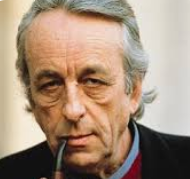
What do children learn at school? They go varying distances in their studies, but at any rate they learn to read, to write and to add - i.e. a number of techniques, and a number of other things as well, including elements (which may be rudimentary or on the contrary thoroughgoing) of scientific' or 'literary culture', which are directly useful in the different jobs in production (one instruction for manual workers, another for technicians, a third for engineers, a final one for higher management, etc.). Thus they learn 'know-how'.
▼
Source
p.132
4 months 3 weeks ago
Of course, he who has put forth his total strength in fit actions, has the richest return of wisdom.
▼
Source
par. 28

4 months 3 weeks ago
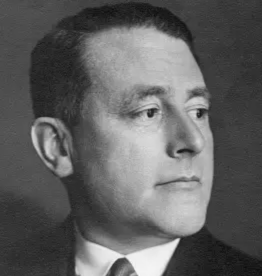
I agree with you, that he was a Man of Erudition, and a very polite Writer; he has display'd a copious Imagination, and a fine Turn of thinking, in courtly Language and nervous Expressions: But as, on the one hand, it must be confess'd, that his Sentiments on Liberty and Humanity are noble and sublime, and that there is nothing trite or vulgar in the Characteristicks; so, on the other, it cannot be denied, that the Ideas he had form'd of the Goodness and Excellency of our Nature, were as romantick and chimerical as they are beautiful and amiable; that he labour'd hard to unite two Contraries that can never be reconcil'd together, Innocence of Manners and worldly Greatness; that to compass this End he favour'd Deism, and, under Pretence of lashing Priestcraft and Superstition, attack'd the Bible it self; and lastly, that by ridiculing many Passages of Holy Writ, he seems to have endeavour'd to sap the Foundation of all reveal'd Religion, with Design of establishing Heathen Virtue on the Ruins of Christianity.
▼
Source
Bernard Mandeville, The Fable of the Bees: Or, Private Vices, Publick Benefits. The Second Volume, ed. F. B. Kaye (1924), pp. 356-357
4 months 3 weeks ago
As long as the state is a political entity this requirement for internal peace compels it in critical situations to decide also upon the domestic enemy. Every state provides, therefore, some kind of formula for the declaration of an internal enemy.
4 months 3 weeks ago
IV. Every tax ought to be contrived as both to take out and to keep out of the pockets of the people as little as possible, over and above what it brings into the public treasury of the state.
▼
Source
Chapter II, Part II, p. 893.
4 months 3 weeks ago
On the first day of a revolution, he is a perfect treasure; on the second, he ought to be shot.
▼
Source
Marc Caussidière, Préfecture de Police, in early 1848, as quoted in Michael Bakunin (1961) by E.H. Carr, p. 150.
4 months 3 weeks ago
No state more extensive than the minimal state can be justified.
▼
Source
Ch. 10 : A Framework for Utopia; The Framework, p. 297
4 months 3 weeks ago
The whole life of the upper classes is a constant inconsistency. The more delicate a man's conscience is, the more painful this contradiction is to him.
▼
Source
Chapter V, Contradiction Between our Life and our Christian Conscience
4 months 3 weeks ago
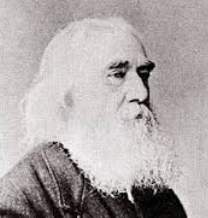
If justice be not a natural principle, it is no principle at all. If it be not a natural principle, there is no such thing as justice. If it be not a natural principle, all that men have ever said or written about it, from time immemorial, has been said and written about that which had no existence. If it be not a natural principle, all the appeals for justice that have ever been heard, and all the struggles for justice that have ever been witnessed, have been appeals and struggles for a mere fantasy, a vagary of the imagination, and not for a reality.If justice be not a natural principle, then there is no such thing as injustice; and all the crimes of which the world has been the scene, have been no crimes at all; but only simple events, like the falling of the rain, or the setting of the sun; events of which the victims had no more reason to complain than they had to complain of the running of the streams, or the growth of vegetation.If justice be not a natural principle, governments (so-called) have no more right or reason to take cognizance of it, or to pretend or profess to take cognizance of it, than they have to take cognizance, or to pretend or profess to take cognizance, of any other nonentity; and all their professions of establishing justice, or of maintaining justice, or of rewarding justice, are simply the mere gibberish of fools, or the frauds of imposters.But if justice be a natural principle, then it is necessarily an immutable one; and can no more be changed—by any power inferior to that which established it—than can the law of gravitation, the laws of light, the principles of mathematics, or any other natural law or principle whatever; and all attempts or assumptions, on the part of any man or body of men—whether calling themselves governments, or by any other name—to set up their own commands, wills, pleasure, or discretion, in the place of justice, as a rule of conduct for any human being, are as much an absurdity, an usurpation, and a tyranny, as would be their attempts to set up their own commands, wills, pleasure, or discretion in the place of any and all the physical, mental, and moral laws of the universe.If there be any such principle as justice, it is, of necessity, a natural principle; and, as such, it is a matter of science, to be learned and applied like any other science. And to talk of either adding to, or taking from, it, by legislation, is just as false, absurd, and ridiculous as it would be to talk of adding to, or taking from, mathematics, chemistry, or any other science, by legislation.
▼
Source
Sections I–II, p. 11–12
4 months 3 weeks ago
Good bye, proud world! I'm going home; Thou art not my friend; I am not thine.
▼
Source
Good-bye, st. 1
4 months 3 weeks ago
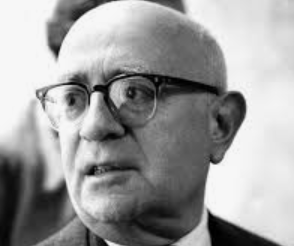
The dressing up and puffing up of the individual erases the lineaments of protest.
▼
Source
p. 283
4 months 3 weeks ago
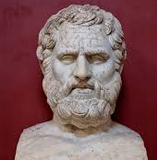
Great strength of body is the gift of nature; But to be able to advise whate'er Is most expedient for one's country's good, Is the peculiar work of sense and wisdom.
4 months 3 weeks ago
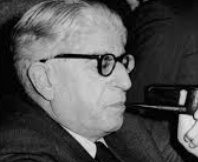
Jesus' own coming was by no means so introverted and other-worldly as a Pauline reinterpretation—always welcome to the ruling class—would have it. ... To Jesus, the kingdom of this world was the devil (John 8:44). This is why he never suggested allowing it to go on; he did not conclude a non-aggression pact with it.
▼
Source
p. 123
4 months 3 weeks ago
Adam Smith’s laws of the market are basically simple. They tell us that the outcome of a certain kind of behavior in a certain social framework will bring about perfectly definite and foreseeable results. Specifically they show us how the drive of individual self-interest in an environment of similarly motivated individuals will result in competition; and they further demonstrate how competition will result in the provision of those goods that society wants, in the quantities that society desires, and at the prices society is prepared to pay. […] But self-interest is only half the picture. It drives men to action. Something else must prevent the pushing of profit-hungry individuals from holding society up to exorbitant ransom: a community activated only by self-interest would be a community of ruthless profiteers. This regulator is competition, the conflict of the self-interested actors on the marketplace. For each man, out to do his best for himself with no thought of social consequences, is faced with a flock of similarly motivated individuals who are engaged in exactly the same pursuit. Hence, each is only too eager to take advantage of his neighbor’s greed. A man who permits his self-interest to run away with him will find that competitors have slipped in to take his trade away; if he charges too much for his wares or if he refuses to pay as much as everybody else for his workers, he will find himself without buyers in the one case and without employees in the other. Thus very much as in The Theory of Moral Sentiments, the selfish motives of men are transmuted by interaction to yield the most unexpected of results: social harmony.
▼
Source
Robert Heilbroner, The Worldly Philosophers 7th ed. (1999), Chapter III. The Wonderful World of Adam Smith
4 months 3 weeks ago
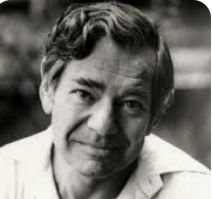
The most obvious failure of organized religions is surely that almost all of them have made a mockery of what their founders taught.
▼
Source
p. 267
4 months 3 weeks ago
Some teachers of mankind — as Plato... the first Christians, the orthodox Muslims, and the Buddhists — have gone so far as to repudiate art. ...[They consider it] so highly dangerous in its power to infect people against their wills, that mankind will lose far less by banishing all art than by tolerating each and every art. ...such people were wrong in repudiating all art, for they denied that which cannot be denied — one of the indispensable means of communication, without which mankind could not exist. ...Now there is only fear, lest we should be deprived of any pleasures art can afford, so any type of art is patronized. And I think the last error is much grosser than the first and that its consequences are far more harmful.
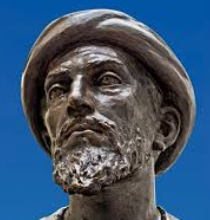
4 months 3 weeks ago
The fundamental imperative about idolatry was that worship was not to be paid to any created thing such as a messenger, a planet, a star, one of the four elements, or to anything produced from them.
▼
Source
Treatise 4: “Idolatry,” H. Russell, trans. (1983), p. 74
4 months 3 weeks ago
The world is upheld by the veracity of good men: they make the earth wholesome.
▼
Source
Uses of Great Men
4 months 3 weeks ago
The thesis of the identity of concept and thing is in general the vital nerve of idealist thought, and indeed traditional thought in general. ... Negative dialectics as critique means above all criticism of precisely this claim to identity.
▼
Source
p. 20
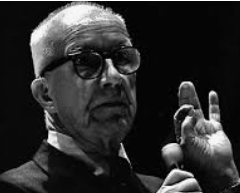
4 months 3 weeks ago
God, to me, it seems is a verb, not a noun, proper or improper.
▼
Source
No More Secondhand God (1963)
4 months 3 weeks ago
Today, classical political economy is often identified by contemporary economists with the quantity theory of money and the so-called “doctrine of free trade,” but historically there was in fact a large and variable set of positions on both within the classical orbit. And, in contrast to Marx's characterization of its scope and origins, the beginnings of a systematic classical political economy have been associated first and foremost with the work of the eighteenth-century Scottish philosopher, Adam Smith. In terms of illuminating our understanding of the significance of classical political economy for the history of political thought, its origins are identified with the time period roughly between 1750 and 1867, and with a group of economic thinkers drawing upon and revising Smith's Wealth of Nations as a basis for analyzing the production, distribution, and exchange of commodities in the market of commercial society, and later within industrial capitalism.
▼
Source
Shannon C. Stimson, "Classical Political Economy", in Coole, Diana H.; Gibbons, Michael; Ellis, Elisabeth et al., The encyclopedia of political thought (2014)
4 months 3 weeks ago
The pilot, who was an intelligent man, had listened in silence to the talk till he was asked to speak. Now every one turned to him, and he said: You are all misleading one another, and are yourselves deceived. The sun does not go round the earth, but the earth goes round the sun, revolving as it goes, and turning towards the sun in the course of each twenty-four hours, not only Japan, and the Philippines, and Sumatra where we now are, but Africa, and Europe, and America, and many lands besides. The sun does not shine for some one mountain, or for some one island, or for some one sea, nor even for one earth alone, but for other planets as well as our earth. If you would only look up at the heavens, instead of at the ground beneath your own feet, you might all understand this, and would then no longer suppose that the sun shines for you, or for your country alone. Thus spoke the wise pilot, who had voyaged much about the world, and had gazed much upon the heavens above.
▼
Source
Part VI: The Coffee-House of Surat (1893) Adaptions from the French
4 months 3 weeks ago
Whatever form it has, it [matter] will be disposed to receive another form; it never leaves off moving and casting off the form which it has in order to receive another. ...It is therefore clear that all corruption, destruction, or defect comes from matter.
▼
Source
Ch.8
4 months 3 weeks ago
The world is his, who has money to go over it.
▼
Source
Wealth
4 months 3 weeks ago
I seek through comprehensive anticipatory design science and its reductions to physical practices to reform the environment instead of trying to reform humans, being intent thereby to accomplish prototyped capabilities of doing more with less...
▼
Source
Earth, Inc. (1973) This is just part of a very long sentence that covers the whole first page, but in this part of the quote, the intention of the entire book is stated.
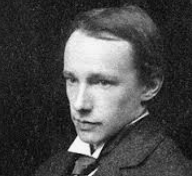
4 months 3 weeks ago
I can prove now, for instance, that two human hands exist. How? By holding up my two hands, and saying, as I make a certain gesture with the right hand, "Here is one hand," and adding, as I make a certain gesture with the left, "and here is another." And if, by doing this, I have proved ipso facto the existence of external things, you will all see that I can also do it now in numbers of other ways: there is no need to multiply examples.
▼
Source
"Proof of an External World," Proceedings of the British Academy 25 (1939).
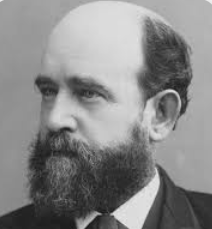
4 months 3 weeks ago
The progress of civilization necessitates the giving of greater and greater attention and intelligence to public affairs. And for this reason I am convinced that we make a great mistake in depriving one sex of voice in public matters, and that we could in no way so increase the attention, the intelligence and the devotion which may be brought to the solution of social problems as by enfranchising our women.
▼
Source
Ch. 21 : Conclusion
4 months 3 weeks ago
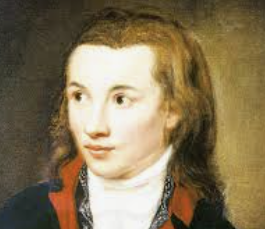
Building worlds is not enough for the deeper urging mind; but a loving heart sates the striving spirit.
▼
Source
Fragment No. 91

4 months 3 weeks ago
The straightening board was created because of warped wood, and the plumb line came into being because of things that are not straight. Rulers are established and ritual and rightness are illuminated because the nature is evil.
▼
Source
Sources of Chinese Tradition (1999), vol. 1, p. 182
4 months 3 weeks ago
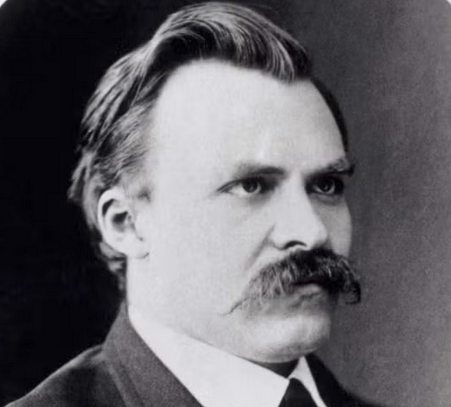
The true aim is [...] reaching nature with this deception
▼
Source
page 39-38
4 months 3 weeks ago
Honest work is much better than a mansion.
▼
Source
p. 82
4 months 3 weeks ago
The more necessary a thing is for living beings, the more easily it is found and the cheaper it is; the less necessary it is, the rarer and dearer it is.
▼
Source
Ch.12
4 months 3 weeks ago
The highest compact we can make with our fellow, is, — "Let there be truth between us two forevermore".
▼
Source
Behavior
4 months 3 weeks ago
Politicians are always realistically maneuvering for the next election. They are obsolete as fundamental problem-solvers.
▼
Source
As quoted in Synergetics Dictionary : The Mind of Buckminster Fuller (1986) by E. J. Applewhite
4 months 3 weeks ago
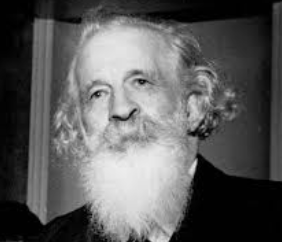
The reflected world is the conquest of calm
▼
Source
"Clear Waters, Springtime Waters"
4 months 3 weeks ago
You write with great eloquence and truth on the effects of mountain scenery on the mind. Whatever exalts the imagination purifies the affections; but even our noblest and best thoughts have their archetypes in sensation. The eye is the most perfect of all the senses, and the one that most feeds the intellect. When surrounded by the grand forms of nature, we give to earth something of the indefinite character of heaven. Great objects excite great thoughts; the standard of our being rises; all our low and grovelling associations disappear; and our sympathies are more strongly awakened with regard to the moral, sublime, the excellent, the decorous, and the great in philosophy. We are more fitted to enjoy the blaze of light of Milton, to pass into the -forms of humanity with Shakespeare, and to move through the heavens with Newton. ... I am leading a truly philosophical life of activity, and the constant pursuit of an object, the elements of such a life. Such moments as I am now passing in the crowded city, prove to me how fitted our being is for independent and solitary thoughts; how much its strength depends upon its own efforts, and how little it owes to general society.Pray do not forget me, and believe me to be, very truly and affectionately, yours...
▼
Source
Letter to Mrs. Apreece [future Mrs. Davy] (26 August 1811) in John Davy (ed.) Fragmentary Remains, Literary and Scientific, of Sir Humphry Davy, ... with a Sketch of His Life and Selections from His Correspondence (1858) pp. 145-146 [https://books.google.
CivilSimian.com created by AxiomaticPanic, CivilSimian, Kalokagathia