

4 months 3 weeks ago
You made me come to Paris. You pestered me to start living again. Well, now it's up to you to make my life livable. You mustn't let three whole days go by without coming to see me. … You wanted me to take notice of you. Now nothing else matters to me. I know you're alive and I feel emptiness inside me when you're away.
▼
Source
Raimon to Regina. p. 20
4 months 3 weeks ago
In regard to propaganda the early advocates of universal literacy and a free press envisaged only two possibilities: the propaganda might be true, or it might be false. They did not foresee what in fact has happened, above all in our Western capitalist democracies—the development of a vast mass communications industry, concerned in the main neither with the true nor the false, but with the unreal, the more or less totally irrelevant. In a word, they failed to take into account man's almost infinite appetite for distraction.
▼
Source
Chapter 4 (pp. 35-36)
4 months 3 weeks ago
The new community which the capitalists are now constructing will be a very complete and absolute community; and one which will tolerate nothing really independent of itself.
▼
Source
pp. 33-34
4 months 3 weeks ago
The possibility of divorce renders both marriage partners stricter in their observance of the duties they owe to each other. Divorces help to improve morals and to increase the population.

4 months 3 weeks ago
A utopia of judicial reticence: take away life, but prevent the patient from feeling it; deprive the prisoner of all rights, but do not inflict pain; impose penalties free of all pain. Recourse to psycho-pharmacology and to various physiological ‘disconnectors’, even if it is temporary, is a logical consequence of this ‘non-corporal’ penalty.
▼
Source
Chapter One, The Spectacle of the Scaffold
4 months 3 weeks ago
The curse which lies upon marriage is that too often the individuals are joined in their weakness rather than in their strength, each asking from the other instead of finding pleasure in giving. It is even more deceptive to dream of gaining through the child a plenitude, a warmth, a value, which one is unable to create for oneself; the child brings joy only to the woman who is capable of disinterestedly desiring the happiness of another, to one who without being wrapped up in self seeks to transcend her own existence.
▼
Source
Bk. 2, Pt.. 5, Ch. 2: The Mother, p. 522
4 months 3 weeks ago
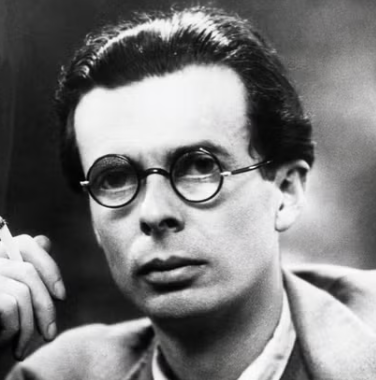
Huxley enjoyed the follies of the human mind even as he stoically stood out against them...Shock was one of the luxuries of the Twenties. But for Huxley, perhaps the most accomplished educator of his generation, to shock was to ensure the course of intellectual freedom.
▼
Source
V. S. Pritchett, "Obituary of Aldous Huxley", The New Statesman (6 December 1963)
4 months 3 weeks ago
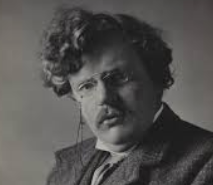
A modern man may disapprove of some of his sweeping reforms, and approve others; but finds it difficult not to admire even where he does not approve.
▼
Source
Said of Benito Mussolini while comparing him to Hildebrand (i.e. Pope Gregory VII), as quoted in "The Pearl of Great Price" by Robert Royal, his Introduction to "The Resurrection of Rome" by G. K. Chesterton in The Collected Works of G.K. Chesterton (1990
4 months 3 weeks ago
[W]e may fancy that we see or feel what we in reality infer. Newton saw the truth of many propositions of geometry without reading the demonstrations, but not, we may be sure, without their flashing through his mind. A truth, or supposed truth, which is really the result of a very rapid inference, may seem to be apprehended intuitively. It has long been agreed by thinkers of the most opposite schools, that this mistake is actually made in so familiar an instance as that of the eyesight. There is nothing of which we appear to ourselves to be more directly conscious, than the distance of an object from us. Yet it has long been ascertained, that what is perceived by the eye, is at most nothing more than a variously coloured surface; that when we fancy we see distance, all we really see is certain variations of apparent size, and degrees of faintness of colour; and that our estimate of the object's distance from us is the result of a comparison (made with so much rapidity that we are unconscious of making it) between the size and colour of the object as they appear at the time, and the size and colour of the same or of similar objects as they appeared when close at hand, or when their degree of remoteness was known by other evidence. The perception of distance by the eye, which seems so like intuition, is thus, in reality, an inference grounded on experience; an inference, too, which we learn to make; and which we make with more and more correctness as our experience increases; though in familiar cases it takes place, so rapidly as to appear exactly on a par with those perceptions of sight which are really intuitive, our perceptions of colour.
▼
Source
p. 4
4 months 3 weeks ago
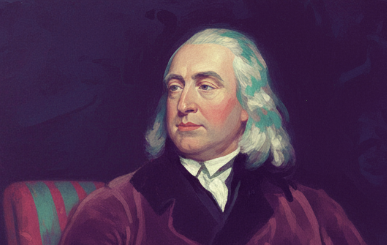
Secrecy is an instrument of conspiracy; it ought not, therefore, to be the system of a regular government.
▼
Source
[http://books.google.com/books?id=AusJAAAAIAAJ&q="Secresy+is+an+instrument+of+conspiracy+it+ought+not+therefore+to+be+the+system+of+a+regular+government"&pg=PA315#v=onepage On Publicity] from The Works of Jeremy Bentham volume 2, part 2 (1839)
4 months 3 weeks ago
He who is subjected to a field of visibility, and who knows it, assumes responsibility for the constraints of power; he makes them play spontaneously upon himself; he inscribes in himself the power relation in which he simultaneously plays both roles; he becomes the principle of his own subjection.
▼
Source
Part Three, Panopticism

4 months 3 weeks ago
I am quite ready, Simmias and Cebes, that I ought to be grieved at death, if I were not persuaded that I am going to other gods who are wise and good and to men departed who are better than those whom I leave behind; and therefore I do not grieve as I might have done, for I have good hope that there is yet something remaining for the dead, and, as has been said of old, some far better thing for the good than for the evil.
4 months 3 weeks ago
We ought to be able to see more clearly just for what reason the mass-man is so easily turned into a fanatic. What I seem to myself to have grasped is this, that such permeability is due to the fact that man, that the individual, in order to belong to the mass, to be a mass-man, has had, as a preliminary, though without having had the least awareness of it, to divest himself of that substantial reality which was linked to his initial individuality or rather to the fact of his belonging to a small actual group. The incredibly sinister role of the press, the cinema, the radio, has consisted in passing that original reality through a pair of flattening rollers to substitute for it a superimposed pattern of ideas and images with no real roots in the deep being of the subject of this experiment.
▼
Source
pp. 140-141
4 months 3 weeks ago
Capacity for the nobler feelings is in most natures a very tender plant, easily killed, not only by hostile influences, but by the mere want of sustenance; and in the majority of young persons it speedily dies away if the occupations to which their position in life has devoted them, and the society into which it has thrown them, are not favourable to keeping that higher capacity in existence.
▼
Source
Ch. 2
4 months 3 weeks ago
The last characteristic of parrhesia... telling the truth is regarded as a duty.
4 months 3 weeks ago
Let us... be careful of admitting into our souls the notion that there is no truth or health or soundness in any arguments at all; but let us rather say that there is as yet no health in us, and that we must quit ourselves like men and do our best to gain health—you and all other men with a view to the whole of your future life, and I myself with a view to death.

4 months 3 weeks ago
Without liberty there is no wealth.
4 months 3 weeks ago
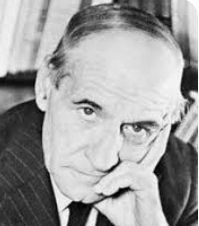
If I had been by nature extremely quick of apprehension, or had possessed a very accurate and retentive memory or were of a remarkably active and energetic character, the trial would not be conclusive; but in all these natural gifts I am rather below than above par; what I could do, could assuredly be done by any boy or girl of average capacity and healthy physical constitution: and if I have accomplished anything, I owe it, among other fortunate circumstances, to the fact that through the early training bestowed on me by my father, I started, I may fairly say, with an advantage of a quarter of a century over my contemporaries.
▼
Source
([https://archive.org/details/autobiography01mill/page/30/mode/1up pp. 30–31])
4 months 3 weeks ago
The characteristic of the hour is that the commonplace mind, knowing itself to be commonplace, has the assurance to proclaim the rights of the commonplace and to impose them wherever it will. As they say in the United States: "to be different is to be indecent." The mass crushes beneath it everything that is different, everything that is excellent, individual, qualified and select. Anybody who is not like everybody, who does not think like everybody, runs the risk of being eliminated. And it is clear, of course, that this "everybody" is not "everybody." "Everybody" was normally the complex unity of the mass and the divergent, specialised minorities. Nowadays, "everybody" is the mass alone.
▼
Source
Chap.I: The Coming Of The Masses
4 months 3 weeks ago
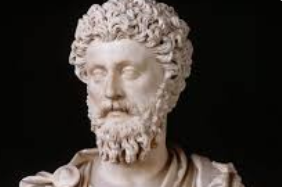
Concentrate every minute like a Roman—like a man—on doing what's in front of you with precise and genuine seriousness, tenderly, willingly, with justice. And on freeing yourself from all other distractions.
▼
Source
II, 5 (Hays translation)
4 months 3 weeks ago
Physics is to be regarded not so much as the study of something a priori given, but rather as the development of methods of ordering and surveying human experience. In this respect our task must be to account for such experience in a manner independent of individual subjective judgement and therefore objective in the sense that it can be unambiguously communicated in ordinary human language.
▼
Source
"The Unity of Human Knowledge" (October 1960)
4 months 3 weeks ago
Anti-psychiatry
4 months 3 weeks ago
He who has lived as a true philosopher has reason to be of good cheer when he is about to die, and that after death he may hope to receive the greatest good in the other world.
▼
Source
Phaedo
4 months 3 weeks ago
In the Renaissance there is much light, yes, and there is much in it with which Italians may share national pride. But there is much darkness. For the Renaissance is also the age of individualism, that through the splendid visions of poetry and art brought the Italian nation to the indifference, skepticism, and distracted cynicism of those who have nothing to defend, not in their family, their Fatherland, or in the world where every human personality conscious of its own value and personal dignity invest itself.
▼
Source
Che cosa è il fascismo: Discorsi e polemiche (“What is Fascism?”), Florence: Vallecchi, (1925) pp. 13-16
4 months 3 weeks ago
Malthus's population principle was quite as much a banner, and a point of union among us, as any opinion specially belonging to Bentham. This great doctrine, originally brought forward as an argument against the indefinite improvability of human affairs, we took up with ardent zeal in the contrary sense, as indicating the sole means of realizing that improvability by securing full employment at high wages to the whole labouring population through a voluntary restriction of the increase of their numbers.
▼
Source
([https://archive.org/details/autobiography01mill/page/105/mode/1up p. 105])
4 months 3 weeks ago
The man with the clear head is the man who frees himself from those fantastic "ideas" and looks life in the face, realises that everything in it is problematic, and feels himself lost. As this is the simple truth — that to live is to feel oneself lost — he who accepts it has already begun to find himself, to be on firm ground. Instinctively, as do the shipwrecked, he will look round for something to which to cling, and that tragic, ruthless glance, absolutely sincere, because it is a question of his salvation, will cause him to bring order into the chaos of his life.
▼
Source
Chapter XIV: Who Rules The World?
4 months 3 weeks ago
The ruling power within, when it is in its natural state, is so related to outer circumstances that it easily changes to accord with what can be done and what is given it to do.
▼
Source
IV, 1
4 months 3 weeks ago
Socrates it was who truly built piecemeal that theorical man. He did it by his doctrine which was singularly deep in the sense that it went straight out to the end of the initial thought, but his radically false doctrine was that morality is in proportion to knowledge, that the man that does not do good is a man that does not know the good and that the man that knows the good does assuredly do it. Here it is precisely, the theorical man introduced as king of the world! Now nothing is more false than this notion. The opposite is more likely to be true. The man that knows the good does not do it, because he is satisfied with knowing it and that is enough for his conceit and because, knowing the good and knowing that he knows it, he fancies that he is doing it and that he has accomplished and fulfilled his duty. The good is instinctive and passionate; the good is in the action and the action is, we must admit, rarely inspired by the idea and by knowledge. It is frequently, one must admit, the effect of an instinctive and unconscious movement.
▼
Source
Emile Faguet, On Reading Nietzsche p. 75

4 months 3 weeks ago
There is but one thing needful — to possess God. All our senses, all our powers of mind and soul, all our external resources, are so many ways of approaching the divinity, so many modes of tasting and of adoring God. We must learn to detach ourselves from all that is capable of being lost, to bind ourselves absolutely only to what is absolute and eternal, and to enjoy the rest as a loan, as a usufruct…. To worship, to comprehend, to receive, to feel, to give, to act: this our law, our duty, our happiness, our heaven.
▼
Source
16 July 1848
4 months 3 weeks ago
Alike in the highest regions of speculation and in the smaller practical concerns of daily life, her mind was the same perfect instrument, piercing to the very heart and marrow of the matter; always seizing the essential idea or principle. The same exactness and rapidity of operation, pervading as it did her sensitive as well as her mental faculties, would, with her gifts of feeling and imagination, have fitted her to be a consummate artist, as her fiery and tender soul and her vigorous eloquence would certainly have made her a great orator, and her profound knowledge of human nature and discernment and sagacity in practical life, would, in the times when such a carrière was open to women, have made her eminent among the rulers of mankind. Her intellectual gifts did but minister to a moral character at once the noblest and the best balanced which I have ever met with in life.
▼
Source
([https://archive.org/details/autobiography01mill/page/186/mode/1up pp. 186-187])
4 months 3 weeks ago
Ortega y Gasset is of the opinion that the inability of a country to produce a genuine mass movement indicates some ethnological defect. He says of his own Spain that its "ethnological intelligence has always been an atrophied function and has never had a normal development."
▼
Source
Eric Hoffer, The True Believer (1951) Ch.18 Good and Bad Mass Movements, §125 citing Ortega y Gasset's The Modern Theme (1931)
4 months 3 weeks ago
All is ephemeral — fame and the famous as well.
▼
Source
Πᾶν ἐφήμερον, καὶ τὸ μνημονεῦον καὶ τὸ μνημονευόμενον. | IV, 35
4 months 3 weeks ago
To protest about bullfighting in Spain, the eating of dogs in South Korea, or the slaughter of baby seals in Canada while continuing to eat eggs from hens who have spent their lives crammed into cages, or veal from calves who have been deprived of their mothers, their proper diet, and the freedom to lie down with their legs extended, is like denouncing apartheid in South Africa while asking your neighbors not to sell their houses to blacks.
▼
Source
Ch. 4: Becoming a Vegetarian

4 months 3 weeks ago
All things fail; but Thou, Lord of all, never failest! They who love Thee, oh, how little they have to suffer! oh, how gently, how tenderly, how sweetly Thou, O my Lord, dealest with them! Oh, that no one had ever been occupied with any other love than Thine! It seems as if Thou didst subject those who love Thee to a severe trial: but it is in order that they may learn, in the depths of that trial, the depths of Thy love. O my God, oh, that I had understanding and learning, and a new language, in order to magnify Thy works, according to the knowledge of them which my soul possesses! Everything fails me, O my Lord; but if Thou wilt not abandon me, I will never fail Thee. Let all the learned rise up against me, — let the whole creation persecute me, — let the evil spirits torment me, — but do Thou, O Lord, fail me not; for I know by experience now the blessedness of that deliverance which Thou dost effect for those who trust only in Thee. In this distress, — for then I had never had a single vision, — these Thy words alone were enough to remove it, and give me perfect peace: "Be not afraid, my daughter: it is I; and I will not abandon thee. Fear not." It seems to me that, in the state I was in then, many hours would have been necessary to calm me, and that no one could have done it. Yet I found myself, through these words alone, tranquil and strong, courageous and confident, at rest and enlightened; in a moment, my soul seemed changed, and I felt I could maintain against all the world that my prayer was the work of God. Oh, how good is God! how good is our Lord, and how powerful! He gives not counsel only, but relief as well. His words are deeds. O my God! as He strengthens our faith, love grows.
▼
Source
Ch. XXV. "Divine Locutions. Discussions on That Subject" ¶ 22 & 23
4 months 3 weeks ago
Society lives by faith, develops by reason.
▼
Source
7 May 1870
4 months 3 weeks ago
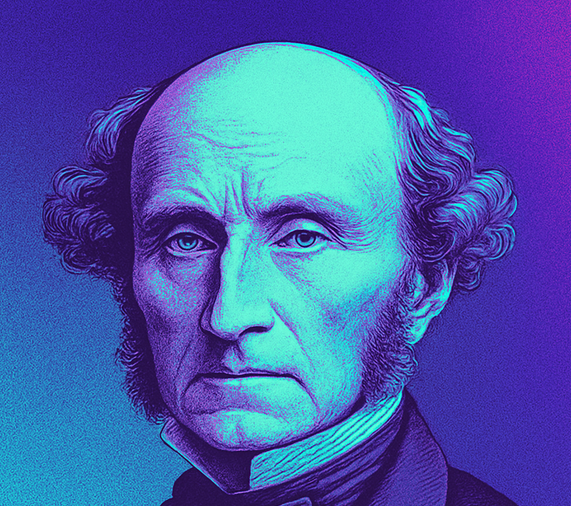
John Stuart Mill's position as the unchallenged leader in economics and in other fields in his time was due not only to the quality of his own work but also to the happenstance that people of comparable stature did not come along at that time to contest his methods and conclusions. He was like a track star running against the clock instead of against another track star. He was never pushed — either by the criticism or the competing theories of comparably able contemporaries — to reach his utmost potential. In the long run, his reputation suffered accordingly, because in the long run there are always people of comparable stature.
▼
Source
Thomas Sowell, "The Enigma of John Stuart Mill", On Classical Economics (2006)
4 months 3 weeks ago
The Greek word for philosopher (philosophos) connotes a distinction from sophos. It signifies the lover of wisdom (knowledge) as distinguished from him who considers himself wise in the possession of knowledge. This meaning of the word still endures: the essence of philosophy is not the possession of the truth but the search for truth. … Philosophy means to be on the way. Its questions are more essential than its answers, and every answer becomes a new question.
▼
Source
Way to Wisdom: An Introduction to Philosophy (1951) as translated by Ralph Mannheim, Ch. 1, What is Philosophy?, p. 12 | Variant translation: It is the search for the truth, not possession of the truth which is the way of philosophy. Its questions are mor
4 months 3 weeks ago
Art thou angry with him whose arm-pits stink? art thou angry with him whose mouth smells foul? What good will this anger do thee?
▼
Source
V, 28
4 months 3 weeks ago
the fact that no one has come up with a really convincing reason for giving greater moral weight to members of our own species, simply because they are members of our species, strongly suggests that there is no such reason. Like racism and sexism, speciesism is wrong.
▼
Source
p. 343
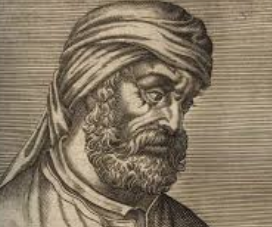
4 months 3 weeks ago
This power and disposition of the Divine Intelligence is set forth also in the Scriptures under the name of Σοφία, Wisdom; for what can be better entitled to the name of Wisdom than the Reason or the Word of God? Listen therefore to Wisdom herself, constituted in the character of a Second Person: “At the first the Lord created me as the beginning of His ways, with a view to His own works, before He made the earth, before the mountains were settled; moreover, before all the hills did He beget me;” that is to say, He created and generated me in His own intelligence. Then, again, observe the distinction between them implied in the companionship of Wisdom with the Lord. “When He prepared the heaven,” says Wisdom, “I was present with Him; and when He made His strong places upon the winds, which are the clouds above; and when He secured the fountains, (and all things) which are beneath the sky, I was by, arranging all things with Him; I was by, in whom He delighted; and daily, too, did I rejoice in His presence.” Now, as soon as it pleased God to put forth into their respective substances and forms the things which He had planned and ordered within Himself, in conjunction with His Wisdom’s Reason and Word, He first put forth the Word Himself, having within Him His own inseparable Reason and Wisdom, in order that all things might be made through Him through whom they had been planned and disposed, yea, and already made, so far forth as (they were) in the mind and intelligence of God. This, however, was still wanting to them, that they should also be openly known, and kept permanently in their proper forms and substances.
▼
Source
Chapter VI.—The Word of God is Also the Wisdom of God. The Going Forth of Wisdom to Create the Universe, According to the Divine Plan.

4 months 3 weeks ago
It follows, therefore, that he who breaks the laws of his country resists the ordinance of God, that is, the law of his nature. God has instituted neither monarchy, nor aristocracy, nor democracy, nor mixed government: but tho God has instituted no particular form of government among men, yet by the general laws of his kingdom, he exacts our obedience to the laws of those communities to which each of us is attached by birth, or to which we may be attached by a subsequent and lawful engagement.
▼
Source
pp. 85-86
4 months 3 weeks ago
Ἴδιον ἀνθρώπου φιλεῖν καὶ τοὺς πταίοντας.
▼
Source
It is man's peculiar duty to love even those who wrong him. | VII, 22
4 months 3 weeks ago
Truthfulness under oath is, by now, a matter of our civic religion, our relation to our fellow citizens rather than our relation to a nonhuman power.
▼
Source
"John Searle on Realism and Relativism." Truth and Progress: Philosophical Papers, Volume 3 (1998).
4 months 3 weeks ago
For whence is it that the bishops and clergy come? Is it not from all? If all are not bound to monogamy, whence are monogamists (to be taken) into the clerical rank? Will some separate order of monogamists have to be instituted, from which to make selection for the clerical body? (No); but when we are extolling and inflating ourselves in opposition to the clergy, then “we are all one:” then “we are all priests, because He hath made us priests to (His) God and Father.”
▼
Source
Chapter 12
4 months 3 weeks ago
Isaac Newton deserves to be included in a series of companions to major philosophers even though he was not a philosopher in the sense in which Descartes, Locke, and Kant were philosophers. That is, Newton made no direct contributions to epistemology or metaphysics that would warrant his inclusion in the standard list of major philosophers of the seventeenth and eighteenth centuries – Descartes, Spinoza, Locke, Leibniz, Berkeley, Hume, and Kant – or even in a list of other significant philosophers of the era – Bacon, Hobbes, Arnauld, Malebranche, Wolff, and Reid. The contributions to knowledge that made Newton a dominant figure of the last millennium were to science, not to philosophy.
▼
Source
p. 1
4 months 3 weeks ago
On the occasion of every act ask thyself, How is this with respect to me? Shall I repent of it? A little time and I am dead, and all is gone.
▼
Source
VIII, 2

4 months 3 weeks ago
How does the poet speak to men with power, but by being still more a man than they?
▼
Source
Burns.
4 months 3 weeks ago
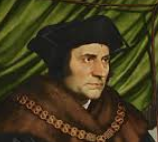
Therefore I must say that, as I hope for mercy, I can have no other notion of all the other governments that I see or know, than that they are a conspiracy of the rich, who, on pretence of managing the public, only pursue their private ends, and devise all the ways and arts they can find out; first, that they may, without danger, preserve all that they have so ill-acquired, and then, that they may engage the poor to toil and labour for them at as low rates as possible, and oppress them as much as they please; and if they can but prevail to get these contrivances established by the show of public authority, which is considered as the representative of the whole people, then they are accounted laws
▼
Source
Ch. 9 : Of the Religions of the Utopians
4 months 3 weeks ago
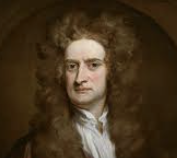
Bullialdus wrote that all force respecting the Sun as its center & depending on matter must be reciprocally in a duplicate ratio of the distance from the center.
▼
Source
Letter to Edmund Halley (June 20, 1686) quoted in I. Bernard Cohen and George E. Smith, ed.s, The Cambridge Companion to Newton (2002) p. 204
4 months 3 weeks ago
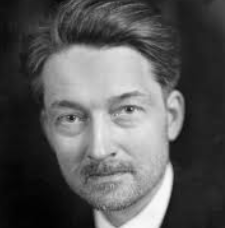
The act of philosophizing involves the character of the philosopher.
▼
Source
p. 207.
CivilSimian.com created by AxiomaticPanic, CivilSimian, Kalokagathia