
4 months 3 weeks ago
Wealth brings a heavy purse; poverty, a light spirit.
▼
Source
p. 88
4 months 3 weeks ago
You will see the mercy of God toward His creatures, how He has provided that which is required, in proper proportions, and treated all individual beings of the same species with perfect equality. ...for it is an act of great and perfect goodness that He gave us existence; and the creation of the controlling faculty in animals is a proof of His mercy towards them, as has been shown by us.
▼
Source
Ch.12

4 months 3 weeks ago
Fine manners need the support of fine manners in others.
▼
Source
Behavior
4 months 3 weeks ago
Realistic thinking accrues only after mistake making, which is the cosmic wisdom's most cogent way of teaching each of us how to carry on.
▼
Source
In Buckminster Fuller and Answar Dil, Humans in Universe (1983), 218.
4 months 3 weeks ago
The mollusk's motto would be: one must live to build one's house, and not build one's house to live in.
4 months 3 weeks ago
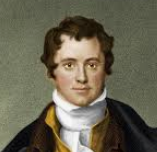
Fortunately science, like that nature to which it belongs, is neither limited by time nor by space. It belongs to the world, and is of no country and of no age. The more we know, the more we feel our ignorance; the more we feel how much remains unknown; and in philosophy, the sentiment of the Macedonian hero can never apply, — there are always new worlds to conquer.
▼
Source
Discourse Delivered at the Royal Society (30 November 1825), published in Six Discourses delivered before the Royal Society, at their Anniversary Meetings, on the Award of the Royal and Copley Medals, preceded by an Address to the Society on the Progress

4 months 3 weeks ago
He who seeks equality between unequals seeks an absurdity.
▼
Source
Ch. 9, Of Aristocracy, Continuation
4 months 3 weeks ago
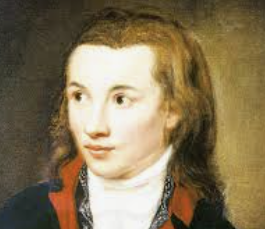
Man is a Sun; his Senses are the Planets.

4 months 3 weeks ago
Disbelieve nothing wonderful concerning the gods, nor concerning divine dogmas.
▼
Source
Symbol 4
4 months 3 weeks ago
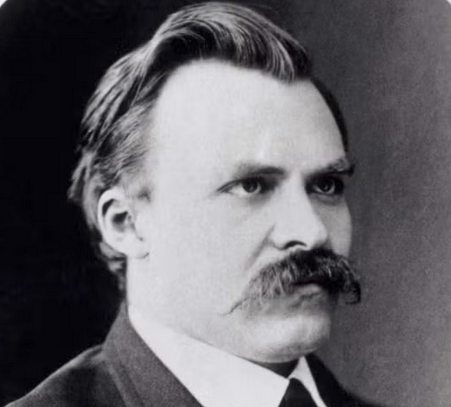
Science rushes headlong, without selectivity, without “taste,” at whatever is knowable, in the blind desire to know all at any cost. Philosophical thinking, on the other hand, is ever on the scent of those things which are most worth knowing, the great and the important insights.
▼
Source
p. 43
4 months 3 weeks ago
People of our generation were divided into supporters of Dostoyevski or Tolstoi, and M. tended to lean toward Tolstoi; but in a general sense he was immune to both, since he suspected that the one was just as much a heresiarch as the other.
▼
Source
Nadezhda Mandelstam Hope Abandoned (1974) Translated from the Russian by Max Hayward
4 months 3 weeks ago
Consider in how many ways His knowledge is distinguished from ours according to all the teaching of every revealed religion. First, His knowledge is one, and yet embraces many different kinds of objects. Secondly, it is applied to things not in existence. Thirdly, it comprehends the infinite. Fourthly, it remains unchanged, though it comprises the knowledge of changeable things; whilst it seems that the knowledge of a thing that is to come into existence is different from the knowledge of the thing when it has come into existence; because there is the additional knowledge of its transition from a state of potentiality into that of reality. Fifthly, according to the teaching of our Law, God's knowledge of one of two eventualities does not determine it, however certain that knowledge may be concerning the future occurrence of the one eventuality.
▼
Source
Ch.20
4 months 3 weeks ago
What potent blood hath modest May!
▼
Source
May-Day
4 months 3 weeks ago
Politics is policy. What policy should you follow in view of the idea that there isn't enough to go around — the power of the few, or the needs of the many? Political economy is based on misassumptions...
4 months 3 weeks ago
Those alone are dear to Divinity who are hostile to injustice.
▼
Source
"Pythagorean Ethical Sentences From Stobæus" (1904)
4 months 3 weeks ago
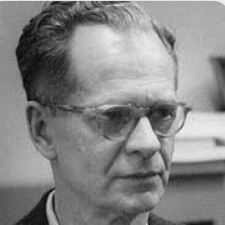
Education is what survives when what has been learned has been forgotten.
▼
Source
"New methods and new aims in teaching", in New Scientist, 22(392) (21 May 1964), pp.483-4
4 months 3 weeks ago
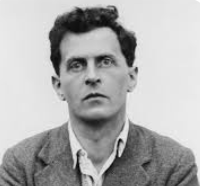
You won't — I really believe — get too much out of reading it. Because you won't understand it; the content will seem strange to you. In reality, it isn't strange to you, for the point is ethical. I once wanted to give a few words in the foreword which now actually are not in it, which, however, I'll write to you now because they might be a key for you: I wanted to write that my work consists of two parts: of the one which is here, and of everything which I have not written. And precisely this second part is the important one.
▼
Source
On his Tractatus Logico-Philosophicus, in a letter to Ludwig von Ficker (1919), published in Wittgenstein : Sources and Perspectives (1979) by C. Grant Luckhard
4 months 3 weeks ago
What prevented Him from making His primary object a direct commandment to us, and to give us the capacity of obeying it? ...As it is the chief object and purpose of God that we should believe in the Law, and act according to that which is written therein, why has He not given us the capacity of continually believing in it, and following its guidance, instead of holding out to us reward for obedience, and punishment for disobedience, or of actually giving all the predicted reward and punishment? For [the promises and the threats] are but the means of leading to this chief object. What prevented Him from giving us, as part of our nature, the will to do that which He desires us to do, and to abandon the kind of worship which He rejects? There is one general answer to these three questions, and all questions of the character; it is this: Although in every one of the signs [related in Scripture] the natural property of some individual being is changed, the nature of man is never changed by God by way of miracle. ...it is in His power, according to the principles taught in Scripture, but it has never been His will to do it, and it never will be. If it were part of His will to change [at His desire] the nature of any person, the mission of prophets and the giving of the Law would have been altogether superfluous.
▼
Source
Ch.32
4 months 3 weeks ago
Science does not know its debt to imagination.
▼
Source
Poetry and Imagination
4 months 3 weeks ago
Doing the right things for the wrong reasons is typical of humanity. Precession — not conscious planning — provides a productive outcome for misguided political and military campaigns. Nature's long-term design intervenes to circumvent the shortsightedness of human individuals, corporations, and nations competing for a share of the economic pie. Fundamentally, political economists misassume an inadequacy of life support to exist on our planet. Humanity therefore competes militarily to see which political system... is fittest to survive. In slavish observance of this misassumption, humans devote their most costly efforts and resources to "killingry" — a vast arsenal of weapons skillfully designed to kill ever more people at ever-greater distances in ever-shorter periods of time while employing ever-fewer pounds of material, ergs of energy, and seconds of time per killing.

4 months 3 weeks ago
To the rational being only the irrational is unendurable, but the rational is endurable.
▼
Source
Variant translation: To a reasonable creature, that alone is insupportable which is unreasonable; but everything reasonable may be supported. | Book I, ch. 2, § 1.
4 months 3 weeks ago
A solitary man is a God, or a beast.
4 months 3 weeks ago
Logic pervades the world: the limits of the world are also its limits. So we cannot say in logic, "The world has this in it, and this, but not that." For that would appear to presuppose that we were excluding certain possibilities, and this cannot be the case, since it would require that logic should go beyond the limits of the world; for only in that way could it view those limits from the other side as well. We cannot think what we cannot think; so what we cannot think we cannot say either. (5.61)
▼
Source
Original German:Die Logik erfüllt die Welt; die Grenzen der Welt sind auch ihre Grenzen. Wir können also in der Logik nicht sagen: Das und das gibt es in der Welt, jenes nicht.Das würde nämlich scheinbar voraussetzen, dass wir gewisse Möglichkeiten aussch
4 months 3 weeks ago
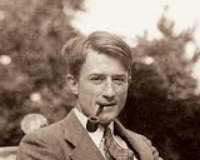
To be conservative, then, is to prefer the familiar to the unknown, to prefer the tried to the untried, fact to mystery, the actual to the possible, the limited to the unbounded, the near to the distant, the sufficient to the superabundant, the convenient to the perfect, present laughter to utopian bliss.
4 months 3 weeks ago
There are men who astonish and delight, men who instruct and guide. Some men's words I remember so well that I must often use them to express my thought. Yes, because I perceive that we have heard the same truth, but they have heard it better.
▼
Source
Character
4 months 3 weeks ago
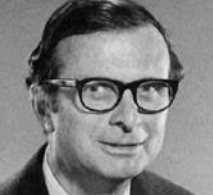
An objective of O.R. as it emerged from this evolution of industrial organization, is to provide managers of the organizations with a scientific basis for solving problems involving the interaction of the components of the organization in the best interest of the organization as a whole. A decision which is best for the organization as a whole is called optimum decision.
▼
Source
p. 6; Partly cited in: (2004) "[http://www.wulrich.com/downloads/ulrich_2004d.pdf In memory of C. West Churchman (1913–2004)]." Journal of Organisational Transformation and Social Change. Vol 1 (Nr. 2–3) p. 210
4 months 3 weeks ago
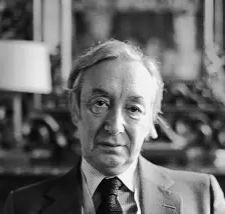
(Martin Gardner) writes about various kinds of cranks with the conscious superiority of the scientist, and in most cases one can share his sense of the victory of reason. But after half a dozen chapters this non-stop superiority begins to irritate; you begin to wonder about the standards that make him so certain he is always right. He asserts that the scientist, unlike the crank, does his best to remain open-minded. So how can he be so sure that no sane person has ever seen a flying saucer, or used a dowsing rod to locate water? And that all the people he disagrees with are unbalanced fanatics? A colleague of the positivist philosopher A. J. Ayer once remarked wryly "I wish I was as certain of anything as he seems to be about everything". Martin Gardner produces the same feeling.
▼
Source
Colin Wilson, The Quest For Wilhelm Reich, pp. 2-3.
4 months 3 weeks ago
When I see someone in anxiety, I say to myself, What can it be that this fellow wants? For if he did not want something that was outside of his control, how could he still remain in anxiety?
▼
Source
Book II, ch. 13, § 1.
4 months 3 weeks ago
I wished to show that Pythagoras, the first founder of the vegetable regimen, was at once a very great physicist and a very great physician; that there has been no one of a more cultured and discriminating humanity; that he was a man of wisdom and of experience; that his motive in commending and introducing the new mode of living was derived not from any extravagant superstition, but from the desire to improve the health and the manners of men.
▼
Source
Antonio Cocchi, The Pythagorean Diet: for the Use of the Medical Faculty, as quoted in The Ethics of Diet by Howard Williams (University of Illinois Press, 2003, [https://books.google.it/books?id=o9ugCcZ13BMC&pg=PA159 p. 159])
4 months 3 weeks ago
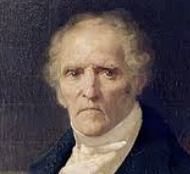
The possibility of associating two or three hundred families in agricultural and manufacturing industry depends upon a system so entirely different from what now exists, that it will open to the reader a new social world. He must consequently, in the study which opens before him, follow the guide with confidence, bearing constantly in min the gigantic results which will flow from association. Such results are well worth the sacrifice of a few prejudices. Every sensible reader will be of this opinion, and will concur to follow the advice which I shall constantly give, namely, to neglect the form and style of presentation, and occupy himself solely with the substance of the theory, seeking to determine whether the process of association is really discovered or not.
▼
Source
The Theory of Social Organization. Harmonian Man: Selected Writings of Charles Fourier, p. 5.
4 months 3 weeks ago
The problems are dissolved in the actual sense of the word — like a lump of sugar in water.
▼
Source
Ch. 9 : Philosophy, p. 183

4 months 3 weeks ago
If your opponent strikes with fire, counter with water, becoming completely fluid and free-flowing. Water, by its nature, never collides with or breaks against anything. On the contrary, it swallows up any attack harmlessly.
4 months 3 weeks ago
We boil at different degrees.
▼
Source
Eloquence
4 months 3 weeks ago
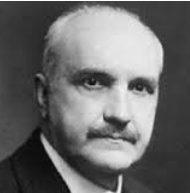
Knowledge can be considered as a collection of information, or as an activity, or as a potential. If we think of it as a collection of information, then the analogy of a computer's memory is helpful, for we can say that knowledge about something is like the storage of meaningful and true strings of symbols in a computer.
▼
Source
p. 9; cited in Daniel J. Power (2004) Decision Support Systems: Frequently Asked Questions. p. 23
4 months 3 weeks ago
Every moment celebrates obsequies over the virtues of its predecessor.
▼
Source
Ch. XIV
4 months 3 weeks ago
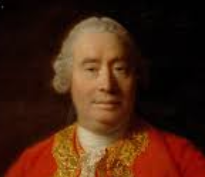
For do our Theologians pretend to make a monopoly of the word, action, and may not the atheists likewise take possession of it, and affirm that plants, animals, men, &c. are nothing but particular actions of one simple universal substance, which exerts itself from a blind and absolute necessity?
▼
Source
Part 4, Section 5
4 months 3 weeks ago
If a person gave your body to any stranger he met on his way, you would certainly be angry. And do you feel no shame in handing over your own mind to be confused and mystified by anyone who happens to verbally attack you? (28) [tr. Elizabeth Carter]
4 months 3 weeks ago
The combination of mathematics and theology, which began with Pythagoras, characterized religious philosophy in Greece, in the Middle Ages, and in modern times down to Kant. Orphism before Pythagoras was analogous to Asiatic mystery religions. But in Plato, Saint Augustine, Thomas Aquinas, Descartes, Spinoza, and Kant there is an intimate blending of religion and reasoning, of moral aspiration with logical admiration of what is timeless, which comes from Pythagoras, and distinguishes the intellectualized theology of Europe from the more straightforward mysticism of Asia. It is only in quite recent times that it has been possible to say clearly that Pythagoras was wrong. I do not know of any other man who has been as influential as he was in the sphere of thought. I say this because what appears as Platonism is, when analyzed, found to be in essence Pythagoreanism. The whole conception of an eternal world, revealed to the intellect but not to the senses, is derived from him. But for him, Christians would not have thought of Christ as the Word; but for him, theologians would not have sought logical proofs of God and immortality.
▼
Source
Bertrand Russell, in A History of Western Philosophy (1945), Book One, Part I, Chapter III, Pythagoras, p. 37
4 months 3 weeks ago
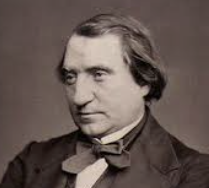
As a rule, all heroism is due to a lack of reflection, and thus it is necessary to maintain a mass of imbeciles. If they once understand themselves the ruling men will be lost.
▼
Source
Orlando, in Caliban, act 2, sc. 1 (1878).
4 months 3 weeks ago
But if you say: "How am I to know what he means, when I see nothing but the signs he gives?" then I say: "How is he to know what he means, when he has nothing but the signs either?"
▼
Source
§ 504

4 months 3 weeks ago
Muslims are we, the country is ours, China and Arabia is ours, India is ours. Under the shadow of swords we have grown up. The crescent scabbard is our national emblem.
▼
Source
Mohammed Iqbal , circa 1930, Ved Mehta "Coming Down", India , Granta 57 (London: Granta, 1997), p. 148. quoted in Savarkar and The Discourse on Islam in Pre-independent India, Amalendu Misra. Source: Journal of Asian History, Vol. 33, No. 2 (1999)
4 months 3 weeks ago
As soon as there is life there is danger.
▼
Source
Actually from De l'Allemagne (1813) by Madame de Stael.
4 months 3 weeks ago
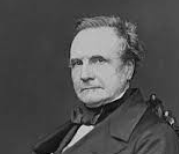
The object of the present volume is to point out the effects and the advantages which arise from the use of tools and machines ;—to endeavour to classify their modes of action ;—and to trace both the causes and the consequences of applying machinery to supersede the skill and power of the human arm.
▼
Source
Preface
4 months 3 weeks ago
It is not politics that can bring true liberty to the soul; that must be achieved, if at all, by philosophy;
▼
Source
"The Irony of Liberalism"

4 months 3 weeks ago
In the Koran as in the Bible, politics is divinized, and human reason, crushed by the religious ascendancy, cannot insinuate its isolating and corrosive poison into the mechanisms of government, so that citizens are believers whose loyalty is exalted to faith, and obedience to enthusiasm and fanaticism.
▼
Source
p. 78
4 months 3 weeks ago
Necessity may be defined in two ways, conformably to the two definitions of cause, of which it makes an essential part. It consists either in the constant conjunction of like objects, or in the inference of the understating from one object to another.
▼
Source
§ 8.27
4 months 3 weeks ago
It is important to recognize that the materialist, scientific paradigm that dominates the late twentieth century world and provides the basis for its dominant institutions, has its basis in the life and work of Pythagoras, one of the most significant representatives of the perennial philosophy and a founder of the magical tradition. This spirit, which gave rise to our world view, is a spirit that must be recaptured if our civilization is to flourish. The choice is a clear one to many, and was summed up in a book title by the late Pythagorean and futurist Buckminster Fuller, Utopia or Oblivion.

4 months 3 weeks ago
Poor, wretched, and stupid peoples, nations determined on your own misfortune and blind to your own good! You let yourselves be deprived before your own eyes of the best part of your revenues; your fields are plundered, your homes robbed, your family heirlooms taken away. You live in such a way that you cannot claim a single thing as your own; and it would seem that you consider yourselves lucky to be loaned your property, your families, and your very lives. All this havoc, this misfortune, this ruin, descends upon you not from alien foes, but from the one enemy whom you yourselves render as powerful as he is, for whom you go bravely to war, for whose greatness you do not refuse to offer your own bodies unto death. He who thus domineers over you has only two eyes, only two hands, only one body, no more than is possessed by the least man among the infinite numbers dwelling in your cities; he has indeed nothing more than the power that you confer upon him to destroy you. Where has he acquired enough eyes to spy upon you, if you do not provide them yourselves? How can he have so many arms to beat you with, if he does not borrow them from you? The feet that trample down your cities, where does he get them if they are not your own? How does he have any power over you except through you? How would he dare assail you if he had no cooperation from you? What could he do to you if you yourselves did not connive with the thief who plunders you, if you were not accomplices of the murderer who kills you, if you were not traitors to yourselves? You sow your crops in order that he may ravage them, you install and furnish your homes to give him goods to pillage; you rear your daughters that he may gratify his lust; you bring up your children in order that he may confer upon them the greatest privilege he knows — to be led into his battles, to be delivered to butchery, to be made the servants of his greed and the instruments of his vengeance; you yield your bodies unto hard labor in order that he may indulge in his delights and wallow in his filthy pleasures; you weaken yourselves in order to make him the stronger and the mightier to hold you in check.
4 months 3 weeks ago
I think I summed up my attitude to philosophy when I said: philosophy ought really to be written only as a poetic composition.
▼
Source
p. 24e | variant translation at [https://wittgenstein-initiative.com/writing-philosophy-as-poetry-literary-form-in-wittgenstein/ wittgenstein-initiative.com]: I think I summed up my position vis-а-vis philosophy when I said: philosophy should really be wr

4 months 3 weeks ago
What we have of systematic and orderly action and speech ... seems to go back to primeval systematic orderliness as found in magic. The scientific tendency to link everything with everything else, to regard nothing as indifferent, clearly already belonged to the age of magic. If we reach the dependence of human fate on empirical describable conditions, we are much closer in our way of thinking to the men of the magical times that we are commonly apt to suspect.
▼
Source
p. 320; as cited in: Cartwright (2008;199)
CivilSimian.com created by AxiomaticPanic, CivilSimian, Kalokagathia