

4 months 3 weeks ago
Even when provocation was great, his satire was so gentle and genial that it warmed even its object.
▼
Source
Charles Johnson Woodbury, Talks with Ralph Waldo Emerson (1890), p. 43
4 months 3 weeks ago
Propose to any Englishman any principle, or any instrument, however admirable, and you will observe that the whole effort of the English mind is directed to find a difficulty, a defect, or an impossibility in it. If you speak to him of a machine for peeling a potato, he will pronounce it impossible; if you peel a potato with it before his eyes, he will declare it useless because it will not slice a pineapple. Impart the same principle or show the same machine to an American or to one of our Colonists and you will observe that the whole effort of his mind is to find some new application of the principle, some new use for the instrument.
▼
Source
Quoted in Richard H. Babbage (1948), "The Work of Charles Babbage", [https://archive.org/details/proceedingsofsym0000symp_y9e6/page/20/mode/2up?q=%22Propose+to+any+Englishman%22 Annals of the Computation Laboratory of Harvard University, vol. 16] cited to
4 months 3 weeks ago
The earth has music for those who listen.
▼
Source
This statement is commonly associated with Santayana, but no source or attribution can be found in his works or correspondence. This quotation is appropriately attributed to Reginald Vincent Holmes' poem "The Magic of Sound", published in Fireside Fancies
4 months 3 weeks ago
Frenchmen, it was to the noise of hellish songs, the blasphemy of atheism, the cries of death, and the prolonged moans of slaughtered innocence, it was by the light of flames, on the debris of throne and altar, watered by the blood of the best of kings and an innumerable host of other victims, it was by the contempt of morality and the established faith, it was in the midst of every crime that your seducers and your tyrants founded what they call your liberty.
▼
Source
Chapter X, p. 84
4 months 3 weeks ago
The slaving Poor are incapable of any Principles: Gentlemen may be converted to true Principles, by Time and Experience. The middling Rank of Men have Curiosity and Knowledge enough to form Principles, but not enough to form true ones, or correct any Prejudices that they may have imbib'd: And 'tis among the middling Rank, that Tory Principles do at present prevail most in England.
▼
Source
Part I, Essay 9: Of The Parties of Great Britain; final lines of this essay in the 1741 and 1742 editions of Essays, Moral and Political, they were not included in later editions.
4 months 3 weeks ago
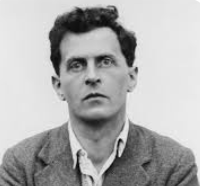
One might say: art shows us the miracles of nature. It is based on the concept of the miracles of nature.

4 months 3 weeks ago
In periods of frenzied haste toward wealth, of feverish speculation and of crisis, of the sudden downfall of great industries and the ephemeral expansion of other branches of production, of scandalous fortunes amassed in a few years and dissipated as quickly, it becomes evident that the economic institutions which control production and exchange are far from giving to society the prosperity which they are supposed to guarantee; they produce precisely the opposite result. … Human society is seen to be splitting more and more into two hostile camps, and at the same time to be subdividing into thousands of small groups waging merciless war against each other. Weary of these wars, weary of the miseries which they cause, society rushes to seek a new organization; it clamors loudly for a complete remodeling of the system of property ownership, of production, of exchange and all economic relations which spring from it.
4 months 3 weeks ago
From an Enlightenment or Positivist point of view, which is Hume's point of view, and mine, there is simply no avoiding the conclusion that the human race is mad. There are scarcely any human beings who do not have some lunatic beliefs or other to which they attach great importance. People are mostly sane enough, of course, in the affairs of common life: the getting of food, shelter, and so on. But the moment they attempt any depth or generality of thought, they go mad almost infallibly. The vast majority, of course, adopt the local religious madness, as naturally as they adopt the local dress. But the more powerful minds will, equally infallibly, fall into the worship of some intelligent and dangerous lunatic, such as Plato, or Augustine, or Comte, or Hegel, or Marx.
▼
Source
[https://https://web.maths.unsw.edu.au/~jim/wrongthoughts.html The Plato Cult and Other Philosophical Follies], 1991. Page 184.
4 months 3 weeks ago
I remember that in a widely distributed French newspaper they asked the famous author of the Génie du Christianisme, if a nymph was not a bit more beautiful than a nun. In supposing them represented by the same talent or by equal talents (a condition without which the question would make no sense), there is no doubt that the nun would be more beautiful. The error best suited to extinguishing the true sentiment of beauty is that of confusing that which pleases with that which is beautiful, or in other words, that which pleases the senses with that which pleases the intelligence.
4 months 3 weeks ago
Were a stranger to drop on a sudden into this world, I would show him, as a specimen of its ills, a hospital full of diseases, a prison crowded with malefactors and debtors, a field of battle strewed with carcasses, a fleet foundering in the ocean, a nation languishing under tyranny, famine, or pestilence. To turn the gay side of life to him, and give him a notion of its pleasures; whither should I conduct him? to a ball, to an opera, to court? He might justly think, that I was only showing him a diversity of distress and sorrow.
▼
Source
Demea to Philo, Part X
4 months 3 weeks ago
Lately, the one person that's meant a lot to me is Wittgenstein. I think his remarks on color turn into some of the most beautiful poetry I've ever read. People call Wittgenstein a philosopher and I call him a poet.
▼
Source
Leslie Marmon Silko, 1986 interview in Conversations with Leslie Marmon Silko edited by Ellen L. Arnold (2000)
4 months 3 weeks ago
It is only by the abolition of the State, by the conquest of perfect liberty by the individual, by free agreement, association, and absolute free federation that we can reach Communism — the possession in common of our social inheritance, and the production in common of all riches.

4 months 3 weeks ago
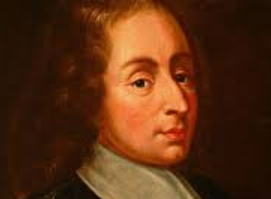
Socrates said, "Those who want fewest things are nearest to the gods."
▼
Source
Socrates, 11.
4 months 3 weeks ago
Mahomet established a religion by putting his enemies to death; Jesus Christ, by commanding his followers to lay down their own lives.
▼
Source
[http://books.google.pt/books?id=MGkNAAAAYAAJ&pg=PA202&dq=%22Mahomet+established+a%22&hl=pt-PT&sa=X&ei=oZmPU-fCDemp7Ab7s4HQAg&ved=0CCsQ6AEwAA#v=onepage&q=%22Mahomet%20established%20a%20religion%22&f=false Thoughts on Religion and Philosophy] (W. Collins,
4 months 3 weeks ago
In virtue of this monstrous system, the son of the worker, on entering life, finds no field which he may till, no machine which he may tend, no mine in which he may dog, without accepting to leave a great part of what he will produce to a master.
▼
Source
Ch. 1 : Our Riches, p. 59
4 months 3 weeks ago
He used to say that personal beauty was a better introduction than any letter; but others say that it was Diogenes who gave this description of it, while Aristotle called beauty "the gift of God"; that Socrates called it "a short-lived tyranny"; Theophrastus, "a silent deceit"; Theocritus, "an ivory mischief"; Carneades, "a sovereignty which stood in need of no guards".
▼
Source
Aristotle, 9.
4 months 3 weeks ago
Several particular maxims... are as powerful, although false, in carrying away belief, as those the most true.
4 months 3 weeks ago
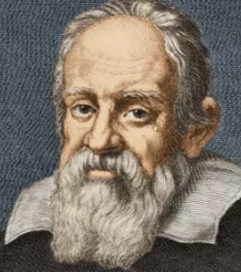
In the long run my observations have convinced me that some men, reasoning preposterously, first establish some conclusion in their minds which, either because of its being their own or because of their having received it from some person who has their entire confidence, impresses them so deeply that one finds it impossible ever to get it out of their heads. Such arguments in support of their fixed idea as they hit upon themselves or hear set forth by others, no matter how simple and stupid these may be, gain their instant acceptance and applause. On the other hand whatever is brought forward against it, however ingenious and conclusive, they receive with disdain or with hot rage — if indeed it does not make them ill. Beside themselves with passion, some of them would not be backward even about scheming to suppress and silence their adversaries.
▼
Source
p. 322

4 months 3 weeks ago
The grandeur of man is measured according to what he seeks and according to the urgency by which he remains a seeker.
▼
Source
Basic Questions of Philosophy: Selected "Problems" of "Logic" (Grundfragen der Philosophie: Ausgewählte "Probleme" der "Logik" (1984), translated by Richard Rojcewicz and André Schuwer, Indiana University Press, 1994, ISBN 0253004381, p. 7)
4 months 3 weeks ago
If we take all into consideration; if we realise the progress made in the gardening culture, and the tendency towards spreading its methods... if we watch the cultural experiments which are being made now—experiments today and realities tomorrow—and ponder over the resources kept in store by science, we are bound to say that it is utterly impossible to foresee at the present moment the limits as to the maximum number of human beings who could draw their means of subsistence from a given area of land, or as to what a variety of produce they could advantageously grow in any latitude.
4 months 3 weeks ago
Apollodorus says, "If any one were to take away from the books of Chrysippus all the passages which he quotes from other authors, his paper would be left empty."
▼
Source
Chrysippus, 3.

4 months 3 weeks ago
A geometrician has learned to perform the most difficult demonstrations and calculations, as a monkey has learned to take his little hat off and on...
4 months 3 weeks ago
I call a sign which stands for something merely because it resembles it, an icon. Icons are so completely substituted for their objects as hardly to be distinguished from them. Such are the diagrams of geometry. A diagram, indeed, so far as it has a general signification, is not a pure icon; but in the middle part of our reasonings we forget that abstractness in great measure, and the diagram is for us the very thing. So in contemplating a painting, there is a moment when we lose the consciousness that it is not the thing, the distinction of the real and the copy disappears, and it is for the moment a pure dream, — not any particular existence, and yet not general. At that moment we are contemplating an icon.
4 months 3 weeks ago
The mind must not be forced; artificial and constrained manners fill it with foolish presumption, through unnatural elevation and vain and ridiculous inflation, instead of solid and vigorous nutriment.
4 months 3 weeks ago
Measure what is measurable, and make measurable what is not so.
▼
Source
The quote is widely misattributed to Galilei, but is actually from two French scholars, Antoine-Augustin Cournot and Thomas-Henri Martin. See "Der messende Luchs: Zwei verbreitete Fehler in der Galilei-Literatur" by Andreas Kleinert in "NTM Zeitschrift fü
4 months 3 weeks ago
In everything well known something worthy of thought still lurks.
▼
Source
p. xxxix

4 months 3 weeks ago
It is certainly much easier wholly to decline a passion than to keep it within just bounds and measures; and that which few can moderate almost anybody may prevent.
▼
Source
p. 463 (Self-denial)
4 months 3 weeks ago
There is something that is much more scarce, something finer far, something rarer than ability. It is the ability to recognize ability. The sternest comment that can be made against employers as a class lies in the fact that men of Ability usually succeed in showing their worth in spite of their employer, and not with his assistance and encouragement.
▼
Source
The Philistine magazine, [http://books.google.com/books?id=xxI8AQAAMAAJ&q=%22There+is+something+that+is+much+more+scarce+something+finer+far+something+rarer+than+ability+It+is+the+ability+to+recognize+ability+The+sternest+comment+that+can+be+made+against+

4 months 3 weeks ago
Bourgeois political economy … never gets to see man who is its real subject. It disregards the essence of man and his history and is thus in the profoundest sense not a ‘science of people’ but of non-people and of an inhuman world of objects and commodities.
▼
Source
“The Foundations of Historical Materialism,” Studies in Critical Philosophy (1972), p. 9
4 months 3 weeks ago
Time with its continuity logically involves some other kind of continuity than its own. Time, as the universal form of change, cannot exist unless there is something to undergo change, and to undergo a change continuous in time, there must be a continuity of changeable qualities.
4 months 3 weeks ago
I appeal to the philosophers of all countries to unite and never again mention Heidegger or talk to another philosopher who defends Heidegger. This man was a devil. I mean, he behaved like a devil to his beloved teacher [i.e., Husserl ], and he has a devilish influence on Germany. … One has to read Heidegger in the original to see what a swindler he was.
▼
Source
Karl Popper, as quoted in "At 90, and Still Dynamic : Revisiting Sir Karl Popper and Attending His Birthday Party" by Eugene Yue-Ching Ho, in Intellectus 23 (Jul-Sep 1992)
4 months 3 weeks ago
The elements that make up all other bodies, these must be bodies that are perfectly inelastic, undeformable and unchangeable.
4 months 3 weeks ago
If we ever damned it will not be because we have loved too much, but because we have loved too little.
▼
Source
p. 16
4 months 3 weeks ago
‘Resignation’ is a keynote in Comte’s writings, deriving directly from assent to invariable social laws. ‘True resignation, that is, a disposition to endure necessary evils steadfastly and without any hope of compensation therefore, can result only from a profound feeling for the invariable laws that govern the variety of natural phenomena. P. 345
4 months 3 weeks ago
We are faced with the curiously appalling trend of modern thought, in which the absolute which was once a means of entering into communion with the divine, has now become an instrument used by those who profit from it, to distort, pervert, and conceal the meaning of the present.
4 months 3 weeks ago
Thus far, gentlemen, I have been insisting very strenuously upon what the most vulgar common sense has every disposition to assent to and only ingenious philosophers have been able to deceive themselves about. But now I come to a category which only a more refined form of common sense is prepared willingly to allow, the category which of the three is the chief burden of Hegel's song, a category toward which the studies of the new logico-mathematicians, Georg Cantor and the like, are steadily pointing, but to which no modern writer of any stripe, unless it be some obscure student like myself, has ever done anything approaching to justice.
▼
Source
Lecture II : The Universal Categories, §3. Laws: Nominalism, CP 5.59
4 months 3 weeks ago
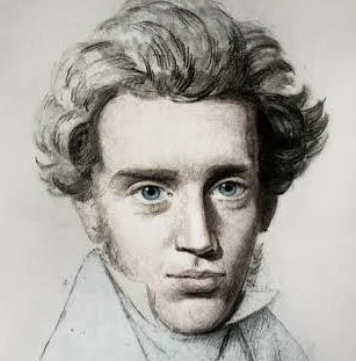
It occurs to me that artists go forward by going backward, something which I have nothing against intrinsically when it is a reproduced retreat — as is the case with the better artists. But it does not seem right that they stop with the historical themes already given and, so to speak, think that only these are suitable for poetic treatment, because these particular themes, which intrinsically are no more poetic than others, are now again animated and inspirited by a great poetic nature. In this case the artists advance by marching on the spot. — Why are modern heroes and the like not just as poetic? Is it because there is so much emphasis on clothing the content in order that the formal aspect can be all the more finished?
▼
Source
Kierkegaard Journals and Papers 1A, 86 September 29, 1835
4 months 3 weeks ago
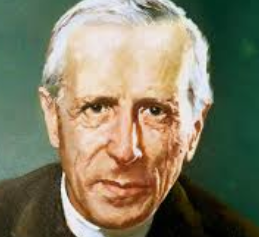
Discontinuity in continuity: that is how... the birth of thought, like that of life, presents... and defines itself.
4 months 3 weeks ago
The weaknesses of the many make the leader possible—and the man who craves disciples and wants followers is always more or less of a charlatan. The man of genuine worth and insight wants to be himself; and he wants others to be themselves, also. Discipleship is a degenerating process to all parties concerned. People who are able to do their own thinking should not allow others to do it for them.
▼
Source
p. 197
4 months 3 weeks ago
Non-operational ideas are non-behavioral and subversive. The movement of thought is stopped at barriers which appear as the limits of Reason itself.
▼
Source
p. 14
4 months 3 weeks ago
Peirce held that the continuity of space, time, ideation, feeling, and perception is an irreducible deliverance of science, and that an adequate conception of the continuous is an extremely important part of all the sciences. This doctrine he called “synechism,” a word deriving from the Greek preposition that means “(together) with.”
▼
Source
[http://plato.stanford.edu/entries/peirce/#syn "Charles Sanders Peirce" profile in Stanford Encyclopedia of Philosophy, §6 : Synechism, the Continuum, Infinites, and Infinitesimals]
4 months 3 weeks ago
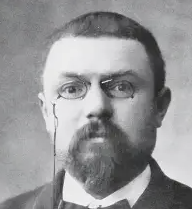
Is not my present nearer my past of yesterday than the present of Sirius?
4 months 3 weeks ago
It is the duty of the human understanding to understand that there are things which it cannot understand, and what those things are. Human understanding has vulgarly occupied itself with nothing but understanding, but if it would only take the trouble to understand itself at the same time it would simply have to posit the paradox.
▼
Source
1847
4 months 3 weeks ago
Yet the greater part of it, I shall show, is nonsense, tricked out with a variety of metaphysical conceits, and its author can be excused of dishonesty only on the grounds that before deceiving others he has taken great pains to deceive himself.
▼
Source
Peter Medawar, "Review of Teilhard de Chardin’s The Phenomenon of Man". In: Mind Vol.70 (1961)
4 months 3 weeks ago
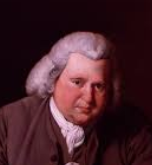
He too renounces his Creator,And forms all sense from senseless matter.Great wizard he! by magic spellsCan all things raise from cockle shells...O Doctor, change thy foolish motto,Or keep it for some lady’s .Else thy poor patients well may quake,If thou no more canst mend than make.
▼
Source
, from a Grangerized copy of Stebbing Shaw’s History of Staffordshire in William Salt Library, Stafford, and from the published version in Gent. Mag. 54, 87 (1784) as cited by Desmond King-Hele, "[https://royalsocietypublishing.org/doi/pdf/10.1098/rsnr.19
4 months 3 weeks ago
Freed from the sublimated form which was the very token of its irreconcilable dreams—a form which is the style, the language in which the story is told—sexuality turns into a vehicle for the bestsellers of oppression. … This society turns everything it touches into a potential source of progress and of exploitation, of drudgery and satisfaction, of freedom and of oppression. Sexuality is no exception.
▼
Source
pp. 77-78
4 months 3 weeks ago
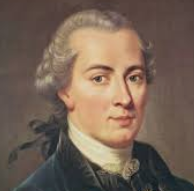
The sensuous may be exceedingly distinct, while intellectual concepts are extremely confused. The former we observe in the prototype of sensuous knowledge geometry; the latter, in the organon of all intellectual concepts, metaphysics. It is evident how much toil the latter is expending to dispel the fogs of confusion darkening the common intellect, though not always with the happy success of the former science.
4 months 3 weeks ago
In the Church which was founded at Corinth, St. Paul had special difficulties of the kind I have mentioned. In that flourishing commercial city, which through its shipping and situation, maintained a vital connexion between East and West, numerous crowds of people flocked together from all quarters, different in speech and in culture. As they mingled with the inhabitants, they produced, by contacts and contrasts, new and ever new differences. Even in the Church this differentiation endeavoured to make itself felt in sects and parties; and a kind of pagan wisdom made a special attempt to force itself forward as a teacher of truth. In his first letter to this church, from which the text I read is taken, St. Paul strongly combats this tendency.
▼
Source
P. 162
4 months 3 weeks ago
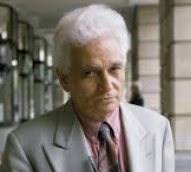
Oh. Marx's love for Shakespeare! It is well known. Chris Hani shared the same passion. I have just learned this and I like the idea. Even though Marx more often quotes Timon of Athens, the Manifesto seems to evoke or convoke, right from the start, the first coming of the silent ghost, the apparition of the spirit that does not answer, on those ramparts of Elsinore which is then the old Europe.
▼
Source
Injunctions of Marx
4 months 3 weeks ago
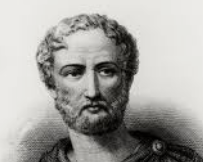
By then day had broken everywhere, but here it was still night—no, more than night.
▼
Source
Letter 16.
CivilSimian.com created by AxiomaticPanic, CivilSimian, Kalokagathia