
4 months 3 weeks ago
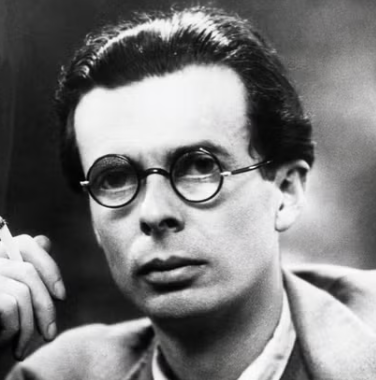
So long as men worship the Caesars and Napoleons, Caesars and Napoleons will duly rise and make them miserable.
▼
Source
Ch. 8, p. 99 [2012 reprint]
4 months 3 weeks ago
We all know that constancy, jealousy, and the personal pledge are natural and inevitable in sex; we do not feel any surprise when we see them either in a murder or in a valentine.
▼
Source
[https://en.wikisource.org/wiki/Page:George_Bernard_Shaw_(IA_cu31924013547645).pdf/187 "The Philosopher" pg. 181]
4 months 3 weeks ago
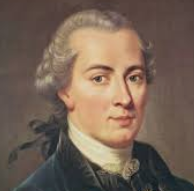
Thus our duties to animals are indirectly duties to humanity.
▼
Source
Part II, p. 213
4 months 3 weeks ago
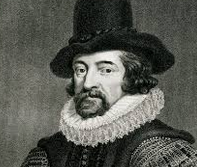
Cosmus, Duke of Florence, was wont to say of perfidious friends, that "We read that we ought to forgive our enemies; but we do not read that we ought to forgive our friends."
▼
Source
No. 206

4 months 3 weeks ago
Conservatives have no intention of compromising with socialists, but even such an alliance, ridiculous though it would be, is more conceivable than the coalition of conservatives and libertarians.
4 months 3 weeks ago
Art, I suppose, is only for beginners, or else for those resolute dead-enders, who have made up their minds to be content with the ersatz of Suchness, with symbols rather than with what they signify, with the elegantly composed recipe in lieu of actual dinner.
4 months 3 weeks ago
In the city set upon slime and loam,They cry in their Parliament, "Who goes home?"And there comes no answer in arch or dome,For none in the city of graves goes home.Yet these shall perish and understand,For God has pity on this great land.
▼
Source
Ch. XXI: "The Road to Roundabout"
4 months 3 weeks ago
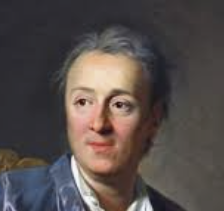
To attempt the destruction of our passions is the height of folly. What a noble aim is that of the zealot who tortures himself like a madman in order to desire nothing, love nothing, feel nothing, and who, if he succeeded, would end up a complete monster!
▼
Source
Ch. 5, as quoted in Selected Writings (1966) edited by Lester G. Crocker

4 months 3 weeks ago
Well, if identity is only a game, if it is only a procedure to have relations, social and sexual-pleasure relationships that create new friendships, it is useful. But if identity becomes the problem of sexual existence, and if people think that they have to "uncover" their "own identity," and that their own identity has to become the law, the principle, the code of their existence; if the perennial question they ask is "Does this thing conform to my identity?" then, I think, they will turn back to a kind of ethics very close to the old heterosexual virility. If we are asked to relate to the question of identity, it must be an identity to our unique selves. But the relationships we have to have with ourselves are not ones of identity, rather, they must be relationships of differentiation, of creation, of innovation. To be the same is really boring. We must not exclude identity if people find their pleasure through this identity, but we must not think of this identity as an ethical universal rule.
▼
Source
"Sex, Power, and the Politics of Identity", interview in The Advocate, June 1982, as translated in Ethics, Subjectivity and Truth (1994), pp. 166

4 months 3 weeks ago
No woman should be authorized to stay at home to raise her children. Society should be totally different. Women should not have that choice, precisely because if there is such a choice, too many women will make that one. It is a way of forcing women in a certain direction.
▼
Source
“A Dialogue with Simone de Beauvoir,” in Betty Friedan, It Changed My Life: Writings on the Women’s Movement, (New York: Random House, 1976), [https://books.google.com/books?id=iv4-Qy82BJ0C&pg=PA397&lpg=PA397 p. 397].
4 months 3 weeks ago
Societies are composed of individuals and are good only insofar as they help individuals to realize their potentialities and to lead a happy and creative life.
▼
Source
Chapter 3 (p. 20)
4 months 3 weeks ago
To have seen you and your unforgotten face, Brave as a blast of trumpets for the fray, Pure as white lilies in a watery space, It were something, though you went from me today. To have known the things that from the weak are furled, Perilous ancient passions, strange and high; It is something to be wiser than the world, It is something to be older than the sky.
▼
Source
The Great Minimum
4 months 3 weeks ago
All abstract sciences are nothing but the study of relations between signs.
▼
Source
Dr. Théophile de Bordeu, in “Conversation Between D’Alembert and Diderot”
4 months 3 weeks ago
We are observing ourselves being observed by the painter, and made visible to his eyes by the same light that enables us to see him. And just as we are about to apprehend ourselves, transcribed by his hand as though in a mirror, we find that we can in fact apprehend nothing of that mirror but its lusterless back. The other side of a psyche.
▼
Source
Las Menias
4 months 3 weeks ago
One is not born a genius, one becomes a genius; and the feminine situation has up to the present rendered this becoming practically impossible.
▼
Source
Bk. I, Pt. 2, Ch. 8: Since the French Revolution: the Job and the Vote, p. 133
4 months 3 weeks ago
Aldous Huxley was uncannily prophetic, a more astute guide to the future than any other 20th- century novelist. Even his casual asides have a surprising relevance to our own times. During the first world war, after America's entry, he warned: "I dread the inevitable acceleration of American world domination which will be the result of it all...Europe will no longer be Europe." His sentiment is widely echoed today, though too late for us to do anything about it. The worst fate for a prophet is for his predictions to come true, when everyone resents him for being so clear-eyed.
▼
Source
J. G. Ballard, [http://www.guardian.co.uk/books/2002/apr/13/biography.aldoushuxley?INTCMP=SRCH Prophet of Our Present]. Review of Aldous Huxley: An English Intellectual by Nicholas Murray. The Guardian (13 April 2002)
4 months 3 weeks ago
Those dry Deists and hard-headed Utilitarians who stalked the streets of Edinburgh and Glasgow in the eighteenth and early nineteenth centuries were very obviously the products of the national religious spirit. The Scottish atheists were unmistakable children of the Kirk. And though they often seemed absurdly detached and dehumanised, the world is now rather suffering for want of such dull lucidity.
▼
Source
Ch. V: "The Scottish Stories"
4 months 3 weeks ago
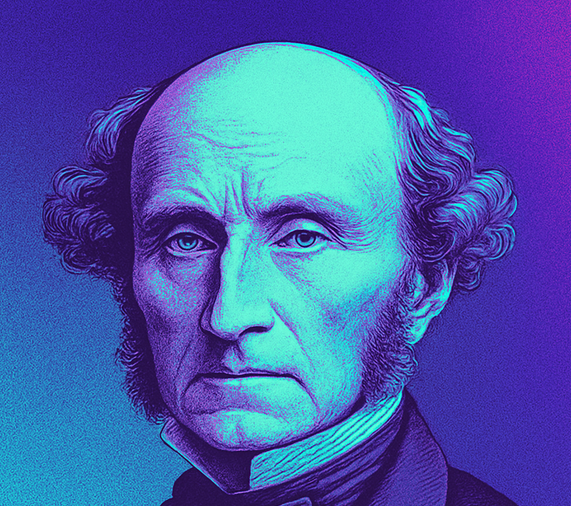
How can great minds be produced in a country where the test of a great mind is agreeing in the opinions of small minds?
▼
Source
As quoted in Egoists: A Book of Supermen (1909) by James Huneker, p. 367
4 months 3 weeks ago
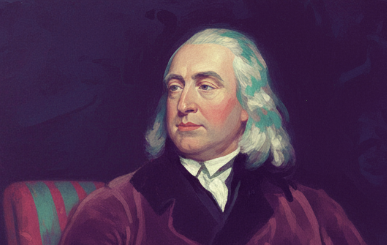
Figure to yourself the mixture of surprise and delight which has this instant been poured into my mind by the sound of my name, as uttered by you, in the speech just read to me out of the Morning Herald... By one and the same man, not only Parliamentary Reform, but Law Reform advocated. Advocated? and by what man? By one who, in the vulgar sense of profit and loss, has nothing to gain by it... Yes, only from Ireland could such self-sacrifice come; nowhere else: least of all in England, cold, selfish, priest-ridden, lawyer-ridden, lord-ridden, squire-ridden, soldier-ridden England, could any approach to it be found.
▼
Source
Letter to Daniel O'Connell (15 July 1828) after O'Connell delivered a speech in the House of Commons in which he advocated parliamentary and legal reform, and ended by calling himself "an humble disciple of the immortal Bentham", quoted in The Works of Je
4 months 3 weeks ago
The 'Enlightenment', which discovered the liberties, also invented the disciplines.

4 months 3 weeks ago
Each of these private teachers who work for pay ... inculcates nothing else than these opinions of the multitude which they opine when they are assembled and calls this knowledge wisdom.
▼
Source
Plato, Republic, 493a
4 months 3 weeks ago
And yet it is clear that the normal development of a human being implies an increasingly precise and, as it were, automatic division between what concerns him and what does not, between things for which he is responsible and those for which he is not. Each one of us becomes the centre of a sort of mental space arranged in concentric zones of decreasing interest and participat ion. It is as though each one of us secreted a kind of shell which gradually hardened and imprisoned him; and this sclerosis is bound up with the hardening of the categories in accordance with which we conceive and evaluate the world.
4 months 3 weeks ago
The art of music is good, for the reason, among others, that it produces pleasure; but what proof is it possible to give that pleasure is good? If, then, it is asserted that there is a comprehensive formula, including all things which are in themselves good, and that whatever else is good, is not so as an end, but as a mean, the formula may be accepted or rejected, but is not a subject of what is commonly understood by proof.
▼
Source
Ch. 1
4 months 3 weeks ago
Recognizing someone as a parrhesiastes... was... important... in Greco-Roman society, and... was explicitly raised and discussed by Plutarch, Galen, and others.
4 months 3 weeks ago
They who have a care of their souls, and do not merely live in the fashions of the body, say farewell to all this; they will not walk in the ways of the blind: and when philosophy offers them purification and release from evil, they feel that they ought not resist her influence, and to her they incline, and whither she leads they follow her.

4 months 3 weeks ago
Only what is fated to die is capable of living. Only what dies lives. Why do you think Christ was killed? They killed him to prove that he wasn’t a god. But in killing him, they immortalized the perishable and transformed man into a god.
4 months 3 weeks ago
In these frequent talks about the books I read, he used, as opportunity offered, to give me explanations and ideas respecting civilization, government, morality, mental cultivation, which he required me afterwards to restate to him in my own words. He also made me read, and give him a verbal account of, many books which would not have interested me sufficiently to induce me to read them of myself: among others, Millar's Historical View of the English Government, a book of great merit for its time, and which he highly valued; Mosheim's Ecclesiastical History, McCrie's Life of John Knox, and even Sewel's and Rutty's Histories of the Quakers. He was fond of putting into my hands books which exhibited men of energy and resource in unusual circumstances, struggling against difficulties and overcoming them: of such works I remember Beaver's African Memoranda, and Collins's account of the first settlement of New South Wales.
▼
Source
([https://archive.org/details/autobiography01mill/page/8/mode/1up p. 8])
4 months 3 weeks ago
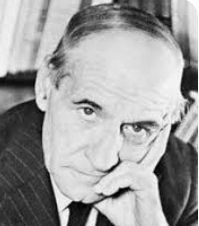
The physical change in the thickness of walls since the Middle Ages could be shown in a diagram. In the fourteenth century each house was a fortress. Man spent the major portion of his day in them, in secret and well-defended solitude. That solitude, working on the soul hour after hour, forged it, like a transcendent blacksmith, into a compact and forceful character. Under its treatment, man consolidated his individual destiny and sallied forth with impunity, never yielding to the contamination from the public. It is only in isolation that we gain, almost automatically, a certain discrimination in ideas, desires, longings, that we learn which are ours, and which are anonymous, floating in the air, falling on us like dust in the street.
▼
Source
p. 168
4 months 3 weeks ago
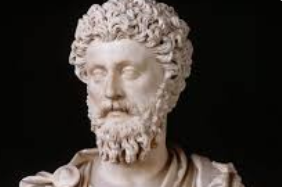
Of Fronto, to how much envy and fraud and hypocrisy the state of a tyrannous king is subject unto, and how they who are commonly called [Eupatridas Gk.], i.e. nobly born, are in some sort incapable, or void of natural affection.
▼
Source
I, 8
4 months 3 weeks ago
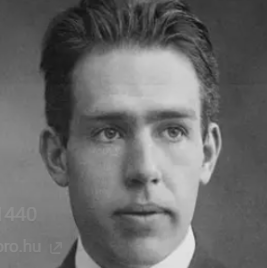
The great extension of our experience in recent years has brought light to the insufficiency of our simple mechanical conceptions and, as a consequence, has shaken the foundation on which the customary interpretation of observation was based.
▼
Source
Niels Bohr, "Atomic Physics and the Description of Nature" (1934)
4 months 3 weeks ago
Foucault revealed the universal truths hidden in societal extremes.
▼
Source
David Rosen, in The Brooklyn Rail, June 2012.
4 months 3 weeks ago
I do not mean to affirm that the description which I have given of the soul and her missions is exactly true—a man of sense ought hardly say that. But I do say that, inasmuch as the soul is shown to be immortal, he may venture to think, not improperly or unworthily, that something of this kind is true.

4 months 3 weeks ago
Modern totalitarianism can be defined as the establishment, by means of the state of exception, of a legal civil war that allows for the physical elimination not only of political adversaries but of entire categories of citizens who for some reason cannot be integrated into the political system.
▼
Source
Chapter One, p. 2.
4 months 3 weeks ago
My previous education had been, in a certain sense, already a course of Benthamism. The Benthamic standard of "the greatest happiness" was that which I had always been taught to apply; I was even familiar with an abstract discussion of it, forming an episode in an unpublished dialogue on Government, written by my father on the Platonic model. Yet in the first pages of Bentham it burst upon me with all the force of novelty. What thus impressed me was the chapter in which Bentham passed judgment on the common modes of reasoning in morals and legislation, deduced from phrases like "the law of nature," "right reason," "the moral sense," "natural rectitude," and the like, and characterized them as dogmatism in disguise, imposing its sentiments upon others under cover of sounding expressions which convey no reason for the sentiment, but set up the sentiment as its own reason. It had not struck me before, that Bentham's principle put an end to all this. The feeling rushed upon me, that all previous moralists were superseded, and that here indeed was the commencement of a new era in thought.
▼
Source
([https://archive.org/details/autobiography01mill/page/64/mode/1up pp. 64-65])
4 months 3 weeks ago
The most immediate result of this unbalanced specialisation has been that to-day, when there are more "scientists" than ever, there are much less "cultured" men than, for example, about 1750. And the worst is that with these turnspits of science not even the real progress of science itself is assured. For science needs from time to time, as a necessary regulator of its own advance, a labour of reconstitution, and, as I have said, this demands an effort towards unification, which grows more and more difficult, involving, as it does, ever-vaster regions of the world of knowledge. Newton was able to found his system of physics without knowing much philosophy, but Einstein needed to saturate himself with Kant and Mach before he could reach his own keen synthesis. Kant and Mach — the names are mere symbols of the enormous mass of philosophic and psychological thought which has influenced Einstein.
▼
Source
Chapter XII: The Barbarism Of "Specialisation"
4 months 3 weeks ago
Remember that man lives only in the present, in this fleeting instant; all the rest of his life is either past and gone, or not yet revealed. Short, therefore, is man's life, and narrow is the corner of the earth wherein he dwells.
▼
Source
III, 10
4 months 3 weeks ago
Not often in life has a human being caused me such joy by his mere presence as you did.
▼
Source
Albert Einstein in a letter to Bohr (1920)
4 months 3 weeks ago
The really important thing is not to live, but to live well. And to live well meant, along with more enjoyable things in life, to live according to your principles.
▼
Source
Presented as a full Socrates quote by various sources like [https://www.goodreads.com/quotes/106034-the-really-important-thing-is-not-to-live-but-to this page], the first sentence of the quote is indeed attributed to Socrates in Plato's dialogue The Apolo
4 months 3 weeks ago
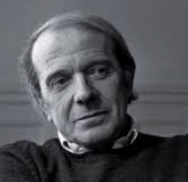
Schizophrenia is like love: there is no specifically schizophrenic phenomenon or entity; schizophrenia is the universe of productive and reproductive desiring machines, universal primary production as "the essential reality of man and nature"
▼
Source
The Desiring Machine

4 months 3 weeks ago
There is a great affinity in me with the Hindu genius - that mind, vast, imaginative, loving, dreamy and speculative, but destitute of ambition, personality and will. Pantheistic disinterestedness, the effacement of the self in the great whole, womanish gentleness, a horror of slaughter, antipathy to action - these are all present in my nature, in the nature at least which has been developed by years and circumstances. Still the West has also its part in me. What I have found difficult to keep up a prejudice in favor of my form, nationality or individuality whatever. Hence my indifference to my own person, my own usefulness, interest or opinions of the moment. What does it all matter? It is not perhaps not a bad thing,' he says, 'that in the midst of the devouring activities of the Western world there should be a few Brahmanical souls.
▼
Source
Amiel, Henri-Frederic Amiel's journal: The Journal Intime of Henri-Frederic Amiel, p. 159 161,224. and 269. Quoted in Londhe, S. (2008). A tribute to Hinduism: Thoughts and wisdom spanning continents and time about India and her culture. New Delhi: Pragun
4 months 3 weeks ago
The writers by whom, more than by any others, a new mode of political thinking was brought home to me, were those of the St. Simonian school in France. In 1829 and 1830 I became acquainted with some of their writings. They were then only in the earlier stages of their speculations. They had not yet dressed out their philosophy as a religion, nor had they organized their scheme of Socialism. They were just beginning to question the principle of hereditary property. I was by no means prepared to go with them even this length; but I was greatly struck with the connected view which they for the first time presented to me, of the natural order of human progress; and especially with their division of all history into organic periods and critical periods.
▼
Source
([https://archive.org/details/autobiography01mill/page/163/mode/1up p. 163])
4 months 3 weeks ago
Torn in this way from its normal connection with contemplation, with being within one's self, pure action permits and produces only a chain of stupidities which we might better call "stupidity unchained." So we see today that an absurd attitude justifies the appearance of an opposing attitude no more reasonable; at least, reasonable enough, and so on indefinitely. Such is the extreme to which political affairs in the West have come!
▼
Source
p. 34
4 months 3 weeks ago
All that is harmony for you, my Universe, is in harmony with me as well. Nothing that comes at the right time for you is too early or too late for me. Everything is fruit to me that your seasons bring, Nature. All things come of you, have their being in you, and return to you.
▼
Source
Πᾶν μοι συναρμόζει ὃ σοὶ εὐάρμοστόν ἐστιν, ὦ κόσμε· οὐδέν μοι πρόωρον οὐδὲ ὄψιμον ὃ σοὶ εὔκαιρον. πᾶν μοι καρπὸς ὃ φέρουσιν αἱ σαὶ ὧραι, ὦ φύσις· ἐκ σοῦ πάντα, ἐν σοὶ πάντα, εἰς σὲ πάντα. ἐκεῖνος μέν φησιν· | IV, 23

4 months 3 weeks ago
neither our distance from a preventable evil nor the number of other people who, in respect to that evil, are in the same situation as we are, lessens our obligation to mitigate or prevent that evil.

4 months 3 weeks ago
Let nothing disturb thee; Let nothing dismay thee: All things pass; God never changes. Patience attains All that it strives for. He who has God Finds he lacks nothing: God alone suffices.
▼
Source
"Poem IX", in Complete Works St. Teresa of Avila (1963) edited by E. Allison Peers, Vol. 3, p. 288
4 months 3 weeks ago
The spirit of sarcasm lives and thrives in the midst of universal wreck; its balls are enchanted and itself invulnerable, and it braves retaliations and reprisals because itself is a mere flash, a bodiless and magical nothing.
▼
Source
16 February 1868
4 months 3 weeks ago
You must be aware of the fact, but I think can hardly appreciate the reality, that in all parts of this country (and wherever our tongue is spoken) there are thousands of earnest men and women to whom your name is as familiar as a household word, and who do not merely admire your ability and appreciate your work, but regard you with all the feeling due to that highest of all characters,—the "great, good man".
▼
Source
Henry George to Mill (22 August 1869), quoted in Michael St. John Packe, The Life of John Stuart Mill (1954), p. 479
4 months 3 weeks ago
It is crazy to want what is impossible. And impossible for the wicked not to do so.
▼
Source
To seek what is impossible is madness: and it is impossible that the bad should not do something of this kind. | | V, 17(Hays translation)
4 months 3 weeks ago
It is easy for us to criticize the prejudices of our grandfathers, from which our fathers freed themselves. It is more difficult to search for prejudices among the beliefs and values that we hold.
▼
Source
Ch. 3: Equality for Animals? (p. 49)
4 months 3 weeks ago
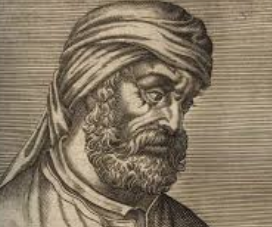
The dead bodies of their parents they cut up with their sheep, and devour at their feasts. They who have not died so as to become food for others, are thought to have died an accursed death. Their women are not by their sex softened to modesty. They uncover the breast, from which they suspend their battle-axes, and prefer warfare to marriage.
▼
Source
Book I, Chapter I.—Preface. Reason for a New Work. Pontus Lends Its Rough Character to the Heretic Marcion, a Native. His Heresy Characterized in a Brief Invective.
CivilSimian.com created by AxiomaticPanic, CivilSimian, Kalokagathia