
4 months 3 weeks ago
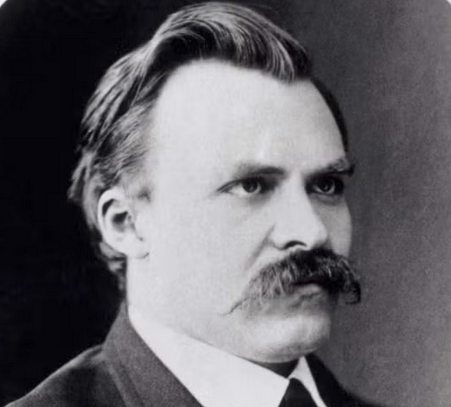
Against that positivism which stops before phenomena, saying "there are only facts," I should say: no, it is precisely facts that do not exist, only interpretations.
▼
Source
Notebooks (Late 1886 – Spring 1887) [http://www.nietzschesource.org/eKGWB/NF-1886,7[60]] | Popular usage: "There are no facts, only interpretations."
4 months 3 weeks ago
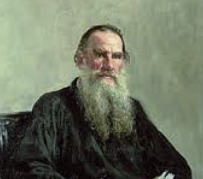
These new justifications are termed "scientific". But by the term "scientific" is understood just what was formerly understood by the term "religious": just as formerly everything called "religious" was held to be unquestionable simply because it was called religious, so now all that is called "scientific" is held to be unquestionable. In the present case the obsolete religious justification of violence which consisted in the recognition of the supernatural personality of the God-ordained ruler ("there is no power but of God") has been superseded by the "scientific" justification which puts forward, first, the assertion that because the coercion of man by man has existed in all ages, it follows that such coercion must continue to exist. This assertion that people should continue to live as they have done throughout past ages rather than as their reason and conscience indicate, is what "science" calls "the historic law". A further "scientific" justification lies in the statement that as among plants and wild beasts there is a constant struggle for existence which always results in the survival of the fittest, a similar struggle should be carried on among humanbeings, that is, who are gifted with intelligence and love; faculties lacking in the creatures subject to the struggle for existence and survival of the fittest. Such is the second "scientific" justification. The third, most important, and unfortunately most widespread justification is, at bottom, the age-old religious one just a little altered: that in public life the suppression of some for the protection of the majority cannot be avoided — so that coercion is unavoidable however desirable reliance on love alone might be in human intercourse. The only difference in this justification by pseudo-science consists in the fact that, to the question why such and such people and not others have the right to decide against whom violence may and must be used, pseudo-science now gives a different reply to that given by religion — which declared that the right to decide was valid because it was pronounced by persons possessed of divine power. "Science" says that these decisions represent the will of the people, which under a constitutional form of government is supposed to find expression in all the decisions and actions of those who are at the helm at the moment. Such are the scientific justifications of the principle of coercion. They are not merely weak but absolutely invalid, yet they are so much needed by those who occupy privileged positions that they believe in them as blindly as they formerly believed in the immaculate conception, and propagate them just as confidently. And the unfortunate majority of men bound to toil is so dazzled by the pomp with which these "scientific truths" are presented, that under this new influence it accepts these scientific stupidities for holy truth, just as it formerly accepted the pseudo-religious justifications; and it continues to submit to the present holders of power who are just as hard-hearted but rather more numerous than before.
▼
Source
IV
4 months 3 weeks ago
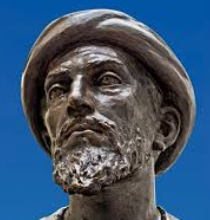
Even the existence of this corporeal element, low as it in reality is, because it is the source of death and all evils, is likewise good for the permanence of the Universe and the continuation of the order of things, so that one thing departs and the other succeeds.
▼
Source
Ch.10
4 months 3 weeks ago
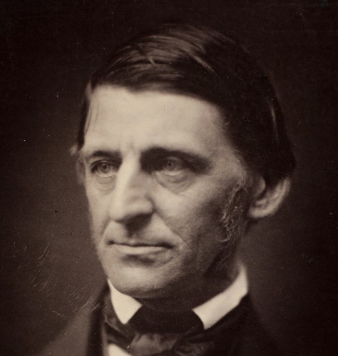
The louder he talked of his honor, the faster we counted our spoons.
▼
Source
Worship
4 months 3 weeks ago
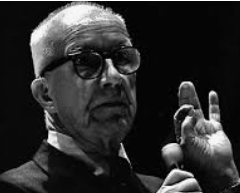
The physical is inherently entropic, giving off energy in ever more disorderly ways. The metaphysical is antientropic, methodically marshalling energy. Life is antientropic. It is spontaneously inquisitive. It sorts out and endeavors to understand.
4 months 3 weeks ago
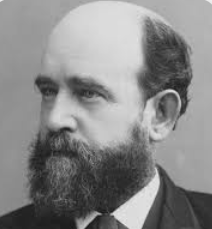
Men must have rights before they can have equal rights. Each man has a right to use the world because he is here and wants to use the world. The equality of this right is merely a limitation arising from the presence of others with like rights. Society, in other words, does not grant, and cannot equitably withhold from any individual, the right to the use of land. That right exists before society and independently of society, belonging at birth to each individual, and ceasing only with his death. Society itself has no original right to the use of land. What right it has with regard to the use of land is simply that which is derived from and is necessary to the determination of the rights of the individuals who compose it. That is to say, the function of society with regard to the use of land only begins where individual rights clash, and is to secure equality between these clashing rights of individuals.
▼
Source
Part I : Declaration, Ch. IV : Mr. Spencer's Confusion as to Rights
4 months 3 weeks ago
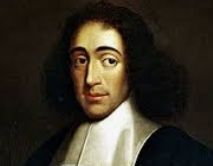
This impels me, before going into your reasons, to set forth briefly my opinion on the question, whether the world was made by chance. But I answer, that as it is clear that chance and necessity are two contraries, so is it also clear, that he, who asserts the world to be a necessary effect of the divine nature, must utterly deny that the world has been made by chance; whereas, he who affirms that God need not have made the world, confirms, though in different language, the doctrine that it has been made by chance; inasmuch as he maintains that it proceeds from a wish, which might never have been formed. However, as this opinion and theory is on the face of it absurd, it is commonly very unanimously admitted, that God's will is eternal, and has never been indifferent; hence... the world is a necessary effect of the divine nature. Let them call it will, understanding, or any name they like, they come at last to the same conclusion, that under different names they are expressing one and the same thing. If you ask them, whether the divine will does not differ from the human, they answer, that the former has nothing in common with the latter except its name; especially as they generally admit that God's will, understanding, intellect, essence, and nature are all identical; so I... lest I... confound the divine nature with the human, do not assign to God human attributes, such as will, understanding, attention, hearing, &c. I therefore say, as I have said already, that the world is a necessary effect of the divine nature, and that it has not been made by chance. I think this is enough to persuade you, that the opinion of those (if such there be) who say that the world has been made by chance, is entirely contrary to mine; and relying on this hypothesis, I proceed to examine those reasons which lead you to infer the existence of all kinds of ghosts.
▼
Source
Letter to Hugo Boxel (October 1674) [https://books.google.com/books?id=Nz1kRKDMbUMC The Chief Works of Benedict de Spinoza] (1891) Tr. R. H. M. Elwes, Vol. 2, Letter 58 (54).
4 months 3 weeks ago
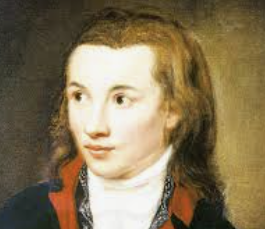
Surely this voice meant our Teacher; for it is he that can collect the indications which lie scattered on all sides. A singular light kindles in his looks, when at length the high Rune lies before us, and he watches in our eyes whether the star has yet risen upon us, which is to make the Figure visible and intelligible.

4 months 3 weeks ago
Sobriety is the strength of the soul, for it preserves its reason unclouded by passion.
▼
Source
As quoted in The History of Philosophy: From the Earliest Times to the Beginning of the Present Century (1819) by William Enfield | Sobriety is the strength of the mind; for it preserves reason unclouded by passion. | As quoted in Bible of Reason (1831) b
4 months 3 weeks ago
Moralities and religions are the principal means by which one can make whatever one wishes out of man, provided one possesses a superfluity of creative forces and can assert one's will over long periods of time — in the form of legislation and customs.
▼
Source
Sec. 144 (Notebook N VII 1. April - June 1885, KGW VII, 3.198, KSA 11.478)
4 months 3 weeks ago
Memento mori—remember death! These are important words. If we kept in mind that we will soon inevitably die, our lives would be completely different. If a person knows that he will die in a half hour, he certainly will not bother doing trivial, stupid, or, especially, bad things during this half hour. Perhaps you have half a century before you die—what makes this any different from a half hour?
▼
Source
p. 209
4 months 3 weeks ago
The philosophers have uttered very perverse ideas as regards God's Omniscience of everything besides Himself; they have stumbled in such a manner that they cannot rise again, nor can those who adopt their views. ...They continued thus: If he perceives and knows all individual things, one of the following three cases must take place: (1.) God arranges and manages human affairs well, perfectly, and faultlessly; (2.) He is overcome by obstacles, and is too weak and powerless to manage human affairs; (3.) He knows [all things] and can arrange and manage them, but leaves and abandons them, as too base, low, and vile... Those who have a knowledge of a certain thing necessarily either (1.) take care of the thing they know, and manage it, or (2.) neglect it; or (3.) while taking care of it, have not sufficient power and strength for its management, although they have the will to do so. ...the philosophers emphatically decided that of the three cases... two are inadmissible in reference to God—viz., want of power, or absence of will... Consequently there remains only the alternative that God is altogether ignorant of human affairs, or that He knows them and manages them well. ...we conclude that God has no knowledge of them in any way of for any reason. This is the argument which led philosophers to speak such blasphemous words.
▼
Source
Ch.16
4 months 3 weeks ago
I think no virtue goes with size; The reason of all cowardice Is, that men are overgrown, And, to be valiant, must come down To the titmouse dimension.
▼
Source
The Titmouse, st. 5
4 months 3 weeks ago
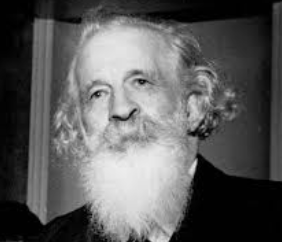
Are you spontaneously enthusiastic about everyone having everything you can have?
4 months 3 weeks ago
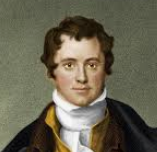
Man is an imagining being.
▼
Source
Ch. 2, sect. 10
4 months 3 weeks ago
He has just returned from Italy, and delights to talk of it,—thinks it, next to England, the finest country in the world, and the society of Rome surpassed only by that of London, and says he should not die contented without going there again.
4 months 3 weeks ago
The ideal of Morality has no more dangerous rival than the ideal of highest Strength, of most powerful life; which also has been named (very falsely as it was there meant) the ideal of poetic greatness. It is the maximum of the savage; and has, in these times, gained, precisely among the greatest weaklings, very many proselytes. By this ideal, man becomes a Beast-Spirit, a Mixture; whose brutal wit has, for weaklings, a brutal power of attraction.
4 months 3 weeks ago
I teach you the Overman. Man is something which shall be surpassed.
▼
Source
Thus Spake Zarathustra.
4 months 3 weeks ago
Tolstoy was an advocate of non-resistance only because he was protected from people's impudence by his innumerable friends. One man can stand for non-resistance, because those who stand for resistance will protect him. You will not be able to do without resistance advocates.
▼
Source
Konstantin Tsiolkovsky
4 months 3 weeks ago
Scripture says:—If a man should rise, pretend to be a prophet, and show you his signs by which he desired to convince you that his words are true, know that God intends thereby to prove to the nations how firmly you believe in the truth of God's Word, and how well you have comprehended the true Essence of God; that you cannot be misled by any tempter to corrupt your faith in God. Your religion will then afford a guidance to all who seek the truth, and of all religions man will choose that which is so firmly established that it is not shaken by the performance of a miracle. For a miracle cannot prove that which is impossible; it is useful only as a confirmation of that which is possible, as we have explained in our Mishneh-torah.
▼
Source
Ch.24
4 months 3 weeks ago
The days .... come and go like muffled and veiled figures, sent from a distant friendly party; but they say nothing, and if we do not use the gifts they bring, they carry them as silently away.
▼
Source
Works and Days
4 months 3 weeks ago
But it can hardly be read in a week. It takes some study.
4 months 3 weeks ago
Since wise people are in the habit of invoking the divinities at the beginning of any philosophic consideration, this is all the more necessary on studying that one which is justly named after the divine Pythagoras. Inasmuch as it emanated from the divinities it could not be apprehended without their inspiration and assistance. Besides, its beauty and majesty so surpasses human capacity, that it cannot be comprehended in one glance. Gradually only can some details of it be mastered when, under divine guidance we approach the subject with a quiet mind. Having therefore invoked the divine guidance, and adapted ourselves and our style to the divine circumstances, we shall acquiesce in all the suggestions that come to us. Therefore we shall not begin with any excuses for the long neglect of this sect, nor by any explanations about its having been concealed by foreign disciplines, or mystic symbols, nor insist that it has been obscured by false and spurious writings, nor make apologies for any special hindrances to its progress. For us it is sufficient that this is the will of the Gods, which all enable us to undertake tasks even more arduous than these. Having thus acknowledged our primary submission to the divinities, our secondary devotion shall be to the prince and father of this philosophy as a leader.
▼
Source
Ch. 1 : Importance of the Subject
4 months 3 weeks ago
True and perfect Friendship is, to make one heart and mind of many hearts and bodies.
4 months 3 weeks ago
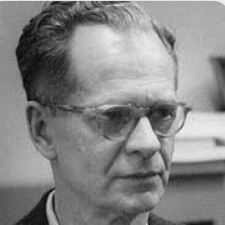
I do not admire myself as a person. My successes do not override my shortcomings.
▼
Source
Journal of Humanistic Psychology (Spring 1991) Vol. 31 No. 2, p. 112
4 months 3 weeks ago
Certainly it is correct to say: Conscience is the voice of God.
▼
Source
p. 75
4 months 3 weeks ago
Maimonides states that the intention of his work is to explain the meaning of Biblical words of various kinds, as well as of Biblical parables. Such an explanation is necessary, because the external meaning of both lends itself to grave misunderstanding. Since the internal meaning, being hidden, is a secret, the explanation of each such word or parable is the revelation of a secret.
▼
Source
Leo Strauss, Persecution and the Art of Writing (1952), 3. Literary Character of the Guide for the Perplexed
4 months 3 weeks ago
Every really able man, in whatever direction he work,—a man of large affairs, an inventor, a statesman, an orator, a poet, a painter,—if you talk sincerely with him, considers his work, however much admired, as far short of what it should be.
▼
Source
Immortality
4 months 3 weeks ago
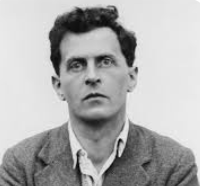
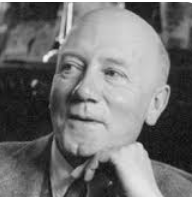
In the meanwhile I retire to my well-earned bath-chair, from which I shall watch with a fatherly eye the philosophic gambols of my younger friends as they dance to the highly syncopated pipings of Herr Wittgenstein's flute.
▼
Source
From the Preface to Mind and Its Place in Nature (1925)
4 months 3 weeks ago
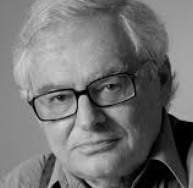
The degree of confirmation assigned to any given hypothesis is sensitive to properties of the entire belief system … simplicity, plausibility, and conservatism are properties that theories have in virtue of their relation to the whole structure of scientific beliefs taken collectively. A measure of conservatism or simplicity would be a metric over global properties of belief systems.
▼
Source
p. 107–108 as cited in: Philip Robbins, "[http://plato.stanford.edu/entries/modularity-mind/ Modularity of Mind]", The Stanford Encyclopedia of Philosophy (Summer 2010 Edition), Edward N. Zalta (ed.)
4 months 3 weeks ago
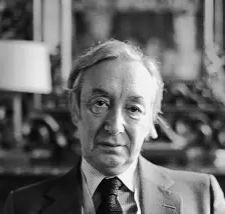
There is philosophy, which is about conceptual analysis — about the meaning of what we say — and there is all of this … all of life.
▼
Source
Emphasizing his views on philosophy as something abstract and separate from normal life to Isaiah Berlin, in the early 1930s, as quoted in A.J. Ayer: A Life (1999) by Ben Rogers, p. 2.
4 months 3 weeks ago
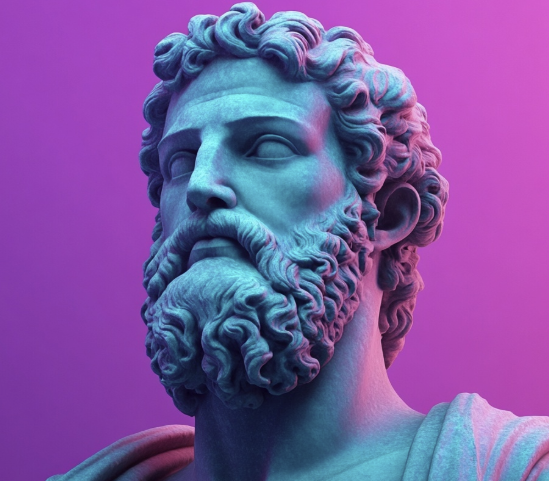
Were I a nightingale, I would act the part of a nightingale; were I a swan, the part of a swan.
▼
Source
Book I, ch. 16, § 20.
4 months 3 weeks ago
The oldest, shortest words— "yes" and "no"— are those which require the most thought.
▼
Source
Quoted in Grist: The National Conference on State Parks magazine, 1965 [https://books.google.fr/books?id=u8VH4AZ1va4C&newbks=1&newbks_redir=0&dq=The%20oldest%2C%20shortest%20words%E2%80%94%20%22yes%22%20and%20%22no%22%E2%80%94%20are%20those%20which%20requ
4 months 3 weeks ago
There are, indeed, things that cannot be put into words. They make themselves manifest. They are what is mystical. (6.522)
▼
Source
Original German: Es gibt allerdings Unaussprechliches. Dies zeigt sich, es ist das Mystische.
4 months 3 weeks ago
Writers who opted out of the referential system and who avoided or escaped the common experience are not part of the Jewish political tradition, even if they are still Jews writing about politics. Karl Marx on class struggle, Sigmund Freud on transference and political leadership, Emile Durkheim on socialism and "moral education," George Simmel on the philosophy of money—these text do not fall within the tradition. Baruch Spinoza's political theology does, despite his excommunication, for Spinoza writes always with the tradition in mind: the Hebrew Bible is his first text; the greatest of medieval Jewish philosophers, Moses Maimonides, is his crucial reference. Modern secular writers like Ahad Ha-am (Asher Ginsberg) and Micha Josef Berdichevsky, schooled in the communities of eastern Europe, still know the tradition and work within it, or at least start from it—even if one of their purposes is an antitraditionalist critique: criticism is a form of engagement. Many of their successors, by contrast, are largely ignorant and entirely disengaged.
4 months 3 weeks ago
So much of our time is spent in preparation, so much in routine and so much in retrospect, that the amount of each person’s genius is confined to a very few hours.
▼
Source
Quoted in Simon Brown (ed.) The New England Farmer, vol. 9 (January 1857) p. 18
4 months 3 weeks ago
Deception, in turn , suggests morality: the morality of deceiving people into thinking something is so when it is not. The moral principle is this: whoever attempts to tame a part of a wicked problem, but not the whole, is morally wrong.
▼
Source
p. 142 cited in: Rob Hundman (2010) Weerbarstig veranderen. p. 38
4 months 3 weeks ago
The propositions which are true and evident must of necessity be employed even by those who contradict them
▼
Source
Book II, ch. 20, § 1
4 months 3 weeks ago
Some fundamental unity was surely to be discerned either in the matter or the structure of things. The Ionic philosophers chose the former field: Pythagoras took the latter. ...The geometry which he had learnt in Egypt was merely practical. ...It was natural to nascent philosophy to draw, by false analogies, and the use of a brief and deceptive vocabulary,2 enormous conclusions from a very few observed facts: and it is not surprising if Pythagoras, having learnt in Egypt that number was essential to the exact description of forms and of the relations of forms, concluded that number was the cause of form and so of every other quality. Number, he inferred, is quantity and quantity is form and form is quality.Footnote2 Primitive men, on seeing a new thing, look out especially for some resemblance in it to a known thing, so that they may call both by the same name. This developes a habit of pressing small and partial analogies. It also causes many meanings to be at attached to the same word. Hasty and confused theories are the inevitable result.
▼
Source
James Gow, [https://books.google.com/books?id=9d8DAAAAMAAJ A Short History of Greek Mathematics] (1884)
4 months 3 weeks ago
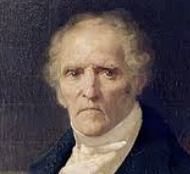
It is certain that nature inclines us toward the amorous orgy, just as much as toward the gastronomic orgy, and that while both are blameworthy in the excess, they would become praiseworthy in an order in which they could be equilibrated.
▼
Source
Charles Fourier: The Visionary and His World, J. Beecher (1986), p. 310
4 months 3 weeks ago
Bach wrote on the title page of his Orgelbüchlein: "To the glory of the most high God, and that my neighbour may be benefited thereby." That is what I would have liked to say about my work.
▼
Source
Wittgenstein in conversation with , cited in (eds.) Recollections of Wittgenstein: Hermine Wittgenstein--Fania Pascal--F.R. Leavis--John King--M. O'C. Drury, Oxford University Press, 1984; p. xvi, and p. 168.

4 months 3 weeks ago
The Art of Peace is the principle of nonresistance. Because it is nonresistant, it is victorious from the beginning. Those with evil intentions or contentious thoughts are instantly vanquished. The Art of Peace is invincible because it contends with nothing.
4 months 3 weeks ago
Nature is no sentimentalist, — does not cosset or pamper us. We must see that the world is rough and surly, and will not mind drowning a man or a woman, but swallows your ships like a grain of dust. The cold, inconsiderate of persons, tingles your blood, benumbs your feet, freezes a man like an apple. The diseases, the elements, fortune, gravity, lightning, respect no persons.
▼
Source
p. 182
4 months 3 weeks ago
The enemies will be asking reasonable questions, like Isn't politics the way matters are really decided, and isn't the rational systems approach simply one political device, to be used when politically expedient? Or isn't morality essentially inexpressible in terms of concepts and words, and doesn't this essentially ineffable quality of our lives lead us humans to decide the way we do? Or, isn't religious imagery really the basis of all our perspectives and concepts, including the perspective of the systems approach? And what is it that carries the values we humans cherish? It is not the ego or the mind, but, say our basic aesthetic feeling, which cannot be conceptualized. And finally, and most generally, why is a rational, holistic approach desirable for the human species, especially since it so often gets out of hand, missing the vital essence of the specific and individual, the here and now, encompassing "everything" to the exclusion of every thing?
▼
Source
p. 69; As cited in: [http://phd-take-2.wikispaces.com/The+Systems+Approach+and+its+Enemies Book Review: The Systems Approach and its Enemies]
4 months 3 weeks ago
Miracles are propitious accidents, the natural causes of which are too complicated to be readily understood.
4 months 3 weeks ago
The very port and gait of a swan, or turkey, or peacock show the high idea he has entertain'd of himself; and his contempt of all others. This is the more remarkable, that in the two last species of animals, the pride always attends the beauty, and is discover'd in the male only. The vanity and emulation of nightingales in singing have been commonly remark'd. All these are evident proofs, that pride and humility are not merely human passions, but extend themselves over the whole animal creation.
▼
Source
Part 1, Section 12
4 months 3 weeks ago
Upon all occasions we ought to have these maxims ready at hand:
4 months 3 weeks ago
From of old, amid the rage of robbery and blood-lust, it came to wise men's consciousness that the human race was suffering from a malady which necessarily kept it in progressive deterioration. Many a hint from observation of the natural man, as also dim half-legendary memories, had made them guess the primal nature of this man, and that his present state is therefore a degeneration. A mystery enwrapped Pythagoras, the preacher of vegetarianism; no philosopher since him has pondered on the essence of the world, without recurring to his teaching. Silent fellowships were founded, remote from turmoil of the world, to carry out this doctrine as a sanctification from sin and misery.
▼
Source
Richard Wagner, Religion and Art (1880), translated by William Ashton Ellis, [http://users.belgacom.net/wagnerlibrary/prose/wlpr0126.htm#d0e1158 Part II]
4 months 3 weeks ago
I can die when I wish to: that is my elixir of life.
▼
Source
The Republic.
CivilSimian.com created by AxiomaticPanic, CivilSimian, Kalokagathia