
4 months 3 weeks ago
The degree of confirmation assigned to any given hypothesis is sensitive to properties of the entire belief system … simplicity, plausibility, and conservatism are properties that theories have in virtue of their relation to the whole structure of scientific beliefs taken collectively. A measure of conservatism or simplicity would be a metric over global properties of belief systems.
▼
Source
p. 107–108 as cited in: Philip Robbins, "[http://plato.stanford.edu/entries/modularity-mind/ Modularity of Mind]", The Stanford Encyclopedia of Philosophy (Summer 2010 Edition), Edward N. Zalta (ed.)
4 months 3 weeks ago
There is philosophy, which is about conceptual analysis — about the meaning of what we say — and there is all of this … all of life.
▼
Source
Emphasizing his views on philosophy as something abstract and separate from normal life to Isaiah Berlin, in the early 1930s, as quoted in A.J. Ayer: A Life (1999) by Ben Rogers, p. 2.
4 months 3 weeks ago
Were I a nightingale, I would act the part of a nightingale; were I a swan, the part of a swan.
▼
Source
Book I, ch. 16, § 20.

4 months 3 weeks ago
The oldest, shortest words— "yes" and "no"— are those which require the most thought.
▼
Source
Quoted in Grist: The National Conference on State Parks magazine, 1965 [https://books.google.fr/books?id=u8VH4AZ1va4C&newbks=1&newbks_redir=0&dq=The%20oldest%2C%20shortest%20words%E2%80%94%20%22yes%22%20and%20%22no%22%E2%80%94%20are%20those%20which%20requ
4 months 3 weeks ago
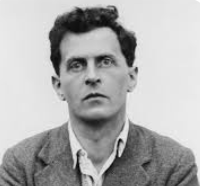
There are, indeed, things that cannot be put into words. They make themselves manifest. They are what is mystical. (6.522)
▼
Source
Original German: Es gibt allerdings Unaussprechliches. Dies zeigt sich, es ist das Mystische.
4 months 3 weeks ago
Writers who opted out of the referential system and who avoided or escaped the common experience are not part of the Jewish political tradition, even if they are still Jews writing about politics. Karl Marx on class struggle, Sigmund Freud on transference and political leadership, Emile Durkheim on socialism and "moral education," George Simmel on the philosophy of money—these text do not fall within the tradition. Baruch Spinoza's political theology does, despite his excommunication, for Spinoza writes always with the tradition in mind: the Hebrew Bible is his first text; the greatest of medieval Jewish philosophers, Moses Maimonides, is his crucial reference. Modern secular writers like Ahad Ha-am (Asher Ginsberg) and Micha Josef Berdichevsky, schooled in the communities of eastern Europe, still know the tradition and work within it, or at least start from it—even if one of their purposes is an antitraditionalist critique: criticism is a form of engagement. Many of their successors, by contrast, are largely ignorant and entirely disengaged.
4 months 3 weeks ago
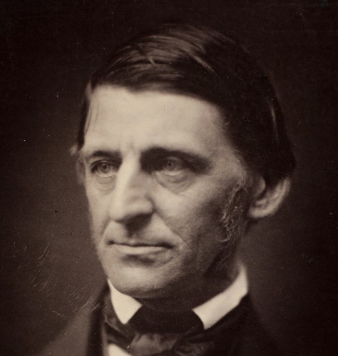
So much of our time is spent in preparation, so much in routine and so much in retrospect, that the amount of each person’s genius is confined to a very few hours.
▼
Source
Quoted in Simon Brown (ed.) The New England Farmer, vol. 9 (January 1857) p. 18
4 months 3 weeks ago
Deception, in turn , suggests morality: the morality of deceiving people into thinking something is so when it is not. The moral principle is this: whoever attempts to tame a part of a wicked problem, but not the whole, is morally wrong.
▼
Source
p. 142 cited in: Rob Hundman (2010) Weerbarstig veranderen. p. 38
4 months 3 weeks ago
The propositions which are true and evident must of necessity be employed even by those who contradict them
▼
Source
Book II, ch. 20, § 1
4 months 3 weeks ago
Some fundamental unity was surely to be discerned either in the matter or the structure of things. The Ionic philosophers chose the former field: Pythagoras took the latter. ...The geometry which he had learnt in Egypt was merely practical. ...It was natural to nascent philosophy to draw, by false analogies, and the use of a brief and deceptive vocabulary,2 enormous conclusions from a very few observed facts: and it is not surprising if Pythagoras, having learnt in Egypt that number was essential to the exact description of forms and of the relations of forms, concluded that number was the cause of form and so of every other quality. Number, he inferred, is quantity and quantity is form and form is quality.Footnote2 Primitive men, on seeing a new thing, look out especially for some resemblance in it to a known thing, so that they may call both by the same name. This developes a habit of pressing small and partial analogies. It also causes many meanings to be at attached to the same word. Hasty and confused theories are the inevitable result.
▼
Source
James Gow, [https://books.google.com/books?id=9d8DAAAAMAAJ A Short History of Greek Mathematics] (1884)
4 months 3 weeks ago
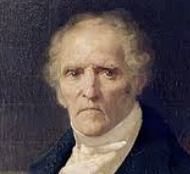
It is certain that nature inclines us toward the amorous orgy, just as much as toward the gastronomic orgy, and that while both are blameworthy in the excess, they would become praiseworthy in an order in which they could be equilibrated.
▼
Source
Charles Fourier: The Visionary and His World, J. Beecher (1986), p. 310
4 months 3 weeks ago
Bach wrote on the title page of his Orgelbüchlein: "To the glory of the most high God, and that my neighbour may be benefited thereby." That is what I would have liked to say about my work.
▼
Source
Wittgenstein in conversation with , cited in (eds.) Recollections of Wittgenstein: Hermine Wittgenstein--Fania Pascal--F.R. Leavis--John King--M. O'C. Drury, Oxford University Press, 1984; p. xvi, and p. 168.
4 months 3 weeks ago
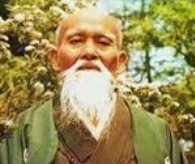
The Art of Peace is the principle of nonresistance. Because it is nonresistant, it is victorious from the beginning. Those with evil intentions or contentious thoughts are instantly vanquished. The Art of Peace is invincible because it contends with nothing.
4 months 3 weeks ago
Nature is no sentimentalist, — does not cosset or pamper us. We must see that the world is rough and surly, and will not mind drowning a man or a woman, but swallows your ships like a grain of dust. The cold, inconsiderate of persons, tingles your blood, benumbs your feet, freezes a man like an apple. The diseases, the elements, fortune, gravity, lightning, respect no persons.
▼
Source
p. 182
4 months 3 weeks ago
The enemies will be asking reasonable questions, like Isn't politics the way matters are really decided, and isn't the rational systems approach simply one political device, to be used when politically expedient? Or isn't morality essentially inexpressible in terms of concepts and words, and doesn't this essentially ineffable quality of our lives lead us humans to decide the way we do? Or, isn't religious imagery really the basis of all our perspectives and concepts, including the perspective of the systems approach? And what is it that carries the values we humans cherish? It is not the ego or the mind, but, say our basic aesthetic feeling, which cannot be conceptualized. And finally, and most generally, why is a rational, holistic approach desirable for the human species, especially since it so often gets out of hand, missing the vital essence of the specific and individual, the here and now, encompassing "everything" to the exclusion of every thing?
▼
Source
p. 69; As cited in: [http://phd-take-2.wikispaces.com/The+Systems+Approach+and+its+Enemies Book Review: The Systems Approach and its Enemies]
4 months 3 weeks ago
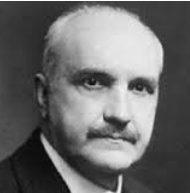
Miracles are propitious accidents, the natural causes of which are too complicated to be readily understood.
4 months 3 weeks ago
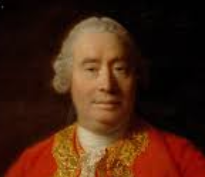
The very port and gait of a swan, or turkey, or peacock show the high idea he has entertain'd of himself; and his contempt of all others. This is the more remarkable, that in the two last species of animals, the pride always attends the beauty, and is discover'd in the male only. The vanity and emulation of nightingales in singing have been commonly remark'd. All these are evident proofs, that pride and humility are not merely human passions, but extend themselves over the whole animal creation.
▼
Source
Part 1, Section 12
4 months 3 weeks ago
Upon all occasions we ought to have these maxims ready at hand:
4 months 3 weeks ago
From of old, amid the rage of robbery and blood-lust, it came to wise men's consciousness that the human race was suffering from a malady which necessarily kept it in progressive deterioration. Many a hint from observation of the natural man, as also dim half-legendary memories, had made them guess the primal nature of this man, and that his present state is therefore a degeneration. A mystery enwrapped Pythagoras, the preacher of vegetarianism; no philosopher since him has pondered on the essence of the world, without recurring to his teaching. Silent fellowships were founded, remote from turmoil of the world, to carry out this doctrine as a sanctification from sin and misery.
▼
Source
Richard Wagner, Religion and Art (1880), translated by William Ashton Ellis, [http://users.belgacom.net/wagnerlibrary/prose/wlpr0126.htm#d0e1158 Part II]
4 months 3 weeks ago
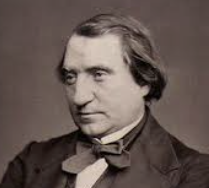
I can die when I wish to: that is my elixir of life.
▼
Source
The Republic.
4 months 3 weeks ago
1. If you do know that here is one hand, we'll grant you all the rest.

4 months 3 weeks ago
Overflowing with the wine of Truth is the cup of IndiaAll philosophers of the Western world have acknowledged IndiaIt is the result of the elegant thinking of IndiansThat higher than the sky is the position of IndiaThis country has had many people of angelic dispositionOn whose account world renowned is the name of IndiaIndia is proud of the existence of RamaSpiritual people consider him prelate of IndiaThis alone is the miracle of this light of righteousnessThat brighter than world’s morning is the evening of IndiaHe was expert in sword craft, was unique in braveryWas matchless in piety and in the enthusiasm of love.
▼
Source
[http://www.allamaiqbal.com/poetry.php?bookbup=22&orderno=112&lang_code=en&lang=2&conType=en Rama]. Translated by: M.A.K. Khalil. | Variant: "The cup of India is brimful of the wine of truth. All philosophers of the western world (have acknowleged) Rāma o
4 months 3 weeks ago
So gentle that he seemed only reading to one person, and yet his voice was so distinct that it filled the room in its lowest tones.
▼
Source
Charles Bradlaugh, of Emerson's manner, as quoted in Ralph Waldo Emerson, His Life, Writings, and Philosophy (1881) by George Willis Cooke, p. 179
4 months 3 weeks ago
In the making both of lace and of statues, the to the artists can only be reduced by producing a larger number of them through more extended education. The expense of the raw material is small in both. The expense of labour in lacemaking is very large, and it is perhaps considerable also in sculpture. The discovery of more convenient localities yielding marble, may make some diminution in its cost; and the improved manufacture of thread may slightly reduce the price of lace. A reduction in the price of labour may to a very moderate extent reduce the cost of the raw material of both. But it is evident that any very great reduction is not to be expected.Let us now contrast this possible reduction with the past history of some industrial art. The plain made at , called patent net, will supply us with a good example. In the year 1813 that lace was sold in the piece at the rate of 218. a-yard. At the present time lace of the same kind, but of a better quality, is sold under the same circumstances at 3d. per yard. Thus, in less than forty years the price of the industrial produce has diminished to one eighty-fourth part of its original price.
4 months 3 weeks ago
The empiricist thinks he believes only what he sees, but he is much better at believing than at seeing.
▼
Source
"Objections to Belief in Substance", p. 201
4 months 3 weeks ago
The mixture of children and men is precisely one of the most beautiful features of aristocratic government. All roles are distributed wisely in the world: that of the young is to do good, and that of old age is to prevent evil. The impetuosity of young men, who demand only action and creation, is very useful to the State; but they are too likely to innovate and destroy, and they would do much evil without the elderly, who are there to stop them. The latter in their turn oppose even useful reforms; they are too inflexible, they do not know how to accommodate themselves to circumstances, and sometimes a twenty-year old senator can very well be placed beside another of eighty.
▼
Source
p. 137
4 months 3 weeks ago
He is happy, whose circumstances suit his temper; but he is more excellent, who can suit his temper to any circumstances.
▼
Source
§ 6.9 : Of Qualities Useful to Ourselves, Pt. 1
4 months 3 weeks ago
Among the sages of this description, to whose useful labors the world is so much indebted, none held a more deservedly conspicuous rank than Pythagoras […] Quitting the land of his nativity […] his zeal for the acquisition of knowledge led him first to Egypt […] Having at this celebrated fountain of learning exhausted the supply without diminishing his thirst, he sought the further means of slaking it, in the then almost unexplored peninsula of India, whence he returned, bringing back with him the doctrine of Metempsychosis, the prejudices against animal diet, the mysterious notions respecting the powers of numbers, and other visionary and fanciful tenets of the East.
▼
Source
Hamilton, William. The History of Medicine, Surgery and Anatomy, Vol I. London: Henry Colburn and Richard Bentley, 1831. quoted from Bhaskar Kamble, The Imperishable Seed: How Hindu Mathematics Changed the World and why this History was Erased, Garuda Pra
4 months 3 weeks ago
Friendship ... receives its real sustenance from an equality that, to proceed without a limp, must have its two limbs equal.
▼
Source
Part 3
4 months 3 weeks ago
Nothing is so difficult as not deceiving oneself.
▼
Source
p. 39e

4 months 3 weeks ago
I do not think the line of division runs between people with secular and those with transcendental creeds, but rather between people with a centralized and dominating zeal which may possibly lead to self-sacrifice and the sacrifice of others, without tolerance in principle, and people who are tolerant on principle, having perhaps some transcendental creed, or because they, as empiricists, see the multiplicity of all arguing.
▼
Source
Otto Neurath (1983) "The orchestration of the sciences by the encyclopedism of logical empiricism." In R. S. Cohen, M. Neurath, & C. R. Fawcett (Eds.), Otto Neurath: Philosophical papers, 1913–1946 (pp. 230–242). Boston: Riedel. (First published 1946); p.
4 months 3 weeks ago
Truths physical have an- origin as divine as truths religious, In the time of Galileo they triumphed over the casuistry and secular power of the Church ; and in our own day the incontrovertible truths of primeval life have won as noble a victory over the errors of a speculative theology, and a false interpretation of the word of God. Science ever has been, and ever must be the safeguard of religion. The grandeur of her truths may transcend our failing reason, but those who cherish and lean upon truths equally grand, but certainly more incomprehensible, ought to see in the marvels of the material world the best defence and illustration of the mysteries of their faith.
▼
Source
More Worlds Than One: The Creed of the Philosopher and the Hope of the Christian (1856), p. 132
4 months 3 weeks ago
Santayana, indeed, is the Moses of the new naturalism, who discerned the promised land from afar but still wanders himself in the desert realms of being.
▼
Source
John Herman Randall, "The Nature of Naturalism", epilogue to Naturalism and the Human Spirit (1944)
4 months 3 weeks ago
If we do not return to the old maxims, if education is not restored into the hands of priests, and if science is not every where placed in the second rank, the evils which await us are incalculable: we shall become brutalized by science, and this is the lowest degree of brutality.
▼
Source
XXXIX, p. 112
4 months 3 weeks ago
All sentiment is right; because sentiment has a reference to nothing beyond itself, and is always real, wherever a man is conscious of it. But all determinations of the understanding are not right; because they have a reference to something beyond themselves, to wit, real matter of fact; and are not always conformable to that standard.
▼
Source
Part I, Essay 23: Of The Standard of Taste
4 months 3 weeks ago
Ambition is the death of thought.
▼
Source
p. 77e

4 months 3 weeks ago
The confused mass of rules of conduct called law, which has been bequeathed to us by slavery, serfdom, feudalism, and royalty, has taken the place of those stone monsters, before whom human victims used to be immolated, and whom slavish savages dared not even touch lest they should be slain by the thunderbolts of heaven.
▼
Source
I

4 months 3 weeks ago
When Diogenes observed how other men were harassed throughout their whole lives, ever plotting against one another, ever encompassed by a thousand ills and never able to enjoy a moment’s rest, nay, not even during the great festivals nor when they proclaimed a truce; and when he beheld that they did or suffered all this simply in order to keep themselves alive, and that their greatest fear was lest their so-called necessities should fail them, and how, furthermore, they planned and strove to leave great riches to their children, he marvelled that he too did not do the like, but was the only independent man in the world.
▼
Source
p. 268
4 months 3 weeks ago
A woman can only be superior as a woman; as soon as she wants to emulate man, she is nothing but an ape.
▼
Source
Letter to his daughter Constance de Maistre, Lettres, 146
4 months 3 weeks ago
Standards of morality and of justice are what Hume calls "artifacts"; they are neither divinely ordained, nor an integral part of original human nature, nor revealed by pure reason. They are an outcome of the practical experience of mankind, and the sole consideration in the slow test of time is the utility each moral rule can demonstrate toward promoting human welfare. Hume may be called a precursor to Darwin in the sphere of ethics. In effect, he proclaimed a doctrine of the survival of the fittest among human conventions—fittest not in terms of good teeth but in terms of maximum social utility.
▼
Source
Christian Bay, The Structure of Freedom (1958), p. 33
4 months 3 weeks ago
The approach to philosophy that I favor, attempting to answer fundamental questions by relating them to scientific findings, is called naturalism. Many philosophers since Plato have scorned naturalism, arguing that science cannot provide answers to the deepest philosophical questions, especially ones that concern not just how the world is but how it ought to be. They think that philosophy should reach conclusions that are true a priori, which means that they are prior to sensory experiences and can be gained by reason alone. Unfortunately, despite thousands of years of trying, no one has managed to find any undisputed a priori truths. The absence of generally accepted a priori principles shows that the distinguished Platonic philosophical tradition of looking for them has failed. Wisdom must be sought more modestly.Sometimes, however, philosophy gets too modest. The highly influential Austrian/British philosopher Wittgenstein asserted that philosophy is unlike science in that all it should aim for is conceptual clarification. In his early writings, he looked to formal logic to provide the appropriate tools, and in his later work he emphasized attention to ordinary language. He claimed that philosophy “leaves everything as it is.” Much of twentieth-century philosophy in English devoted itself to the modest goal of merely clarifying existing concepts. But no one has learned much from analyzing the logic or the ordinary use of the words “wise” and “wisdom.” We need a theory of wisdom that can tell us what is important and why it is important. Such theorizing requires introducing new concepts and rejecting or modifying old ones.
▼
Source
, The Brain and the Meaning of Life (2010), Chap. 1 : We All Need Wisdom
4 months 3 weeks ago
Once a German jurist of great renown, Ihering, wanted to sum up the scientific work of his life and write a treatise, in which he proposed to analyze the factors that preserve social life in society. "Purpose in Law" (Der Zweck im Rechte), such is the title of that book, which enjoys a well-deserved reputation.He made an elaborate plan of his treatise, and, with much erudition, discussed both coercive factors which are used to maintain society: wagedom and the different forms of coercion which are sanctioned by law. At the end of his work he reserved two paragraphs only to mention the two non-coercive factors — the feeling of duty and the feeling of mutual sympathy — to which he attached little importance, as might be expected from a writer in law.But what happened? As he went on analyzing the coercive factors he realized their insufficiency. He consecrated a whole volume to their analysis, and the result was to lessen their importance! When he began the last two paragraphs, when he began to reflect upon the non-coercive factors of society, he perceived, on the contrary, their immense, outweighing importance; and instead of two paragraphs, he found himself obliged to write a second volume, twice as large as the first, on these two factors: voluntary restraint and mutual help; and yet, he analyzed but an infinitesimal part of these latter — those which result from personal sympathy — and hardly touched free agreement, which results from social institutions.

4 months 3 weeks ago
Epimenides was sent by his father into the field to look for a sheep, turned out of the road at mid-day and lay down in a certain cave and fell asleep, and slept there fifty-seven years; and after that, when awake, he went on looking for the sheep, thinking that he had been taking a short nap.
▼
Source
Epimenides, 2.
4 months 3 weeks ago
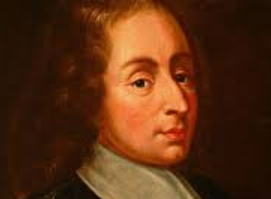
If the public thought elevates you above the generality of men, let the other humble you, and hold you in a perfect equality with all mankind, for this is your natural condition.
4 months 3 weeks ago
That we are Utopians is well known. So Utopian are we that we go the length of believing that the Revolution can and ought to assure shelter, food, and clothes to all — an idea extremely displeasing to middle-class citizens, whatever their party color, for they are quite alive to the fact that it is not easy to keep the upper hand of a people whose hunger is satisfied.
▼
Source
Ch. 5 : Food, p. 98
4 months 3 weeks ago
It was a favourite expression of Theophrastus that time was the most valuable thing that a man could spend.
▼
Source
Theophrastus, 10.

4 months 3 weeks ago
We have now but to prove a third attribute: I mean the faculty of feeling which the philosophers of all centuries have found in this same substance. ...[T]he Cartesians have made, in vain, to rob matter of this faculty. But in order to avoid insurmountable difficulties, they have flung themselves into a labyrinth from which they have thought to escape by this absurd system "that animals are pure machines."An opinion so absurd has never gained admittance among philosophers... Experience gives us no less proof of the faculty of feeling in animals than of feeling in men.
▼
Source
Ch. VI Concerning the Sensitive Faculty of Matter
4 months 3 weeks ago
A few rules include all that is necessary for the perfection of the definitions, the axioms, and the demonstrations, and consequently of the entire method of the geometrical proofs of the art of persuading.
4 months 3 weeks ago
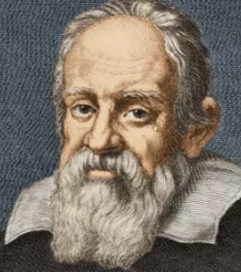
I am quite convinced; and, believe me, if I were again beginning my studies, I should follow the advice of Plato and start with mathematics, a science which proceeds very cautiously and admits nothing as established until it has been rigidly demonstrated.
▼
Source
Simplicio, First Day, page 90.

4 months 3 weeks ago
Today we decide about metaphysics and about even more elevated things at philosophy conferences. For everything that is to be done these days we must first have a meeting, and here is how it works: people come together, constantly come together, and they all wait for one another to turn up so that the others will tell them how it is, and if it doesn’t get said, never mind, everyone has had their say. It may very well be that all the talkers who are having their say have understood little of the matter in question, but still we believe that if we accumulate all that misunderstanding something like understanding will leap forth at the end of the day. Thus there are people today who travel from one meeting to the next and who are sustained by the confidence that something is really happening, that they’ve actually done something; whereas, at bottom, they’ve merely ducked out of work, seeking in chatter a place to build a nest for their helplessness—a helplessness, it is true, that they will never understand.
▼
Source
Gesamtausgabe, 20:376, as translated by David Farrell Krell in Portraits of American Continental Philosophers (1999), p. 101
CivilSimian.com created by AxiomaticPanic, CivilSimian, Kalokagathia