

6 months 2 weeks ago
Beware an act of avarice; it is bad and incurable disease.
▼
Source
source
Maxim no. 19.

6 months 3 weeks ago
Great men are they who see that spiritual is stronger than any material force, that thoughts rule the world. No hope so bright but is the beginning of its own fulfillment.
▼
Source
source
July 18, 1867, Progress of Culture Phi Beta Kappa Address
6 months 4 weeks ago
Eloquence, when at its highest pitch, leaves little room for reason or reflection; but addressing itself entirely to the fancy or the affections, captivates the willing hearers, and subdues their understanding. Happily, this pitch it seldom attains. But what a Tully or a Demosthenes could scarcely effect over a Roman or Athenian audience, every Capuchin, every itinerant or stationary teacher can perform over the generality of mankind, and in a higher degree, by touching such gross and vulgar passions.
▼
Source
source
Section 10 : Of Miracles Pt. 2
2 months 3 weeks ago
The bodies breathe, feed, store up strength, and then in an erotic moment are shattered, are spent and drained utterly, that they may bequeath their spirit to their sons. What spirit? The drive upward!

3 months 2 weeks ago
This great maxim of philosophy he had gathered by the teaching of nature alone - that man was created to work, not to speculate or feel or dream. Accordingly, he set his whole heart thitherwards. He did work wisely and unweariedly, and perhaps performed more with the tools he had than any man I now know.
3 months 2 weeks ago
The eye of the intellect "sees in all objects what it brought with it the means of seeing."
▼
Source
source
Varnhagen von Ense's Memoirs.
6 months 3 weeks ago
On the other hand, the cheapest form of pride is national pride; for the man affected therewith betrays a want of individual qualities of which he might be proud, since he would not otherwise resort to that which he shares with so many millions. The man who possesses outstanding personal qualities will rather see most clearly the faults of his own nation, for he has them constantly before his eyes. But every miserable fool, who has nothing in the world whereof he could be proud, resorts finally to being proud of the very nation to which he belongs. In this he finds compensation and is now ready and thankful to defend, ... all the faults and follies peculiar to it.
▼
Source
source
From 'Parerga and Paralipomena', Vol. 1, Aphorisms on the Wisdom of Life, 'What A Man Represents', pp. 360
4 months 2 weeks ago
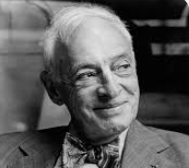
The book of the world, so richly studied by autodidacts, is being closed by the "learned," who are raising walls of opinions to shut the world out.
▼
Source
source
p. 15
4 months 3 weeks ago
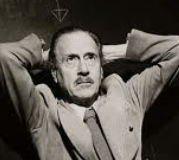
Youth instinctively understand the present environment - the electric drama. It lives mythically and in depth.
2 months 3 weeks ago
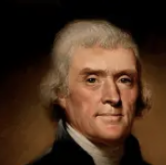
He who steadily observes the moral precepts in which all religions concur, will never be questioned at the gates of heaven as to the dogmas in which they all differ.
▼
Source
source
Letter to William Canby
2 months 3 weeks ago
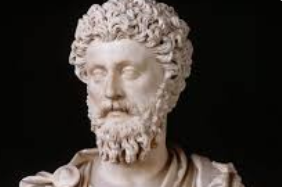
There is no man so fortunate that there shall not be by him when he is dying some who are pleased with what is going to happen. Suppose that he was a good and a wise man, will there not be at least some one to say to himself, Let us at last breathe freely, being relieved from this schoolmaster? It is true that he was harsh to none of us, but I perceive that he tacitly condemns us.-This is what is said of a good man. But in our own case how many other things are there for which there are many who wish to get rid of us.
▼
Source
source
X, 36
4 months 3 weeks ago
It's misleading to suppose there's any basic difference between education & entertainment. This distinction merely relieves people of the responsibility of looking into the matter.
▼
Source
source
(1957) from "Classroom Without Walls", Explorations Vol. 7, 1957; reprinted in Explorations in Communication ed. E. Carpenter & M. McLuhan, (Boston: Beacon, 1960); and again in McLuhan: Hot and Cool ed. G. E. Stearn (NY: Dial, 1967).
3 months 2 days ago
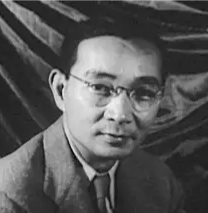
To the West, it seems hardly imaginable that the relationship between man and man (which is morality) could be maintained without reference to a Supreme Being, while to the Chinese it is equally amazing that men should not, or could not, behave toward one another as decent beings without thinking of their indirect relationship through a third party.
▼
Source
source
p. 106
5 months 2 weeks ago
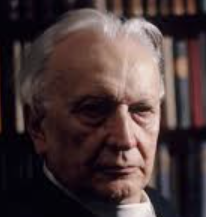
Our questions and answers are in part determined by the historical tradition in which we find ourselves. We apprehend truth from our own source within the historical tradition. The content of our truth depends upon our appropriating the historical foundation. Our own power of generation lies in the rebirth of what has been handed down to us. If we do not wish to slip back, nothing must be forgotten; but if philosophising is to be genuine our thoughts must arise from our own source. Hence all appropriation of tradition proceeds from the intentness of our own life. The more determinedly I exist, as myself, within the conditions of the time, the more clearly I shall hear the language of the past, the nearer I shall feel the glow of its life.
2 months 3 weeks ago
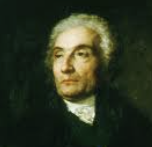
Government is a true religion: it has its dogmas, its mysteries, and its ministers. To annihilate it or submit it to the discussion of each individual is the same thing; it lives only through national reason, that is to say through political faith, which is a creed.
▼
Source
source
p. 87
4 months 2 weeks ago
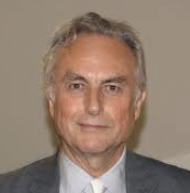
We've reached a truly remarkable situation: a grotesque mismatch between the American intelligentsia and the American electorate. A philosophical opinion about the nature of the universe which is held by the vast majority of top American scientists, and probably the majority of the intelligentsia generally, is so abhorrent to the American electorate that no candidate for popular election dare affirm it in public. If I'm right, this means that high office in the greatest country in the world is barred to the very people best qualified to hold it: the intelligentsia, unless they are prepared to lie about their beliefs. To put it bluntly American political opportunities are heavily loaded against those who are simultaneously intelligent and honest.
▼
Source
source
Richard Dawkins on militant atheism,
4 months 3 weeks ago
The stock market was created by the telegraph and the telephone, and its panics are engineered by carefully orchestrated stories in the press.
▼
Source
source
(p. 106)

7 months 1 week ago
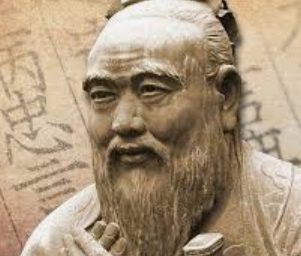
The superior man is modest in his speech, but exceeds in his actions. James Legge translation. Variant translations: The superior man acts before he speaks, and afterwards speaks according to his actions. The greater man does not boast of himself, But does what he must do. A good man does not give orders, but leads by example.
6 months 4 weeks ago
The Christian Religion not only was at first attended with miracles, but even at this day cannot be believed by any reasonable person without one. Mere reason is insufficient to convince us of its veracity: and whoever is moved by Faith to assent to it, is conscious of a continued miracle in his own person, which subverts all the principles of his understanding, and gives him a determination to believe what is most contrary to custom and experience.
▼
Source
source
Section 10 : Of Miracles Pt. 2

4 months 2 weeks ago
4 ways: Agnosticism, Relativism, Amorality, Morality.
1) I don't know. 2) Everybody is different. 3) Do whatever you can. 4) Do what you should.
5 months 2 days ago
The first task of administrative theory is to develop a set of concepts that will permit the description, in terms relevant to the theory, of administrative situations. These concepts, to be scientifically useful, must be operational; that is, their meanings must correspond to empirically observable facts or situations.
▼
Source
source
p. 43.
6 months 3 weeks ago
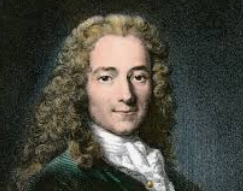
Virtue is debased by self-justification.
▼
Source
source
Oedipe, act II, scene IV, 1718
3 months 1 week ago
Children and fools speak the truth; and somehow they find happiness in their sincerity.
▼
Source
source
Ch. 1 : Our life begins
3 months 2 weeks ago
Resolve to serve no more, and you are at once freed. I do not ask that you place hands upon the tyrant to topple him over, but simply that you support him no longer; then you will behold him, like a great Colossus whose pedestal has been pulled away, fall of his own weight and break in pieces.
4 months 1 week ago
The consciousness of brutes would appear to be related to the mechanism of their body simply as a collateral product of its working, and to be as completely without any power of modifying that working as the steam-whistle which accompanies the work of a locomotive engine is without influence upon its machinery. Their volition, if they have any, is an emotion indicative of physical changes, not a cause of such changes.
4 months 2 weeks ago
A free society is a community of free beings, bound by the laws of sympathy and by the obligations of family love. It is not a society of people released from all moral constraint-for that is precisely the opposite of a society. Without moral constraint there can be no cooperation, no family commitment, no long-term prospects, no hope of economic, let alone social, order.
▼
Source
source
"The Limits of Liberty," The American Spectator
6 months 3 weeks ago
Titles of property, for instance railway shares, may change hands every day, and their owner may make a profit by their sale even in foreign countries, so that titles to property are exportable, although the railway itself is not.
▼
Source
source
Vol. II, Ch. X, p. 215.
4 months 1 week ago
In comparing civilized man with the animal world, one is as the Alpine traveller, who sees the mountains soaring into the sky and can hardly discern where the deep shadowed crags and roseate peaks end, and where the clouds of heaven begin. Surely the awe-struck voyager may be excused if, at first, he refuses to believe the geologist, who tells him that these glorious masses are, after all, the hardened mud of primeval seas, or the cooled slag of subterranean furnaces-of one substance with the dullest clay, but raised by inward forces to that place of proud and seemingly inaccessible glory. But the geologist is right; and due reflection on his teachings, instead of diminishing our reverence and our wonder, adds all the force of intellectual sublimity, to the mere aesthetic intuition of the uninstructed beholder.
▼
Source
source
Ch.2, p. 131-132
7 months 1 week ago
It pertains to all men to know themselves and to learn self-control.
2 months 3 weeks ago
You could leave life right now. Let that determine what you do and say and think.
▼
Source
source
(Hays translation) II, 11
3 months 4 days ago
In our country the lie has become not just a moral category but a pillar of the State.
▼
Source
source
As quoted in The Observer
5 months 2 weeks ago
Verily, verily, I say unto you, Except ye eat the flesh of the Son of man, and drink his blood, ye have no life in you. Whoso eateth my flesh, and drinketh my blood, hath eternal life; and I will raise him up at the last day. For my flesh is meat indeed, and my blood is drink indeed. He that eateth my flesh, and drinketh my blood, dwelleth in me, and I in him.
▼
Source
source
6:53-56
2 months 2 weeks ago
The state of mind which enables a man to do work of this kind is akin to that of the religious worshiper or the lover; the daily effort comes from no deliberate intention or program, but straight from the heart.
6 months 3 weeks ago
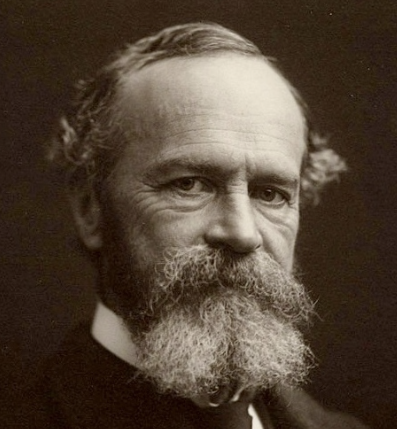
For the philosophy which is so important in each of us is not a technical matter; it is our more or less dumb sense of what life honestly and deeply means. It is only partly got from books; it is our individual way of just seeing and feeling the total push and pressure of the cosmos. ...I have heard friends and colleagues try to popularize philosophy... but they soon grew dry, and then technical, and the results were only partially encouraging. So my enterprise is a bold one. The founder of pragmatism... gave... lectures... with that very word in its title,-flashes of brilliant light relieved against Cimmerian darkness! None of us... understood all that he said-yet here I stand making a very similar venture. ...There is... a curious fascination in hearing deep things talked about, even though neither we nor the disputants understand them. We get the problematic thrill, we feel the presence of the vastness.
▼
Source
source
Lecture I, The Present Dilemma in Philosophy
3 months 2 days ago
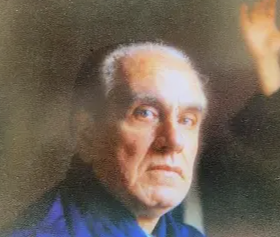
Not being able to ban sexuality altogether, Catholicism has tried to reduce it to a mere biological fact, allowing its use in marriage only for procreation. Unlike certain ancient traditions, Catholicism has recognized no higher value, not even a potential one, in the sexual experience taken in itself. There is lacking any basis for its transformation in the interests of a more intense life, to integrate and elevate the inner tension of two beings of different sexes, whereas it is in exactly these terms that one should conceive of a concrete "sacralization" of the union and the effect of a higher influence involved in the rite.
▼
Source
source
p. 190
7 months 2 weeks ago
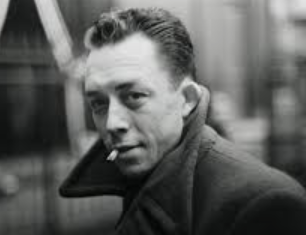
An intellectual is someone whose mind watches itself.

5 months 1 week ago
The might which kills outright is an elementary and coarse form of might. How much more varied in its devices; how much more astonishing in its effects is that other which does not kill; or which delays killing.
▼
Source
source
in The Simone Weil Reader, p. 155
4 months 2 weeks ago
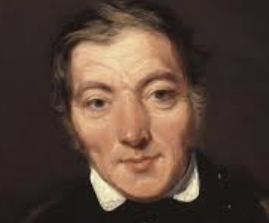
It is therefore, the interest of all, that every one, from birth, should be well educated, physically and mentally, that society may be improved in its character, - that everyone should be beneficially employed, physically and mentally, that the greatest amount of wealth may be created, and knowledge attained, - that everyone should be placed in the midst of those external circumstances that will produce the greatest number of pleasurable sensations, through the longest life, that man may be made truly intelligent, moral and happy, and be thus prepared to enter upon the coming Millennium.
▼
Source
source
A Development of the Principles & Plans on which to establish self-supporting Home Colonies
6 months 3 weeks ago
Fools admire everything in an author of reputation.
6 months 3 weeks ago
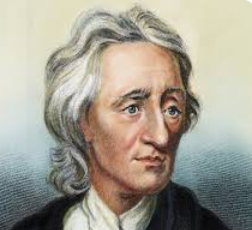
This I think is sufficiently evident, that children generally hate to be idle. All the care then is, that their busy humour should be constantly employ'd in something of use to them; which, if you will attain, you must make what you would have them do a recreation to them, and not a business.
▼
Source
source
Sec. 129
4 months 3 weeks ago
Such would be the successive phases of the image:it is the reflection of a profound reality;it masks and denatures a profound reality;it masks the absence of a profound reality;it has no relation to any reality whatsoever: it is its own pure simulacrum.In the first case, the image is a good appearance-representation is of the sacramental order. In the second, it is an evil appearance-it is of the order of maleficence. In the third, it plays at being an appearance-it is of the order of sorcery. In the fourth, it is no longer of the order of appearances, but of simulation.
4 months 2 weeks ago
The individual selectionist would admit that groups do indeed die out, and that whether or not a group goes extinct may be influenced by the behaviour of the individuals in that group. He might even admit that if only the individuals in a group had the gift of foresight they could see that in the long run their own best interests lay in restraining their selfish greed, to prevent the destruction of the whole group. How many times must this have been said in recent years to the working people of Britain? But group extinction is a slow process compared with the rapid cut and thrust of individual competition. Even while the group is going slowly and inexorably downhill, selfish individuals prosper in the short term at the expense of altruists. The citizens of Britain may or may not be blessed with foresight, but evolution is blind to the future.
▼
Source
source
Ch. 1. Why Are People?
4 months 3 weeks ago
All meaning alters with acceleration, because all patterns of personal and political interdependence change with any acceleration of information.
▼
Source
source
(p. 178-179)
4 months 1 week ago
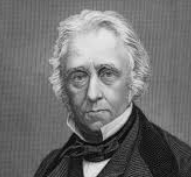
At last I have attained true glory. As I walked through Fleet Street the day before yesterday, I saw a copy of Hume at a bookseller's window with the following label: "Only 2l. 2s. Hume's History of England in eight volumes, highly valuable as an introduction to Macaulay." I laughed so convulsively that the other people who were staring at the books took me for a poor demented gentleman.
▼
Source
source
Alas for poor David! Journal entry (8 March 1849), quoted in George Otto Trevelyan, The Life and Letters of Lord Macaulay, Volume II (1876), p. 253
6 months 3 weeks ago
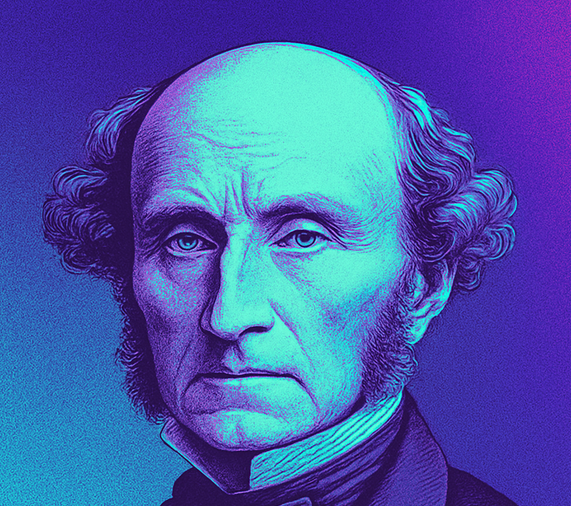
What, in unenlightened societies, colour, race, religion, or in the case of a conquered country, nationality, are to some men, sex is to all women; a peremptory exclusion from almost all honourable occupations, but either such as cannot be fulfilled by others, or such as those others do not think worthy of their acceptance.
▼
Source
source
Ch. 4
5 months 1 week ago
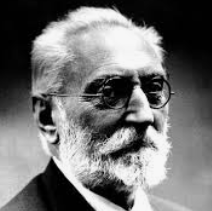
"God does not think, He creates; He does not exist, He is eternal," wrote Kierkegaard (Afslutende uvidenskabelige Efterskrift); but perhaps it is more exact to say with Mazzini, the mystic of the Italian city, that "God is great because his thought is action" (Ai giovani d'Italila), because with Him to think is to create, and He gives existence to that which exists in His thought by the mere fact of thinking it, and the impossible is unthinkable by God. It is not written in the Scriptures that God creates with His word - that is to say, with His thought - and that by this, by His Word, He made everything that exists? And what God has once made does He ever forget? May it not be that all the thoughts that have ever passed through the Supreme Consciousness still subsist therein? In Him, who is eternal, is not all existence eternalized?
5 months 3 days ago
It is at work everywhere, functioning smoothly at times, at other times in fits and starts. It breathes, it heats, it eats. It shits and fucks. What a mistake to have ever said the id. Everywhere it is machines - real ones, not figurative ones: machines driving other machines, machines being driven by other machines, with all the necessary couplings and connections. from Anti-oedipus: capitalism and schizophrenia,
▼
Source
source
p. 1
CivilSimian.com created by AxiomaticPanic, CivilSimian, Kalokagathia