

6 months 3 weeks ago
It cannot be very difficult to determine who have been the contrivers of this whole mercantile system; not the consumers, we may believe, whose interest has been entirely neglected; but the producers, whose interests has been so carefully attended to; and among this later class our merchants and manufactures have been by far the principal architects. In the mercantile regulations, which have been taken notice of in this chapter, the interest of our manufacturers has been most peculiarly attended to;and the interest, not so much of the consumers, as that of some other sets of producers, has been sacrificed to it.
▼
Source
source
Chapter VIII, p. 721.

5 months 2 weeks ago
The ontological concept of truth is in the centre of a logic which may serve as a model of pre- technological rationality. It is the rationality of a two-dimensional universe of discourse which, contrasts with the of thought and behavior that develop in the execution of the technological project.
▼
Source
source
p. 130
7 months ago
All the passages in the Holy Scriptures that mention assistance are they that do away with "free-will", and these are countless...For grace is needed, and the help of grace is given, because "free-will" can do nothing.
▼
Source
source
p. 270
3 months 2 weeks ago
The fundamental political question is why do people obey a government. The answer is that they tend to enslave themselves, to let themselves be governed by tyrants. Freedom from servitude comes not from violent action, but from the refusal to serve. Tyrants fall when the people withdraw their support.
▼
Source
source
This quote is a paraphrase of the contents of the first chapter of Discourse on Voluntary Servitude. The quote appears in an edition titled Politics of Obedience: The Discourse of Voluntary Servitude edited by Murray Rothbard and Harry Kurz (1975), p. 39
3 months 1 week ago
In the development of any science, the first received paradigm is usually felt to account quite successfully for most of the observations and experiments easily accessible to that science's practitioners. Further development, therefore, ordinarily calls for the construction of elaborate equipment, the development of an esoteric vocabulary and skills, and a refinement of concepts that increasingly lessens their resemblance to their usual common-sense prototypes. That professionalization leads, on the one hand, to an immense restriction of the scientist's vision and to a considerable resistance to paradigm change. The science has become increasingly rigid. On the other hand, within those areas to which the paradigm directs the attention of the group, normal science leads to a detail of information and to a precision of the observation-theory match that could be achieved in no other way.
▼
Source
source
p. 64
7 months ago
There is a plague on Man, the opinion that he knows something.
6 months 3 weeks ago
A stupid man's report of what a clever man says is never accurate, because he unconsciously translates what he hears into something that he can understand.
6 months 3 weeks ago
Do not be too timid and squeamish about your actions. All life is an experiment. The more experiments you make the better.
▼
Source
source
November 11, 1842


5 months 3 weeks ago
Humiliate the reason and distort the soul...
▼
Source
source
Part 2, Chapter ?

5 months 5 days ago
The history of the Romanovs is an Elizabethan tragedy that lasts for three centuries. Its keynote is cruelty, a barbaric, pointless kind of cruelty that has always been common in the East, but that came to Europe only recently, in the time of Hitler.
▼
Source
source
pp. 61-62
5 months 2 weeks ago
If every pure character in the Old Testament announces the Messiah, if every unworthy person is his torturer and every woman his Mother, does not the Book of Books lose all life with this obsessive theme? On the doctrine of prefiguration.
▼
Source
source
Persons or Figures
4 months 3 weeks ago
Go - take the mother's soul, and learn three truths: Learn What dwells in man, What is not given to man, and What men live by. When thou hast learnt these things, thou shalt return to heaven.
▼
Source
source
Ch. IV
4 months 2 weeks ago
The fear of death is more to be dreaded than death itself.
▼
Source
source
Maxim 511
6 months 3 weeks ago
False and doubtful positions, relied upon as unquestionable maxims, keep those who build on them in the dark from truth. Such are usually the prejudices imbibed from education, party, reverence, fashion, interest, et cetera.
▼
Source
source
Book IV, Ch. 7


3 months 1 week ago
Happy the people whose annals are blank in history books!
▼
Source
source
Life of Frederick the Great, Bk. XVI, ch. 1.
5 months 3 weeks ago
There are things I can't force. I must adjust. There are times when the greatest change needed is a change of my viewpoint.
▼
Source
source
As quoted in Cracking the Code of Our Physical Universe : The Key to a Whole New World of Enlightenment and Enrichment (2006) by Matthew M Radmanesh, p. 91
6 months 3 weeks ago
There is no more miserable human being than one in whom nothing is habitual but indecision.
▼
Source
source
Ch. 4
4 months 3 weeks ago
Nothing in this book is true.
3 months 2 weeks ago
Nowhere is there more constancy and more unanimity than among the French to subordinate that sex which they pretend to honor so highly.
▼
Source
source
The Theory of Social Organization
6 months 3 weeks ago
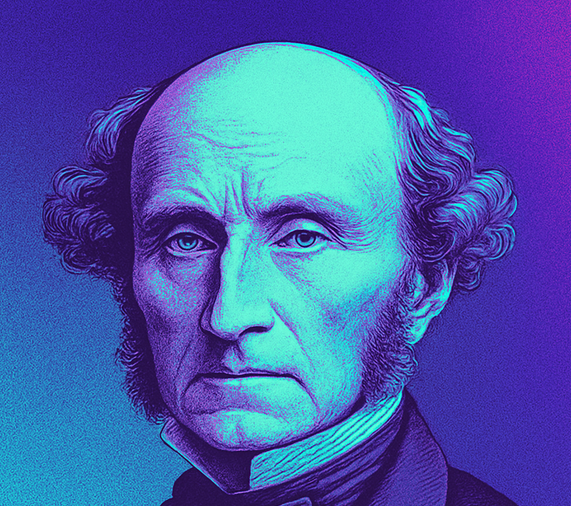
The best state for human nature is that in which, while no one is poor, no one desires to be richer, nor has any reason to fear being thrust back by the efforts of others to push themselves forward.
▼
Source
source
Book IV, Chapter VI, §2
6 months 2 weeks ago
A teacher who can show good, or indeed astounding results while he is teaching, is still not on that account a good teacher, for it may be that, while his pupils are under his immediate influence, he raises them to a level which is not natural to them, without developing their own capacities for work at this level, so that they immediately decline again once the teacher leaves the schoolroom.
▼
Source
source
p. 43e
2 months 3 weeks ago
All law is "situational law." The sovereign produces and guarantees the situation in its totality. He has the monopoly over this last decision.
▼
Source
source
p.13

6 months 2 weeks ago
Discipline 'makes' individuals; it is the specific technique of a power that regards individuals both as objects and as instruments of its exercise. It is not a triumphant power...it is a modest, suspicious power, which functions as a calculated, but permanent economy.
6 months 3 weeks ago
Poetry must be new as foam, and as old as the rock.
▼
Source
source
March 1845
3 months 1 week ago
For this reason those who are tossed about at sea, who proceed uphill and downhill over toilsome crags and heights, who go on campaigns that bring the greatest danger, are heroes and front-rank fighters; but persons who live in rotten luxury and ease while others toil, are mere turtle-doves safe only because men despise them.
7 months ago
When I play with my cat, who knows if I am not a pastime to her more than she is to me?
▼
Source
source
Ch. 12 (tr. Donald M. Frame) , tr. David Wills, 2008
5 months 3 weeks ago
The Divine Existence (Daseyn),-his Existence, I say, which, according to the distinction already laid down, is his (Manifestation and Revelation of himself-is absolute- only through itself, and of necessity, LIGHT:-namely, y the inward and spiritual Light. This Light, left to itself, separates and divides itself into an infinite multiplicity of individual rays; and in this way, in these individual rays, becomes estranged from itself and its | original source. But this same Light may also again concentrate itself from out this separation, and conceive and comprehend itself as One, as that which it is in itself,-the Existence and Revelation of God; remaining indeed, even in this conception, that which it is in its form,-Light; but yet in this condition, and even by means of this very condition, announcing it-to self as having no real Being in itself, but as only the, Existence and Self-Manifestation of God.
▼
Source
source
p. 78
3 months 3 days ago
The whole history of religion is a history of the failure of preaching. Preaching is moral violence.
6 months 3 weeks ago
The beginning of religion, more precisely its content, is the concept of religion itself, that God is the absolute truth, the truth of all things, and subjectively that religion alone is the absolutely true knowledge.
3 months 1 week ago
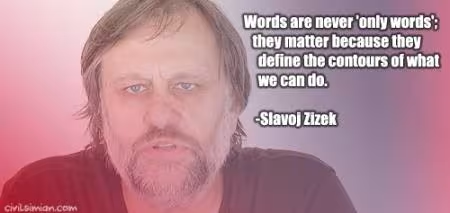
It is no longer the moral, religious, spiritual condition of the people that is our concern, but their physical, practical, economical condition, as regulated by public laws.
3 months 2 weeks ago
A multitude is irreducible multiplicity; the singular social differences that constitute the multitude must always be expressed and can never be flattened into sameness, unity, identity, or indifference. ... the compact identities of factory workers in the dominant countries have been undermined with the rise of short-term contracts and forced mobility of new forms of work; how migration has challenged traditional notions of national identity; how family identity has changed and so forth.
▼
Source
source
105

5 months 2 weeks ago
Impossible for me to know whether or not I take myself seriously. The drama of detachment is that we cannot measure its progress. We advance into a desert, and we never know where we are in it.
2 months 3 weeks ago
But we, O blockhead, with dogged spite and armored loveshall force those deaf dark powers to grow ears and hear us!I know that God is earless, eyeless, and heartless too,a brainless Dragon Worm that crawls on earth and hopesin anguish and then in secret that we'll give him soul,for then he, too, may sprout ears, eyes, to match his growth,but God is clay in my ten fingers, and I mould him!
▼
Source
source
Odysseus to Kentaur, Book VIII, line 829
7 months 2 weeks ago
Art, at least, teaches us that man cannot be explained by history alone and that he also finds a reason for his existence in the order of nature.
6 months 3 weeks ago
A just system must generate its own support.
▼
Source
source
Chapter V, Section 41, p. 261
5 months 5 days ago
In a book called Symbolism, Its Meaning and Effect, Whitehead points out that perception is usually a matter of symbols, just like language; I say I see a book when I actually see a red oblong. The Transactionists (who have been influenced by Whitehead rather than Husserl) take this one stage further, and point out that when I 'perceive' something, I am actually making a bet with myself that what I perceive is what I think it is. In order to act and live at all, I have to make these bets; I cannot afford to make absolutely certain that things are what I think they are. But this means that we should not take our perceptions at face value, any more than Nietzsche was willing to take philosophy at its face value; we must allow for prejudice and distortion.
▼
Source
source
p. 66
3 months 1 week ago
If one rejects laissez faire on account of man's fallibility and moral weakness, one must for the same reason also reject every kind of government action.
▼
Source
source
Planning for Freedom (1952), p. 44
2 months 3 weeks ago
We are not simple people who believe in happiness; nor weaklings who crumple to the ground in distress at the first reverse; nor skeptics observing the bloody effort of marching humanity from the lofty heights of a mocking, sterile wit. Believing in the fight, though we entertain no illusions about it, we are armed against every disappointment.
▼
Source
source
Toda Raba
3 months 2 weeks ago
The strengthening of behavior which results from reinforcement is appropriately called "conditioning". In operant conditioning we "strengthen" an operant in the sense of making a response more probable or, in actual fact, more frequent.
▼
Source
source
Science and Human Behavior
6 months 3 weeks ago
I was a solitary, shy, priggish youth. I had no experience of the social pleasures of boyhood and did not miss them. But I liked mathematics, and mathematics was suspect because it has no ethical content. I came also to disagree with the theological opinions of my family, and as I grew up I became increasingly interested in philosophy, of which they profoundly disapproved. Every time the subject came up they repeated with unfailing regularity, 'What is mind? No matter. What is matter? Never mind.' After some fifty or sixty repetitions, this remark ceased to amuse me.
▼
Source
source
p. 9
4 months 5 days ago
Lost time was like a run in a stocking. It always got worse.
▼
Source
source
The Steep Ascent
5 months 3 weeks ago
Morals are in all countries the result of legislation and government; they are not African or Asian or European: they are good or bad.
6 months 2 weeks ago
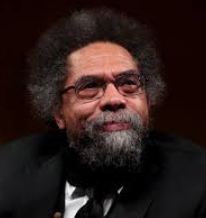
The most taboo issue on U.S. campuses these days, in many instances, has to do with the vicious Israeli occupation of precious Palestinians. It's very difficult to have a respectful, robust conversation about that. And I am unequivocal in my solidarity with Palestinian brothers and sisters... I'm not in any way going to stop talking about the Palestinian plight and predicament.
▼
Source
source
Speaking in Too Radical for Harvard? Cornel West on Failed Fight for Tenure, Biden's First 50 Days & More, Democracy Now!
4 months 3 weeks ago
My theory is that all women have hydrofluoric acid bottled up inside.
▼
Source
source
On difficulties with women, as quoted in "Kurt Vonnegut, Writer of Classics of the American Counterculture, Dies at 84" by Dinitia Smith in The New York Times
7 months 1 week ago
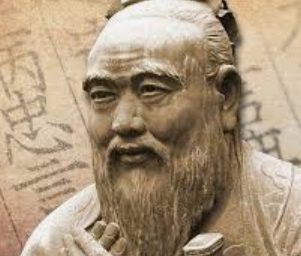
The way which the superior man pursues, reaches wide and far, and yet is secret. Common men and women, however ignorant, may intermeddle with the knowledge of it; yet in its utmost reaches, there is that which even the sage does not know. Common men and women, however much below the ordinary standard of character, can carry it into practice; yet in its utmost reaches, there is that which even the sage is not able to carry into practice. Great as heaven and earth are, men still find some things in them with which to be dissatisfied. Thus it is that, were the superior man to speak of his way in all its greatness, nothing in the world would be found able to embrace it, and were he to speak of it in its minuteness, nothing in the world would be found able to split it.
6 months 3 weeks ago
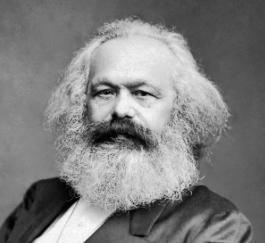
Capital is dead labor, that vampire-like, only lives by sucking living labor, and lives the more, the more labor it sucks.
▼
Source
source
Vol. I, Ch. 10, Section 1, p. 257.
CivilSimian.com created by AxiomaticPanic, CivilSimian, Kalokagathia