


3 months ago
When we try to develop and procure benefits for the world with universal love as our standard, then attentive ears and keen eyes will respond in service to one another, then limbs will be strengthened to work for one another, and those who know the Tao will untiringly instruct others. Thus the old and those who have neither wife nor children will have the support and supply to spend their old age with, and the young and weak and orphans will have the care and admonition to grow up in. When universal love is adopted as the standard, then such are the consequent benefits. It is incomprehensible, then, why people should object to universal love when they hear it.
▼
Source
source
Book 4; Universal Love III
7 months 1 day ago
Those who have handled sciences have been either men of experiment or men of dogmas. The men of experiment are like the ant, they only collect and use; the reasoners resemble spiders, who make cobwebs out of their own substance. But the bee takes a middle course: it gathers its material from the flowers of the garden and of the field, but transforms and digests it by a power of its own. Not unlike this is the true business of philosophy; for it neither relies solely or chiefly on the powers of the mind, nor does it take the matter which it gathers from natural history and mechanical experiments and lay it up in the memory whole, as it finds it, but lays it up in the understanding altered and digested. Therefore from a closer and purer league between these two faculties, the experimental and the rational (such as has never yet been made), much may be hoped.
▼
Source
source
Aphorism 95



6 months 3 weeks ago
The opinions that are held with passion are always those for which no good ground exists; indeed the passion is the measure of the holder's lack of rational conviction.
▼
Source
source
Opinions in politics and religion are almost always held passionately. Introduction to 1961 edition of Sceptical Essays, 1961
3 months 3 days ago
Whenever the therapist stands with society, he will interpret his work as adjusting the individual and coaxing his 'unconscious drives' into social respectability. But such 'official psychotherapy' lacks integrity and becomes the obedient tool of armies, bureaucracies, churches, corporations, and all agencies that require individual brainwashing. On the other hand, the therapist who is really interested in helping the individual is forced into social criticism. This does not mean that he has to engage directly in political revolution; it means that he has to help the individual in liberating himself from various forms of social conditioning, which includes liberation from hating this conditioning - hatred being a form of bondage to its object.
▼
Source
source
p. 8

3 months 1 week ago
A Parliament speaking through reporters to Buncombe and the twenty-seven millions, mostly fools.
▼
Source
source
Latter Day Pamphlets, No. 6.
4 months 3 weeks ago
Humanity unceasingly strives forward from a lower, more partial and obscure understanding of life to one more general and more lucid. And in this, as in every movement, there are leaders - those who have understood the meaning of life more clearly than others - and of those advanced men there is always one who has in his words and life, manifested this meaning more clearly, accessibly, and strongly than others. This man's expression ... with those superstitions, traditions, and ceremonies which usually form around the memory of such a man, is what is called a religion. Religions are the exponents of the highest comprehension of life ... within a given age in a given society ... a basis for evaluating human sentiments. If feelings bring people nearer to the religion's ideal ... they are good, if these estrange them from it, and oppose it, they are bad.
4 months 2 weeks ago
We are not born free, nor do we come into this world with a self-identity and autonomy of our own. We achieve those things, through the conflict and cooperation that weave us into the social fabric.
▼
Source
source
Where We Are: The State of Britain Now
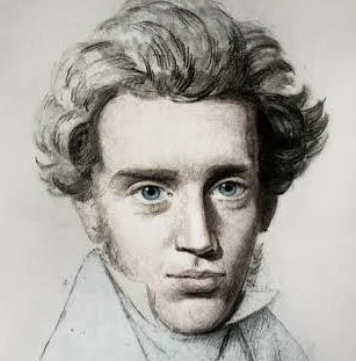
7 months 3 weeks ago
My dear reader, read aloud, if possible! If you do so, allow me to thank you for it: if you not only do it yourself, if you also influence others to do it, allow me to thank each one of them, and you again and again!
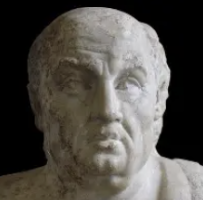
3 months 1 week ago
But the wise man is fortified against all inroads; he is alert; he will not retreat before the attack of poverty, or of sorrow, or of disgrace, or of pain. He will walk undaunted both against them and among them.
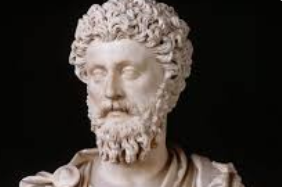
2 months 2 weeks ago
A little time, and thou shalt close thy eyes; and him who has attended thee to thy grave, another soon will lament.
▼
Source
source
X, 34
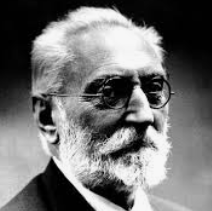
5 months 1 week ago
Shall we not perhaps be told, on the other hand, that if the sinner suffers an eternal punishment, it is because he does not cease to sin? - for the damned sin without ceasing. This however is no solution to the problem, which derives all its absurdity from the fact that punishment has been conceived as vindictiveness or vengeance, not as correction, and has been conceived after the fashion of barbarous peoples. And in the same way hell has been conceived as a sort of police institution, necessary in order to put fear into the world. And the worst of it is that it no longer intimidates, and therefore will have to be shut up.
6 months 3 weeks ago
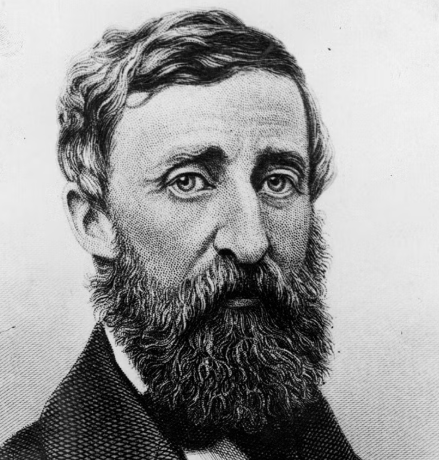
It takes two to speak the truth, - one to speak, and another to hear.
4 months 2 weeks ago
Them that die will be the lucky ones!
▼
Source
source
Ch. 20, Silver's Embassy.
6 months 3 weeks ago
In obedience to the feeling of reality, we shall insist that, in the analysis of propositions, nothing "unreal" is to be admitted. But, after all, if there is nothing unreal, how, it may be asked, could we admit anything unreal? The reply is that, in dealing with propositions, we are dealing in the first instance with symbols, and if we attribute significance to groups of symbols which have no significance, we shall fall into the error of admitting unrealities, in the only sense in which this is possible, namely, as objects described.
▼
Source
source
Ch. 16: Descriptions
5 months 6 days ago
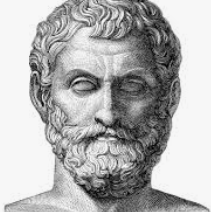
He has been named respectively, Jehovah, Allah, Brahma, Father in Heaven, Order of Heaven, First Cause, Supreme Being, Chance. Each name corresponds to a system of thought derived from the experiences of those who have used it.Among medieval and modern philosophers, anxious to establish the religious significance of God, an unfortunate habit has prevailed of paying Him metaphysical compliments. He has been conceived as the foundation of the metaphysical situation with its ultimate activity. If this conception be adhered to, there can be no alternative except to discern in Him the origin of all evil as well as of all good. He is then the supreme author of the play, and to Him must therefore be ascribed its shortcomings as well as its success.
▼
Source
source
Ch. 11: "God", pp. 250-251
6 months 4 days ago
Do not ask who started it.
▼
Source
source
Finish it A Dictionary of Thoughts (1908) by Tryon Edwards, p. 234
3 months 3 days ago
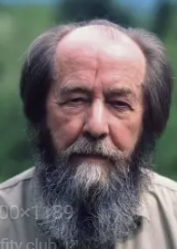
Violence, less and less embarrassed by the limits imposed by centuries of lawfulness, is brazenly and victoriously striding across the whole world, unconcerned that its infertility has been demonstrated and proved many times in history. What is more, it is not simply crude power that triumphs abroad, but its exultant justification. The world is being inundated by the brazen conviction that power can do anything, justice nothing.
6 months 3 weeks ago
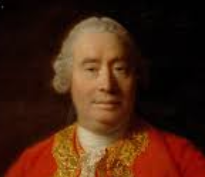
There is an inconvenience which attends all abstruse reasoning. That it may silence, without convincing an antagonist, and requires the same intense study to make us sensible of its force, that was at first requisite for its invention. When we leave our closet, and engage in the common affairs of life, its conclusions seem to vanish, like the phantoms of the night on the appearance of the morning; and 'tis difficult for us to retain even that conviction, which we had attain'd with difficulty.
▼
Source
source
Part 1, Section 1
3 months 1 week ago
When I hear any man talk of an unalterable law, the only effect it produces upon me is to convince me that he is an unalterable fool.
▼
Source
source
Peter Plymley's Letters (1808), Letter IV

6 months 2 weeks ago
One can say that the author is an ideological product, since we represent him as the opposite of his historically real function. (When a historically given function is represented in a figure that inverts it, one has an ideological production.) The author is therefore the ideological figure by which one marks the manner in which we fear the proliferation of meaning.
▼
Source
source
What is an author?
2 months 2 weeks ago
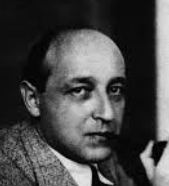
In order to be transmuted into knowledge, every perception is and must be ordered and organized into categories. The extent, however, to which we can organize and express our experience in such conceptual forms is, in turn, dependent upon the frames of reference which happen to be available at a given historical moment. The concepts which we have and the universe of discourse in which we move, together with the directions in which they tend to elaborate themselves, are dependent largely upon the historical-social situation of the intellectually active and responsible members of the group.
2 months 3 weeks ago
The Plan of the System, may aim at a Natural or an Artificial System. But no classes can be absolutely artificial, for if they were, no assertions could be made concerning them.

6 months 3 weeks ago
Nothing is rich but the inexhaustible wealth of Nature. She shows us only surfaces, but she is million fathoms deep.
▼
Source
source
p. 183
3 months 2 weeks ago
Education is what survives when what has been learned has been forgotten.
▼
Source
source
"New methods and new aims in teaching", in New Scientist, 22(392) (21 May 1964), pp.483-4
6 months 3 weeks ago
The average man's opinions are much less foolish than they would be if he thought for himself: in science, at least, his respect for authority is on the whole beneficial.
▼
Source
source
On Education, Especially in Early Childhood (1926), Ch. 2: The Aims of Education, p. 63

6 months 3 weeks ago
The sweetest thing in all my life has been the longing - to reach the Mountain, to find the place where all the beauty came from - my country, the place where I ought to have been born. Do you think it all meant nothing, all the longing? The longing for home? For indeed it now feels not like going, but like going back.
▼
Source
source
Psyche
5 months 6 days ago
Revolutionary feminism embraces men who are able to change, who are capable of responding mutually in a subject-to-subject encounter where desire and fulfillment are in no way linked to coercive subjugation. This feminist vision of the sexual imaginary is the space few men seem able to enter.
7 months 1 day ago
Since my logic aims to teach and instruct the understanding, not that it may with the slender tendrils of the mind snatch at and lay hold of abstract notions (as the common logic does), but that it may in very truth dissect nature, and discover the virtues and actions of bodies, with their laws as determined in matter; so that this science flows not merely from the nature of the mind, but also from the nature of things.
▼
Source
source
Aphorism 52
10 months 4 weeks ago
I think that the task of philosophy is not to provide answers, but to show how the way we perceive a problem can be itself part of a problem.
5 months 1 week ago
Logic chases truth up the tree of grammar.
▼
Source
source
Philosophy of Logic
5 months 2 days ago
There were honest people long before there were Christians and there are, God be praised, still honest people where there are no Christians. It could therefore easily be possible that people are Christians because true Christianity corresponds to what they would have been even if Christianity did not exist.
▼
Source
source
L 16
5 months 1 week ago
The blessing that the market does not ask about birth is paid for in the exchange society by the fact that the possibilities conferred by birth are molded to fit the production of goods that can be bought on the market.
▼
Source
source
E. Jephcott, trans., p. 9.
6 months 3 weeks ago
You find as you look around the world that every single bit of progress of humane feeling, every improvement in the criminal law, every step toward the diminution of war, every step toward better treatment of the colored races, or even mitigation of slavery, every moral progress that there has been in the world, has been consistently opposed by the organized churches of the world. I say quite deliberately that the Christian religion, as organized in its churches, has been and still is the principal enemy of moral progress in the world.
▼
Source
source
"The Emotional Factor"
2 months 3 weeks ago
Your favour of July 31, was duly received, and was read with peculiar pleasure. The sentiments breathed through the whole do honor to both the head and heart of the writer. Mine on the subject of slavery of negroes have long since been in possession of the public, and time has only served to give them stronger root. The love of justice and the love of country plead equally the cause of these people, and it is a moral reproach to us that they should have pleaded it so long in vain, and should have produced not a single effort, nay I fear not much serious willingness to relieve them & ourselves from our present condition of moral & political reprobation.
7 months 3 weeks ago
Seek first God's Kingdom, that is, become like the lilies and the birds, become perfectly silent - then shall the rest be added unto you.
5 months 1 week ago
The aim of jazz is the mechanical reproduction of a regressive moment, a castration symbolism. 'Give up your masculinity, let yourself be castrated,' the eunuchlike sound of the jazz band both mocks and proclaims, 'and you will be rewarded, accepted into a fraternity which shares the mystery of impotence with you, a mystery revealed at the moment of the initiation rite.
▼
Source
source
Perennial Fashion - Jazz (1978), Prisms, p. 129, as translated by Samuel Weber and Shierry Weber
4 months 3 weeks ago
Saying that what we call our "selves" consist only of our bodies and that reason, soul, and love arise only from the body, is like saying that what we call our body is equivalent to the food that feeds the body. It is true that my body is only made up of digested food and that my body would not exist without food, but my body is not the same as food. Food is what the body needs for life, but it is not the body itself. The same thing is true of my soul. It is true that without my body there would not be that which I call my soul, but my soul is not my body. The soul may need the body, but the body is not the soul.
▼
Source
source
p. 12

5 months 3 weeks ago
No protracted war can fail to endanger the freedom of a democratic country.
▼
Source
source
Book Three, Chapter XXII.
4 months 3 weeks ago
To attain this end we must secure a preponderance of virtue over vice and must endeavor to secure that the honest man may, even in this world, receive a lasting reward for his virtue. But in these great endeavors we are gravely hampered by the political institutions of today. What is to be done in these circumstances? To favor revolutions, overthrow everything, repel force by force?... No! We are very far from that. Every violent reform deserves censure, for it quite fails to remedy evil while men remain what they are, and also because wisdom needs no violence.
▼
Source
source
Book V, Ch. 7
6 months 1 week ago
And when the physician said, "Sir, you are an old man," "That happens," replied Pausanias, "because you never were my doctor."
▼
Source
source
Of Pausanias the Son of Phistoanax

3 months 3 days ago
Adeimantus, in what amounts to an accusation of Socrates, asserts that the philosophers appear to be either useless or vicious. Plato, as I have suggested, teaches that ultimately this is an appearance that cannot be reversed, and this insures the philosophers' permanent marginality. They appear as useless because they are. They are neither artisans, nor statesmen, nor rhetoricians. They are idlers who contribute nothing to security or posterity. Their peculiar contemplative pleasures are not accessible to the majority of mankind, and they do not provide for the popular pleasures as do the poets.
▼
Source
source
Commerce and Culture, p. 285.

2 months 2 weeks ago
Nations are barbarian in their infancy but not savage. The barbarian is a proportional mean between the savage and the citizen. He already possesses no end of knowledge: he has habitations, some agriculture, domestic animals, laws, a cult, regular tribunals; he lacks only the sciences.
▼
Source
source
p. 25
4 months 3 weeks ago
Those who used to sacrifice animals did not take them for beasts. And even the Middle Ages, which condemned and punished them in due form, was in this way much closer to them than we are, we who are filled with horror at this practice. They held them to be guilty: which was a way of honoring them. We take them for nothing, and it is on this basis that we are "human" with them. We no longer sacrifice them, we no longer punish them, and we are proud of it, but it is simply that we have domesticated them, worse: that we have made of them a racially inferior world, no longer even worthy of our justice, but only of our affection and social charity, no longer worthy of punishment and of death, but only of experimentation and extermination like meat from the butchery.
▼
Source
source
"The Animals: Territory and Metamorphoses," pp. 134-135
3 months 1 week ago
Such parliamentary bagpipes I myself have heard play tunes, much to the satisfaction of the people.
5 months 1 week ago
When I contemplate the green serenity of the fields or look into the depths of clear eyes through which shines a fellow-soul, my consciousness dilates, I feel the diastole of the soul and am bathed in the flood of the life that flows about me, and I believe in my future; but instantly the voice of mystery whispers to me, "Thou shalt cease to be!" the angel of Death touches me with his wing, and the systole of the soul floods the depth of my spirit with the blood of divinity.

5 months 2 weeks ago
We dread the future only when we are not sure we can kill ourselves when we want to.
6 months 3 weeks ago
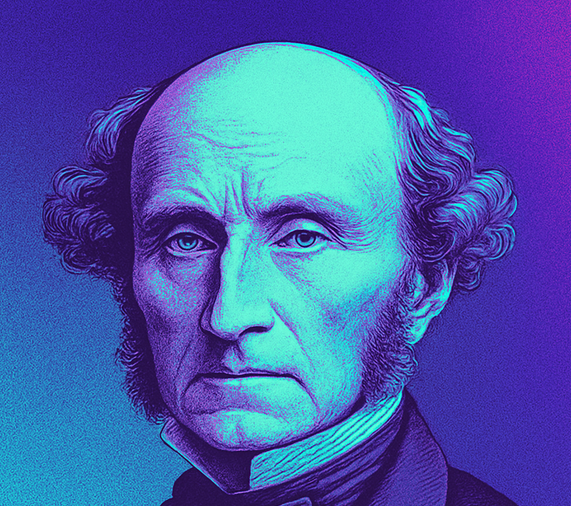
The great writers to whom the world owes what religious liberty it possesses, have mostly asserted freedom of conscience as an indefeasible right, and denied absolutely that a human being is accountable to others for his religious belief.
▼
Source
source
Ch. 1: Introductory
7 months 3 weeks ago
Let us suppose that a man believes in eternal life on Christ's word. In that case he believes without any fuss about being profound and searching and philosophical and racking his brains.
CivilSimian.com created by AxiomaticPanic, CivilSimian, Kalokagathia