

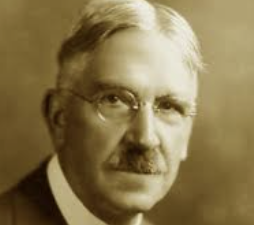
7 months 1 week ago
But the individual butterfly or earthquake remains just the unique existence which it is. We forget in explaining its occurrence that it is only the occurrence that is explained, not the thing itself.
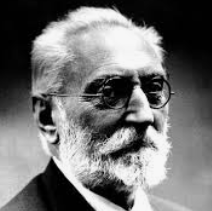
7 months 1 week ago
But our Don Quixote, the inward, the immortal Don Quixote, conscious of his own comicness, does not believe that his doctrines will triumph in this world, because they are not of it. And it is better that they should not triumph. And if the world wished to make Don Quixote king, he would retire alone to the mountain, fleeing from the king-making crowds, as Christ retired alone to the mountain when, after the miracle of the loaves and fishes, they sought to proclaim him king. He left the title of king for the inscription written over the cross.
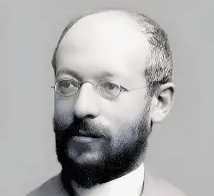
5 months 1 day ago
Every social occurrence as such, consists of an interaction between individuals. In other words, each individual is at the same time an active and a passive agent in a transaction. In case of superiority and inferiority, however, the relation assumes the appearance of a one-sided operation ; the one party appears to exert, while the other seems merely to receive an influence.
▼
Source
source
p. 169
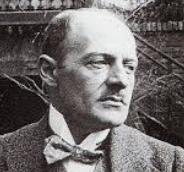
7 months 1 week ago
Antiquity believed that the forces of love in the universe were limited. Therefore they were to be used sparingly,and everyone was to be loved only according to his value.
▼
Source
source
L. Coser, trans. (1961), p. 94
7 months 1 week ago
In the life of the mass-order, the culture of the generality tends to conform to the demands of the average human being. Spirituality decays through being diffused among the masses when knowledge is impoverished in every possible way by rationalisation until it becomes accessible to the crude understanding of all.
7 months 1 week ago
I have read descriptions of Paradise that would make any sensible person stop wanting to go there.
▼
Source
source
No. 125. (Usbek writing to Rhedi)
8 months 3 weeks ago
I regard utility as the ultimate appeal on all ethical questions; but it must be utility in the largest sense, grounded on the permanent interests of man as a progressive being.
▼
Source
source
Ch. 1: Introductory
9 months ago
But by far the greatest obstacle to the progress of science and to the undertaking of new tasks and provinces therein is found in this - that men despair and think things impossible.
▼
Source
source
Aphorism 92
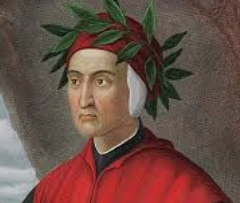
9 months 4 days ago
Love hath so long possessed me for his ownAnd made his lordship so familiar.
▼
Source
source
Chapter XXIV
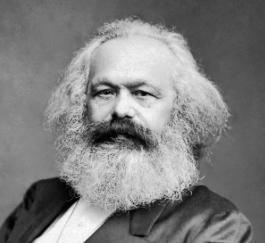
8 months 3 weeks ago
Democracy is the road to socialism.
▼
Source
source
Attributed to Marx in recent years, including in Communism (2007) by Tom Lansford, p. 48



8 months 1 week ago
Repentance for one's evil deeds is the safeguard of life.

8 months 2 weeks ago
There is little in common between the organised parading of madness in the eighteenth century and the freedom with which madness came to the fore during the Renaissance. The earlier age had found it everywhere, an integral element of each experience, both in images and in real life dangers. During the classical period, it was also on public view, but behind bars. When it manifested itself it was at a carefully controlled distance, under the watchful eye of a reason that denied all kinship with it, and felt quite unthreatened by any hint of resemblance. Madness had become a thing to be observed, no longer the monster within, but an animal moved by strange mechanisms, more beast than man, where all humanity had long since disappeared.
▼
Source
source
Part One: 5. The Insane
9 months 2 weeks ago
What, then, of human activities? Is humankind itself hastening its own end? Man has, for instance, been burning carbon-containing fuel — wood, coal, oil, gas — at a steadily accelerating rate. All these fuels form carbon dioxide. Some is absorbed by plants and the oceans but not as fast as it is produced. This means the carbon dioxide content of the air is going up — slightly but nevertheless up. Carbon dioxide retains heat, and even a small rise means a warming of the Earth's atmosphere. This may result in the melting of the polar ice caps with unusual speed, flooding the world before we have learned climate control. In reverse, our industrial civilization is making our atmosphere dustier so that it reflects more sunlight away and cools the Earth slightly — thus making possible a glacial advance in a few centuries, also before we have learned climate control.

5 months 2 weeks ago
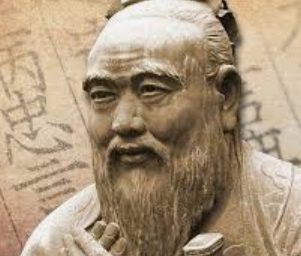
The gentleman knows that whatever is imperfect and unrefined does not deserve praise. ... He makes his eyes not want to see what is not right, makes his ears not want to hear what is not right, makes his mouth not want to speak what is not right, and makes his heart not want to deliberate over what is not right. ... For this reason, power and profit cannot sway him, the masses cannot shift him, and nothing in the world can shake him.
▼
Source
source
Readings in Classical Chinese Philosophy (2001), p. 260
8 months 3 weeks ago
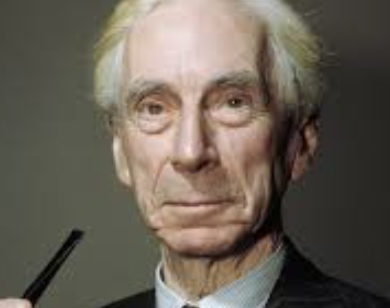
The world at present is obsessed by the conflict of rival ideologies, and one of the apparent causes of conflict is the desire for the victory of our own ideology and the defeat of the other. I do not think that the fundamental motive here has much to do with ideologies. I think the ideologies are merely a way of grouping people, and that the passions involved are merely those which always arise between rival groups. Ideologies, in fact, are one of the methods by which herds are created, and the psychology is much the same however the herd may have been generated.
9 months 1 week ago
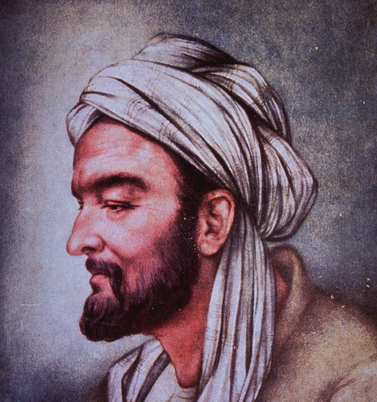
Religious law makes it illegal for the ignorant to drink wine, but intelligence makes it legal for the intellectual.
9 months 1 week ago
A man living without conflicts, as if he never lives at all.
8 months 3 weeks ago
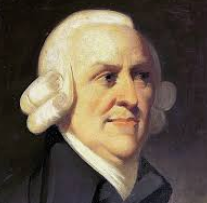
A very poor man may be said in some sense to have a demand for a coach and six; he might like to have it; but his demand is not an effectual demand, as the commodity can never be brought to market in order to satisfy it.
▼
Source
source
Chapter VII, p. 67.
9 months 2 weeks ago
I don't say it was deliberate fraud. He was probably madly sincere, and sincerely mad.

7 months 2 weeks ago
This is the pure form of servitude: to exist as an instrument.
▼
Source
source
p. 33
9 months 2 weeks ago
Radiation, unlike smoking, drinking, and overeating, gives no pleasure, so the possible victims object.
4 months 3 weeks ago
There is only one woman in the world. One woman, with many faces.
▼
Source
source
This occurs in the film The Last Temptation of Christ (1988), based upon the novel by Kazantzakis, but has not been located in the novel itself.
7 months 4 days ago
Power is not opposed to freedom. It is precisely freedom that distinguishes power from violence or coercion.
9 months 3 weeks ago
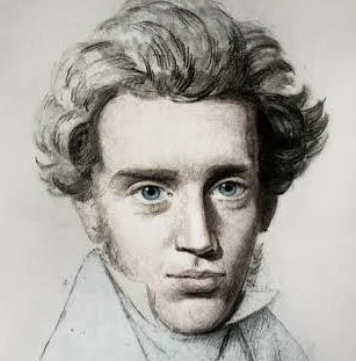
For as only one thing is necessary, and as the theme of the talk is the willing of only one thing: hence the consciousness before God of one's eternal responsibility to be an individual is that one thing necessary.
7 months 1 week ago
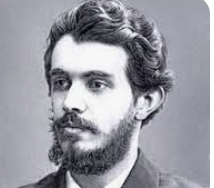
The greater part of Eastern teachers of the Church, from Clement of Alexandria to Maximus the Confessor, were supporters of Apokatastasis, of universal salvation and resurrection. And this is characteristic of (contemporary) Russian religious thought. Orthodox thought has never been suppressed by the idea of Divine justice and it never forgot the idea of Divine love. Chiefly - it did not define man from the point of view of Divine justice but from the idea of transfiguration and Deification of man and cosmos.
▼
Source
source
"The Truth of Orthodoxy" as translated in Vestnik of the Russian West European Patriarchal Exarchate

6 months 2 weeks ago
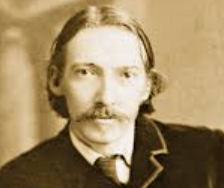
Nothing like a little judicious levity.
▼
Source
source
The Wrong Box, ch. 7 (1889).
6 months 2 weeks ago
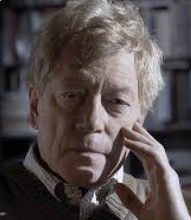
When truth cannot make itself known in words, it will make itself known in deeds.
▼
Source
source
Should he have spoken?, The New Criterion (September 2006), p. 22; also in The Roger Scruton Reader (2009) edited by Mark Dooley
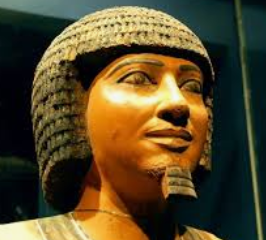
8 months 1 week ago
Follow your desire as long as you live and do not perform more than is ordered; do not lessen the time of following desire, for the wasting of time is an abomination to the spirit... When riches are gained, follow desire, for riches will not profit if one is sluggish.
▼
Source
source
Maxim no. 11.
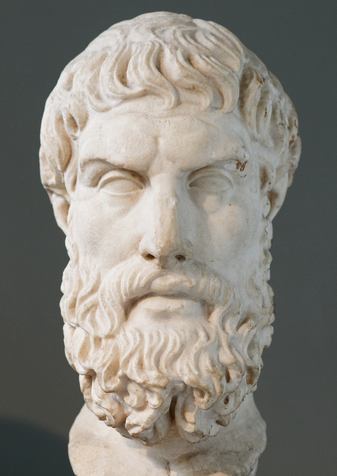
9 months 1 week ago
Since it is every man's interest to be happy through the whole of life, it is the wisdom of every one to employ philosophy in the search of felicity without delay; and there cannot be a greater folly, than to be always beginning to live.
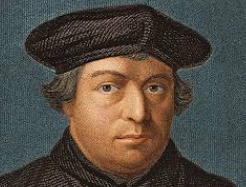
8 months 4 weeks ago
Now I say this to keep the conscience free from mischievous laws and fictitious sins, and not because I would defend images. Nor would I condemn those who have destroyed them, especially those who destroy divine and idolatrous images. But images for memorial and witness, such as crucifixes and images of saints, are to be tolerated.
▼
Source
source
p. 91

5 months 1 week ago
But greatly his most important culture he had gathered - and this, too, by his own endeavors - from the better part of the district, the religious men; to whom, as to the most excellent, his own nature gradually attached and attracted him. He was religious with the consent of his whole faculties. Without religion he would have been nothing.


8 months 3 days ago
A solitary man is a God, or a beast.
6 months 2 weeks ago
Reading Decline of the West I learned that in Spengler's view ours was a Faustian civilization and that we, the Jews, were Magians, the survivors and representatives of an earlier type, totally incapable of comprehending the Faustian spirit that had created the great civilization of the West. ... What Magians were to Faustians, Faustians might very well be to Americans.
▼
Source
source
Part I, p. 26
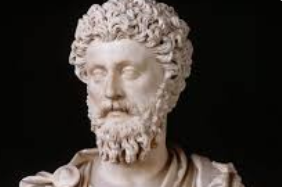
4 months 2 weeks ago
Human life. Duration: momentary. Nature: changeable. Perception: dim. Condition of Body: decaying. Soul: spinning around. Fortune: unpredictable. Lasting Fame: uncertain. Sum Up: The body and its parts are a river, the soul a dream and mist, life is warfare and a journey far from home, lasting reputation is oblivion.
▼
Source
source
(Hays translation) II, 17
8 months 3 weeks ago
In art the Chinese aim at being exquisite, and in life at being reasonable.
▼
Source
source
The Problem of China (1922), Ch. XI: Chinese and Western Civilization Contrasted
8 months 1 week ago
Without consciousness the mind-body problem would be much less interesting. With consciousness it seems hopeless.
▼
Source
source
p. 166.
5 months 1 week ago
Religion in most countries, more or less in every country, is no longer what it was, and should be,-a thousand-voiced psalm from the heart of Man to his invisible Father, the fountain of all Goodness, Beauty, Truth, and revealed in every revelation of these; but for the most part, a wise prudential feeling grounded on mere calculation; a matter, as all others now are, of Expediency and Utility; whereby some smaller quantum of earthly enjoyment may be exchanged for a far larger quantum of celestial enjoyment. Thus Religion too is Profit, a working for wages; not Reverence, but vulgar Hope or Fear.
6 months 3 weeks ago
The positivist philosophy of Comte and the I doctrine deduced from it that humanity is an organism, and Darwin's doctrine of a law of the struggle for existence that is supposed to govern life, with the differentiation of various breeds of people which follows from it, and the anthropology, biology, and sociology of which people are now so fond-all have the same aim. These have all become favourite sciences because they serve to justify the way in which people free themselves from the human obligation to labour, while consuming the fruits of other people's labour.
8 months 3 weeks ago
The past alone is truly real: the present is but a painful, struggling birth into the immutable being of what is no longer. Only the dead exist fully. The lives of the living are fragmentary, doubtful, and subject to change; but the lives of the dead are complete, free from the sway of Time, the all but omnipotent lord of the world. Their failures and successes, their hopes and fears, their joys and pains, have become eternal-our efforts cannot now abate one jot of them. Sorrows long buried in the grave, tragedies of which only a fading memory remains, loves immortalized by Death's hallowing touch these have a power, a magic, an untroubled calm, to which no present can attain. ...On the banks of the river of Time, the sad procession of human generations is marching slowly to the grave; in the quiet country of the Past, the march is ended, the tired wanderers rest, and the weeping is hushed.
▼
Source
source
On History, 1904

7 months 1 week ago
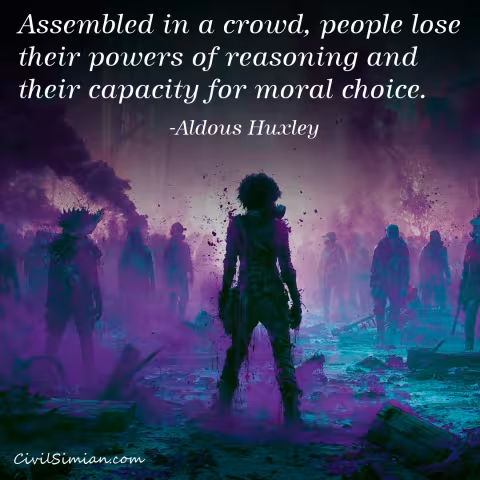
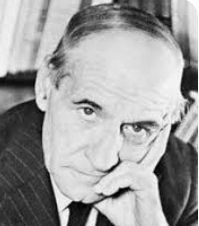
The demagogues, impresarios of alteracion, who have already caused the death of several civilizations, harass men so that they shall not reflect, see to it that they are kept herded together in crowds so that they cannot reconstruct their individuality in the one place where it can be reconstructed, which is in solitude.
▼
Source
source
p. 33
5 months 2 days ago
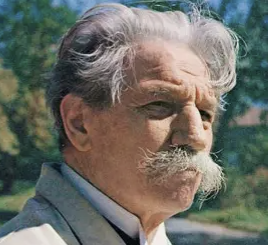
Resignation as to knowledge of the world is for me not an irretrievable plunge into a scepticism which leaves us to drift about in life like a derelict vessel. I see in it that effort of honesty which we must venture to make in order to arrive at the serviceable world-view which hovers within sight. Every world-view which fails to start from resignation in regard to knowledge is artificial and a mere fabrication, for it rests upon an inadmissible interpretation of the universe.
CivilSimian.com created by AxiomaticPanic, CivilSimian, Kalokagathia