🤷♂️☠️...these are the rumors Christians....



The problem is that rural America has been a colony, certainly throughout my lifetime. I don't think anybody's paid attention to rural America since about 1945 or '50. Certainly not since 1952, when Eisenhower's Secretary of Agriculture said to the farmers: "Get big or get out." They've just abandoned rural America to corporations and technologies.
The seeds of heavenly bodies are deposited and cared for in the Milky Way, from which they emanate in swarms of comets that travel a ;long time and ordinarily gravitate towards various suns before becoming fixed in orbit.

The light will not shame you, if it shows you your own ugliness, and that ugliness so offends you that you perceive the beauty of the light.
Did you ever hear my definition of marriage? It is, that it resembles a pair of shears, so joined that they can not be separated; often moving in opposite directions, yet always punishing anyone who comes between them.
The political is the most intense and extreme antagonism, and every concrete antagonism becomes that much more political the closer it approaches the most extreme point, that of the friend-enemy grouping.
You, your families, your friends and your countries are to be exterminated by the common decision of a few brutal but powerful men. To please these men, all the private affections, all the public hopes, all that has been achieved in art, and knowledge and thought and all that might be achieved hereafter is to be wiped out forever. Our ruined lifeless planet will continue for countless ages to circle aimlessly round the sun unredeemed by the joys and loves, the occasional wisdom and the power to create beauty which have given value to human life.
Yet when we speak of time... do we not unconsciously adopt this hypothesis... and put ourselves in the place of this imperfect god... Do not even the atheists put themselves in the place where god would be..?
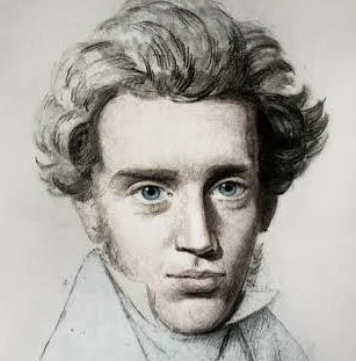
The person who is going to preach ought to live in the Christian thoughts and ideas: they ought to be his daily life. If so, this is the view of Christianity, then you, too, will have eloquence enough and precisely that which is needed when you speak extemporaneously without specific preparation. However, it is fallacious eloquence if someone, without otherwise occupying himself with, without living in these thoughts, once in a while sits down and laboriously collects such thoughts, perhaps in the field of literature, and then works them into a well-composed discourse, which is then committed to memory and delivered superbly, with respect both to voice and diction and gestures.
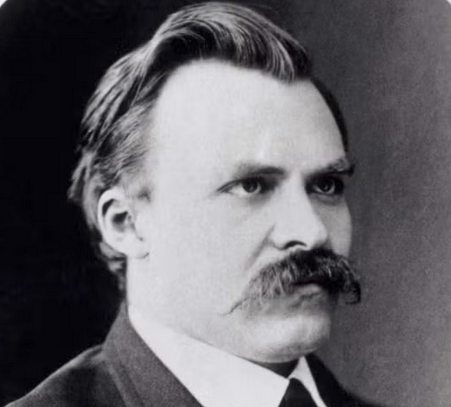
These principles it is necessary strictly to attend to, because they will serve much to explain the whole course both of government and real property, wherever the German nations obtained a settlement; the whole of their government depending for the most part upon two principles in our nature,-ambition, that makes one man desirous, at any hazard or expense, of taking the lead amongst others; and admiration, which makes others equally desirous of following him from the mere pleasure of admiration, and a sort of secondary ambition, one of the most universal passions among men. These two principles, strong both of them in our nature, create a voluntary inequality and dependence.
Mysticism is, in essence, little more than a certain intensity and depth of feeling in regard to what is believed about the universe.
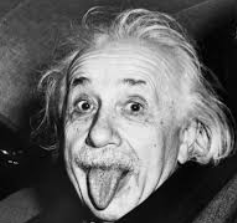
We are inclined to overemphasize the material influences in history. The Russians especially make this mistake. Intellectual values and ethnic influences, tradition and emotional factors are equally important. If this were not the case, Europe would today be a federated state, not a madhouse of nationalism.

Once again, I experienced that overwhelming joy in the universe that I had felt in London outside the V and A. But this time, my consciousness of the world seemed larger, more complex. It was the mystic's sensation of oneness, of everything blending into everything else. Everything I looked at reminded me of something else, which also became present to my consciousness, as if I were simultaneously seeing a million worlds and smelling a million scents and hearing a million sounds-- not mixed up, but each separate and clear. I was overwhelmed with a sense of my smallness in the face of this vast, beautiful, objective universe, this universe whose chief miracle is that it exists, as well as myself. It is no dream, but a great garden in which life is trying to obtain a foothold. I experienced a desire to burst into tears of gratitude; then I controlled it, and the feeling subsided into a calm sense of immense, infinite beauty.
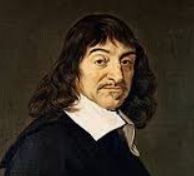
No doubt you know that Galileo had been convicted not long ago by the Inquisition, and that his opinion on the movement of the Earth had been condemned as heresy. Now I will tell you that all things I explain in my treatise, among which is also that same opinion about the movement of the Earth, all depend on one another, and are based upon certain evident truths. Nevertheless, I will not for the world stand up against the authority of the Church. ...I have the desire to live in peace and to continue on the road on which I have started.
Whilst shame keeps its watch, virtue is not wholly extinguished in the heart; nor will moderation be utterly exiled from the minds of tyrants.

It is easy to see that, even in the freedom of early youth, an American girl never quite loses control of herself; she enjoys all permitted pleasures without losing her head about any of them, and her reason never lets the reins go, though it may often seem to let them flap.
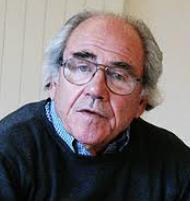
There is no aphrodisiac like innocence.
Every person is an end in themselves. That's universal. To respect that leads to flourishing. Not respecting it in extremes leads to unnecessary death.

In a head-on clash between violence and power, the outcome is hardly in doubt. Nowhere is the self-defeating factor in the victory of violence over power more evident than in the use of terror to maintain domination, about whose weird successes and eventual failures we know perhaps more than any generation before us. Violence can destroy power; it is utterly incapable of creating it.
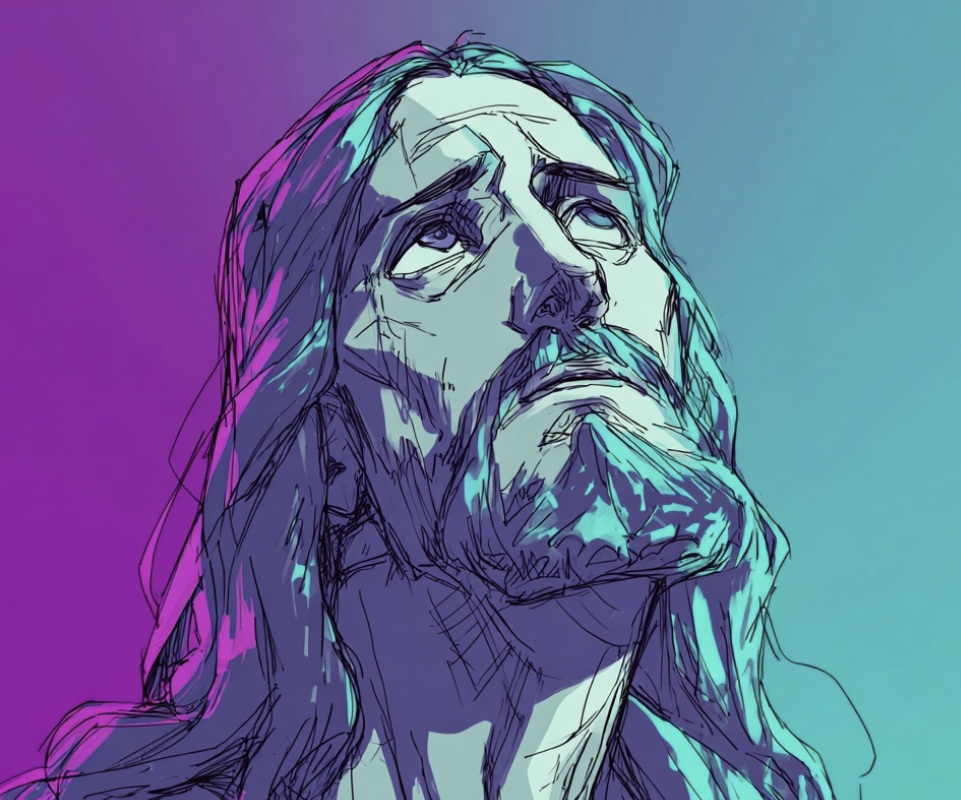
I came to set fire to the earth, and I wish it were already on fire!
No sane person should believe that something is 'subjective' merely because it cannot be settled beyond controversy.
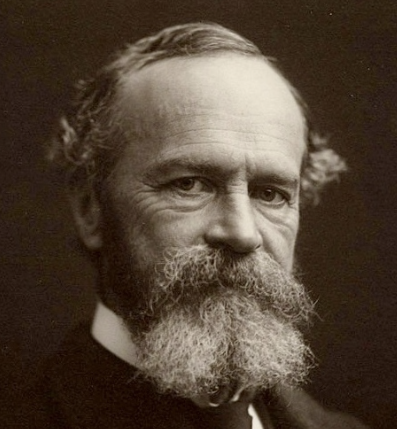
Take the happiest man, the one most envied by the world, and in nine cases out of ten his inmost consciousness is one of failure. Either his ideals in the line of his achievements are pitched far higher than the achievements themselves, or else he has secret ideals of which the world knows nothing, and in regard to which he inwardly knows himself to be found wanting.
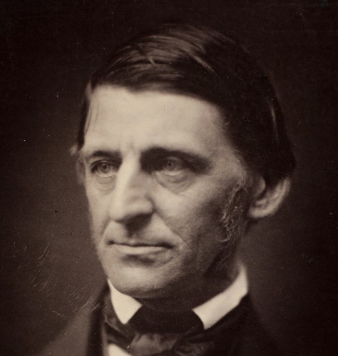
Nothing is rich but the inexhaustible wealth of Nature. She shows us only surfaces, but she is million fathoms deep.

Mediocrity in poets has never been tolerated by either men, or gods, or booksellers.
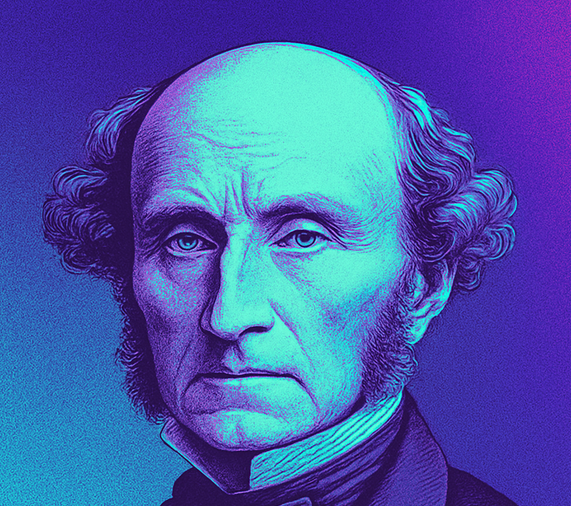
I remember the very place in Hyde Park where, in my fourteenth year, on the eve of leaving my father's house for a long absence, he told me that I should find, as I got acquainted with new people, that I had been taught many things which youths of my age did not commonly know; and that many persons would be disposed to talk to me of this, and to compliment me upon it. What other things he said on this topic I remember very imperfectly; but he wound up by saying, that whatever I knew more than others, could not be ascribed to any merit in me, but to the very unusual advantage which had fallen to my lot.

All the concessions we make to Eros are holes in our desire for the absolute.
In writing a history of madness, Foucault has attempted-and this is the greatest merit, but also the very infeasibility of his book-to write a history of madness itself. Itself.
We might liken the 'two selves' to Laurel and Hardy. Ollie is the objective mind, 'you'. Stan is the subjective mind, the 'hidden you'. But Stan happens to be in control of your energy supply. So if you wake up feeling low and discouraged, you (Ollie) tend to transmit your depression to Stan, who fails to send you energy, which makes you feel lower than ever. This vicious circle is the real cause of most mental illness.
Sentimentality, like pornography, is fragmented emotion; a natural consequence of a high visual gradient in any culture.
Philosophy can bake no bread; but she can procure for us God, Freedom, Immortality. Which, then, is more practical, Philosophy or Economy?
If a young girl is being forced into a brothel she will not talk about her rights. In such a situation the word would sound ludicrously inadequate.

Burke said with a depth that it is impossible to admire enough that art is man's nature: yes, undoubtedly, man with all his affections, all his knowledge, all his arts, is truly the man of nature, and the weaver's web is as natural as the spider's.
We have to construct the figure of a new David, the multitude as champion of asymmetrical combat, immaterial workers who became a new kind of combatants, cosmopolitan bricoleurs of resistance and cooperation.
The terrifying experience and obsession of death, when preserved in consciousness, becomes ruinous. If you talk about death, you save part of yourself. But at the same time, something of your real self dies, because objectified meanings lose the actuality they have in consciousness.
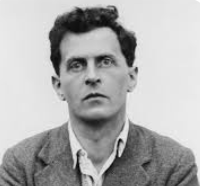
What I hold fast to is not one proposition but a nest of propositions.
And every man, in love or pride, Of his fate is ever wide.
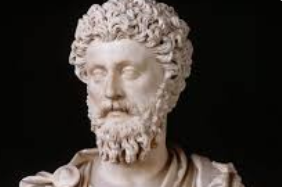
No longer let thy breathing only act in concert with the air which surrounds thee, but let thy intelligence also now be in harmony with the intelligence which embraces all things. For the intelligent power is no less diffused in all parts and pervades all things for him who is willing to draw it to him than the aërial power for him who is able to respire it.
A modern factory reaches perhaps almost the limit of horror. Everybody in it is constantly harassed and kept on edge by the interference of extraneous wills while the soul is left in cold and desolate misery. What man needs is silence and warmth; what he is given is an icy pandemonium.Physical labour may be painful, but it is not degrading as such. It is not art; it is not science; it is something else, possessing an exactly equal value with art and science, for it provides an equal opportunity to reach the impersonal stage of attention.
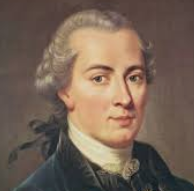
All our knowledge falls with the bounds of experience.

The King that followeth Truth, and ruleth according to Justice, shall reign quietly: but he that doth the contrary, seeketh another to reign for him.
Does anyone bathe in a mighty little time? Don't say that he does it ill, but in a mighty little time. Does anyone drink a great quantity of wine? Don't say that he does ill, but that he drinks a great quantity. For, unless you perfectly understand the principle from which anyone acts, how should you know if he acts ill? Thus you will not run the hazard of assenting to any appearances but such as you fully comprehend.
I cannot contribute anything to this world because I only have one method: agony.

Violated, dishonored, wading in blood, dripping filth - there stands bourgeois society. This is it [in reality]. Not all spic and span and moral, with pretense to culture, philosophy, ethics, order, peace, and the rule of law - but the ravening beast, the witches' sabbath of anarchy, a plague to culture and humanity. Thus it reveals itself in its true, its naked form.
Wilt thou seal up the avenues of ill? Pay every debt as if God wrote the bill.
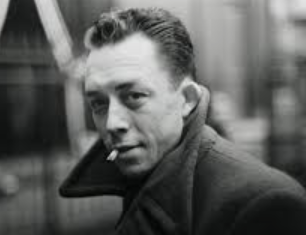
When the imagination sleeps, words are emptied of their meaning: a deaf population absent-mindedly registers the condemnation of a man. ... there is no other solution but to speak out and show the obscenity hidden under the verbal cloak.
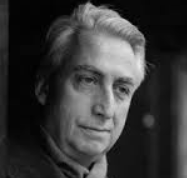
Statistically, myth is on the right. There, it is essential, well-fed, sleek, expensive, garrulous, it invents itself ceaselessly. It takes hold of everything, all aspects of the law, of morality, of aesthetics, of diplomacy, of household equipment, of Literature, of entertainment.
CivilSimian.com created by AxiomaticPanic, CivilSimian, Kalokagathia