It sounds so cool the way he says it....but no matter how magical it sounds, it's utter insanity....


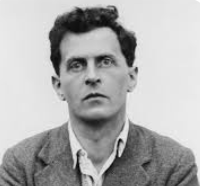
But more correctly: The fact that I use the word "hand" and all the other words in my sentence without a second thought, indeed that I should stand before the abyss if I wanted so much as to try doubting their meanings - shows that absence of doubt belongs to the essence of the language-game, that the question "How do I know..." drags out the language-game, or else does away with it.
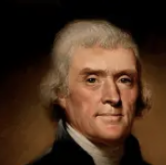
With all these blessings, what more is necessary to make us a happy and prosperous people? Still one thing more, fellow-citizens,-A wise and frugal Government, which shall restrain men from injuring one another, shall leave them otherwise free to regulate their own pursuits of industry and improvement, and shall not take from the mouth of labor the bread it has earned. This is the sum of good government, and this is necessary to close the circle of our felicities.

The main problem for the average reader -- particularly of The Great Beast -- is that Crowley seems such an intolerable show-off that it is hard to believe anything he says.
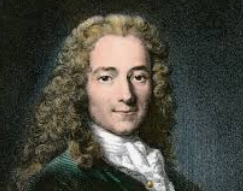
God gave us the gift of life; it is up to us to give ourselves the gift of living well.

I seem to myself, among civilised men, an intruder, a troglodyte enamored of decrepitude, plunged into subversive prayers.
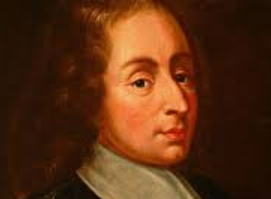
A doubtful balance is made between truth and pleasure, and... the knowledge of one and the feeling of the other stir up a combat the success of which is very uncertain, since, in order to judge of it, it would be necessary to know all that passes in the innermost spirit of the man, of which man himself is scarcely ever conscious.
Nature gets credit which should in truth be reserved for ourselves: the rose for its scent: the nightingale for his song: and the sun for his radiance. The poets are entirely mistaken. They should address their lyrics to themselves, and should turn them into odes of self-congratulation on the excellency of the human mind.
The dominion of bad men is hurtful chiefly to themselves who rule, for they destroy their own souls by greater license in wickedness; while those who are put under them in service are not hurt except by their own iniquity. For to the just all the evils imposed on them by unjust rulers are not the punishment of crime, but the test of virtue. Therefore the good man, although he is a slave, is free; but the bad man, even if he reigns, is a slave, and that not of one man, but, what is far more grievous, of as many masters as he has vices; of which vices when the divine Scripture treats, it says, For of whom any man is overcome, to the same he is also the bond-slave.

A person who is shallow aspires to depth; one who is ugly aspires to beauty; one who is narrow aspires to breadth; one who is poor aspires to wealth; one who is humble aspires to esteem. Whatever one lacks in oneself he must seek outside.

We think it also necessary to express our astonishment that a government, desirous of being called free, should prefer connection with the most despotic and arbitrary powers in Europe.
Existential envy which is directed against the other person's very nature, is the strongest source of ressentiment. It is as if it whispers continually: "I can forgive everything, but not that you are- that you are what you are-that I am not what you are-indeed that I am not you." This form of envy strips the opponent of his very existence, for this existence as such is felt to be a "pressure," a "reproach," and an unbearable humiliation. In the lives of great men there are always critical periods of instability, in which they alternately envy and try to love those whose merits they cannot but esteem. Only gradually, one of these attitudes will predominate. Here lies the meaning of Goethe's reflection that "against another's great merits, there is no remedy but love."

He came in sight of a pass guarded by armed men. 'you cannot pass ... Do you not know that all this country belongs to the Spirit of the Age? ... Here Enlightenment, take this fugitive to our Master.'
We are organization watchers in our role as citizens. Increasing attention has been fixed in recent years upon the functioning of society's organizations: its large corporations and its governments. Hence this could also be described as a book for Everyman-for it proposes a way of thinking about organizational issues that concern us all.
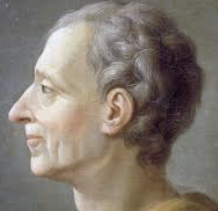
I write to thee on this subject, friend, because I am angry at a book which I have just left, which is so large, that it seems to contain universal science, but it hath almost split my head, without teaching me anything.
Only optimists commit suicide, the optimists who can no longer be . . . optimists. The others, having no reason to live, why should they have any to die?
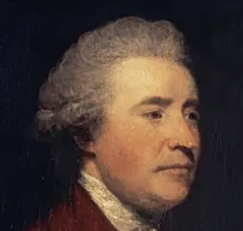
Our patience will achieve more than our force.
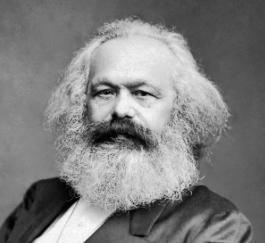
The worker's existence is thus brought under the same condition as the existence of every other commodity. The worker has become a commodity, and it is a bit of luck for him if he can find a buyer, And the demand on which the life of the worker depends, depends on the whim of the rich and the capitalists.
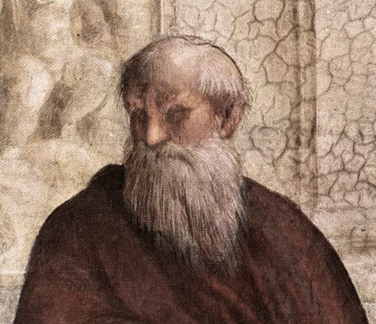
Withdraw into yourself and look. And if you do not find yourself beautiful yet, act as does the creator of a statue that is to be made beautiful: he cuts away here, he smoothes there, he makes this line lighter, this other purer. ... Cut away all that is excessive, straighten all that is crooked, bring light to all that is overcast, labor to make all one glow or beauty and never cease chiseling your statue, until there shall shine out on you from it the godlike splendor of virtue.
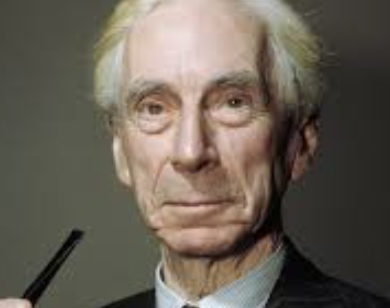
Every great study is not only an end in itself, but also a means of creating and sustaining a lofty habit of mind.
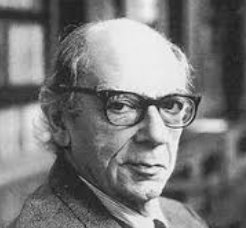
Those who have ever valued liberty for its own sake believed that to be free to choose, and not to be chosen for, is an inalienable ingredient in what makes human beings human.
No sacrifice is lost for a great ideal!
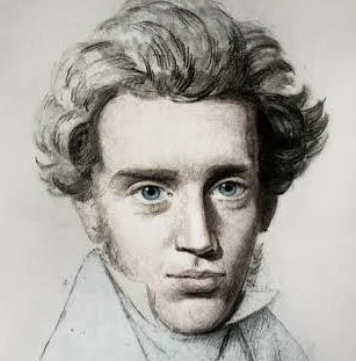
You wanted God's ideas about what was best for you to coincide with your ideas, but you also wanted him to be the almighty Creator of heaven and earth so that he could properly fulfill your wish. And yet, if he were to share your ideas, he would cease to be the almighty Father.

The English are a dumb people. They can do great acts, but not describe them.
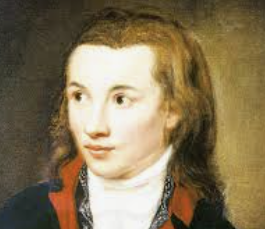
Most observers of the French Revolution, especially the clever and noble ones, have explained it as a life-threatening and contagious illness. They have remained standing with the symptoms and have interpreted these in manifold and contrary ways. Some have regarded it as a merely local ill. The most ingenious opponents have pressed for castration. They well noticed that this alleged illness is nothing other than the crisis of beginning puberty.
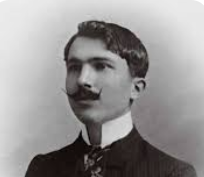
We must understand well that we do not proceed from a unity of God to the same unity of God again. We do not proceed from one chaos to another chaos, neither from one light to another light, nor from one darkness to another darkness. What would be the value of our life then? What would be the value of all life? But we set out from an almighty chaos, from a thick abyss of light and darkness tangled. And we struggle - plants, animals, men, ideas - in this momentary passage of individual life, to put in order the Chaos within us, to cleanse the abyss, to work upon as much darkness as we can within our bodies and to transmute it into light.
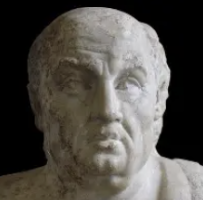
Pain he endures, death he awaits.
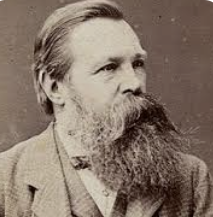
The general co-operation of all members of society for the purpose of planned exploitation of the forces of production, the expansion of production to the point where it will satisfy the needs of all, the abolition of a situation in which the needs of some are satisfied at the expense of the needs of others, the complete liquidation of classes and their conflicts, the rounded development of the capacities of all members of society through the elimination of the present division of labor, through industrial education, through engaging in varying activities, through the participation by all in the enjoyments produced by all, through the combination of city and country - these are the main consequences of the abolition of private property.
To resign oneself or to blow out one's brains, that is the choice one faces at certain moments. In any case, the only real dignity is that of exclusion.
Besides, he who is feared, fears also; no one has been able to arouse terror and live in peace of mind.
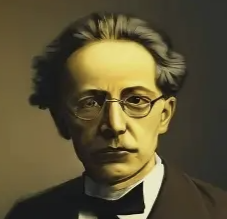
If man puts his honor first in relying upon himself, knowing himself and applying himself, this in self-reliance, self-assertion, and freedom, he then strives to rid himself of the ignorance which makes a strange impenetrable object a barrier and a hindrance to his self-knowledge.
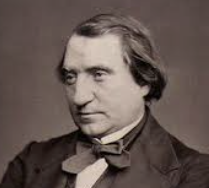
Jesus, in some respects, was an anarchist, for he had no idea of civil government. That government seems to him purely and simply an abuse.
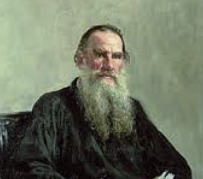
After Plotinus, says Schassler, fifteen centuries passed without the slightest scientific interest for the world of beauty and art. ...In reality, nothing of the kind happened. The science of aesthetics ... neither did nor could vanish, because it never existed. ... the Greeks were so little developed that goodness and beauty seemed to coincide. On that obsolete Greek view of life the science of aesthetics was invented by men of the eighteenth century, and especially shaped and mounted in Baumgarten's theory. The Greeks (as anyone may read in Bénard's book on Aristotle and Walter's work on Plato) never had a science of aesthetics.

Can anybody remember when the times were not hard and money not scarce?
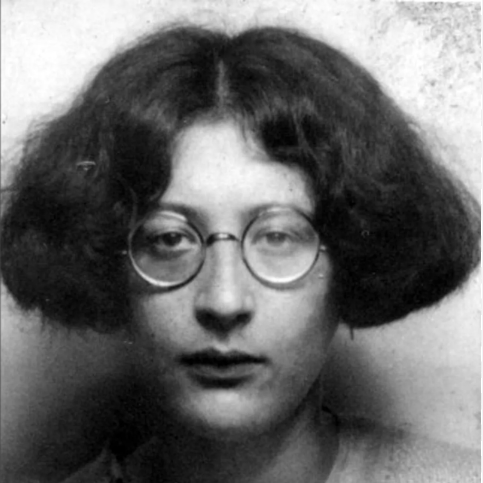
There are necessities and impossibilities in reality which do not obtain in fiction, any more than the law of gravity to which we are subject controls what is represented in a picture. ... It is the same with pure good; for a necessity as strong as gravity condemns man to evil and forbids him any good, or only within the narrowest limits and laboriously obtained and soiled and adulterated with evil. ... The simplicity which makes the fictional good something insipid and unable to hold the attention becomes, in the real good, an unfathomable marvel.
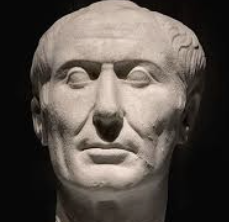
Practice is the best of all instructors.
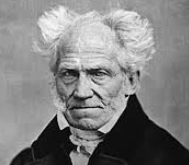
A book can never be anything more than the impression of its author's thoughts [Ein Buch kann nie mehr seyn, als der Abdruck der Gedanken des Verfassers]. The value of these thoughts lies either in the matter about which he has thought, or in the form in which he develops his matter - that is to say, what he has thought about it.
The gentleman knows that whatever is imperfect and unrefined does not deserve praise. ... He makes his eyes not want to see what is not right, makes his ears not want to hear what is not right, makes his mouth not want to speak what is not right, and makes his heart not want to deliberate over what is not right. ... For this reason, power and profit cannot sway him, the masses cannot shift him, and nothing in the world can shake him.
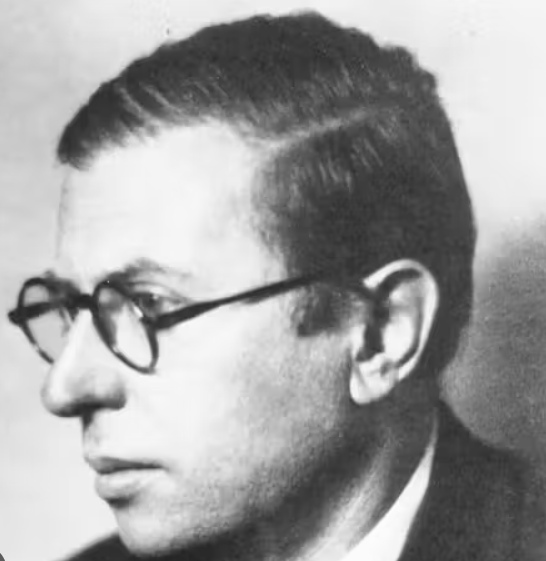
But since he has decided to have the impossibility of living, every misfortune is an opportunity which lays this importance of living before his eyes and obliges him to decide, once again, to die.
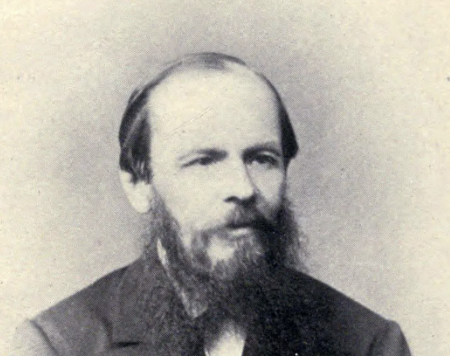
In dreams you sometimes fall from a height, or are stabbed, or beaten, but you never feel pain unless, perhaps, you really bruise yourself against the bedstead, then you feel pain and almost always wake up from it. It was the same in my dream. I did not feel any pain, but it seemed as though with my shot everything within me was shaken and everything was suddenly dimmed, and it grew horribly black around me. I seemed to be blinded, and it benumbed, and I was lying on something hard, stretched on my back; I saw nothing, and could not make the slightest movement.
Whoso belongs only to his own age, and reverences only its gilt Popinjays or smoot-smeared Mumbojumbos, must needs die with it.
How can I, who was not able to retain my own past, hope to save that of another?
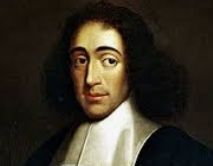
The perfection of a thing does not annul its existence, but, on the contrary, asserts it. Imperfection, on the other hand, does annul it ; therefore we cannot be more certain of the existence of anything, than of the existence of a being absolutely infinite or perfect-that is, of God. For inasmuch as his essence excludes all imperfection, and involves absolute perfection, all cause for doubt concerning his existence is done away, and the utmost certainty on the question is given. This, I think, will be evident to every moderately attentive reader.
Anarchism is the only philosophy which brings to man the consciousness of himself; which maintains that God, the State, and society are non-existent, that their promises are null and void, since they can be fulfilled only through man's subordination.
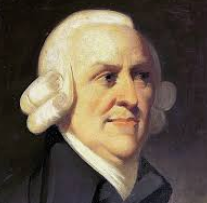
Nothing but the most exemplary morals can give dignity to a man of small fortune.
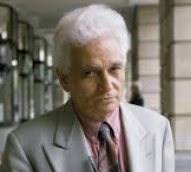
At the end of Being and Nothingness, ... Being in-itself and Being for-itself were of Being; and this totality of beings, in which they were effected, itself was linked up to itself, relating and appearing to itself, by means of the essential project of human-reality. What was named in this way, in an allegedly neutral and undetermined way, was nothing other than the metaphysical unity of man and God, the relation of man to God, the project of becoming God as the project constituting human-reality. Atheism changes nothing in this fundamental structure.
CivilSimian.com created by AxiomaticPanic, CivilSimian, Kalokagathia