

6 months 3 days ago
Men are not allowed to think freely about chemistry and biology: why should they be allowed to think freely about political philosophy?
▼
Source
source
As quoted in A Dictionary of Scientific Quotations (1991) by Alan Lindsay Mackay

3 months 1 week ago
Bacon, Locke, Descartes, Hume, and all the others knew they were giving rights to vulgarity. But in so doing-in addition to caring for man's well-being-they were providing rights for themselves.
▼
Source
source
"Commerce and Culture," p. 289.
5 months 2 weeks ago
Nonbeing must in some sense be, otherwise what is it that there is not? This tangled doctrine might be nicknamed Plato's beard; historically it has proved tough, frequently dulling the edge of Occam's razor.
▼
Source
source
"On What There Is"

7 months 1 week ago
A thing therefore never returns to nothing.
▼
Source
source
Book I, line 248 (tr. Munro)
5 months 3 weeks ago
Thus far, gentlemen, I have been insisting very strenuously upon what the most vulgar common sense has every disposition to assent to and only ingenious philosophers have been able to deceive themselves about. But now I come to a category which only a more refined form of common sense is prepared willingly to allow, the category which of the three is the chief burden of Hegel's song, a category toward which the studies of the new logico-mathematicians, Georg Cantor and the like, are steadily pointing, but to which no modern writer of any stripe, unless it be some obscure student like myself, has ever done anything approaching to justice.
▼
Source
source
Lecture II : The Universal Categories, §3. Laws: Nominalism, CP 5.59

2 months 3 weeks ago
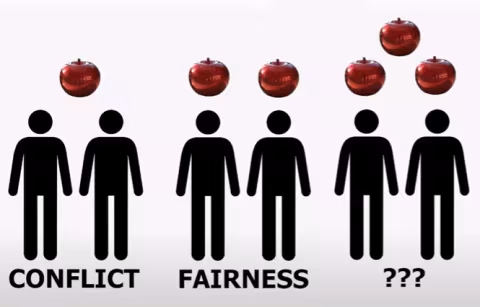
It seems like those without money are forced to be focused on money. There's no option. But something else is going on. Those who are treated unfairly are forced to focus on ethics, while those who are well off and view life as fair from their perspective SEEM like they are less ethical...all the way up to just straight evil. Ultimately this is a generalization, but, I still think there's something to it.
2 months 3 weeks ago
What need is there of suspicious fear, since it is in thy power to inquire what ought to be done? And if thy seest clear, go by this way content, without turning back: but if thy dost not see clear, stop and take the best advisers. But if any other things oppose thee, go on according to thy powers with due consideration, keeping to that which appears to be just. For it is best to reach this object, and if thou dost fail, let thy failure be in attempting this. He who follows reason in all things is both tranquil and active at the same time, and also cheerful and collected.
▼
Source
source
X, 12
5 months 4 weeks ago
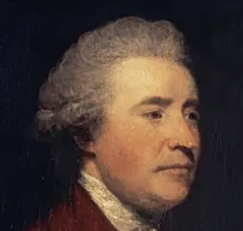
The writers against religion, whilst they oppose every system, are wisely careful never to set up any of their own.
▼
Source
source
Preface
6 months 4 weeks ago
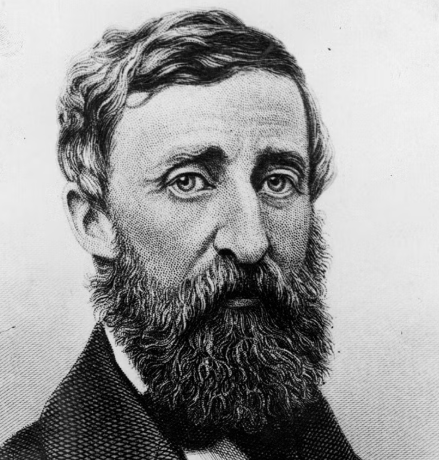
Every poet has trembled on the verge of science.
▼
Source
source
July 18, 1852
7 months 3 weeks ago
An observer studying the Solar system dispassionately, and finding himself capable of bringing the four giant planets to his notice, could reasonably say that the Solar system consisted of one star, four planets, and some traces of debris.
6 months 4 weeks ago
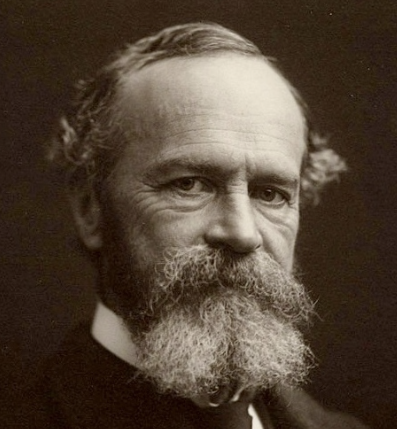
The impulse to take life strivingly is indestructible in the race.
▼
Source
source
Ch. 21

5 months 3 weeks ago
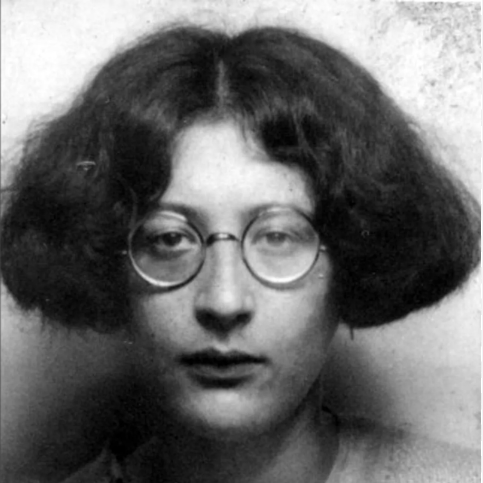
To suffer is to produce knowledge.

5 months 2 weeks ago
Paradoxical as it may seem, a Latin prose or a geometry problem, even though they are done wrong, may be of a great service one day, provided we devote the right kind of effort to them. Should the occasion arise, they can one day make us better able to give someone in affliction exactly the help required to save him, at the supreme moment of his need.
4 months 2 weeks ago
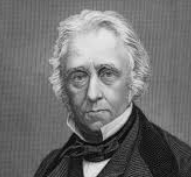
Those who compare the age in which their lot has fallen with a golden age which exists only in imagination, may talk of degeneracy and decay; but no man who is correctly informed as to the past, will be disposed to take a morose or desponding view of the present.
▼
Source
source
Vol. I, ch. 1
7 months 2 days ago
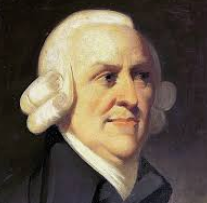
Oatmeal indeed supplies the common people of Scotland with the greatest and best part of their food, which is in general much inferior to that of their neighbours of the same rank in England.
▼
Source
source
Chapter VIII, p. 91 (Oatmeal in England makes for great horses, in Scotland Great Men).
7 months 6 days ago
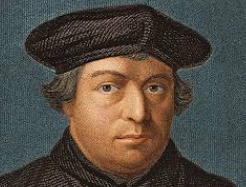
The Mass is the greatest blasphemy of God, and the highest idolatry upon earth, an abomination the like of which has never been in Christendom since the time of the Apostles.
▼
Source
source
171
5 months 3 weeks ago
To try curing someone of a "vice," of what is the deepest thing he has, is to attack his very being, and this is indeed how he himself understands it, since he will never forgive you for wanting him to destroy himself in your way and not his.
3 months 1 week ago
World-view is a product of life-view, not vice versa.
6 months 4 weeks ago
The people who are regarded as moral luminaries are those who forego ordinary pleasures themselves and find compensation in interfering with the pleasures of others.
▼
Source
source
Ch. 8: Eastern and Western Ideals of Happiness
5 months 3 weeks ago
I love talking to simple people, with common folk, if you like, and I still do it and still chat now as before with anyone, regardless of intellectual level. On the contrary, I like uneducated people much better and that is obviously my Rumanian heritage.
6 months 4 weeks ago
We are not so absurd as to propose that the teacher should not set forth his own opinions as the true ones and exert his utmost powers to exhibit their truth in the strongest light. To abstain from this would be to nourish the worst intellectual habit of all, that of not finding, and not looking for, certainty in any teacher. But the teacher himself should not be held to any creed; nor should the question be whether his own opinions are the true ones, but whether he is well instructed in those of other people, and, in enforcing his own, states the arguments for all conflicting opinions fairly.
▼
Source
source
"Civilization," London and Westminster Review, April 1836

2 months 4 weeks ago
Individualism is going around these days in uniform, handing out the party line on individualism.
▼
Source
source
Think Little
3 months 3 weeks ago
Those who have taken the planets to be inanimate bodies without function, limited to traveling geometric paths, resemble idiots who would believe that the brain is inanimate because it has no visible function, or that the stomach is idle because it does no visible work as do our limbs. Civilizees have always been reproached for believing nature to be limited to known effects. If the planets were not animate creatures endowed with functions, God would then appear to be an advocate of laziness. He would have created universes furnished with large inert bodies spending eternity in purposeless meandering as do the idlers in our society.
▼
Source
source
L'attraction passioneé
7 months 4 weeks ago
If someone were to expound that godliness is to belong to childhood in the temporal sense and thus dwindle and die with the years as childhood does, is to be a happy frame of mind that cannot be preserved but only recollected; if someone were to expound that repentance as a weakness of old age accompanies the decline of one's powers, when the senses are dulled, when sleep no longer strengthens but increases lethargy-this would be ungodliness and foolishness.

5 months 1 week ago
I never lose an opportunity of urging a practical beginning, however small, for it is wonderful how often in such matters the mustard-seed germinates and roots itself.
▼
Source
source
Letter to a friend, quoted in The Life of Florence Nightingale Vol. II (1914) by Edward Tyas Cook, p. 406
7 months 3 weeks ago
Often, writers on historical events tend to consider ... a loss of willingness to fight as a sign of "decadence," as though there were something despicable about not being a bully and not being willing to engage in mass murder. Perhaps we ought to feel instead that to cease to be warlike means to begin to be civilized and decent.
6 months 4 weeks ago
All the thoughts of a turtle are turtle.
▼
Source
source
1855
6 months 4 weeks ago
Truth happens to an idea. It becomes true, is made true by events. Its verity is in fact an event, a process: the process namely of its verifying itself, its veri-fication. Its validity is the process of its valid-ation.
▼
Source
source
Lecture VI, Pragmatism's Conception of Truth

5 months 1 week ago
During his lifetime Gurdjieff did not publish any books on the techniques of his teaching, and his pupils were bound to secrecy on the subject. Since his death in Paris in 1949, however, many of his works have been published, and there has been a flood of memoirs by disciples and admirers. Gurdjieff was in almost ever respect the antithesis of Aleister Crowley. Whereas Crowley craved publicity, Gurdjieff shunned it. Crowley was forgotten for two decades after his death; Gurdjieff on the contrary, has become steadily better known, and his influence continues to grow. One of the main reasons for this is that there was so little of the charlatan about him. He is no cult figure with hordes of gullible disciples. What he has to teach makes an appeal to the intelligence, and can be fully understood only by those who are prepared to make a serious effort.

7 months 2 days ago
This endeavour to do a thing or leave it undone, solely in order to please men, we call ambition, especially when we so eagerly endeavour to please the vulgar, that we do or omit certain things to our own or another's hurt : in other cases it is generally called kindliness.
▼
Source
source
Part III, Prop. XXIX

4 months 5 days ago
If there is anything unique about the human animal it is that it has the ability to grow knowledge at an accelerating rate while being chronically incapable of learning from experience. Science and technology are cumulative, whereas ethics and politics deal with recurring dilemmas. Whatever they are called, torture and slavery are universal evils; but these evils cannot be consigned to the past like redundant theories in science. They return under different names: torture as enhanced interrogation techniques, slavery as human trafficking. Any reduction in universal evils is an advance in civilization. But, unlike scientific knowledge, the restraints of civilized life cannot be stored on a computer disc. They are habits of behaviour, which once broken are hard to mend. Civilization is natural for humans, but so is barbarism.
▼
Source
source
An Old Chaos: Humanism and Flying Saucers (p. 75)

7 months 1 week ago
The principles of pleasure are not firm and stable. They are different in all mankind, and variable in every particular with such a diversity that there is no man more different from another than from himself at different times.
4 months 4 weeks ago
The revolutionaries say: "The government organization is bad in this and that respect; it must be destroyed and replaced by this and that." But a Christian says: "I know nothing about the governmental organization, or in how far it is good or bad, and for the same reason I do not want to support it."
▼
Source
source
Chapter IX, The Acceptance of the Christian Conception of Life will Emancipate Men from the Miseries of our Pagan Life
6 months 4 weeks ago
I have seen manners that make a similar impression with personal beauty, that give the like exhilaration and refine us like that; and in memorable experiences they are suddenly better than beauty, and make that superfluous and ugly. But they must be marked by fine perception, the acquaintance with real beauty. They must always show control; you shall not be facile, apologetic, or leaky, but king over your word; and every gesture and action shall indicate power at rest. They must be inspired by the good heart. There is no beautifier of complexion, or form, or behavior, like the wish to scatter joy, and not pain, around us.
▼
Source
source
p. 167
6 months 4 weeks ago
If I could put my hand on the north star, would it be as beautiful? The sea is lovely, but when we bathe in it, the beauty forsakes all the near water. For the imagination and senses cannot be gratified at the same time.
▼
Source
source
Beauty
4 months 2 weeks ago
I neither deny nor affirm the immortality of man. I see no reason for believing in it, but, on the other hand, I have no means of disproving it.

6 months 3 weeks ago
A strict allegory is like a puzzle with a solution: a great romance is like a flower whose smell reminds you of something you can't quite place. I think the something is 'the whole quality of life as we actually experience it.'
▼
Source
source
C. S. Lewis' Letters to Children - letter to Lucy, 9/11/1958
7 months 1 week ago
So far as it goes, a small thing may give an analogy of great things, and show the tracks of knowledge.
▼
Source
source
Book II, lines 123-124 (tr. Rouse)
7 months 1 week ago
My Lord St. Albans said that Nature did never put her precious jewels into a garret four stories high, and therefore that exceeding tall men had ever very empty heads.
▼
Source
source
No. 17
6 months 3 weeks ago
The human body is the best picture of the human soul.
▼
Source
source
Pt II, p. 178

5 months 3 weeks ago
Wherefore think ye evil in your hearts? For whether is easier, to say, Thy sins be forgiven thee; or to say, Arise, and walk? But that ye may know that the Son of man hath power on earth to forgive sins, (then saith he to the sick of the palsy,) Arise, take up thy bed, and go unto thine house.
▼
Source
source
9:4-6 (KJV) Said to some scribes.
3 months 1 week ago
Thus proletarian violence has become an essential factor in Marxism. Let us add once more that, if properly conducted, it will have the result of suppressing parliamentary socialism, which will no longer be able to pose as the leader of the working classes and as the guardian of order.
▼
Source
source
p. 79
4 months 3 weeks ago
There is but one art, to omit.
▼
Source
source
As cited in The Harper Book of Quotations, Revised Edition (1993), Ed. R. Fitzhenry, HarperCollins, p. 498 : ISBN 0062732137, 9780062732132
5 months 2 weeks ago
I have never said that human society ought to be aristocratic, but a great deal more than that. What I have said, and still believe with ever-increasing conviction, is that human society is always, whether it will or no, aristocratic by its very essence, to the extreme that it is a society in the measure that it is aristocratic, and ceases to be such when it ceases to be aristocratic. Of course I am speaking now of society and not of the State.
▼
Source
source
Chap.II: The Rise Of The Historic Level
3 months 1 week ago
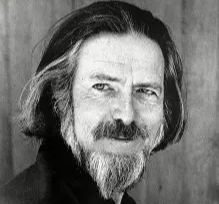
I have suggested that behind almost all myth lies the mono-plot of the game of hide-and-seek.
▼
Source
source
The Two Hands of God : The Myths of Polarity (1963), p. 29
5 months 1 week ago
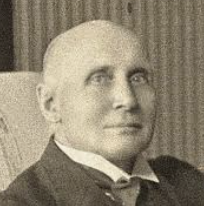
The term many presupposes the term one, and the term one presupposes the term many.
▼
Source
source
Pt. I, ch. 2, sec. 2.
CivilSimian.com created by AxiomaticPanic, CivilSimian, Kalokagathia