

5 months 1 week ago
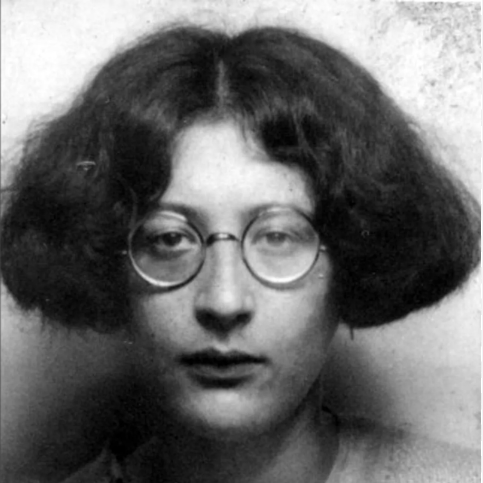
To wish to escape from solitude is cowardice. Friendship is not to be sought, not to be dreamed, not to be desired; it is to be exercised (it is a virtue).
▼
Source
source
p. 274
5 months 1 week ago
Psychoanalysis, which interprets the human being as a socialized being, and the psychic apparatus as essentially developed and determined through the relationship of the individual to society, must consider it a duty to participate in the investigation of sociological problems to the extent the human being or his/her psyche plays any part at all.
▼
Source
source
"Psychoanalyse und Soziologie" (1929); published as "Psychoanalysis and Sociology" as translated by Mark Ritter, in Critical Theory and Society : A Reader (1989) edited by S. E. Bronner and D. M. Kellner
5 months 2 weeks ago
Subjective reason ... is inclined to abandon the fight with religion by setting up two different brackets, one for science and philosophy, and one for institutionalized mythology, thus recognizing both of them. For the philosophy of objective reason there is no such way out. Since it hold to the concept of objective truth, it must take a positive or a negative stand with regard to the content of established religion.
▼
Source
source
p. 12.
5 months 6 days ago
Even Darwin's natural selection only predicts that survivors will be fit enough, that is, fitter than their losing competitors; it postulates satisficing, not optimizing.
▼
Source
source
p. 166; As cited in Ronald J. Baker (2010, p. 122).
6 months 4 days ago
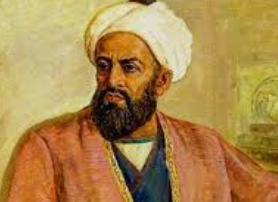
How can even the lowest mind, if he reflects at all the marvels of this earth and sky, the brilliant fashioning of plants and animals, remain blind to the fact that this wonderful world with its settled order must have a maker to design, determine and direct it?
▼
Source
source
Tibawi, A.L. (ed. and tr.). (1965) Al-Risala al-Qudsiyya (The Jerusalem Epistle) "Al-Ghazali's Tract on Dogmatic Theology". In: The Islamic Quarterly, 9:3-4 (1965), 3-4.


5 months 1 week ago
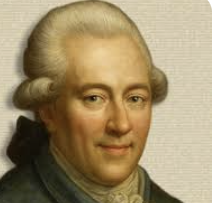
You believe that I run after the strange because I do not know the beautiful; no, it is because you do not know the beautiful that I seek the strange.
▼
Source
source
F160
4 months 3 weeks ago
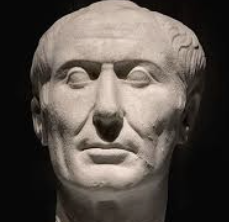
There is but a step between a proud man's glory and his disgrace.
▼
Source
source
Maxim 138

5 months 2 weeks ago
A whole dimension of human activity and passivity has been de-eroticized. The environment from which the individual could obtain pleasure-which he could cathect as gratifying almost as an extended zone of the body-has been rigidly reduced. Consequently, the "universe" of libidinous cathexis is likewise reduced. The effect is a localization and contraction of libido, the reduction of erotic to sexual experience and satisfaction.
▼
Source
source
p. 73
5 months 2 weeks ago
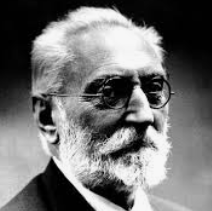
And this God, the living God, your God, our God, is in me, is in you, lives in us, and we live and move and have our being in Him. And he is in us by virtue of the hunger, the longing, which we have for Him, He is Himself creating the longing for Himself.
7 months 1 week ago
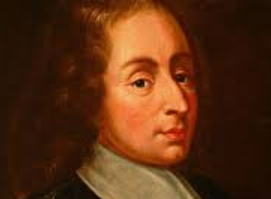
These two states which it is necessary to know together in order to see the whole truth, being known separately, lead necessarily to one of these two vices, pride or indolence, in which all men are invariably led before grace, since if they do not remain in their disorders through laxity, they forsake them through vanity, so true is that which you have just repeated to me from St. Augustine, and which I find to a great extent; for in fact homage is rendered to them in many ways.

7 months ago
Our Traders in Men (an unnatural commodity!) must know the wickedness of that Slave-Trade, if they attend to reasoning, or the dictates of their own hearts; and such as shun and stiffle all these, wilfully sacrifice Conscience, and the character of integrity to that golden Idol.
5 months 3 weeks ago
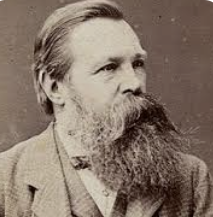
I have never seen a class so deeply demoralised, so incurably debased by selfishness, so corroded within, so incapable of progress, as the English bourgeoisie; and I mean by this, especially the bourgeoisie proper, particularly the Liberal, Corn Law repealing bourgeoisie. For it nothing exists in this world, except for the sake of money, itself not excluded. It knows no bliss save that of rapid gain, no pain save that of losing gold. In the presence of this avarice and lust of gain, it is not possible for a single human sentiment or opinion to remain untainted.
▼
Source
source
p. 275
7 months 5 days ago
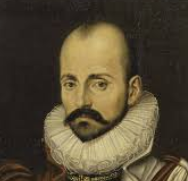
Truly man is a marvellously vain, diverse, and undulating object. It is hard to found any constant and uniform judgement on him.
▼
Source
source
Ch. 1. That Men by various Ways arrive at the same End (tr. Donald M. Frame)Cotton, rev. W. Hazlitt, 1842

5 months 3 weeks ago
I long to be free - desperately free. Free as the stillborn are free.
5 months 2 weeks ago
The operations of understanding thus divide the world into numberless polarities, and Hegel uses the expression 'isolated reflection' (isolierte Reflection) to characterize the manner in which understanding forms and connects its polar concepts. The rise and spread of this kind of thinking Hegel connects with the origin and prevalence of crucial relationships in human life. The antagonisms of 'isolated reflections' express real antagonisms. .... Isolation and opposition are not, however, the final state of affairs. The world must not remain a complex of fixed disparates. The unity that underlies the antagonisms must be grasped and realized by reason, which has the task of reconciling the opposites and 'sublimating' them in a true unity.
▼
Source
source
P. 45
7 months 4 weeks ago
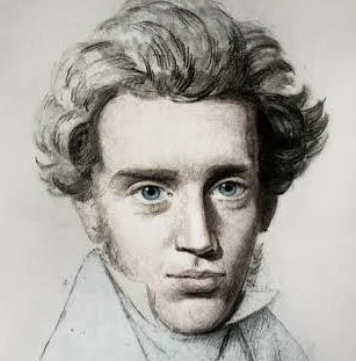
And thus Christianity is played in, Christendom. Artists in dramatic costumes make their appearance in artistic buildings-there really is no danger at all, anything but that: the teacher is a royal functionary, steadily promoted, making a career-and how he dramatically plays Christianity, in short, he plays comedy. He lectures about renunciation, but he himself is being steadily promoted; he teaches all that about despising worldly titles and rank, but he himself is making a career.
7 months ago
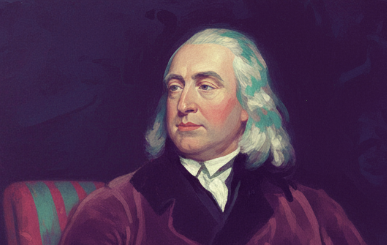
Liberty therefore not being more fit than other words in some of the instances in which it has been used, and not so fit in others, the less the use that is made of it the better. I would no more use the word liberty in my conversation when I could get another that would answer the purpose, than I would brandy in my diet, if my physician did not order me: both cloud the understanding and inflame the passions.
▼
Source
source
Jeremy Bentham, quoted in P. J. Kelly, Utilitarianism and Distributive Justice: Jeremy Bentham and the Civil Law, Oxford, 1990, p. 96
5 months 1 week ago
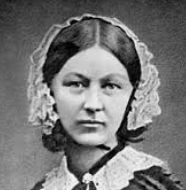
That man and woman have an equality of duties and rights is accepted by woman even less than by man. Behind his destiny woman must annihilate herself, must be only his complement. A woman dedicates herself to the vocation of her husband; she fills up and performs the subordinate parts in it. But if she has any destiny, any vocation of her own, she must renounce it, in nine cases out of ten.
4 months 2 weeks ago
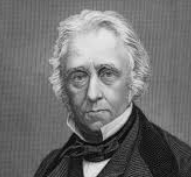
Your Constitution is all sail and no anchor.
▼
Source
source
Letter to H.S. Randall, author of a Life of Thomas Jefferson
6 months 4 weeks ago
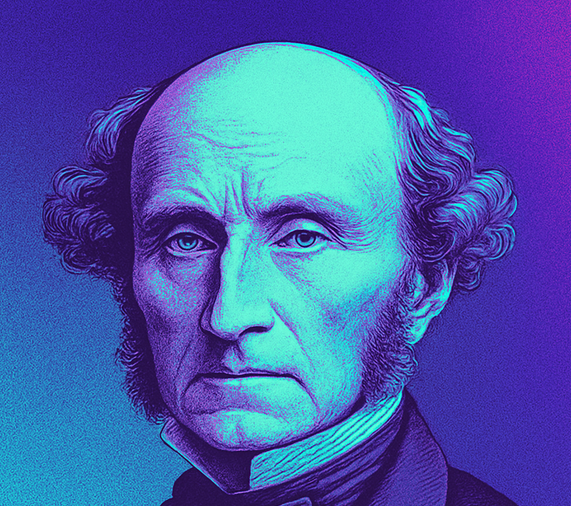
I conceive that the description so often given of a Benthamite, as a mere reasoning machine, though extremely inapplicable to most of those who have been designated by that title, was during two or three years of my life not altogether untrue of me. ...There is nothing very extraordinary in this fact: no youth of the age I then was, can be expected to be more than one thing, and this was the thing I happened to be. Ambition and desire of distinction, I had in abundance; and zeal for what I thought the good of mankind was my strongest sentiment, mixing with and colouring all others. But my zeal was as yet little else, at that period of my life, than zeal for speculative opinions. It had not its root in genuine benevolence, or sympathy with mankind; though these qualities held their due place in my ethical standard. Nor was it connected with any high enthusiasm for ideal nobleness.
▼
Source
source
(pp. 109-110)
2 months 2 weeks ago
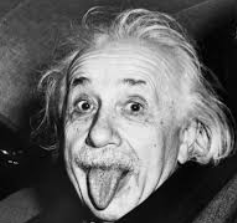
The most simple picture one can form about the creation of an empirical science is along the lines of an inductive method. Individual facts are selected and grouped together such that their lawful connection becomes clearly apparent. ... The truly great advances in our understanding of nature originated in a manner almost diametrically opposed to induction. The intuitive grasp of the essentials or a large complex of facts leads the scientist to the postulation of a hypothetical basic law, or several such basic laws. From the basic laws (system of axioms) he derives his conclusions as completely as possible in a purely logically deductive manner. These conclusions, derived from the basic laws (and often only after time-consuming developments and calculations), can then be compared to experience, and in this manner provide criteria for the justification of the assumed basic law.
5 months 4 weeks ago
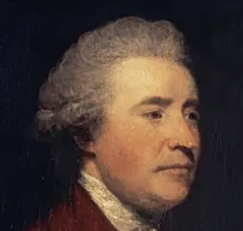
All those instances to be found in history, whether real or fabulous, of a doubtful public spirit, at which morality is perplexed, reason is staggered, and from which affrighted Nature recoils, are their chosen and almost sole examples for the instruction of their youth.
▼
Source
source
No. 1, volume v, p. 286
6 months 4 weeks ago
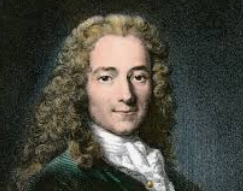
All philosophical sects have run aground on the reef of moral and physical ill. It only remains for us to confess that God, having acted for the best, had not been able to do better.
▼
Source
source
"Power, Omnipotence," Dictionnaire philosophique, 1785-1789
5 months 1 week ago
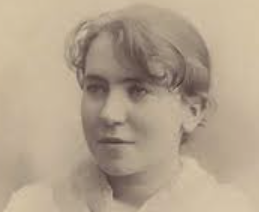
Militarism, the destroyer of youth, the raper of women, the annihilator of the best in the race, the very mower of life.
6 months 4 weeks ago
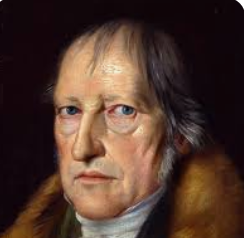
The good is the idea, or unity of the conception of the will with the particular will. Abstract right, well-being, the subjectivity of consciousness, and the contingency of external reality, are in their independent and separate existences superseded in this unity, although in their real essence they are contained in it and preserved. This unity is realized freedom, the absolute final cause of the world. Addition.-Every stage is properly the idea, but the earlier steps contain the idea only in more abstract form. The I, as person, is already the idea, although in its most abstract guise. The good is the idea more completely determined; it is the unity of the conception of will with the particular will. It is not something abstractly right, but has a real content, whose substance constitutes both right and well-being.
▼
Source
source
Georg Wilhelm Friedrich Hegel, Philosophy of Right translated by SW Dyde Queen's University Canada 1896 p. 123

7 months 1 week ago
Be not swept off your feet by the vividness of the impression, but say, "Impression, wait for me a little. Let me see what you are and what you represent. Let me try you."
▼
Source
source
Book II, ch. 18, § 24, Reported in Bartlett's Quotations (1919) as "Be not hurried away by excitement, but say, "Semblance, wait for me a little".
6 months 4 weeks ago
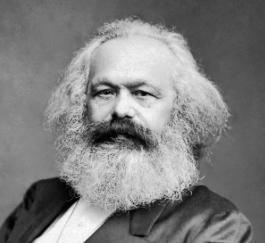
He who can buy bravery is brace, though a coward. As money is not exchanged for anyone specific quality, for any one specific thing, or for any particular human essential power, but for the entire objective world of man and nature, from the standpoint of its possessor it therefore serves to exchange every property for every other, even contradictory, property and object: it is the fraternization of impossibilities. It makes contradictions embrace.
▼
Source
source
p. 105, The Marx-Engels Reader
6 months 2 weeks ago
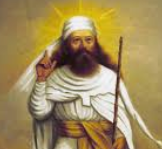
Indulge in no wrathfulness, for a man when he indulges in wrath becomes then forgetful of his duty and good works . . . and sin and crime of every kind occur unto his mind, and until the subsiding of the wrath he is said to be just like Ahareman.
6 months 3 weeks ago
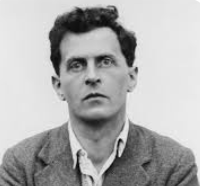
What cannot be imagined cannot even be talked about.
▼
Source
source
Journal entry (12 October 1916), p. 84e
5 months 2 weeks ago
The pathfinders of modern thought did not derive what is good from the law. ... Their role in history was not that of adapting their words and actions to the text of old documents or generally accepted doctrines: they themselves created the documents and brought about the acceptance of their doctrines.
▼
Source
source
p. 33.


7 months 1 week ago
Thus the sum of things is ever being renewed, and mortal creatures live dependent one upon another. Some species increase, others diminish, and in a short space the generations of living creatures are changed and, like runners, pass on the torch of life.
▼
Source
source
Book II, line 75 (tr. Rouse)
7 months 1 week ago
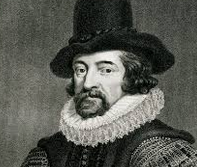
But by far the greatest hindrance and aberration of the human understanding proceeds from the dullness, incompetency, and deceptions of the senses; in that things which strike the sense outweigh things which do not immediately strike it, though they be more important. Hence it is that speculation commonly ceases where sight ceases; insomuch that of things invisible there is little or no observation.
▼
Source
source
Aphorism 50
5 months 2 weeks ago
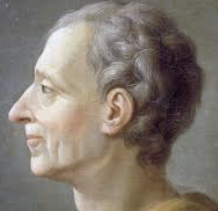
Useless laws weaken the necessary laws.
▼
Source
source
Book XXIX: Of the Manner of Composing Laws, Chapter 16: Things to be Observed in the Composing of Laws
2 months 2 weeks ago
The most simple picture one can form about the creation of an empirical science is along the lines of an inductive method. Individual facts are selected and grouped together such that their lawful connection becomes clearly apparent. ... The truly great advances in our understanding of nature originated in a manner almost diametrically opposed to induction. The intuitive grasp of the essentials or a large complex of facts leads the scientist to the postulation of a hypothetical basic law, or several such basic laws. From the basic laws (system of axioms) he derives his conclusions as completely as possible in a purely logically deductive manner. These conclusions, derived from the basic laws (and often only after time-consuming developments and calculations), can then be compared to experience, and in this manner provide criteria for the justification of the assumed basic law.
▼
Source
source
[https://web.archive.org/web/20150119033423/http://einsteinpapers.press.princeton.edu/vol7-trans/124 "Induction and Deduction in Physics"], Berliner Tageblatt, 25 December 1919.
6 months 4 weeks ago
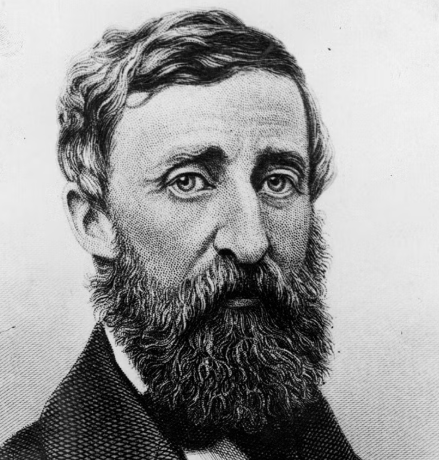
You can hardly convince a man of an error in a lifetime, but must content yourself with the reflection that the progress of science is slow. If he is not convinced, his grandchildren may be.
5 months 2 weeks ago
My conduct must be the best proof, the moral proof, of my supreme desire; and if I do not end by convincing myself, within the bounds of the ultimate and irremediable uncertainty of the truth of what I hope for, it is because my conduct is not sufficiently pure. Virtue, therefore, is not based upon dogma, but dogma upon virtue, and it is not faith that creates martyrs but martyrs who create faith. There is no security or repose - so far as security and repose are obtainable in this life, so essentially insecure and unreposeful - save in conduct that is passionately good.
6 months 3 weeks ago
The less somebody knows and understands himself the less great he is, however great may be his talent. For this reason our scientists are not great.
▼
Source
source
p. 51e

6 months 4 weeks ago
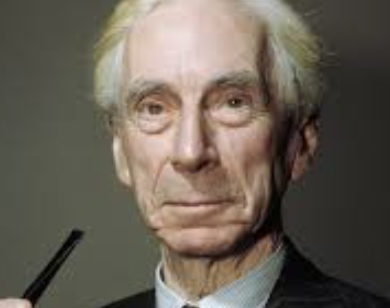
The Austrians are a highly civilised race, half-surrounded by Slavs in a relatively backward state of culture. ... Servia, a country so barbaric that a man can secure the throne by instigating the assassination of his predecessor, is engaged constantly in fermenting the racial discontent of men of the same race who are Austrian subjects.
▼
Source
source
War: The Offspring of Fear (1914), quoted in Ray Monk, Bertrand Russell: The Spirit of Solitude, 1872-1921 (1996), p. 373
7 months 1 week ago
If you would be a good reader, read; if a writer, write.
▼
Source
source
Book II, ch. 18, 1.
5 months 2 weeks ago
We used to pay too little attention to utopias, or even disregard them altogether, saying with regret they were impossible of realisation. Now indeed they seem to be able to be brought about far more easily than we supposed, and we are actually faced by an agonising problem of quite another kind: how can we prevent their final realisation? ... Utopias are more realisable than those 'realist politics' that are only the carefully calculated policies of office-holders, and towards utopias we are moving. But it is possible that a new age is already beginning, in which cultured and intelligent people will dream of ways to avoid ideal states and to get back to a society that is less 'perfect' and more free.
▼
Source
source
pp. 187-188. Aldous Huxley used this passage (in French translation) as the epigraph to Brave New World.
6 months 3 weeks ago
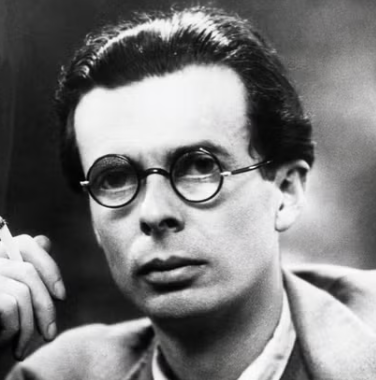
Both of us victims of the same twentieth-century plague. Not the Black Death, this time; the Grey Life.

6 months 2 days ago
The foremost, or indeed the sole condition which is required in order to succeed in centralizing the supreme power in a democratic community, is to love equality, or to get men to believe you love it. Thus the science of despotism, which was once so complex, is simplified, and reduced as it were to a single principle.
▼
Source
source
Book Four, Chapter IV.
6 months 3 weeks ago
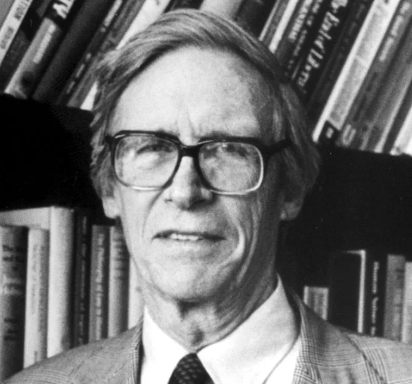
The difference principle, for example, requires that the higher expectations of the more advantaged contribute to the prospects of the least advantaged.
▼
Source
source
Chapter II, Section 16, pg. 95
5 months 3 weeks ago
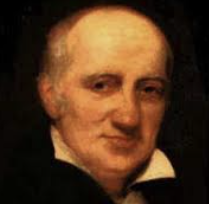
The illustrious archbishop of Cambray was of more worth than his chambermaid, and there are few of us that would hesitate to pronounce, if his palace were in flames, and the life of only one of them could be preserved, which of the two ought to be preferred ... Supposing the chambermaid had been my wife, my mother or my benefactor. This would not alter the truth of the proposition. The life of Fenelon would still be more valuable than that of the chambermaid; and justice, pure, unadulterated justice, would still have preferred that which was most valuable. Justice would have taught me to save the life of Fenelon at the expence of the other. What magic is there in the pronoun "my", to overturn the decisions of everlasting truth?
▼
Source
source
Vol.1, bk. 2, ch. 2
6 months 3 weeks ago
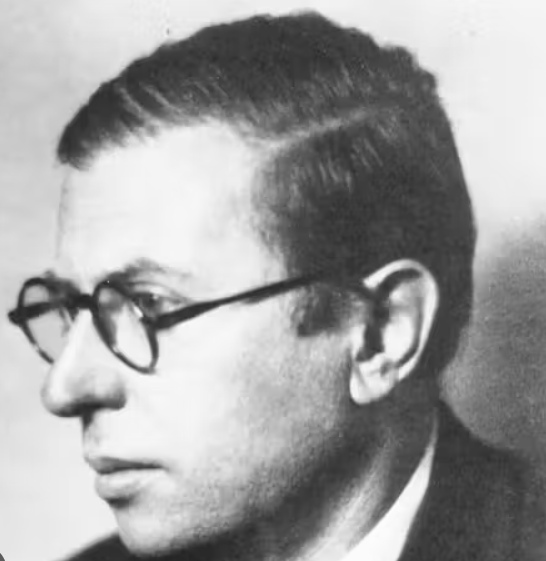
Yes, Lord, you are innocence itself: how could you conceive of Nothingness, you who are plenitude? Your gaze is light and transforms all into light: how could you know the half-light in my heart?
▼
Source
source
Act 3, sc. 6
CivilSimian.com created by AxiomaticPanic, CivilSimian, Kalokagathia