The masses will burn it down first....or they'll just break away from the system. It won't be the techno feudalism the sadists dream of.....


How many, once lauded in song, are given over to the forgotten; and how many who sung their praises are clean gone long ago!
As soon as the discourse is about a holy spirit, about believing in the holy spirit, how many do you think believe in that? Or when the discourse is about an evil spirit that should be renounced: how many do you think believe in such a thing? How can this be? Is it perhaps because the subject becomes too earnest when it is the holy spirit? For I can talk about, believe in, the spirit of the age, the spirit of the world, and the like and do not thereby need to think of anything specific. It is a kind of spirit, but I am not absolutely bound by what I say. And not being bound by what one says is highly prized.

I used to ask myself, over a coffin: "What good did it do the occupant to be born?," I now put the same question about anyone alive.
The ruling power within, when it is in its natural state, is so related to outer circumstances that it easily changes to accord with what can be done and what is given it to do.
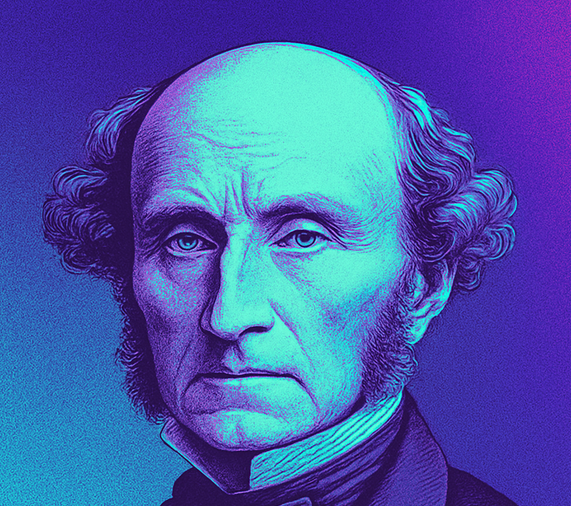
Those only are happy (I thought) who have their minds fixed on some object other than their own happiness; on the happiness of others, on the improvement of mankind, even on some art or pursuit, followed not as a means, but as itself an ideal end. Aiming thus at something else, they find happiness by the way.
I would mind more if I could claim that The Selfish Gene had become severely outmoded and superseded. Unfortunately (from one point of view) I cannot. Details have changed and factual examples burgeoned mightily. But, with an exception that I shall discuss in a moment, there is little in the book that I would rush to take back now, or apologize for.
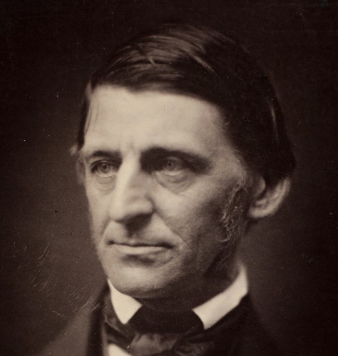
Not from a vain or shallow thought His awful Jove young Phidias brought.

Among these widely differing families of men, the first that attracts attention, the superior in intelligence, in power, and in enjoyment, is the white, or European, the MAN pre-eminently so called, below him appear the Negro and the Indian.
Skepticism is an exercise in defascination.
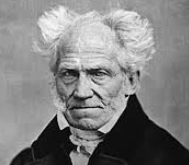
In our monogamous part of the world, to marry means to halve one's rights and double one's duties.
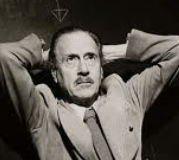
Although meaningless in a tribal context, numbers and statistics assume mythic and magical qualities of infallibility in literate societies.
It is in this way that all my books have been composed. They were always written at least twice over; a first draft of the entire work was completed to the very end of the subject, then the whole begun again de novo; but incorporating, in the second writing, all sentences and parts of sentences of the old draft, which appeared as suitable to my purpose as anything which I could write in lieu of them. I have found great advantages in this system of double redaction. It combines, better than any other mode of composition, the freshness and vigour of the first conception, with the superior precision and completeness resulting from prolonged thought. In my own case, moreover, I have found that the patience necessary for a careful elaboration of the details of composition and expression, costs much less effort after the entire subject has been once gone through, and the substance of all that I find to say has in some manner, however imperfect, been got upon paper.
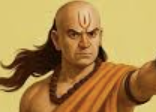
The world's biggest power is the youth and beauty of a woman.
It is debasing to die the way one does; it is intolerable to be exposed to an end over which we have no control, an end which lies in wait for us, overthrows us, casts us into the unnameable.
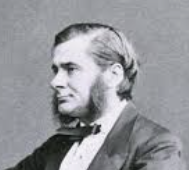
Our reverence for the nobility of manhood will not be lessened by the knowledge, that Man, is in substance and in structure, one with the brutes; for, he alone possesses the marvellous endowment of intelligible and rational speech, whereby, in the secular period of his existence, he has slowly accumulated and organized the experience which is almost wholly lost with the cessation of every individual life in other animals; so that now he stands raised upon it as on a mountain top, far above the level of his humble fellows, and transfigured from his grosser nature by reflecting, here and there, a ray from the infinite source of truth.
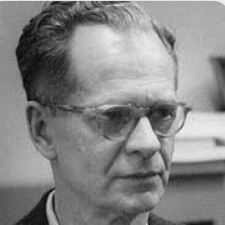
A person who has been punished is not thereby simply less inclined to behave in a given way; at best, he learns how to avoid punishment.
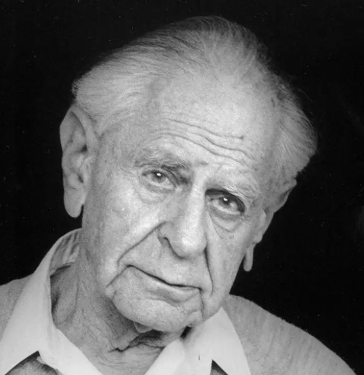
I am a rationalist. ...I mean ...[I] wish... to understand the world, and to learn by arguing with others. (...I do not say a rationalist holds the mistaken theory that men are... rational.)
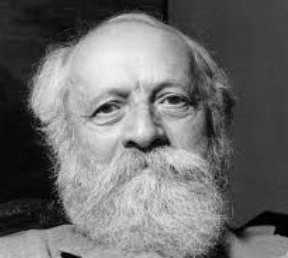
So long as a man's power, that is, his capacity to realize what he has in mind, is bound to the goal, to the work, to the calling, it is, considered in itself, neither good nor evil, it is only a suitable or unsuitable instrument. But as soon as this bond with the goal is broken off or loosened, and the man ceases to think of power as the capacity to do something, but thinks of it as a possession, that is, thinks of power in itself, then his power, being cut off and self-satisfied, is evil; it is power withdrawn from responsibility, power which betrays the spirit, power in itself.
Familiar things happen, and mankind does not bother about them. It requires a very unusual mind to undertake the analysis of the obvious.
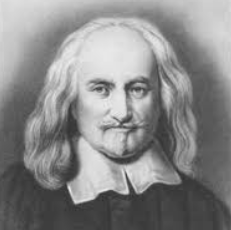
But this priviledge, is allayed by another; and that is, by the priviledge of Absurdity; to which no living creature is subject, but man only.
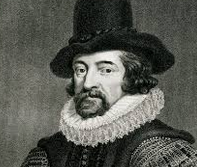
For the inquisition of Final Causes is barren, and like a virgin consecrated to God produces nothing.
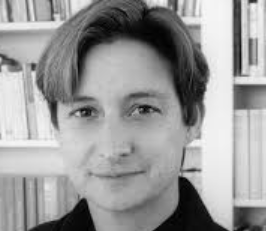
Nonviolence is an ideal that cannot always be fully honored in the practice. To the degree that those who practice nonviolent resistance put their body in the way of an external power, they make physical contact, presenting a force against force in the process. Nonviolence does not imply the absence of force or of aggression. It is, as it were, an ethical stylization of embodiment, replete with gestures and modes of non-action, ways of becoming an obstacle, of using the solidity of the body and its proprioceptive object field to block or derail a further exercise of violence.
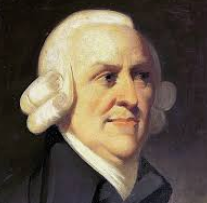
Justice, however, never was in reality administered gratis in any country. Lawyers and attornies, at least, must always be paid by the parties; and, if they were not, they would perform their duty still worse than they actually perform it.
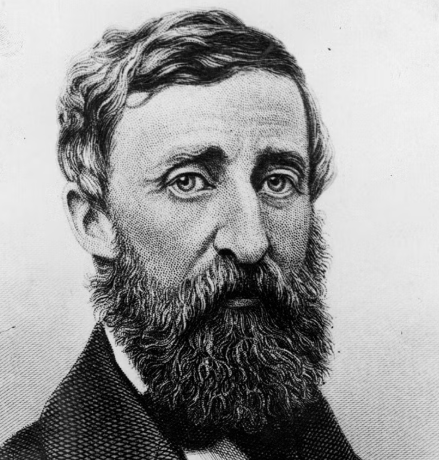
The youth gets together his materials to build a bridge to the moon, or, perchance, a palace or temple on the earth, and, at length, the middle-aged man concludes to build a woodshed with them.
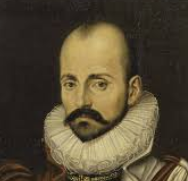
They who have compared our lives to a dream were, perhaps, more in the right than they were aware of. When we dream, the soul lives, works, and exercises all its faculties, neither more nor less than when awake; but more largely and obscurely, yet not so much, neither, that the difference should be as great as betwixt night and the meridian brightness of the sun, but as betwixt night and shade; there she sleeps, here she slumbers; but, whether more or less, 'tis still dark, and Cimmerian darkness. We wake sleeping, and sleep waking.
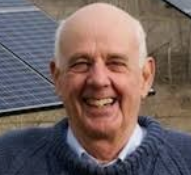
If we are serious about peace, then we must work for it as ardently, seriously, continuously, carefully, and bravely as we have ever prepared for war.

I see the situation of man in the world of planetary technicity not as an inexitricable and inescapable destiny, but I see the task of thought precisely in this, that within its own limits it helps man as such achieve a satisfactory relationship to the essence of technicity. National Socialism did indeed go in this direction. Those people, however, were far too poorly equipped for thought to arrive at a really explicit relationship to what is happening today and has been underway for the past 300 years.
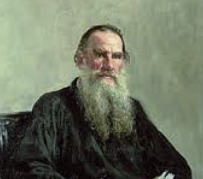
People continued - regardless of all that leads man forward - to try to unite the incompatibles : the virtue of love, and what is opposed to love, namely, the restraining of evil by violence. And such a teaching, despite its inner contradiction, was so firmly established that the very people who recognize love as a virtue accept as lawful at the same time an order of life based on violence and allowing men not merely to torture but even to kill one another.
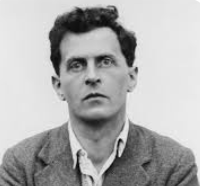
What we do is to bring words back from their metaphysical to their everyday use.
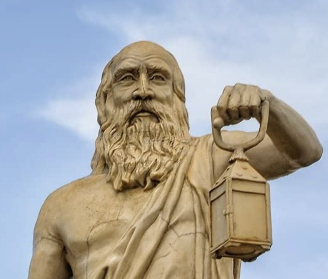
When some one boasted that at the Pythian games he had vanquished men, Diogenes replied, "Nay, I defeat men, you defeat slaves."
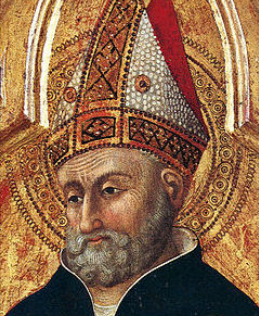
But it isn't just a matter of faith, but of faith and works. Each is necessary. For the demons also believe you heard the apostle and tremble (Jas 2:19); but their believing doesn't do them any good. Faith alone is not enough, unless works too are joined to it: Faith working through love (Gal 5:6), says the apostle.

Many city-dwellers have a romanticized conception of the living world. From another perspective, some "conservation biologists" favour e.g. "Pleistocene rewilding". By contrast, I think any truly compassionate person should be horrified at the terrible suffering of Nature "red in tooth and claw". Why not aim for a cruelty-free world instead?
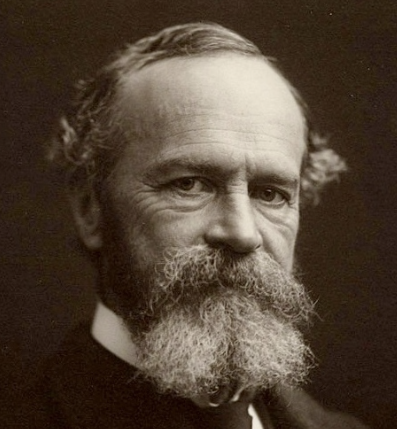
In its widest possible sense, however, a man's Self is the sum total of all that he can call his, not only his body and his psychic powers, but his clothes and his house, his wife and children, his ancestors and friends, his reputation and works, his lands and horses, and yacht and bank-account. All these things give him the same emotions. If they wax and prosper, he feels triumphant; if they dwindle and die away, he feels cast down.
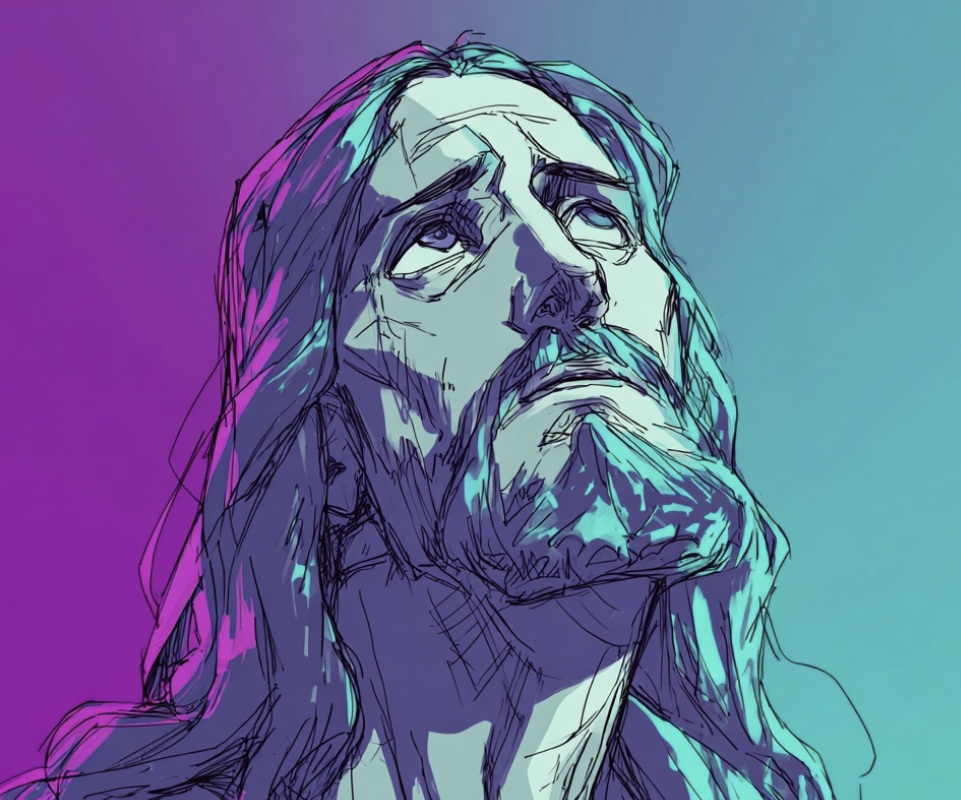
The man old in days will not hesitate to ask a small child seven days old about the place of life, and he will live. For many who are first will become last, and they will become one and the same.
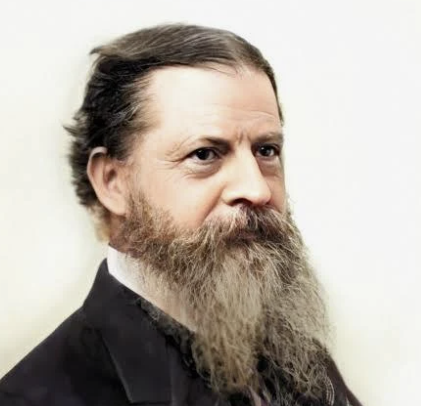
It has never been in my power to study anything, - mathematics, ethics, metaphysics, gravitation, thermodynamics, optics, chemistry, comparative anatomy, astronomy, psychology, phonetics, economics, the history of science, whist, men and women, wine, metrology, except as a study of semeiotic.
Whatever can be done another day can be done today.

Luther's merit in literary history is of the greatest: his dialect became the language of all writing. They are not well written, these Four-and-twenty Quartos of his; written hastily, with quite other than literary objects. But in no Books have I found a more robust, genuine, I will say noble faculty of a man than in these. A rugged honesty, homeliness, simplicity; a rugged sterling sense and strength. He dashes out illumination from him; his smiting idiomatic phrases seem to cleave into the very secret of the matter. Good humor too, nay tender affection, nobleness and depth: this man could have been a Poet too! He had to work an Epic Poem, not write one.
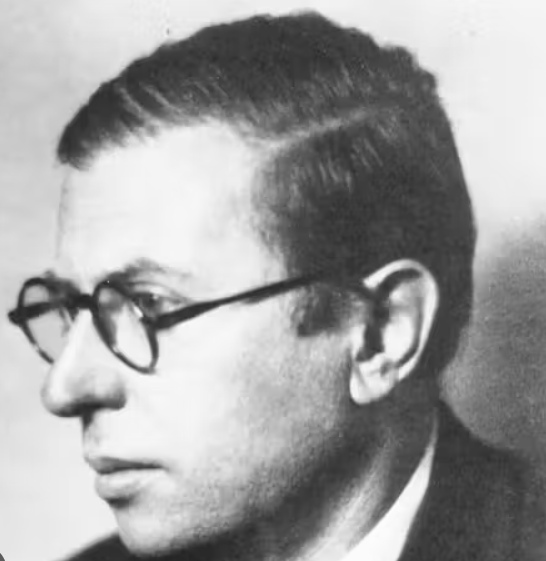
I think they do it to pass the time, nothing more. But time is too large, it can't be filled up. Everything you plunge into it is stretched and disintegrates.

Now the real fruits of human nature - the arts, sciences, great enterprises, lofty conceptions, manly virtues - are due especially to the state of war. In a word, we can say that blood is the manure of the plant we call genius.
Is not the reason of the confidence of the positive, critical, experimental scientists, and of the reverent attitude of the crowd towards their doctrines, still the same? At first it seems strange how the theory of evolution (which, like the redemption in theology, serves the majority as a popular expression of the whole new creed) can justify people in their injustice, and it seems as if the scientific theory dealt only with facts and did nothing but observe facts. But that only seems so. It seemed just the same in the case of theological doctrine: theology, it seemed, was only occupied with dogmas and had no relation to people's lives, and it seemed the same with regard to philosophy, which appeared to be occupied solely with transcendental reasonings. But that only seemed so. It was just the same with the Hegelian doctrine on a large scale and with the particular case of the Malthusian teaching.
The pathfinders of modern thought did not derive what is good from the law. ... Their role in history was not that of adapting their words and actions to the text of old documents or generally accepted doctrines: they themselves created the documents and brought about the acceptance of their doctrines.
Even the free importation of foreign corn could very little affect the interest of the farmers of Great Britain. Corn is a much more bulky commodity than butcher's-meat. A pound of wheat at a penny is as dear as a pound of butcher's-meat at fourpence. The small quantity of foreign corn imported even in times of the greatest scarcity, may satisfy our farmers that they can have nothing to fear from the freest importation.
History is nothing but assisted and recorded memory. It might almost be said to be no science at all, if memory and faith in memory were not what science necessarily rest on. In order to sift evidence we must rely on some witness, and we must trust experience before we proceed to expand it. The line between what is known scientifically and what has to be assumed in order to support knowledge is impossible to draw. Memory itself is an internal rumour; and when to this hearsay within the mind we add the falsified echoes that reach us from others, we have but a shifting and unseizable basis to build upon. The picture we frame of the past changes continually and grows every day less similar to the original experience which it purports to describe.
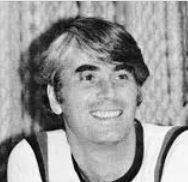
Some anarchists have claimed not merely that we would be better off without a state, but that any state necessarily violates people's moral rights and hence is intrinsically immoral. Our starting point then, though nonpolitical, is by intention far from nonmoral. Moral philosophy sets the background for, and boundaries of, political philosophy. What persons may and may not do to one another limits what they may do through the apparatus of a state, or do to establish such an apparatus.
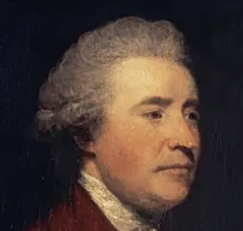
I am aware that the age is not what we all wish. But I am sure, that the only means of checking its precipitate degeneracy, is heartily to concur with whatever is the best in our time; and to have some more correct standard of judging what that best is, than the transient and uncertain favour of a court. If once we are able to find, and can prevail on ourselves to strengthen an union of such men, whatever accidentally becomes indisposed to ill-exercised power, even by the ordinary operation of human passions, must join with that society, and cannot long be joined, without in some degree assimilating to it. Virtue will catch as well as vice by contact; and the public stock of honest manly principle will daily accumulate. We are not too nicely to scrutinize motives as long as action is irreproachable. It is enough, (and for a worthy man perhaps too much,) to deal out its infamy to convicted guilt and declared apostacy.
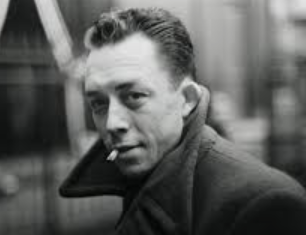
Real fulfillment, for the man who allows absolutely free rein to his desires, and who must dominate everything, lies in hatred.
CivilSimian.com created by AxiomaticPanic, CivilSimian, Kalokagathia